Quick Summary: A cheaper Havapoo often costs more later in vet bills, so the guide pushes first-time buyers to demand OFA and BAER health records from both the Havanese and Poodle parent lines before paying any deposit. It warns against wire transfers, gift cards, and apps like Venmo or Zelle, and recommends paying with a credit card so you can dispute the charge. Red flags include pressure to decide fast, missing contracts, and sellers who dodge questions about the parents. The article also walks through prepping your home for pickup day, matching the puppy to your schedule, and keeping the first week calm, citing Sage Puppies as an example of a small Utah program that follows these practices.
Two Havapoo listings can look identical in photos and still sit a thousand dollars apart. The cheaper puppy often costs more later, in vet bills tied to untested parents. This Havapoo buyer guide exists to close that gap for first-time owners.
You will learn how to read health evidence, spot red flags in contracts and payment requests, and run a Havapoo puppy questions checklist before you send any deposit. We also cover Havapoo puppy prep, so your home, vet, and routine are ready on day one.
Everything here reflects how a small Utah program like Sage Puppies breeds and places Havanese and Poodle crosses, so the advice matches what careful breeders actually do.
What a Reputable Havapoo Breeder Looks Like
A good Havapoo breeder makes you prove you’ll be a good owner, not the other way around. Any Havapoo Buyer Guide will tell you the same thing: the breeder’s habits matter more than the puppy’s photo.
Green Flags That Show Up Together
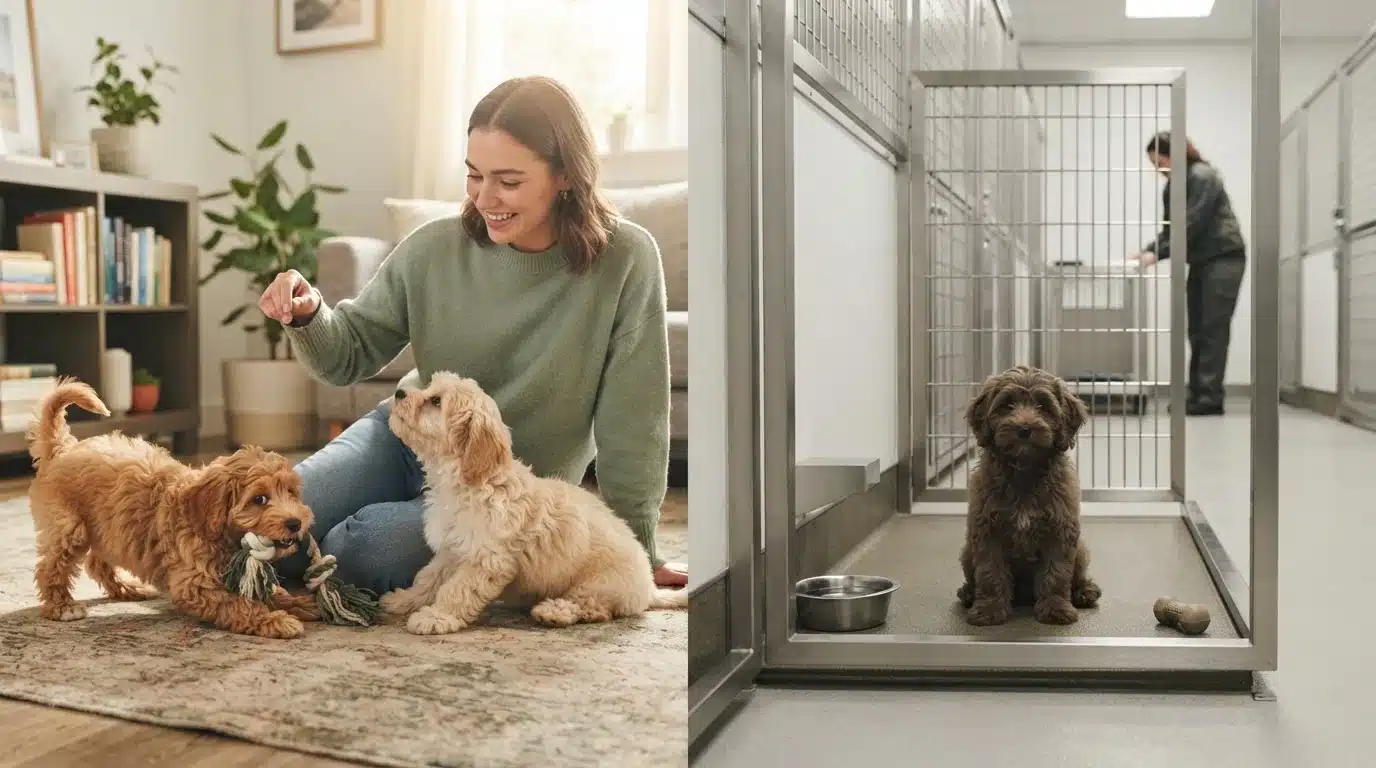
Watch for a cluster, not one trait. A reputable breeder welcomes your questions, lets you visit or video call, and introduces the mother dog. They health-test both parent lines and share the results without being asked. Expect detailed questions about your home, schedule, and experience. Clean living areas, limited litters, and a written contract are standard. Good breeders also interview you the way you interview them, because a well-matched puppy stays in its home.
Red Flags That End the Conversation
Some warning signs should stop the deal immediately. Walk away from anyone who offers multiple breeds always available, takes payment through gift cards or wire transfers, or refuses to show where puppies live. No health testing records, no contract, or pressure to decide today are deal breakers too. Selling puppies under eight weeks old violates most state laws. When a breeder dodges questions about the parents, trust that instinct and keep looking.
A Havapoo inherits health risks from both parent breeds, so a serious breeder screens both lines. Ask for documentation, not promises. The OFA’s breed-by-breed CHIC listings show exactly which screenings each breed should have, and you can match a breeder’s claims against them.

Havanese-Line Tests to Ask About
The Havanese Club of America lists three core screenings for the breed: patellar luxation (loose kneecaps), a cardiac exam, and a BAER hearing test. Patellas can be certified through the OFA at a year old, and congenital cardiac exams check for inherited heart defects. BAER testing measures hearing in each ear and can be done as early as six weeks. Ask whether the mother’s Havanese lines also carry DNA tests for conditions such as chondrodysplasia, which affects bone development. A breeder who knows these terms, and shows certificates with registration numbers, is doing the work.
Poodle-Line Tests to Ask About
On the Poodle side, hips and eyes matter most. Responsible breeders have their Poodle parents’ hips evaluated and keep the dogs lean, because hip dysplasia runs in the breed. Eyes need an annual exam by a veterinary ophthalmologist to rule out inherited problems like progressive retinal atrophy. DNA tests for the prcd-PRA gene variant are common and reliable, so ask which tests the Poodle parent carries clear. Poodles should also be screened for patellar luxation and cardiac issues, the same knee and heart checks required on the Havanese side.
How to Read the Health Records
Real records name the dog, show a registration number, and list the testing organization. Vague phrases like “vet checked” are not health clearances; a routine checkup is not a screening program. If you want a second set of eyes on paperwork before you commit, our Havapoo buyer guide walks through comparing breeders’ records.
Questions to Ask Before You Place a Deposit
A good breeder welcomes questions. A vague answer before you pay is a preview of the support you’ll get later, so ask these before any money changes hands.
Questions About the Litter
Start with the parents. Ask to see health test results for both the Havanese and the Poodle lines, and ask which specific tests were run and why. Then ask how many litters the mother has had, since responsible programs limit a dam to a few. Follow with: How old is each parent? Where do the puppies live during their first eight weeks? What early socialization happens, and can you meet the mother in person or on video? You can dig deeper into why these lines matter in our guide to Havapoo and Cavapoo health issues.

Questions About the Contract and Return Policy
Get the agreement in writing before you pay anything. Ask what the deposit covers, whether it applies to the purchase price, and under what conditions it is refundable or transferable to a future litter. Ask whether the contract includes a health exam window, what vaccinations and deworming the puppy will have completed, and what happens if your vet finds a problem in the first days at home. Also ask about the return clause. A breeder who commits to taking a dog back at any age is telling you something important about how they view their puppies.
Questions That Reveal the Breeder’s Communication Style
How a breeder answers matters as much as what they say. Ask how often they send updates and photos while the litter grows, and whether you can visit before pickup day. Ask who raises the puppies and who you contact after you bring yours home. Clear, prompt answers with no pressure to pay quickly signal a program you can trust; evasive replies do not.
Reading the Price and the Payment
What Drives a Havapoo’s Price
Well-bred Havapoo puppies usually cost between $1,500 and $4,500, and the spread comes down to a few predictable factors. The breeding program’s testing and care costs matter most: health-tested parents, vet visits, vaccinations, and early socialization all raise the price before a puppy is born. Coat color and size also play a role. Rare colors and smaller toy-sized pups often cost more, though neither guarantees better health or temperament. Where you buy counts too. A boutique program like Sage Puppies sets one clear price per puppy, while classified listings can hide extra fees for shipping or “processing” later.

Safe Ways to Pay and Refund Cues
Before you send money, decide how you would get it back if something went wrong. A credit card is the safest choice because you can dispute a charge. Paying with a credit card also protects you in ways wire transfers do not. The Michigan Attorney General’s consumer alert warns against wiring money, sending gift cards, or using apps like Venmo, Zelle, or Cash App, since those payments are hard to reverse once they are gone.
The FTC’s pet scam guidance adds two habits: search the seller’s name with words like “review” or “scam,” and refuse sellers who push unusual payment methods. Both agencies describe the same pattern: a low price, a fast deadline, then a request for untraceable payment before delivery.
Refund cues are just as revealing. A trustworthy breeder puts the deposit terms in writing, explains what happens if the puppy cannot go home, and never asks you to pay before you have seen the parents or spoken to them directly. If the answers are vague, walk away and keep your money.
Matching the Puppy to Your Home
Havapoos adapt well to apartments and smaller homes, but “adaptable” does not mean “carefree.” Before you choose a puppy, look honestly at your schedule, your household, and how ready your space really is.

Match Your Daily Schedule to the Puppy
A Havapoo is a companion dog. It wants people nearby, so your daily rhythm matters more than your floor plan. Plan for one to two short walks a day, about 30 to 45 minutes total, plus play and short training sessions. This is a moderately active breed suited to apartment life when that exercise is real and consistent.
The bigger issue is time alone. Puppies under six months cannot hold it for a full workday, so line up a midday break from a neighbor, dog walker, or your own flexible schedule. If everyone in the house is gone eight to ten hours, start planning for that gap now rather than after the puppy arrives.
Match Your Household Composition
Think about who shares your home. Havapoos are people-oriented and usually gentle with respectful kids, which is why they suit many families. They also tend to be eager to please and easy to train, a real help for first-time owners.
Add allergies, other pets, and mobility limits to the list. A toddler needs a puppy that is supervised around small hands. A cat needs a slow introduction. And if anyone in the home has dog allergies, spend time with the breed before you commit rather than trusting a promise.
First-Week Readiness Checklist
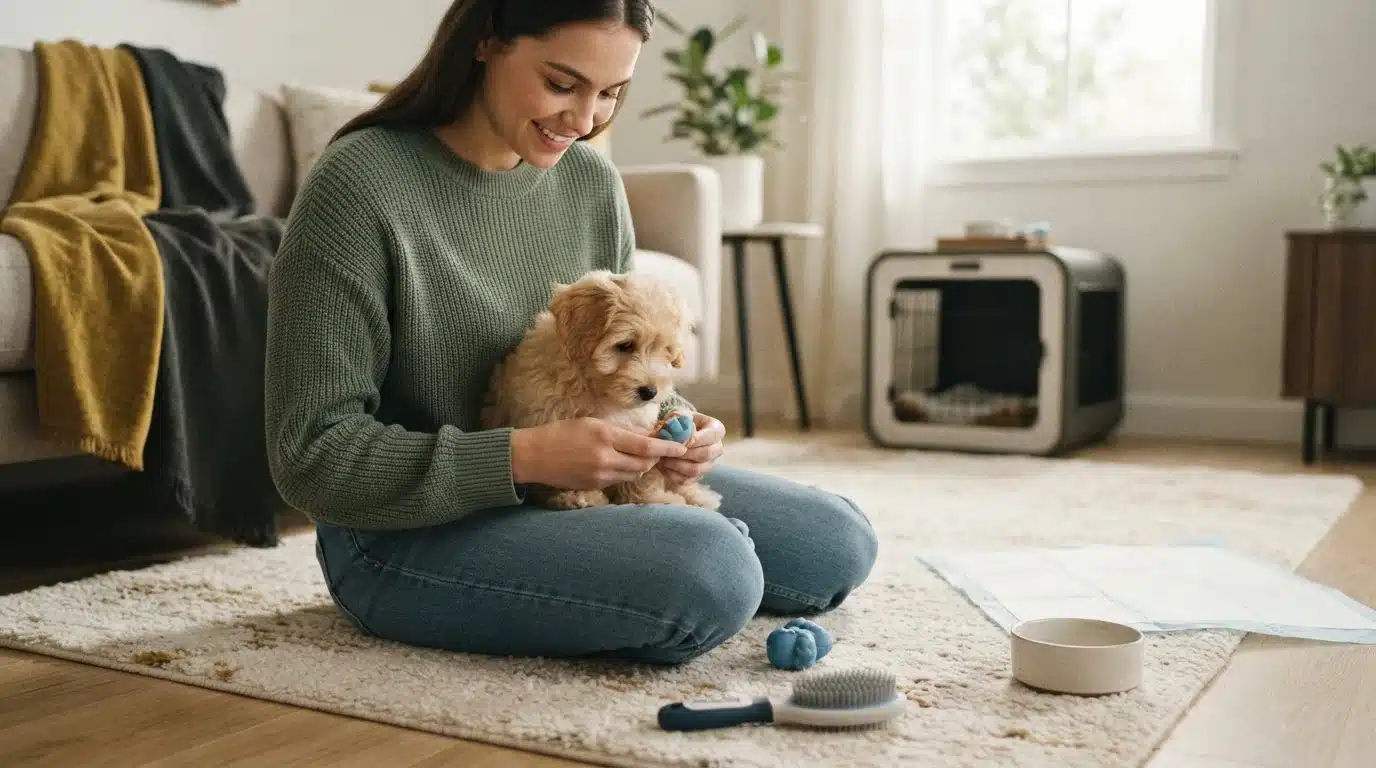
Set up before pickup day so the puppy lands in a calm, safe space. Use this list:
- A quiet zone with a crate, bed, and water bowl away from heavy foot traffic
- Puppy-proofing: cords secured, small items lifted, trash latched
- Food matching what the breeder feeds, to avoid stomach upset
- A vet appointment booked within the first few days
- Gear on hand: collar, leash, ID tag, brush, and chew toys
- A potty plan, with a door or pad route everyone agrees on
If you are comparing breeds before committing, the guide to Havanese vs Cavapoo for first-time owners covers how each fits different homes. For the drive itself, keep the puppy safe in a secured crate rather than loose in the car, and build in potty stops. The first week sets the pattern, so keep visitors few, routines boring, and praise steady.
Bringing Your Havapoo Home
Pickup Day and the Travel Home
Keep the ride simple and calm. A crate secured in the back seat is the safest setup, with a towel inside that smells like the litter. Ask the breeder what the puppy ate and when, since a small meal before travel can prevent an upset stomach. Havapoos are small, so a carrier works well for short trips. Skip big stops along the way; the goal is a quiet, direct trip home. Local families picking up in Utah get home in minutes, while families having a puppy delivered should plan a calm first evening with no visitors.
The First Seven Days at Home
Expect a short adjustment period. Some puppies sleep a lot the first day; others cry at night. Keep a steady routine: potty breaks after waking, eating and playing, then a bedtime in the same spot every night. Feed the same food the breeder used and change it slowly over a week if you plan to switch. Limit handling to family members and keep play sessions short. Before the puppy arrives, set up a pen, crate, bowls and chew toys so nothing is improvised. Our guide to preparing your new puppy home walks through the full setup. Resist the urge to take your puppy everywhere; immunity builds with each round of vaccines.
When to Call the Breeder and the Vet
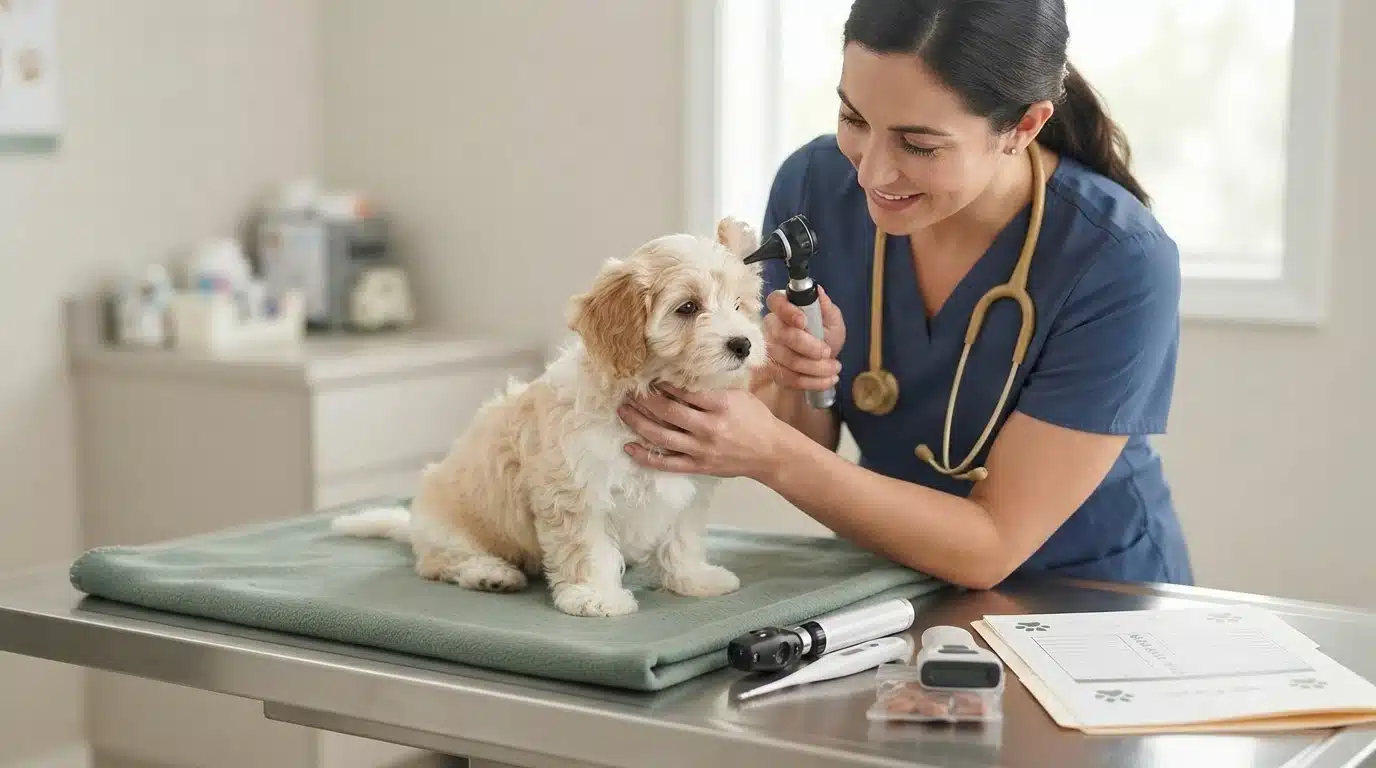
Book a vet visit within the first two or three days, and bring your health records; most puppies start vaccinations around six to eight weeks. Call your vet right away for vomiting, diarrhea, refusing food or extreme tiredness. Call your breeder for questions about food, temperament or the first nights. A good breeder wants those calls and answers them.
Common Mistakes First-Time Havapoo Buyers Make
Most Havapoo problems start before the puppy ever comes home. The two patterns that trip up first-time buyers are rushing the money side and underestimating the first few weeks.
Mistakes Around Money and Speed
Urgency is a red flag. Scammers post cute puppy photos, claim high demand, and push for a fast deposit through apps like Cash App, so the FTC advises walking away from any seller who pressures you. Another mistake is skipping the written contract and health history, then arguing later over terms that were never put on paper. Read the breeder’s deposit and refund terms before sending a dollar, and compare what a clear, written reservation process looks like on a reputable pricing and reservation page. Slow down. Good breeders welcome questions.
Mistakes After the Puppy Comes Home
New owners often rush introductions, invite visitors too soon, or expect a young Havapoo to hold it for hours. Puppies need short, frequent potty breaks, a consistent routine, and crate time built up gradually. Skipping early socialization is just as common. Waiting until all vaccines are done usually costs you the easiest window for meeting people and sounds. Keep walks short, keep rules steady, and expect progress in weeks, not days.

Ready to meet your Havapoo? Browse the current litter on the Sage Puppies available-puppies page, review pricing and reservation details, then submit an application. Cassie’s owner-managed matching pairs first-time buyers with puppies raised the Sage way: wisely bred, beautifully loved. Your first step takes five minutes.
Frequently Asked Questions
Q1: How do I choose a reputable Havapoo breeder?
Look for health-tested parents, a written contract, video visits, and a breeder who interviews you. Walk away from gift-card payments, pressure, or missing test records.
Q2: What questions should I ask a Havapoo breeder before buying?
Ask for test results from both Havanese and Poodle lines, how many litters the mother has had, socialization practices, deposit terms, and the return clause.
Q3: How much does a Havapoo puppy cost?
Well-bred Havapoos usually run $1,500 to $4,500, driven by health testing, size, coat color, and the program’s care standards.
Q4: Are Havapoos good for first-time dog owners?
Yes. They’re eager to please, easy to train, and adapt well to apartments, provided someone handles midday potty breaks.
Q5: Should I pay a deposit with Venmo or Zelle?
No. Use a credit card, which lets you dispute charges. Wire transfers, gift cards, and payment apps are hard to reverse.
Conclusion
Choosing a Havapoo puppy comes down to three habits: demand health test results from both the Havanese and Poodle lines, get every deposit and contract term in writing, and pay only with methods you can dispute. Visit or video call before you send money, and walk away from pressure, gift-card requests, or missing records. Then prepare your home before pickup day, so the first week sets a calm, steady pattern. Take the process slowly. A well-bred puppy from a program that screens its parents and answers your questions will cost less over its lifetime than a bargain listing with hidden problems. Trust the evidence, not the photos, and the right match usually follows.