Quick Summary: Havanese, Havapoo, and Cavapoo puppies are strong travel choices because they usually stay under 15 pounds, remain small enough for an under-seat carrier into adulthood, and tend to be calm, adaptable companions. Flying requires checking each airline’s carrier dimensions, fees, age limits, and health certificate rules, then training the puppy to treat its crate as a safe resting place. Sage Puppies offers these breeds with documented health testing and ancestry, local pickup in Utah, and nationwide delivery.
The tell that a small breed puppy can fly in the cabin is not its weight on the scale. It is whether the dog fits in a carrier that slides under the seat in front of you, and major US airlines set that space at roughly 18 by 11 by 11 inches at best. That constraint shapes everything about small breed puppy travel, from which breeds to consider to how you plan a trip.
This guide walks through the breeds that handle flying and road trips well, including Havanese, Havapoo, and Cavapoo puppies, and explains under-seat carrier dimensions, cabin fees, health certificates, and crate training basics. If you are picking a travel-sized companion for your family, the decision starts here.
Why Small Breed Puppies Are the Easiest Dogs to Move
Moving a dog across the country sounds complicated until you look at the numbers. Small breed puppies usually weigh under 15 pounds as adults, so they fit in an airline-approved carrier that goes right in the cabin with you. No cargo hold, no separate shipping service, and no worrying about your puppy flying alone in the dark.
Three things decide whether a puppy travels well: its adult size, its adult weight, and its temperament. Size and weight determine if the dog fits an in-cabin carrier at all. Temperament decides how calm it stays inside that carrier for a few hours. A dog can clear the height limit and still struggle if it panics in tight spaces, so breed matters more than people expect.
Size, Weight, and Temperament: The Three Variables That Matter
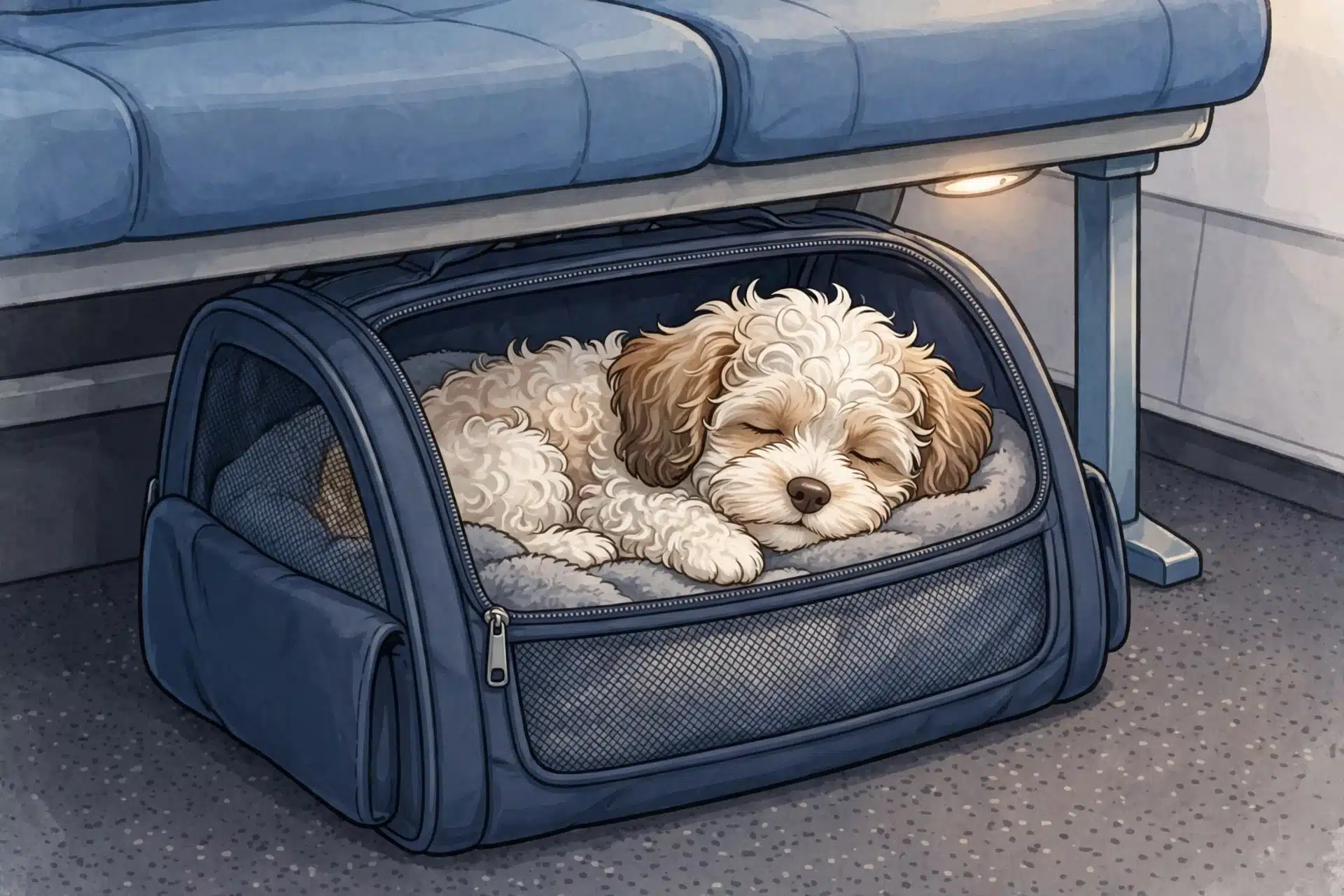
Adult size sets your carrier options before anything else. Most US airlines require a soft carrier of roughly 18 by 11 by 11 inches that fits under the seat, which suits dogs up to about 15 pounds. Breeds such as the Havanese stay small for life, while many larger breeds outgrow that space within months. Temperament rounds it out: calm, people-focused dogs settle faster.
The Under-Seat Carrier Test
Before you choose a breed, run the carrier test. Measure the space under an airline seat, buy a soft-sided carrier with those dimensions, and let your puppy eat and nap in it at home. A dog that treats the carrier as a den will fly calmly. Early crate training makes this step easy, and it starts working even before your puppy comes home.
Small Breed Puppies That Travel Well: Havanese, Havapoo, and Cavapoo
Which small breed puppies travel best? The Havanese, Havapoo, and Cavapoo top the list because all three stay small, bond closely with their people, and adapt quickly to new places. Each one typically matures well under the 15-pound mark, so a cabin carrier stays a realistic plan for life, not just puppyhood.
Small, Adaptable, and Built for a Change of Scenery
The Havanese handles travel better than most toy breeds. Its small but sturdy body and adaptable nature make it content almost anywhere, which is why the AKC describes the breed as an ideal city dog that thrives on being with its people. That same flexibility translates to hotels, cars, and airport terminals. A Havanese that has learned to settle in a crate treats an under-seat carrier as one more nap spot rather than a challenge.
Compact and Highly Social
The Havapoo blends Havanese sociability with poodle intelligence, and both parents pass along traits that matter on the road. These puppies want to be where you are, so they take new surroundings in stride instead of shutting down. They also train quickly, which helps with crate habits before a first flight. Since adult Havapoos usually land between roughly 8 and 15 pounds, most stay comfortably within typical carrier limits even as adults.
Calm Companions With a Gentler Energy Level
Cavapoos lean toward the gentler side of the travel spectrum. Bred from the Cavalier King Charles Spaniel and the poodle, they tend to be soft-tempered, affectionate, and happy to rest quietly after a burst of play. That lower-key energy makes long flights and car days easier on everyone. You can see how their play and energy needs shape daily routines before you commit.
Airline In-Cabin Rules: Carrier Sizes, Fees, and Age Limits
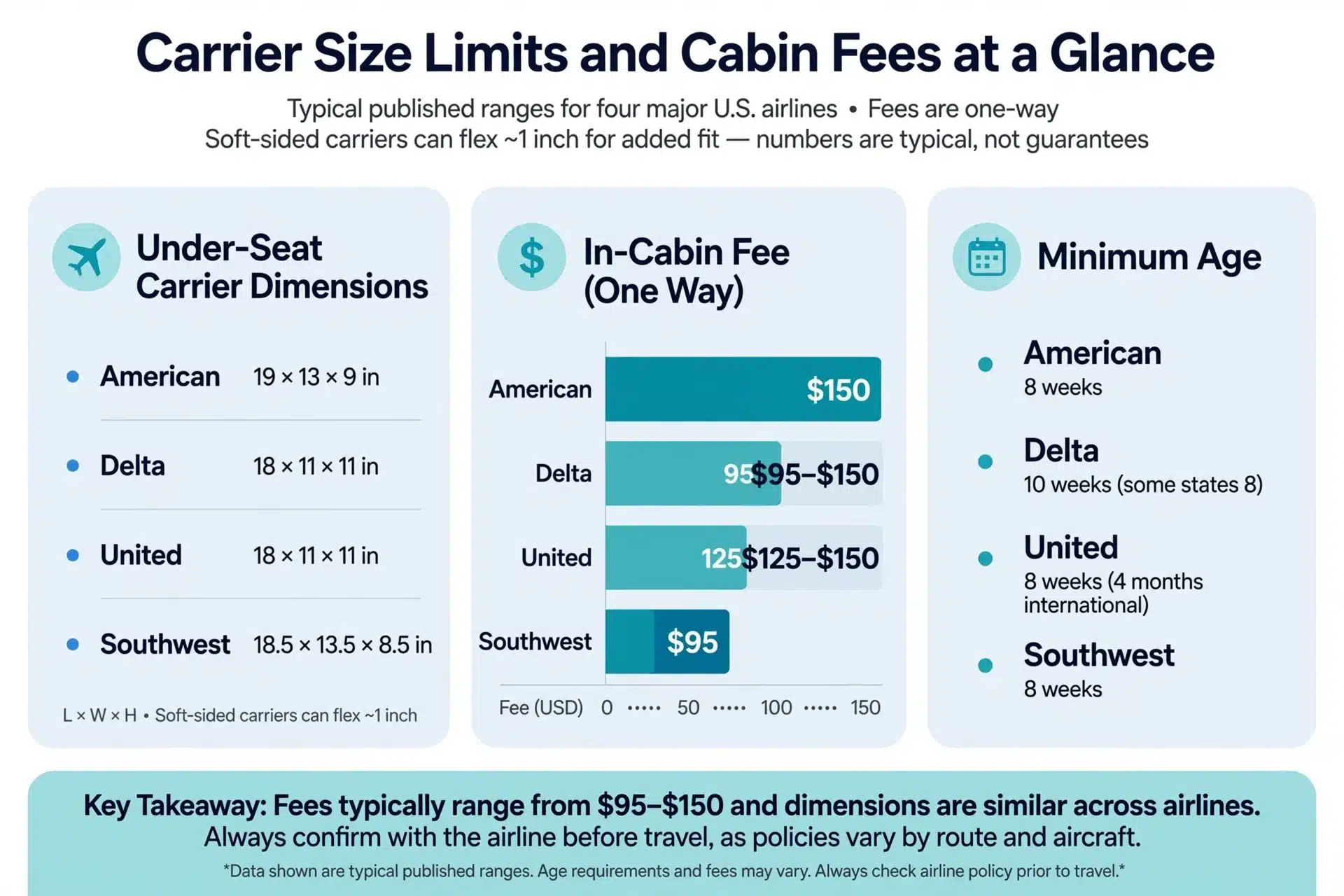
The fastest rule to remember: most US airlines cap in-cabin carriers at about 18 by 11 by 11 inches, and your puppy must stay inside that space, under the seat, for the whole flight. Fees and age rules vary by carrier, so check the specific airline before you book.
Carrier Size Limits and Cabin Fees at a Glance
Airlines set their own under-seat dimensions and pet fees, so the numbers below are typical published ranges, not guarantees.
| Airline | Typical Under-Seat Limit | In-Cabin Fee (One Way) | Minimum Age |
|---|---|---|---|
| American | About 19 by 13 by 9 inches | $150 | 8 weeks |
| Delta | About 18 by 11 by 11 inches | $95-$150 | 10 weeks (some states 8) |
| United | About 18 by 11 by 11 inches | $125-$150 | 8 weeks (4 months international) |
| Southwest | About 18.5 by 13.5 by 8.5 inches | $95 | 8 weeks |
Because soft-sided carriers can flex about an inch, they usually buy you a little room on strict flights.
Booking Mechanics That Cause Most Problems
Most travel trouble starts at booking, not boarding. Airlines cap the number of pets per cabin, often six to eight, and they sell those spots first come, first served. So call the airline or reserve the pet slot online right after you buy your ticket, and confirm it again 48 hours before departure.
A few more traps to dodge: connecting flights may use different aircraft with tighter under-seat space, some states require puppies to be at least 8 to 10 weeks old, and you may need a recent health certificate for flying. Get all three confirmed in writing.
Calculating a Compliant Carrier From Your Puppy’s Measurements
Measure your puppy in inches, then match the carrier to the dog, not the other way around.
- Measure length from nose to tail base.
- Measure height from floor to shoulder, or to the head when sitting.
- Add 2 to 4 inches to both numbers.
- Compare those totals against the airline’s under-seat limit before you buy.
A full-grown Havanese near 10 pounds fits most standard carriers, which is why our Havanese, Havapoo, and Cavapoo guide pairs well with airline rules. Weight limits matter less than the dog’s ability to stand and turn.
Road Trips and the First Ride Home
Restraint, Crates, and Crash-Safe Setup
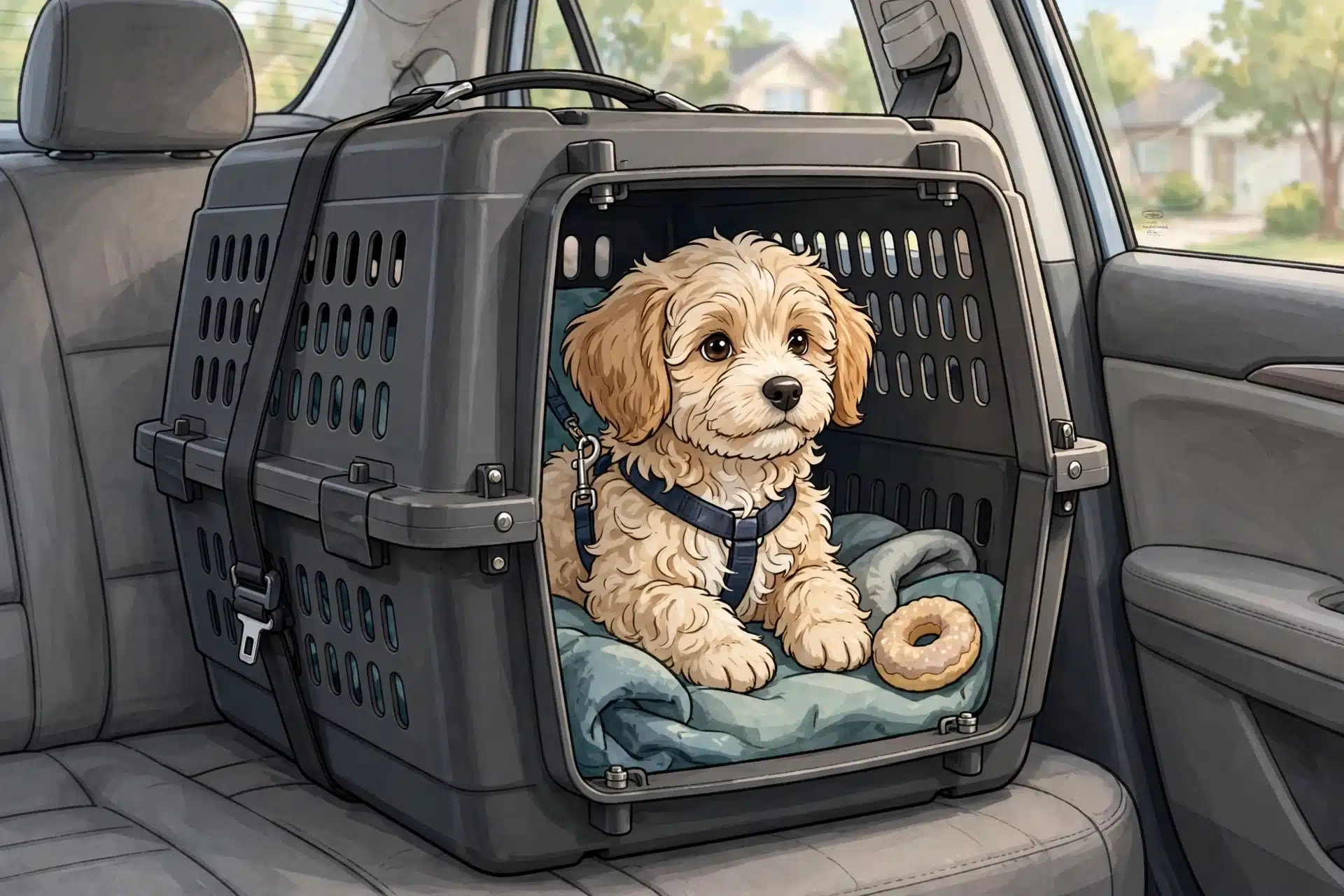
A loose puppy in the car is a danger to both of you, so plan the first ride before pickup day. A crash-tested crate or carrier secured with a seatbelt strap is the safest setup, and it doubles as a head start on crate training. Start the crate at home a few days early so the car feels familiar. A well-bred program like Sage Puppies sends puppies home already used to short crate sessions, which makes that first drive to Utah or the airport calmer for everyone.
Heat, Cold, and Break Schedules
Puppies overheat and chill faster than adult dogs, so the cabin temperature matters more than the outside one. Run the air conditioning or heat on the puppy’s side of the car, and never leave a puppy alone in a parked vehicle, even for a few minutes. On trips longer than an hour, plan a break every two hours. Use it for a potty stop, a short walk, and a quiet drink of water. Skip food right before driving and feed a small meal after you arrive.
Motion Sickness and a Calm First Ride
Many puppies drool, whine, or vomit on their first few drives, and most outgrow it with practice. Keep early rides short and build up slowly. Ask your vet about motion sickness remedies before a long trip, and never dose a puppy on your own. Keep the radio low, the windows partly closed, and the crate steady. A calm driver makes a calm puppy, so leave early and drive gently on that first ride home.
Training a Puppy to Travel Without Stress
You train a puppy to travel the same way you train it to sit: small steps, repeated often, rewarded calmly. Start weeks before any real trip, and build each skill on the one before it.
Carrier and Crate Comfort First
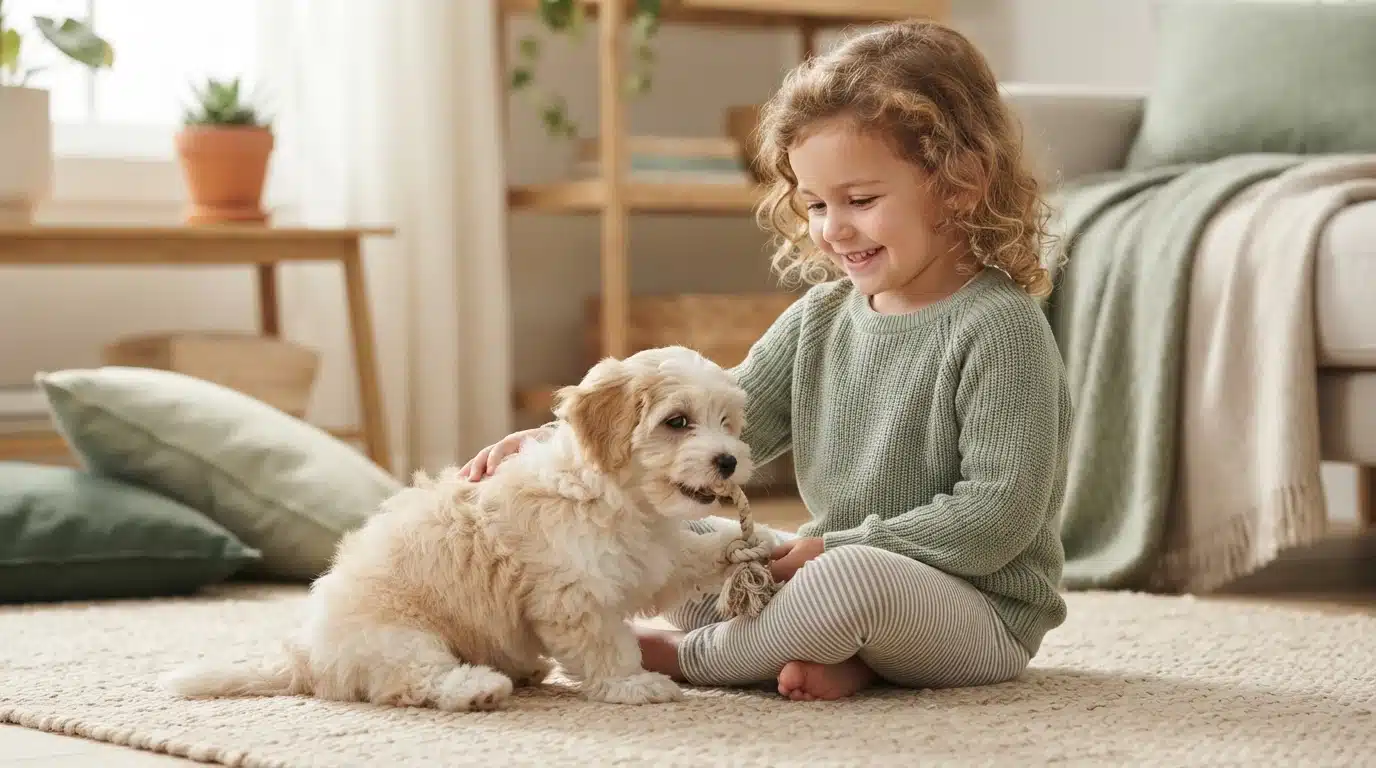
The carrier should feel like a bedroom, not a punishment. Leave it open in your living room with a blanket, a treat inside, and the door off or propped wide. Feed part of your puppy’s meals in there. Once it walks in on its own, close the door for a few seconds, then a few minutes. This same crate work doubles as puppy crate training at home, so the effort pays off twice.
Building Calm Around Travel Sounds and Movements
Real travel means noise and motion, so practice both. Turn the car on and let it idle while your puppy rests in the carrier. Then drive around the block, then across town. Play recordings of airport sounds, from jet engines to rolling suitcases, at low volume while your puppy eats or plays. Raise the volume slowly over several sessions. A puppy that has heard these sounds before handles the real thing with far less worry.
Settle Skills and Arrival Decompression
Teach a simple “settle” cue on a mat at home, then practice it in the car and near the carrier. On travel day, reward calm lying-down behavior instead of fussing. When you arrive, resist the urge to rush into activities. Give your puppy a quiet spot, water, and a short walk first. New places are a lot, and a calm first hour prevents the zoomies and accidents later.
Health, Vaccines, and the Paperwork a Trip Requires
Airlines set the age floor, and it is usually 8 weeks for domestic flights. Delta requires 10 weeks on most routes, and international trips often push the minimum to 4 months, which matters because some countries also require a rabies shot puppies cannot get until about 12 weeks old. Plan the trip around those dates.
Vaccination Timing and the Travel Window
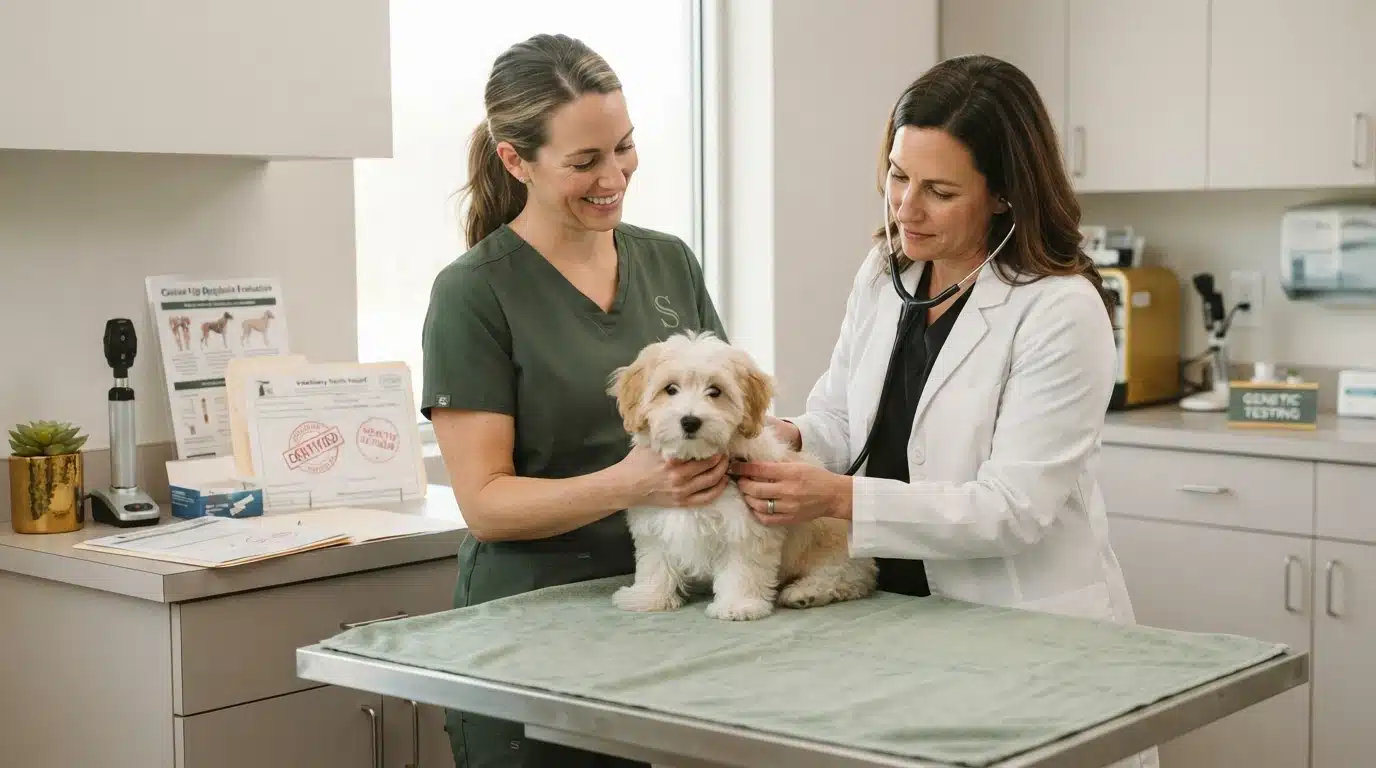
Puppies start their core shots at 6 to 8 weeks, with boosters every few weeks until roughly 16 weeks. A vet may clear a healthy puppy to fly after the first round, but many vets suggest waiting until at least 10 weeks so the immune system and nerves are ready. Book the flight after that window, not before.
Health Certificates and International Entry Rules
Most airlines want a health certificate issued within 10 days of your departure, even if your destination accepts an older one. Each state sets its own entry rules for pets, and crossing a border adds rabies records, possible waiting periods, and USDA endorsement, so a mistake means the puppy stays home.
Documents to Collect From Your Breeder
Ask for these before pickup or delivery, and keep copies on your phone:
| Document | Why You Need It |
|---|---|
| Vaccination record | Dates of each shot, signed by a vet |
| Vet health check | Proof of exam before travel |
| Health certificate | Required by most airlines within 10 days |
| Registration or pedigree papers | Confirms ancestry for your records |
A good breeder hands these over unprompted. Sage Puppies includes full health records with every puppy, and APHIS state rules tell you the rest.
Choosing a Travel-Ready Puppy From a Reputable Breeder
A travel-ready puppy starts with the breeder, not the airline. A good breeder socializes puppies early, keeps litters with mom past eight weeks, and can tell you exactly how a puppy will likely mature. That last part matters most, because your cabin carrier plan depends on adult size, not the fluffy eight-week-old in the photo.
Questions to Ask About a Puppy’s Travel Readiness
Ask how the puppies are socialized. A puppy raised in a busy home handles airports, new people, and car rides far better than a kennel-raised one. Also ask: How big were the parents? What age can the puppy come home? Has crate training started? A breeder who already asks about your travel plans is a good sign, since the AKC lists breeder questions as a sign of responsibility, not nosiness.
Verifying Ancestry, Health Testing, and Contracts
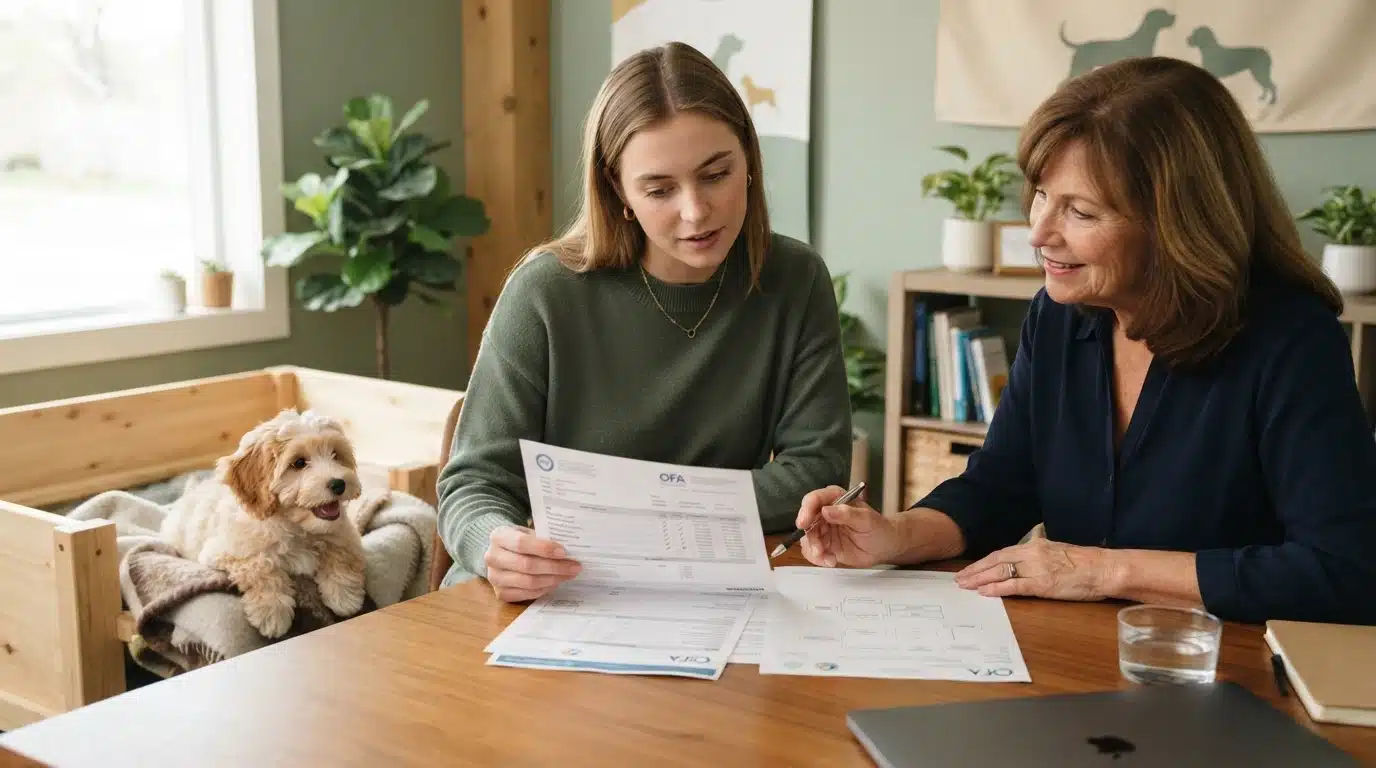
Ask for proof, not promises. “Vet checked” is not health testing. Ask which tests the parents passed, and request the paperwork; breed-club lists show what to expect for each breed. A known pedigree also helps predict adult weight, which keeps your puppy inside that 18 by 11 by 11 inch carrier for life. The OFA’s breeder interview guide covers exactly what to request. Then read the contract before you pay, especially the health and return terms.
Where Sage Puppies Fits as a Travel-Minded Option
Havanese, Havapoo, and Cavapoo puppies mature under about 15 pounds, so cabin flying stays realistic into adulthood. Sage Puppies in South Jordan, Utah verifies ancestry, runs documented health testing, and supports both local pickup and nationwide delivery with a clear application process. Whichever breeder you choose, ask these questions first. A puppy bred and raised well makes every trip easier.

If a puppy that fits an airline carrier for life sounds like the right plan, start with the breed. At Sage Puppies, Cassie matches families with health-tested Havanese, Havapoo, and Cavapoo puppies, with pickup in Utah or delivery nationwide. Browse available puppies and apply today.
Frequently Asked Questions
Q1: What small breed puppies travel well?
Havanese, Havapoo, and Cavapoo puppies lead the list. All three mature under about 15 pounds, fit standard under-seat carriers for life, and stay calm in tight spaces because they bond closely with their people.
Q2: Can a puppy fly in the cabin on a plane?
Yes, if it fits an airline-approved soft carrier of roughly 18 by 11 by 11 inches under the seat. Reserve the pet spot right after booking, since airlines cap pets per cabin.
Q3: How old does a puppy have to be to fly?
Most US airlines require at least 8 weeks, Delta wants 10 weeks on most routes, and international flights often require 4 months plus a rabies vaccine.
Q4: Do I need a health certificate to fly with my puppy?
Usually yes. Most airlines want one issued within 10 days of departure, and each state adds its own entry rules.
Q5: How do I get my puppy used to a carrier before a flight?
Feed meals inside an open carrier at home, then close the door for short stretches. A puppy that treats the carrier as a den flies calmly.
Q6: How should I handle my puppy’s first car ride home?
Use a crash-tested crate secured with a seatbelt strap, skip food before driving, and take a break every two hours for potty and water.
Conclusion
A travel-ready puppy comes down to three things: adult size under about 15 pounds, a temperament that settles in a carrier, and paperwork in order. Havanese, Havapoo, and Cavapoo puppies meet the first two naturally, which is why they top the list of small breed puppies for travel and flying.
The rest is planning. Check each airline’s under-seat carrier dimensions and pet in cabin fee before booking, fly only after the age floor clears, and get a health certificate for flying with a dog within 10 days of departure. Start puppy crate training weeks early, and the carrier becomes a den rather than a cage. Choose a breeder who documents health testing and ancestry, because that paperwork keeps your cabin plan realistic for life.