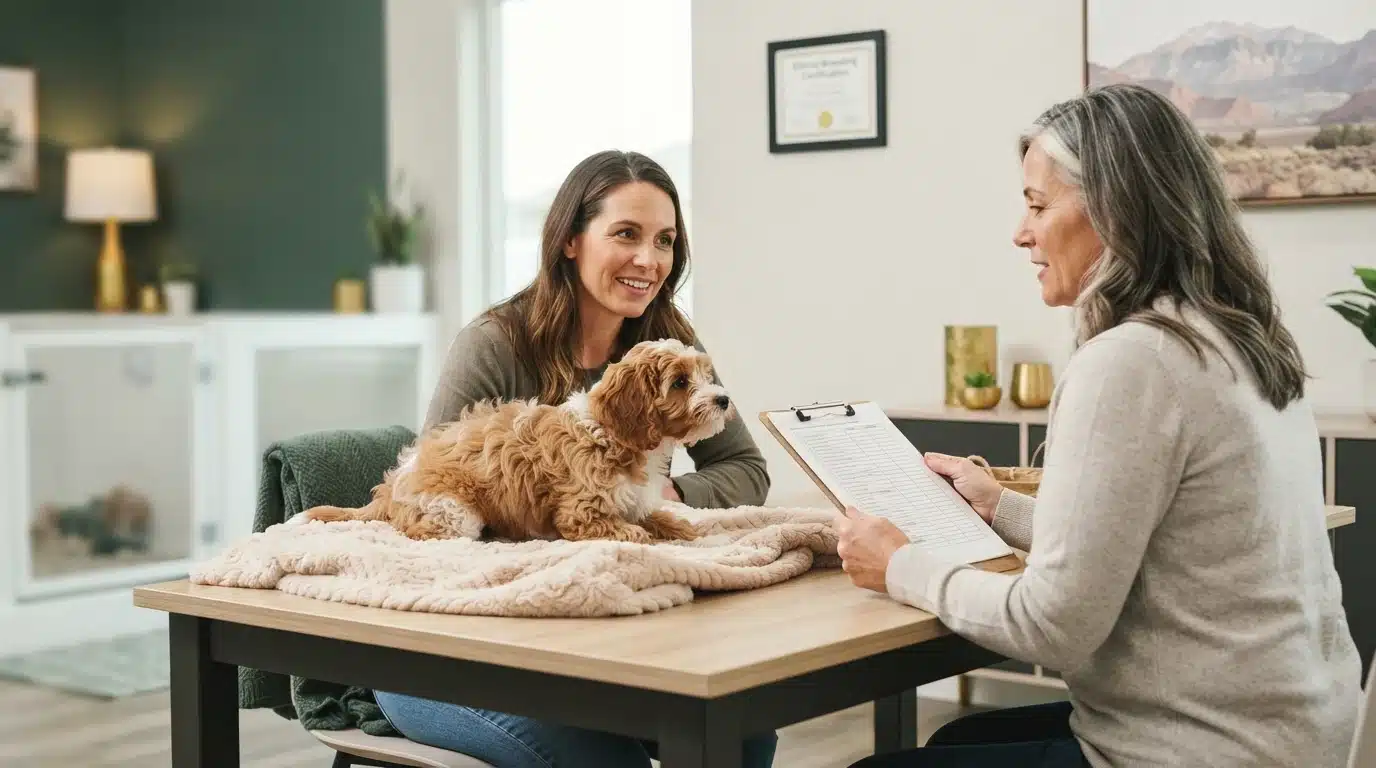
Quick Summary: Cavapoo puppies need short play and training bursts, 45 to 90 minutes of daily activity spread throughout the day, and 16 to 20 hours of sleep. Watch their behavior because frantic zoomies, escalating nipping, and ignored cues usually mean they need rest, not more exercise. Begin potty routines, name recognition, crate training, and gentle socialization right away, using positive reinforcement and short sessions that end on a success, with Sage Puppies emphasizing that every puppy develops at its own pace.
Two Cavapoo puppies from the same litter can look completely different in one living room. One naps through the afternoon while the other runs laps around the coffee table for twenty minutes straight. That contrast is the real starting point, because your Cavapoo puppy energy level will shape everything from how long your puppy can focus to how you plan each day.
The challenge for most families is guessing what those first months actually demand. Many guides hand out a single exercise number and leave it there.
This guide takes a different path. You will see what Cavapoo puppies look like at each age band, how to spot an overstimulated puppy, why rest matters as much as play, and how socialization and early training fit the short window when puppies learn fastest.
Cassie Milar raises Cavapoos, Havanese and Havapoos at Sage Puppies in South Jordan, Utah, and the guidance here reflects what her program documents as puppies grow. Individual puppies vary, so treat every stage here as a range, not a rule.
What Cavapoo Puppy Energy Actually Looks Like
Cavapoo puppies live in short, loud bursts. A healthy Cavapoo puppy energy level looks like ten minutes of full-speed play, then a hard crash into sleep, often 18 to 20 hours of it a day while they grow. Most pups land somewhere between 45 and 90 minutes of real activity daily, spread across the day rather than done in one long walk. Here’s how that rhythm actually plays out, and how to read it.
Burst Energy, Then Sudden Sleep
Expect the zoomies. Your puppy will tear laps around the living room, pounce, spin, and then stop mid-play and fall asleep on the floor. That pattern is normal for a Cavalier King Charles Spaniel Poodle mix and not a sign of a problem. Growing burns serious fuel, so young puppies sleep 16 to 20 hours each day according to JustFoodForDogs’ puppy sleep guide. Build the day around it: short play blocks, a potty break, then a nap in a quiet spot. An enforced nap schedule often fixes biting and crankiness on its own.
Spottable Signs of a Puppy Who Has Had Enough
Overtired puppies look hyper, not sleepy. Watch for these overstimulated puppy signs:
- Bitey behavior that ramps up instead of settling
- Zoomies that feel frantic rather than joyful
- Ignoring a cue your puppy clearly knows
- Whining, pacing, or pawing at you
- Difficulty settling even in a calm room
When you see them, end the fun immediately. Carry your pup to a quiet space or a crate, offer a lick mat or chew, and let sleep do the reset. A nap usually settles things within 15 minutes.
Cavapoo Energy Versus Other Small Breeds
Cavapoos sit in the moderate middle. Compared in our Cavapoo vs Shih Tzu energy comparison, they need more daily activity than a Shih Tzu but less intensity than a working-breed mix. Individual variation matters more than the breed label, though. Some litters lean toward the calm Cavalier side, others toward the bouncy Poodle side, so judge the puppy in front of you, not the average.
Play That Works: Toys, Rules and Structure
Play is where a Cavapoo puppy’s energy gets shaped, not just spent. Good play follows a rhythm: short bursts, clear rules, then rest. Watch the cavapoo puppy play behavior in your home for a week and patterns emerge, like the ten-minute sprint followed by a hard crash that defines a healthy cavapoo puppy energy level.
Toy Categories That Match How Cavapoo Puppies Play
Puppies play three ways: chasing, chewing, and problem-solving. Match toys to each so play stays fresh. Soft fetch toys satisfy the chase, rubber chews save your furniture, and puzzle feeders work that clever Poodle brain. Rotate three or four toys weekly so old ones feel new again. Skip anything small enough to swallow or stuffed with loose filler.
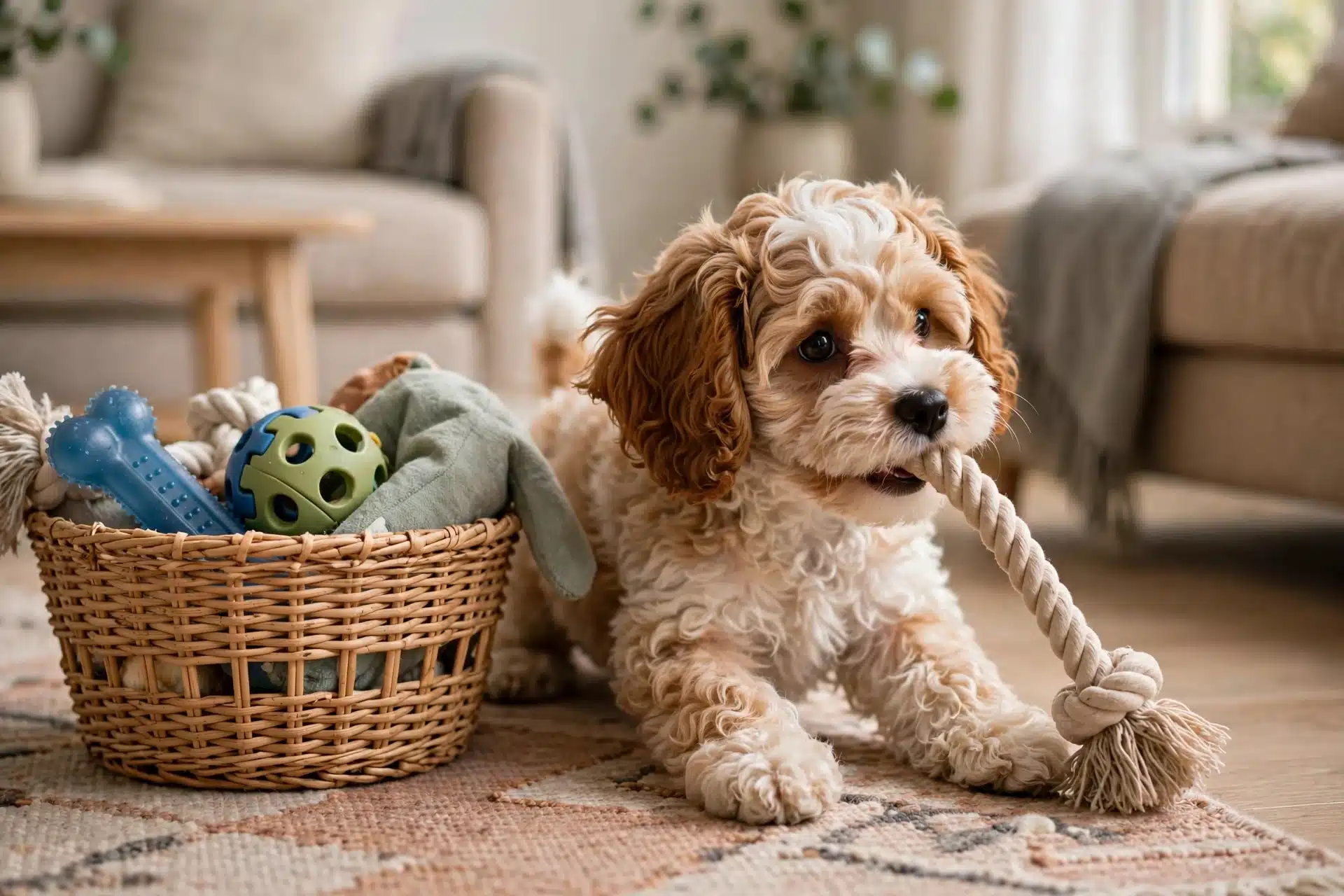
A Play Session That Ends in a Settled Puppy
Structure beats exhaustion. A puppy who plays until it drops often wakes up wired instead of tired, so end sessions while your puppy is still engaged rather than frantic.
A workable session looks like this:
- Five minutes of chase or tug to burn the first wave of energy.
- Two minutes of calm, like sniffing treats scattered in grass or a few gentle scent games indoors.
- A short rest in a crate or pen with a chew, so napping becomes the natural next step.
Vets list zoomies, nipping, ignoring cues, and barking as signs of an overstimulated dog, and the fix is lowering input, not adding more exercise. If a session ends badly, make the next one shorter. Many breeders, including Sage Puppies, coach new owners to build quiet time into the daily routine rather than chase calm with activity.
Playing Safely With Children and Other Dogs
Set two rules before play starts. First, kids never grab, carry, or tease. Second, adults referee every dog-to-dog session and end it early. Breaks every few minutes keep play from tipping into roughhousing, and both children and puppies learn faster when someone calmly pauses the fun. Well-matched play partners, calm toddlers supervised on the floor, and short sessions all build the basic manners your pup will also need in early small-breed puppy training.
Exercise and Activity Through the First Year
How much exercise does a Cavapoo puppy need? It changes by age: short indoor play sessions of a few minutes each in the first weeks home, 15 to 20 minute walks plus play by three to six months, and 45 to 90 minutes of total daily activity, split up, from six months on. Every puppy is different, so confirm the plan with your veterinarian, especially before longer walks.
The First Weeks Home: Short, Frequent, Indoors
A new puppy does not need walks. Between vaccinations, most vets advise keeping young puppies off public ground, so exercise means indoor play: a tug session, a ball rolled down the hallway, or a sniff around the backyard. Keep each burst to five or ten minutes, then let them nap. Watch for overstimulated puppy signs like nipping that escalates, frantic zooming, or a puppy who stops listening. Those usually mean rest is due, not more play. Short sessions fit a young puppy attention span far better than one long workout.
Months Three to Six: Walks, Surfaces and Exploration
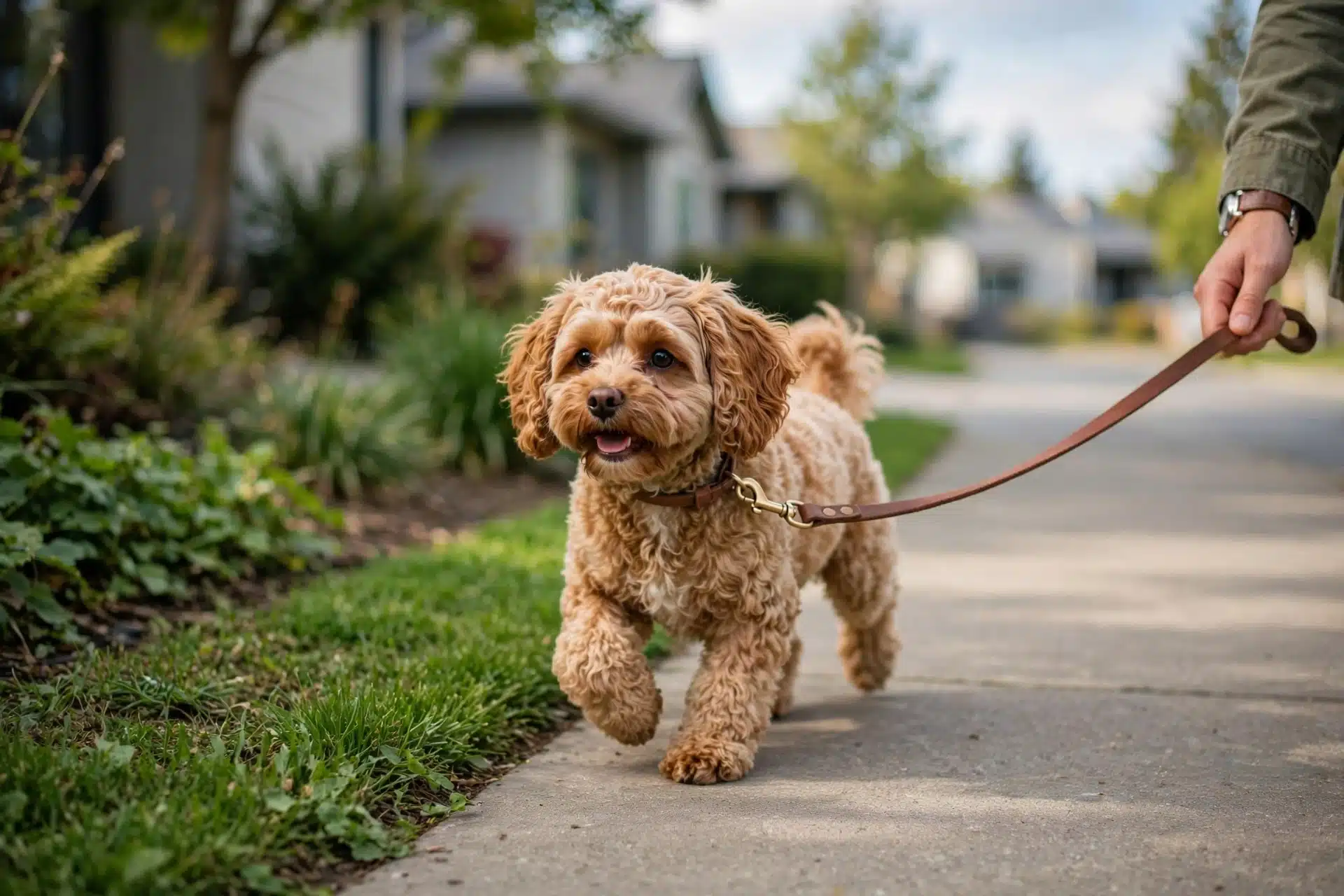
Once your vet clears walks, start short and flat. Fifteen to twenty minutes of leash walking, once or twice a day, is plenty for a small breed puppy. Keep the pace gentle and let the sniffing happen, because scent work tires a puppy faster than distance does. This stage overlaps with the puppy socialization window, so vary the route: grass, pavement, stairs, and quiet trails all build confidence. This is also when early puppy training pays off, since a short walk doubles as loose-leash and name practice.
Months Six to Twelve: Adolescent Energy and Outlets
Adolescence arrives with longer stamina and bolder ideas. Your Cavapoo can now handle 45 to 90 minutes of total activity daily, but small breeds still need puppy exercise paced around growth plates, the soft areas at the ends of growing bones. Favor steady walks, play sessions, and sniffing games over repetitive jumping or long runs on hard surfaces. puzzle feeders and short training refreshers help on rainy days when energy has nowhere to go. If your schedule tightens, a midday break matters more than one long evening session.
Training Needs: What a Cavapoo Puppy Can Actually Learn
Yes, Cavapoos are easy to train by most measures. The Cavalier King Charles Spaniel and Poodle mix brings a people-focused temperament, so praise and food work fast. The catch is a short puppy attention span, not stubbornness. In the first 90 days, work through this priority list:
- Potty training on a set schedule
- Name recognition and a quick come
- Crate training for naps and nights
- Handling: paws, ears, mouth, and grooming touches
- Meeting new people and places before the socialization window closes
Starting at Eight Weeks: The First Four Weeks of Training
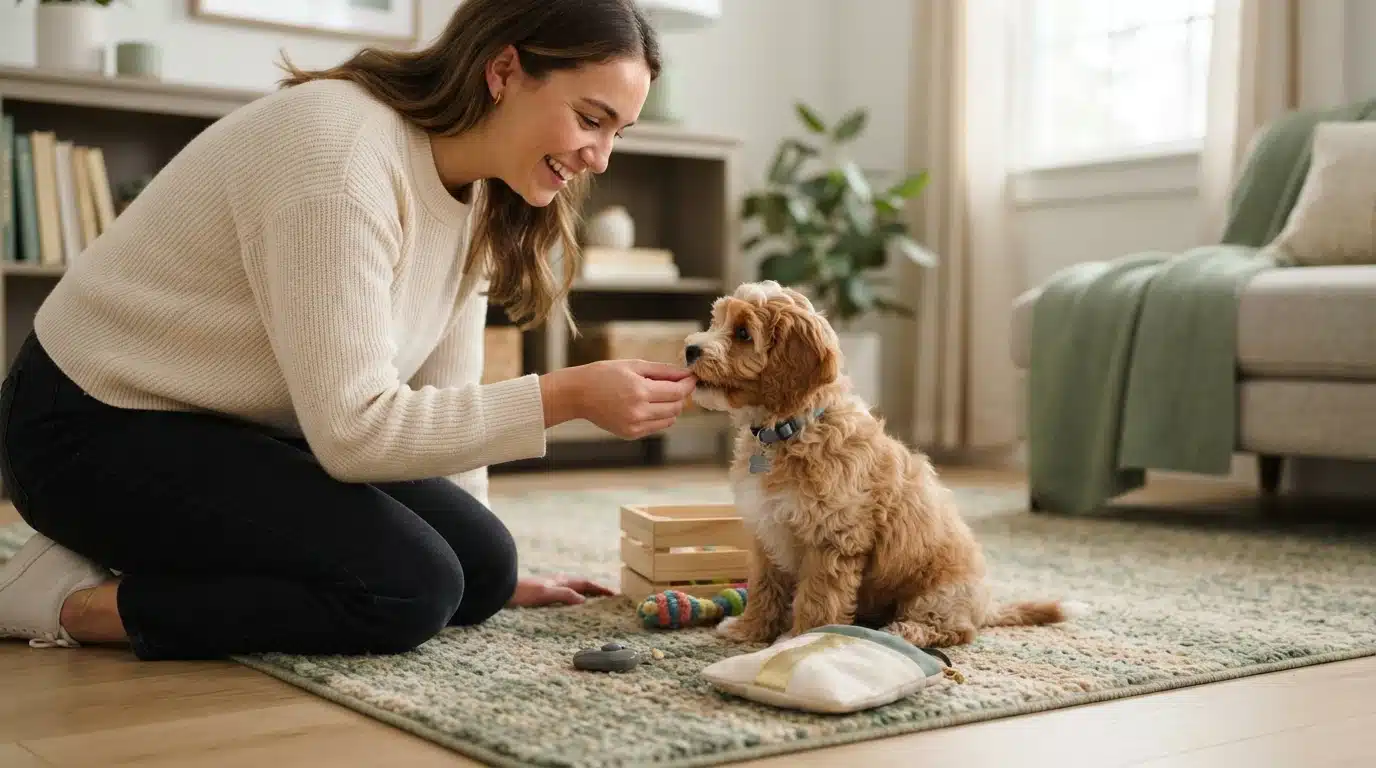
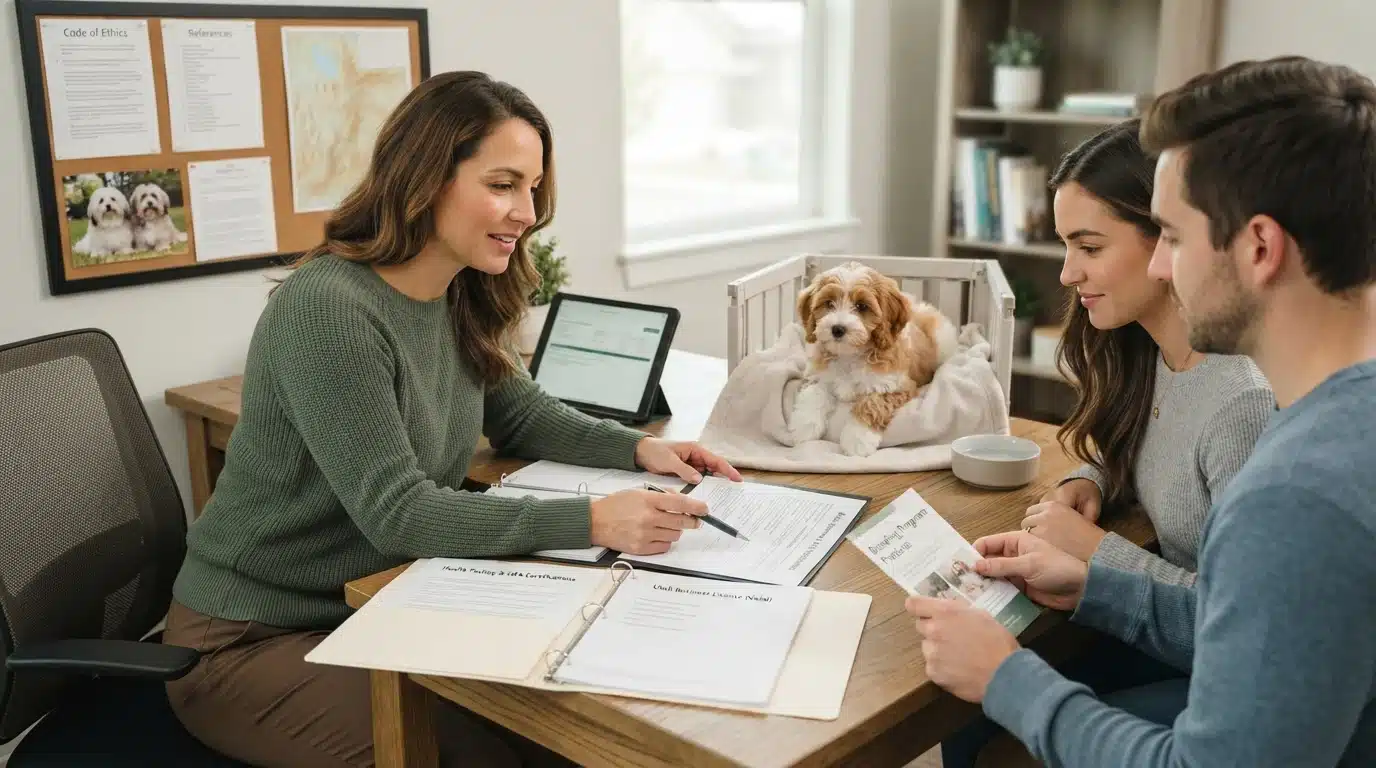
Start training the day your puppy comes home, usually around eight weeks. AVSAB guidance says socialization should begin during the first three months, even before shots are finished, because that window never reopens. Weeks eight to twelve, focus on potty trips every hour or two and calm crate time. Weeks twelve to sixteen, add short leash practice and one new safe outing per week. Breeders can help here; programs like ours start gentle handling and house sounds before puppies leave.
Reward Methods That Work With This Temperament
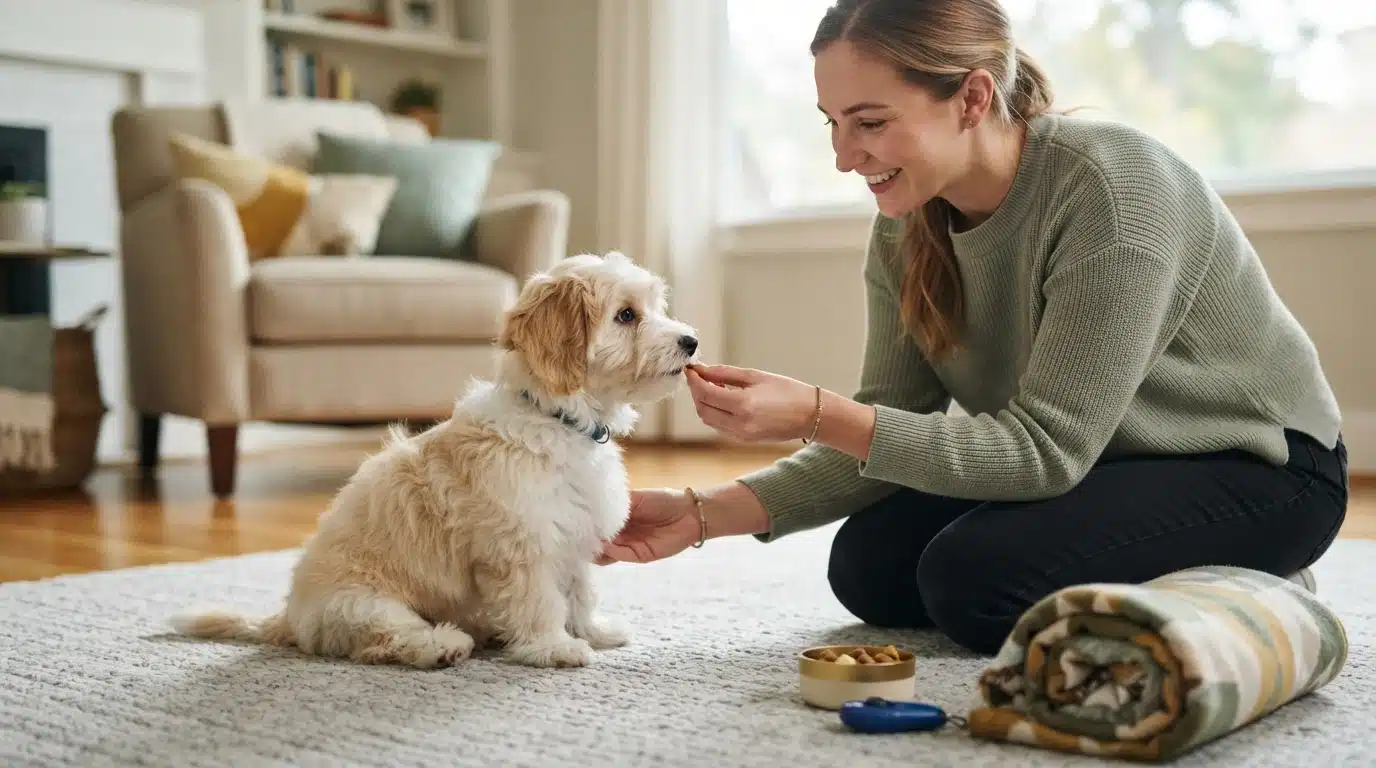
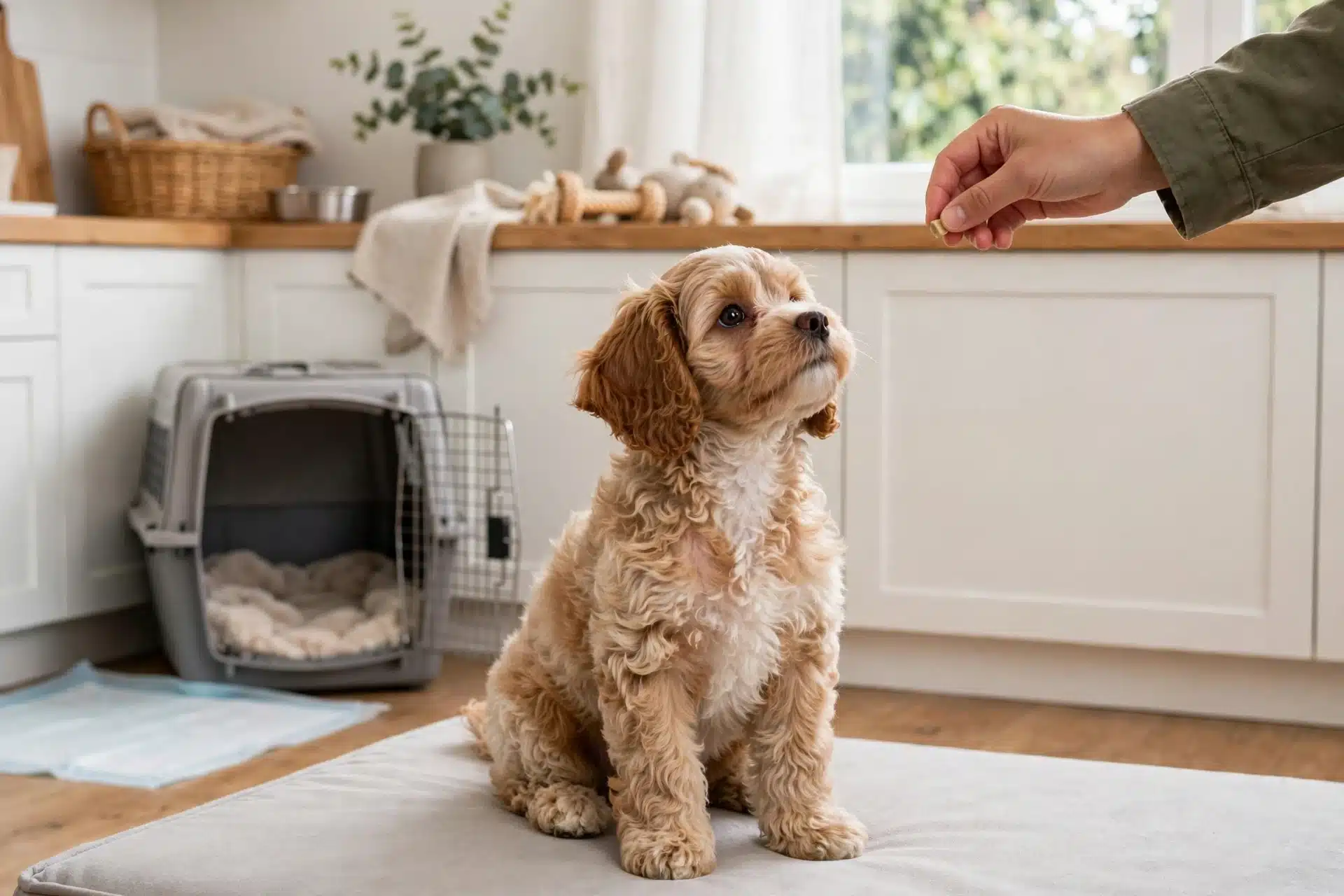
Cavapoos read faces better than most small breeds, so positive reinforcement puppy training fits naturally. Pair a tiny treat with a happy voice, and mark the exact second your puppy does the right thing. Keep treats pea-sized; this breed gains weight easily. Avoid scolding or raised voices. A Cavapoo that worries about your mood stops offering behavior, and a shut-down puppy looks like a “calm” puppy while learning nothing. Session length matters more than method: three two-minute wins beat one ten-minute struggle.
Attention, Distraction and the Eight-Minute Myth
You may have read that puppies can focus for one minute per month of age, so an eight-week pup gets eight minutes. Treat it as a ceiling, not a goal. Some days you will get three focused minutes, especially before a nap. Watch for the signs: sniffing the floor, turning away, a soft yawn. Stop while your puppy is still winning. Early training that ends on success builds a dog who asks to train again tomorrow.
Socialization, Rest and the Real Daily Rhythm
A young Cavapoo’s day runs on a simple loop: short activity, a meal or training moment, then a long nap. Puppies sleep 16 to 20 hours daily, so the waking hours matter more than the total. Here is how one morning might look for an eight-week-old:
| Time | Activity |
|---|---|
| 7:00 am | Potty break, then breakfast |
| 7:30 am | Five minutes of play and name practice |
| 8:00 am | Nap in the crate, 60 to 90 minutes |
| 9:30 am | Potty break, short carry-along outing |
| 10:00 am | Sniffing time in the yard, then a nap |
| Noon | Lunch, quick training game, nap |
| Afternoon | Repeat the same cycle with calm handling |
Using the Early Socialization Window Well
Your Cavapoo puppy socialization clock starts fast. The AVSAB position statement says the first three months are the prime window, when curiosity outweighs fear, and it supports gentle socializing before vaccines are finished. So invite calm visitors, carry your pup past traffic sounds, and let him meet kind, healthy dogs. Keep each meeting short and happy. A worried puppy should never be pushed forward; let him watch from a safe distance instead.
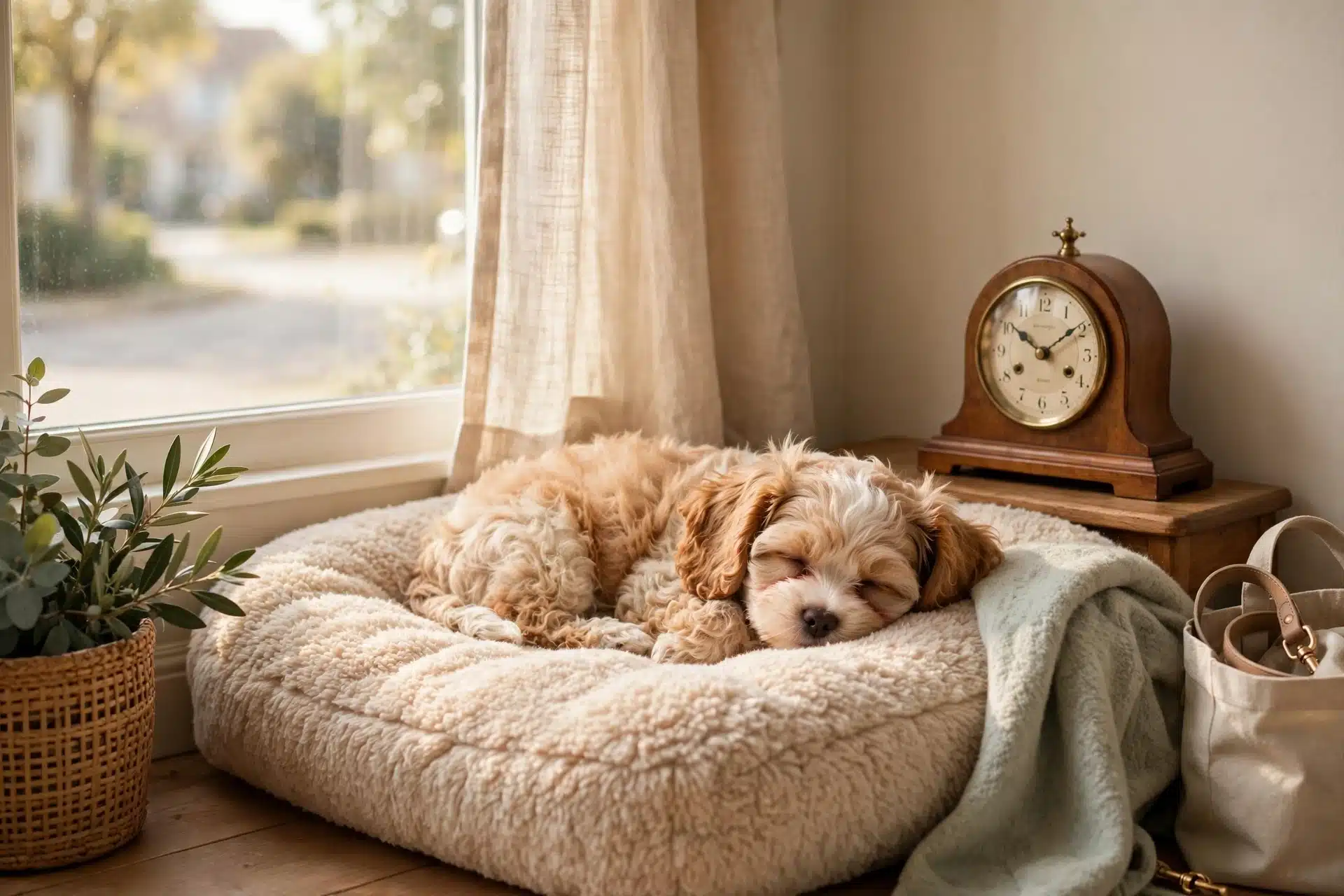
Rest as Part of Training
An overstimulated puppy bites harder, zooms wildly, and stops listening. These are not obedience failures. They are signs a nap is overdue, and a nap usually settles things within about 15 minutes. Watch for glassy eyes, frantic nipping, or barking at nothing. Then quietly settle your pup in the crate before the meltdown starts. Rest protects your Cavapoo training progress, because a tired brain cannot learn.
Building Alone Time Gradually
Separation worry is common in Cavalier King Charles Spaniel Poodle mixes, so start small. Leave the room for thirty seconds, return, and repeat. Build to five minutes, then a full nap alone. Crate training helps here, since the crate becomes a safe den rather than a punishment. Families planning their first week together can follow our first week home routine for a day-by-day version.

If a Cavapoo’s mix of zoomies, naps and short training sessions sounds like your kind of household, the next step is simple. Visit Sage Puppies to learn about Cassie’s Cavapoo program, review the application process, and ask the questions this guide may have sparked.
Frequently Asked Questions
Q1: What are the play, energy, and training needs of Cavapoo puppies?
Cavapoo puppies need 45 to 90 minutes of daily activity in short bursts, 16 to 20 hours of sleep, and brief positive training sessions started at eight weeks. Their play style is chase, chew, and puzzle-solving, with rest built in between.
Q2: How do I calm an overstimulated puppy?
Watch for frantic zoomies, escalating nipping, and ignoring known cues. End play, move your pup to a quiet crate with a chew, and let a nap settle things, usually within about 15 minutes.
Q3: How much exercise does a Cavapoo puppy need at three months?
Once your vet clears walks, plan one or two 15 to 20 minute leash walks daily plus short indoor play, letting sniffing do much of the tiring.
Q4: When should Cavapoo puppy socialization start?
Start immediately. The socialization window runs through the first three months, so begin gentle outings and calm visitor meetings before vaccines finish, keeping each experience short and happy.
Q5: What should I train first with a Cavapoo puppy?
Begin with potty training on a schedule, name recognition, crate training, and handling practice. Keep sessions to two or three minutes and end on a win.
Q6: Can Cavapoo puppies be left alone?
Build alone time gradually: thirty seconds, then five minutes, then a full nap alone. Crate training helps prevent separation worry from taking hold.
Conclusion
A Cavapoo puppy’s day runs on rhythm, not rules. Short bursts of play, 45 to 90 minutes of activity spread across the day, and 16 to 20 hours of sleep form the base. Watch behavior instead of counting minutes: escalating nipping, frantic zoomies, and ignored cues mean a nap is due, not more exercise.
Training starts the day your puppy comes home, with potty routines, name games, and crate time in two-minute sessions that end on a win. Socialization matters just as much, because the window closes around three months and never reopens.
Every puppy differs. Some lean calm, some lean bouncy, so the puppy in front of you beats any breed average. Plan for ranges, adjust as you go, and rest will do half the training for you.