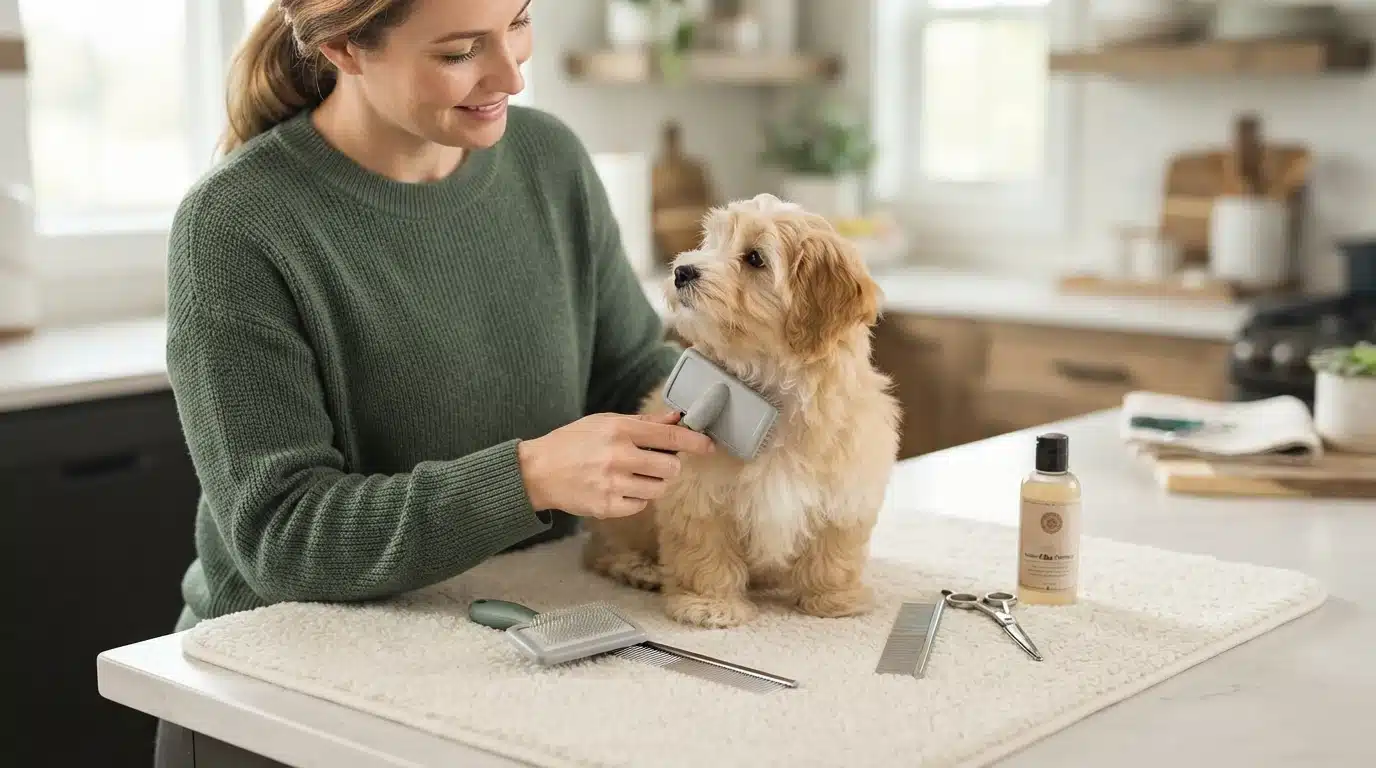
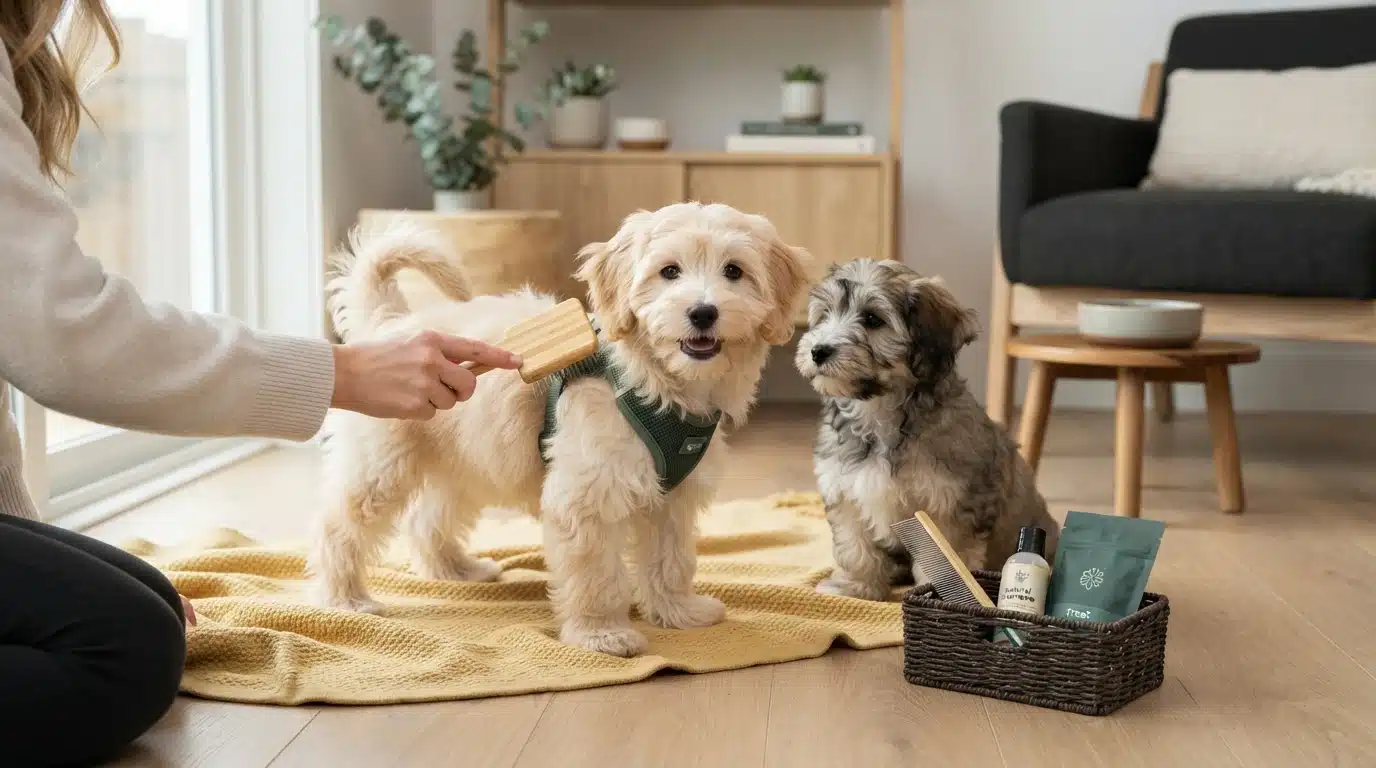
Quick Summary: A Havapoo with a short, Poodle-influenced coat is usually easier to manage, needing brushing about 2 to 3 times a week and roughly $500 to $700 in annual professional grooming. A long-coated Havanese needs daily brushing, more frequent trims, and can cost over $1,000 yearly, but offers a fuller, showable coat. Coat length matters more than breed alone, so choose the routine you can maintain and start short, positive grooming sessions between 8 and 16 weeks to prevent mats and build lifelong cooperation.
Two silky-coated puppies can sit side by side in your living room and still need completely different grooming calendars. A Havanese puppy’s double coat grows nonstop and tangles behind the ears and at the collar if you miss a session. A Havapoo puppy’s Poodle-influenced coat usually combs out with less effort, especially once trimmed short. So which wins on day-to-day care? The Havapoo is generally the easier coat to manage at home, while the Havanese asks for a higher Havanese brushing frequency but rewards it with a coat you can keep in full length.
Most first-time owners hear only “low shedding” and “easy to groom,” which says nothing about daily time, drying, the professional grooming bill, or a mat that reaches the skin. This guide works through both coats side by side, covering how to groom a Havanese and how to groom a Havapoo, bathing, costs, and shared care, then ends with a clear pick by household.
Havapoo vs Havanese Puppies: Grooming and Care at a Glance
| Havapoo puppy | Havanese puppy | |
|---|---|---|
| Coat type and texture | Soft, wavy to curly Poodle-influenced coat; length and texture vary with the Poodle parent | Long, soft, silky double coat per the AKC breed standard; coat hair grows continually |
| Brushing and combing frequency | Several times a week, daily if the coat is kept long | Puppies about 3 times a week to build tolerance; 2 to 3 times a week or more for full coats |
| Bathing and drying routine | Bath roughly every 3 to 5 weeks; full blow dry needed to prevent matting | Bath every 2 to 3 weeks in a short cut; every 1 to 2 weeks in a full show coat |
| Professional grooming needs | Trim every 6 to 8 weeks is often sufficient; shorter cuts cut home brushing sharply | Trim every 4 to 6 weeks; full coats need blow drying and careful combing |
| Non-coat care | Tear staining, ear checks and dental care, shared with both parent breeds | Tear staining, ear checks, nail trims and frequent dental care for small breeds |
| Best suited owner | Busy first-time owners, travelers and families wanting a shorter, lower-effort coat | Owners who enjoy coat handling and want a full-length, showable coat |
How Havapoo and Havanese Puppies Compare
Havapoo puppy
A Havapoo is a cross between a Havanese and a Toy or Miniature Poodle. The result is a small companion dog with a soft, wavy-to-curly Poodle-influenced coat that is usually easier to keep in a shorter trim. This mix suits busy first-time owners, travelers and families who want a lower-effort coat, with trims every 6 to 8 weeks.
Havanese puppy
The Havanese is a small, non-shedding companion breed from Cuba with a long, silky double coat that grows continually. Owners who enjoy coat handling, and want a full-length, showable coat, will get the most from it. Learning how to groom a Havanese properly is part of daily life with the breed.
Coat Structure: Why the Two Grooming Loads Differ
Both breeds have hair-like coats that shed very little, but they behave differently under a brush. That difference sets your weekly schedule before you ever pick a puppy.
What the Havanese Double Coat Means for Your Schedule
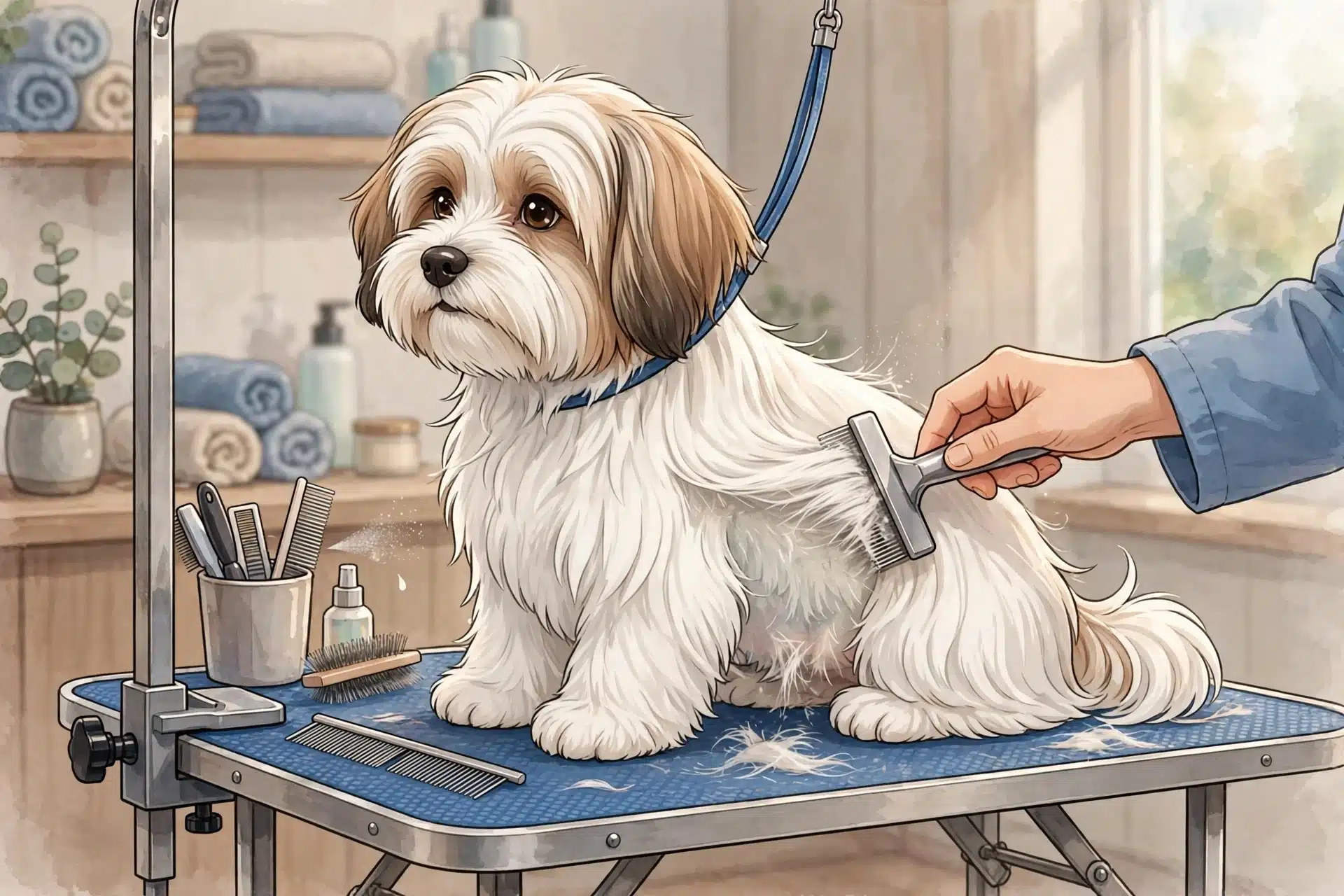
A Havanese carries a soft, silky double coat that keeps growing. The light undercoat traps shed hair instead of letting it fall out, so tangles form close to the skin where a quick top brushing never reaches. If you keep the coat long and learn how to groom a Havanese properly, plan on brushing several times a week and combing to the root to catch mats early.
How a Poodle Cross Changes Coat Handling
A Havapoo inherits a poodle-influenced coat, usually wavy or curly, with a finer, single-layer feel. Shed hair tends to fall out rather than lodge in an undercoat, so mats start more often at friction points like the collar line and behind the ears. Curly coats also tighten as they dry, which is why a full blow-out matters after every bath.
Coat Length as the Real Decision Variable
Coat type matters less than the cut you maintain. A short puppy clip on either breed drops brushing to a few minutes, while a full Havanese show coat or long Havapoo coat demands near-daily work. If you want a deeper look at how another poodle cross compares, our Havapoo and Cavapoo grooming guide walks through that pairing.
Do Havapoo Puppies Need Daily Brushing Like Havanese Puppies?
The Direct Answer, With Frequencies
Short answer: usually no. A Havapoo in a short cut needs brushing about 2 to 3 times a week, while a Havanese in a long coat needs daily brushing to stay tangle-free. The Havanese Club of America notes that full-coated dogs need the most work, and shorter trims reduce it. Either way, keep a consistent Havanese brushing frequency once the coat grows long.
Brushing Versus Combing: Why the Second Step Matters
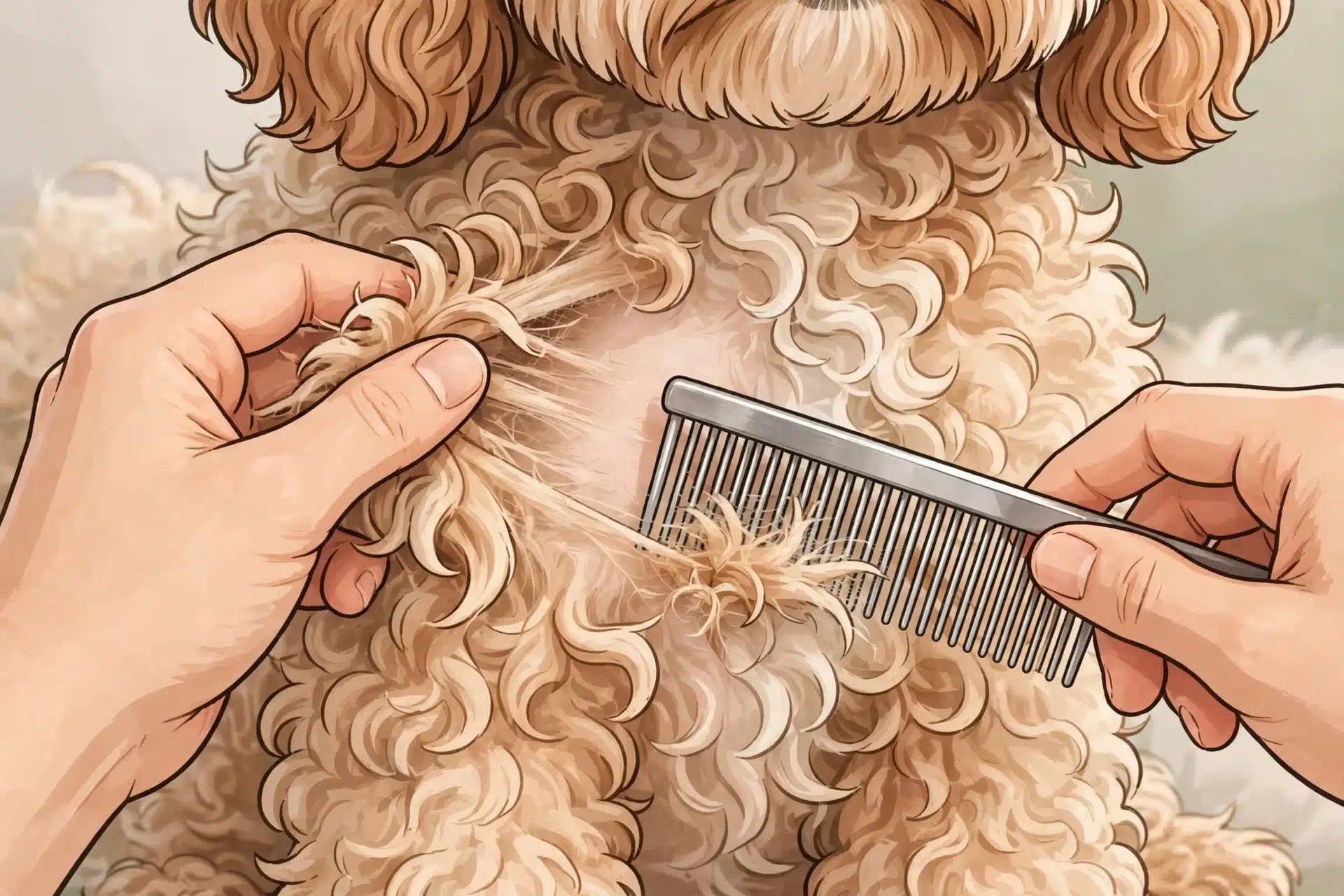
A brush glides over the surface and can miss tangles forming near the skin. After brushing, run a metal comb through the same section. If the comb catches, you have found a mat the brush skipped. Groomers call this line brushing: part the coat, work one thin strip at a time, and comb to the skin. It is also the core of how to groom a Havapoo at home, since both coats mat close to the base. Our Havapoo coat care guide walks through each step.
The Four Matting Zones Every Havanese Owner Finds
Check the same four spots every time: behind the ears, under the collar or harness, the armpits, and the pants area where the legs meet the body. Friction plus moisture softens the hair and speeds tangling, so mats form there first. Working these zones for two minutes after each brushing session prevents most de-matting problems, and it takes far less time than teasing out a tight mat later.
Bathing, Drying and Coat Preparation
Bath Schedules by Coat Length
Bath frequency follows the coat. A Havanese in a longer trim usually needs a bath every 3 to 5 weeks, while a Havapoo in a short cut does well at every 2 to 3 weeks. A full show coat may need washing as often as every 1 to 2 weeks. Brush before the bath, not after, because water tightens any existing tangle.
Drying Is Where Most Home Grooming Goes Wrong
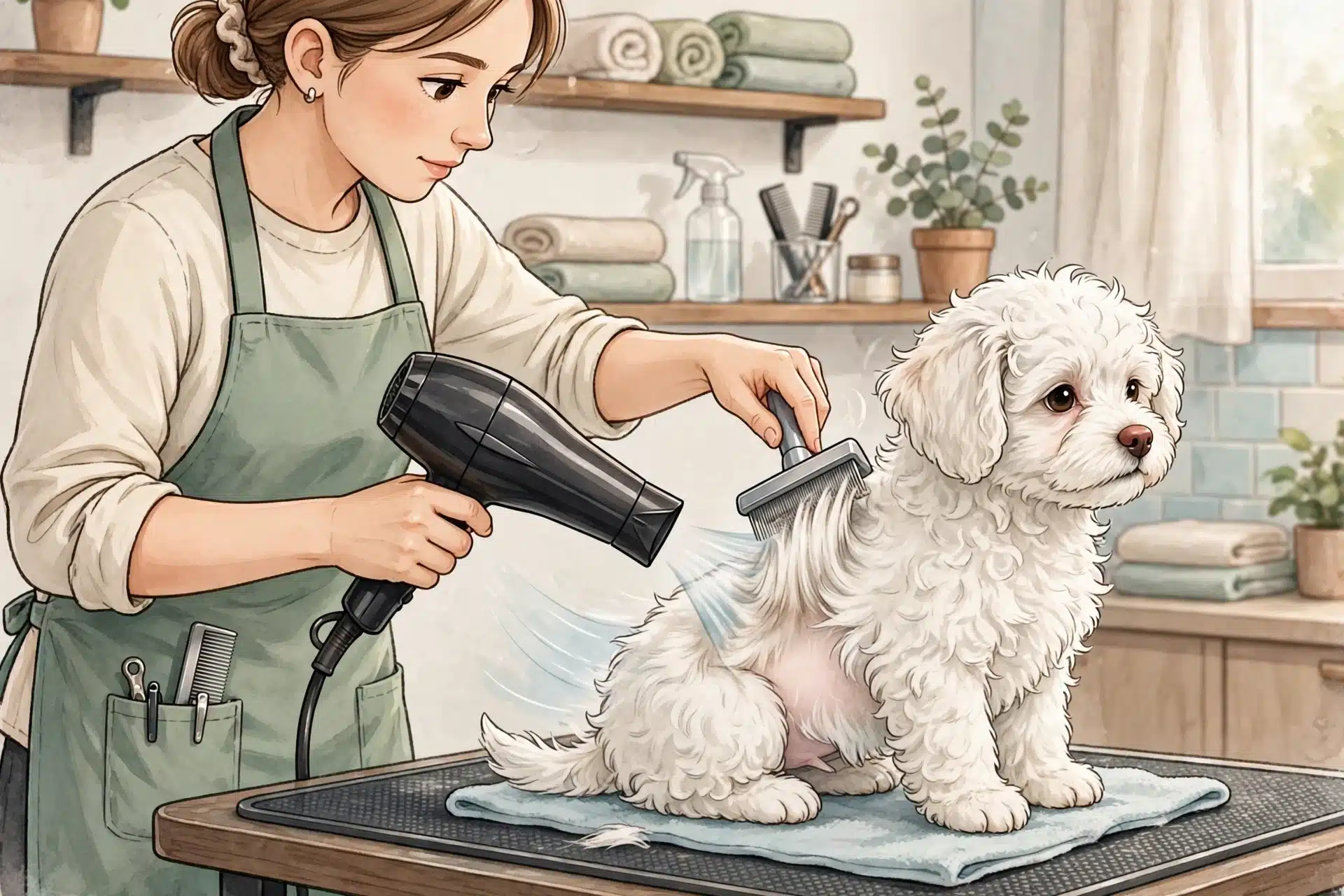
Never let either breed air dry. Damp hair swells, frizzes and twists into fresh mats within hours, especially at the collar, armpits and behind the ears. Blow dry on low heat while brushing the coat in the direction it grows, lifting small sections so you reach the undercoat near the skin. Keep the dryer moving and point airflow along the coat rather than against it. A Havanese’s silky hair and a Havapoo’s denser curl both need to be fully dry before you finish brushing, so budget 20 to 30 minutes for the job.
Coat Conditioners and Detangling Sprays
Conditioner matters more with these breeds than most. It smooths the hair shaft so brushes glide instead of snapping strands. Diluted conditioner helps a long Havanese coat; a light leave-in works well on a Havapoo’s curls. Between baths, mist a detangling spray before brushing, since dry brushing pulls and breaks hair. Focus product on friction zones, and rinse thoroughly so residue does not attract dirt.
Professional Grooming: Cost, Schedule and the First Visit
Professional grooming intervals depend on breed and cut:
- Havanese in a short pet cut: every 6 to 8 weeks
- Havanese in a long coat: every 4 to 6 weeks
- Havapoo in a short cut: every 6 to 8 weeks
- Havapoo with a fuller, curlier coat: every 4 to 6 weeks
Expect roughly $60 to $100 per visit for small breeds in most US markets, with metro areas running higher.
Why a Shorter Trim Costs Less Time, Not Just Less Money
Groomers charge for time on the table. A puppy cut means less scissoring, faster drying and less de-matting, so the session runs 60 to 90 minutes instead of two-plus hours. Short cuts also stretch the gap between visits, which lowers your yearly total even at the same per-visit rate.
Puppy First Groom: Timing and Acclimation
Book the first full groom between 14 and 16 weeks, after core vaccines, but schedule a shorter “puppy intro” visit earlier. Many groomers offer a cheap bath-and-dry for puppies 10 to 12 weeks old. It builds tolerance for the table, clippers and dryer before a long session feels scary.
Budgeting the Full Care Picture
Multiply visits by price, then add home tools: slicker brush, metal comb, dryer and conditioning spray. A Havapoo in a short cut often lands around $500 to $700 a year in professional grooming, while a full-coated Havanese can pass $1,000. Budgeting both sides up front keeps surprises off your credit card. If you are weighing the two coats directly, our comparison of Havapoo and Cavapoo grooming covers cut choices in detail.
Beyond the Coat: Eyes, Ears, Nails and Teeth
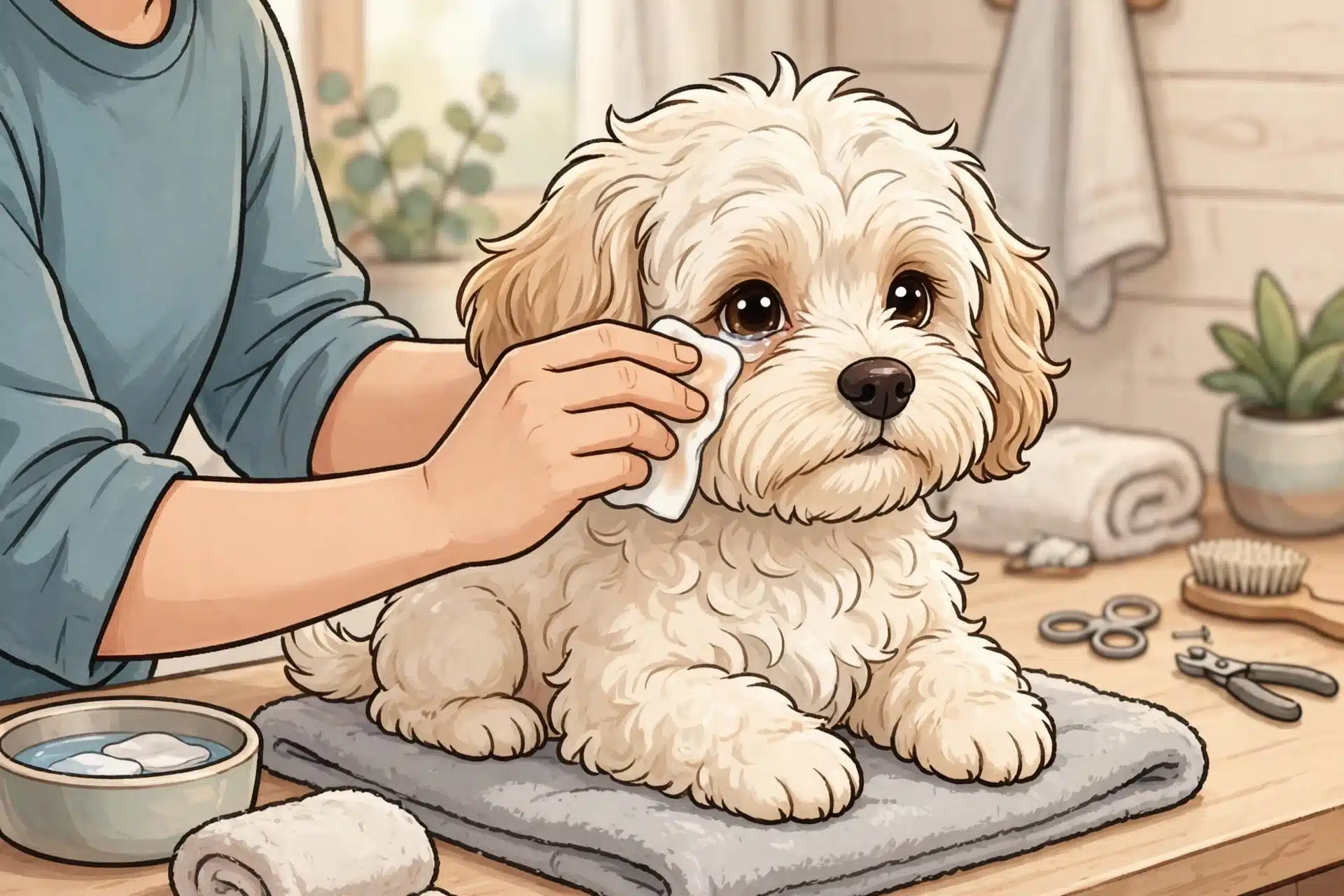
Both breeds carry light coats over dark skin around their eyes, so tear staining shows up in Havanese and Havapoo puppies alike. Wipe the area daily with a warm, damp cloth and keep the hair around the eyes trimmed. If you notice heavy discharge, redness or squinting, call your vet instead of reaching for a whitening product, since staining often points to an underlying eye issue.
Ears, Nails and Skin Checks
Check ears weekly for redness, odor or debris, especially in a Havapoo, where the Poodle side can pass on hairier ear canals that trap moisture. Your groomer can pluck or trim ear hair at routine visits. Trim nails every two to three weeks; if you hear clicking on hard floors, they are overdue. While your hands are already on the dog, run them over the whole body to feel for lumps, scabs or hot spots.
Teeth in Small Breeds
Small breeds pack a full set of teeth into a small jaw, so tartar builds up fast and dental disease is the most common health problem vets see in adult dogs. Brush several times a week with a dog-safe toothpaste, and use dental chews as a supplement, not a substitute. Starting tooth brushing during the puppy stage makes the habit far easier to keep for life, and regular home care can delay costly professional cleanings.
Building the Grooming Habit on a Young Puppy
A Havanese or Havapoo puppy should get a short grooming session most days of the week: 5 to 10 minutes of brushing, a quick paw and ear touch, and a treat at the end. Keep it easy and positive, and the habit sticks for life.
Why the First Two Months Set the Habit
The weeks from 8 to 16 weeks shape how your puppy feels about grooming forever. Handling is the goal, not the coat. Puppies go through a fear period in this window, so pair brushing with treats and stop before your puppy gets restless. Touch the paws, ears, belly and muzzle every day, since those are the spots groomers handle most. Trainers recommend teaching paw targeting so nail trims stay calm later; AKC Pet Insurance walks through the basics.
Tools and Handling Technique
You only need a few items at this stage. A soft bristle brush, a metal greyhound comb, blunt-tip scissors and puppy shampoo cover it. Let your puppy sniff each tool first, then brush for a minute and reward. Work in short sweeps along the back, then the legs. Brush in the direction the hair grows and follow with the comb to catch tangles. A full Havanese puppy grooming schedule lays out weekly sessions by age.
What Changes as the Coat Grows
Between 6 and 12 months, the adult coat arrives. A Havapoo’s coat thickens and curls, while a Havanese coat lengthens into silky hair, and both start to mat at the collar, armpits and behind the ears. Move to line brushing, holding the hair up and brushing small sections down to the skin. Sessions stretch from 5 minutes to 15 or 20, still several times a week.
Which Should You Choose: Havapoo or Havanese?
Both breeds are low-shedding and family-friendly. The real difference is daily work: a Havapoo in a short cut takes less coat care, while a Havanese rewards more hands-on time with a stunning, silky coat. Pick by the grooming routine you can honestly keep.
| Choose a Havapoo if | Choose a Havanese if |
|---|---|
| You want the easier coat care routine, brushing about 2 to 3 times a week in a short cut | You enjoy brushing and want a companion with a signature long, silky coat |
| You prefer lower professional grooming costs, roughly $500 to $700 a year | You value a proven breed with clear Havanese breed standards and history |
| You are a first-time owner still building a grooming habit | You have time for daily brushing or regular visits to a groomer |
| You love the playful, adaptable poodle-cross temperament | You want the classic Havanese charm in a slightly smaller, long-lived package |
Next Steps for Families Ready to Compare Puppies
The grooming difference is real but manageable for either breed if you build habits early. Compare current Havanese and Havapoo availability, then ask breeders what coat types the parents show. At Sage Puppies, Cassie’s matching process looks at your grooming budget and lifestyle, not just availability. Choose the puppy you will still enjoy brushing in year three.

Whichever coat you choose, the grooming habit you start now decides how easy the next 15 years feel. Sage Puppies raises Havanese and Havapoo puppies in South Jordan, Utah, and helps families nationwide match the right coat to their routine. Check live availability and pricing on the available puppies page or start with pricing and reservation.
Frequently Asked Questions
Q1: How do Havapoo and Havanese puppies differ in grooming needs?
A Havanese carries a silky double coat that keeps growing, so a long coat needs daily brushing and combing to the skin. A Havapoo’s wavy, Poodle-influenced coat usually combs out faster, and a short cut drops brushing to 2 to 3 times a week.
Q2: Which is easier to groom, a Havapoo or a Havanese puppy?
The Havapoo is usually easier, especially in a short trim. It needs fewer home sessions and lower grooming bills, around $500 to $700 a year versus over $1,000 for a full-coated Havanese.
Q3: Do Havapoo puppies need daily brushing like Havanese puppies?
Usually no. A Havapoo in a short cut does well with 2 to 3 sessions weekly, though a longer coat moves toward daily work.
Q4: How much does professional grooming cost for each breed?
Most small-breed visits run $60 to $100. Short-cut Havapoos typically go every 6 to 8 weeks; full-coated Havanese need trims every 4 to 6 weeks.
Q5: When should my puppy have its first full groom?
Book between 14 and 16 weeks, after core vaccines. A shorter bath-and-dry intro visit at 10 to 12 weeks builds tolerance early.
Conclusion
The grooming gap between these two coats comes down to structure and length. A Havapoo’s Poodle-influenced coat, kept in a short trim, needs brushing about 2 to 3 times a week and roughly $500 to $700 a year in professional grooming. A Havanese’s silky double coat asks for daily brushing in full length, a trim every 4 to 6 weeks, and a yearly bill that can pass $1,000.
Coat length, not breed alone, sets your real workload, so pick the routine you can honestly keep. Either way, the habits you build between 8 and 16 weeks decide how calm every future session feels. Short daily puppy sessions, full blow-drying after baths, and combing to the skin prevent most mats before they start.