Quick Summary: Havapoo grooming is mainly about building a calm habit early: brush twice weekly with a soft slicker brush and metal comb, bathe every three to four weeks, and check daily for tangles around the ears and armpits. Between 8 and 18 months, the adult coat replaces the puppy fuzz, so daily brushing and a short puppy cut can help control shedding and mats. Match tools to your puppy’s silky, wavy, or curly coat, keep sessions positive, and arrange the first professional groom around four to six months.
A Havapoo puppy can hold still for a brushing session of about ninety seconds before turning into a squirming, squeaking handful of feet, and most first-time owners meet that moment in the first weekend home. How you handle it matters. Puppies who learn early that brushing feels safe tend to accept grooming for life, while puppies who learn to fight the brush keep fighting it for the next decade. This guide walks you through havapoo puppy grooming in plain terms, from the right tools and first brushing sessions to baths, mats, and the coat change that surprises so many new owners around the one-year mark. At Sage Puppies in South Jordan, Utah, Cassie Milar’s program breeds Havanese, Havapoo, and Cavapoo only, and we’ve gathered this advice to help your new puppy’s first weeks go smoothly.
Step 1: Grooming and Coat Care for Havapoo Puppies, Start to Finish
A Havapoo puppy needs a short weekly grooming session, a bath every three to four weeks, and a quick daily check for tangles. Here is the whole routine as a beginner:
- Brush the coat twice a week with a slicker brush, then comb through.
- Bathe every three to four weeks with puppy-safe shampoo.
- Trim nails every two to three weeks and check ears weekly.
- Wipe the face daily and fluff dry after every bath.
Havapoos inherit a soft, low-shedding coat from the Havanese and Poodle side of their family tree, and that coat grows fast. Skip the brushing and mats form close to the skin, where you cannot see them. Havapoo puppy grooming is less about skill and more about habit. Ten minutes a week prevents hours of dematting later.
The 10-Minute Weekly Session, Step by Step
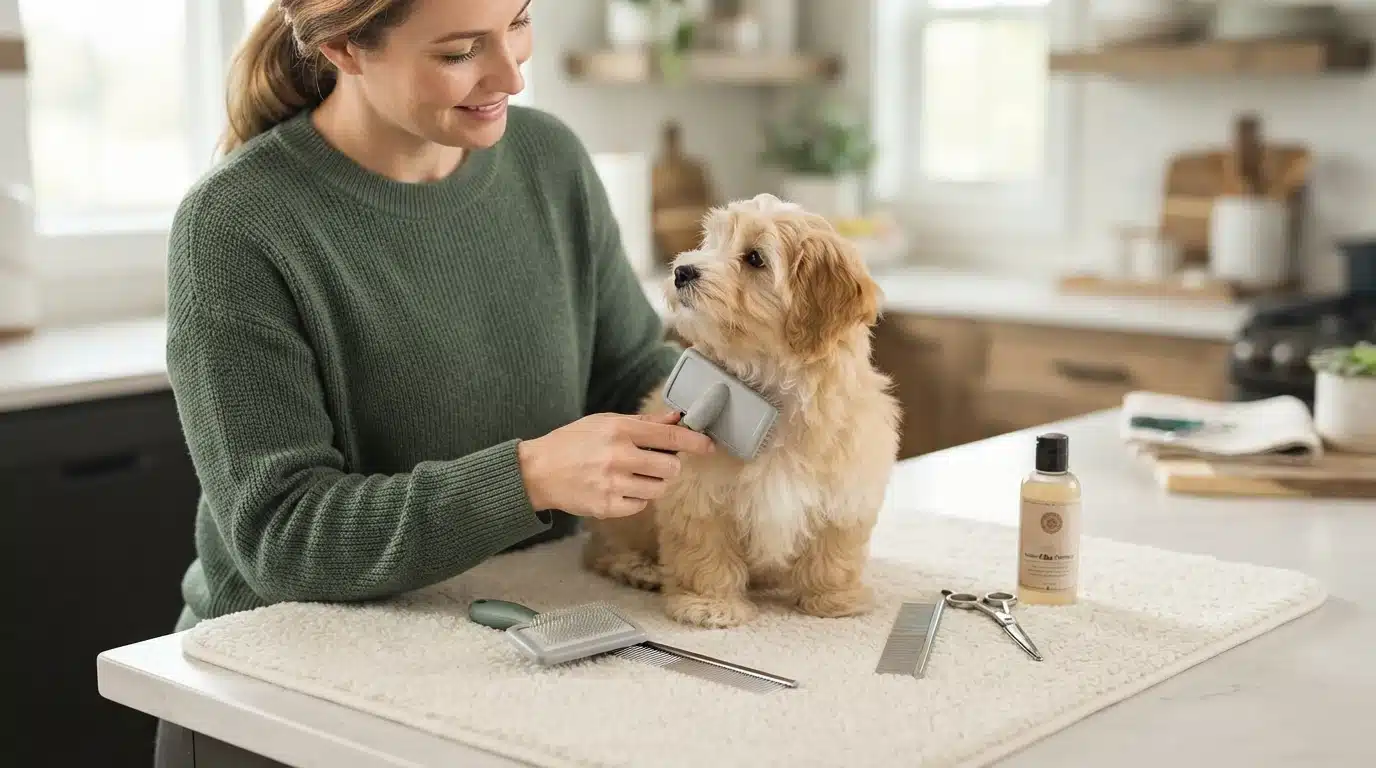
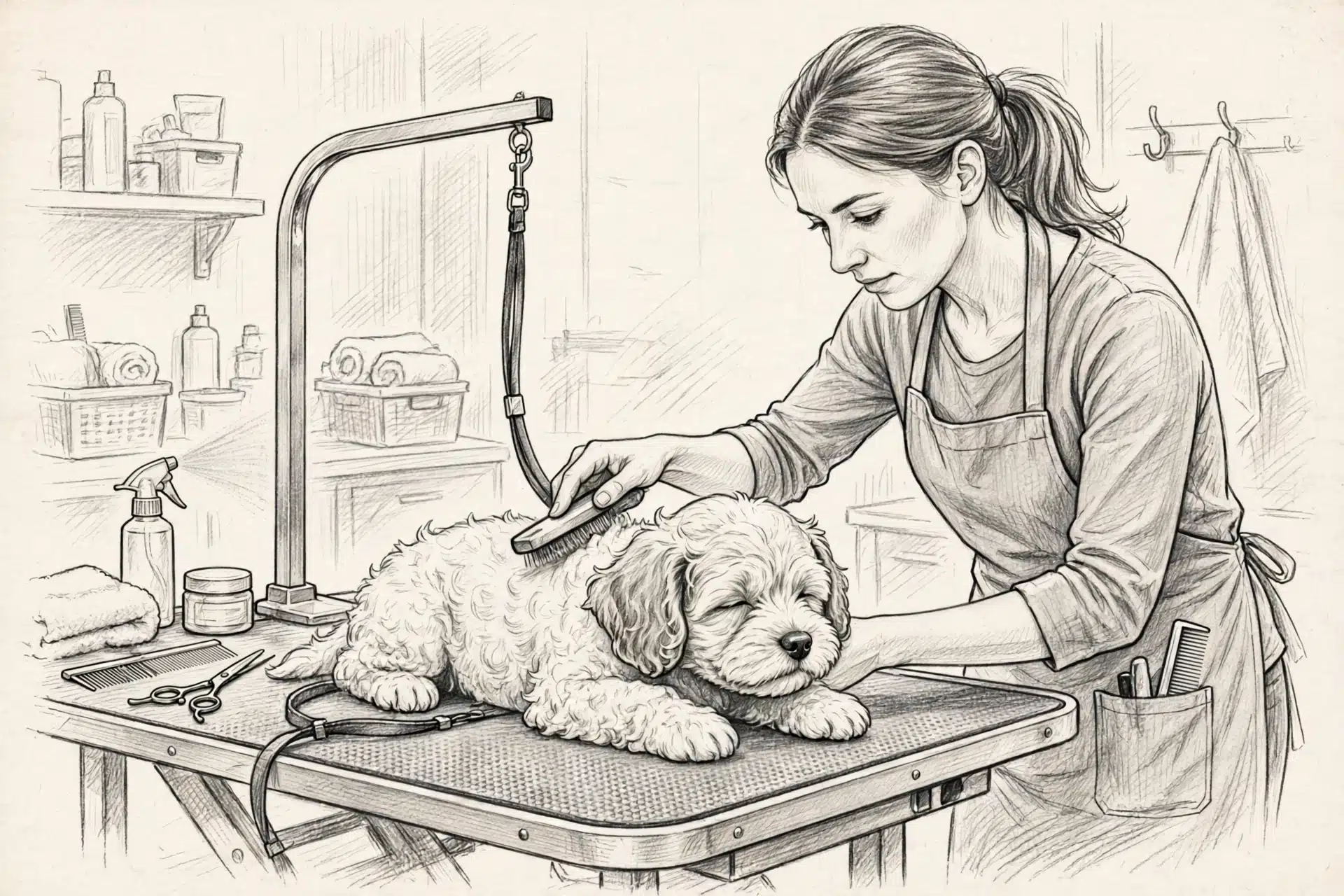
Start with the body, then move to the legs, belly, armpits and behind the ears. Those last three spots mat first, so give them extra passes. Mist the coat lightly with water or coat conditioner before brushing; brushing a dry coat breaks the hair. Work in small sections down to the skin, not just the top layer you can see.
Finish with a metal comb. If the comb glides through, you are done. If it catches, go back with the slicker brush and work the tangle out from the tip toward the base. When you learn how to brush a Havapoo puppy this way, sessions stay short and calm. Reward with a small treat when you finish, and keep your voice relaxed so the puppy learns grooming is routine.
Bathing Your Havapoo Puppy Without the Struggle
Bathe a Havapoo puppy every three to four weeks, or sooner after a muddy adventure. More frequent bathing strips the natural oils and dries the skin, so resist the urge to wash weekly. Use lukewarm water and a puppy-safe shampoo, and place a rubber mat in the sink or tub so paws do not slide. Wet the coat fully, lather down to the skin, and rinse until the water runs clear.
Towel off, then blow dry on low heat while brushing the hair in the direction it grows. Drying while brushing is what keeps the coat smooth instead of frizzy. A puppy that dries loose in a crate will curl into tangles. If bath time turns into a wrestling match, shorten the session and build up gradually with treats and patient handling.
Nails, Ears and the Face
Trim the nails every two to three weeks. If you hear clicking on hard floors, they are too long. A nail grinder is gentler for beginners than clippers because you can remove a little at a time, and it is far easier to stop before you cut the quick, the pink blood vessel inside the nail. Keep styptic powder on hand just in case, and take only tiny passes if your puppy squirms.
Check the ears weekly for redness, odor or debris, and wipe the outer ear with a dog ear cleaner on a cotton pad. Never insert anything into the ear canal.
The face needs care too. Havapoos collect tear staining and food bits around the muzzle, so wipe under the eyes daily with a damp cloth. Trim the hair around the eyes with blunt-tipped styling scissors, cutting tiny slivers with the scissors pointed away from the eye. If that feels risky, ask a groomer to show you the angle on your first visit.
A Simple Two-Minute Daily Habit
Once a day, run your hands and the comb through the armpits, behind the ears and around the collar. Sixty seconds finds a fresh tangle while it is still loose fur you can pick apart with your fingers. Mats that reach the skin usually started as a missed knot two weeks earlier. Pair the check with a cuddle on the couch and it will not feel like a chore for either of you.
How to Brief a Professional Groomer
Book your puppy’s first professional groom between four and six months, after the second round of vaccines. Tell the groomer you want a short puppy cut, and say explicitly that this is a first groom, so the session stays calm and slow. Plan on professional grooming every six to eight weeks going forward. If you are comparing how Havapoo and Cavapoo coats differ in the grooming chair, we cover that in our guide to Havapoo vs Cavapoo grooming needs and coat care.
Step 2: Know Which Coat You Are Brushing
Silky, Wavy or Fluffy: Identifying Coat Texture
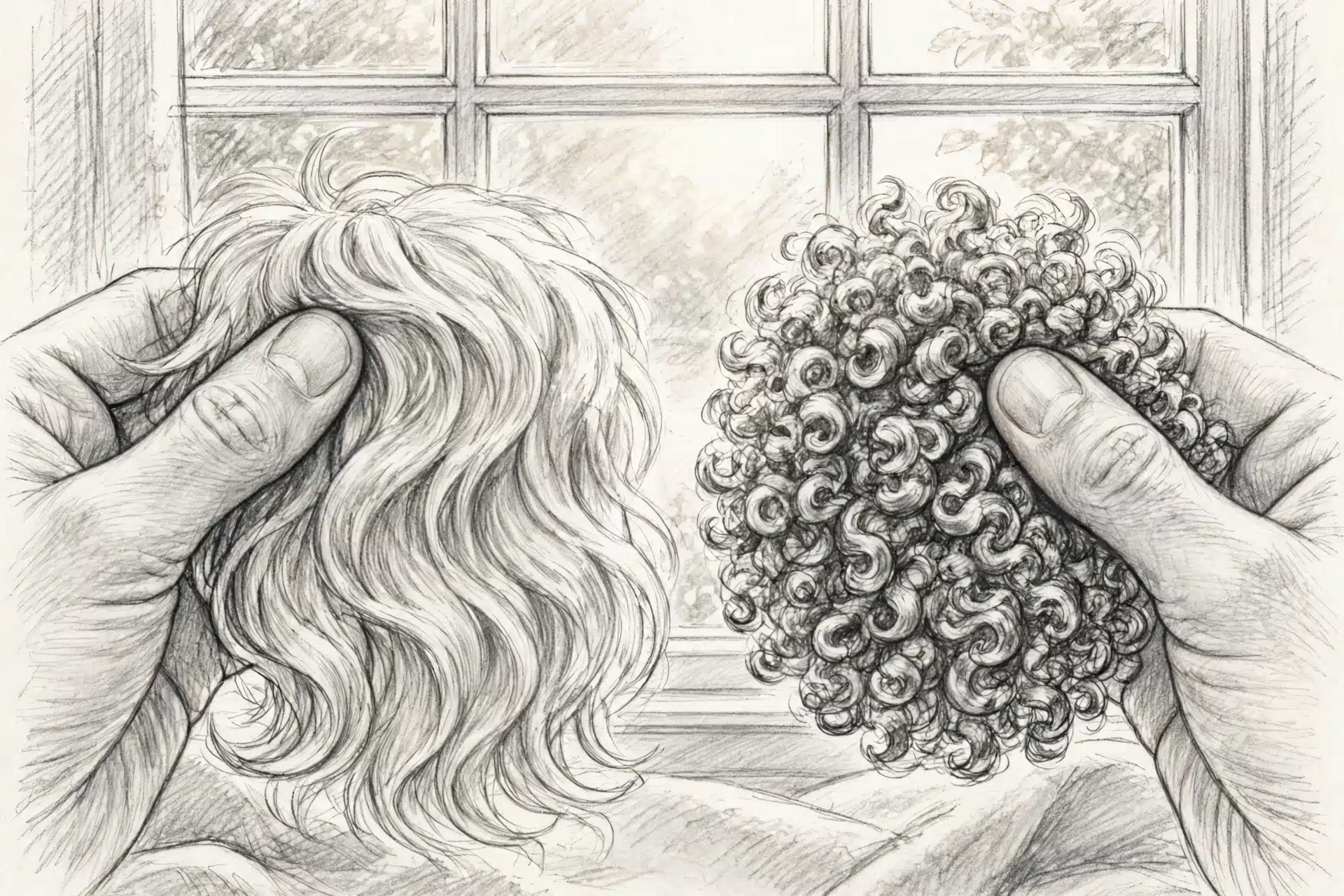
Havapoo coats vary even within one litter. Some puppies carry the Havanese side’s fine, silky hair. Others show Poodle-tight curls or a soft, wavy middle ground. Run your fingers through the coat and lift it against the light. Straight and shiny points toward silky, while dense and springy points toward curlier. Part the hair to see the undercoat, if there is one.
Why the Havanese Side Matters for Coat Care
The Havanese breed standard calls for a soft, light coat with an outer layer and undercoat, and the breed’s coat may be shorter and softer in puppies. That light texture tangles fast at the ears, armpits and pants area. Because a Havapoo puppy grooming routine depends on which parent contributed more, knowing your puppy’s texture tells you how often to brush and where to expect mats. Coats on the silky end usually need more frequent, gentle attention than tight curls.
What Low Shedding Does and Does Not Mean
Low shedding means loose hair mostly stays trapped in the coat instead of falling onto your sofa. That protects your floors, but it also means tangles build up unless you brush them out. And low shedding is not the same as allergen-free; allergy triggers come from dander and saliva, not just hair. So no puppy can be promised as allergy-safe.
Why Coat Type Decides Your Tool and Schedule
Curl-prone coats need a slicker brush two to three times a week. Silkier coats do better with a soft bristle brush or comb used more often but more gently. Poodle-heavy coats also need trimming every six to eight weeks. If you want to see how coat type changes the routine across breeds, Sage’s Havapoo vs Cavapoo grooming comparison walks through it breed by breed.
Step 3: Assemble a Grooming Kit That Does Not Need Replacing
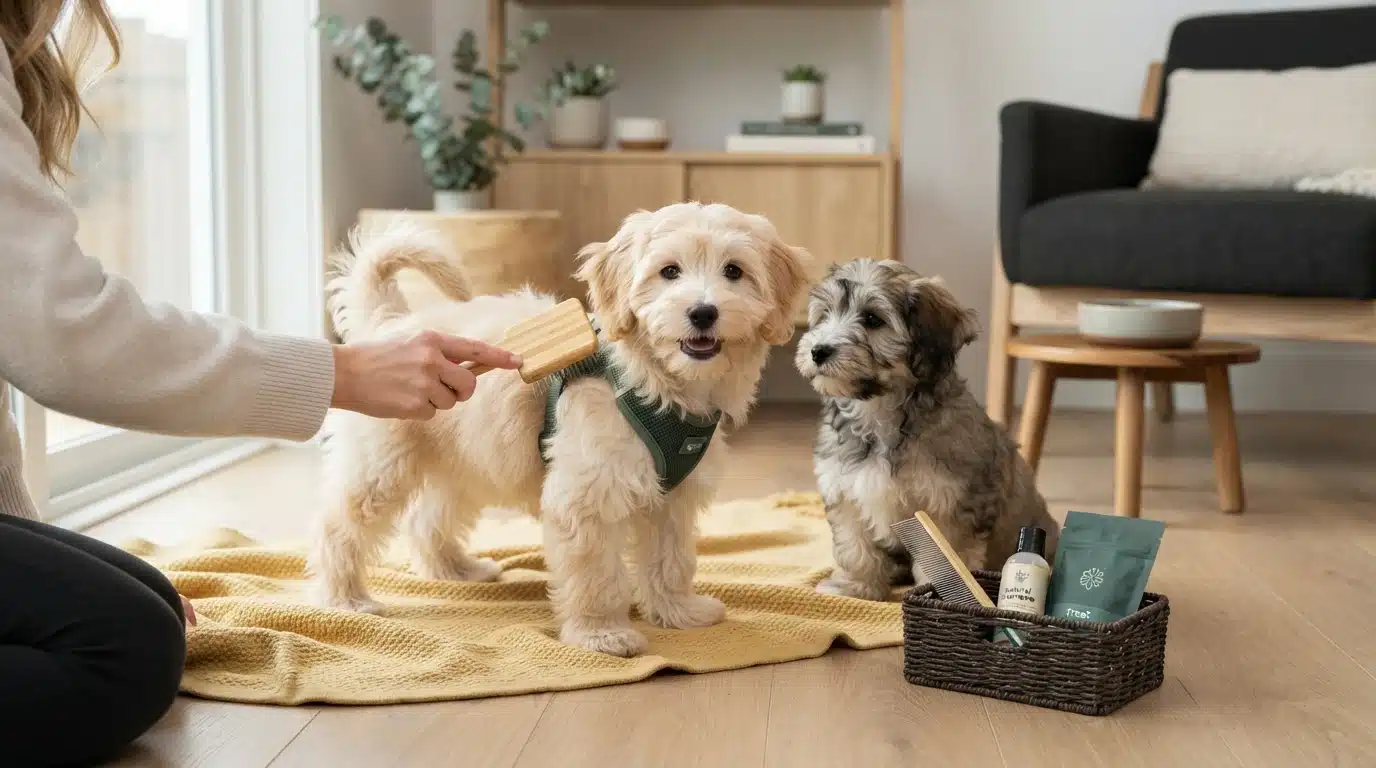
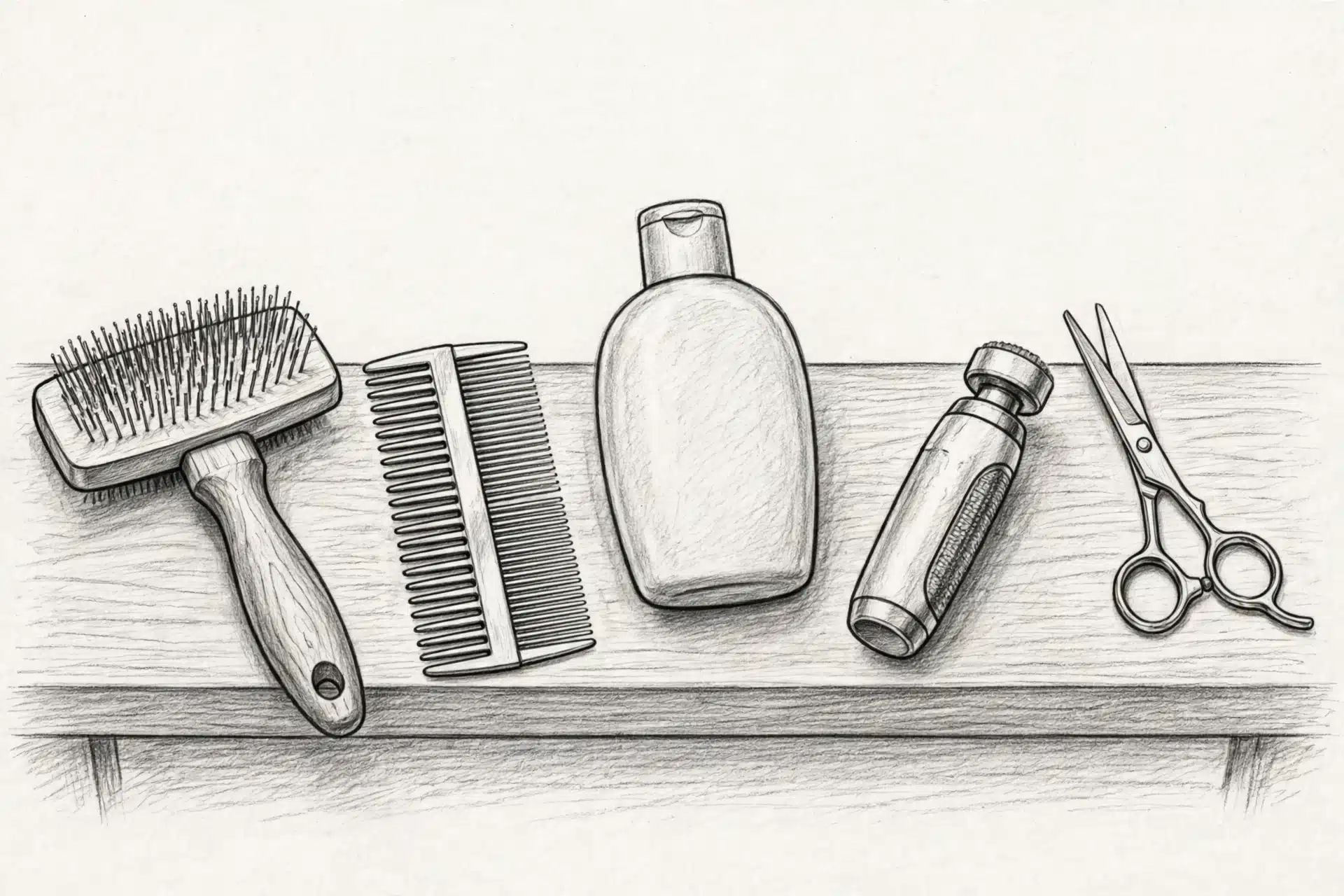
A Havapoo coat needs the same core tools from eight weeks to adulthood, so buy well once. Here is the checklist: a soft slicker brush, a metal greyhound comb, puppy shampoo, a coat conditioner, absorbent towels, a low-heat dryer or blow dryer with a cool setting, blunt-nosed scissors, nail clippers or a grinder, styptic powder, and ear cleaner made for dogs.
Brushing and Detangling Tools
The best brush for a Havapoo puppy is a soft slicker brush for the body and legs. Its fine wire pins lift tangles without scratching skin. Add a metal comb with both wide and narrow teeth. Run it through each section after the slicker. If the comb glides through, the coat is clean. If it snags, you found a hidden mat. A good slicker brush should feel gentle against your own wrist, not sharp.
Bathing and Drying Supplies
For every Havapoo puppy bath, use a shampoo labeled safe for puppies, plus a light conditioner to help the comb slide afterward. Keep two absorbent towels near the tub, and set a rubber mat down so paws do not slip. Dry on low or cool heat while brushing, because damp undercoat mats fast.
Nail, Ear and Face Tools
Grind or clip nails every few weeks, and keep styptic powder on hand in case you nick the quick. Blunt-tipped scissors trim hair around the eyes and paw pads safely. A vet-approved ear cleaner and cotton rounds finish the kit. Nothing here needs replacing later.
Building the Kit on a Budget
Starter sets often bundle slicker, comb, clippers and grinder for less than buying separately, so compare bundles first. Mid-range single tools usually outlast the cheapest versions. Cassie’s product guides on this site flag which budget picks hold up, and the first-year grooming schedule shows when each tool actually gets used.
Step 4: Plan for the Coat Change Between 8 and 18 Months
What Happens to the Coat During the Change
Most Havapoo puppies lose their puppy coat somewhere between 8 and 18 months, and the exact timing depends on which parent passed down more curl. The soft puppy fuzz falls out and the denser adult coat grows in behind it. Expect more shedding during this window, even in a low-shedding breed mix.
Brushing Through the Change Without Pulling Out Healthy Coat
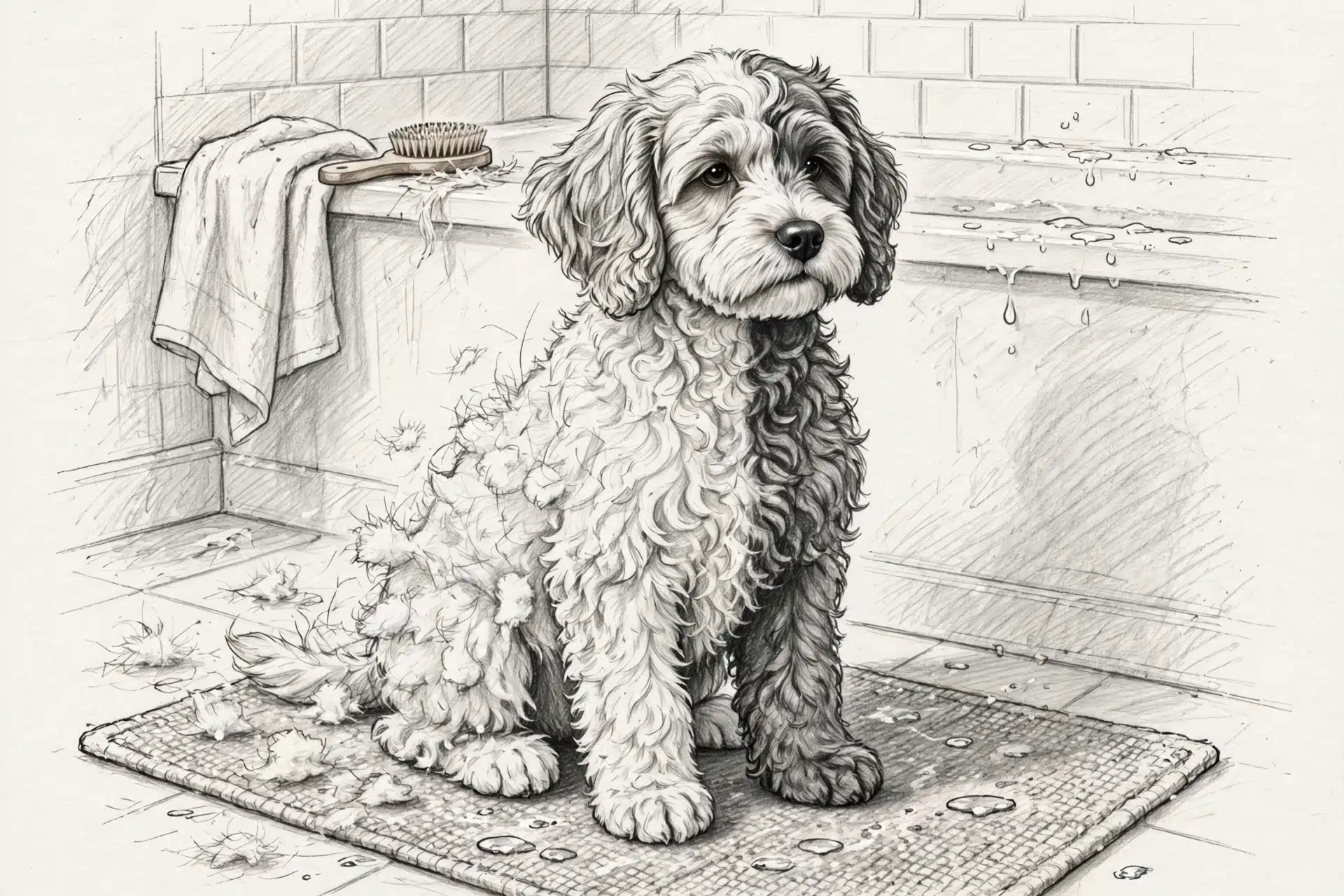
Loose undercoat is the reason matting spikes during the adult coat transition. Brush daily with your slicker, then finish with a metal comb to confirm you reach the skin. A light spritz of coat conditioner before brushing helps tangles release without tugging. Work in short sessions with treats, because some spots feel tender while new coat grows in.
Cutting Hair Short During the Change
Many owners book a short puppy cut during this stage, and it is a smart move. The clipper removes shedding puppy fuzz, and the fresh adult coat grows in evenly instead of patchy. Tell your groomer the coat is changing so they plan around thin spots. Most Havapoos settle into professional grooming every 4 to 8 weeks after the change ends, which matches the year-long schedule many breeders, including Sage Puppies, walk first-time owners through.
Step 5: Set a Grooming Schedule That Matches Your Puppy’s Age
A Havapoo puppy’s needs shift fast, so a schedule that fits an 8-week-old falls apart by month eight. Work in stages.
From 8 Weeks to 6 Months
Brush two to three times a week for about five minutes. Puppy coats are soft and tangle less than adult coats, so short sessions prevent bad habits from forming. Trim nails every three to four weeks, wipe around the eyes daily, and bathe only when the coat is genuinely dirty. Keep every session short and end on a treat, because your goal now is tolerance, not a flawless coat.
From 6 Months Through the Coat Change
As the adult coat comes in, step up to daily brushing with a slicker brush, checking behind the ears, armpits, and harness area where mats start. Add a leave-in coat conditioner during this stretch. The coat change usually runs between 8 and 18 months, and a short puppy cut through it keeps brushing manageable. If mats outpace you, a professional trim resets the coat without drama.
Step 6: Fix the Problems That Show Up Most Often
Removing Small Mats Without Pulling Hair
Hold the mat at its base so the skin stays slack. Work a dematting comb or your fingers from the tip, picking apart loose strands before you brush. A few drops of coat conditioner help tight knots slide apart. If a mat sits close to the skin, cut it with blunt styling scissors instead of yanking.
When Your Puppy Fights the Brush
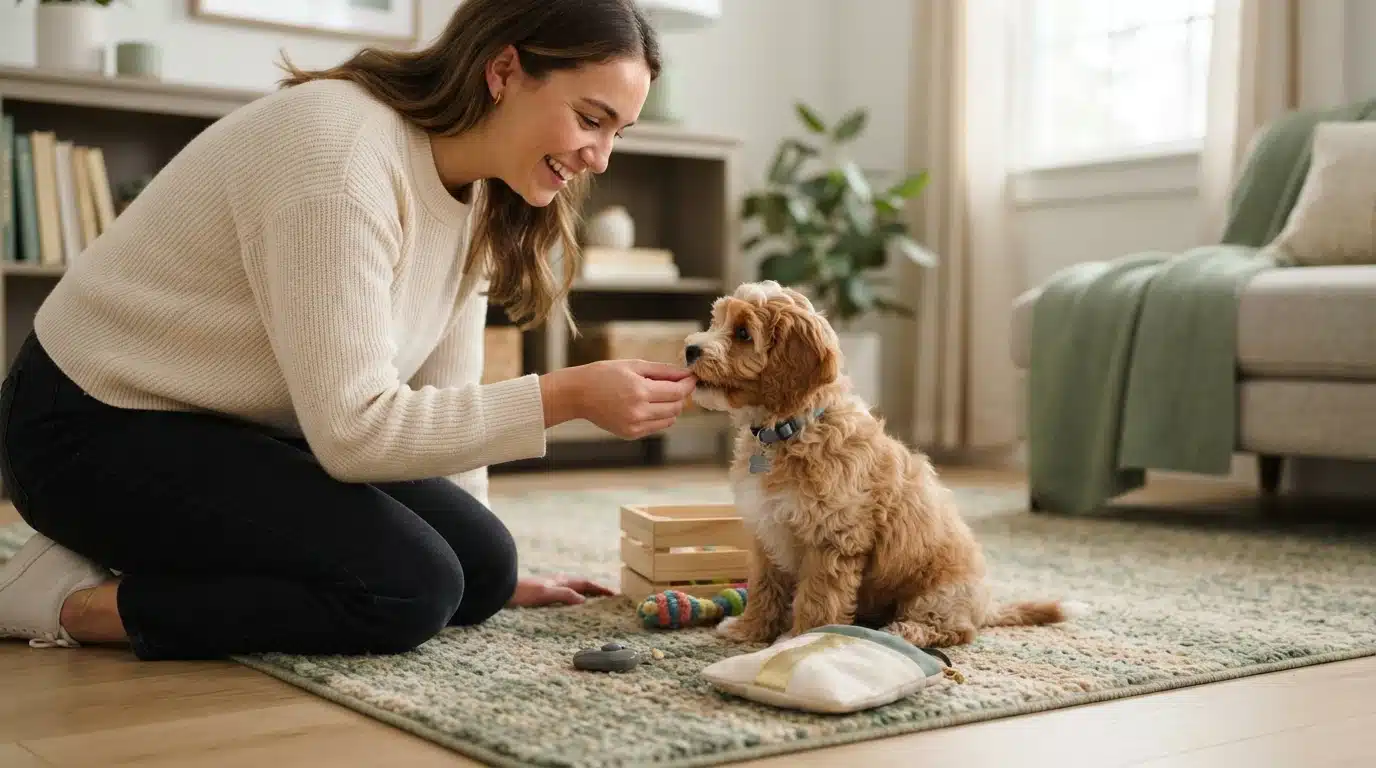
Havapoos learn through positive reinforcement, so make brushing predict good things. Short, calm sessions work:
- Show the brush, feed a treat, and put it away.
- Brush one small area, then reward again.
- Stop before your puppy squirms or nips.
- Add a little more coat each day.
End every session while things still feel easy. Most puppies accept full brushing within a couple of weeks of steady practice, and it fits the routine in Sage’s beginner Havapoo grooming guide.
Red Flags a Grooming Kit Cannot Fix
Some problems need a professional or a veterinarian, not more brushing at home. Call for help when you see:
- Mats pressed against skin, or sore, red patches underneath
- Cuts, nicks, or bleeding from clipping or scissors
- Scratching, hair loss, or a dull, greasy coat that keeps returning
Skin trouble often looks like a grooming problem but needs a diagnosis first.
Step 7: Build the Routine That Lasts
A Havapoo coat changes faster than most new owners expect, so the plan you build now should flex through year one. Two habits make that easy: ask good questions early, and pace your decisions to your puppy’s age.
What to Ask a Breeder About Your Puppy’s Coat
Before pickup or delivery, ask which parent passed down more curl, what the parents’ adult coats look like, and how often the breeder brushes their own dogs. A good breeder will also show you how to brush a havapoo puppy without making it a wrestling match. Chewy’s breeder question guide recommends asking about coat care needs up front, and coated mixes deserve exactly that. Sage Puppies walks each family through this during matching, so you leave with the routine already started.
A Year-One Timeline of Coat Decisions
Months 1 through 6 are simple: brush two or three times weekly, bathe monthly, and keep trims to face, feet and sanitary areas. Between 8 and 18 months, expect the coat change, and hold a short puppy cut through it so matting stays manageable. After the adult coat settles, book professional grooming every 4 to 8 weeks.

Grooming a Havapoo feels far less daunting once you have the right puppy and a plan. If you want a companion raised with this coat care in mind, Sage Puppies can help. Start the application, and we’ll match you with a Havapoo puppy whose needs fit your family’s routine.
Frequently Asked Questions
Q1: What grooming and coat care do Havapoo puppies need?
Brush twice weekly with a slicker, bathe every three to four weeks, and run a two-minute daily check over the ears and armpits. From six months, step up to daily brushing because the adult coat tangles far faster than puppy fuzz.
Q2: When does the Havapoo coat change happen?
Usually between 8 and 18 months. The soft puppy fuzz sheds out and a denser adult coat grows in, so brush daily through that window.
Q3: What is the best brush for a Havapoo puppy?
A soft slicker brush for the body, plus a metal greyhound comb to confirm you reached the skin. Silkier coats handle a soft bristle brush better.
Q4: Are Havapoos hypoallergenic?
No puppy can be promised allergy-safe. Low shedding helps, but dander and saliva still trigger some allergies.
Q5: When should my puppy’s first professional groom happen?
Book between four and six months, after the second vaccines. Ask for a short puppy cut and mention it is a first groom.
Conclusion
Havapoo puppy grooming comes down to habit, not skill. Brush twice weekly with a slicker, bathe every three to four weeks, and run a two-minute daily check behind the ears and under the arms. As the coat change between 8 and 18 months brings in the denser adult coat, step up to daily brushing and consider a short puppy cut through that window. Match your tools and schedule to your puppy’s texture, whether silky, wavy, or curly. Build the kit once, keep sessions short and positive, and book the first professional groom around four to six months. Ten minutes a week now prevents mats, sore skin, and expensive dematting later.