Quick Summary: A reputable breeder provides verifiable parent health records, raises puppies indoors with their mother until at least eight weeks, screens buyers, and uses a written contract with return terms. Before paying, ask for three documents: OFA or CHIC health results, a signed purchase contract, and the puppy’s veterinary records. Registration papers, high prices, USDA licensing, and urgent sales tactics prove little on their own, while sellers who dodge these checks are a major warning sign.
Two listings can look identical: same small-breed puppy, similar price, quick replies. The difference shows up later. One breeder hands you hip radiographs, an eye exam date and a signed contract before payment; the other asks for a deposit first and answers questions about the parents afterward. In the reputable vs backyard breeders question, documentation matters more than promises. Families searching for a reputable puppy breeder near me often cannot judge a private household seller, and first-time buyers cannot tell a paperwork gap from a hidden failure. This comparison walks through six questions, the records that back each answer, and the puppy breeder red flags that should end a search immediately.
Reputable vs Backyard Breeders: What Actually Differs
| Reputable breeder program | Backyard breeding operation | |
|---|---|---|
| Health testing and records | Parent clinical screening (for example OFA hips, patella and annual eye exams for Havanese) plus a veterinary exam record for the puppy, usually available before deposit | Rarely any parent testing or DNA results; often no veterinary exam record for the puppy before payment |
| Where puppies are raised | In a clean, social indoor environment, usually with the mother and littermates until at least 8 weeks, with parents available to meet | Often a home, porch, shed or garage, sometimes with puppies separated from the mother early and limited exposure to household sights and sounds |
| Buyer screening and contracts | Written application, detailed interview, signed purchase contract with spay/neuter and return terms | Little or no screening, typically a first-come deposit with no written agreement |
| Pricing and payment process | Transparent price with a deposit that follows the contract, waitlists common, litters planned to match homes | Often priced below or comparable to established programs, frequently advertised with urgency and immediate availability |
| Support after the sale | Health guarantee terms, lifetime breeder contact, take-back or return policy for the life of the dog | Little support once payment clears; no written guarantee and no guaranteed return path |
How Reputable breeder program and Backyard breeding operation Compare
Reputable breeder program
An established program breeds limited, planned litters of one or two breeds and documents parent health screening, veterinary care, contracts and post-sale support. It suits families who want proof, not promises. Health records, a written application and lifetime support come standard.
Key strengths
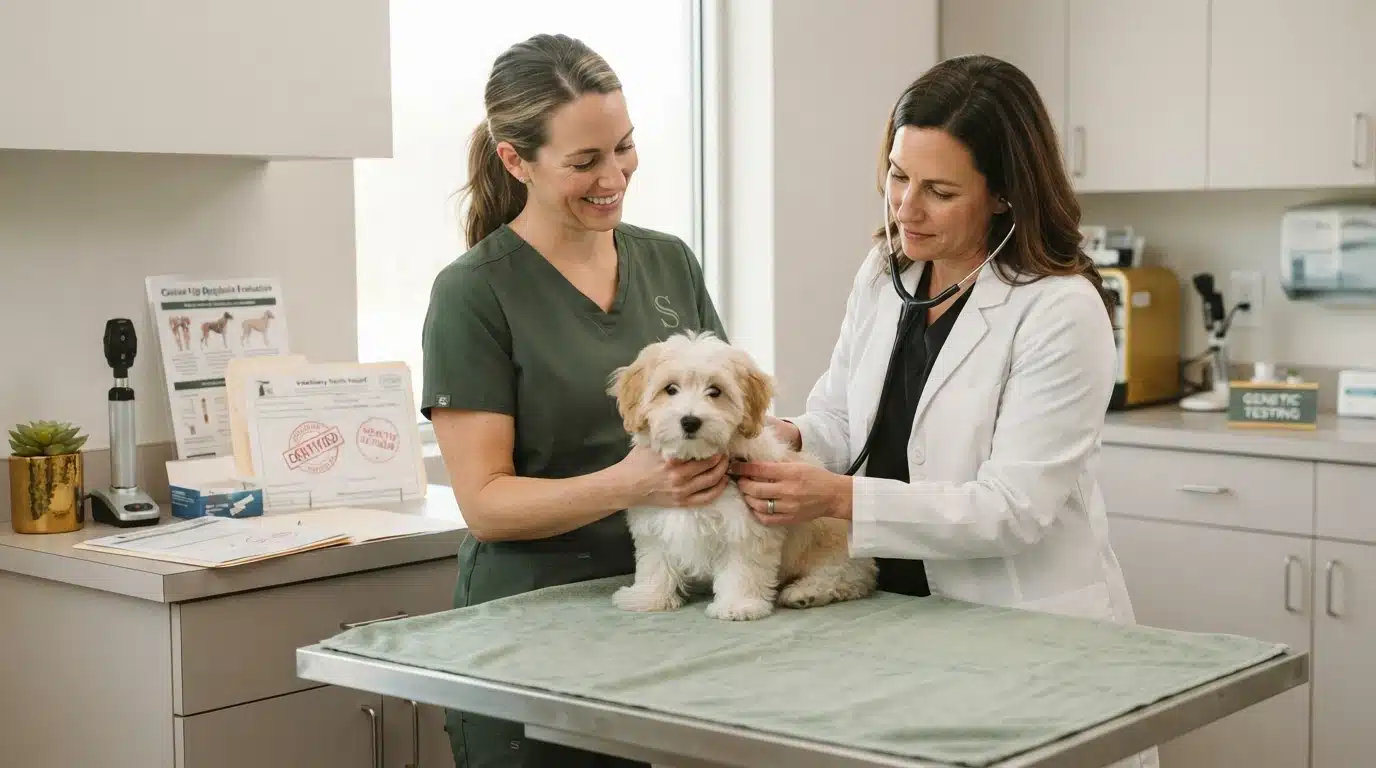
- Parent health testing (OFA hips, patellas, eye exams) plus a puppy veterinary exam record, usually available before deposit
- Clean, social indoor raising with the mother until at least 8 weeks
- Signed contract with spay/neuter and return terms, plus a lifetime take-back policy
Backyard breeding operation
A backyard breeding operation is a private household breeding its own family pet, usually with good intentions but little knowledge of breed health, structure or record-keeping. Its angle on this comparison is simple: the puppy may be healthy, but nothing is documented. Pricing often looks tempting, with urgency and no written agreement.
Key strengths
- Puppies priced below or comparable to established programs
- Convenient, local pickup with immediate availability
Health Testing, Vet Records, and Genetic Transparency
The three kinds of health evidence and why they are not interchangeable
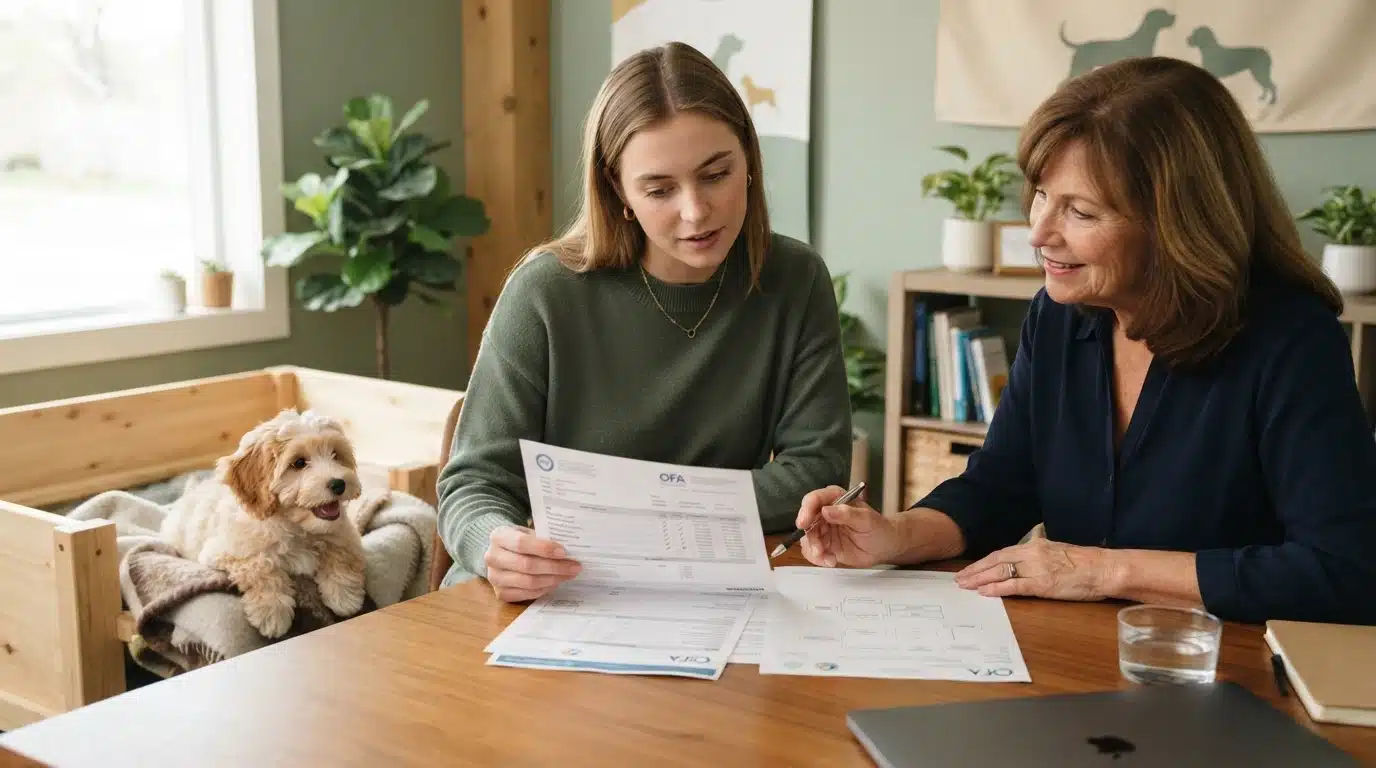
How many health tests should a reputable Havanese breeder have? Three core screenings on each parent, on file with OFA. Any puppy breeder health testing conversation comes down to three separate documents, and they prove different things:
- Parent health testing, such as OFA hips, patella and eye results
- Genetic panels, DNA screens for inherited disease variants
- The puppy’s own vet records, an exam, vaccines and deworming
A litter photo album proves none of these. A clean bill of health for an eight-week-old puppy tells you nothing about hips you cannot see for two years.
What the Havanese breed club actually requires in 2025
The Havanese Club of America, the AKC parent club for the breed, keeps a public standard. To earn a CHIC number, a Havanese needs results on file with the OFA’s CHIC program, and the breed club lists the specifics as OFA hips, OFA patellas and an annual eye exam by a veterinary ophthalmologist. The club’s own health statement says breeders on its list must test the sire and dam of every litter. For a Cavapoo or Havapoo, ask for the same three screenings plus the parent breeds’ relevant DNA panels. We check for a CHIC number before anything else, because it is public and hard to fake; our Havanese testing guide walks through each record.
Questions to ask that force a verifiable answer
Backyard breeders answer vaguely, so ask questions with checkable answers. When you check a breeder’s credentials, use these:
- “What are the sire and dam’s OFA numbers?” You can look them up yourself in minutes.
- “May I see the parents’ eye exam results, and what date were they done?” Annual exams expire.
- “Which DNA panel did you run, and what variants were clear?”
- “Who examined the puppy, and what vaccines has it had?”
A breeder who hesitates, or hands you one photocopy, is telling you something.
Where Puppies Are Raised and How They Are Socialized
A breeder’s setting shapes a puppy’s temperament more than any paperwork. Ask where litters sleep, who handles them daily, and what sounds and surfaces they meet before they go home.
What a home visit can and cannot prove
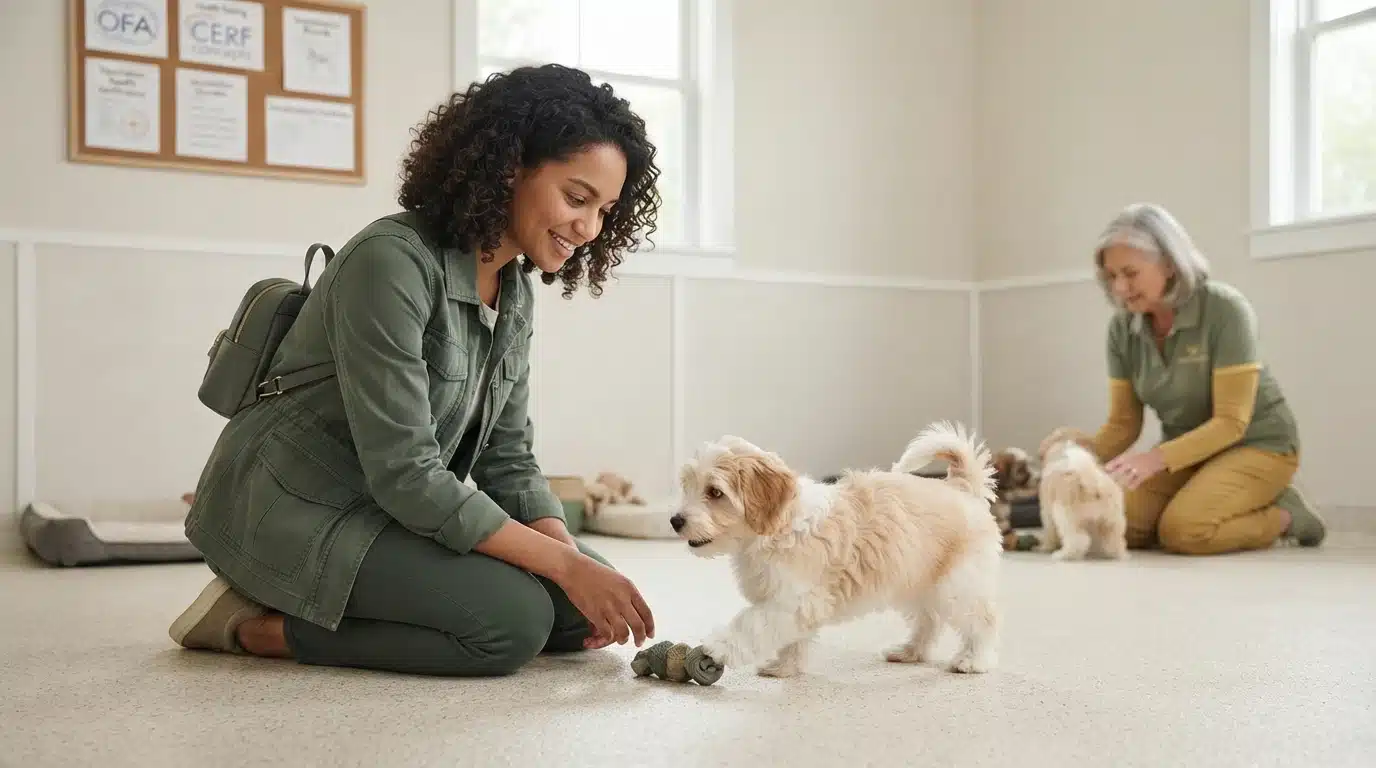
Visiting confirms the puppies live in a clean, indoor space with the mother, not in stacked cages or a detached shed. You can see flooring, bedding and how the litter reacts to strangers. What it cannot prove is daily effort. Ask how often each puppy is handled and by whom, because socialization is built through repeated contact, not through one tidy room.

Weaning age and litter socialization
Reputable breeders keep puppies with the mother and littermates until at least 8 weeks, matching what veterinary guidance on early development recommends. Those extra weeks matter: puppies learn bite control and calm behavior from their mother and siblings, and removing them early often shows up later as nipping or anxiety. Ask exactly when the litter was born and when pickup happens, and treat pressure to take a puppy before 8 weeks as a serious red flag.
Parent access and what it reveals about temperament
You should be able to meet the mother, and usually the father if he lives on site. Watch how she greets you: a confident, friendly dam suggests her puppies are likely to be calm and easy to train. A fearful, skittish or aggressive mother is a warning sign, because temperament has inherited components. When parents are unavailable, ask for videos showing their daily behavior. Breeders who raise Havanese, Havapoo and Cavapoo litters inside the home, as Sage Puppies does in South Jordan, Utah, can usually produce both.
Screening, Contracts, and Who Gets to Say No
What a serious application actually asks
A good breeder interviews you as carefully as you interview them. Expect written questions about your home, work schedule, children, other pets, past dogs and how you plan to handle training. Some programs also ask about your experience with small breeds. A thoughtful application and reservation process signals that the breeder cares where the puppy lands, not just whether the deposit clears.
Contract terms worth reading line by line
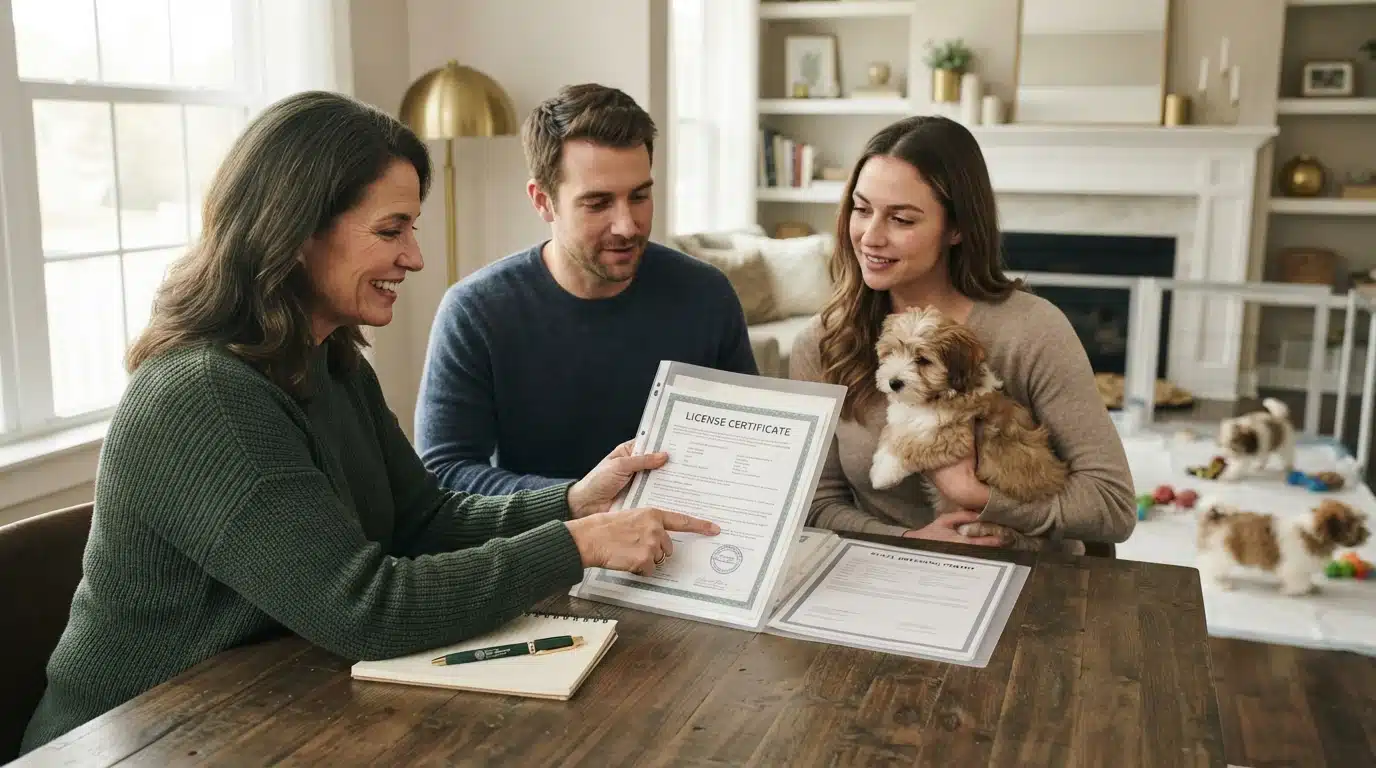
What should a puppy contract include? Look for these clauses:
- Health guarantee period, with what it covers and what it does not
- Spay or neuter clause, including any deadline and proof required
- Return policy, stating the breeder takes the dog back at any age
- Breeder contact terms, such as required health updates
Read each line before you sign. Ask questions about anything vague.

Why no screening is a meaningful signal
If a breeder takes your money with no questions, the sale matters more than the puppy’s future. Legitimate programs decline mismatches, so being screened is a good sign. No vetting, no waiting list, instant availability for several litters: those patterns point toward volume selling, and volume selling rarely pairs with health testing.
Pricing, Deposits, and Marketing Pressure
Why a high price proves nothing on its own
A steep price tag tells you what a breeder charges, not what a breeder does. Some backyard breeders and puppy mills price litters at boutique rates because buyers assume cost equals care. Compare the price against the evidence: health testing, the puppy purchase contract, socialization work, and references. A $4,000 puppy with no OFA paperwork costs more than a well-documented one.
Urgency, discounting, and invented scarcity
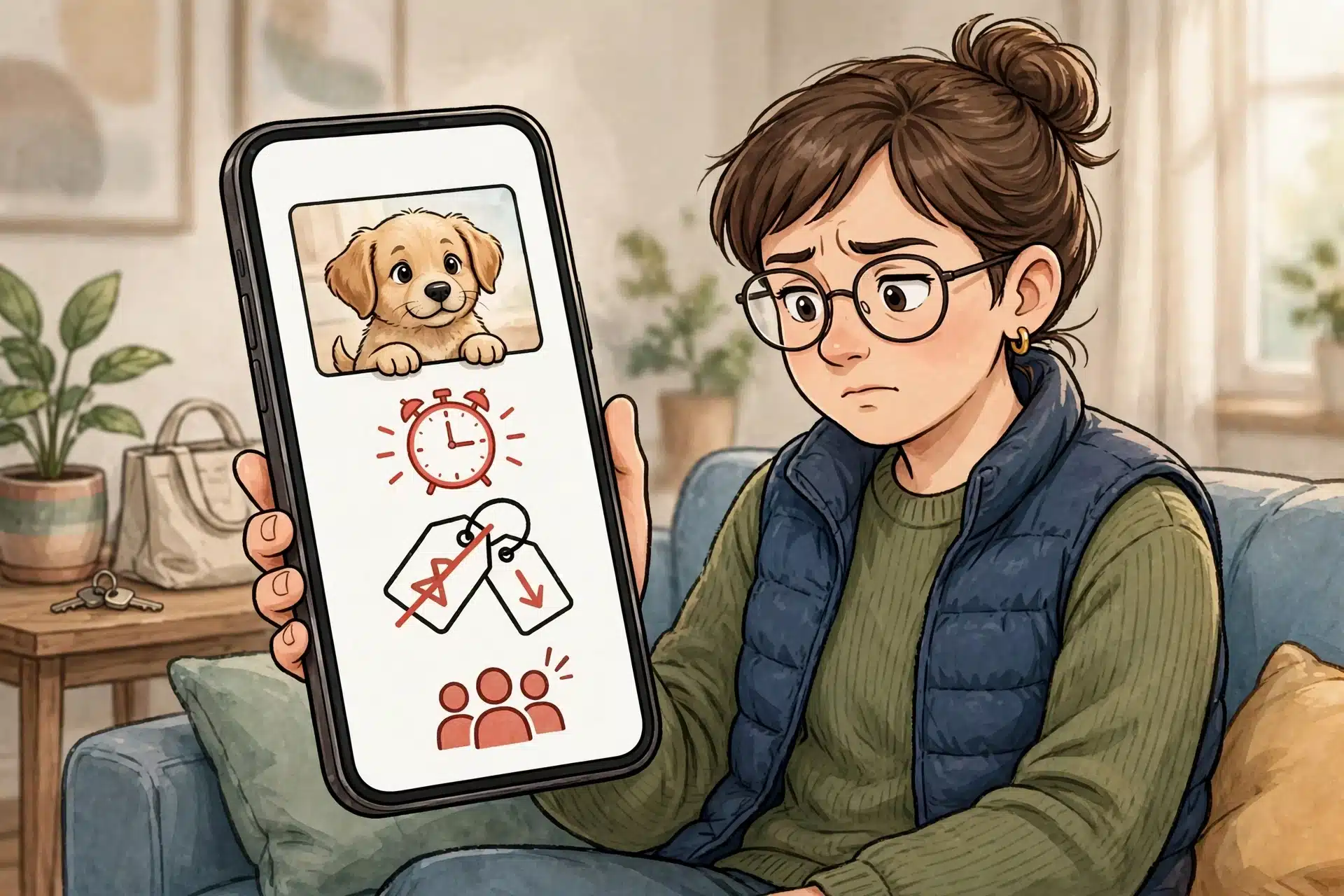
Scarcity tactics are classic puppy breeder red flags. Be careful when a seller claims three other families want the same puppy today, slashes the price for cash, or pushes you to decide before a vet visit. Real breeders also want good matches, so they screen you right back. A calm breeder may have a waitlist, but nobody should rush you.
Deposits, payment methods, and delivery fees
Never send a deposit by wire transfer, gift card, or payment app with no buyer protection, and never pay in full before you meet the puppy. Ask what the deposit covers, whether it is refundable, and when the balance is due. Get the deposit terms in writing within the contract. Delivery is where puppy scams multiply, so treat extra fees for transport as negotiable line items, not surprises. Chargebacks and disputes work only when you paid through a traceable method.
Tip: A legitimate deposit always ties back to a written agreement. If the seller resists putting terms in writing, walk away.
Sage Puppies, for example, publishes its price range and deposits before the application, so families know the full cost upfront.
Licensing, Registration, and Other Signals That Only Look Convincing
What USDA licensing actually covers
Does USDA licensing mean a breeder is reputable? No. It only means the breeder met a federal threshold, usually keeping dogs in covered breeding use, and follows minimum care standards for housing, food, and vet access. Those rules are a floor, not a mark of quality. Many puppy mills operate legally under license, so treat licensing as a starting check, never proof of how puppies are raised.
Registration, papers, and certificates
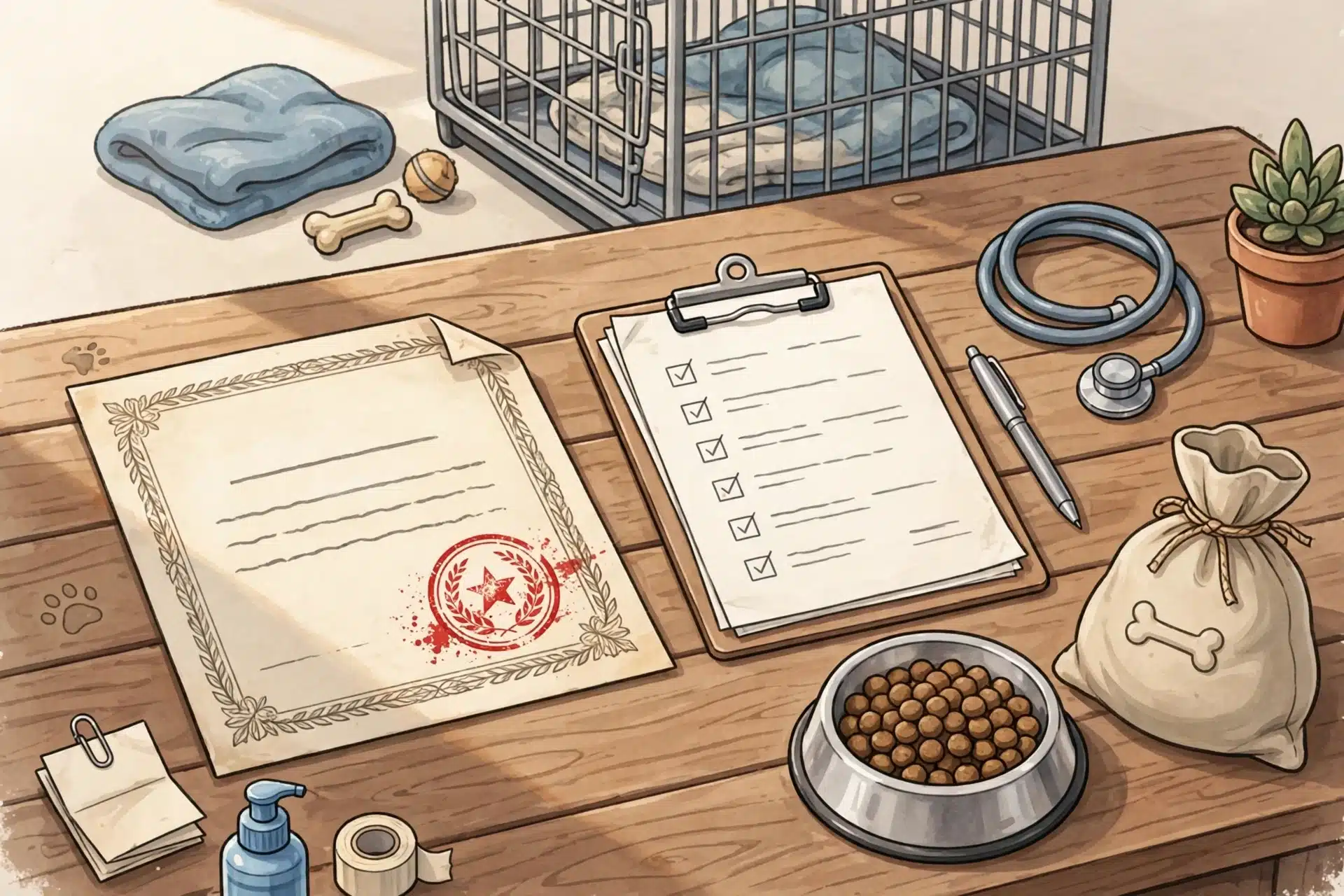
Registration papers prove lineage, not health or care. A puppy can be fully registered with a kennel club and still come from a neglected mother. The same goes for “champion bloodlines” and laminated certificates on a website wall. Ask what the paper actually documents. Then ask for the evidence that matters: parent health testing results and a written contract.
The sincere hobby breeder who simply lacks training
Not every warning sign points to a puppy mill. Some hobby breeders genuinely love their dogs but skip health testing, screens, or socialization plans because they don’t know better. They mean well, yet their puppies can still carry inherited problems. Ask direct questions and check answers against veterinary guidance. Kindness and competence are different qualifications.
Reading the Signals for Small-Breed Crosses Like Havapoo and Cavapoo
Crossbreed marketing versus crossbreed documentation
“Doodle” branding sells well, but marketing is not evidence. A Havapoo or Cavapoo breeder verification should still rest on the parent breeds’ tests. For Havanese lines, that means OFA patellas, hips, and annual eye exams, the three tests behind a CHIC number. Ask which side of the cross was tested, and ask for proof.
What a small owner-managed program looks like
Small crosses often come from home programs, so the signals shift from facility size to ownership. Expect one person who knows every puppy by name, screens buyers with a real application, and keeps litters indoors with the mother until at least 8 weeks. A program like Sage Puppies fits this model: two breeds, documented parent testing, and the owner personally handling matching and questions.
Applying the criteria when you cannot visit in person
Distance does not lower the bar; it changes the tools. Use live video calls to see the mother, litter, and living space in real time. Verify each parent’s results yourself in the public OFA database. Then ask the breeder to walk you through health records and contract terms on camera before any deposit.
Which Should You Choose: Reputable or Backyard?
For most families, a reputable breeder is the safer pick because health testing and socialization start before you ever pay. A backyard breeder can still produce lovely puppies, but you carry more risk with no paperwork to fall back on.
When each option can be reasonable
A reputable breeder fits nearly every situation, especially for first-time owners or families with kids. A small home breeder can be reasonable if the mother lives there, the litter stays inside until at least 8 weeks, and the breeder answers health questions openly. Even a well-meaning backyard litter deserves the same checks, because good intentions do not replace OFA eye, patella and hip records.
The three-document rule before you pay
How do you tell a reputable breeder from a backyard breeder? Request three documents and compare them before any money changes hands:
- Health test results – OFA or CHIC records for the parents’ hips, patellas and eyes.
- A written purchase contract – covering the health guarantee, returns and any spay-neuter clause.
- Veterinary records – vaccination and deworming dates for your specific puppy.
A seller who stalls on all three has told you everything you need to know.
What to do if you already sent a deposit
Act fast. Ask for the three documents in writing and set a short deadline. If the seller dodges, requests surprise shipping fees, or pressures you with “another buyer,” treat it as a scam and contact your bank or payment app right away, as the FTC advises. The BBB found that most pet scams add extra charges after the first deposit, so stop paying the moment new fees appear.

Now you know what to ask. If you want a health-tested Havanese, Havapoo or Cavapoo from a program that raises puppies indoors with their mother and answers every question openly, start with the application at Sage Puppies and take your next step with confidence.
Frequently Asked Questions
Q1: How do you tell a reputable breeder from a backyard breeder?
Ask for three documents before paying: parent OFA or CHIC health results, a written contract with return terms, and your puppy’s own vet records. A backyard breeder usually stalls on all three or offers photos instead of paperwork.
Q2: Can a backyard breeder also be a puppy mill?
No. A backyard breeder is often a household with one pet litter; a puppy mill breeds many dogs for volume. Both can lack health testing, so apply the same checks either way.
Q3: Are registered puppies automatically healthy?
No. Registration papers prove lineage only. Always verify parent health testing separately.
Q4: What deposit method is safest?
Use traceable payments with buyer protection. Avoid wire transfers, gift cards and untraceable apps.
Q5: Can I verify a breeder without visiting?
Yes. Request a live video call, then look up each parent’s OFA numbers yourself in the public database.
Conclusion
In the reputable vs backyard breeders comparison, proof separates the two every time. A reputable breeder shows parent health testing on file with OFA, keeps puppies with their mother until at least 8 weeks, screens buyers, and signs a written contract with return terms. A backyard operation relies on photos, urgency, and instant availability. Apply the three-document rule: health test results, a signed puppy purchase contract, and your puppy’s own vet records, all before any deposit. Registration papers and a high price prove nothing on their own. When a seller stalls on any document, that answer is your answer.