Quick Summary: For most families, bringing home one puppy is the smarter start because it costs roughly half as much in the first year, trains faster, and allows stronger family bonding. Two litter mates can succeed only with two experienced handlers, separate crates, training, walks, and socialization, since same-age puppies can become overly dependent on each other. The best middle path is to raise one puppy for six to twelve months, then add a well-matched second, with Sage Puppies helping families screen puppies based on temperament and household needs.
Two Havapoo pups from the same litter, curled up in one bed, sound like the cutest thing you will ever bring home. They can also be the fastest way to end up with two dogs who panic when apart. Most first-time families do better with one puppy now and a well-matched second dog later. Two litter mate puppies only work when your household can give each one separate training, socialization, and one-on-one time. This guide compares both paths across cost, training load, daily life, and long-term outcomes, explains littermate syndrome, and gives you clear questions to ask any breeder offering family-raised puppies.
Litter Mates vs a Single Puppy: At a Glance
| Raising two litter mate puppies | Raising a single puppy | |
|---|---|---|
| Training and supervision | Double the sessions and near-constant supervision, with separate training required so one dog does not mask the other’s progress | One puppy, one schedule, and full attention available for house training, name response, and leash skills |
| Cost and expenses | Two puppies, two sets of supplies, two food budgets, and two vet bills from day one | One puppy’s purchase price, one set of supplies, one food budget, and one set of routine vet visits |
| Daily household life | Busier and louder, with play-wrestling that can escalate and two separate sleep and crate schedules to manage | Calmer for the household and easier for a first-timer to manage training, visitors, and settling in |
| Best suited for | Experienced dog owners with time, energy, and a plan for separate socialization | First-time owners, busy families, apartment households, and anyone starting puppy training from scratch |
| Long-term outcome | Can work well, but carries real littermate syndrome risk if the dogs lean on each other instead of on the family | Faster, more reliable training progress and a dog that bonds confidently with the whole family |
How Raising two litter mate puppies and Raising a single puppy Compare
Raising two litter mate puppies
Bringing home two puppies from the same litter means one home, one training schedule, and one budget covering everything twice. It suits experienced owners who have time, energy, and a real plan for separate socialization. The upside is built-in play; the risk is littermate syndrome if the pair lean on each other instead of on you.
Key strengths
- Built-in companionship and play from day one
- One pickup trip and one adjustment period for the household
Raising a single puppy
Raising a single puppy puts your full attention, training time, and budget behind one dog. It fits first-time owners, busy families, and apartment households who want a calmer start. One schedule and one set of vet visits make early progress easier to see and shape.
Key strengths
- One schedule, one budget, and full training attention
- Faster, more reliable progress and whole-family bonding
What Littermate Syndrome Actually Is
Littermate syndrome describes a set of behavior problems that can show up when raising two puppies from the same litter (or any same-age pair) in one home. The pups bond so tightly to each other that they struggle to bond with people. Common effects include panic when separated, poor focus during training, and fear of new dogs and people.
The Warning Signs Families Actually Notice
Watch for these at home:
- One puppy collapses or howls when the other leaves the room
- Neither pup responds to their name without the sibling nearby
- Leash training stalls because each pup stares at the other
- One pup grows bold; the other stays behind it, learning nothing
- Play tips into nonstop roughhousing with no off switch
Most of this surfaces between 6 and 12 months, well after pickup day.
Why Same-Age, Same-Breed Pups Are the Risk Pair
Littermate syndrome is not about shared blood. It is about shared age and developmental windows. Two same-age pups hit fear periods and adolescence at once, so bad habits reinforce each other. This is why littermate syndrome can appear in two unrelated puppies born weeks apart, not just true siblings.
Evidence Versus Assumption
Here is the honest part: the label has weaker science than the internet suggests. Penn State Extension calls it a phenomenon, not a true syndrome, and an IAABC Foundation analysis found no scientific proof it exists as described. What is real is the risk of codependence when owners skip separate training and socialization. Well-run programs, including those raising family-raised puppies with individual attention, manage this by matching each pup to people first. Separate walks, separate crates, and separate classes prevent most of it. So the risk is manageable, but only with deliberate effort.
Training and Supervision: One Schedule or Two
One puppy gets one schedule. Two puppies get two, and that is the whole job in a sentence. Trainers who work with littermates are blunt about it: you must train each pup separately and also run short sessions together, so each dog learns to listen to you, not to its sibling.
Why Two Puppies Cannot Train Together
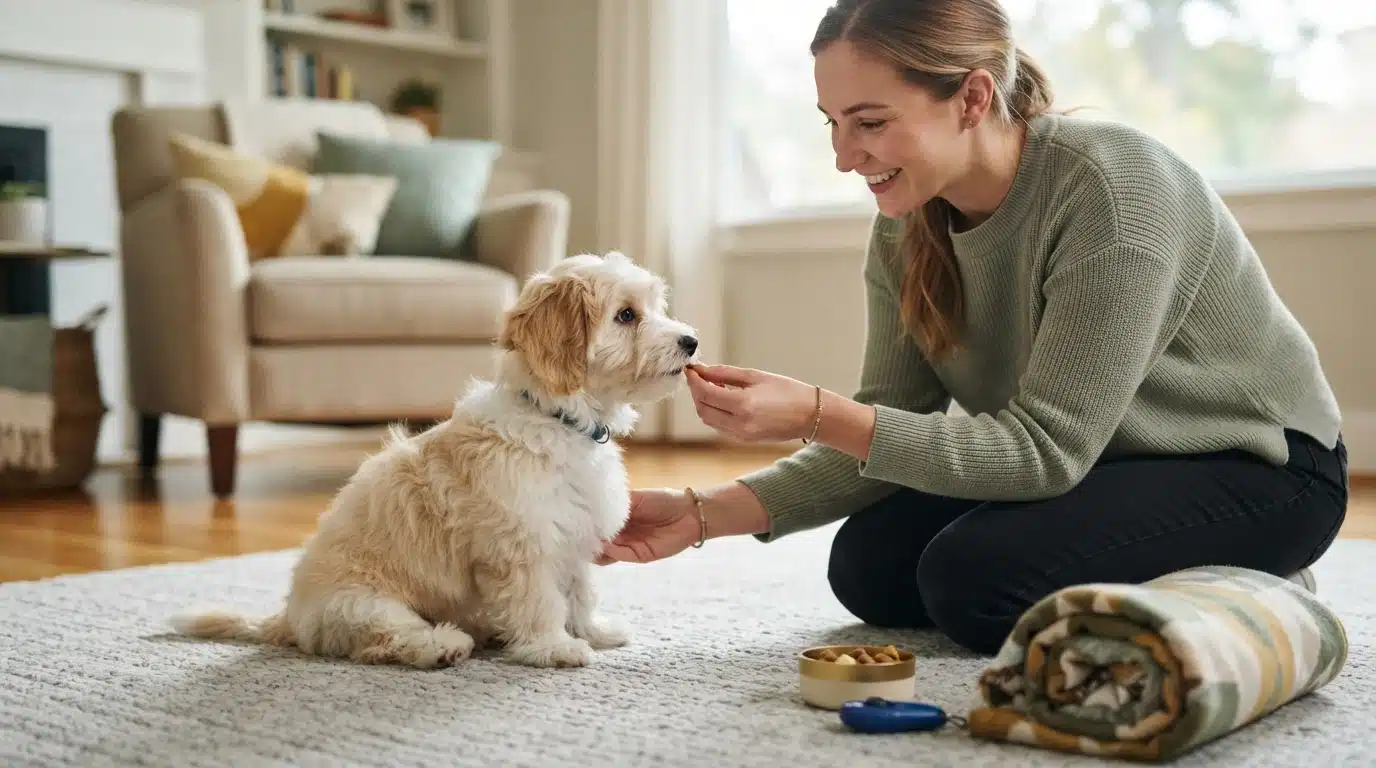
When you practice sit with both pups in the room, neither learns much. Each one watches the other, competes for treats, or waits for the sibling to figure it out. Trainers recommend one puppy crated while the other works, then swap. That doubles every session: two recalls, two name games, two settle drills. Short five-minute blocks still work well with Havanese and doodle mixes, so the time adds up faster than the effort per block.
The Supervision Load in the First Eight Weeks
Free time is where littermates drift into trouble, so most trainers build in separate outings and separate training classes for each pup. Practically, that means one adult per puppy for play sessions, potty trips, and car rides in the early weeks. Tag-teaming works, but both adults cannot be off duty at once. Single-puppy homes can share supervision; two-puppy homes schedule it.

House Training One Versus Two
House training doubles for the same reason: two bladders, two signals, two mid-night trips. Accidents also feed each other, because one puppy’s mess can cue the other to go in the same spot. Watch each pup individually, reward the instant each one finishes outside, and clean with an enzymatic spray. Guidance on raising small breeds well runs through Sage Puppies’ training problems and fixes, including house-training setbacks.
Cost and Expenses: The Two-Puppy Math
So how much more does it cost to raise two puppies? Roughly double, with a few shared savings. Here is a labeled example for one Utah household bringing home two Havanese litter mates.
| Cost Item | One Puppy | Two Puppies |
|---|---|---|
| Purchase price | $3,500-$4,500 | $7,000-$9,000 |
| First-year vet, food, supplies | $1,500-$2,000 | $3,000-$4,000 |
| Training classes | $235-$385 | $470-$770 |
| Example first-year total | $5,235-$6,885 | $10,470-$13,770 |
Purchase Price: A Pair Versus Two Separate Puppies
Buying litter mates does not earn a discount at most family programs. You pay the full price per puppy, twice. Sage Puppies lists its Havanese, Havapoo and Cavapoo puppies at $3,500-$4,500, and its current pricing and reservation page shows the up-to-date figures before you apply. Two single puppies picked up months apart cost the same.
Monthly Costs That Double
Ongoing costs scale almost one to one. Two puppies eat twice the food, need two crate setups, two vaccine series, two spay or neuter surgeries, and two doses of preventives. Pet insurance runs per dog, not per household. Rover estimates first-year puppy costs between $1,460 and $6,745 before the purchase price, so a pair can land anywhere in the $2,900 to $13,500 range on top of buying them.
The Costs Families Forget
A few line items surprise people. Grooming doubles for Havanese coats, since both pups need trims every four to six weeks. Boarding or pet sitting costs twice when you travel. And training often costs more than double, because litter mates need separate classes and separate walks to build individual skills.
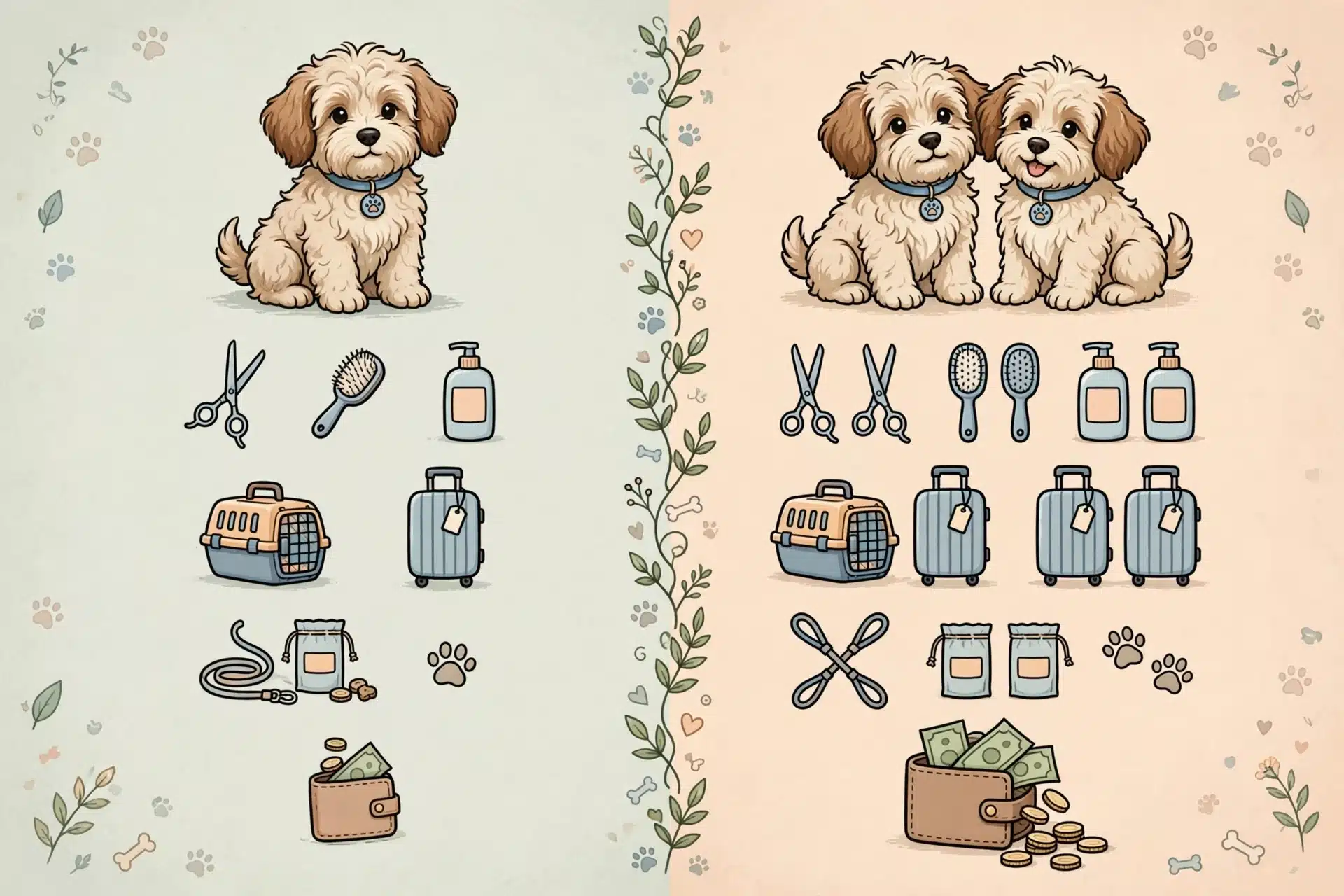
According to the American Kennel Club figures cited by MarketWatch, the average upfront cost of owning a dog in 2025 was about $2,127, and a second dog adds that again.
Daily Household Life With One Puppy or Two
Play, Sleep, and the Roughhousing Question
A single puppy plays with you, naps when the house settles, and learns your household rhythm fast. Two puppies play with each other, and that play runs hot. Trainers advise separating the pups for some play sessions so the less confident one finds her own footing. Expect loud wrestling, then watch for stiff posture or yelps that do not pause the game. Separate crates and short solo play breaks keep the intensity healthy. Not every tumble needs rescuing.
How Two Puppies Change Your Household
Two puppies double the potty trips, the chewed shoes, and the 6 a.m. wake-ups. You will also split them for training, walks, and vet visits, since each needs one-on-one time with people. That alone time matters. Puppies raised together can bond so tightly that one panics when apart, which is why family-raised puppies who grow up with people start ahead. Budget the schedule, not just the money.

What Changes When the Second Puppy Arrives Later
Adding a puppy to an adult dog is its own project. Your older dog sets the rules, so supervise early play and give him escape routes. Introduce them on neutral ground, feed separately at first, and keep the newcomer’s training solo. Slower starts beat fast friendships that go sideways.
Litter Mates Versus a Single Puppy: How to Decide
Should you get two litter mate puppies or just one? For most households, one puppy is the safer choice because raising two together doubles the work and cost while raising the risk of littermate syndrome. But a pair makes sense in specific situations:
- You have ample time, space, and budget for twice the training, vet visits, and supervision.
- Every family member is on board with the workload.
- You want companionship for the dogs more than individual focus on each.
- You have experience raising puppies and can commit to separate socialization for littermates from day one.
If any of those boxes go unchecked, a single puppy usually grows into a better-adjusted companion.
When Two Litter Mates Are the Right Call
Some families genuinely thrive with a pair. Retired owners who are home all day often do well, because they can split the puppies for separate walks, crates, and training sessions. Experienced owners who understand the risk can also manage two successfully. The key is treating them as two individual dogs from the start: separate crates, separate training time, and one-on-one outings. Skip that separation work, and the puppies bond to each other instead of to you.
When One Puppy Is the Better Choice
Choose one puppy if you work away from home, if this is your first dog, or if the budget math made you pause. A single puppy learns faster because your attention is undivided. House training, crate training, and basic manners all come more quickly. One puppy also lets each family member build a real bond, which matters more than most people expect before pickup day.
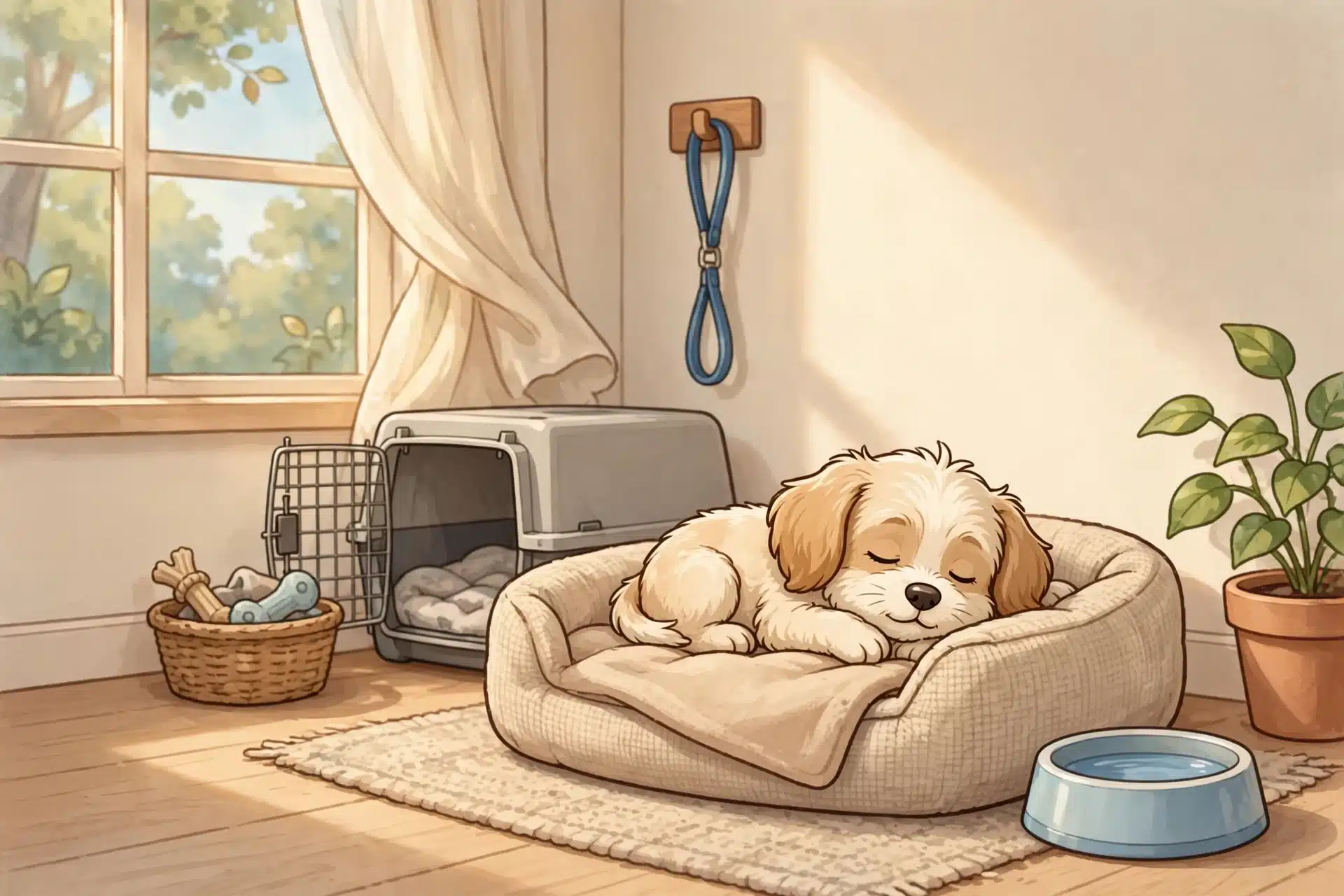
The Middle Path: One Puppy Now, a Second Later
Many families land here. Start with one puppy, raise it through the demanding first six to twelve months, then add a second when the timing is right. Second-puppy timing works best when you can check these boxes:
- Your first dog has solid house training and basic manners.
- Someone is home often enough to supervise the early weeks.
- Your budget absorbs a second round of vet bills and training classes.
- Your first dog has shown friendly, relaxed behavior around other dogs.
A breeder who matches temperament carefully, the way Sage Puppies does, can help you pick a second puppy that fits the dog you already have. Wait at least six months between pickups. The gap lets each puppy become its own dog first, so the pairing builds a bond instead of a dependency.
Finding Family-Raised Puppies Near You: What to Ask
What Family-Raised Actually Looks Like
A true family-raised puppy grows up in a kitchen, not a kennel run. The pups hear dishes, kids, and vacuums from week three onward, which builds early confidence. When you search for family-raised puppies for sale near me, ask where the litter sleeps, how many people handle the pups daily, and whether the home-raised small breed puppies in Utah live with the mother the whole time.
Questions to Ask Before You Commit
Bring a short list to every breeder conversation:
- Health: Are the parents tested, and can I see records?
- Socialization: What sounds, surfaces, and people has each puppy met?
- Temperament matching: How do you match a pup to my household?
- Support: What happens if the fit is wrong in the first weeks?
- Paperwork: What comes home with the puppy on pickup day?
Any breeder who answers these easily is worth a second conversation.
Local Pickup in Utah, Delivery Elsewhere
Utah families can meet the litter in person, which tells you more than any photo. For pickup or delivery from South Jordan, Utah, ask how travel days are handled, what the puppy rides in, and when you will get updates. Many families nationwide on the available puppies page choose a flight nanny instead of cargo, so the pup arrives calm and handled.
Which Should You Choose: Litter Mates or a Single Puppy?
The Decision in One Minute
For most families, one puppy is the simpler, smarter start. A single pup bonds with you, trains faster, and costs roughly half as much in year one. Pair the price table earlier in this article with your own schedule and the answer usually becomes clear.
Choose two litter mates only if you meet all three conditions:
- You have two experienced handlers in the house
- You can give each puppy separate socialization, separate training, and separate sleep spots every day
- Your budget absorbs the doubled first-year cost, around $10,470-$13,770 by our example
If you want the pair but miss those conditions, the middle path wins: bring home one puppy now, then add a second in 6 to 12 months. By then the older dog has manners, and the age gap blocks littermate syndrome before it starts, the problem trainers see when two puppies raised together bond to each other instead of to people.
Your Next Step With Family-Raised Puppies
Start with temperament, not timing. Whether you adopt one pup or two, the match matters more than the count. Good breeders screen homes, answer the two-at-once question honestly, and help you plan second puppy timing. That screening is part of what you should expect from anyone offering family-raised puppies for sale near me, including our own application process here in South Jordan. A breeder who says yes to two litter mates without asking a single question about your household is telling you something. Listen.

Still torn between one pup or two? Talk it through with Cassie at Sage Puppies. She matches each Havanese, Havapoo and Cavapoo puppy to your household, not just your wishlist. Browse current litters and pricing, then submit your application to get started.
Frequently Asked Questions
Q1: Is it better to get litter mates or a single puppy?
For most families, one puppy is the safer start. A single pup trains faster and costs roughly half as much in year one. Choose litter mates only if you have two experienced handlers, time for separate socialization for littermates, and room in the budget.
Q2: What is littermate syndrome and how can I prevent it?
Littermate syndrome describes sibling puppies bonding to each other instead of to people, causing panic when apart and weak focus. Prevent it with separate crates, separate training sessions, and separate walks from day one.
Q3: How much does raising two puppies from the same litter cost?
Roughly double. Our example budget shows $10,470-$13,770 for two puppies in year one versus $5,235-$6,885 for one, covering purchase price, vet visits, food, supplies, and training classes.
Q4: When is the best second puppy timing?
Wait at least six months, ideally until your first dog has solid house training, basic manners, and relaxed behavior around other dogs. The age gap blocks codependence before it starts.
Q5: Should I get two puppies at once if I work full time?
Usually not. Two puppies need one adult per puppy for potty trips, play, and training in the early weeks. A single puppy fits working households far better.
Q6: What should I ask breeders offering family-raised puppies for sale near me?
Ask where the litter sleeps, how many people handle each pup daily, whether parents are health tested, how temperament matching works, and what happens if the fit is wrong. Easy, specific answers signal a good program.
Q7: Can Utah families meet the litter before pickup?
Yes. Local pickup in South Jordan lets you meet the litter and mother in person. Families nationwide can use a flight nanny, so the puppy arrives calm and handled rather than shipped as cargo.
Conclusion
One puppy or two comes down to attention, not cuteness. A single pup costs roughly half as much in year one, trains faster, and bonds with the whole family. Raising two puppies from the same litter can work, but only with separate crates, separate training, and separate socialization from day one, or the pair risks littermate syndrome. The middle path, one puppy now and a well-matched second in six to twelve months, suits most households best. Whichever route you take, temperament matching matters more than timing, so choose a breeder who screens your home honestly.