Quick Summary: A Havapoo puppy barking at the entry door in a thin-walled apartment is not being defiant, so match the noise to its cause before training: alert barking, demand whining, over-tired fussing, or separation distress. Start with a 48-hour log of time, trigger, sound, and duration, then fix the setup first, using draft stoppers, closed blinds, a settle zone, and 18 to 20 hours of daily sleep to cut rehearsal. Respond in the moment (quietly acknowledge and reward silence for alert barking, ignore and withdraw for demand barking), train one quiet alternative like a mat settle with a marker word, and counter-condition sounds at low intensity. Change one variable at a time and expect clearer results in two to three weeks, escalating to a vet or certified trainer if separation distress ramps up, while Sage Puppies litters of Havanese, Havapoo, and Cavapoo are bred and matched with apartment homes in mind.
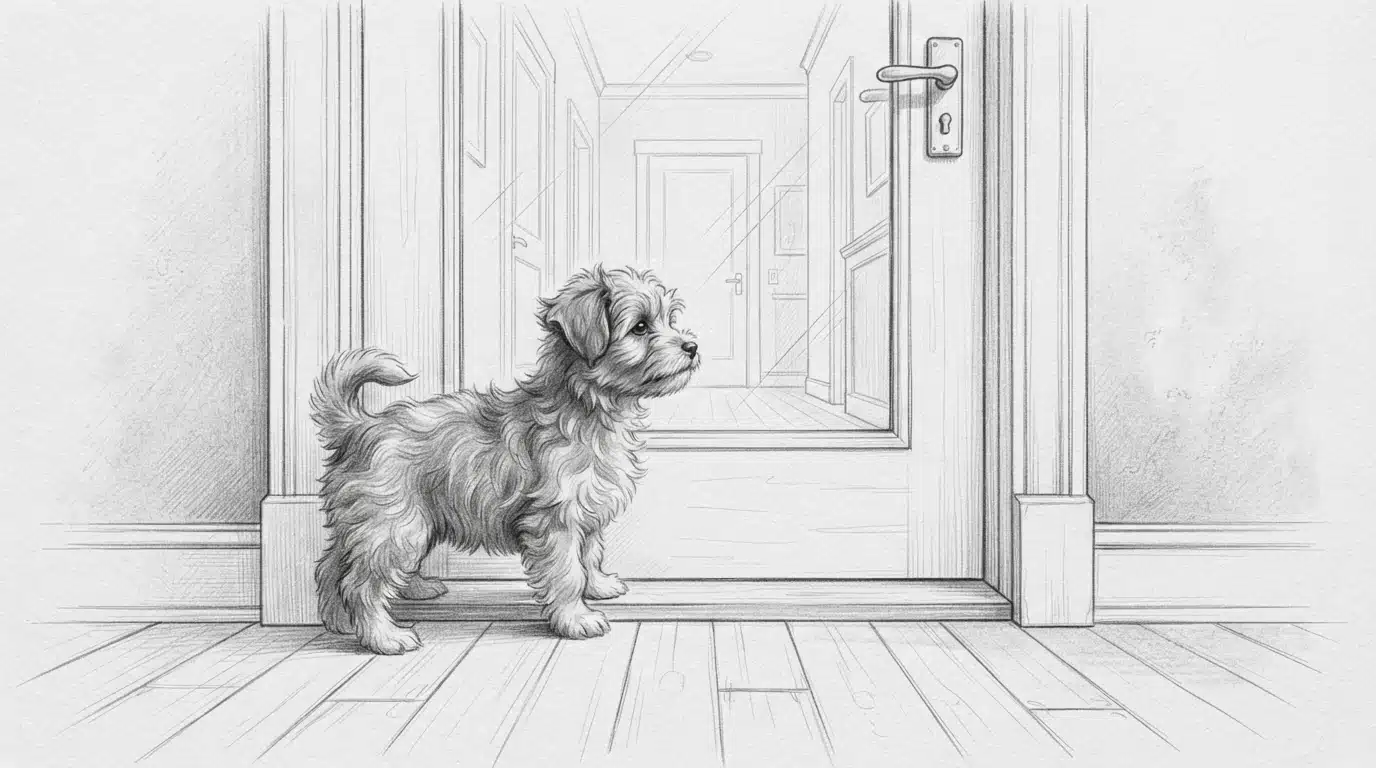
It is 6:40 p.m. in a second-floor unit. The hallway has filled with returning neighbors, and your Havapoo puppy is planted at the entry door, barking at a door that has not opened yet. That is not defiance. That is a small body hearing a sound field an apartment was never designed to absorb, and the hardest part of puppy barking solutions in shared housing is that the noise bothers people through walls you cannot control.
Generic advice tells you to stop dog barking with one command. That fails here, because a small dog barking at the elevator, whining when you shower, and fussing at bedtime are four different behaviors with four different fixes. This guide separates alert barking, demand whining, over-tired meltdowns, and separation vocalizing, then maps each one to the realities of apartment living with a new puppy. Every protocol follows current reward-based guidance, and it draws on Sage Puppies’ work with Havanese, Havapoo, and Cavapoo families, many of them in first-floor-noise, thin-walled buildings, plus clear points where a vet or certified trainer should step in.
Why Your Small Breed Puppy Barks and Whines in an Apartment
Your small breed puppy barks and whines in an apartment for four main reasons: alert barking at sounds like hallway steps and elevator dings, demand barking for attention or food, whining from an over-tired body, and vocalizing linked to being left alone. None of these mean your puppy is “bad.” They are normal puppy signals that a small body in a shared building makes loud, fast, and easy for neighbors to hear.
Small breed bodies meet apartment sound
A Havanese puppy weighs less than ten pounds, so its bark travels down a hallway the same way a chime travels through an office. Hard floors, thin doors, and shared walls carry sound both ways. Your puppy hears footsteps, trash chutes, and closing doors all day, so it has more triggers than a puppy in a house. The fix starts with noticing which sounds set it off, then managing the setup before you start the month-one training timeline.
The four categories of barking and whining
Why does my small breed puppy bark and whine in an apartment? Match the sound to a cause before you try to stop dog barking:
- Alert barking: sharp, repeated barks at hallway or elevator noise.
- Demand barking: pushes for play, food, or eye contact, often with staring.
- Over-tired whining: fussing when a nap was missed or arousal spiked.
- Separation vocalizing: whining that starts when you leave, and keeps going.
Each category needs a different response, so guessing wastes weeks.
What Havanese, Havapoo, and Cavapoo puppies add to the picture
These companion breeds were bred to work closely with people, so they read your habits fast and learn that whining pays. That is intelligence, not manipulation. Breeders like us see it daily in litters: a puppy that gets attention on cue is calmer than one rewarded for noise. Stick to reward-based methods, which the AVSAB humane training position statement recommends for behavior problems, and expect progress through practice, not overnight.
Step 1: Log the Triggers Before You Change Anything
Your puppy’s barking has causes, and guessing at them wastes days. Before you correct anything, spend two days finding out what actually sets each noise off. A short, honest log tells you whether you are dealing with alert barking at the hallway, demand whining at your feet, or true separation distress, and those need different fixes.
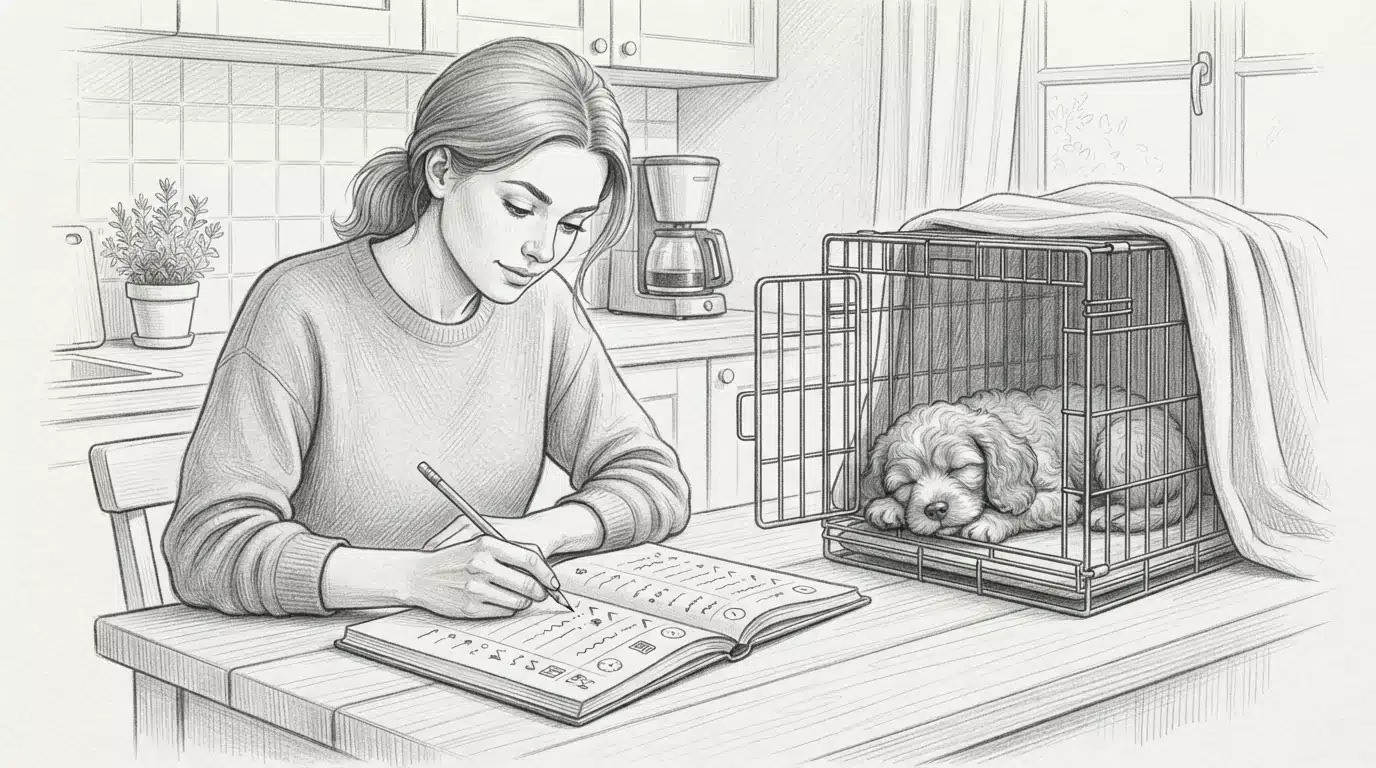
Build the 48-hour trigger log
Keep a note on your phone or a pad by the door. For two full days, write down four things for every barking or whining episode: the time, what happened just before it, the sound your puppy made, and how long it lasted. Note body language too, like a stiff tail, a play bow, or ears pinned back. Be exact. “Barked at 6:40 p.m. when the elevator chimed, sharp repeated yips, three minutes” beats “barked a lot this evening.”
Map each trigger to a sound path in your unit
Apartments carry noise in predictable lanes. Hallway footsteps and elevator chimes travel through the entry door. Drainpipe and plumbing sounds come from shared walls. Street noise rises through windows, and neighbor voices drift across thin floors. Stand where your puppy rests and listen for a few minutes to find each path in your own unit. Mark them on a simple sketch. If entry-door sounds dominate, checking out advice for choosing a puppy suited to apartment living can add helpful context, but the log still rules the plan.
Read the log for the real pattern
After 48 hours, count episodes by trigger and time. Most logs show one clear winner, often hallway noise near dinner. Fix that top trigger first and you usually quiet more than half the barking before any training session even starts.
Step 2: Fix the Apartment Setup Before the Barking Starts
Training fights a losing battle when the apartment itself keeps re-firing your puppy’s triggers. The fastest way to help stop dog barking is to manage the setup first: block the hallway trigger, cut the window sight line, and give your puppy one place to settle. Here is how to do it.
Manage the entry door and hallway
Hallway noise is the top trigger in multi-unit housing. Footsteps, elevator dings, and keys in locks all register as “someone is coming.” Track when your building is busiest, then plan around it. During peak hours, feed meals or stuff a Kong near the door so hallway sounds predict good things. Add a foam door draft stopper and a weather strip to muffle sound through the gap. Ask neighbors to text before visits so you can prep. Over a few weeks, counter-conditioning to sounds works best when the sound stays below the threshold where barking starts.
Cut the window and balcony sight line
If your puppy barks at every dog, stroller, or delivery driver below, the view is the problem. Close blinds during trigger hours, or apply frosted window film that lets light through but blocks detail. Skip balcony watching entirely for now. Threshold training means your puppy only sees triggers at a distance or intensity she can stay calm at, and an eighth-floor window gives her none of that. Remove the rehearsal and the habit fades.
Build a settle zone and manage sleep and enrichment
Over-tired puppies bark far more than tired adult dogs, and small companion breeds crash hard. Set up a settle zone away from the front door, using a crate or playpen with a settle mat. Enforce naps: most puppies this age need 18 to 20 hours of sleep daily, so cap wake windows at about an hour. Add two or three short enrichment sessions each day, like snuffle mats or lick mats, which lower arousal naturally.
A puppy who is rested, fed, and safely enclosed barks a fraction as much. Fix the environment first, then Step 3’s in-the-moment response has something to work with.
Step 3: Respond Correctly in the Moment of Barking
Your response has to match the trigger. The same yip at 6:40 p.m. might mean the neighbor dropped a key, your puppy wants your dinner, or she has simply been awake too long. Read the situation first, then act.
Alert barking at a hallway or window sound
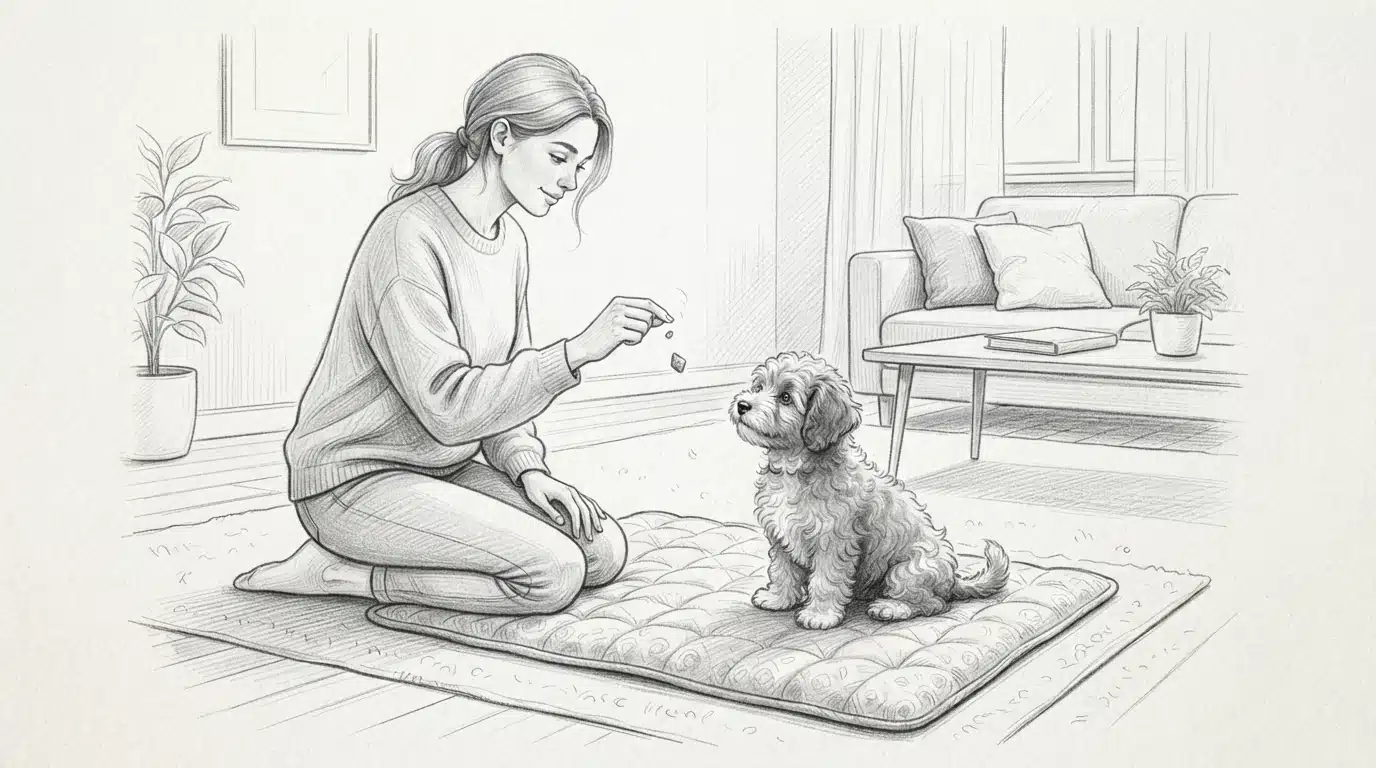
Stop apartment barking at hallway noise with this calm interrupt sequence:
- Quietly acknowledge: say “thanks, I hear it” in a flat, low voice.
- Walk to your puppy, guide her a few steps away from the window or door.
- Cue “settle” on a mat and feed a treat the moment she is quiet.
- Repeat the treat every few seconds while the sound continues, then space them out.
- End with a chew or stuffed toy so the event closes on something good.
Never yell, because your voice joins the noise she is reacting to. Over weeks, pair hallway sounds with treats from a distance to build a calmer default.
Demand barking for attention, food, or access
Demand barking is a negotiation tactic, and Havanese and doodle mixes are skilled negotiators. The rule is simple: barking never earns the reward, silence does. Look away, step back, or leave the room for a few seconds when the noise starts. The instant she pauses, turn back and give her what she wanted, calmly. If you sometimes give in, you teach her to bark longer and louder. Consistency from every person in the household matters more than any single correction.
Over-tired barking and separation whining
Whining when you leave the room splits into two branches. Attention-seeking whining stops within a minute or two of you being gone; ignore it and reward quiet. Distress vocalizing ramps up: trembling, pacing, scratching at the door. That is separation distress, not naughtiness, and it needs a gradual alone-time plan or help from a trainer or your veterinarian. Also check the clock first. A puppy past her wake window often just needs a nap, not training.
Step 4: Train a Quiet Alternative Your Puppy Can Actually Perform
Punishing barking in a small breed puppy rarely works, and AVSAB’s humane training statement recommends reward-based methods instead. Your puppy needs something better to do than bark, so teach one quiet behavior and pay for it well.
Choose the alternative behavior and the marker
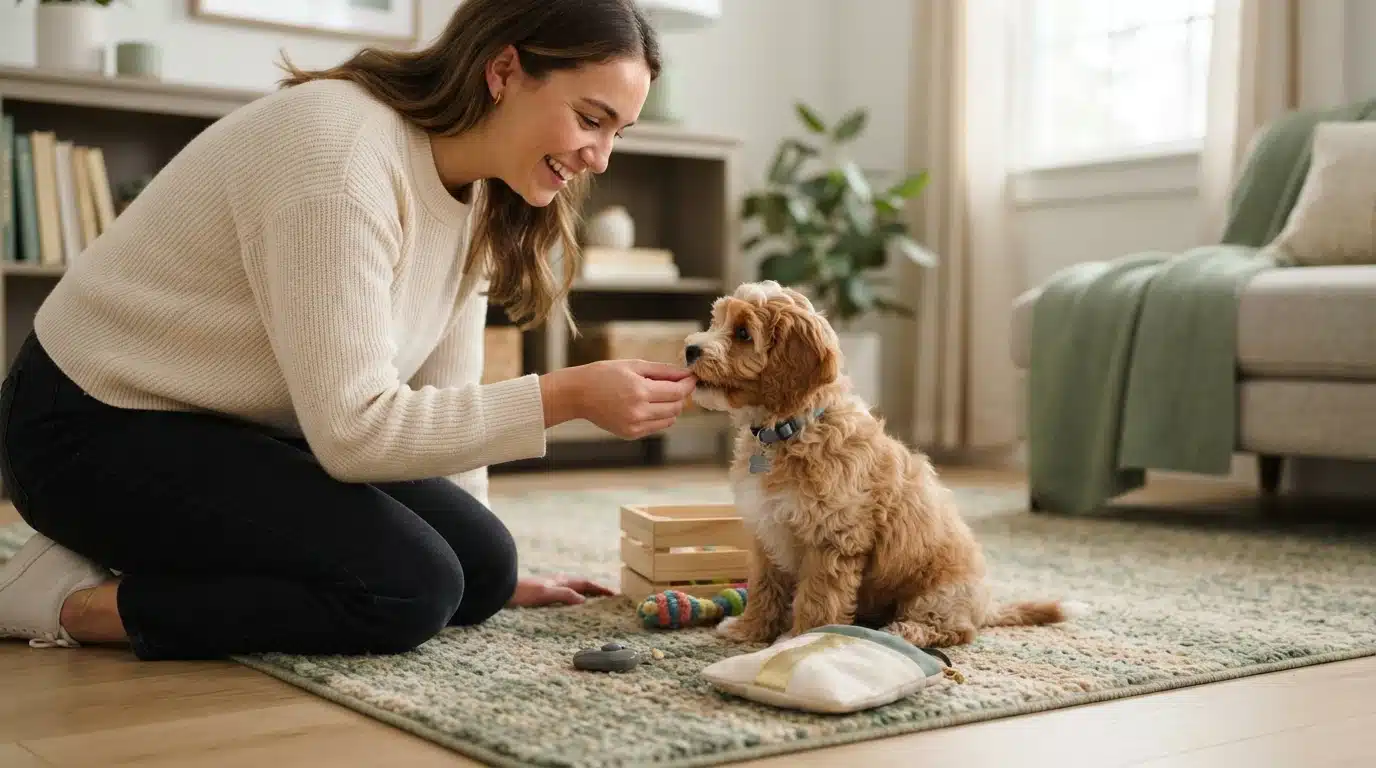
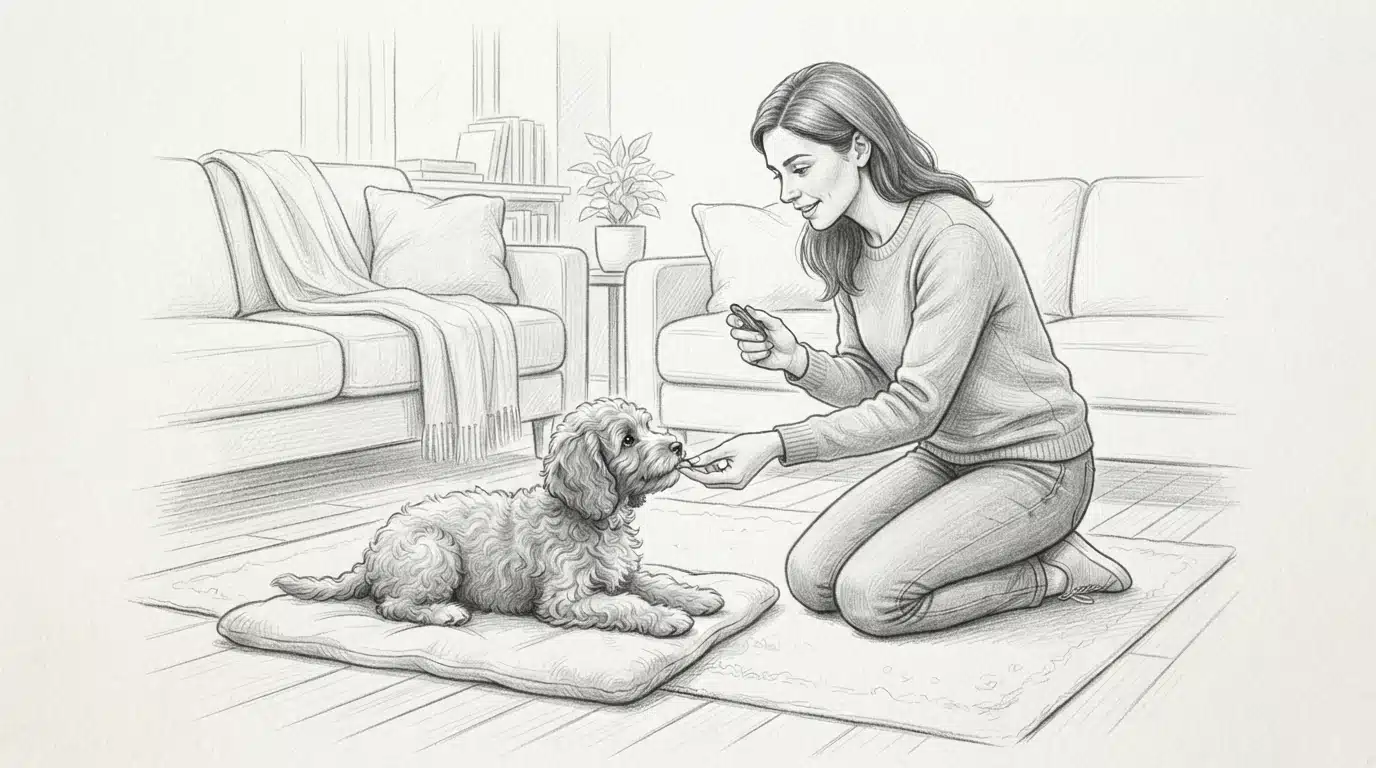
Pick a behavior your puppy can hold while aroused. A “settle” on a mat, a down-stay, or a hand target all work in a small apartment. Then choose a marker word, such as “yes,” said at the exact moment of quiet. The marker tells your puppy which action earned the treat. Keep it simple: one behavior, one marker, one reward your puppy loves. Use pea-sized treats so you can repeat often without upsetting a small stomach.
Run short, clean repetitions
Train below the barking threshold first. Practice in a quiet room with no hallway noise, five reps at a time. Say the cue, wait for the behavior, mark, and reward. Add tiny challenges one at a time: a knock on your own door, then a recording at low volume, then the real thing from a distance. If your puppy breaks position or barks, the step was too big. Drop back one level and end that session on an easy win. Two or three short sessions a day beat one long one, especially for companion breeds that tire emotionally fast.
Counter-condition the sound itself
For sounds your puppy cannot control, like elevator dings and hallway footsteps, use counter-conditioning. Play a recording of the trigger so quietly your puppy notices but stays calm, then feed treats. Pause, repeat, and raise volume only when your puppy stays relaxed. Over days, the sound starts predicting good things instead of alarm. If real hallway noise still tips your puppy over, train farther from the door and build up slowly.
📌 For crate-specific quiet work, our Havanese crate training guide walks through the same reward-based steps inside the crate.
Step 5: Track Progress and Adjust the Plan
How long does it take to reduce apartment barking? Most small breed puppies show clearer improvement in two to three weeks when the plan stays consistent. The timeline depends on your puppy’s age, the trigger type, how often the trigger happens, and whether everyone in the home responds the same way. Alert barking to hallway noise usually shifts fastest; separation distress takes longer and may need professional help.
The progress, pause, simplify grid
After 48 hours of logging, score each trigger as one of three outcomes:
| Rating | What it looks like | What to do |
|---|---|---|
| Progress | Shorter episodes, faster settling, or fewer daily counts | Keep the plan exactly as it is |
| Pause | Same frequency and duration for a full week | Hold steady for another week before changing anything |
| Simplify | Episodes lasting longer or spreading to new triggers | Lower the difficulty and rebuild |
Progress means the plan is working, so resist the urge to add more. Pause is normal for demand barking, especially in companion breeds bred to engage people. Simplify is your safety valve: shorten sessions, add distance from the trigger, or raise the treat value.
Change one variable at a time
If a week passes with no change, adjust one thing only. Swap the reward, move the settle mat farther from the door, or cap wake windows at about an hour. Never change two variables at once, because you cannot tell which shift helped. Reward-based methods remain the standard here; AVSAB’s position statements recommend only reward-based training for behavior problems. If episodes grow worse despite simplifying, or your puppy cannot settle when truly alone, escalate to your veterinarian or a certified trainer rather than pushing harder. Longer timelines are common: by six months, puppies should be making real progress with independence skills, per the AKC’s puppy training timeline.

Still hearing that 6:40 p.m. bark after a week? The plan in this guide works best when it starts early, with a puppy raised around apartment sounds and calm napping habits. At Sage Puppies, every Havanese, Havapoo, and Cavapoo litter is bred and matched with exactly this kind of home in mind. Browse available puppies or start the application today.
Frequently Asked Questions
Q1: Why does my small breed puppy bark and whine in an apartment?
Because shared walls create constant triggers: hallway steps, elevator dings, and plumbing all land on small ears, and companion breeds react fast. Match each sound to alert barking, demand whining, over-tired fussing, or separation distress before you train.
Q2: How do I stop my puppy barking at hallway noises in an apartment?
Block the sound path first with a draft stopper, then counter-condition: pair hallway sounds with treats from a distance. Quietly acknowledge, guide her to a settle mat, and reward silence.
Q3: How do I stop my small breed puppy whining when I leave the room?
Check the clock first; she may just need a nap. True attention-seeking stops within a minute or two, so ignore it and reward quiet. Distress that ramps up needs a gradual alone-time plan.
Q4: How long before apartment barking improves?
Most puppies improve within two to three weeks of consistent practice. Alert barking shifts fastest; separation distress takes longer and may need a certified trainer.
Q5: Should I use bark collars or Corrections on a small puppy?
No. Reward-based training is the recommended standard for behavior problems, and punishment often increases noise in small companion breeds.
Conclusion
Fixing apartment barking starts with matching the sound to its cause: alert, demand, over-tired, or separation. Log triggers for 48 hours, then manage the setup before training. Block hallway sound paths, cap wake windows, and reward silence rather than noise. Change one variable at a time, and expect clearer progress in two to three weeks. If distress ramps up instead of fading, involve your veterinarian or a certified trainer. For Havanese, Havapoo, and Cavapoo puppies, reward-based work fits the breed: these companion dogs learn fast when quiet pays better than barking.