Quick Summary: Verify the seller, puppy’s health records, parents’ screening, ancestry papers, contract, and microchip before paying a deposit or final balance. Request records early, check them independently through the vet and OFA, and avoid wire transfers, gift cards, crypto, and pressure to pay before paperwork arrives. Pause and walk away if records are missing, payment details do not match the seller, or the seller refuses video verification or a written agreement.
Slow down when a seller says the paperwork will come after pickup. A legitimate breeder can share the veterinary exam record, vaccination certificate, deworming log and contract draft weeks before go-home day. A seller who cannot is telling you something important before you hand over a deposit.
That gap between promise and proof is the problem this puppy payment checklist solves. Most buyers collect a folder of papers and still cannot tell which documents actually verify a puppy before payment. Below you get eight ordered steps, each one tied to what the puppy paperwork before payment proves, plus US and Utah routes to confirm health test results, business registration and delivery terms on your own. Whether you are picking up a Havanese in South Jordan or receiving a Cavapoo by flight nanny across the country, you will know exactly what to demand first.
Before You Start: Build a Verification Folder and a Question List
Start every puppy payment checklist with a folder. Use Google Drive, Dropbox, or a paper binder, and drop every file and answer there as it arrives. That paper trail is what you fall back on if anything goes wrong later.
What to request, in writing, before you discuss payment
Ask the breeder to send these before any money moves:
- A signed purchase contract with its puppy purchase contract terms spelled out
- The puppy’s exam record from a licensed vet
- Vaccination certificate and deworming records
- Registration papers, such as AKC paperwork
- Parent OFA health test results and DNA panel reports
- A bill of sale or written receipt
- Microchip number and transfer paperwork
A serious breeder answers without hesitation. If replies stall or turn vague, treat it as a signal and keep looking. Our guide to breeder red flags covers what hesitation usually means.
Why to ask early rather than at pickup
Requesting documents at the pickup table leaves you no room to verify anything. You would be standing in a driveway, holding a puppy, deciding fast. Ask on day one instead, so you have time to check registries, read contract clauses, and call the vet clinic. Early requests also sort sellers quickly. Honest programs send files within days; scammers delay, excuse, or disappear.
Step 1: Verify the Seller Before You Verify the Puppy
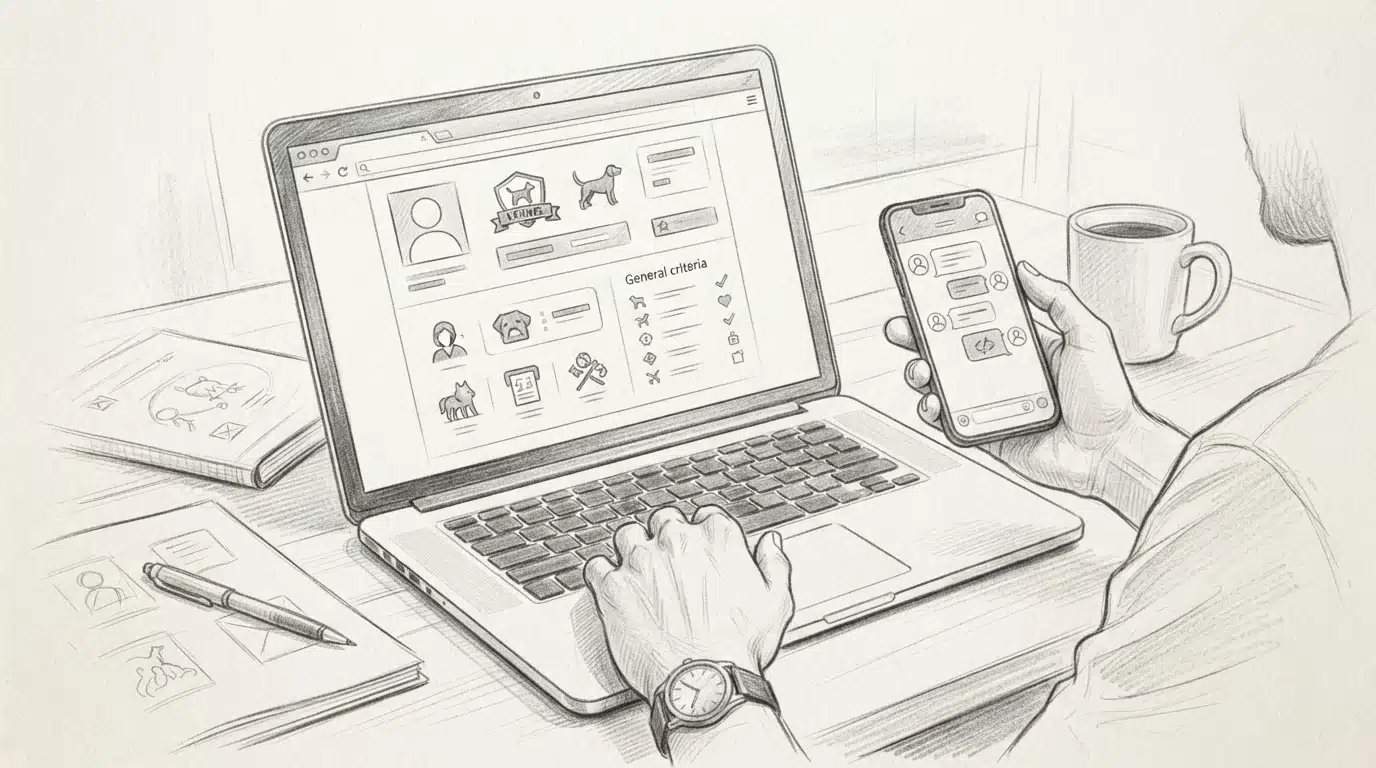
A healthy puppy from an untrustworthy seller still ends badly. So start any puppy payment checklist with the person or business behind the listing, not the litter. Confirm who they are, what licenses apply, and how they want to be paid before you talk about deposits.
Match the business details to the listing you found
Ask for the seller’s full legal name and business name, then cross-check them against the listing. A Utah program should show up in the state’s business registration search, and the address should match where pickup happens. If the listing says “Sage Puppies” but payment goes to a personal account under a different name, stop and ask why. Small mismatches, like a city that changed between emails, deserve a direct answer.
Understand which licenses apply and which do not
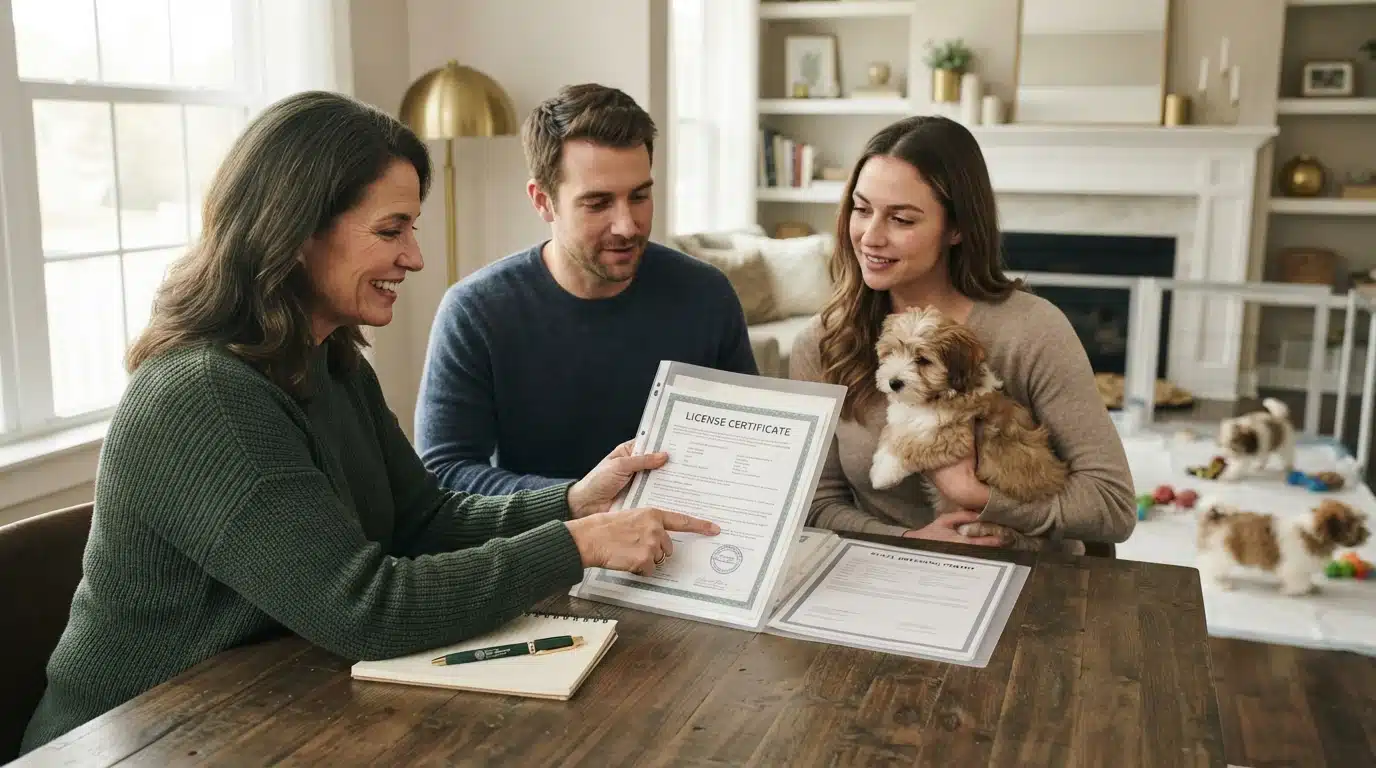
Bigger is not automatically better here. Federal rules tie USDA licensing to scale: breeders with more than four breeding females who sell sight unseen generally need a USDA license, as the AKC explains. A small home program may legally need only state or local registration. So a missing USDA number is not proof of a scam, but a seller who cannot explain their own licensing status is a real warning.
Spot the pressure and payment red flags early
Scams rush you. Treat these as stop signs: wire transfers, gift cards, crypto, or “pay today or the puppy goes to someone else.” Refusing a video call, hiding the mother, or dodging basic questions matters too. Our guide to reputable puppy breeder red flags covers these signals in depth. A legitimate seller welcomes verification; a fraudulent one punishes it.
Step 2: Verify the Puppy’s Own Health Record, Vaccines and Deworming
A puppy’s health record is the paper trail of its first weeks. Before money moves, you want proof of exams, shots and deworming, and proof that a real clinic stands behind it.
The health record checklist, item by item
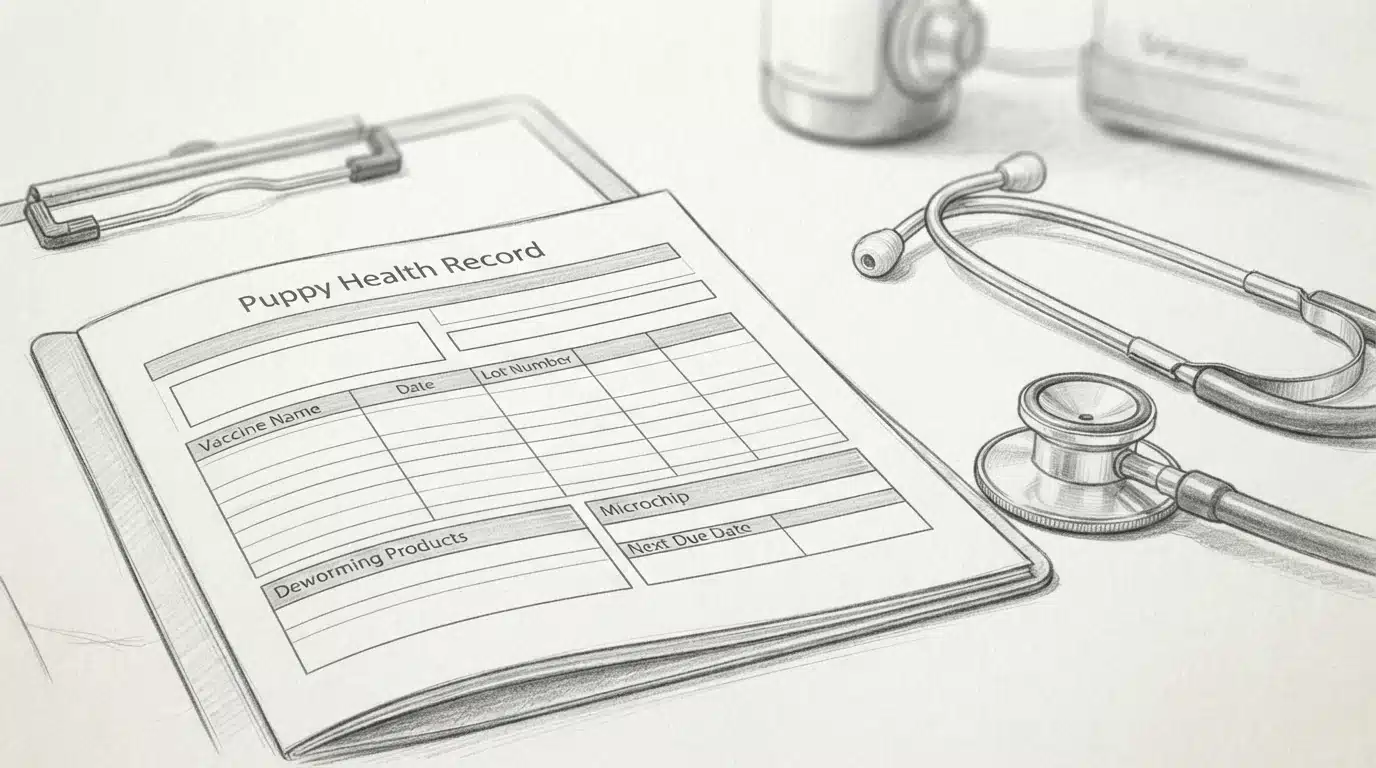
Ask the seller for these items in one packet:
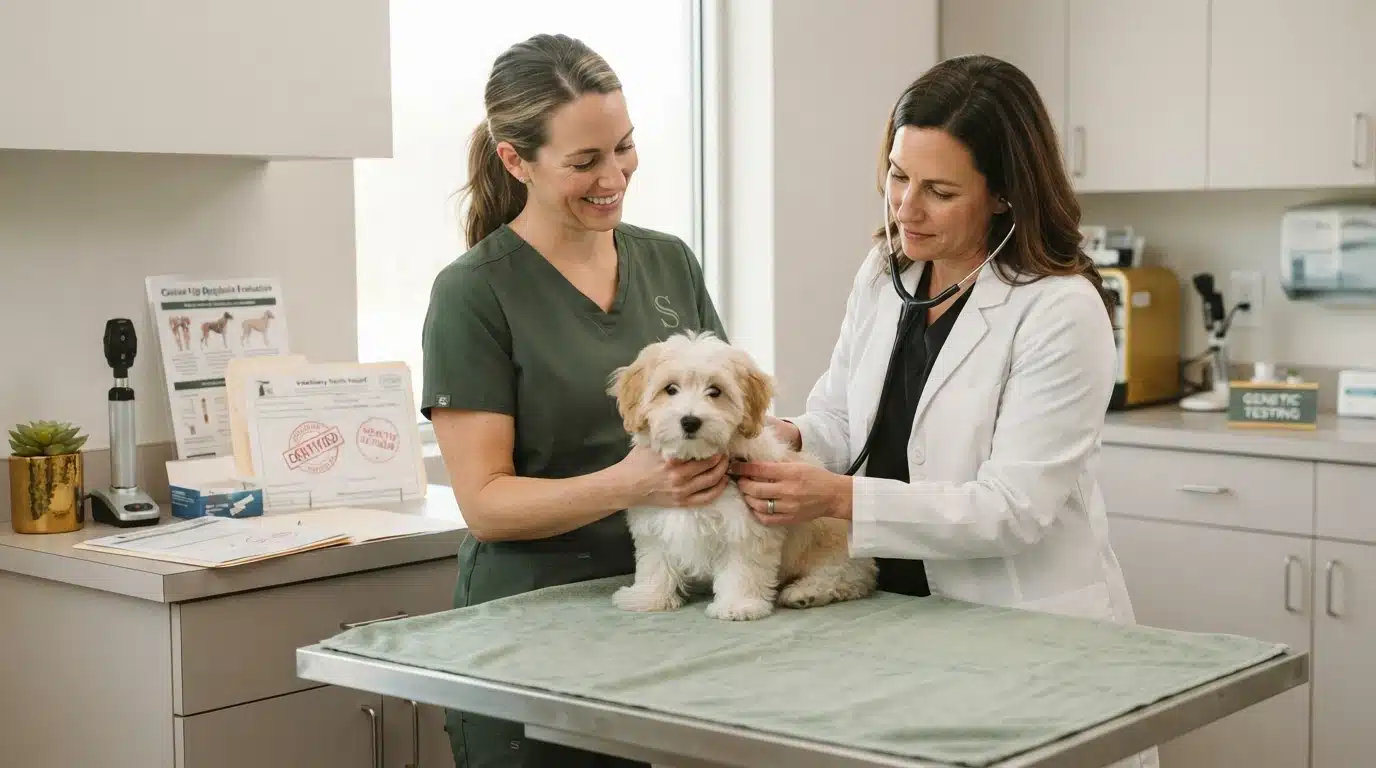
- Exam record: date, findings and clinic name from a licensed veterinarian.
- Vaccination certificate: vaccine name, date given and lot number.
- Deworming records: product used and dates, usually starting around two weeks of age.
- Microchip number: listed on the exam record so you can match it at pickup.
- Next-due dates: so your own vet knows what comes next.
Confirm the clinic yourself in under a minute
Ask the seller for these items in one packet… then check the clinic: The record means nothing if the clinic does not exist. Call the number listed or search the clinic’s name. Ask the front desk whether they saw this puppy and can confirm the exam date. A legitimate seller welcomes the call. Hesitation here is a red flag worth taking seriously.
What the puppy’s own records do not tell you
These documents prove the puppy was seen and treated. They do not prove the parents were screened. Hip, eye, heart and DNA testing of the parents sits in a separate set of papers, and Step 4 covers how to verify those through registries. Keep the two files apart in your mind so a thick vaccine record never substitutes for missing parent testing.
Puppy age, vaccines and the take-home window
Puppies get a series of shots, not one. Most start vaccines near six to eight weeks and need boosters after they come home, so a single shot at a young age is normal and incomplete. Ask your vet to plan the remaining doses the first week you have the puppy, and keep the seller’s record in the same folder.
Tip: Photograph every page of the health record before you pay. If paperwork is ever disputed, your photos carry dates, clinic details and the microchip number in one place.
Step 3: Verify the Parents’ Health Screening and DNA Results Separately
A clean puppy exam says nothing about the parents. Heart, knee and eye problems in Havanese, Havapoo and Cavapoo lines are inherited, so the parents’ own screening is where real proof lives.

Look the parents up yourself
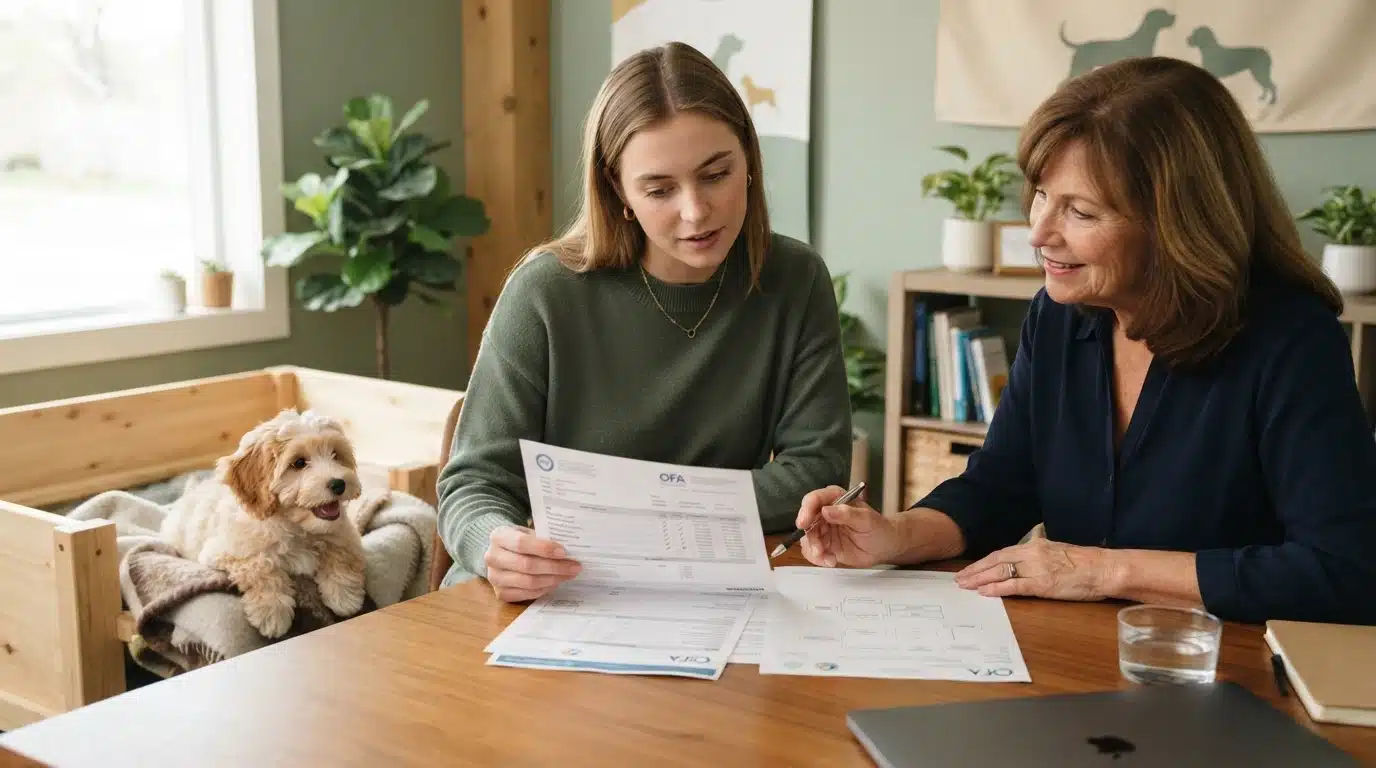
Ask for each parent’s registered name and registration number. Then search the OFA’s advanced database yourself, because it holds health records on millions of individual dogs. Check that the results, ages at testing and breed match what the breeder claimed. If a parent has no record at all, ask why before you pay. Our parent screening guide walks through this lookup step by step.
Match screening to the breed, not a generic panel
Every breed carries different risks. Havanese screening should cover knees, heart, eyes and hearing, and a CHIC number confirms the breed’s required tests were done. Cavaliers need heart and eye exams because of mitral valve disease. A breeder who says “fully tested” without naming the tests is asking you to trust a label, so request the exact list for your puppy’s breed and cross-check it.
What DNA panels can and cannot tell you
DNA results cover inherited gene variants, such as certain heart conditions in the breed. They do not check hips, knees, heart murmurs or eyes. A clean panel plus normal X-rays, eye exams and a cardiac clearance together give a fuller picture than either test alone.
A CHIC report lists each test performed, the dog’s age at testing and the results in one place.
Step 4: Check Registration and Ancestry Paperwork
Registration papers trace your puppy’s family tree. What you should receive depends on the mix you are buying, so know the baseline before you pay.
What to expect for each type of puppy
A purebred Havanese comes with an AKC registration application naming the sire and dam. Most companion puppies arrive on limited registration, which lets the dog be registered but not bred, and the breeder controls any change to full status. Havapoos and Cavapoos are crosses, so no registry certifies them. For those, ask for the parents’ purebred registration numbers and a written pedigree covering both sides. If a seller cannot produce either, walk away.

Verify the registry record and keep the paperwork
Once you have the paperwork, confirm it. The AKC lets you look up registration details, and a quick call or online check can confirm the litter exists. Match the parents’ names on the pedigree to the names on their health test results from Step 3, so the screening clearly belongs to your puppy’s line. Keep every document with your puppy purchase contract. Breeders who run their own matching process, like Sage Puppies, hand these records over with the puppy, and you should expect the same from anyone you pay.
Step 5: Review the Purchase Contract and Payment Terms
A solid puppy purchase contract should include all of this in writing before you pay:
- Full names and contact details for both parties
- Deposit amount, balance due date, and refund terms
- A health guarantee with a stated window for a vet exam
- Price, breed, and identification of the exact puppy
- Delivery or pickup terms and who covers costs
- Spay or neuter expectations, if any
Anything promised verbally should appear in the document. If it is not written down, it does not exist.
Read the deposit and refund terms closely
Deposits vary widely, so ask what happens if you change your mind and what happens if the breeder does. Some deposits are refundable for a set period; others apply to a different litter instead. Get the balance structure in writing too, including the due date and accepted payment methods. A seller who pushes full prepayment by wire transfer is waving a classic puppy scam red flag, since wire funds are nearly impossible to recover.
Check the health guarantee language for what it actually covers
Guarantees are not equal. Some cover only fatal congenital defects within a short window. Others require a vet exam within 48 to 72 hours or they void entirely. Look for what triggers a replacement or refund, who pays return shipping, and whether hereditary conditions like patellar luxation are included. A short, vague clause is a reason to keep shopping.
Confirm the delivery terms and the parties to the agreement
Make sure the contract names the legal seller, not a broker or middleman. For remote buyers, delivery terms should state the method, cost, age at travel, and who holds responsibility in transit. Utah families picking up should confirm the pickup location matches the registered address. A service like Sage Puppies puts these terms in a written agreement before any deposit moves, which is the standard to hold any seller to.
Step 6: Confirm the Pickup Handoff Checklist
On pickup day, a legitimate breeder hands you a complete go-home folder before the balance is due. That folder should include:
- Signed puppy purchase contract
- Health record with vaccination certificate and deworming dates
- Vet exam record dated before pickup
- Microchip number and transfer paperwork
- Registration application or paperwork
- Feeding schedule and a sample of current food
Your go-home day folder
Sit down and read everything before you pay the balance. The contract should match what you agreed on: deposit vs balance payment structure, spay or neuter terms, and your named puppy’s details. Check dates on the vaccine certificate. If the seller instead emails files that day, verify they match the puppy you met. A complete folder is a habit at Sage Puppies, and it should be at any program you buy from.
Verify the microchip is present and matches
Ask the breeder to scan the chip while you watch. Compare the number on the scanner to the paperwork. Any mismatch is a stop-and-ask moment. Then check where the chip is registered using AAHA’s free microchip registry lookup tool, and get instructions for updating the record into your name within the first week.
If something is missing at handoff
Pause the payment. Ask for the missing item in writing, or have the gap spelled out in the contract with a delivery date. Missing vaccine records or an unscanned chip are the biggest red flags. Good breeders fix gaps fast; pressure to “pay first, paperwork later” is not normal.
Step 7: Red Flags That Mean You Should Walk Away
Most puppy problems show up before payment, not after. If any item below appears, pause and re-verify from Step 1.
The short list of walk-away triggers
- No video call, or stock photos reused across listings, a top warning sign in BBB’s puppy scam study
- Wire transfer, gift card, or crypto-only payment
- Extra fees appearing after you agree on a price, like surprise shipping charges
- Missing or photocopied-only health records, or a breeder who cannot point to parent OFA results
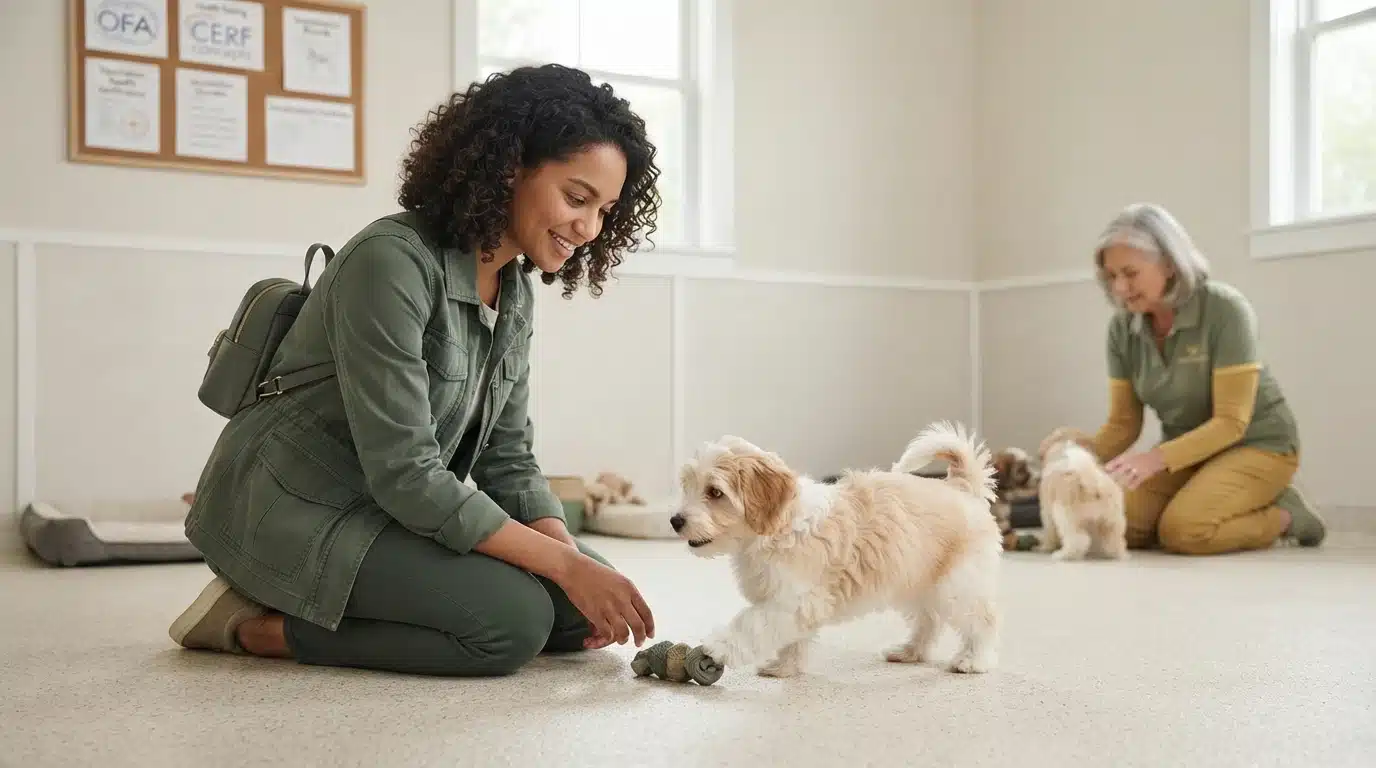
- Refusal to let you see where puppies live, in person or on video
- A contract with no health guarantee at all
One weak answer deserves a follow-up question. Several together mean walk away.
Responding to pressure without losing the puppy
Good breeders expect questions, so pressure is a signal, not a reason to rush. Ask for the missing item in writing and give a fair deadline, say 48 hours. Legitimate sellers respond with documents or a video call. If a deposit feels unavoidable, keep it small, pay by credit card for dispute protection, and never send the balance until you have every paper in hand. A seller who truly has the puppy will wait a day.
If you suspect fraud
Report it. File a complaint with the BBB, your state attorney general, and the FTC, and tell the platform where you found the listing so it gets removed. If you already paid, call your bank or card issuer immediately and describe the fraud; card payments are far easier to reverse than wires. Then save every message, receipt, and listing screenshot, since those records support your claim and help the next family avoid the same seller.

Ready to see the checklist in action? Visit Sage Puppies to review our application, ask questions before you pay, and meet Havanese, Havapoo and Cavapoo puppies raised in South Jordan. Wisely Bred. Beautifully Loved.
Frequently Asked Questions
Q1: What should I verify before paying for a puppy?
Verify the seller first, then the puppy. Confirm the business name and address, check parent OFA health test results yourself, read the puppy purchase contract terms in full, and never pay the balance before you hold every document, including the vaccination certificate and deworming records, in hand.
Q2: What paperwork should I get from a breeder before I pay?
Ask for the signed contract, vet exam record, vaccination certificate, deworming log, registration or pedigree papers, microchip transfer paperwork, and a bill of sale. Request all of it in writing before any deposit, not at pickup.
Q3: Which health records and vaccines should a puppy have before I pay?
Expect a licensed vet exam record, a vaccination certificate with vaccine name, date and lot number, deworming dates from about two weeks on, and next-due dates. One shot at a young age is normal, since boosters continue after go-home day.
Q4: Can I verify a puppy remotely if it ships by flight nanny?
Yes. Use video calls, scan the microchip on camera, verify the clinic and OFA records yourself, and make delivery terms, costs and in-transit responsibility part of the written contract.
Q5: How do I check a breeder’s OFA results and DNA panels?
Get each parent’s registered name and number, then search OFA’s database yourself and match breed, tests and ages. Remember DNA panels miss hips, knees, murmurs and eyes, so require those exams too.
Q6: What payment methods are safe for a puppy deposit?
Pay by credit card for dispute protection and keep deposits small. Avoid wire transfers, gift cards and crypto entirely, and never send the balance before you have every document in hand.
Conclusion
Verification before payment comes down to eight steps: vet the seller, confirm the puppy’s exam record, vaccination certificate and deworming log, check parent OFA results and DNA panels yourself, match registration and ancestry papers, read the puppy purchase contract terms closely, and hold the balance until the go-home folder and microchip scan check out. Walk away from wire transfers, missing records and pressure tactics.
Remote buyers can run this whole checklist by video, since clinics, OFA lookups and delivery terms all verify without a visit. Run this puppy payment checklist in order, and the paperwork will tell you who deserves your deposit.