Quick Summary: Research breeders before falling for a cute puppy: verify state and USDA registration, inspect parent OFA and DNA health records, visit the puppies and mother, and compare finalists on transparency, socialization, contract terms, and after-pickup support. Read the contract carefully, budget for the puppy’s full first-year cost, and walk away from pressure to pay quickly or refusal to show records. Sage Puppies highlights application-based matching to a household’s lifestyle, clear delivery terms, and ongoing support as signs of a breeder built around fit rather than first come, first served.
You have probably seen a breeder website with a photo of a sleepy Havapoo pup and a promise that every puppy comes with health testing, a pedigree, and a lifetime guarantee. It looks convincing. It might also be a puppy scam.
The real problem is that most families never learn how to research a breeder before they fall in love with a face. So they take the website at its word.
This guide gives you a better way. You will learn how to research puppies and their breeders step by step: checking licenses and registries, reading health records, visiting in person, and comparing your options with a simple scoring sheet. The same puppy breeder search tips apply whether you are shopping for a Havanese, Havapoo, or Cavapoo. We write from years of hands-on work with these breeds at our small Utah program, so every step here reflects what we ask families to check, including with us.
Step 1: Define What You Need Before You Search
The best breeder search starts at your kitchen table, not on Google. Write down what your family actually needs from a dog, because every later step depends on it.
Breed, Size, and Energy Level Checklist
Answer these before you look at a single litter:
- Size: How much space and yard do you have?
- Energy: Daily walks, or a couch companion?
- Shedding and grooming: Are you fine with regular brushing?
- Kids and other pets: Which breeds handle both well?
- Time alone: How many hours will the dog be by itself?
Havanese, Havapoo, and Cavapoo puppies suit many families for their size and friendly nature, but match temperament to your routine, not a photo.
Breeder, Rescue, or Shelter: Making the Honest Comparison
Before you research a breeder, decide whether buying is right for you. Shelters and rescues offer wonderful adult dogs, often at lower cost. A breeder makes sense when you want a known pedigree, health-tested parents, and a puppy raised with early socialization. Both are honest choices. Pick one for real reasons, not pressure from either side.
Setting Your Search Area and Timeline
So, is it better to pick up a puppy or have it delivered? Pickup lets you meet the breeder, see the home, and read the parents’ temperament in person. Delivery saves travel days and works well across the country, but costs extra and skips the visit. Local pickup within driving distance is ideal; delivery suits families who cannot travel. Plan on eight to twelve weeks from application to go-home day.
A One-Page Requirements Worksheet
Build a one-page sheet with five rows: breed, size, energy, grooming, and budget. Add your travel range and timeline. Then check breeder programs against it, including the puppy application process, so every choice traces back to your family’s actual needs.
Step 2: Build a Shortlist and Check Registration and Licensing
Paperwork won’t tell you if a breeder loves their dogs, but it filters out a lot of trouble fast. Run each name on your shortlist through this lookup routine:
- Search your state’s agency first. Many states license commercial breeders through the department of agriculture, and a few require it for anyone selling puppies.
- Check the federal side. The USDA’s Animal Care Public Search Tool lists anyone licensed or registered under the Animal Welfare Act, plus inspection reports.
- Match the name, city, and license status exactly. A “pending” or expired listing deserves a question, not an assumption.
- Note what comes back empty. Small home breeders are often exempt, so an empty result isn’t proof of a problem.

Where to Look Up a Breeder’s License and Registration
Start with your state agriculture department’s breeder license lookup page, then move to the USDA tool above. If your state has no public database, call the licensing office and ask by name. Nonprofits such as Bailing Out Benji also run a licensed breeder search engine that pulls state and federal records together, which is handy when you’re still learning how to research a breeder.
What a License Does and Does Not Tell You
A license says the breeder met a legal floor and opened their doors to inspection. It does not measure socialization, health testing, or how puppies are raised in a home. For research on what licensed versus unlicensed actually means for buyers, the tradeoffs are worth understanding before you judge a shortlist by paperwork alone.
Breed Club and Registry Cross-Checks
Breed clubs add a quality layer licenses can’t. For purebreds like the Havanese, the breed club’s breeder directory and the OFA CHIC program publish health screening results you can verify yourself. Cross-checking registration against these records takes minutes and confirms the parents behind the puppy.
Red Flags That Appear on Paper
Watch for litters from many breeds under one roof, repeated USDA inspection violations, license numbers that don’t match the seller’s name, and registry claims no database supports. A breeder offering Havanese, Havapoo, and Cavapoo puppies should explain clearly why each program, including small operations like Sage Puppies, is licensed where licensing applies.
Step 3: Read the Health Records Without Guesswork
Ask for records before you visit, not after you fall in love with a puppy. A good breeder welcomes the request. What health records should you ask for?
- Parent OFA results (hips, patellas, eyes): proof the parents were screened for joint and eye problems
- Parent DNA panel: proof the parents were checked for breed-specific genetic conditions
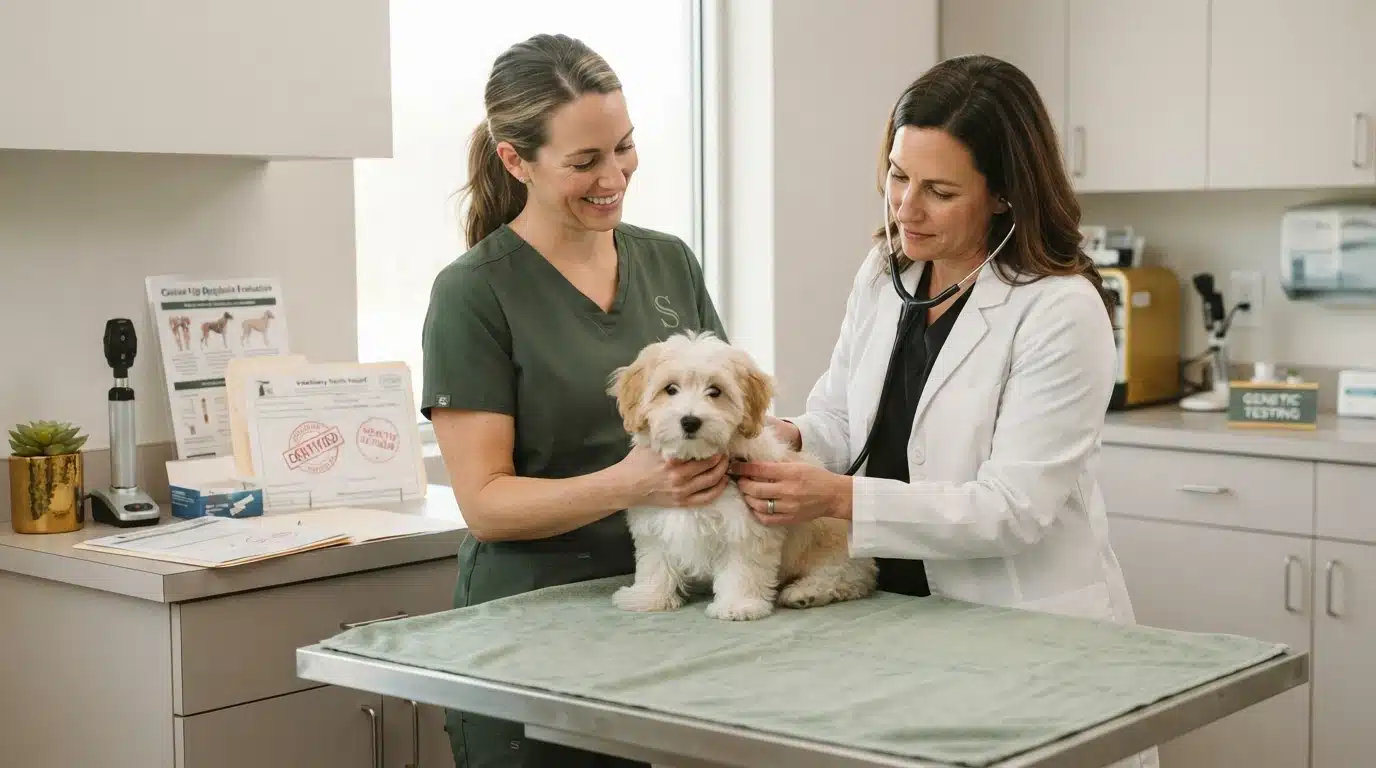
- Vet exam record for the puppy: proof a licensed veterinarian checked the puppy, not just the breeder
- Vaccination and deworming log: proof of the care the puppy has received so far
- Health guarantee or contract terms: what the breeder commits to after you take the puppy home
Any pushback on these papers is a red flag worth noting.

The Documents to Ask For Before You Visit
Email your request before the visit so nothing feels rushed. Reputable breeders keep a folder for each litter. Part of learning how to research a breeder is seeing how quickly and clearly those records arrive. A breeder who can send scans the same week is usually the one who did the testing on time.
Three Different Records and Three Different Meanings
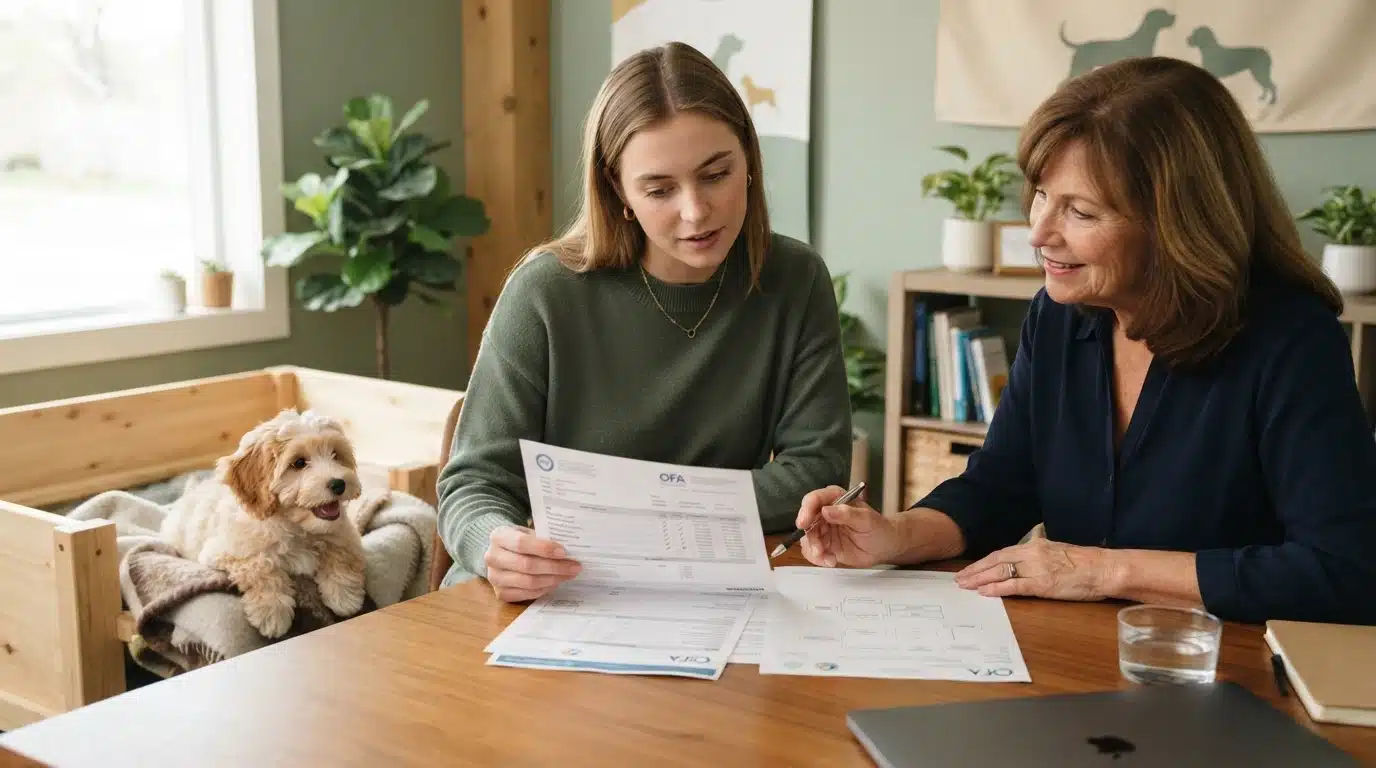
These papers are not interchangeable. OFA results cover physical screening, such as hips, patellas and annual eye exams, and results live in a public database. CHIC certification from the OFA means the dog completed a breed’s required list, though a CHIC number does not require passing scores, only that results are public. A DNA panel is different again: it checks genes, not joints. You want parent health screening and a DNA panel, since each catches problems the other misses.
Matching Requirements to Breed and Cross
Required tests differ by breed. The Havanese Club of America lists OFA hips, OFA patellas and annual CERF eye exams among the tests needed for a CHIC certificate, per their breed health notes. For a Havapoo or Cavapoo, both parents should be screened for their own breed’s list. Search the OFA CHIC browse-by-breed page for each parent breed, then match what the breeder sends against it. We break this down further in our guide to reading a breeder’s health testing records.
Turning Records Into Questions
Records give you the next round of questions, not just reassurance. Ask how old each parent was at testing, why a result is listed as fair rather than good, and whether any littermate had a health issue. Vague answers matter as much as the papers themselves.
Step 4: Visit the Puppies, or Do a Serious Virtual Visit
A breeder who is proud of how puppies are raised will invite you to see it. Treat the visit as your inspection, not just a meet-and-greet, and bring a short checklist so you do not get caught up in puppy kisses.
What to Look At in the Home or Kennel
Start with the basics. The space should be clean, warm, and safe, with fresh water, soft bedding, and room to move. Note the smell; strong ammonia means the area is not being cleaned often. Puppies raised in a home setting get more early handling, which helps with training later. Before you go, read what to verify before pickup day health checks.
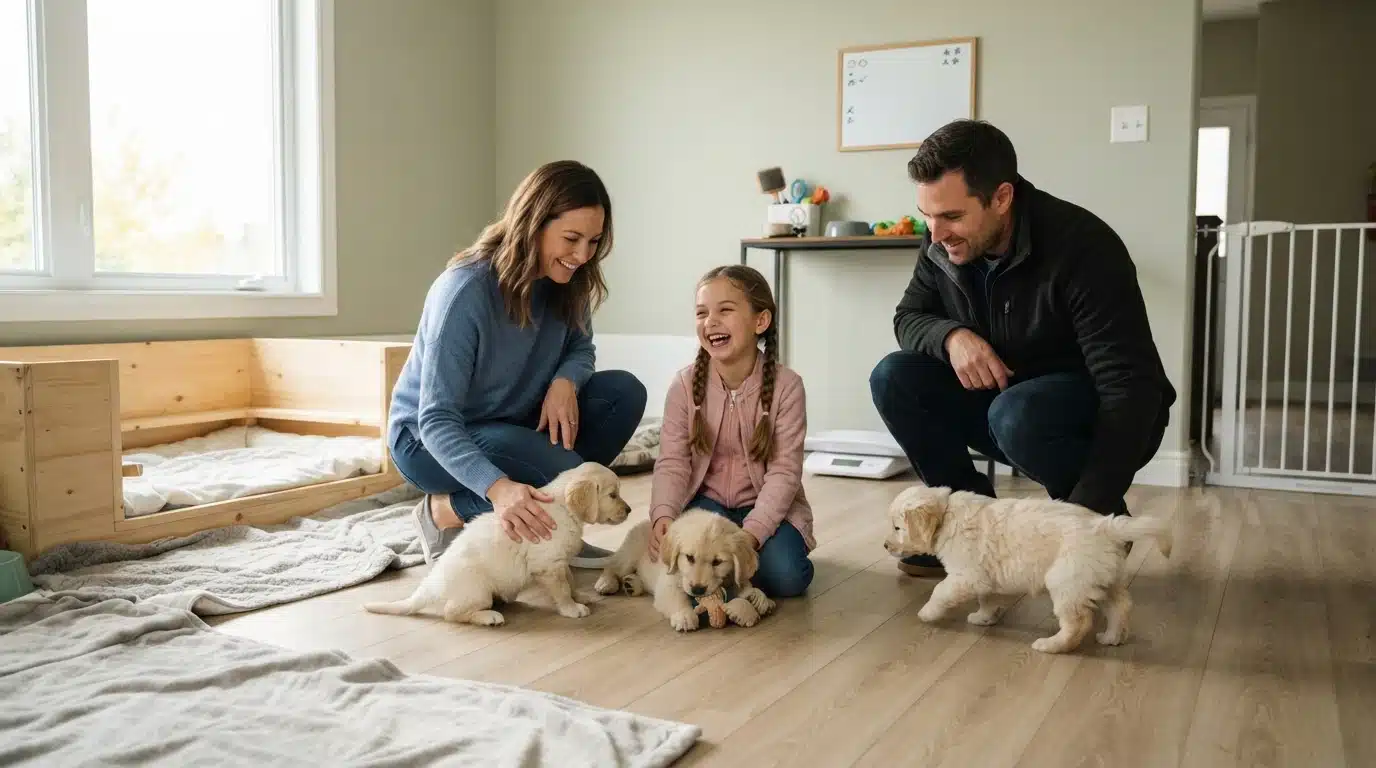
Watching the Mother and Her Puppies
Ask to meet the mother. Her temperament matters more than any pedigree page, because calm, friendly parents tend to raise calm, friendly puppies. She should look healthy, with clear eyes, a good coat, and an easy way about her. If the breeder cannot show you the mother, or the dam is nervous or kept away, ask why.
Meeting the Puppies Without Stressing Them
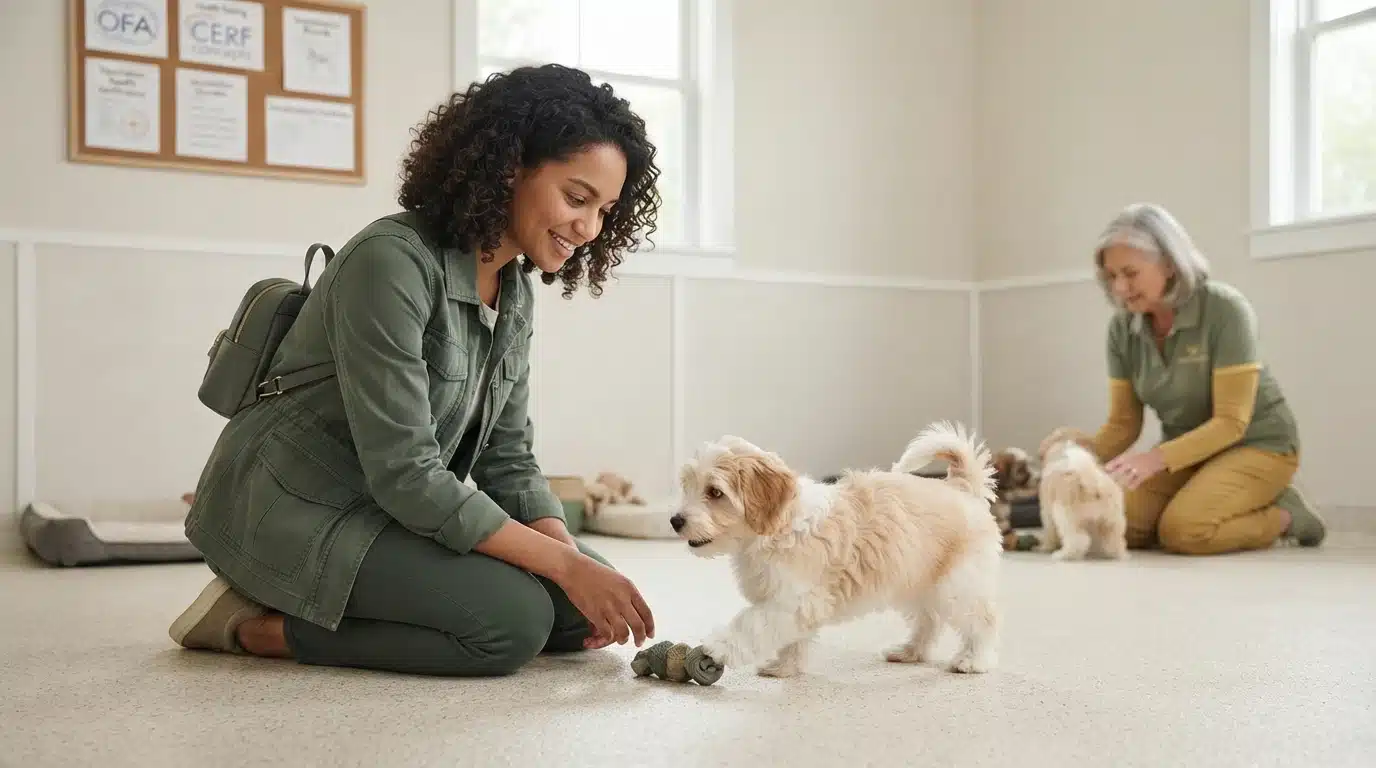
Sit on the floor and let the puppies come to you. Watch how they respond to a new person: curiosity is a good sign, and so is quick recovery after a startle. Check each puppy for clear eyes, clean ears, and steady walking. A shy pup is not a bad pup, but you should know what you are signing up for.
Virtual Visits: What to Ask For on a Live Call
If you cannot travel, a live video call is the next best thing. Ask the breeder to walk the camera through the puppy area, show the mother, and hold each puppy so you can see it move. Request the call happen live, not a recorded video, since edits can hide problems. A confident breeder will offer this without hesitation. Ask follow-up questions on the spot and take notes, then compare answers across your finalists.
Step 5: Compare Breeders Side by Side and Pick the Best Fit
To choose the right breeder for your family, score each one on five weighted criteria and compare the totals side by side. The breeder with the best paperwork is not always the best fit. Fit comes down to how their process, timing, and support match your home.
The Five Criteria to Weight First
- Health testing of both parents, verified against OFA and CHIC records
- Transparency, including open answers about where puppies are raised
- Early socialization and handling in a real home
- Contract terms that protect you and the puppy
- Ongoing support after you bring the puppy home
Weight these in that order. Health and honesty matter more than a shorter waitlist.
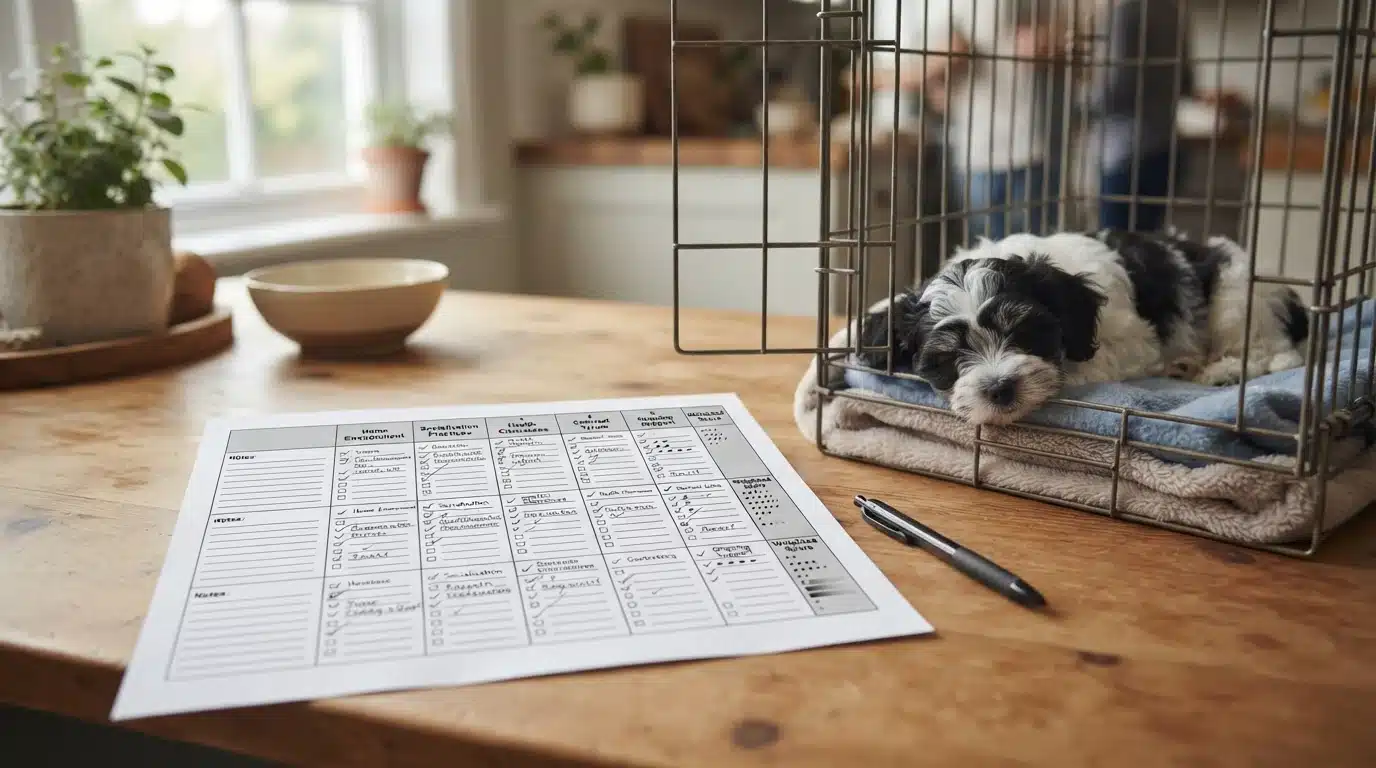
A Side-by-Side Comparison Sheet
Build a simple sheet before you decide. List each breeder in a column, then score the five criteria from 1 to 5.
| Criterion | Breeder A | Breeder B | Breeder C |
|---|---|---|---|
| Health testing | 5 | 3 | 4 |
| Transparency | 4 | 5 | 3 |
| Socialization | 4 | 3 | 5 |
| Contract terms | 5 | 4 | 4 |
| After-pickup support | 3 | 5 | 5 |
| Total | 21 | 20 | 21 |
Tie or near-tie? Go back to your notes from the visit and phone call. The totals break down quickly when you trust one breeder more.
Matching a Breeder to Your Family’s Routine
A local Utah family can visit in person, meet the mother, and handle pickup day themselves. A family across the country depends on the breeder’s delivery process and communication instead. So weight availability and updates higher when distance is involved. If your household has school runs, work calls, and sports, also ask how each breeder matches puppies to homes rather than filling orders first come, first served. Programs like Sage Puppies’ application process pair temperament and energy level to your routine, which matters more for a Havanese or Cavapoo than a spot in line.
What Support After Pickup Should Include
Support is the criterion families forget until they need it. Before you commit, ask each breeder:
- Who answers questions in week one, and how fast?
- What written guidance do you get on feeding, crate setup, and grooming?
- Is there a health record, vaccination schedule, and clear contract at handoff?
- Will the breeder take the dog back if the home ever fails?
A breeder who answers these in detail, without hesitation, usually scores well on everything else too.
Step 6: Review the Contract, Records, and Total Cost Before You Pay
Good breeders hand you paperwork before they ask for money. Read it all, because what’s written matters more than what’s promised.
Contract Terms Worth Reading Line by Line
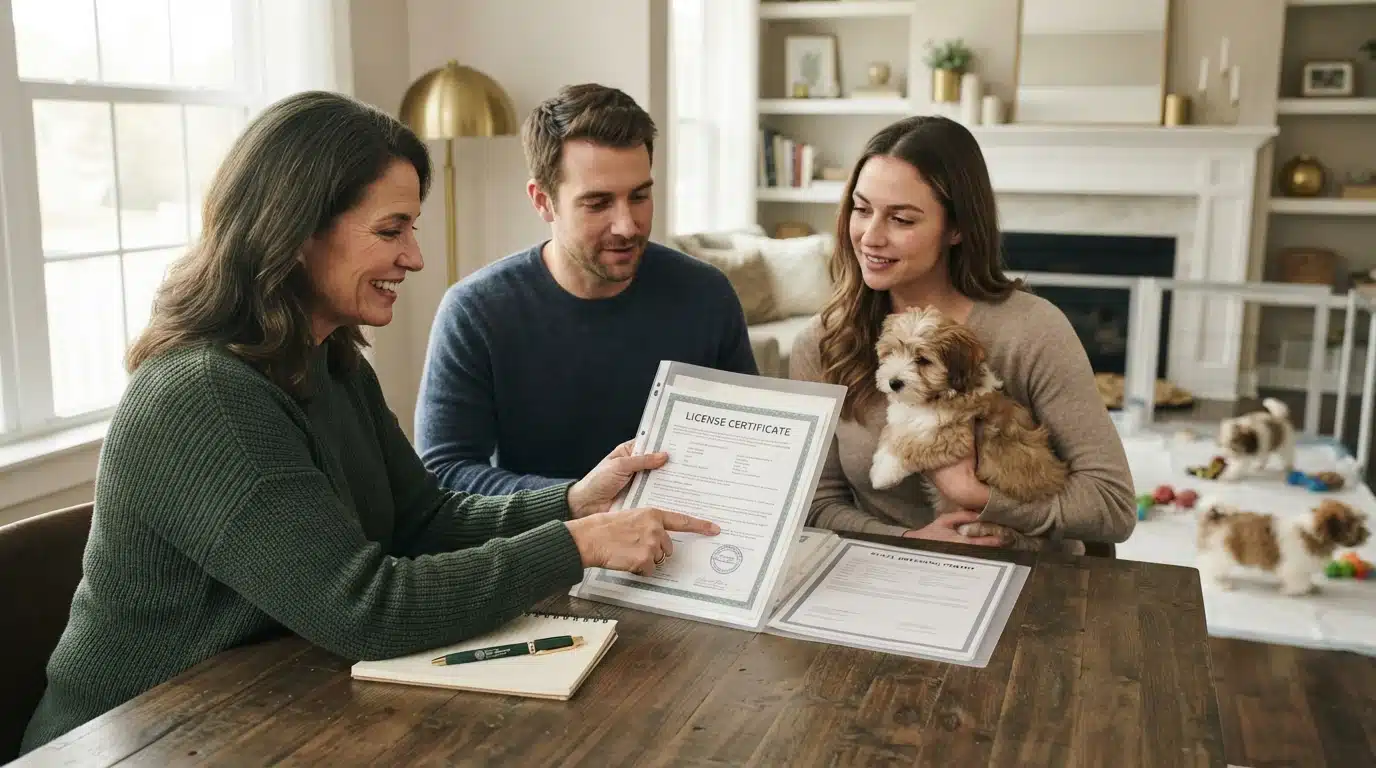
Look for a health guarantee with a real timeline, a return policy you could actually use, and who pays if the puppy needs a vet visit early on. The contract should name both parties, list the puppy’s microchip number, and state spay or neuter expectations. Ask questions before you sign, not after.
Records Handover and Pickup or Delivery Details
Before handover, you should receive vaccination dates, deworming records, a vet exam note, and food the puppy is already eating. Reputable programs also share parent health screening results, not just a DNA panel. If you’re arranging delivery, get the carrier, timing, and cost in writing. Breeders who work nationwide, like Sage Puppies, put those delivery terms in the agreement so nothing is a surprise on the day.
Budgeting the Total Cost, Not Just the Purchase Price
How much does a puppy cost to buy and raise in the first year? Plan for four categories:
- Purchase price: often $1,500 to $4,500 for well-bred small breeds
- First-year vet care: exams, vaccines, spay or neuter
- Supplies: crate, bedding, food, grooming tools
- Training and grooming: classes plus regular coat care for breeds like the Havanese
Add these up before you commit. A labeled example helps: a $3,500 puppy with roughly $1,000 in first-year vet care, $400 in supplies, and $600 in training lands near $5,500 total.
When Something Feels Wrong, and How to Respond
Trust your instincts. Pressure to pay fast, requests for gift cards or wire transfers, and refusal to video call or visit are classic puppy scam red flags. Walk away and report the listing if you see them. A good breeder will still be there tomorrow.

Ready to put this checklist to work? See how it plays out with a boutique Utah breeder at Sage Puppies. Browse available Havanese, Havapoo and Cavapoo puppies, review the application, and ask questions before you commit. Wisely Bred. Beautifully Loved.
Frequently Asked Questions
Q1: How do I choose which reputable puppy breeder is right for my family?
Score your finalists on the five weighted criteria: health testing, transparency, socialization, contract terms, and support. Then match the winner to your routine, since temperament fitting your home beats a shorter waitlist.
Q2: How do I compare reputable puppy breeders in my city or state?
Build a side-by-side sheet, score each breeder 1 to 5 on the five criteria, and weight health and honesty first. If totals tie, return to your visit notes and trust the clearer communicator.
Q3: How do I verify a puppy breeder is licensed and registered in the US?
Check your state agriculture department’s lookup first, then the USDA Animal Care Public Search Tool. Match the name, city, and status exactly. An empty result isn’t proof of trouble; small home breeders are often exempt.
Q4: How long does the application-to-go-home process usually take?
Plan on eight to twelve weeks from application to go-home day, though a popular program’s waitlist can stretch longer. Ask each breeder for current timing in writing.
Q5: Is puppy delivery as safe as local pickup?
Handled well, yes. Require live video calls before paying, get carrier, timing, and cost in writing, and confirm the puppy travels with its health records and vet exam note.
Q6: What questions should I ask a breeder on a virtual visit?
Ask them to walk the camera through the puppy area, show the mother moving, and answer how old each parent was at health testing. Live calls only, never edited recordings.
Conclusion: Take Your Time and Choose the Right Fit
Finding a reputable puppy breeder comes down to research before romance. Define your family’s needs first, then verify licenses through your state lookup and the USDA tool. Read the health records yourself: parent OFA screening, a DNA panel, and a vet exam for each puppy. Visit in person or on a live video call, meet the mother, and score every finalist on your weighted sheet. Read the contract line by line and budget the full first year, not just the purchase price. Whether you pick up locally in Utah or arrange nationwide delivery, a breeder who welcomes every check is the one worth trusting. Take your time. The right fit is worth the wait.