
Quick Summary: Buying puppies online in Wisconsin requires verifying the seller’s identity, license, and health records before paying. Ask for live videos of the mother and puppy, review paperwork, and avoid rushed payments or vague shipping promises. Trustworthy breeders are transparent and willing to answer questions, while scams often avoid direct contact and push quick, untraceable payments.
If you are looking at Wisconsin puppies for sale and a seller asks for a deposit before you can verify the mother dog, license status, or health records, stop there. That is the point where many families lose money, get false promises, or end up with a sick puppy that was never raised the way they were told.
The hard part is simple. Online listings make bad sellers look polished. Fake photos, copied reviews, rushed payment requests, and vague shipping stories can make unsafe Wisconsin puppies for sale seem real. First-time buyers often do not know what to check, what paperwork matters, or how to tell a careful breeder from a puppy scam.
This guide fixes that. You will learn how to vet online Wisconsin puppies for sale, what questions to ask before sending money, which red flags matter most, and how to compare delivery, pickup, and breeder claims without getting overwhelmed.
We built this guide around real buyer concerns, plain screening steps, and the standards careful families use when they want a well-raised companion puppy. If you also want a trusted breeder process to compare against, start with our Available Puppies and How It Works pages.
1. Verify the seller before you look at the puppies
Start with the seller, not the puppy photos. A clean website means very little if you cannot confirm who is behind it.
Check these basics first:
- Business name
- Full street address
- Working phone number
- Real person you can speak with
If a seller gives only a first name, a form, and vague shipping details, stop there. Search the business name plus complaint or scam. Ask whether the address is where the dogs are actually raised. Ask who owns the parents. Serious breeders answer clearly.
A quick screening list helps:
| What to verify | Good sign | Bad sign |
|---|---|---|
| Name | Matches website and paperwork | Changes across listings |
| Address | Full location given | Only city or no address |
| Phone | Live call or callback | Text only |
| Photos | Unique, current puppy photos | Reused images on many sites |
Wisconsin buyers should also check whether the seller falls under state licensing rules. The Wisconsin DATCP says many breeders, dealers, shelters, and rescues must be licensed and inspected, and buyers can check licensed dog sellers online. DATCP also notes that breeders selling fewer than 25 dogs from fewer than four litters do not need that state license, so an unlisted seller is not always illegal.
Use this simple rule:
- Ask how many dogs they sell each year.
- Ask whether they bred and raised the puppy themselves.
- Ask if they are licensed in Wisconsin, if required.
- Ask for the puppy’s health certificate and age.
Wisconsin law also says puppies cannot be sold before 7 weeks old, and dogs sold for a fee must come with a certificate of veterinary inspection.
Last, study the seller’s online trail. The FTC warns that pet scammers often avoid phone or video contact, use stolen photos, and push payment by gift card, wire transfer, crypto, or cash apps with little buyer protection. Their pet scam warning is worth reading before you send a deposit.
Watch for these red flags:
- Comments turned off everywhere
- No parent dog photos or video
- No clear pickup or delivery process
- Pressure to pay fast
- No contract shown before payment
A trustworthy breeder wants verification to go both ways.
Also Read: Puppy Care Blog & Resources | Sage Puppies
2. Check whether the puppy can be verified, not just admired
Cute photos mean very little if you cannot verify the puppy behind them. Start with proof you can check, not promises you have to trust.
Ask for the mother, and ideally the full rearing environment
Ask for a live video call with the mother dog, not just more clips of the puppy. In Wisconsin, puppies cannot be sold without their mothers until they are at least 7 weeks old, according to Wisconsin DATCP dog seller guidance. That makes the mother part of your basic reality check.
Use this quick list during the call:
- See the puppy nurse, play, or rest near the mother if age allows
- Ask to view the whelping area and where puppies spend most of the day
- Look for clean bedding, fresh water, toys, and normal home noise
- Check whether the seller avoids showing the full space
- Notice if the mother seems calm, alert, and used to people
If a seller says the mother is “not available,” “at another farm,” or “too stressed to show,” slow down.
A careful breeder welcomes this step. At Sage Puppies, for example, families should expect clear views of how puppies are raised, not only polished photos.

Review the puppy’s age and health paperwork
Ask for paperwork before you leave a deposit. In Wisconsin, dogs sold for a fee must be examined by a vet and come with a health certificate, also called a certificate of veterinary inspection, per DATCP consumer information. That certificate is helpful, but it is not a long-term warranty.
Check these items:
- Date of birth
- Vet exam date
- Vaccine and deworming record
- Microchip number, if one is listed
- Breed, sex, color, and markings
- Seller name and address
| What to review | What should match | Red flag |
|---|---|---|
| Birth date | Age in ad and video | Too young to leave |
| Health certificate | Puppy’s identity and exam date | Different puppy details |
| Vaccine record | Dates fit puppy’s age | Missing dates or labels |
| Seller info | Contract and messages | Different names or locations |
Registration papers and a health certificate do not prove good breeding by themselves. They only prove limited facts.
Check that the photos and details match the puppy
Use the listing like a fact sheet. The puppy in the photos should match the puppy in the video and on the records.
- Compare coat color, face markings, size, and sex
- Ask for a same-day video with your name spoken aloud
- Request one clip from indoors and one outside
- Run a reverse image search if anything feels off
The FTC also advises buyers to reverse image search photos and insist on an in-person or video visit before sending money, as noted in its pet scam alert.
Also Read: 10 Adorable Havapoo Colors You Need to See (2026)
3. Evaluate payment, deposits, and transport with a consumer-protection mindset
Do not send money before verification is complete
Paying early is where many families lose control. Finish your breeder checks first, then talk money.
A safe process should include:
- A real phone call
- A live video visit
- Clear puppy details in writing
- A written agreement before any deposit
- A named pickup or delivery plan
The biggest red flag is not just the first deposit. It is the next surprise charge. The Animal Legal & Historical Center notes that puppy scams often add fake fees for crates, insurance, vaccines, or shipping after the buyer is emotionally committed common puppy scam charges.
Use this quick payment filter:
| Payment question | Safer sign | Risk sign |
|---|---|---|
| Is the deposit tied to a written agreement? | Yes, with puppy and terms listed | No contract or vague receipt |
| Is the payment method traceable? | Card or documented invoice path | Wire, gift card, pressure to rush |
| Are refund terms explained? | Clear and written | “Refundable” but not documented |
If the seller says “send the deposit now, we will sort details later,” stop there.
Treat transport promises as part of the sale, not a separate detail
Transport is not an afterthought. It is part of the deal, and it belongs in writing before you pay.
Ask for:
- Who is handling transport
- Whether you are doing local pickup, meeting in person, or using delivery
- The expected route and timing
- What documents travel with the puppy
- Which fees are included in the total price
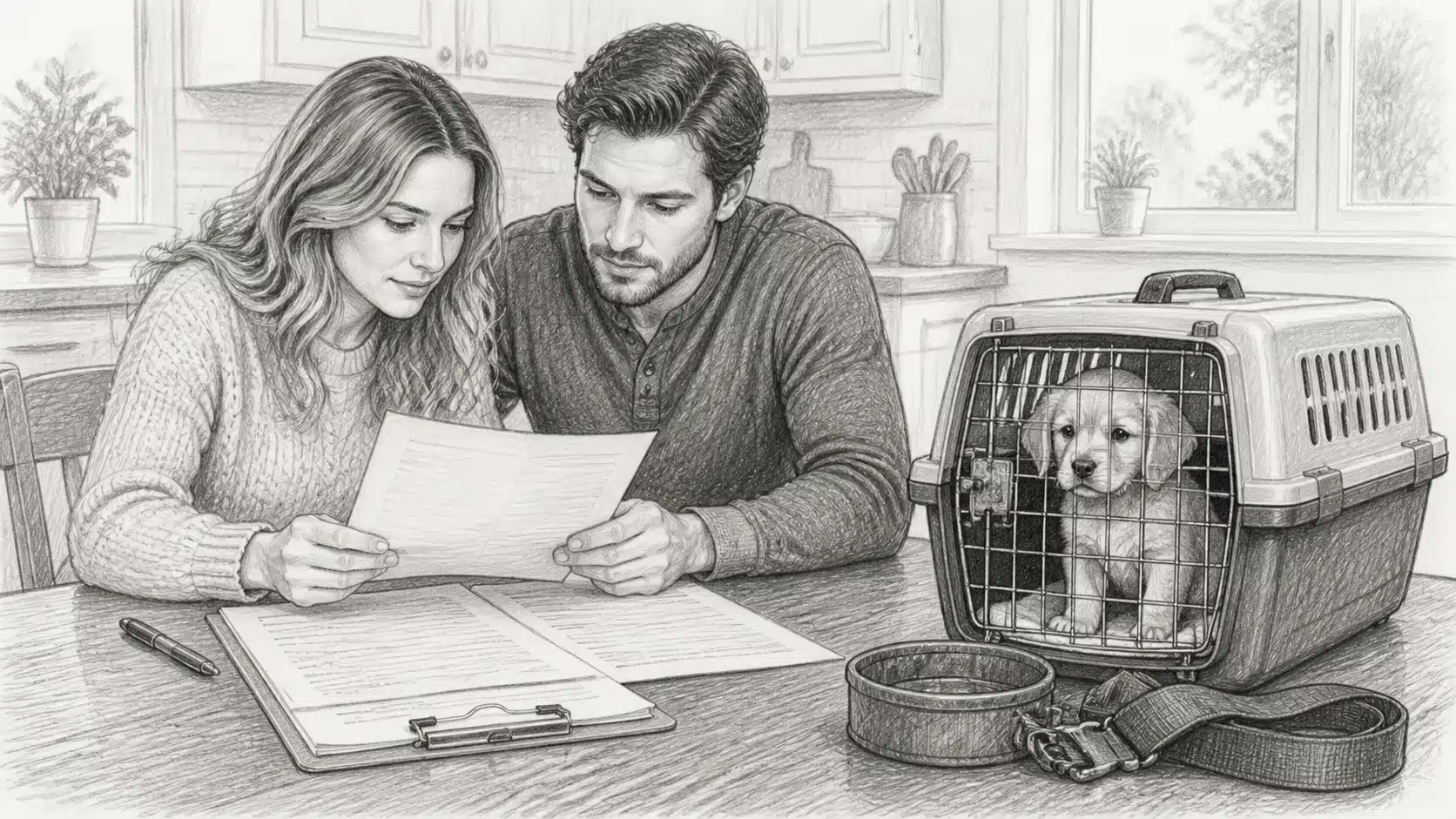
IPATA advises buyers to get a firm contract that includes the transport method, time frame, and health certificate copy when buying from a breeder or third party pet buyer transport contract tips. That matters because scammers often split the story in two parts: first a puppy sale, then a fake shipper with new demands.
For a careful program like Sage Puppies, pickup in Utah or clearly explained delivery should feel simple, not messy. If transport details stay fuzzy until after your deposit clears, treat that as a warning.
Use screenshots and written records as part of your protection
Good records protect you before a problem and after one.
Save:
- The original puppy listing
- Texts, emails, and invoices
- The breeder’s stated price
- Deposit terms
- Delivery promises
- Photos used in the listing
- Payment confirmations
Take screenshots as you go. Do not wait until something feels off.
Verbal promises are easy to deny. Written records are much harder to argue with.
A careful breeder will not mind clear paperwork. In fact, strong documentation usually signals a more honest process. If plans change, ask for the update in writing before you send more money. That one habit can save you from “just one more fee” pressure and gives you a cleaner trail if you need to dispute a charge.
4. Compare ethical breeder signals before you reserve a puppy
A cute listing is not enough. Before you send a deposit, compare breeders on what they prove, not what they promise. This is where many Wisconsin puppy buyers avoid trouble. For the full safe-shopping process, go back to the parent guide on puppies for sale in Wisconsin.
Look for health, socialization, and temperament priorities
Start with the basics. A solid breeder talks clearly about parent health testing, early socialization, and the puppy’s temperament, not just color or size. The AKC says responsible breeders should share proof of health screenings and let you learn about the parents’ temperament and living setup through a visit or video call according to AKC.
Use this quick comparison:
| Signal | Good sign | Weak sign |
|---|---|---|
| Health | Shows parent test records and explains breed risks | Says “vet checked” but offers no proof |
| Socialization | Describes home noises, handling, routine, people exposure | Says puppies are “well loved” only |
| Temperament | Matches puppies by energy and fit | Lets buyers pick only by photo |

A breeder who cannot explain why this puppy fits your home is not helping you choose well.
Ask what is in writing before you commit
Ask for every key term before you reserve. Not after. A written agreement should spell out the puppy’s identity, price, records, and what happens if the puppy gets sick or your family cannot keep it. AKC notes that buyers should be able to review the contract in advance, and strong contracts often cover return terms and health record details in its puppy contract guide.
Ask for these in writing:
- Deposit amount and refund terms
- Pickup or delivery process
- Health record packet included
- Return or rehoming expectations
- When the puppy can go home
If the breeder avoids written details, slow down. Good programs do not fear clear paperwork.
Compare response quality, not just the puppy photos
Photos sell emotion. Replies reveal standards.
Look at how the breeder answers normal questions. Strong replies are specific, calm, and consistent. They ask about your home, kids, schedule, and breed fit. OFA says reputable breeders should screen you too and should welcome questions about health testing, parents, and contracts.
Use this checklist:
- Answers your questions fully
- Provides records without drama
- Explains next steps in order
- Does not rush payment
- Cares where the puppy is going
Sage Puppies stands out here when families want clear health, pickup, and nationwide delivery details without pressure.
Also Read: Find a Reputable Puppy Breeder Near You: Step-by-Step
5. Know when to walk away and what to do next
If a seller makes you feel rushed, confused, or guilty for asking normal questions, stop. The FTC says real breeders should welcome a phone or video visit, and sellers who refuse that are a major red flag in its pet scam advice.
Walk away from secrecy, urgency, and shifting stories
Leave the deal if you notice any of these patterns:
- No live call or video
- New fees keep appearing
- The pickup story keeps changing
- Parent info stays vague
- Photos do not match the timeline
- You are pushed to pay today
A good breeder can answer the same questions twice and give the same answer both times. A scammer often cannot. One day the puppy is in Wisconsin. The next day it is “already with the shipper.” Then the breeder says the puppy needs extra insurance before travel.
If the facts keep moving, treat that as your answer.

Report suspected fraud and protect your records
Do not just disappear and hope for the best. Save everything first.
- Screenshot the listing, messages, invoice, and payment request.
- Save phone numbers, email addresses, usernames, and bank or app details.
- Report the case at ReportFraud.ftc.gov.
- If you sent money online, file a complaint with IC3 right away. The FBI says IC3 is the public reporting hub for internet-enabled crime and fraud.
Use one folder for every record. Keep file names simple by date.
Fast records help if your bank, card issuer, or law enforcement asks for proof.
Move forward only with a breeder who is clear and consistent
The right breeder feels calm, not slippery. Look for this short checklist:
| What you ask | What a solid breeder gives |
|---|---|
| Where is the puppy now? | One clear location and timeline |
| Can we talk live? | Yes, with no excuses |
| What is included? | Written price and terms |
| How does pickup or delivery work? | Simple, consistent steps |
That is the standard to compare against. If you want a cleaner process, start with breeders who explain pricing, pickup, and delivery plainly, like Sage Puppies does through its application and how-it-works pages.

If you want a safer path than sorting through random online listings, start with Sage Puppies. Sage Puppies helps Wisconsin families avoid common red flags with a clear, family-first process, health-tested parents, and honest pickup or nationwide delivery options. You can view available Havanese, Havapoo, and Cavapoo puppies, review pricing, and submit an application when the timing feels right.
Frequently Asked Questions
Q1: puppies for sale in Wisconsin
Start with the seller, not the puppy photo. Ask for parent health testing, recent video, pickup or delivery details, and a clear contract. If the answers feel rushed or vague, walk away. Safe listings hold up under simple questions.
Q2: How do I spot a puppy scam fast?
Watch for pressure, odd payment requests, copied photos, and no live video call. A real breeder can explain the puppy’s routine, parents, and timeline without dodging. If they refuse basic proof, treat that as your answer.
Q3: Is delivery safe for a small puppy?
It can be, if the process is clear. Ask who handles transport, how long travel takes, and what support you get before pickup. Good programs explain each step and give you a real person to contact.
Q4: Should I buy from out of state?
Yes, if the breeder is transparent. Many families buy beyond Wisconsin when they want a better fit. Sage Puppies, for example, explains pickup in Utah and nationwide delivery in plain language, which helps reduce guesswork.
Q5: What paperwork should I expect?
Expect a sales agreement, health record, vaccine or deworming notes, and written next steps. Read everything before you pay. If key details are only verbal, slow down and ask for them in writing.
Conclusion
Buying a puppy online can be safe if you slow down and verify everything. The biggest wins are simple: confirm the seller is real, ask for clear health records, review delivery terms in writing, and never send money just because someone creates urgency.
Wisconsin gives buyers useful checkpoints. Many higher-volume dog sellers must be licensed, puppies cannot be sold before 7 weeks, and dogs sold for a fee must come with a certificate of veterinary inspection, according to Wisconsin DATCP’s dog seller consumer information. Federal scam advice lines up with that. The FTC warns buyers to research the seller and avoid gift cards, wire transfers, crypto, and payment apps when a stranger demands them, as noted in FTC consumer guidance on pet scams.
Good breeders welcome questions. Scammers dodge them. That one rule will save many families time, stress, and money.



