Quick Summary: Finding reputable puppies in Vermont requires careful research: look for breeders who openly share health tests, parent info, and living conditions, and avoid vague listings or fast payment requests. Ask detailed questions about health, temperament, and contracts, and verify reviews from multiple sources. Patience and thoroughness ensure a safe, healthy puppy from a responsible breeder, rather than rushing into risky deals or scams.
If you are scanning Puppies Vermont listings, slow down before you send a deposit. The biggest risk is not missing out on a cute puppy. It is choosing from vague ads, puppy mills, or sellers who hide health, parent info, and how the puppies are raised.
This guide helps you spot the difference between risky Vermont Puppy Sales and breeder programs built on care, planning, and clear standards. You will learn what Reputable Breeders Vermont should show you, what red flags to avoid, what questions to ask, and how to compare Puppies Vermont options with confidence.
The goal is simple: help families make a safe, informed choice. We focus on the breeder side of the process, because that is where good outcomes start. If you want Puppies Vermont families can trust, this framework gives you a clear path before you ever reserve a puppy.
How to Tell a Reputable Breeder from a Risky Listing
What a trustworthy breeder communicates early
A good breeder is clear from the first message. They tell you the puppy’s breed, age, parents, health testing, price, pickup terms, and what they need from you as a buyer. They also welcome questions.
You should expect a breeder to share:
- Recent photos and video of the actual puppy
- Health records and vaccine details
- Information about the parents’ temperament and care
- A chance to talk by phone or meet by video
- A clear process for deposit, pickup, or delivery
The FTC says legit breeders usually support an in-person or video visit, and you should be cautious if a seller will not let you visit, video chat, or even speak by phone FTC guidance on pet scams.
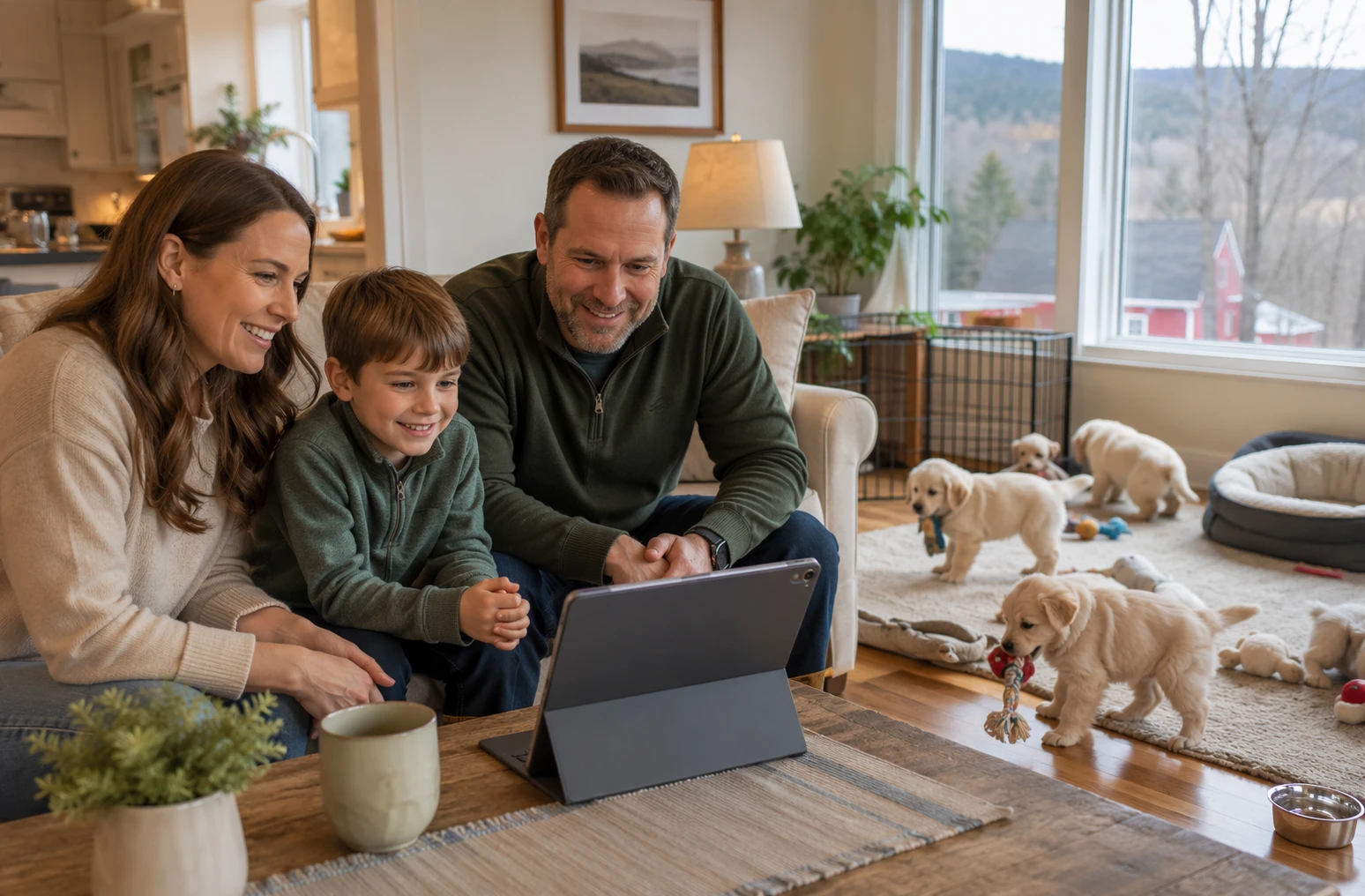
A reputable breeder also asks about your home, schedule, and experience. That is a good sign, not a sales trick. Careful breeders place puppies on purpose. For families comparing programs, this kind of open, family-first communication is what sets ethical breeders apart from risky classifieds.
If the seller seems more focused on fast payment than the puppy’s long-term home, step back.
Warning signs that should slow you down
Some listings look polished but still carry real risk. Slow down if the seller avoids basic proof or pushes urgency.
Common red flags include:
- The price is far below normal market range.
- The seller wants full payment before a call or visit.
- They ask for gift cards, wire transfers, crypto, or payment apps.
- They reuse stock-style photos or refuse live video.
- They cannot show where the puppy was raised.
- They brag about USDA licensing as if it proves quality.
Federal rules set minimum standards for some commercial breeders, but USDA licensing is not the same as excellent breeding or home-raised care USDA Animal Welfare Act regulations.
Cute photos do not equal a real puppy, a healthy puppy, or a careful breeder.
Ask the Right Questions Before You Reserve a Puppy
A good breeder will welcome smart questions. If they dodge, rush, or get vague, pause the reservation.
Questions about health and testing
Start with the parents. Ask which breed-specific health tests were done, when they were done, and if you can see the records. Cornell says responsible breeders test for conditions recommended by the breed club and should provide a good early start for puppies, including clean housing and basic preventive care according to Cornell’s breeder guidance.
Use a short checklist:
- What tests were done on both parents?
- Can I see OFA, eye, heart, patella, or DNA results if relevant?
- Has the puppy seen a vet yet?
- What vaccines and deworming has the puppy had?
- What does your contract say if a serious inherited issue appears?
A reputable breeder explains test results in plain English. They do not expect you to “just trust them.”
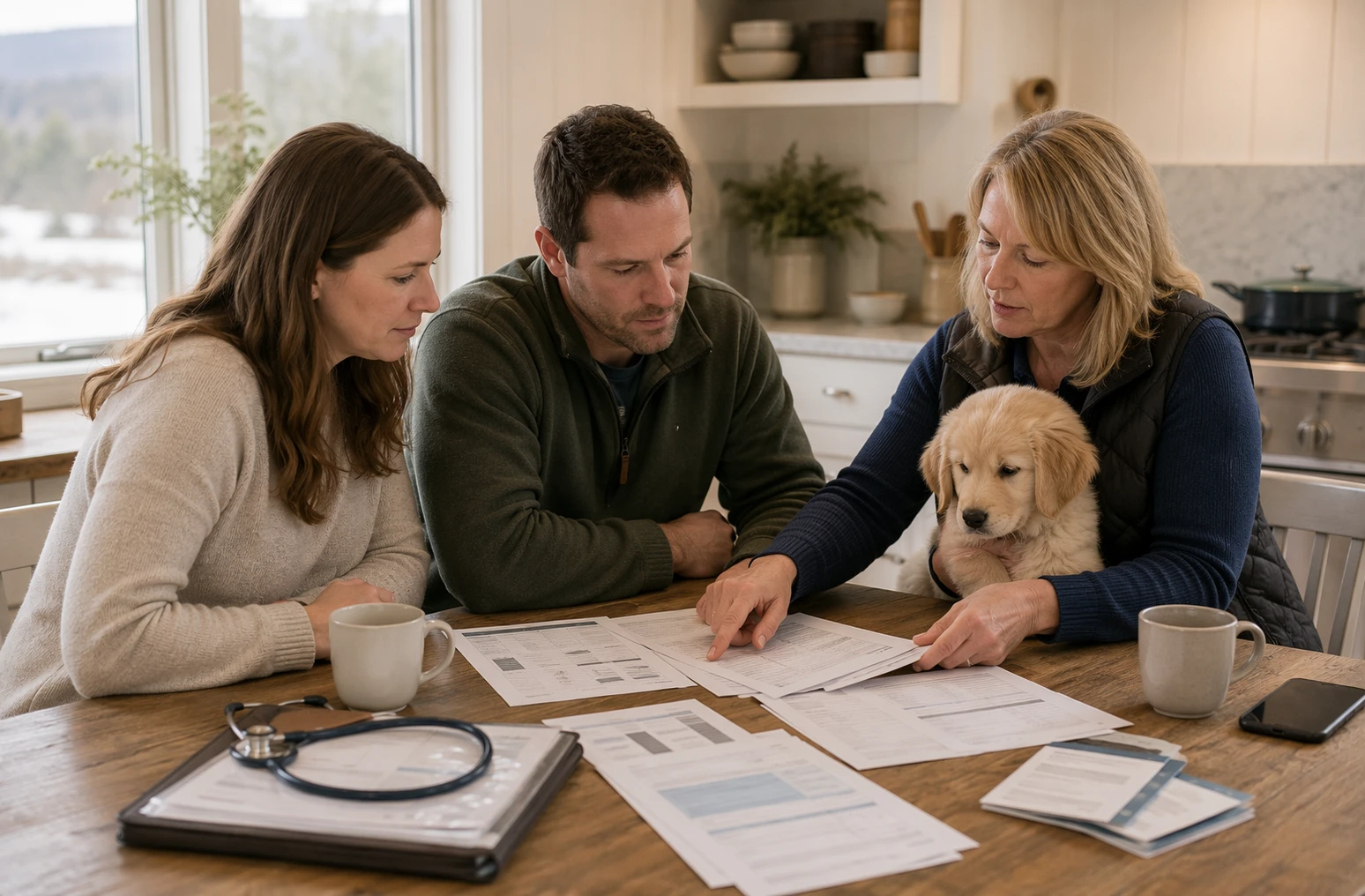
The AKC also notes that buyers should ask whether the parents were health tested and whether puppies are current on vaccines before going home, usually no earlier than 8 to 12 weeks in many cases per AKC breeder questions.
Questions about temperament and early care
Health matters, but daily care shapes the puppy you bring home. Ask how the litter is raised, what the puppies hear and see each day, and how the breeder matches each puppy to a family.
Ask these questions:
- Are puppies raised in the home or in a separate kennel?
- What early socialization do you do?
- Have they met children, adults, grooming tools, and normal home sounds?
- Do you start crate, potty, or handling practice?
- How do you spot a puppy that is confident, softer, or more easygoing?
Look for clear, specific answers. Good breeders know each puppy’s habits, energy, and stress signs.
If every puppy is described as “perfect,” you are not getting a real temperament read.
Also Read: 10 Things To Know Before Buying Puppies For Sale In Idaho
What Health Testing and Care Should Look Like
Health testing is more than a vet check
A clean bill of health at pickup is not enough. Reputable breeders test the parent dogs before breeding and track puppy care from birth.
Ask for a clear record of:
- Genetic screening tied to the breed
- Orthopedic or eye testing when relevant
- A full vaccination and deworming schedule
- Vet exam notes for the puppy
- A health record you can take to your own vet
The AKC explains that breeder health work can start very early, and some programs also use Early Neurological Stimulation, or ENS, during days 3 to 16 when done correctly and briefly according to AKC. That does not replace real health testing, but it shows the breeder has a structured care plan.
Warning: If a seller says “vet checked” but cannot show parent testing, skip the listing.
| What to ask for | Why it matters |
|---|---|
| Parent health tests | Lowers risk of inherited problems |
| Puppy vet record | Shows current care, not promises |
| Vaccine and deworming dates | Helps your vet continue care on time |
| Feeding and growth notes | Shows daily attention and monitoring |
Early socialization shapes future behavior
Good breeders do not wait for you to start behavior work. The most important socialization window for puppies is about 3 to 14 weeks, according to the AVMA. That means the breeder controls a huge part of your puppy’s start.
Look for puppies raised with:
- Gentle daily handling
- Normal home sounds
- Safe exposure to new surfaces and objects
- Calm, positive human contact
- Age-appropriate crate and grooming prep
A strong program builds confidence without flooding the puppy. You want steady exposure, not chaos.
A well-socialized puppy should seem curious and settled, not shut down or panicked.
At programs like Sage Puppies, this home-raised approach matters because health and temperament work together.
Also Read: 10 Questions to Ask Before Buying a Puppy Locally
How to Review Contracts, Deposits, and Buyer Policies
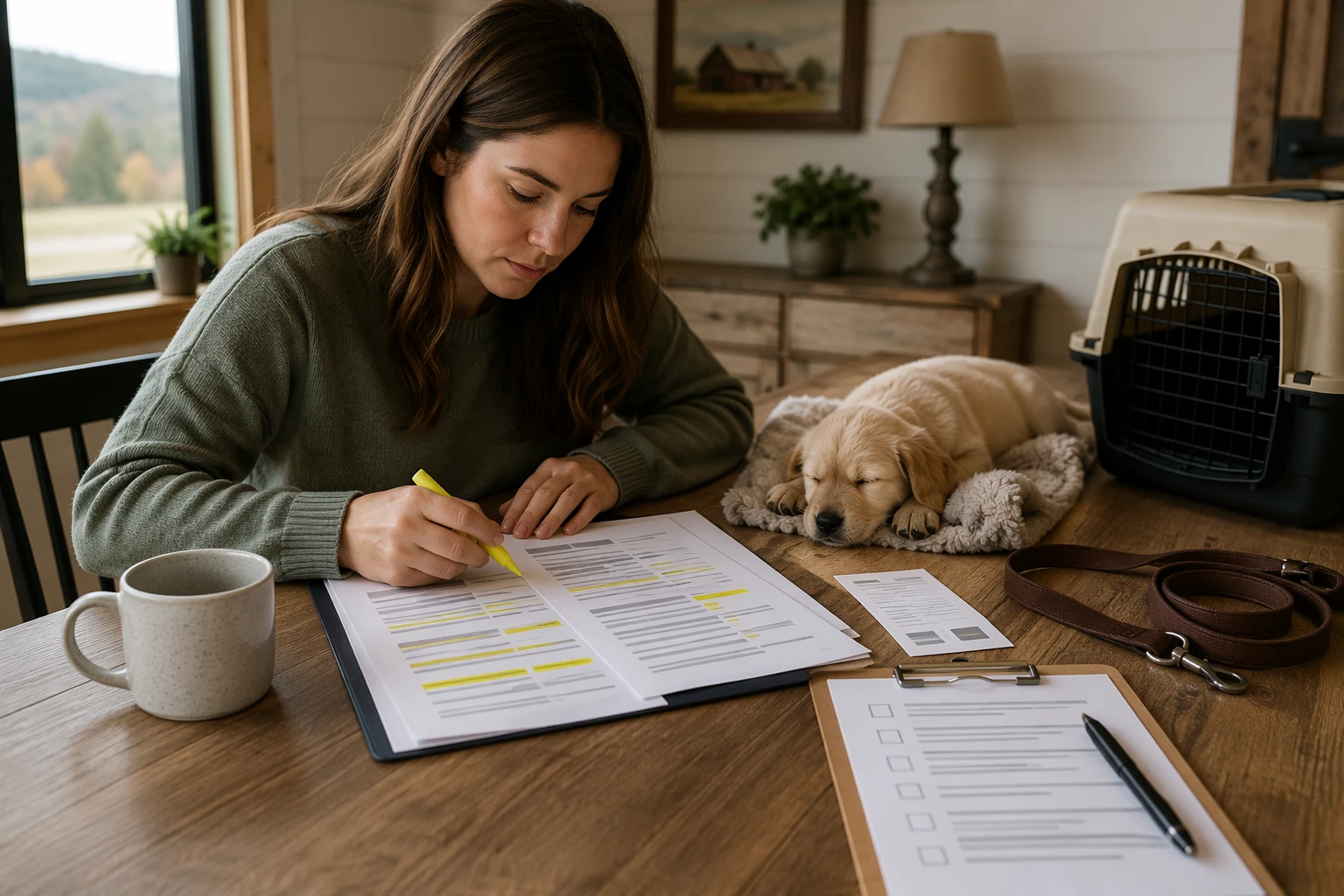
A good breeder puts terms in writing before you send money. Read the contract early, then match it against the breeder’s words, health records, and pickup plan.
What to look for in a contract
Start with the basics. The contract should clearly name the puppy, price, breeder, and buyer. The AKC notes that strong puppy contracts often include the puppy’s ID details, parent information, purchase price, health record terms, and return-to-breeder language in case your family can no longer keep the dog according to AKC’s contract guide.
Use this quick check:
| Contract item | Why it matters | Red flag |
|---|---|---|
| Puppy and parent details | Confirms identity and lineage | Vague or missing info |
| Health terms | Explains exams, records, and any remedy | No written timeline |
| Return policy | Shows what happens if plans change | Seller disappears after pickup |
| Pickup or delivery terms | Sets clear handoff rules | Last-minute changes |
Look for:
- Who pays for travel, exam, or delivery
- When the puppy goes home
- What happens if the breeder keeps a puppy longer
- Whether deposits are refundable or transferable
If a breeder will not share the contract before payment, pause. That is a buyer safety issue.
How to handle deposits responsibly
Treat a deposit like a reservation fee, not a leap of faith. The FTC warns buyers to slow down if a seller pushes upfront payment or asks for hard-to-trace methods like gift cards, crypto, wire transfers, or payment apps in its pet scam alert.
Before sending anything:
- Ask for the signed policy in writing.
- Confirm the deposit amount and due date.
- Ask if it is refundable, transferable, or applied to the final price.
- Pay in a traceable way.
- Save receipts, emails, and screenshots.
A responsible breeder, including boutique programs like Sage Puppies, should explain deposits in plain English without pressure.
Never send a deposit just to “hold your spot” if key terms are still unclear.
How to Check Reviews, References, and Online Reputation
Where to look for meaningful feedback
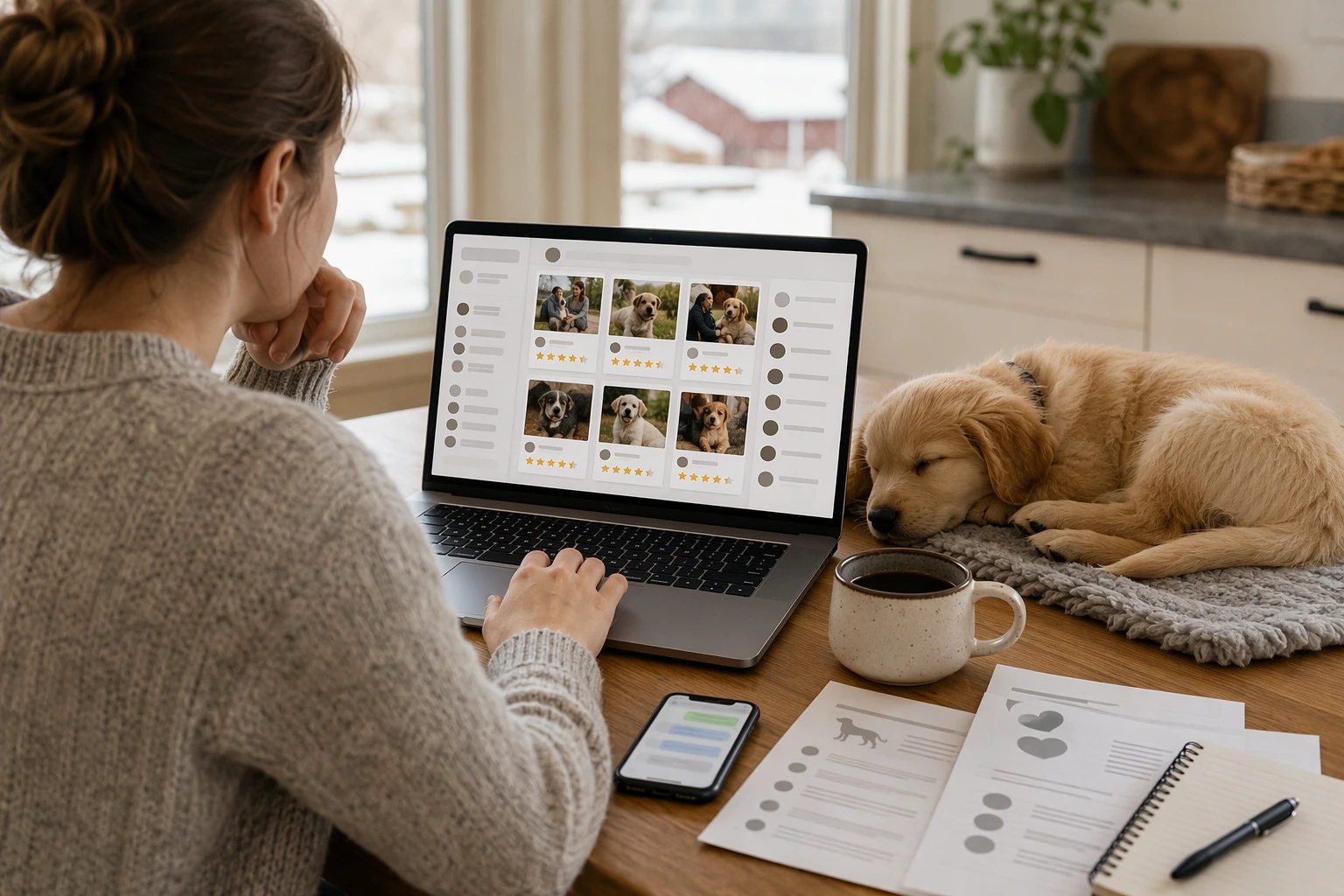
Start off-site. Reviews on a breeder’s own website can help, but they should never be your only proof. The Better Business Bureau says buyers should check business profiles, complaints, and customer reviews before sending money, and its pet scam guidance warns that many online pet ads are fake BBB pet scam advice. A local news report citing BBB research says 80% of sponsored pet ads may be fake, which is why outside verification matters BBB warning on fake pet ads.
Look in a few places:
- Google reviews for patterns over time
- BBB profiles for complaint history and responses
- Breed forums and Facebook groups for unfiltered buyer stories
- References from past families you can contact yourself
Ask each reference:
- Was the puppy healthy at pickup?
- Did the breeder stay helpful after the sale?
- Were records, pricing, and expectations clear?
If every review sounds polished, vague, or almost identical, slow down.
How to interpret mixed signals
A few mixed reviews do not always mean a breeder is bad. Look for the type of complaint, not just the star score.
Use this quick filter:
| Signal | Usually fine | Concerning |
|---|---|---|
| Response style | Calm, clear, specific | Defensive, blaming, hostile |
| Complaint pattern | One-off delay or mix-up | Repeated health, refund, or misrepresentation issues |
| References | Real families who talk openly | Breeder avoids direct contact |
Good breeders can have waitlist problems, busy seasons, or one unhappy buyer. That happens. What matters is whether the same issue keeps showing up.
Walk away if reviews mention pressure, changing prices, missing paperwork, or refused video calls.
Also Read: 10 Unique Care Tips For Small Breed Puppies In Urban Settings
Choosing the Right Puppy for Your Home
Pick the puppy that fits your real life, not your ideal life. The best match usually comes down to energy, grooming, and how your home runs day to day.
Ask yourself:
- How active is your family on normal weekdays?
- How much brushing, bathing, and coat care will you keep up with?
- Are you home often, or is the puppy alone for long stretches?
- Do you have small kids, older pets, or a quieter home?
The AKC notes that breed research should cover temperament, size, exercise needs, and grooming needs before you choose the right dog for your lifestyle. That matters a lot in Vermont, where long winters can limit outdoor time for some families.
| Home factor | Better fit | Think twice if |
|---|---|---|
| Busy family life | Social, adaptable puppy | Puppy seems easily overwhelmed |
| Low-shed preference | Regular grooming is fine | You want low maintenance coat care |
| Apartment or smaller home | Moderate energy puppy | You want a high-drive working type |
| First-time owners | Easygoing temperament | You prefer the boldest pup in the litter |
Do not choose based on color or size alone. Temperament fit will matter more after the first week home.
Good breeders often help place puppies by personality, not just buyer preference. Trust that process.
Patience also protects you. Reputable breeders often have waitlists because they plan litters carefully and place puppies with intent. According to the AKC, waiting for a well-bred puppy from a good breeder is often worth it for long-term health and support even if the process takes time.
Use the wait to:
- Confirm your breed and sex preferences
- Prepare your home and routine
- Review the contract
- Budget for grooming, training, and vet care
Also Read: Family-Raised Puppy Contracts: Key Terms to Review First
Common Mistakes to Avoid
The biggest mistakes happen when buyers rush, trust listings too fast, or confuse paperwork with proof of quality. Those errors can lead to health issues, surprise costs, or a puppy that was not raised well.
Many families regret these choices:
- Paying a deposit before a live call, visit, or clear proof the puppy is real
- Believing AKC papers alone mean the breeder is responsible
- Skipping health testing questions for the parents
- Choosing the lowest price instead of the best breeder fit
- Taking home a puppy too young
- Failing to ask what happens if you cannot keep the dog later
Cornell notes that good breeders test for breed-related conditions and provide early socialization, not just registration Cornell guidance. The USDA public search tool also lets buyers check certain licensed facilities and inspection records USDA Animal Care Public Search Tool.
If a seller avoids questions, pushes fast payment, or will not show where puppies are raised, step back.
A short wait for the right breeder usually beats years of regret.
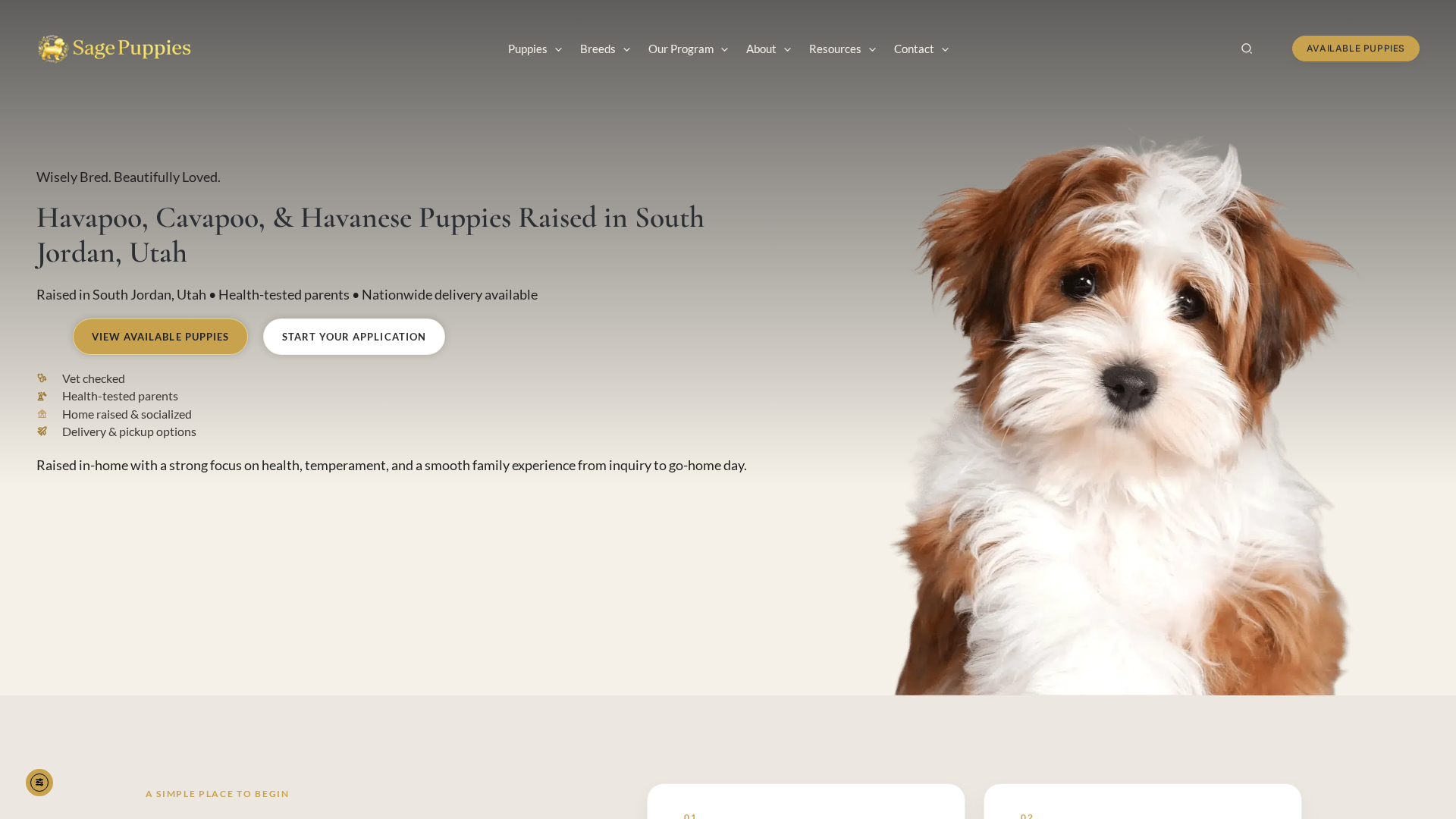
If you want a safer, clearer path than sorting through risky listings, start with Sage Puppies. Their home-raised Havanese, Havapoo, and Cavapoo puppies come from health-tested parents with early socialization and a transparent family-first process. Review available puppies, pricing, and delivery or pickup options, then submit an application when you are ready.
Frequently Asked Questions
Q1: How can I find reputable breeders selling puppies in Vermont?
Start with breeders who openly share health testing, parent details, living conditions, and waitlist steps. Ask to talk by phone, meet the puppies if possible, and review the contract before placing a deposit. Avoid vague listings and rush sales.
Q2: What are key signs of a trustworthy puppy breeder in Vermont?
Good breeders ask you questions too. They explain breed fit, socialization, vaccine timing, and what support looks like after pickup. They do not hide prices, dodge health questions, or offer multiple litters with no clear care plan.
Q3: Where can I see reviews of Vermont puppy breeders?
Check Google reviews, Facebook pages, and breeder testimonials. Read for patterns, not one perfect comment. Look for notes about communication, puppy health, and how the breeder handled concerns after the puppy went home.
Q4: Should I avoid breeders who always have puppies available?
Not always, but be careful. A steady supply can mean high-volume breeding. Ask how many litters they raise at once, where puppies are kept, and how they handle early socialization.
Q5: What should I ask before sending a deposit?
Ask about health testing, parent temperament, pickup timing, refund terms, and what records come home with your puppy. If a breeder pressures you to pay fast, walk away.
Conclusion
Finding puppies for sale in Vermont gets safer when you slow down and verify the breeder, not just the puppy. The best buyers ask for health testing, meet the breeder, review records, and walk away from rushed sales, vague answers, or too-good-to-be-true listings.
Vermont also gives buyers useful protections. State law requires certain written disclosures at sale, and buyers may have restitution rights if a veterinarian finds illness soon after purchase or a hereditary issue within the allowed period under Vermont’s sale law. It also helps to remember that USDA licensing is not the same as quality, since even Humane World for Animals warns that “USDA licensed” does not prove a breeder is reputable.