Quick Summary: Choosing a puppy in Massachusetts requires careful comparison of breeders based on health records, environment, and transparency. Focus on breeders who raise a few breeds, provide clear health testing, and show the puppies’ living conditions in person. Massachusetts laws protect buyers with requirements for health certificates and warranties, so asking for proper documentation and understanding the seller type helps avoid scams. Sage Puppies stands out for its transparency, health testing, and family-focused approach.
Most people comparing Massachusetts puppies for sale look at cute photos first. That is usually the wrong place to start. The real signs of a good breeder are simpler: clear health records, a chance to learn about the mother dog, a small number of breeds, and honest answers that do not feel rehearsed.
That is the challenge with Massachusetts puppies for sale. Ethical breeders and polished resellers can look similar online. First-time families often struggle to tell the difference until it is too late.
This guide fixes that. You will learn how to compare Massachusetts puppies for sale with a practical breeder checklist, what Massachusetts buyers should ask, which red flags matter most, and how to spot a healthy, well-raised small-breed puppy.
The advice here is built for real family decisions, with a focus on breeder standards, puppy health, temperament, transparency, and a smoother path from first search to confident choice.
1. Start With the Right Kind of Seller
The first filter is simple: choose the seller type before you compare puppies. In Massachusetts, that one step can save you from buying from the wrong setup.
Look for a breeder who stays focused
A good breeder usually stays narrow. The Massachusetts Department of Agricultural Resources says most breeders handle one or two breeds, and warns buyers to be cautious if many breeds are present or if the setup feels unclear according to the state’s buyer guidance.
Use this quick screen:
- Ask how many breeds they raise
- Ask how often they have litters
- Ask who owns the parent dogs
- Ask what early social care happens in the home
A focused breeder tends to know the breed well, track family lines, and speak clearly about health and temperament.
If the answers feel vague, rushed, or overly salesy, move on.
Ask whether the business is actually a pet shop
This matters more than many buyers realize. Massachusetts defines a pet shop as a place where animals are kept for sale, barter, exchange, import, export, or gift under 330 CMR 12.01. A home address alone does not prove you are dealing with a small breeder.
Ask directly:
- Are you a breeder or a licensed pet shop?
- Do you keep puppies from outside breeders for resale?
- Can I see your license if one applies?
| Seller sign | Lower-risk answer | Red flag |
|---|---|---|
| Breed range | One or two breeds | Many unrelated breeds |
| Puppy source | Born and raised there | Brought in from elsewhere |
| Parent access | Parents known and shown | Parents unavailable |
| Records | Clear and organized | Incomplete or evasive |

See the mother and the living environment
Ask to see the mother with the puppies, not just the puppies alone. Massachusetts tells buyers to watch the mother interact and look for signs she is nursing. That visit also shows you how the puppies are actually being raised.
Check for:
- Clean floors and bedding
- Calm adult dogs
- Bright, alert puppies
- Fresh water and safe play space
- Normal household sounds and handling
Photos and video help, but they are not the same as seeing the real environment live.
If you are buying from a premium program such as Sage Puppies, this is where transparency should feel easy, not forced.
Also Read: Health-Tested Puppies for Sale Near Me: Buyer Checklist
2. Verify the Health Paperwork Before You Compare Price
A lower price means very little if the paperwork is weak. In Massachusetts, a dog brought into the state must have an official health certificate, and commercial sellers cannot sell dogs under 8 weeks old under Massachusetts law. Start there before you compare deposits, delivery fees, or color premiums.
Check the puppy’s age and vet exam timing
Ask for the puppy’s date of birth first. If the seller avoids that question, slow down.
For Massachusetts buyers, age matters because:
- Dogs imported for sale cannot be under 8 weeks old
- A very young puppy may not be ready for travel or separation
- Early shipment can raise stress and health risk
Then ask when the puppy was last examined by a veterinarian. For pet shop sales in Massachusetts, a health certificate must be dated no more than 7 calendar days before the sale or offer for sale under 330 CMR 12.05.
Use this quick screen:
| Item to verify | What you want to see | Red flag |
|---|---|---|
| Date of birth | Exact date listed | “About 8 weeks” |
| Vet exam date | Recent, clearly dated | No exam date |
| Health certificate | Copy available before payment | “We send it later” |
If the seller talks about being “vet checked” but will not share dates, treat that as missing paperwork.

Review the full medical record, not just vaccine claims
“Up to date on shots” is not a medical record. Ask for the full record, including:
- Vaccine names and dates
- Deworming dates and product used
- Any treatment for diarrhea, cough, eye issues, or skin problems
- Microchip number, if placed
- Notes from the exam, not just a signed summary
A clean breeder should send this without drama. You are checking for gaps, not perfection. One treated issue is not always a deal breaker. Hidden treatment history is.
Ask how the seller handles out-of-state transport
If the puppy is coming into Massachusetts, ask who books transport and what papers travel with the puppy. The state says dogs entering Massachusetts need a health certificate, and dogs over 6 months must meet rabies rules on import per Mass.gov pet import guidance.
Ask these questions:
- Who issues the certificate – the breeder’s vet or a transport partner?
- What date is the certificate issued?
- Does the puppy travel with ID that matches the paperwork?
- What happens if the puppy shows signs of illness before departure?
Good sellers answer these questions clearly. Great sellers send the records before you have to chase them.
Also Read: 10 Signs a California Puppy Listing Is a Scam – Sage Puppies
3. Compare Breeders by How They Raise and Place Puppies
This is where weak breeders fall apart. Ask for proof, not promises. If a breeder cannot explain how they test parents, raise puppies, and choose homes, move on. For the bigger picture, go back to the parent guide on comparing Massachusetts breeders wisely.
Ask what health testing is done on the parents
“Vet checked” is not enough. A puppy exam tells you about that puppy on that day. It does not tell you whether the parents were screened for inherited issues common in the breed.
Ask for:
- The exact tests done on sire and dam
- The dates of those tests
- Any written results or registry records
- A clear answer on what problems they breed away from
In Massachusetts, dogs sold by regulated sellers must come with health records, and pet shops must provide a 14-day warranty under state sale rules. That helps, but it is still better to prevent trouble before pickup.
Use this quick screen:
| Breeder answer | What it means | Your next move |
|---|---|---|
| “Our parents are health tested for breed-specific issues” | Strong start if they can show records | Ask to see proof |
| “Our vet says the parents are healthy” | Too vague | Ask what tests were done |
| “We have never had a problem” | Not proof | Treat as a red flag |
A refund policy does not replace careful breeding. It only helps after your family is already attached.
Look for intentional socialization and early handling
Good breeders do more than keep puppies clean and fed. They build confidence early. The AKC notes that gentle daily handling matters in the first weeks, and some breeders use Early Neurological Stimulation during days 3 to 16 as part of a wider start to puppy development, according to AKC guidance on ENS.
Ask:
- Who handles the puppies each day?
- What sounds, surfaces, and routines do they meet?
- Are they raised in a home or a separate kennel area?
- How do you help shy puppies?
Look for breeders who mention:
- Gentle daily touch
- Exposure to normal home noise
- Safe play and rest routines
- Age-appropriate crate or potty intro
Socialization should be planned, not random.
Match the breeder’s placement process to your family
A solid breeder screens you too. That is a good sign. They should ask about:
- Kids and their ages
- Work schedule
- Other pets
- Energy level you want
- Travel, training, and grooming plans
The best match is not always the cutest puppy first. It is the puppy whose temperament fits your home.
| Placement style | What you may hear | Best for |
|---|---|---|
| First-come pick | “Choose by deposit order” | Families who know the risk |
| Breeder-guided match | “We match by temperament” | First-time owners |
| Hybrid process | “You choose from suitable puppies” | Families wanting both input and guidance |
Sage Puppies stands out here because its process centers on family fit, early handling, and transparency, which is what careful first-time owners usually need most.
4. Use Massachusetts Rules as Your Buyer Safety Net
Massachusetts rules can help you spot a safe seller fast. They also help you compare breeders and pet shops on paper, not just on promises.
Know which protections apply to the sale
Start by asking one direct question: Is this seller acting as a breeder, or as a licensed pet shop under Massachusetts rules? That matters because pet shops have clear sale and record duties. The state says pet shops must provide the dog’s medical record, give notice of the 14-day warranty, and have the dog examined by a veterinarian within seven days before sale, according to Massachusetts buying guidance.
Use this quick check:
| Question | Why it matters | Good sign |
|---|---|---|
| Is the license displayed? | Licensed pet shops must show it | Seller answers clearly |
| Can you see full records? | Records should be ready at sale | No delay or excuses |
| How old is the puppy? | Dogs under 8 weeks cannot be sold or imported for resale | Seller gives exact birth date |
If a seller gets vague when you ask what legal category they fall under, slow down.
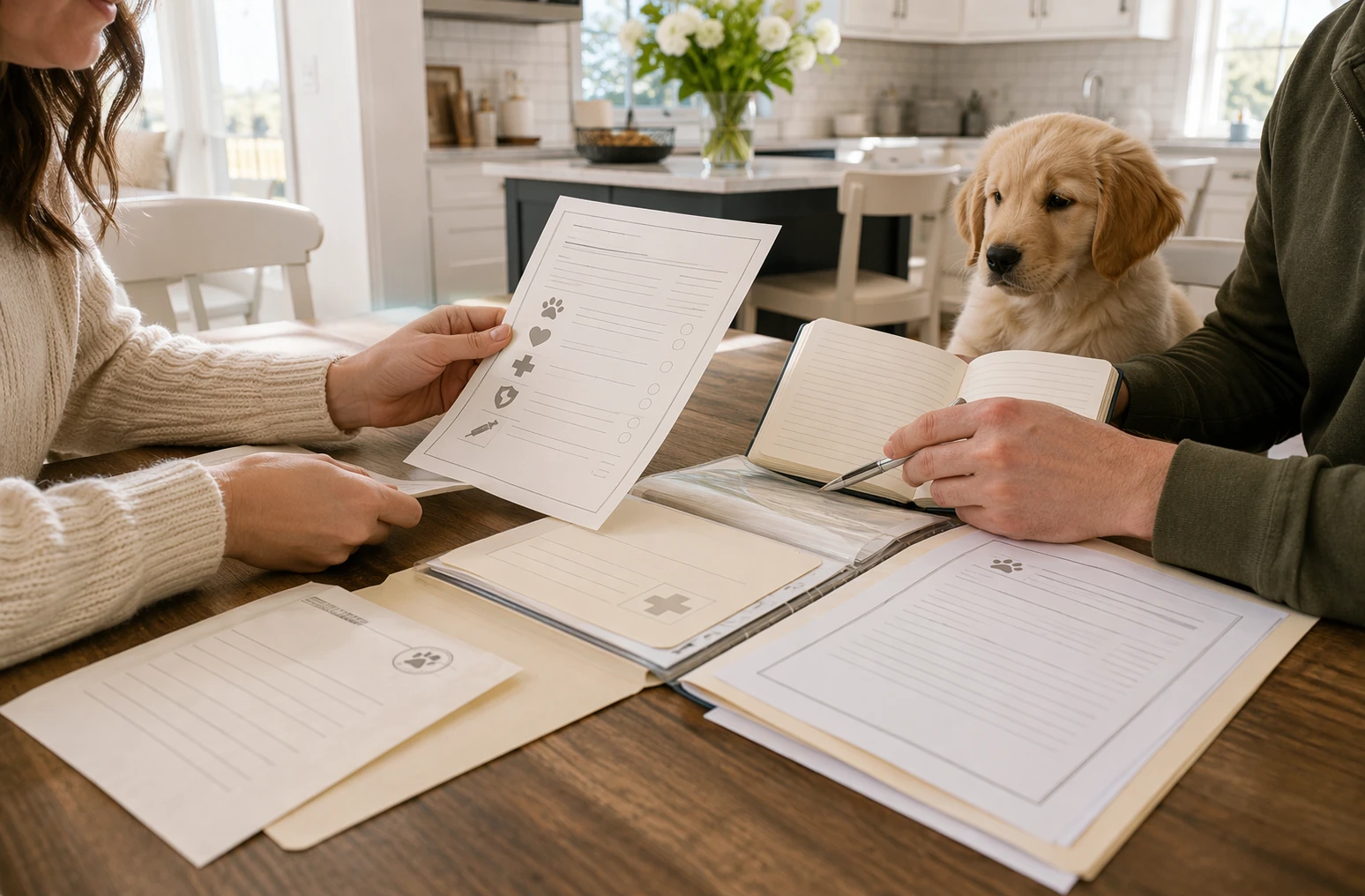
Use the warranty and return process as a comparison point
A strong seller does not dodge the hard questions. Ask them to explain, step by step, what happens if your vet finds illness or a serious congenital issue right after purchase.
Massachusetts rules for licensed pet shops require a refund or, if both sides agree, a replacement animal when the buyer acts within the set timeline in 330 CMR 12.05. That makes the return process a useful comparison tool.
Compare sellers on these points:
- Written terms – Are they easy to read?
- Time windows – Are dates and deadlines clear?
- Records – Do they hand over complete health history?
- Responsiveness – Do they explain next steps calmly?
Better programs welcome these questions because clear paperwork protects both the family and the puppy.
Recognize when a seller is hiding risk behind convenience
Convenience can be real. It can also hide risk.
Watch for red flags like these:
- Pressure to pay before you see records
- Delivery offered, but no clear health paperwork
- “Vet checked” claims with no dated proof
- Refusal to explain who bred the puppy and where
- Many breeds, always available, no waitlist
A careful family should treat speed as a bonus, not proof of quality. Ethical programs, including boutique breeders like Sage Puppies, tend to lead with transparency, health history, and clear pickup or delivery steps.
If the sales process feels smoother than the answers, you are likely the one absorbing the risk.
Also Read: Reputable Puppy Breeder Near Me: 9 Signs to Trust
5. Choose the Breeder That Fits Your Life, Not Just Your Budget
Price matters. Daily fit matters more. The right breeder makes your first weeks easier, your vet visit smoother, and your long-term ownership less stressful. If you have not read the main guide yet, go back to the parent pillar post for the full Massachusetts comparison framework before you choose.
Compare communication and follow-through
Start with how the breeder handles simple questions. Good breeders answer clearly, stay consistent, and do not rush you.
Use this quick scorecard:
| What to compare | Strong sign | Red flag |
|---|---|---|
| Replies | Timely, direct, specific | Vague, delayed, pushy |
| Health answers | Shares records and parent info | Dodges or changes subject |
| Puppy updates | Sends real progress notes or photos | Sends only sales language |
| Education | Explains breed fit and care | Focuses only on deposit |
Massachusetts also tells buyers to ask whether you are dealing with a true breeder or a pet shop, ask to see the mother, and be cautious if many breeds are offered through one source, according to Massachusetts buying tips.
If a breeder is easy to reach before payment but hard to reach after, expect trouble later.

Consider delivery, pickup, and next-step clarity
Logistics shape the whole experience. A lower price can lose its value fast if pickup is confusing, delivery is poorly handled, or post-sale steps are unclear.
Ask these questions before you commit:
- Who handles transport?
- What records come with the puppy?
- What happens if weather or flight plans change?
- When should your first vet visit happen?
- Who do you contact after pickup?
For dogs shipped into Massachusetts, an official health certificate must accompany the dog, and puppies imported for sale or resale cannot be under eight weeks old under Massachusetts shipment rules.
- Look for a written pickup or delivery plan
- Confirm timing, crate setup, and handoff details
- Make sure the breeder explains feeding, sleep, and transition steps
Choose the puppy source that supports long-term ownership
A good breeder does not disappear once the puppy leaves. They help you settle in, spot normal adjustment issues, and know when to call your vet.
Look for support like:
- breed-specific guidance
- feeding and schedule tips
- realistic house-training advice
- clear records and next-step reminders
- calm help after delivery or pickup
The cheapest puppy can become the most expensive choice if the source gives you no support, weak records, or poor early care.
This is where boutique programs often stand out. A source like Sage Puppies can be worth more when communication stays steady, delivery options are clear, and families know exactly what comes next.

If you want a simpler way to compare breeders wisely, start with Sage Puppies. Sage Puppies helps Massachusetts families review health-tested, home-raised Havanese, Havapoo, and Cavapoo puppies with clear next steps, transparent communication, and delivery or pickup options so you can move forward with confidence.
Frequently Asked Questions
Q1: where to buy puppies in Massachusetts
Start with small home breeders, not listings alone. Ask for health testing, parent details, socialization, contracts, and pickup terms. In Massachusetts, choose sellers who answer clearly and welcome screening. If local options feel thin, families also consider trusted programs like Sage Puppies with delivery.
Q2: How do I compare breeders fairly?
Use the same checklist for each breeder. Compare health testing, living setup, early training, communication, waitlist rules, and refund terms. A higher price can make sense if the puppy had better care, stronger records, and a smoother family transition.
Q3: What papers should I ask for?
Ask for a sales contract, vaccine record, deworming record, microchip details if included, and parent health testing proof. You should also get feeding instructions and a clear pickup or delivery plan before sending your final payment.
Q4: Are puppy delivery services safe?
They can be, if the breeder explains the route, timing, handoff, and who handles the puppy. Avoid vague shipping promises. Good breeders treat delivery like part of the puppy’s care plan, not just a transport add-on.
Q5: What are red flags when shopping online?
Watch for stock photos, rushed deposits, no parent information, and prices that seem oddly low. Be careful if the seller avoids calls or dodges health questions. Clear answers and consistent records matter more than a polished website.
Conclusion
Choosing puppies for sale in Massachusetts gets much safer when you slow down and compare the source, not just the puppy. The smart path is simple:
- check health records
- ask to see how puppies are raised
- confirm who is legally selling the dog
- review breeder answers for honesty and depth
Massachusetts also gives buyers real protections. State guidance says pet shops must provide records and a 14-day warranty, and buyers should get a vet exam within 14 days, according to Mass.gov buying tips. State rules also bar licensed sellers from offering sick animals for sale under 330 CMR 12.05. A careful comparison now helps your family avoid stress, surprise costs, and heartbreak later.