Quick Summary: A safe winter puppy pickup in Massachusetts requires a secured carrier, dry layers, and a flexible travel plan, not just a blanket. Pack a crash-tested crate, fleece blankets, towels, water, food, and paperwork within reach, and pre-warm the car without using heating pads or direct vents. Keep the puppy in the rear seat, never loose or on a lap, and carry them over salted pavement to protect paws. Check the forecast, allow extra time, and reschedule if roads are unsafe, then move the puppy straight into a quiet indoor area on arrival.
A snowy pickup morning can turn stressful fast if your car is not ready. The key puppy pickup essentials are not just a soft blanket. You need a secure carrier, dry layers, safe warmth, and a simple plan for getting a small puppy home calmly.
Massachusetts winter roads bring slush, cold wind, wet boots, and sudden storms. Small Havanese, Havapoo, and Cavapoo puppies can chill quickly, especially after a long handoff or ride.
This guide covers practical puppy pickup essentials, winter dog supplies, safe restraint, and weather backup plans. It also explains winter puppy safety without risky overheating. Families who prepare these puppy pickup essentials before leaving can focus on the exciting part – bringing their new puppy home.
Step 1: Choose and Test the Puppy’s Winter Travel Setup
Select a Secured Carrier or Vehicle-Rated Harness
Bring a hard-sided or sturdy soft-sided carrier that fits flat on your rear seat or rear footwell. It should have secure zippers, good airflow, and room for the puppy to stand, turn, and lie down.
| Setup | Best use | Winter check |
|---|---|---|
| Secured carrier | Most young small-breed puppies | Add a washable fleece layer, not loose blankets |
| Vehicle-rated harness | Calm puppy with proper fit | Test chest fit and seat-belt connection first |
Use the carrier’s seat-belt loops or secure it so it cannot slide. A puppy harness must be made for vehicle travel, not just walks. Federal standards do not certify pet restraints, as NHTSA explains, so follow the maker’s directions closely.
Keep the carrier warm, never hot. Avoid heating pads, hot water bottles, and thick bedding that could cover a puppy’s face.
Practice Loading Before the Massachusetts Pickup
Set up the carrier in your car a day before leaving. Check that doors close, the carrier stays level, and your rear heat reaches the area without blowing straight at it.
- Secure the empty carrier.
- Drive for 10 minutes.
- Listen for sliding, rattling, or loose clips.
- Pack a spare towel in case of snow, slush, or motion sickness.
Keep the Puppy Out of the Front Seat and Pickup Bed
Place the puppy in the rear seating area, away from front airbags. NHTSA warns that airbags can seriously harm a small occupant positioned in front. Never carry a puppy loose, on a lap, or in an open pickup bed.
Also Read: How to Keep Your New Oregon Puppy Dry During Rainy Pickup
Step 2: Pack the Core Puppy Pickup Essentials
Pack one small tote and keep it within reach, not buried in the trunk. Your new puppy needs secure travel, steady warmth, and a simple way to handle spills or an unexpected delay.
Safety and Restraint Items
Bring a crash-tested travel crate or secure soft-sided carrier sized for a small puppy. Line it with an absorbent pad, then buckle or anchor it so it cannot slide.
- A properly fitted harness and lightweight leash
- Backup slip lead for the handoff
- ID tag with your phone number
- Seat belt tether only if it attaches safely to the harness
- Flashlight and charged phone
Never hold a puppy in your lap while the car is moving. A sudden stop can cause serious harm.
Warmth and Comfort Items
Small Havanese, Havapoo, and Cavapoo puppies can get chilled quickly after leaving a warm home. Pack a soft fleece blanket and a spare dry towel. Keep the carrier away from direct heater vents, which can overheat a puppy fast.
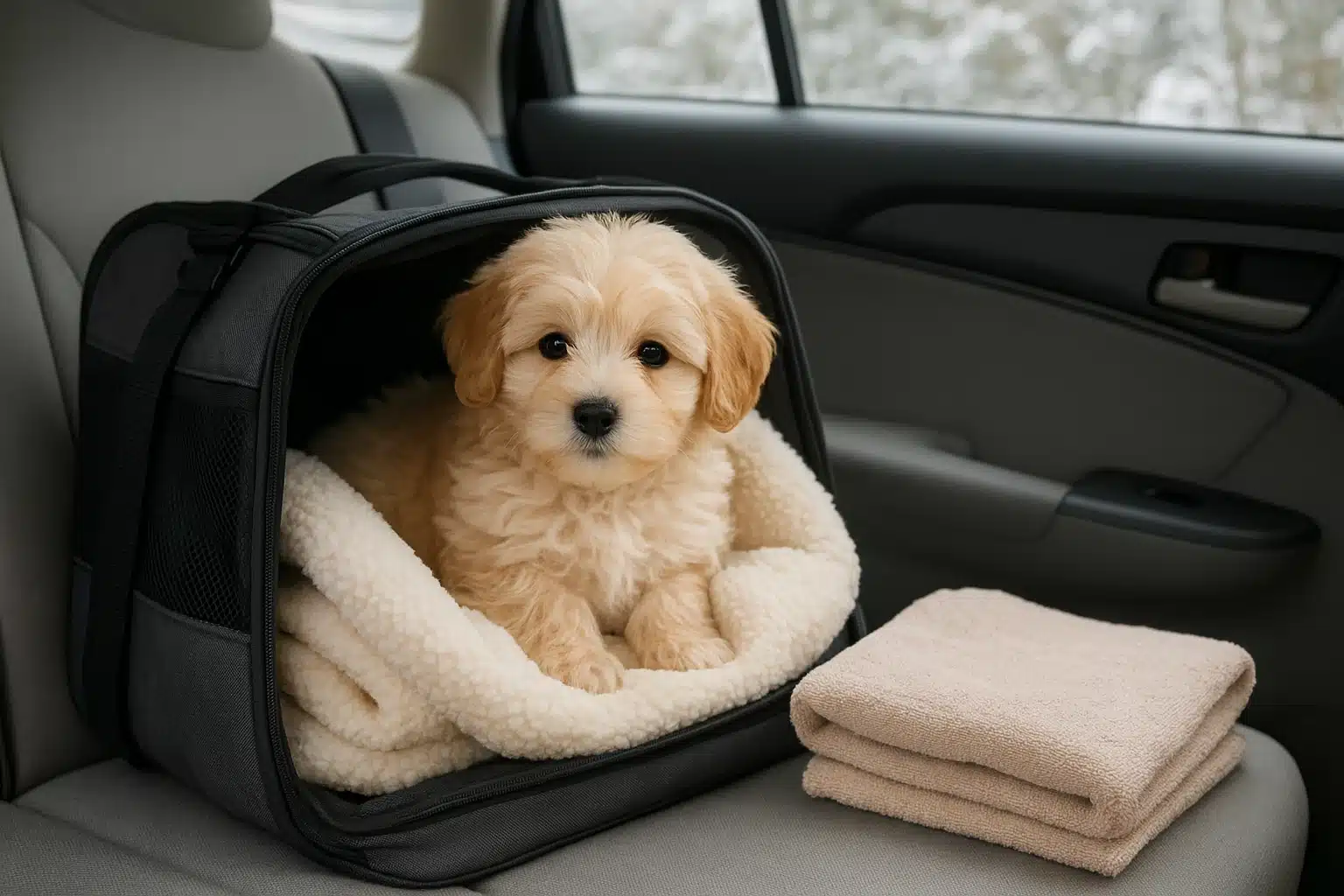
Use layers you can add or remove. A covered carrier can block drafts, but leave clear airflow on at least two sides. Bring a familiar-smelling cloth only if the breeder provides one.
| Item | Why it helps | Winter note |
|---|---|---|
| Fleece blanket | Holds gentle warmth | Pack a dry backup |
| Absorbent pad | Keeps bedding dry | Replace after accidents |
| Carrier cover | Cuts drafts | Never block airflow |
| Towel | Dries paws or coat | Remove road salt promptly |
Water, Food, and Cleanup Supplies
Bring bottled water, a collapsible bowl, the puppy’s current food, and a few small training treats. Offer water during a safe stop, not while driving. Avoid changing food on pickup day.
- Paper towels and unscented wipes
- Waste bags
- Enzyme cleaner in a leakproof bag
- Extra pads and a plastic bag for wet items
Massachusetts emergency guidance also lists pet food, water, bowls, carriers, blankets, and familiar comfort items as key supplies for animals during disruptions. Review the state checklist before a long winter drive.
Documents and Handoff Information
Keep all papers in a waterproof folder by the passenger seat. Confirm you have the puppy’s health records, feeding routine, microchip details if provided, and breeder contact information.
Ask who to call after hours if you have a first-night question. Save the pickup address, planned route, and veterinarian contact in your phone. Massachusetts advises winter drivers to share their route and expected arrival time, a smart habit when bringing home a puppy. See the state’s winter driving tips.
Also Read: 10 Adorable Havapoo Colors You Need to See (2026)
Step 3: Warm the Vehicle Without Overheating the Puppy
Preheat and Inspect the Vehicle
Start the car 10 to 15 minutes before pickup. Clear snow from doors, seats, and the carrier area. Warm the cabin, then lower the heat to a mild, steady setting before the puppy enters.
Check that the carrier is secure, dry, and away from a direct vent. The AVMA advises that pets should ride restrained in a properly secured carrier or harness.
Use Layers, Not Direct Heat
Use a fleece blanket over part of the carrier, leaving open space for airflow. Add a soft towel beneath the puppy for warmth and traction.
Avoid placing a heating pad, hot water bottle, or heat pack in the carrier. A young Havanese, Havapoo, or Cavapoo can overheat fast and cannot move away safely in a small space.
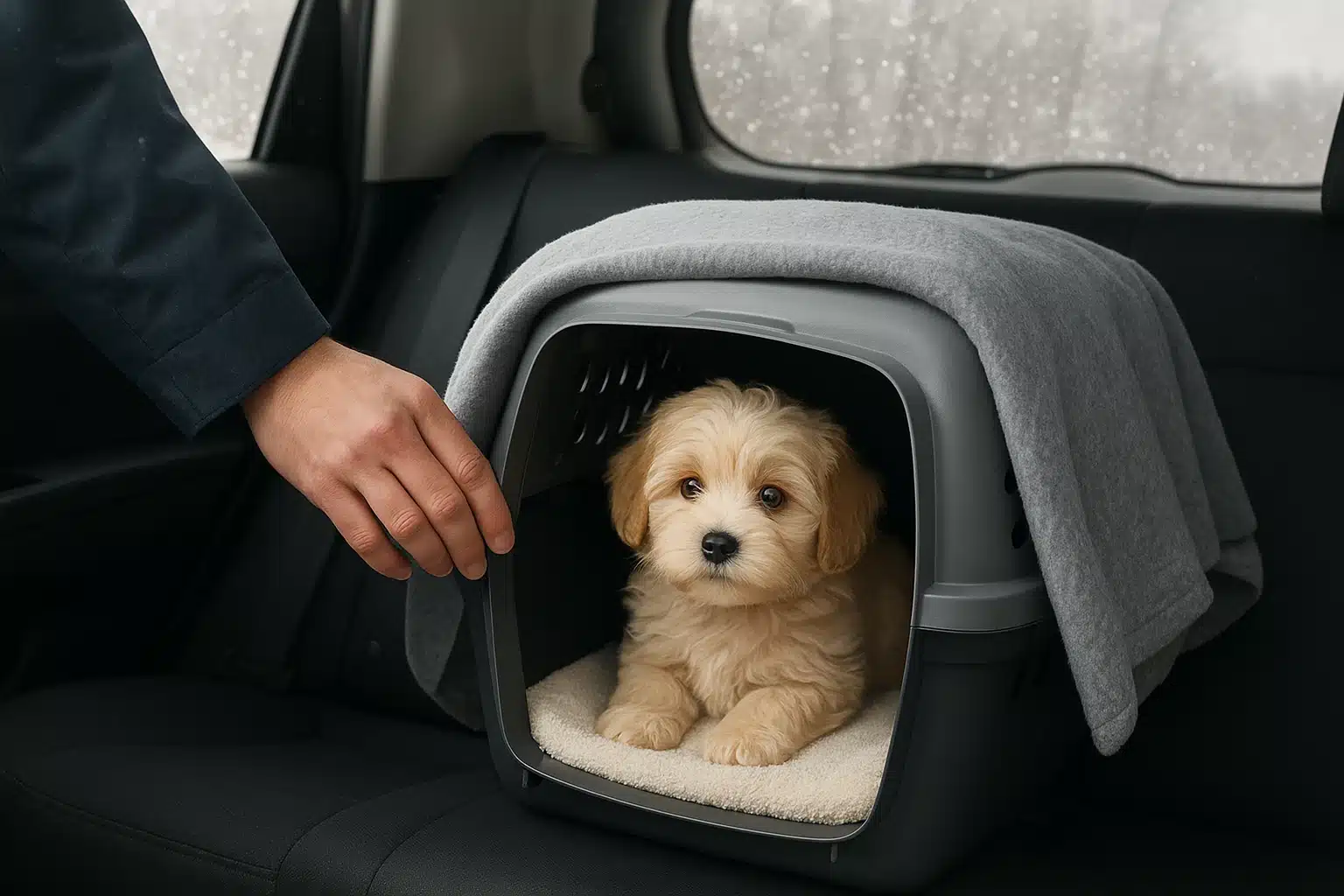
Watch for panting, restlessness, heavy drooling, or a hot-feeling body. If you see these signs, reduce the heat, uncover more of the carrier, and offer fresh water at the next safe stop.
Never leave your puppy alone in a parked vehicle. Cold cars can chill young dogs quickly, while a warm car can heat up faster than expected.
Protect Small Paws During Loading and Stops
Carry your puppy from the handoff to the vehicle. Do not let tiny paws touch salted pavement, slush, or ice.
At rest stops, use a clean towel or puppy pad on a sheltered patch of ground. Wipe paws, legs, and belly afterward. The AVMA warns that de-icers and antifreeze can harm pets if licked from fur or paws.
Step 4: Plan the Drive Home Around the Puppy
Confirm Feeding and Potty Timing at Pickup
Before you leave, ask when your puppy last ate, drank, and went potty. Keep the first drive calm, not rushed. Follow the breeder’s feeding plan rather than offering a large meal in the car.
| Ask at handoff | Why it helps |
|---|---|
| Last meal time | Helps you plan the next meal |
| Last potty break | Sets a realistic stop plan |
| Usual food | Avoids a sudden food change |
Pack a leash, waste bags, paper towels, and a spare blanket where the passenger can reach them.
Assign the Driver and Puppy Passenger
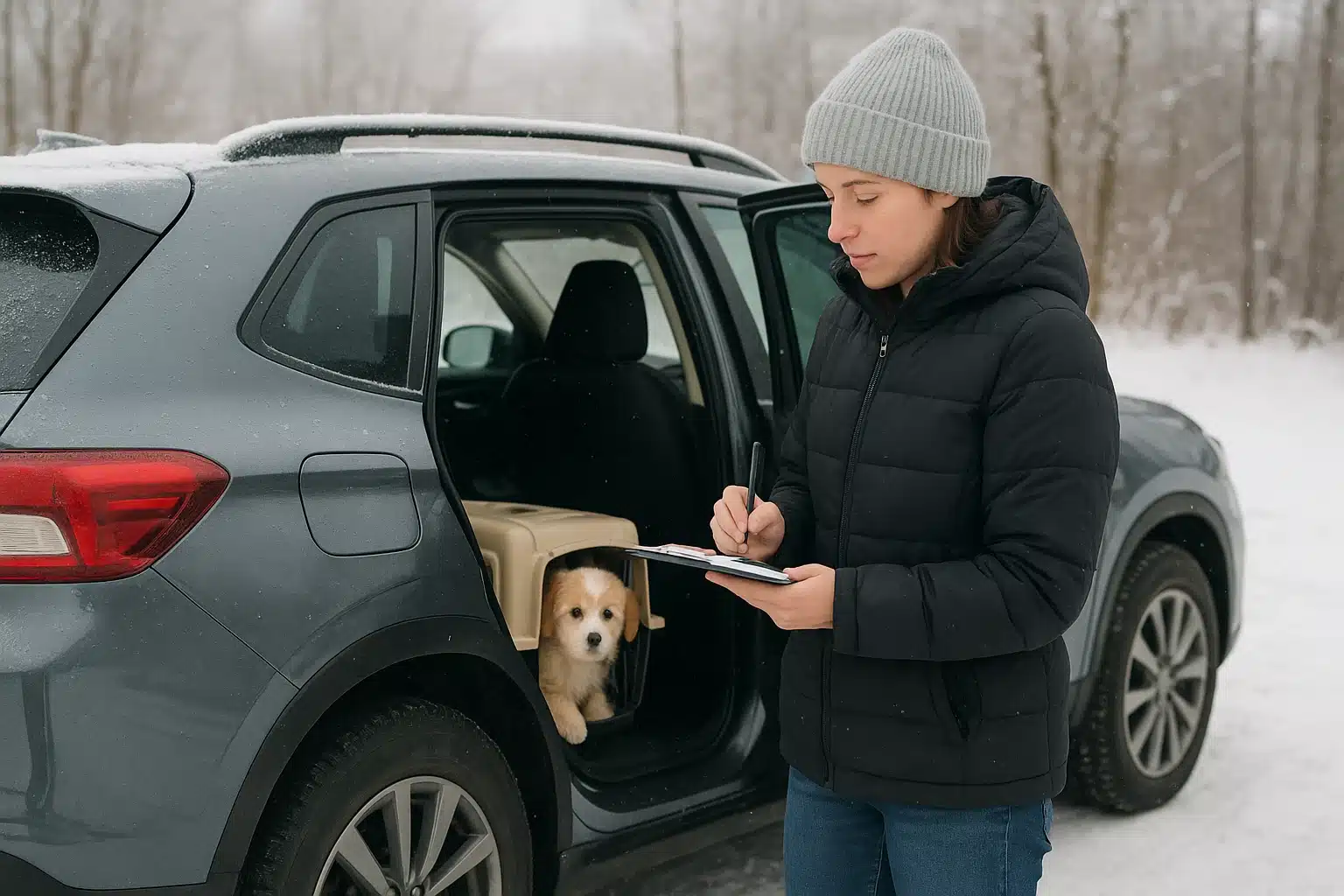
Choose one adult to drive and one to handle the puppy’s needs. The driver should not turn around, hold the puppy, or reach into the carrier. The American Veterinary Medical Association advises a secured carrier or proper harness, not a loose pet in the vehicle, for safety and fewer distractions (AVMA vehicle safety guidance).
Respond Calmly to Crying, Drooling, or an Accident
Some crying is normal. Speak softly, keep the cabin quiet, and let the puppy settle in the secured carrier. Do not open it while the car is moving.
- Pull over only at a safe, well-lit stop.
- Offer a brief potty break on leash if needed.
- Replace wet bedding and wipe the carrier dry.
- Resume with steady heat and calm driving.
Drooling, lip licking, or vomiting can signal car sickness. Avoid human medicine. If vomiting repeats or your puppy seems weak, call your breeder or a vet. Keep the puppy with you during stops. Young puppies should never wait alone in a cold car.
Also Read: Massachusetts Puppies: How to Compare Breeder Support Services
Step 5: Prepare for Massachusetts Winter Delays and Road Hazards
Check the Route, Weather, and Pickup Window
Check the forecast, road alerts, and your full route the night before and again before leaving. Build in extra time for slower traffic, plows, and a safe handoff.
MassDOT advises drivers to avoid the worst of a storm, use main roads, and allow extra travel time. Review its winter driving guidance before you go.
If conditions worsen, contact the breeder early. A calm reschedule is safer than rushing home with a new puppy.
Pack a Winter Vehicle Backup Kit
Keep your puppy supplies in the cabin. Put the road kit in the trunk.
| Item | Why it helps |
|---|---|
| Charged phone and car charger | Lets you update the breeder or call for help |
| Blanket, water, and snacks | Supports people during a long delay |
| Scraper, brush, and small shovel | Clears snow and helps free the car |
| Flashlight and traction aid | Helps with a dark, slippery stop |
| Puppy towels and spare bedding | Handles wet paws or an accident |
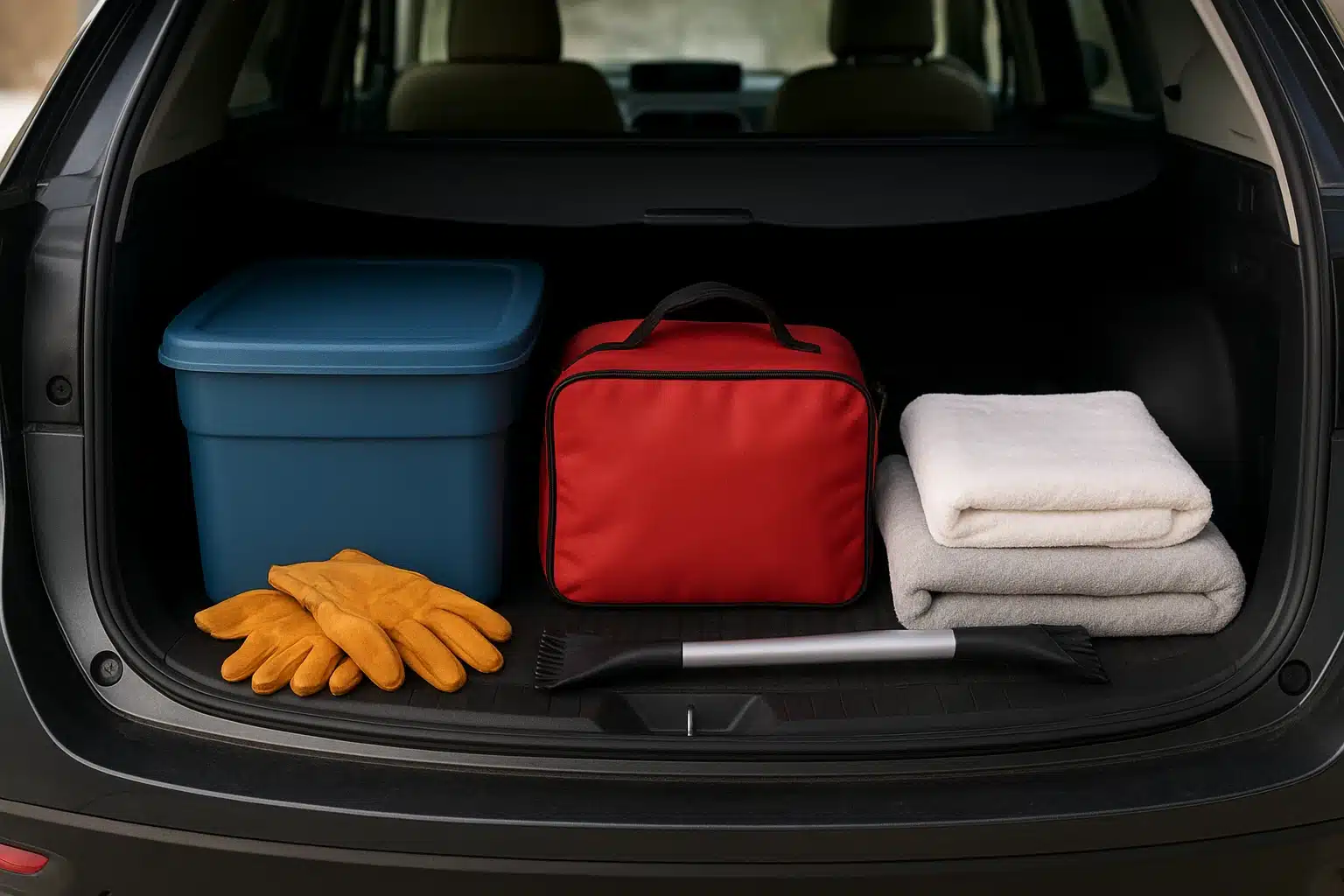
MassDOT also recommends basics such as jumper cables, a shovel, reflectors, and traction material in winter vehicles.
Make Stops Safe Around Ice Melt and Unfamiliar Ground
Choose a clear, well-lit spot for any puppy break. Carry your puppy over deep snow, slush, and salted pavement when possible. Keep them on leash.
Ice melt can irritate paws and cause harm if licked. Wipe paws and belly with a damp towel before your puppy settles back into the car, as Massachusetts pet safety guidance advises.
Never leave a new puppy alone in a cold parked car.
Also Read: What to Bring When Picking Up a Havapoo Puppy Locally
Step 6: Complete a Calm, Secure Handoff at Pickup
Confirm the Puppy’s Current Routine
Before you leave, ask what the puppy ate today, when they last went potty, and where they usually sleep. Confirm their food brand, meal size, nap rhythm, and any comfort item they know.
Keep the first evening simple. Match that routine as closely as you can, then make changes slowly once your puppy settles in.
In cold Massachusetts weather, move the puppy from the warm handoff space straight into your pre-warmed vehicle.
Collect and Organize Available Records
Place every paper item in one waterproof folder before you load up. Ask for clear instructions on the next steps, not just a stack of forms. The AVMA advises families to receive up-to-date health records from their puppy provider, along with proof of purchase and contact details for follow-up questions in its puppy selection guidance.
| Item | Why it matters | Where to keep it |
|---|---|---|
| Vaccine and deworming record | Helps your veterinarian plan care | Waterproof folder |
| Feeding and routine notes | Supports a smooth first week | Glove box |
| Health certificate, if provided | May be needed for interstate travel | Folder with records |
| Breeder contact details | Gives you one clear point of contact | Phone and printed copy |
Load the Puppy Without a Doorway Escape
Set the secured carrier in the car first. One adult should hold the puppy while another opens doors and checks footing for ice.
Do not let a new puppy walk loose in a parking lot, driveway, or snowy entry. Close the car door before adjusting blankets or talking through final details.
The puppy goes from safe arms into the latched carrier, then the vehicle door closes. Keep that order every time.
Step 7: Make the First Arrival at Home Warm and Simple
Move Directly From the Car to the Prepared Indoor Area
Park as close as possible and carry your puppy straight inside. In snowy or icy weather, skip the front-yard welcome and outdoor photos. Settle them in a quiet, warm room with a crate or pen, water, and a familiar blanket.
| First 15 Minutes | Keep It Simple |
|---|---|
| Potty chance | Use one cleared, low-traffic spot |
| Indoor setup | Offer water and a calm resting place |
| Family greeting | Let one person greet at a time |
Keep outdoor trips brief. Small puppies can chill quickly, especially after a long winter drive.
Follow the Familiar Routine Before Adding New Experiences
Use the food, feeding time, and sleep routine shared at handoff. Avoid a house tour, visitors, baths, and excited play on day one. Let your puppy explore one safe area at their own pace.
- Speak softly.
- Keep lights and noise low.
- Give frequent, calm potty breaks.
- Allow plenty of uninterrupted naps.
Positive early exposure matters, but puppies should meet new things at a pace that does not cause fear, notes the AVMA socialization review.
Save Questions and Observations for the First Veterinary Visit
Write down feeding amounts, stool changes, coughing, sleep patterns, and any questions from the first few days. Bring the breeder’s health and vaccine records to your veterinary visit. Your vet can tailor a care and vaccine plan to your puppy’s needs, as AVMA guidance explains.
Call your vet promptly for repeated vomiting, diarrhea, unusual weakness, or trouble breathing.
Also Read: 10 Signs a California Puppy Listing Is a Scam – Sage Puppies
Step 8: Use the Printable Winter Puppy Pickup Checklist
Pack Before Leaving Home
Use this quick list before you leave:
| Item | Why it matters |
|---|---|
| Secured carrier | Keeps your puppy safe and contained |
| Dry blanket and towels | Adds warmth and handles spills |
| Water, bowl, and food | Covers unexpected delays |
| Leash, ID tag, and paperwork | Supports a smooth handoff |
Pack a spare towel and a small cleanup bag. AVMA travel guidance also recommends carrying health records and emergency contacts.
Check Before Driving Away
- Secure the carrier near the center of the vehicle.
- Confirm doors and latches are fully closed.
- Keep the cabin warm, but do not aim hot air directly at the puppy.
- Put the breeder’s contact details within reach.
Never hold a puppy in your lap while driving. A crate or proper restraint protects everyone.
Check When You Arrive Home
- Carry your puppy inside before unpacking the car.
- Wipe paws, legs, and belly to remove slush or de-icer.
- Offer water, then a calm potty break.
- Check that your puppy is warm, dry, and alert.
The AVMA warns that young pets chill quickly in cold cars, so avoid extra stops.

Ready for a calm, well-planned puppy homecoming? Sage Puppies helps families prepare for safe pickup or nationwide delivery of lovingly raised Havanese, Havapoo, and Cavapoo puppies. Review available puppies and begin your family-first adoption plan today.
Frequently Asked Questions
Q1: How do I keep my puppy warm on the drive home in winter?
Pre-warm the car, use a light fleece blanket, and keep the carrier away from cold windows. Check often for shivering or panting. Never use a heating pad inside the carrier.
Q2: What essentials should I pack for winter puppy pickup?
Pack a secured carrier, towels, blanket, water, paper towels, waste bags, leash, collar, and your breeder paperwork. Bring extra towels for wet paws, snow, or motion sickness.
Q3: What is the safest way to transport a puppy in the car?
Place a properly sized carrier on the back seat and secure it with the seat belt. Do not hold the puppy in your lap or let them roam.
Q4: Should I delay pickup during a snowstorm?
Yes, if roads are unsafe. Ask your breeder about a new pickup time and avoid rushing through ice, low visibility, or deep snow.
Q5: Can my puppy wear a coat in the carrier?
Avoid bulky coats in a carrier. A dry blanket is safer and lets you watch your puppy’s comfort level.
Conclusion
A safe winter puppy pickup comes down to four things: a secured carrier, steady warmth, clean supplies, and a flexible travel plan. Pack food, water, towels, waste bags, records, and a comfort item within easy reach. Keep your new Havanese, Havapoo, or Cavapoo out of drafts and never loose in the car.
Watch the forecast, allow extra time, and postpone travel if conditions turn unsafe. Massachusetts officials advise avoiding winter-storm driving when possible and carrying basic emergency gear, including blankets and a charged phone, for essential trips in their winter driving guidance. Calm preparation protects your puppy from the first mile home.