Quick Summary: Finding ethical puppies in Kansas requires verifying breeders’ legal status, health testing, and transparency about parent dogs and living conditions. Avoid breeders who hide records or avoid questions, and prioritize clear communication about pickup or delivery plans. A responsible breeder provides proof of health tests, shows the parents, and raises puppies in clean, social environments, helping families make confident, ethical choices.
If you are looking at Kansas puppies for sale and keep spotting the same puppy photos on different sites, pause there. The real job is not picking the cutest face first. It is figuring out which breeder is truly raising puppies with care, health focus, and honest practices.
That is where most families get stuck. Listings can look polished, prices can feel urgent, and every seller seems to claim they are responsible. Yet the gap between a well-raised puppy and a risky source is huge. If you are searching for Kansas puppies for sale, you need a simple way to sort ethical breeders from brokers, resellers, and high-volume operations.
This guide gives you that filter. You will learn what to ask, what paperwork matters, which red flags should stop you, and how to compare breeders nearby or those offering delivery. You will also see how Kansas-specific details fit into your search for Kansas puppies for sale, so you can make a calm decision instead of a rushed one.
Our focus is buyer-first and practical. We look at this the way careful families do: health testing, home-raised care, puppy temperament, pickup or delivery clarity, and breeder transparency. If you want Kansas puppies for sale from a source you can trust, this guide will help you ask better questions before you commit.
Step 1: Verify the breeder is operating legally in Kansas
What Kansas buyers should look for first
Start with the license question. Ask the breeder what kind of Kansas license or permit applies to their setup, and ask for the full legal business name tied to it. In Kansas, the Animal Facilities Inspection Program licenses and inspects dog and cat breeders and other pet animal businesses under the Kansas Pet Animal Act, and licensed facilities are subject to regular inspections according to the Kansas Department of Agriculture.
A seller does not earn trust just because the puppies look clean online. You want proof that the business exists, can be inspected, and is willing to identify itself clearly.
Use this quick check:
| Buyer check | What to ask for | Why it matters |
|---|---|---|
| Legal name | Full name on license or paperwork | Helps you match records |
| Facility type | Breeder, hobby breeder, retail breeder, or distributor | Shows if they understand the law |
| Kansas status | Current license or permit details | Confirms they are not hiding |
| Physical location | Real address, not just a meeting spot | Lets you verify where puppies are raised |

Watch for these red flags:
- They refuse to share a real address.
- They only want to meet in a parking lot.
- They cannot explain whether they are licensed.
- They pressure you to send a deposit before paperwork.
If a breeder gets defensive when you ask basic legal questions, walk away.
Why a paper trail matters more than a cute listing
Kansas law gives you a practical reason to ask for records, not just promises. Kansas regulations require licensees to keep records for each animal, including where the dog came from, identifying details, vaccination information if available, and who the dog was sold to. Those records must be kept on site for the current license year and the prior two years under Kansas recordkeeping rules.
That matters because paperwork tells a story photos cannot.
Ask for:
- The puppy’s date of birth.
- Parent information.
- Vaccine and deworming records.
- Microchip details, if used.
- A written sales contract.
- Any health testing tied to the parents.
A good breeder should hand this over without drama. Ethical programs know serious families ask hard questions. That is normal. It protects you and the puppy.
A polished listing can be made in ten minutes. A real paper trail takes steady, honest breeding practices.
If the seller has missing records, vague answers, or changing details, treat that as a legal and ethical warning sign, not a small mistake.
Also Read: 10 Signs a California Puppy Listing Is a Scam – Sage Puppies
Step 2: Confirm the breeder shows the parents, not just the puppies
Parent dogs should be part of the conversation
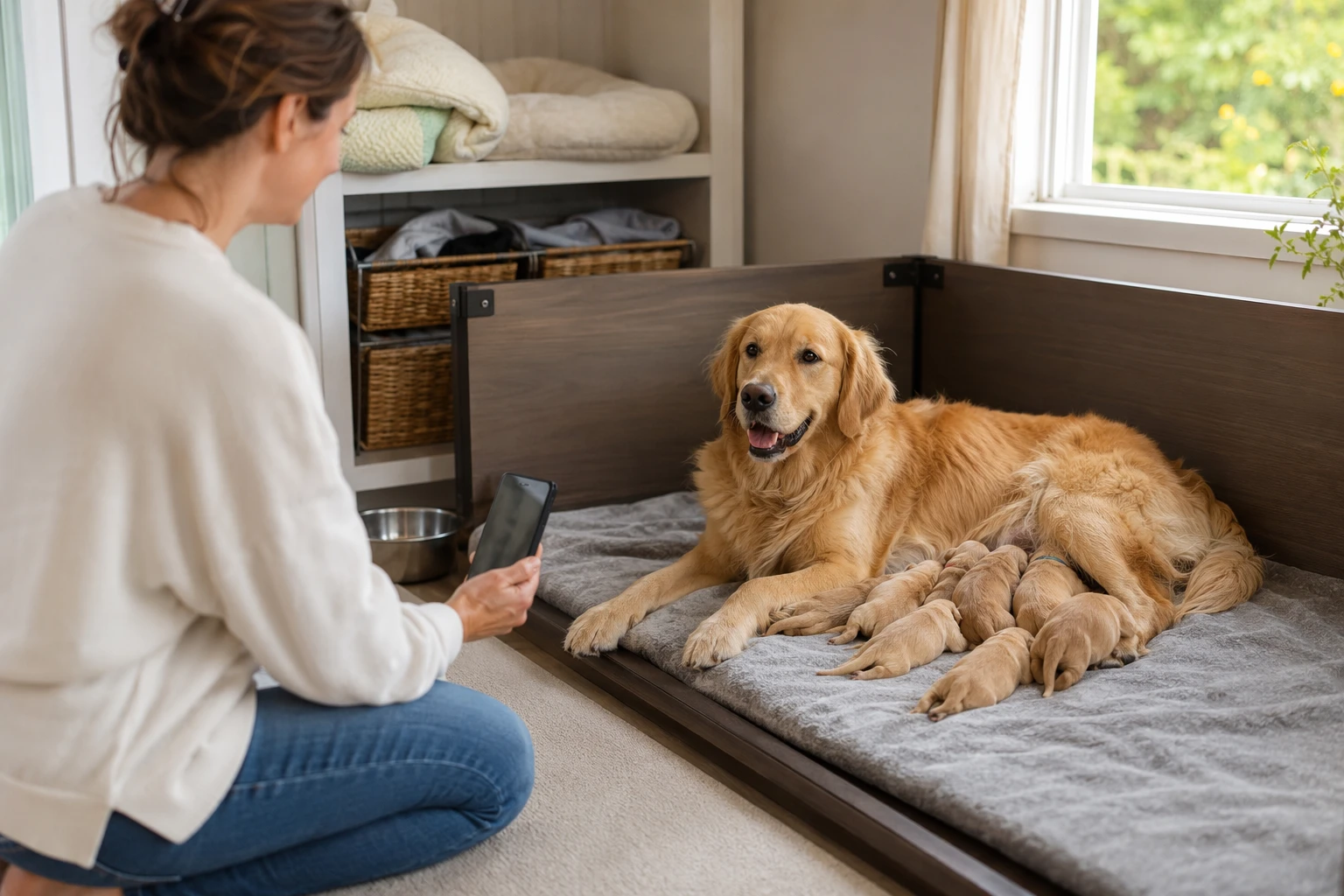
Cute puppy photos prove almost nothing. You need to see the mother dog, and ideally the sire too, because the parents tell you far more about health, size, and temperament than a staged litter shot.
A good breeder should talk about the parents in plain detail, including:
- age
- breed or mix
- personality
- health testing
- how often they are bred
- where they live when not raising puppies
The USDA itself is reviewing stronger federal standards around the care of breeding females and the exercise and socialization of dogs, which shows how central parent welfare is to ethical breeding in 2026, according to this APHIS proposed rule notice.
Ask for a live video call if you cannot visit right away. During that call, look for a parent dog that seems:
- calm, not shut down
- clean and comfortable
- willing to approach people
- physically sound in movement
- matched to the puppy photos and records
If a breeder only shows puppies and keeps changing the subject when you ask about the mother, treat that as a serious red flag.
Use this quick check:
| What to ask | Good sign | Red flag |
|---|---|---|
| Can I see the mother with the litter? | Yes, in person or live video | “She is unavailable” with no clear reason |
| Can you explain the parents’ temperaments? | Specific, honest answer | Vague praise only |
| Do the parents live on site? | Clear explanation either way | Confusing story |
| Can I review health records for both parents? | Shares records willingly | Avoids or delays |
See where the puppies live and grow
You are not just buying a puppy. You are judging the raising setup. The USDA inspection guide covers basics like housing, sanitation, feeding, watering, and vet care at regulated facilities in its Animal Welfare Inspection Guide. That is the floor, not the goal.
Ask to see where puppies spend their days. Look for:
- Clean space with fresh bedding and no strong odor.
- Room to move beyond a small pen.
- Daily contact with people, sounds, and normal home life.
- Safe separation areas for rest, feeding, and potty habits.
A breeder who raises puppies well should be able to show:
- the whelping area
- play space
- food and water setup
- how puppies interact with people
- where the mother can rest away from the litter
Parking lot meetups, rushed handoffs, or “delivery only” deals make it easy to hide poor living conditions.
Sage Puppies, for example, builds trust by centering home-raised care and parent transparency. That is the standard you want, even if you are buying in Kansas and arranging pickup or delivery later.
Step 3: Ask for health testing and go-home records before you reserve
What health testing should mean in practice
“Health tested” should mean proof, not a nice sentence on a website. Ask for the sire and dam’s actual results, not just a promise that they were checked. Cornell notes that responsible breeders test for conditions recommended by the breed’s parent club, and those tests can include hips, eyes, heart, thyroid, and DNA screening depending on the breed Cornell’s breeder guidance. AKC also says breed testing should follow parent club standards AKC health testing requirements.
Ask for:
- Parent dog names and registered IDs
- Which tests were done
- The date of each test
- The actual result, not “passed”
- Who performed the test
Use this quick check:
| Claim | What you should ask for | Good sign |
|---|---|---|
| “Parents are health tested” | Copies or screenshots of results | Clear records with dates |
| “Vet checked” | What was checked, and when | Specific exam details |
| “Genetic clear” | Which panel and which parent | Breed-based explanation |
If a breeder avoids records or gets annoyed, pause your reservation.
What go-home information should be ready
A careful breeder should already have the puppy’s basic records lined up before asking for your deposit. You should not need to chase them for simple health paperwork after you commit.
Ask what you will receive at pickup or before delivery:
- Vet exam record
- Vaccination record with dates
- Deworming record with dates
- Microchip details, if used
- Feeding instructions and current food
- Contract and health terms
- Parent information
- A timeline for your next vet visit
A record packet does not need to be fancy. It needs to be clear and complete. AKC notes that puppies should be examined by a veterinarian before going home, and many breeders send puppies home with first shots and deworming already started. Good record keeping also matters because accurate identification and litter records help prevent mix-ups.
| Record | Why it matters | What to check |
|---|---|---|
| Vaccine sheet | Shows early care | Dates and product listed |
| Deworming log | Confirms routine care | More than one date |
| Vet exam note | Confirms recent check | Puppy name or ID |
| Microchip info | Helps with ID | Number matches paperwork |
Why a health conversation should feel calm, not salesy
A good breeder does not rush this step. They answer plainly, send documents, and give you time to read. The tone should feel calm because health records are normal, not secret.
Watch for green flags:
- They explain what each record means
- They admit limits – no breeder can promise a perfect lifetime outcome
- They want your vet visit booked soon after pickup
- They care more about fit than fast payment
Watch for red flags:
- “You don’t need that yet”
- “Just trust me”
- Pressure to reserve before records are shared
- Vague talk instead of documents
This is one place where boutique programs like Sage Puppies can stand out. Families often feel safer when the process is personal, organized, and easy to verify.
Also Read: 10 Questions to Ask Before Buying a Puppy Locally
Step 4: Compare delivery, pickup, and communication before you commit
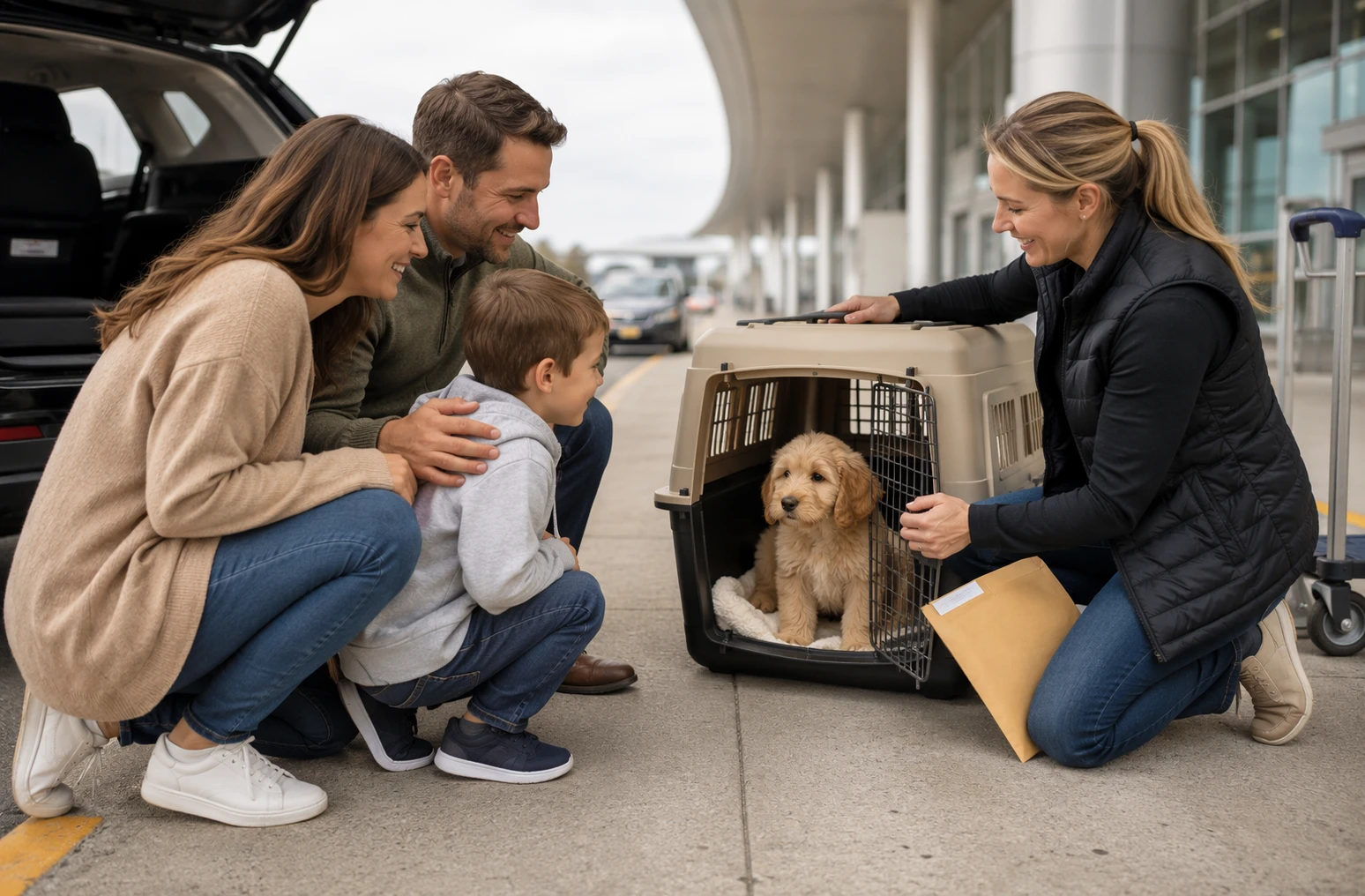
Pick the handoff plan before you send a deposit. A great puppy can still have a rough start if the travel plan feels rushed, confusing, or too stressful.
Choose the handoff that feels safest and calmest
Most families should compare three things side by side: local pickup, breeder-arranged ground delivery, and flight-based transport. Ask what the puppy experiences, not just what you pay.
| Handoff option | Best fit | What to confirm first |
|---|---|---|
| Local pickup | Families within driving range | Pickup age, meeting location, health records, go-home routine |
| Ground delivery | Families who want less travel stress | Driver details, trip length, potty breaks, handoff timing |
| Flight nanny or air transport | Long-distance families | Airline process, carrier setup, airport handoff, delays |
A simple check helps:
- Who handles the puppy door to door?
- How long is the full trip?
- What papers come at handoff?
- What happens if weather or flights change?
For interstate travel, the receiving state may set its own animal health rules, so verify them early through USDA APHIS interstate guidance. If you are comparing nationwide delivery from a program like Sage Puppies, ask whether the team walks you through timing, records, and the exact handoff person.
The safest option is usually the one with the fewest unknowns, not the one that sounds fastest.
Use communication quality as a decision filter
Communication tells you a lot about breeder standards. If replies are vague before payment, they usually get worse after payment.
Look for breeders who can clearly explain:
- pickup or delivery dates
- what records you get
- who to call on travel day
- feeding, crate, and potty routine
- what support looks like in the first 48 hours
For air travel, recent CDC rules matter if a dog is entering the U.S. from abroad. The agency says dogs from rabies-free or low-risk countries still need a CDC Dog Import Form, and if traveling by air, the receipt must be shown to the airline before boarding, per CDC import form instructions.
Use this quick filter before you commit:
- Green flag: direct answers within a reasonable time
- Green flag: photos or videos that match what they describe
- Red flag: pressure to pay before travel details are clear
- Red flag: no written plan for delays, refunds, or rescheduling
If a breeder cannot explain the handoff in plain English, pause. Clear care usually comes with clear communication.
If you want a breeder that matches the standards in this guide, take the next step with Sage Puppies. Sage Puppies raises Havanese, Havapoo, and Cavapoo puppies in a home setting, with health-tested parents, early socialization, and a clear family-first process. That helps Kansas buyers avoid guesswork, ask better questions, and move forward with confidence. Visit the site to review available puppies, learn about pickup or nationwide delivery, and start your application when the fit feels right.
Frequently Asked Questions
Q1: where to buy puppies in Kansas
Start with small, home-based breeders, breed clubs, and rescues with clear records. Ask for health testing, parent details, and vet history before you visit. Avoid sellers who always have many litters, rush payment, or will not answer basic care questions clearly.
Q2: How can I tell if a Kansas breeder is ethical?
Look for proof, not promises. Ethical breeders share health testing, explain temperament goals, raise puppies in the home, and ask you questions too. They stay involved after pickup. A clean space matters, but transparency and records matter more than polished marketing.
Q3: Is it safe to buy a puppy without meeting in person first?
It can be, but only if the breeder is transparent. Ask for recent videos, parent information, health records, and a live call. Review the contract carefully. Programs like Sage Puppies also explain pickup and delivery clearly, which helps families verify each step.
Q4: What health paperwork should I ask for before reserving?
Ask for age-appropriate vaccine records, deworming history, a vet check, and parent health testing when relevant to the breed. You should also review the sales contract and pickup terms. If a breeder avoids paperwork or says it is unnecessary, walk away.
Q5: Should I choose local pickup or delivery for my puppy?
Both can work well. Local pickup gives you a direct handoff and a chance to ask final questions in person. Delivery helps long-distance families, but the breeder should explain timing, transport method, and what your puppy needs right after arrival.
Conclusion
Finding the right puppy in Kansas comes down to one simple rule – slow down and verify everything. A good breeder welcomes questions, shares health testing, explains parent temperament, and shows you how puppies are raised.
This guide narrowed the search to what matters most:
- State oversight
- Clear breeder records
- Real health standards
- Safe pickup or delivery plans
- A fit between the puppy and your family
Kansas gives buyers useful checks. The state’s Animal Facilities Inspection Program licenses and inspects covered facilities under the Kansas Pet Animal Act, and routine inspections are not announced, according to the Kansas Department of Agriculture. You can also review federal inspection and compliance records for regulated sellers through the USDA Animal Care search tool.
The best breeder is not the one with the fastest reply or the cutest photo. It is the one with clear proof, calm answers, and healthy puppies raised with care.
If you keep those standards in place, you are far more likely to bring home a puppy that is well started, well matched, and responsibly bred.