Quick Summary: Buying a puppy in Colorado requires careful vetting of sellers to avoid red flags like vague records or pressure to pay quickly. Check who is actually raising the puppy, review health testing and vet records before committing, and ensure clear plans for pickup or delivery. Reputable breeders provide detailed information, transparent processes, and prioritize early socialization and health, making the purchase safer and more ethical.
If you are sorting through Colorado puppies for sale and a seller gets vague about the puppy’s age, health records, or where the puppy was raised, stop there. That is often the first sign you are dealing with a risky seller, not a careful breeder.
That is the real problem with Colorado puppies for sale right now. Many listings look sweet and simple, but the details that matter most are missing. First-time buyers can end up comparing photos, prices, and promises instead of checking proof, breeder practices, and how the puppy will actually transition home.
This guide fixes that. You will learn what to ask, what paperwork should be ready, how to spot weak answers, and how to compare Colorado puppies for sale without getting pulled in by pressure or pretty marketing. You will also see how to filter for health testing, family-raised care, and clear pickup or delivery terms.
Our approach is built for qualified families who want a small-breed puppy and want to buy wisely. We focus on the checks that matter in real life, with an ethical breeder lens shaped by how careful programs like Sage Puppies present health, temperament, and transfer transparency.
1. Check Who Is Actually Selling the Puppy
Look for the breeder’s direct role
Start with one basic question: Is this the original breeder, or just a middleman? In Colorado, that matters more now. A 2026 state law says a broker is a person who sells a pet animal bred by someone else, and it bars brokers from transferring dogs or cats in Colorado. The same law still allows sales by the original breeder of the dog or cat, according to the Colorado General Assembly bill summary.
Ask the seller these questions before you pay a deposit:
- Did you breed this puppy yourself?
- Can I see the dam, or at least current photos and records tied to her?
- What is your kennel or program name and physical location?
- Whose name is on the health records, microchip file, and contract?
If answers shift, slow down.
Use this quick filter:
| Check | Good sign | Red flag |
|---|---|---|
| Seller identity | Same person bred and raised puppy | Seller says they are “helping a partner” |
| Records | Parent info matches contract | Records show a different breeder name |
| Facility trail | Clear home base and pickup terms | Multiple pickup states or surprise handoff |
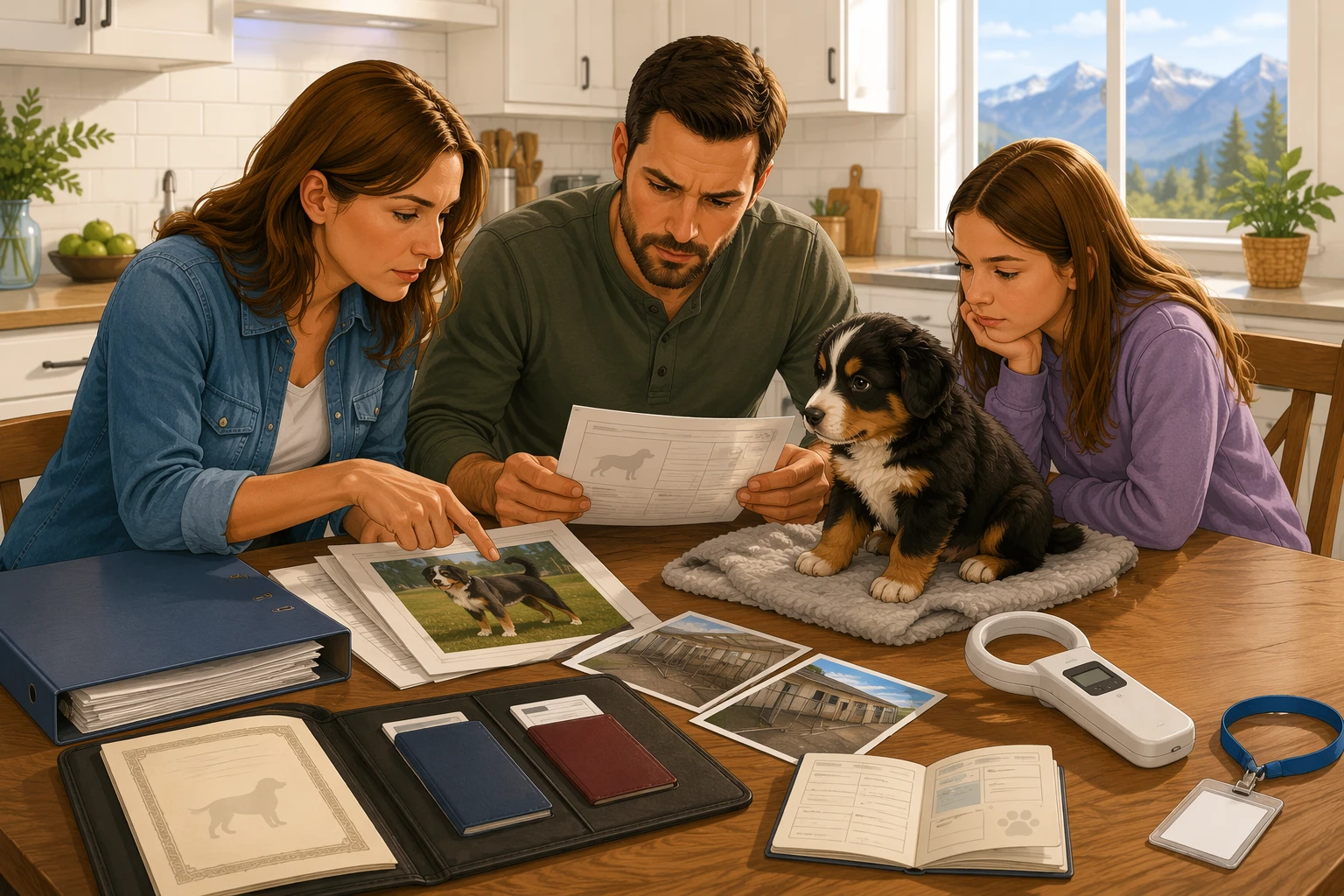
A real breeder should explain their role plainly, not hide behind vague phrases like “placement partner” or “network.”
You can also search a seller in the USDA Animal Care public search tool if they claim a federal license.
Treat vague listing language as a red flag
Bad listings often sound polished but say almost nothing. That is the point.
Watch for phrases like:
- “Available now in your area”
- “Delivered by our team”
- “From our network of top breeders”
- “Limited details until deposit is placed”
Those lines can hide who raised the puppy, where the litter was born, and who handled early care.
A solid listing should state:
- Breeder or program name
- City and state
- Puppy birth date
- Parent breed and health info
- Pickup or delivery process
- Who owns the puppy today
If the ad feels easier to buy from than to verify, treat that as a warning.
For families comparing programs, this is where transparent breeders stand out. Sage Puppies, for example, makes sense only if the family can clearly see who bred the puppy, how pickup or delivery works, and what paperwork follows the puppy home.
Also Read: Complete Guide to Finding Puppies for Sale in Colorado with Sage Puppies
2. Review Health Testing and Veterinary Records
Ask for the exact documents before reservation
Ask for records before you place a deposit, not after. A good seller should send clear copies fast. If they stall, crop pages, or say records come only at pickup, treat that as a warning.
Request these items in writing:
- The puppy’s vaccination record
- A recent vet exam record
- Any deworming record
- Parent dog health test results
- A sample sales contract and health terms
- If the puppy is coming from outside Colorado, the Certificate of Veterinary Inspection
Colorado rules say dogs transferred into a PACFA-licensed facility from outside the state must arrive with a valid CVI issued within 10 days, and imported dogs must meet listed vaccine rules under Colorado’s pet animal requirements.
Use a quick document check table:
| Document | What it should show | Red flag |
|---|---|---|
| Vaccine record | puppy name, dates, clinic info | handwritten only, no clinic |
| Vet exam | exam date, findings, vet signature | vague note with no exam detail |
| Deworming record | product name and date | seller says “done at home” only |
| Parent testing | dog names match parents advertised | no proof, just a promise |
If names, birth dates, or microchip details do not match across records, pause the purchase.
Understand what health-tested should mean
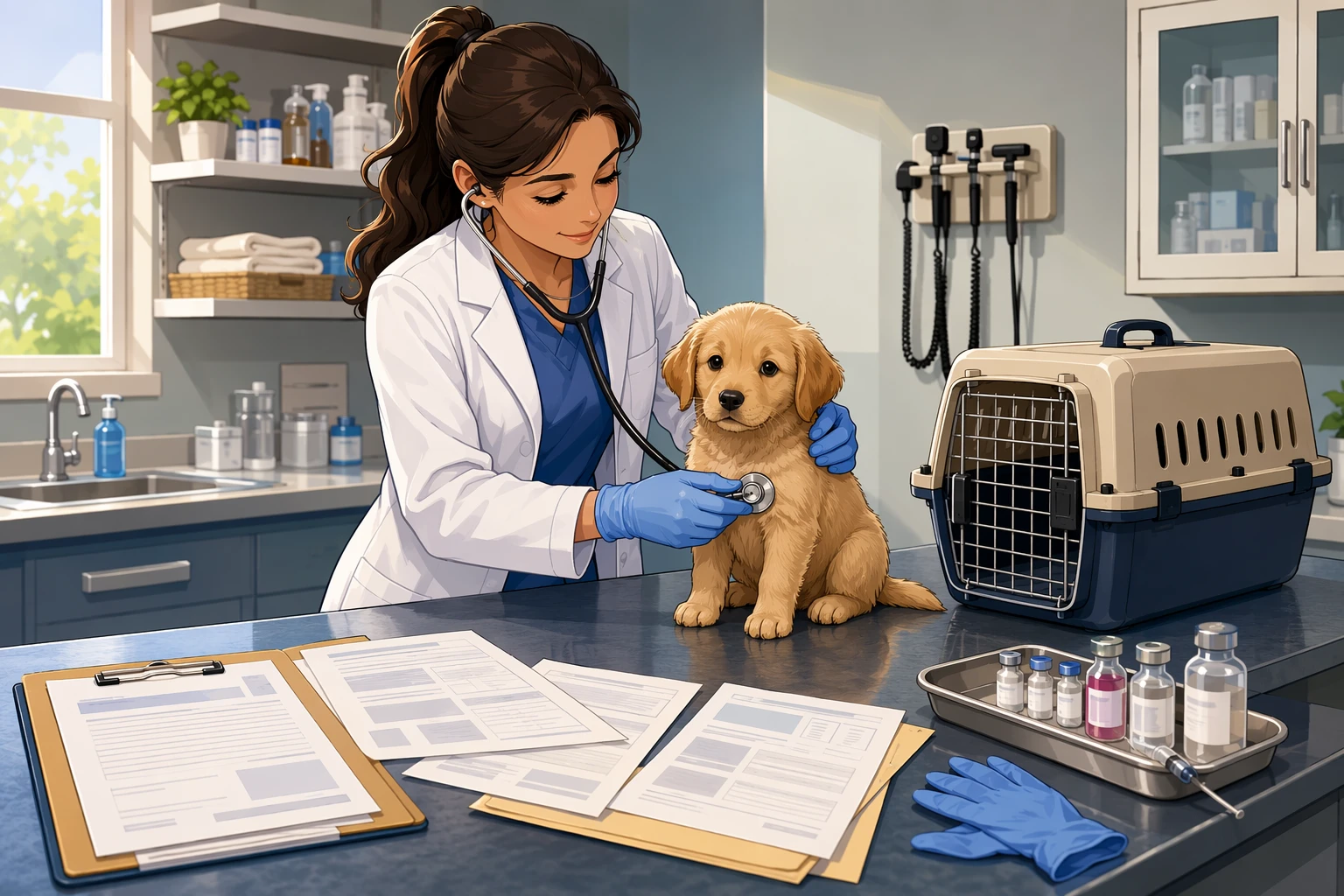
“Health-tested” should mean the parents were screened for breed-related issues, not that the puppy got one basic checkup. First-time buyers miss this all the time.
Ask these direct questions:
- Which tests were done on the sire and dam?
- Can you send the actual results, not a summary?
- Were the tests genetic, orthopedic, eye-related, or heart-related?
- How do those results affect this litter?
For small companion breeds, you want more than “vet checked.” You want proof tied to the breed mix and the parent dogs. A clean puppy exam does not replace parent screening.
Good records usually include:
- Parent names that match the listing
- Test dates
- Lab, clinic, or registry details
- Clear pass, normal, or carrier status notes where relevant
A seller who explains limits honestly is often safer than one who promises a “perfect” puppy.
If you are comparing breeders, look for the same level of record detail each time. Programs like Sage Puppies tend to stand out when they show parent health testing and puppy care records clearly, without making you chase them.
Confirm age-appropriate readiness
Do not judge records in a vacuum. Judge them against the puppy’s age and travel plan.
Colorado rules do not allow sale or transfer of dogs under 8 weeks under state special requirements. USDA also notes rabies timing matters by age, and an initial rabies vaccine is not accepted before 12 weeks in its travel guidance.
Use this simple readiness check:
- 8 weeks or older for legal transfer
- Age fits the vaccine record dates
- Vet exam happened close to pickup
- Travel paperwork matches destination state needs
- The seller explains what care is still due after go-home day
A solid seller will tell you what the puppy has had, what is due next, and what your vet should recheck in the first few days.
Also Read: 10 Signs a California Puppy Listing Is a Scam – Sage Puppies
3. Confirm the Breeder Explains Care, Socialization, and Early Development
A real breeder should explain how your puppy is being shaped before pickup. That matters because the first three months are the key socialization window, according to the AVSAB puppy socialization statement. If the answer sounds vague, keep looking.
Ask how the puppies are raised day to day
Ask what a normal day looks like from morning to bedtime. You want clear details, not a sales script.
Good questions include:
- Where do the puppies sleep and play?
- How often are they handled by adults and children?
- What sounds do they hear each day?
- Do they see crates, grooming tools, car rides, or new surfaces?
- How do they start potty habits and short alone-time?
A strong answer should mention:
- Positive handling from an early age
- Safe exposure to household noise
- Short, calm novelty sessions
- Rest time, not constant stimulation
- Age-fit routines for feeding, cleanup, and play
A breeder should be able to tell you what they do when a puppy seems shy, busy, or easily overwhelmed. “They all do great” is not enough.
Look for temperament notes, not empty labels
“Sweet,” “tiny,” and “perfect family dog” tell you almost nothing. Ask for temperament notes on the exact puppy. Good breeders track patterns like confidence, recovery after a surprise, interest in people, and comfort with touch.
Look for observations such as:
- “Greets new people after a short pause”
- “Recovers fast from new sounds”
- “More snuggly than adventurous”
- “Needs a slower intro to busy kids”
The AVMA review on puppy socialization notes that positive early exposure can lower later fear. So ask how the breeder matches puppy traits to your home.
| What to ask | Strong answer | Weak answer |
|---|---|---|
| How do you describe this puppy? | Specific behavior notes from daily care | Generic praise only |
| How do you handle shy puppies? | Slower exposure, reward-based support | “They grow out of it” |
| How do you prepare them for family life? | Sounds, touch, routines, gentle novelty | “They are raised with love” |
If you are comparing programs, Sage Puppies stands out when a family wants a home-raised puppy with a clear early socialization story, not just cute photos.
4. Verify Pickup or Delivery Details Before You Commit
A good seller makes the handoff clear before you pay. Ask for the full transfer plan in writing, not just a text that says “delivery available.” You want the exact date window, pickup city or airport, who handles the puppy, what happens if weather delays travel, and when final payment is due.
Use this quick checklist:
- Pickup or delivery date range
- Exact meeting location
- Name of the breeder, flight nanny, or driver
- Health record packet included at transfer
- Refund or reschedule terms if plans change
If a seller avoids simple delivery questions, treat that like a bigger trust problem.
For air transport, basic rules matter. USDA says dogs moved in commerce must be at least 8 weeks old and weaned before transport under the AWA USDA age guidance. The U.S. Department of Transportation also notes that airline animal shipments must follow carrier rules on crates, timing, and handling DOT animal travel overview.
| Transfer item | What you should get | Red flag |
|---|---|---|
| Date plan | Clear day or narrow window | “We’ll figure it out later” |
| Location | Exact address or airport | Vague meetup spot |
| Handler | Full name and role | Unknown third party |
| Records | Vaccine and exam packet | “We’ll send that later” |

Hold local pickup and national delivery to the same standard. A nearby handoff is not safer just because it is close. You still need ID, records, timing, and a clean chain of custody. National delivery can be fine too, if the process is transparent and calm.
Compare both options with this lens:
- Who has the puppy at each step
- How long the puppy is in transit
- When you receive records and care instructions
- What support you get if the plan changes
Sage Puppies, for example, should be able to explain local pickup and nationwide delivery with the same level of detail. That is the standard to look for anywhere.
Before you commit, ask:
- Who physically places the puppy with me?
- Will I get updates on travel day?
- Is the puppy ever passed between unknown handlers?
- What is the backup plan if there is a delay?
The best transfer plan feels boring. Clear, documented, and easy to verify usually means safer.
Also Read: Health-Tested Puppies for Sale Near Me: Buyer Checklist
5. Avoid Red Flags That Should Send You Elsewhere
Watch for pressure, urgency, and missing details
Walk away if the seller pushes you to pay before you can verify the basics. Fast-sale lines like “three other families are waiting” or “send a deposit tonight” are not proof of quality. They are pressure.
Colorado buyers should also pause when key facts stay fuzzy. The state’s PACFA program licenses and inspects many pet animal businesses, and complaints can be reported to the Colorado Department of Agriculture through PACFA’s process, according to the PACFA FAQ. If a seller avoids talking about licensing, transfer records, or where the puppy was raised, that matters.
Common red flags include:
- No clear answer on the puppy’s age
- No written health record or vaccine history
- Refusal to show parent information
- Only cash, wire, or app payment requests
- Vague delivery terms
- Poor photos that never show the same puppy twice
If the seller gives you less information after you ask good questions, leave.

Choose the seller who welcomes questions
A strong seller does not rush you. They expect smart questions and answer them with records, dates, and plain language. Colorado law also requires pet stores to disclose pricing, license details, and certain violation history before sale under the state’s Pet Store Consumer Protection Act. Even when you are buying from a breeder, that level of openness is still a good standard.
Use this quick filter:
| Seller behavior | What it usually means | Your move |
|---|---|---|
| Answers clearly | Organized and transparent | Keep talking |
| Dodges simple questions | Hiding gaps | Step back |
| Shares records first | Buyer-focused process | Positive sign |
| Pushes deposit first | Sales-first mindset | Leave |
Ask:
- Can I review health records before paying?
- Who handled early socialization?
- What happens if delivery plans change?
The best seller is calm, clear, and easy to verify.
If you want a simpler, safer path, start with a breeder who already checks the boxes in this guide. Sage Puppies raises Havanese, Havapoo, and Cavapoo puppies in a home setting, with health-tested parents, early socialization, and clear pickup or nationwide delivery details. Review available puppies, pricing, and the adoption steps, then apply when the fit feels right for your family.
Frequently Asked Questions
Q1: where to buy puppies in Colorado
Start with breeders and puppy programs that share parent health testing, clear pickup or delivery terms, and recent puppy records. Avoid listings that rush payment, hide the home setup, or will not answer basic questions. Good sellers make the process easy to verify.
Q2: What paperwork should a Colorado puppy seller provide?
Ask for a sales agreement, vaccine and deworming record, microchip details if used, parent health testing, and feeding instructions. You should also get the seller’s full contact details. If anything feels vague, pause and ask for written proof before sending money.
Q3: How can I spot a scam puppy listing?
Watch for prices far below market, copied photos, urgent deposit demands, or sellers who avoid phone or video contact. A real program explains its process clearly. Sage Puppies, for example, focuses on transparent communication, family placement, and documented puppy care.
Q4: Is delivery safer than pickup?
Delivery can work well if the handoff is planned and documented. Ask who handles transport, when the puppy last ate, and what support you get after arrival. Pickup gives you more direct contact, but either option should feel organized and clear.
Q5: What should I check on puppy visit day?
Look at energy level, clean eyes, nose, coat, and stool area. Ask how the puppy handles being held, new sounds, and short crate time. You want a puppy that seems cared for, not stressed, shut down, or rushed into a sale.
Conclusion
Buying a puppy in Colorado gets safer when you slow down and verify the seller. The big checks are simple: confirm the breeder or business fits Colorado’s PACFA rules, ask for health records you can read, match the puppy to your home, and get every transfer detail in writing. Colorado’s PACFA program licenses and inspects many pet animal facilities, which gives buyers a useful first filter through the Colorado Department of Agriculture PACFA program. For sellers that fall under federal oversight, buyers can also review license and inspection information in the USDA Animal Care Search Tool.
The best choice is rarely the fastest one. A strong seller welcomes questions, explains pickup or delivery clearly, and never rushes payment before trust is built. If a breeder is careful, transparent, and focused on puppy welfare, you are far more likely to bring home a healthy small-breed companion that truly fits your family.