
Quick Summary: North Kingstown’s proposed ban would only stop pet stores like Fish Bowl from selling puppies, leaving breeders and rescues unaffected. Families must still demand proof of parent health testing, home-raised care, and clear contracts-no inspection or license guarantees quality. The debate highlights how retail sales often obscure sourcing, pushing buyers toward direct relationships with breeders who document every step. Sage Puppies, for example, offers transparent records and nationwide delivery for breeds like Havanese, proving the shift toward verified sources isn’t just about legality but real puppy welfare.
North Kingstown officials are weighing a Rhode Island puppy sales ban after complaints about Fish Bowl Aquarium and Pet Mart. Reports from August 18, 2026, say North Kingstown pet store laws remain in revision, with a public hearing ahead. DEM unannounced visits found no violations.
This leaves families asking how to buy puppies Rhode Island legally. This guide explains the proposal, state rules, and how to vet Rhode Island puppy breeders, rescues, and sellers. It offers a fact-based way to assess Rhode Island puppy breeders amid the Rhode Island puppy sales ban.
What North Kingstown’s Proposed Ordinance Would Change
The proposal is local, not a statewide ban
The proposed Rhode Island puppy sales ban applies only within North Kingstown. It would stop pet stores and other commercial businesses in town from selling puppies and kittens, while still allowing shelters and rescues to place animals, according to local reporting on the draft ordinance.
It would not ban responsible breeders, private rehoming, or puppy purchases elsewhere in Rhode Island.
A local store-sales rule does not replace careful buyer research. Ask every source for parent health records, home-raising details, and a clear plan for pickup or delivery.
Why the Fish Bowl dispute prompted public attention
The proposal followed protests and complaints after Fish Bowl Aquarium and Pet Mart opened in North Kingstown. Advocates raised concerns about commercial breeding and the puppies’ housing.
State inspectors made unannounced visits after complaints and found no animal-care law violations, NewsNation reported. The dispute still pushed a wider question into public view: should puppies be sold in a retail setting at all?
For families, the debate reinforces a simple standard: choose a breeder who can show where puppies begin life, how they are socialized, and who stands behind the placement.
What happens before a final vote
The council must revise the language, decide whether an existing store would be grandfathered in, hold a public hearing, and then vote. That means the Rhode Island puppy sales ban proposal is not final.
Watch for these next steps:
- A published draft with exact exemptions.
- Notice of the public hearing.
- Council discussion of any grandfather clause.
- The final Town Council vote.
Do not make a buying decision based on a proposed rule alone. Verify the breeder, records, and terms before placing a reservation.
Also Read: How to Find a Reputable Local Puppy Breeder Before You Visit
What Reporting and Regulators Say About Fish Bowl
DEM’s regulatory role and reported inspections
Rhode Island DEM licenses pet shops and handles complaints about animal health and store conditions. Its rules set minimum care standards and guide inspections after complaints.
Reporting says DEM received several complaints about Fish Bowl Aquarium and Pet Mart. Inspectors made unannounced visits and found no evidence of animal-care violations, according to local reporting. That finding does not end the policy debate. It means inspectors did not find a breach of the current rules.
A clean inspection is useful, but families should still ask for breeder records, health details, and a clear source history.
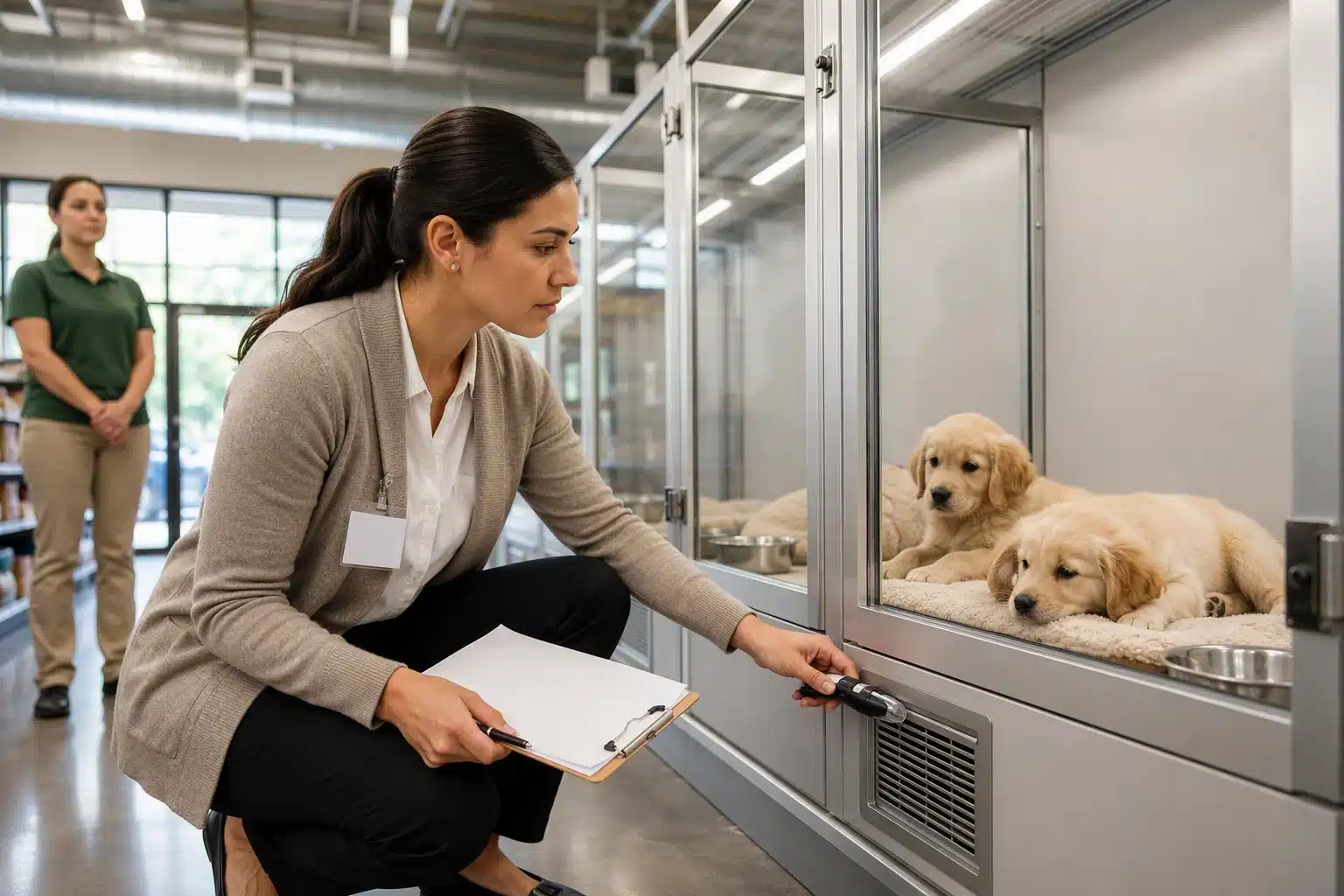
The animal-welfare case for a retail restriction
Advocates want fewer puppies sold through retail stores because they worry about hidden commercial breeding sources, long transport, and rushed buying. Their main point is simple: a puppy should not be treated like an off-the-shelf item.
A retail restriction would shift stores toward shelter partnerships or adoption events. State rules apply to pet shops, breeders, brokers, and rescues, but they are minimum standards, as the Rhode Island animal-care rule explains.
- Ask where the puppy was born.
- Meet the breeder when possible.
- Review parent health testing and early care.
- Avoid pressure to take a puppy home that day.
The store owner’s response
Fish Bowl owner Michael Marabello says the shop uses reputable breeders, not puppy mills. He has also said the puppy enclosures have proper light and ventilation, and that his business secured permits before puppies arrived.
Reports note a separate local zoning concern about dogs staying overnight. That issue is different from a DEM animal-care violation. Families should keep both facts in view: claims deserve proof, and rules alone are not the full picture of responsible puppy placement.
Also Read: Havanese, Havapoo & Cavapoo Puppy Care Blog
How Rhode Island Buyers Can Purchase a Puppy Legally
Private breeder purchases
Buy directly from a breeder who can clearly show where puppies are raised, explain parent health testing, and provide a written purchase record. Rhode Island regulates breeders that meet certain litter or puppy-sale thresholds, while smaller hobby breeders may be exempt. Ask direct questions before placing a deposit.
- Meet the breeder by video or in person.
- Review health, vaccine, and care records.
- Confirm the puppy’s age, identity, and pickup plan.
Rhode Island’s animal care rules cover licensed breeders and set minimum welfare standards for regulated facilities. Review the state’s breeder and animal-care definitions if you need clarity.
Shelters and rescues
Adoption is legal through municipal shelters, private shelters, and properly registered rescues. Ask the agency for its adoption agreement, medical records, and the puppy’s known history.

For a puppy brought in from another state, request its Certificate of Veterinary Inspection, also called a health certificate. Rhode Island DEM says eligible adopted animals also need proof of current rabies vaccination and spay or neuter status from the agency.
A rescue should never rush you past paperwork or refuse basic health-history questions.
Out-of-state breeders and delivery
You may buy from an out-of-state breeder and arrange pickup or delivery to Rhode Island. The key legal document is an interstate CVI issued by an accredited veterinarian, unless a specific exemption applies. Rhode Island defines the CVI as required for lawful interstate animal movement in its importation rules.
Before sending funds:
- Confirm who transports the puppy.
- Get the CVI before travel.
- Keep copies of the contract and records.
Sage Puppies serves Rhode Island families through planned pickup or nationwide delivery, with clear records and a family-first process.
How to Evaluate Rhode Island Puppy Breeders
Verify the parents, not just the puppy
A sweet puppy cannot tell you enough about future health or temperament. Ask to meet the mother, and ask for clear health-test results for both parents.
Check the breeder’s license status if they meet Rhode Island’s definition of a breeder. The state requires licensed facilities to follow animal-care standards and allows inspections. Rhode Island’s animal-care rules set those minimum standards.
Ask direct questions:
- What tests were completed, and what were the results?
- What are the parents like around people and children?
- How often is each parent bred?
- Can I see dated records, not only a verbal summary?
A responsible breeder welcomes careful questions. Pressure, vague answers, or missing records are reasons to pause.

Look for family-raised development
Good early care is visible in the puppy’s daily setting. Look for clean, calm space, regular human contact, and age-fit play rather than a rushed handoff in a parking lot.
Ask how puppies experience normal home sounds, gentle handling, grooming, crate time, and short separations. Watch their body language during a visit or live video call. A well-started puppy may be curious or briefly shy, but it should not appear shut down.
Use this quick comparison:
| Ask to see | Why it matters |
|---|---|
| Living area and littermates | Shows daily care and cleanliness |
| Mother with puppies | Confirms origin and care |
| Socialization routine | Explains the puppy’s early start |
Read the contract before sending a deposit
Read every page before you reserve a puppy. The agreement should name the breeder, puppy, price, deposit terms, pickup or delivery plan, health records, and each family’s duties.
Rhode Island law requires sellers to keep health and disposition records for dogs sold for two years. State record-keeping rules give buyers a sensible reason to request written details.
Confirm these points in writing:
- When the deposit is refundable or transferable.
- What records come home with the puppy.
- Who handles travel costs and timing.
- What support is available after pickup.
Never send money until the breeder, puppy, records, and terms all line up.
Also Read: Puppy Care Blog & Resources | Sage Puppies
Choosing the Right Small Companion Breed
Questions for Havanese families
A Havanese may suit families who want a bright, close-by companion. The breed is known for a friendly, playful nature and a long coat that needs steady care, according to the AKC breed profile.
Ask yourselves:
- Can someone give this social dog plenty of daily company?
- Will we brush often or budget for regular grooming?
- Are the children old enough to handle a small dog gently?
- Can we ask to see parent health-testing records?
A small puppy still needs clear rules, calm handling, and daily training.

Questions for Havapoo and Cavapoo families
Havapoos and Cavapoos can be lovely fits for homes seeking an affectionate, low-shedding-type coat mix. Coat texture, size, energy, and adult look can vary within any mixed litter.
Use these questions before you apply:
- Do we have time for brushing, trims, and basic training?
- Who will care for the puppy during workdays and travel?
- Have we met the puppy’s parents or reviewed their records?
- Does the breeder explain pickup or nationwide delivery clearly?
Cavaliers are gentle, people-focused dogs, but they also need early social time and training, notes the AKC’s Cavalier guide.
Choose the individual puppy and breeder with care, not just the breed name.
Also Read: 10 Must-Ask Questions Before Buying a Puppy Locally
What a North Kingstown Ban Could Mean for Buyers and Sellers
More direct relationships could help responsible buyers
The proposal targets pet-store sales, not thoughtful families working directly with accountable breeders. Local reporting says the council is still revising the measure and weighing a public hearing, so it is not a final ban yet. North Kingstown coverage also notes officials are considering whether an existing store would be grandfathered in.
For buyers, direct contact can make the process clearer:
- Meet the breeder or arrange a live call.
- Ask for parent health-testing records.
- Learn how puppies are raised and socialized.
- Review the contract, fees, pickup, and delivery details before reserving.
For responsible sellers, the shift may reward openness over quick transactions.
A good breeder welcomes careful questions. Pressure, vague answers, or payment-only contact are reasons to pause.
Online sourcing could increase the need for caution
Fewer retail options may send more families online. That can widen access to well-raised puppies, but it also makes proof more important. A polished website alone does not show how a puppy was bred or cared for.
Use this short check before sending a deposit:
- Confirm the seller’s identity and location.
- Ask to see the puppy and mother live when possible.
- Get records and terms in writing.
- Avoid sellers who rush shipping or refuse questions.
Rhode Island already bars the sale of puppies that are not fully weaned without veterinary approval, according to the Rhode Island General Assembly.
Rhode Island’s Existing Oversight Framework
Minimum standards are not the same as a quality guarantee
Rhode Island licenses and regulates pet shops, breeders, brokers, kennels, shelters, and similar facilities. Its animal-care rules set minimum standards for housing, maintenance, care, and inspections, including complaint-based inspections, according to the state’s active facility rules.
That oversight matters, but a license alone cannot tell you how a puppy was raised.
Ask beyond compliance:
- Can you meet the breeder or see where puppies live?
- Are parent health tests shared before a reservation?
- What social time and home routine did the puppy have?
A clean facility and current license are a starting point, not proof of careful breeding or a good family match.
What Rhode Island’s pet-shop application records
The Rhode Island pet-shop license application asks for useful business details. These include the shop’s location, owner information, operating hours, staffing, animal types and capacity.
It also asks applicants to name the distributors or brokers supplying animals, with USDA license numbers and contact details. A detailed floor plan must show items such as cages, isolation areas, cleaning-log locations, food storage, ventilation, and emergency equipment, as shown in the DEM pet-shop application.
For families, those records support better questions:
- Who bred this specific puppy?
- Has the puppy moved through a broker?
- Can the seller provide direct breeder records?
Importation and health documentation
Rhode Island regulates animals entering the state to reduce disease risk. A certificate of veterinary inspection, often called a health certificate, is the document used for lawful interstate animal movement unless an exemption applies.
State import rules aim to allow animals that are disease-free or come from qualified disease-free sources. The state also maintains a dog and cat importation manifest that records identifying details, source and receiving entities, pickup and drop-off locations, and carrier information.
Keep copies of the puppy’s health certificate, vaccine record, microchip details, and seller contract. Ask who completed each record and when.
Health paperwork helps confirm transport and current care. It does not replace proof of parent testing, clear sourcing, and an open conversation with the breeder.
Also Read: 10 Adorable Havapoo Colors You Need to See (2026)
A Practical Checklist for Families Searching in Rhode Island
Questions to ask before reserving
Start with proof, not promises. Ask where the puppy was raised, how the parents were health tested, and what daily social time puppies receive.
- Can I meet the breeder by video call or visit where appropriate?
- May I review parent health records and the puppy’s records?
- What is included in the reservation agreement, total price, and refund terms?
- How do you match a puppy’s temperament to our home, children, and schedule?
Rhode Island rules set minimum care standards for licensed breeders, brokers, and pet shops, according to the state’s animal care facility rules.
A rushed reservation, vague paperwork, or refusal to discuss parent dogs is a reason to pause.
Questions to settle before pickup or delivery
Get the handoff plan in writing before you pay the balance. This matters even more for a puppy traveling from another state.
- Confirm the pickup date, delivery route, and who handles each step.
- Ask which health records, food details, and transition notes come home.
- Clarify when to schedule your first local vet visit.
- Save every receipt, contract, and message.
For dogs entering Rhode Island, DEM notes that an out-of-state animal needs a Certificate of Veterinary Inspection, also called a health certificate. Review the state’s pet owner guidance before delivery.

Choose a source that welcomes questions, shares how puppies are raised, and supports a thoughtful match. Sage Puppies offers home-raised Havanese, Havapoo, and Cavapoo puppies from health-tested parents, with clear adoption steps, South Jordan pickup, and nationwide delivery.
Frequently Asked Questions
Q1: puppies for sale in Rhode Island
Look for breeders who welcome questions, share parent health records, and explain daily puppy care. Avoid rushed deposits. Ask where puppies are raised, what support follows pickup, and whether you can meet the breeder.
Q2: How can I legally buy a puppy in Rhode Island after North Kingstown’s proposed sales ban?
A local retail ban affects pet stores, not responsible direct purchases from breeders. Confirm town rules, review the seller’s records, and use a clear contract before paying a reservation fee.
Q3: What are the risks of buying puppies from pet stores like The Fish Bowl in North Kingstown?
Ask for the puppy’s source, health history, and breeder details. Store sales can limit direct contact with the breeder, making it harder to assess early care and parent health.
Q4: Are there ethical alternatives to pet stores for adopting puppies in Rhode Island?
Yes. Work directly with a transparent breeder or adopt through a rescue. Ethical breeders discuss temperament, health testing, home routines, and whether a puppy fits your family.
Q5: What should I ask before reserving a puppy?
Ask about parent testing, vaccines, socialization, pickup plans, and contract terms. Sage Puppies gives families a clear, family-first process for Havanese, Havapoo, and Cavapoo puppies.
Conclusion
North Kingstown’s proposed ban would change where families can buy puppies, not the care a good breeder provides. The measure remains under review, with a public hearing and key details still ahead, according to local reporting on the proposal.
For Rhode Island and nationwide buyers, the safest standard stays simple: work directly with a breeder who shares health records, raises puppies in a home setting, welcomes thoughtful questions, and offers clear pickup or delivery plans. A Havanese, Havapoo, or Cavapoo should be chosen for fit, temperament, and lifelong care – never because a puppy is easy to buy on the spot.




