
Quick Summary: Transparent regional breeders typically offer stronger health records than Kentucky puppy farms because they provide parent-specific genetic test results, while farms often rely on generic claims or routine vet papers. Buyers should verify each parent’s named, dated test results and match them to the puppy, not just accept a health guarantee or USDA license. The article advises asking for direct records, checking the USDA public search tool for inspection reports, and walking away if a seller refuses to share documents. Ultimately, the clearest paper trail tied to named parents, not location or size, determines the safer choice.
A listing can claim “health tested,” “vet checked,” or “USDA licensed” and still give a Kentucky family little proof of inherited-health risk. For puppy farm health, transparent regional dog breeders are usually the safer choice. They should identify each parent, explain breed-relevant tests, share readable results, and link those results to the puppy.
Families shopping for puppies in Kentucky often compare sites with very different standards. A clean photo, health guarantee, or license does not prove complete breeder health records. Vaccine papers show routine care. They do not replace genetic and parent screening.
This guide separates puppy farm health claims from useful evidence. It covers oversight, wellness files, inherited-disease tests, registry proof, and written policies. You will get checks, questions, and warning signs to judge puppy farm health fairly, not by labels alone.
Kentucky Puppy Farms vs Regional Breeders: Health Records Compared
| Kentucky puppy farms and high-volume commercial breeding operations | Transparent regional dog breeders | |
|---|---|---|
| Health-record scope | May emphasize puppy vaccines, deworming, veterinary checks, or facility compliance; parent testing may be unclear | Can include parent screening, genetic results, veterinary care, puppy records, and written policy details |
| Parent identification | May be incomplete, difficult to trace, or not publicly connected to the puppy listing | Should identify the sire and dam and connect records to each dog |
| Breed relevance | Testing claims may be generic or presented without explaining breed and parent-line risks | More likely to explain testing in relation to the specific breeds and parent lines |
| Verification access | Often depends on seller-provided documents, inspection records, or limited remote communication | Often supports direct questions, parent profiles, registry searches, video calls, or visits |
| Puppy wellness documentation | May include vaccination, deworming, veterinary, and movement paperwork | Should provide age-appropriate veterinary, vaccine, deworming, and transition records |
| Buyer transparency | Varies widely; caution is warranted when visits, parent details, or original records are restricted | Stronger when the breeder welcomes informed questions and explains limitations without promising perfection |
How Kentucky puppy farms and high-volume commercial breeding operations and Transparent regional dog breeders Compare
Kentucky puppy farms and high-volume commercial breeding operations
These operations may provide puppy vaccine, deworming, vet, or transport papers. Families need to separate that routine paperwork from named parent health results, especially when parent details or original records are hard to inspect. Kentucky oversight can also vary by location.
Transparent regional dog breeders
Smaller direct programs suit families who want to ask clear questions before applying. They should connect each puppy to named parents, breed-relevant screening, care records, and honest answers about limits. This makes records easier to review, not automatically perfect.
What Puppy Farm Health Records Actually Prove
Puppy wellness records versus parent breeding records
A puppy wellness record shows care given to that puppy. It may list a vet exam, vaccines, deworming, weight, or a health note at one point in time. Ask for a dated copy and the clinic name.
Parent breeding records answer a different question: Was this pairing screened for inherited risks? Ask to see both parents’ named results, test dates, and the lab or registry that issued them.
| Record | What it can prove | What it cannot prove |
|---|---|---|
| Puppy vet record | Basic care and findings before placement | Parent genetic health |
| Parent test result | Screening tied to a specific parent | A lifetime guarantee for the puppy |
| Pedigree | Family line and identity | That health tests were completed |
A clean puppy exam is good news. It is not a substitute for documented testing of both parents.
A health guarantee is not the same as health testing
A health guarantee is a contract term. Read the time limit, exclusions, required vet visits, and remedy before you reserve.
Health testing happens before breeding. It gives you records to review before emotions and deposits get involved. A clear breeder can explain what each result means, not just say the parents are “healthy.”
Why licensing and inspection records have limits
USDA oversight matters, but it measures compliance with care rules, not the quality of every breeding choice. For covered facilities, USDA requires a written veterinary care program and medical records, including vaccines and tests, available during inspection, as explained by USDA APHIS.
Use inspection history as one checkpoint. The USDA public search tool lets families review facility and inspection records. Then still request direct, parent-specific health documents.
Trust records you can match to the actual parents of your puppy.
Also Read: Havanese, Havapoo & Cavapoo Puppy Care Blog
Which Health Tests Should a Responsible Breeder Perform?
Genetic screening for the actual parent lines
Ask for health records for both parents, not a general statement that a line is “healthy.” DNA testing should match the risks found in each parent breed. For a crossbreed, that means reviewing the Havanese and Poodle or Cavalier King Charles Spaniel and Poodle sides.
A useful record shows the dog’s registered name, microchip or ID, lab result, and date.
- Ask which DNA conditions were tested.
- Ask whether each parent is clear, a carrier, or affected.
- Ask how the pairing avoids producing affected puppies.
The OFA explains breed-specific screening helps buyers check which tests matter.
A carrier result is not automatically a red flag. Breeding decisions matter more: a responsible breeder never pairs two dogs that could produce affected puppies.
Orthopedic, eye, and cardiac evaluations
DNA alone cannot show every risk. Responsible breeders also use physical exams and formal clearances where appropriate.
| Area | Record to request | Why it matters |
|---|---|---|
| Knees | Patella evaluation | Small dogs can face kneecap problems |
| Eyes | CAER eye exam | Screens for observable inherited eye disease |
| Heart | Cardiac exam | Checks for heart concerns before breeding |
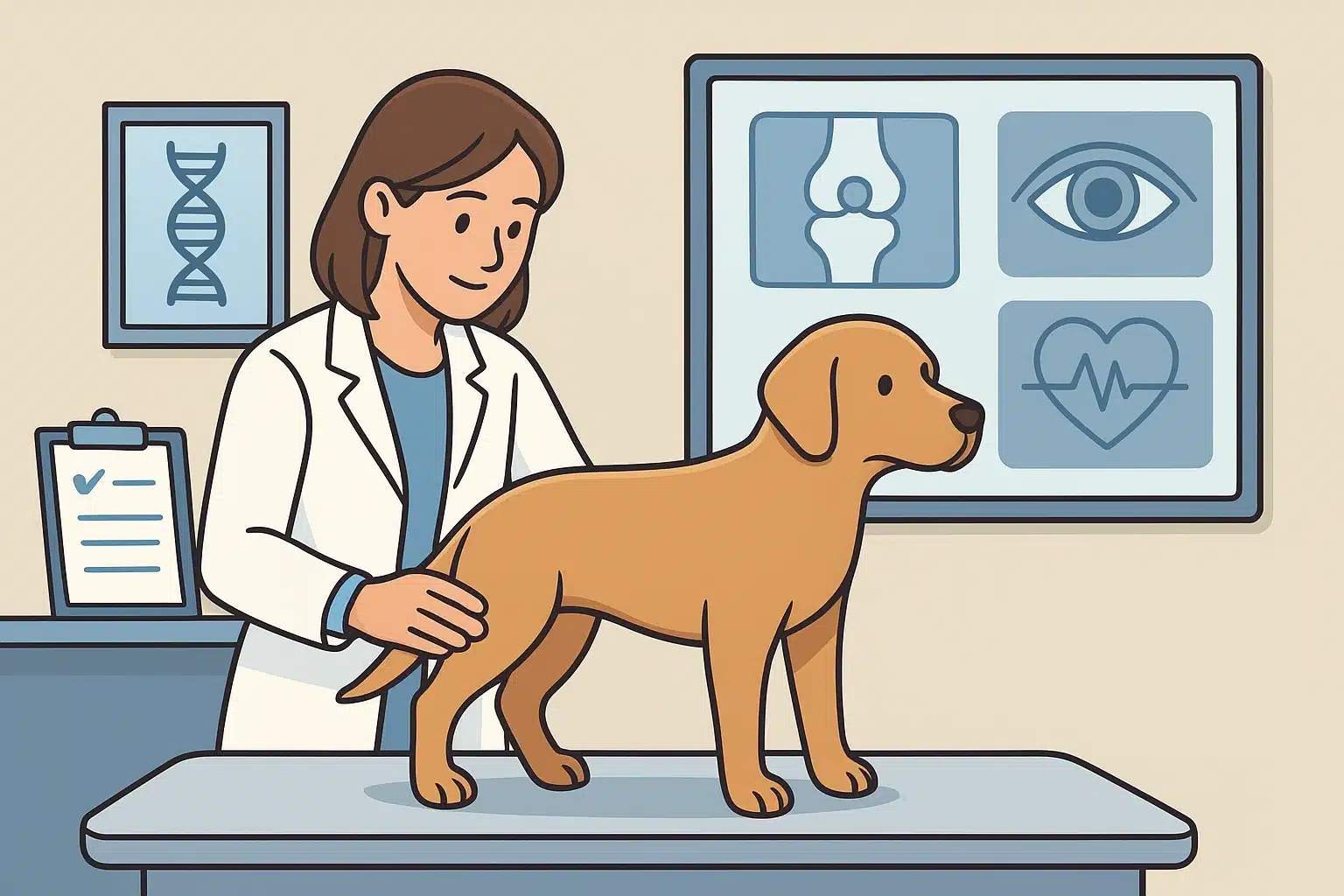
For eye records, ask who performed the exam. OFA notes that a board-certified veterinary ophthalmologist performs eye clearance exams. Cardiac clearances also need current dates, since some adult-onset findings can develop later. OFA recommends annual cardiac exams for adult-onset clearance.
Testing questions for Havanese, Havapoo, and Cavapoo families
Bring this short checklist to every breeder call:
- Can I see both parents’ original test reports before I apply?
- Which tests came from the Havanese, Poodle, and Cavalier sides?
- Are knee, eye, and heart results tied to each dog’s identity?
- When were the clearances completed, and are they still current?
- Can I verify the records through OFA or the testing lab?
A breeder should answer plainly and share documents without pressure. That is the standard Sage Puppies families should expect before reserving a small companion puppy.
Also Read: Puppy Care Blog & Resources | Sage Puppies
How to Verify a Breeder’s Health Records Before You Reserve
A health claim is not enough. Ask for the records before you send a reservation fee, then check that every document belongs to the actual parents of your puppy.
Confirm the sire and dam first
Start with the registered name, breed, date of birth, and permanent ID for both parents. Do not accept “our Havanese mom” or a nickname alone.
Ask the breeder to identify the exact sire and dam in writing. This matters when a program has several similar-looking dogs or uses an outside stud.
- Request each parent’s full registered name.
- Ask which tests were completed and when.
- Confirm the records match the planned litter, not another breeding dog.
The OFA buyer guidance advises families to review health screens for both parents and, where possible, their close relatives.
Check the record itself, not just the summary
Read the actual certificate, lab result, or database entry. Look for the dog’s name, ID number, test date, result, and issuing group. A cropped screenshot with no identifying details proves very little.
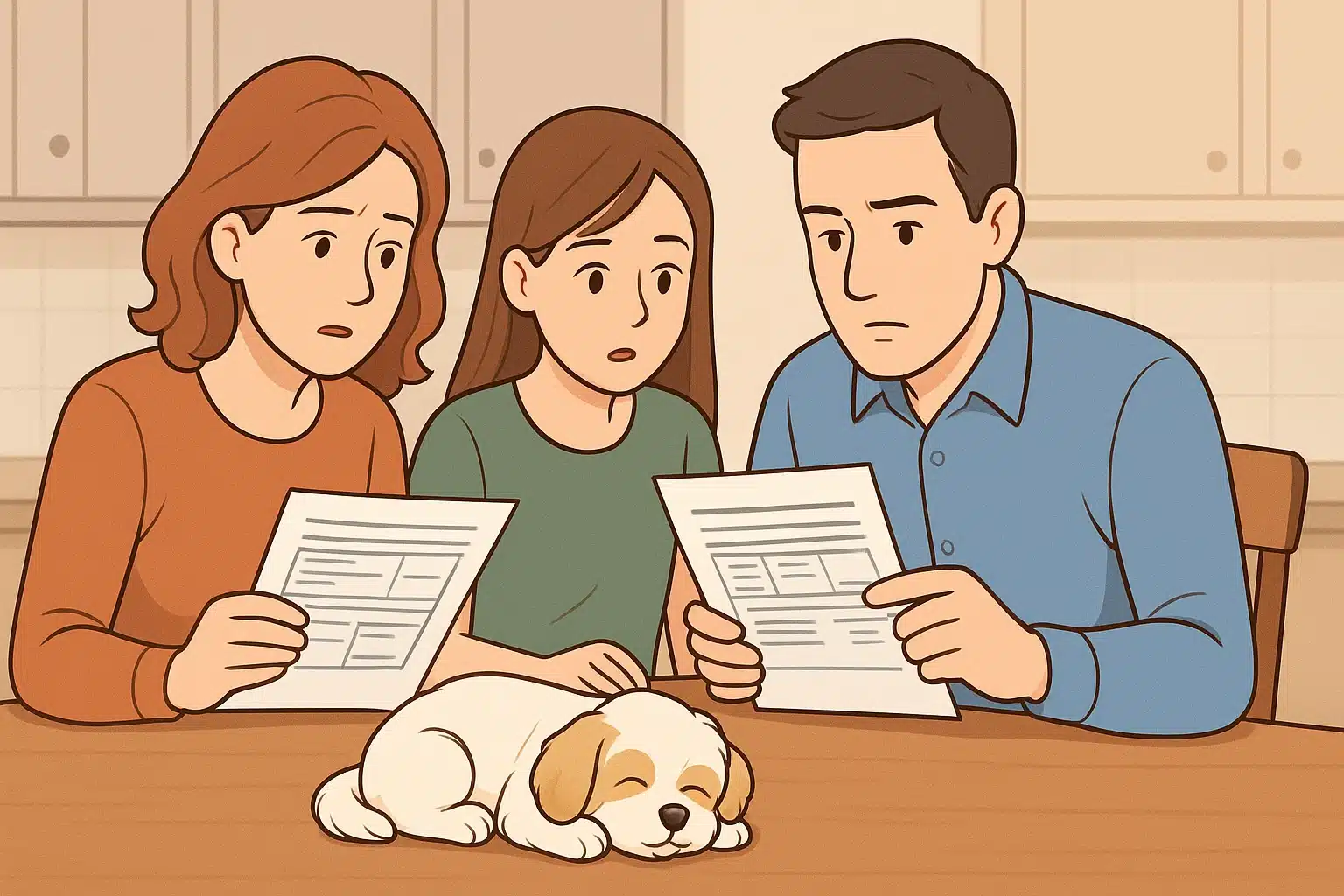
Use the OFA database to search the registered name and compare what you see. OFA notes that a CHIC number shows required screens were completed and made public, but it does not mean every result was normal. Read each result, not just the badge.
| Check | What should match |
|---|---|
| Dog identity | Registered name, sex, microchip or tattoo |
| Test record | Test type, date, provider, clear or graded result |
| Database entry | Same parent named on the breeder’s records |
Warning: “DNA tested” is not a full health plan. DNA panels, eye exams, heart checks, and patella evaluations answer different questions.
Match parent records to puppy records
Then ask for the puppy’s own file. It should connect the puppy to that litter through a birth date, sex, color or collar ID, and parent names.
Use this quick check:
- Compare the litter date with the puppy’s date of birth.
- Make sure the dam and sire names match every record.
- Ask which records transfer home with the puppy.
- Read the contract before you reserve.
Ask what the breeder does when results are incomplete
A careful breeder does not hide gaps. Ask directly: Was a test delayed, unavailable, abnormal, or not relevant to this pairing?
Listen for a clear answer, supporting records, and a sensible breeding decision. Walk away if you get pressure, vague claims, or a refusal to share documents.
At Sage Puppies, a transparent conversation about parent testing is part of choosing a well-started companion, not an extra favor.
Regional Dog Breeders Versus Puppy Farms: Where Transparency Changes
Access to parents, facilities, and daily care
A transparent breeder makes it easy to see how dogs live. Ask for a live video visit if travel is not practical. You should see the mother, the puppy area, sleeping space, play space, and clean water.
| What to request | Strong response | Concern |
|---|---|---|
| Parent access | Meet the mother or see her live | Only staged photos |
| Living area | Live walk-through with clear answers | No visit or vague clips |
| Health files | Parent-specific results and dates | A generic health statement |
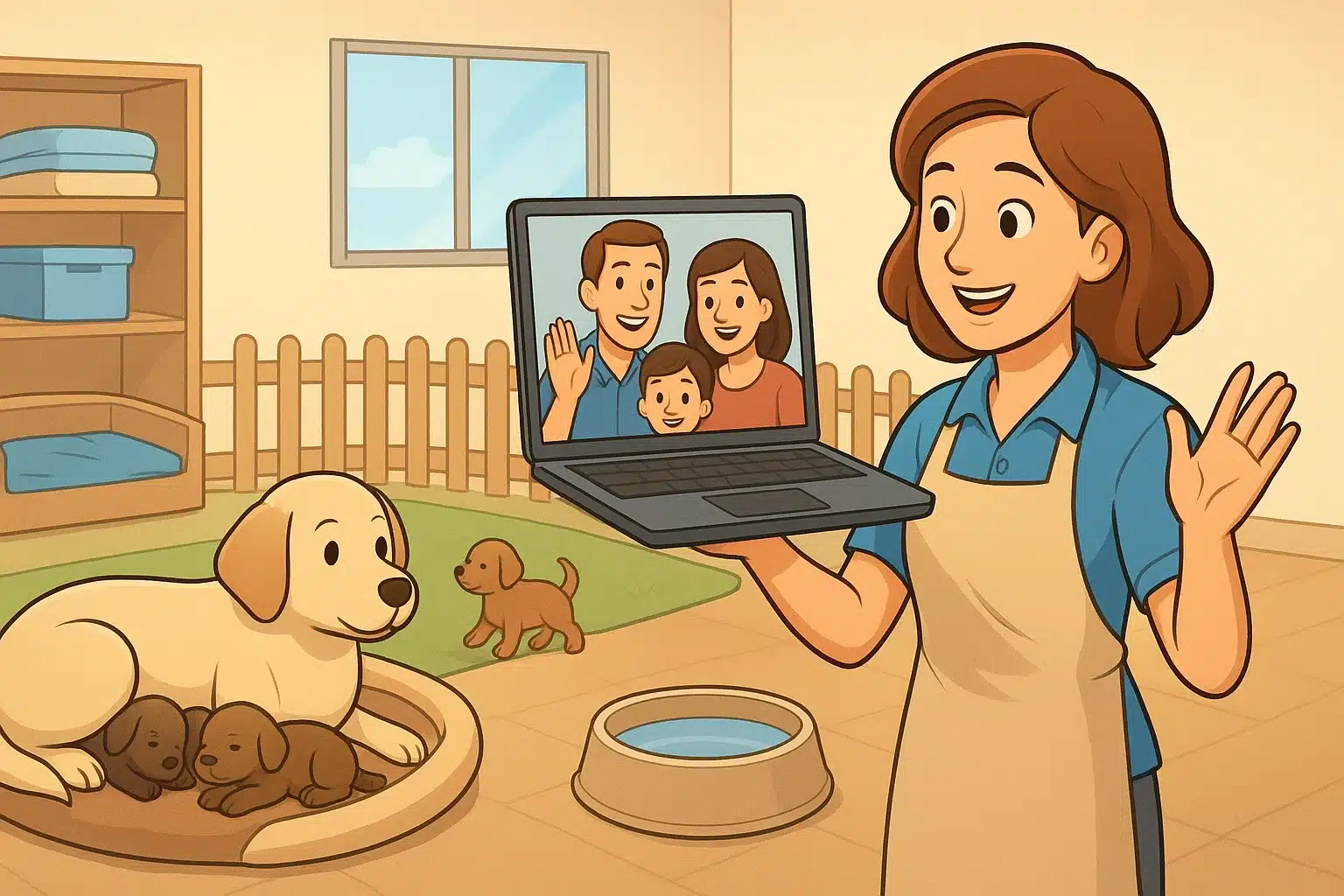
A clean facility matters, but it does not replace proof of parent health testing.
USDA inspectors review premises, records, care practices, and veterinary programs for licensed facilities during inspections, and reports can be checked through the USDA Animal Care search tool.
Communication before and after the sale
Regional breeders often offer more direct contact because they handle fewer litters. That alone is not proof of quality. Test the communication.
Ask these questions before you apply:
- Which tests were completed for each parent?
- Can I review the actual results?
- What has this puppy experienced each day?
- Who should I contact after pickup or delivery?
Clear answers should match the records. A breeder who rushes a deposit, avoids follow-up questions, or cannot identify the puppy’s parents creates a real gap in trust.
Why location alone does not settle the question
A Kentucky address does not make a seller transparent. Neither does a breeder being several states away. Judge the evidence, not the map.
Look for open access, parent records, consistent answers, and a written plan for pickup or delivery. Sage Puppies in South Jordan, Utah, can serve local and nationwide families while keeping this conversation direct and personal.
Also Read: How to Match a Kentucky Puppy’s Temperament to Your Lifestyle
Kentucky Red Flags That Should Make You Pause
Health language without supporting documents
“Health tested,” “vet checked,” and “genetically clear” are claims, not proof. Ask for each parent’s actual results, the testing lab or registry, test date, and registered name. A puppy wellness note does not replace parent screening for inherited concerns.
| Claim | Proof to request |
|---|---|
| Health tested parents | Named reports tied to each parent |
| Vet checked puppy | Dated exam record and vaccine details |
| Clear genetics | Full result, not a cropped screenshot |
A seller who cannot share records before a deposit has not earned your trust.
Pressure, secrecy, or inconsistent identities
Pause if you are pushed to pay “today,” told questions must wait until pickup, or offered only vague photos. Compare the breeder name, payment account, phone number, and parent names across every document. They should match.
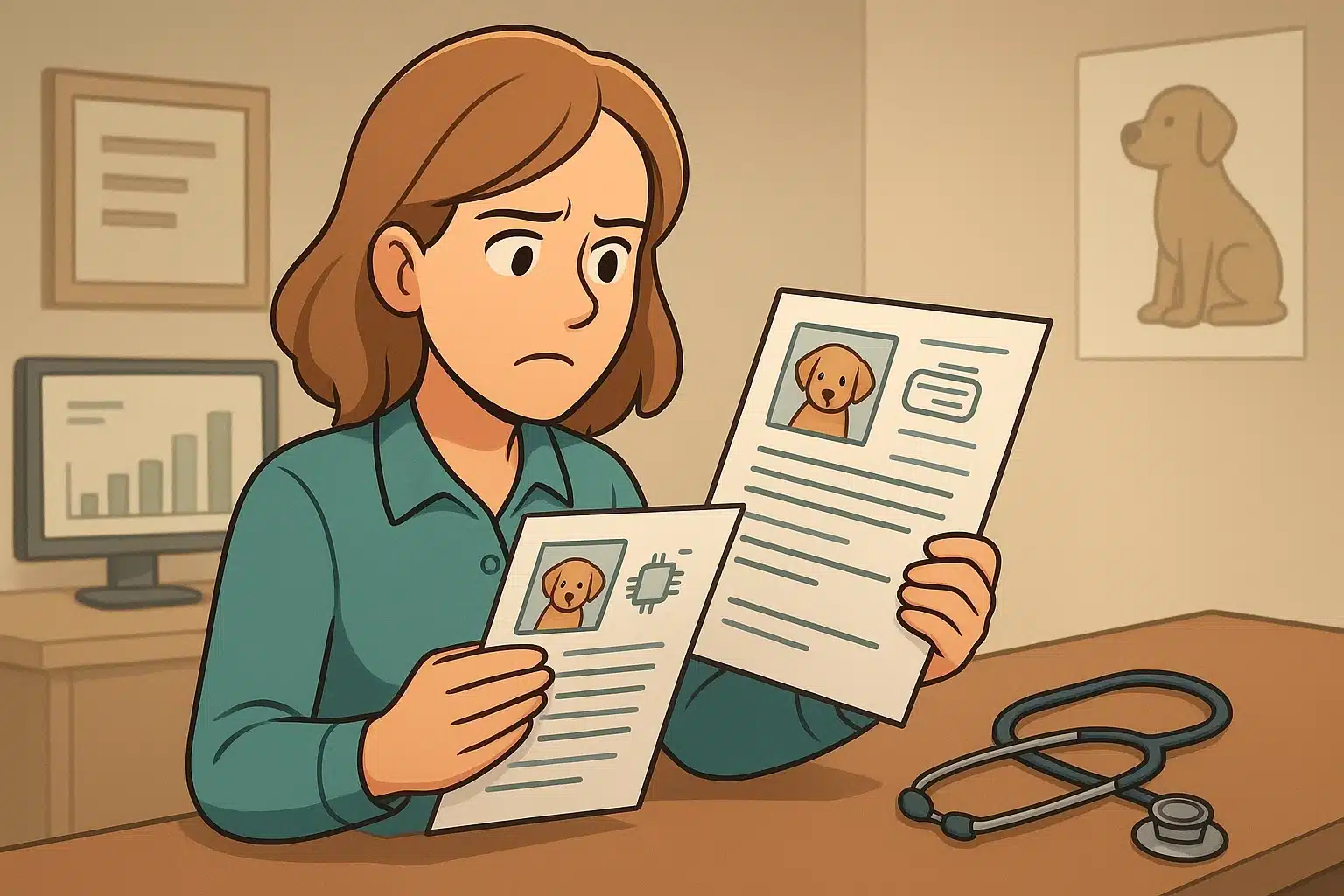
Ask for a live video visit or a current, unedited puppy video. A careful breeder welcomes reasonable questions and explains what each record means.
Records that cannot be independently connected
A real record should connect to a real dog. Check that the parent name, breed, date of birth, microchip or registration number, and test result align. For interstate movement, Kentucky rules state a Certificate of Veterinary Inspection must identify the animal and list shipper and receiver details, as outlined in Kentucky’s official regulation.
- Do not accept a generic clinic invoice as health proof.
- Do not rely on a certificate with missing parent details.
- Call the issuing clinic or registry using contact details you find yourself.
Also Read: https://sagepuppies.com/category/guides/
Which Option Gives Families the Strongest Health Record Trail?
Choose a regional breeder when verification matters most
Choose the breeder who can connect each puppy to its parents, test results, and care notes without delay. A smaller regional program often makes that trail easier to follow because you can ask direct questions and receive records tied to named dogs.
Ask for:
- Parent health testing results and the lab or registry used
- Dates of vaccines, deworming, and wellness checks
- A clear explanation of any result that needs follow-up
- The puppy’s parents, breeding plan, and home-raising routine
Sage Puppies gives families a direct path to ask these questions before they apply.
A health-tested parent is not a vague promise. The breeder should show the actual record and explain what it means for that pairing.
Proceed with a commercial operation only after the evidence clears the same test
Size does not prove poor care, and a USDA license does not replace breed-specific health proof. USDA-regulated facilities must maintain dog medical records, including identification, routine care, tests, and health issues, under its veterinary care rules.
| Check | Evidence to request | Pass standard |
|---|---|---|
| Parent testing | Dated, named results | Matches both parents |
| Puppy care | Individual health record | Lists care and dates |
| Oversight | USDA inspection history, if applicable | No unresolved concerns |
USDA inspection reports are public through its Animal Care search tool, but they are only one part of the picture.
A five-minute decision rule
Use this quick filter before you reserve:
- Ask for both parents’ health records.
- Confirm names, dates, and test provider.
- Match the parents to the puppy’s listing.
- Read the puppy’s own care record.
- Walk away if the answer is “we do not share that.”
Choose the source with the clearest paper trail, not the boldest health claim.

Choose a breeder who can clearly discuss each parent’s health records, not just promise them. Sage Puppies offers home-raised Havanese, Havapoo, and Cavapoo puppies with health-tested parents and a transparent adoption process. View available puppies, ask direct questions, and apply when the fit feels right.
Frequently Asked Questions
Q1: What health tests should a responsible breeder perform?
Responsible breeders test parents for breed-relevant inherited risks, plus eye, heart, and joint concerns when appropriate. Ask which tests match the puppy’s breed mix and request the actual parent results.
Q2: How can I verify a breeder’s health records?
Ask for dated reports showing the dog’s registered name or microchip number. Check that each report belongs to the parent, not a sibling. A clear breeder will explain any result.
Q3: What are the signs of a puppy mill in Kentucky?
Warning signs include vague records, many breeds, no parent details, rushed deposits, and no questions about your home. Avoid sellers who only share health claims, not test documents.
Q4: Is a vet check the same as genetic health testing?
No. A vet exam checks a puppy’s current condition. Genetic testing reviews inherited risks in the parents. Strong records include both, along with a clear plan for follow-up care.
Q5: Should I review records before paying a reservation fee?
Yes. Review parent testing, vaccine records, and the breeder’s process first. A thoughtful program, such as Sage Puppies, should welcome careful questions from families.
Conclusion
The better choice is not defined by a Kentucky address, a farm label, or a breeder’s sales page. Choose the breeder who can show parent health test results, explain each record, and match them to your puppy’s family line.
Ask for proof before you reserve. Check dates, parent names, test types, vet records, and how the breeder handles questions after placement. USDA records can add useful context because inspectors review regulated facilities, records, and veterinary care during inspections through the APHIS public search tool.
Clear records and open communication matter more than broad promises.
For Havanese, Havapoo, and Cavapoo families, a smaller regional breeder relationship can make verification simpler and more personal.



