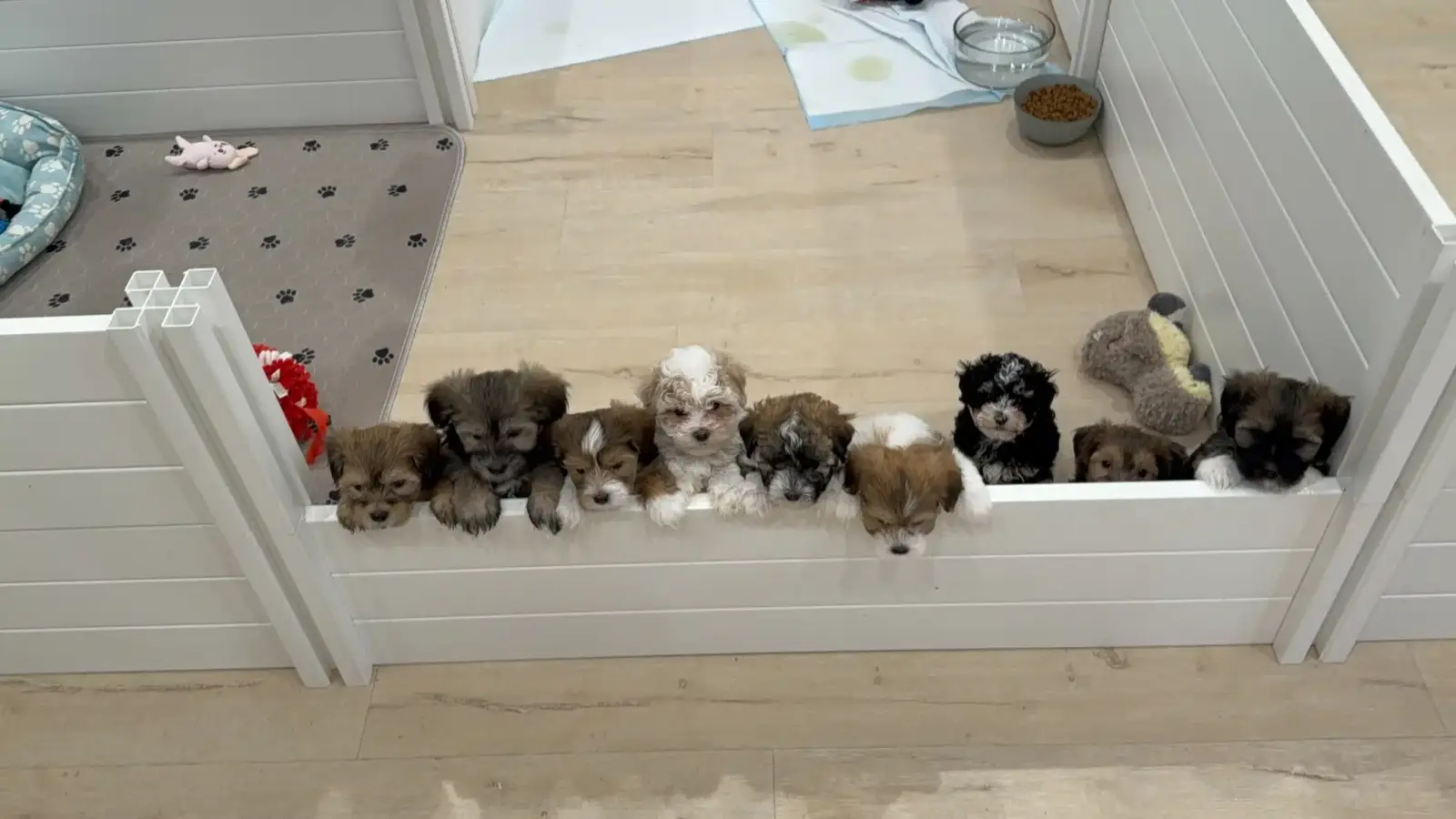
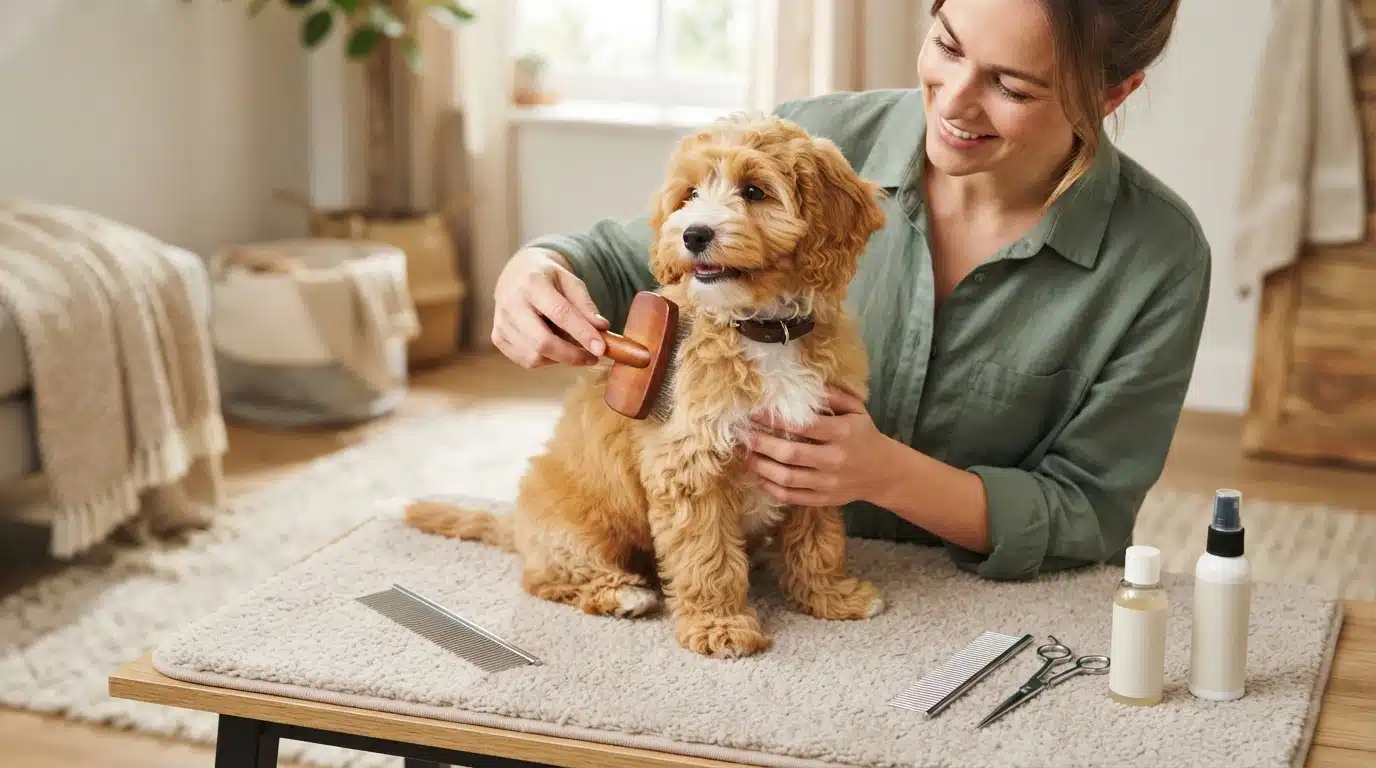
Quick Summary: A calm, boring first week is the single best way to help a new Kentucky puppy settle in, so skip visitors and focus on rest, routines, and gentle handling. Set up one puppy-proofed room, keep the same food, book a vet visit within 2-3 days, and take potty breaks after every meal, nap, and play session. Introduce kids and resident pets slowly, and prioritize trust over training, since early positive socialization prevents fear later. Sage Puppies, which delivers home-raised Havanese, Havapoo, and Cavapoo puppies to Kentucky, provides a written first-week plan to guide families through this transition.
Your puppy’s first evening in Kentucky may start after a long delivery, a drive home from pickup, or a happy handoff at your door. It’s tempting to celebrate with visitors, photo sessions, and a trip to the park. Resist that urge. The best first week is quiet, built on rest, predictable routines, and gentle observation while your puppy settles in.
That’s the challenge this guide solves: knowing exactly what to do each day when you buy puppies in Kentucky, without overwhelming a small companion breed like a Havanese, Havapoo, or Cavapoo. Below, you’ll find a practical day-by-day plan covering home setup, feeding and potty schedules, early vet care, and safe socialization.
At Sage Puppies, every puppy is home-raised with health-tested parents and early handling, so your first week simply continues the calm start we’ve already built.
Step 1: Confirm the Kentucky Go-Home Plan Before Your Puppy Travels
Families who buy puppies in Kentucky usually welcome them through delivery, so the single best thing you can do is nail down every travel detail before go-home day. When you buy puppies in Kentucky from Sage Puppies, your coordinator confirms timing, handoff location, food notes, health records, and payment steps in advance. You should also confirm who will be home to receive the puppy and keep your phone close on travel day.
What to Confirm Before Go-Home Day
Work through this list at least a few days ahead:
- Delivery date and window. Confirm the arrival time and the best phone number for updates.
- Handoff plan. Know exactly where you will meet, or where the courier will arrive.
- Paperwork. Health records, vaccine dates, and feeding notes should travel with your puppy.
- First vet visit. Book a wellness exam within the first few days. The AKC recommends an early checkup so your vet can confirm health and plan vaccines.
- Your supplies. Crate, food, bowls, and potty area ready before the puppy arrives, not after.
If you plan any extra travel with your puppy later, check USDA pet travel requirements well in advance.
Set Up a Quiet Landing Zone
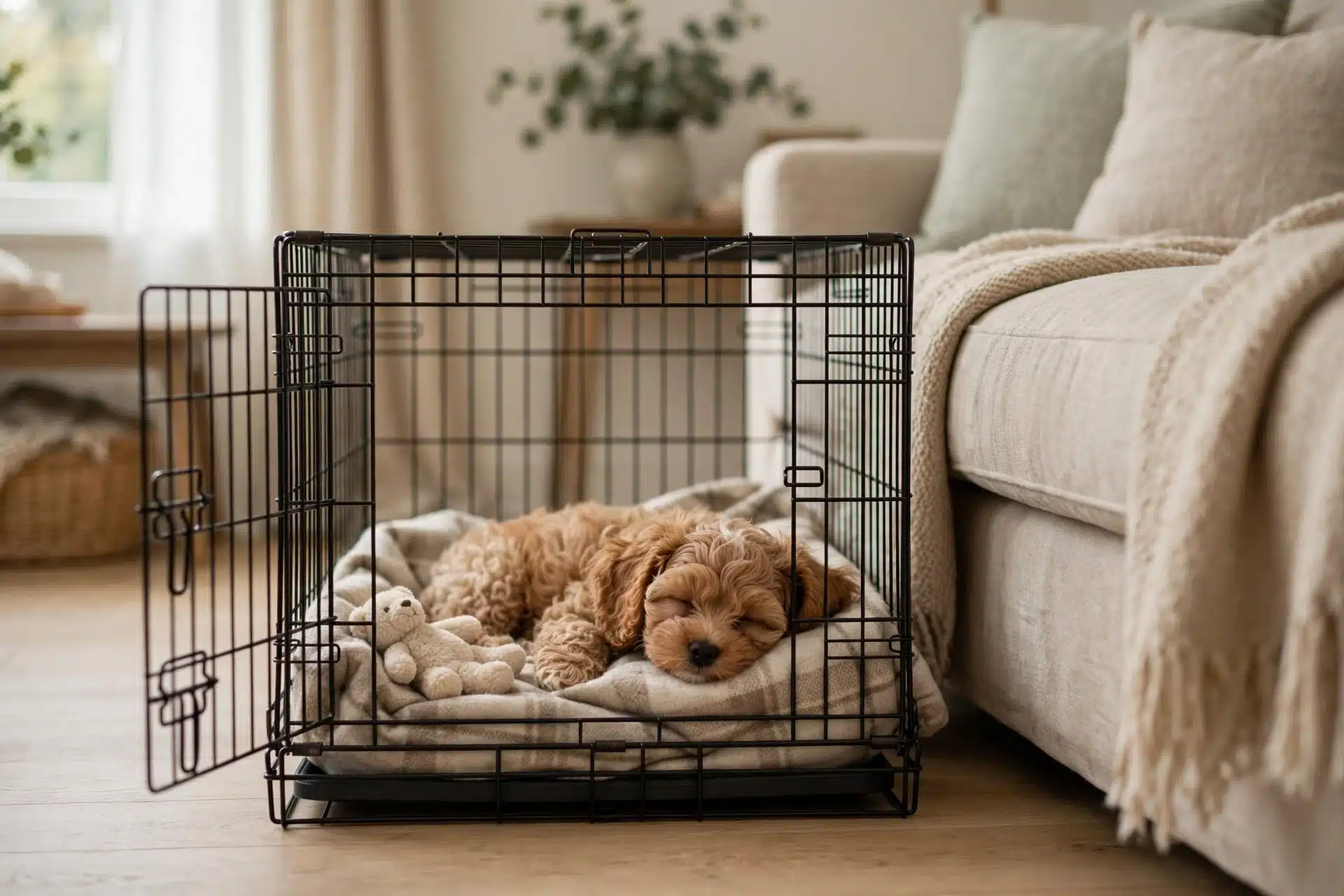
Before arrival, prepare one small room or playpen: a crate with soft bedding, water, one chew toy, and a potty spot outside. Skip the welcome party. Let your puppy potty first, then rest, explore slowly, and meet the family one person at a time.
Also Read: How to Match a Kentucky Puppy’s Temperament to Your Lifestyle
Step 2: Make Arrival Day Quiet, Safe, and Predictable
Your puppy just left the only home they have ever known. Everything is new: the smells, the floor, the people. The kindest thing you can do on arrival day is keep it boring. A calm first day helps a small breed puppy like a Havanese or Cavapoo settle faster than a day full of visitors and photo sessions.
The First Two Hours
- Carry your puppy to the potty spot first, before anything else. Reward them if they go.
- Let them explore one room only. Keep it the room where their crate and bed are set up.
- Let the puppy come to you. Sit on the floor and stay low-key.
- Skip visitors entirely on day one. Dogs Trust advises avoiding guests for the first few days so your puppy can bond with your family first.
If kids live in your home, set the rule now: sit down to hold the puppy, quiet voices, gentle hands.
Plan the First Night Around Rest
Put the crate next to your bed. Your puppy can hear you breathe, and you can hear when they need a potty break, which vets recommend for young puppies. Expect one or two wake-ups.
Do not let your puppy “cry it out.” Veterinarians warn that ignoring a crying puppy can be stressful for them, so check in calmly for a potty trip, then return them to bed.
Tip: A warm blanket that smells like the breeder’s home makes the first night much easier. Ask us for one before your Sage Puppies puppy travels.
Also Read: How to Spot Responsible Puppy Breeders in Kentucky Online
Step 3: Build a Simple Feeding, Potty, and Sleep Rhythm
Puppies settle fastest when the day repeats itself. Feed at set times, go out right after meals and naps, and protect sleep. Colorado State veterinarians note that consistency speeds up housebreaking and training.
Use a Repeatable Daily Cycle
Keep it boring. Boring works.
- Wake up and go straight outside.
- Breakfast, then a potty break within 30 minutes.
- Short play session, then a nap.
- Lunch, potty, play, nap. Repeat through the afternoon.
- Dinner, one last potty break, then bedtime.
Most 8-12 week puppies eat three meals a day and sleep 16 to 20 hours daily. Anchor meals to your own breakfast, lunch, and dinner so you never forget. A sample AKC puppy schedule confirms several short play sessions beat one long romp.
Support Potty Training Without Pressure
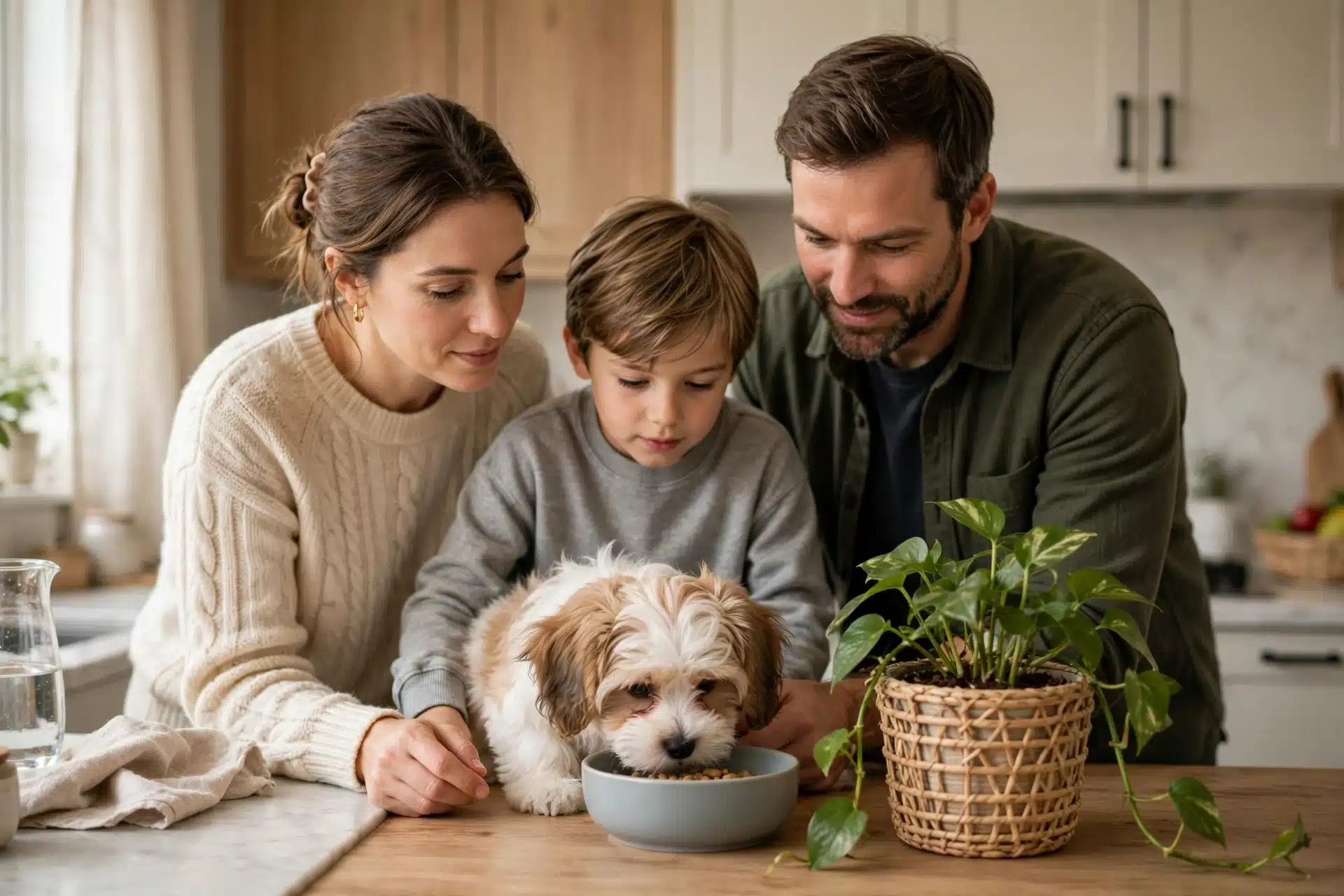
Take your puppy out after every meal, drink, nap, and play session. Young puppies can only hold it for two to three hours. Use the same door and the same spot each time, and praise calmly the moment they go.
Accidents will happen. Clean them with an enzymatic cleaner and skip the scolding. Punishment just teaches a puppy to hide it. If you catch them mid-accident, a gentle “uh-oh” and a quick trip outside does the job.
Watch for sniffing, circling, or wandering off. Those are your puppy’s polite way of asking to go out.
Know When Feeding Changes Need Guidance
Stick with the food your puppy already knows for the first week. Sudden diet changes cause stomach upset and potty setbacks. Call your vet before switching brands, adjusting portions, or adding supplements. They can also flag loose stools, skipped meals, or low energy that need a closer look.
Step 4: Schedule the First Veterinary Visit and Organize Health Records
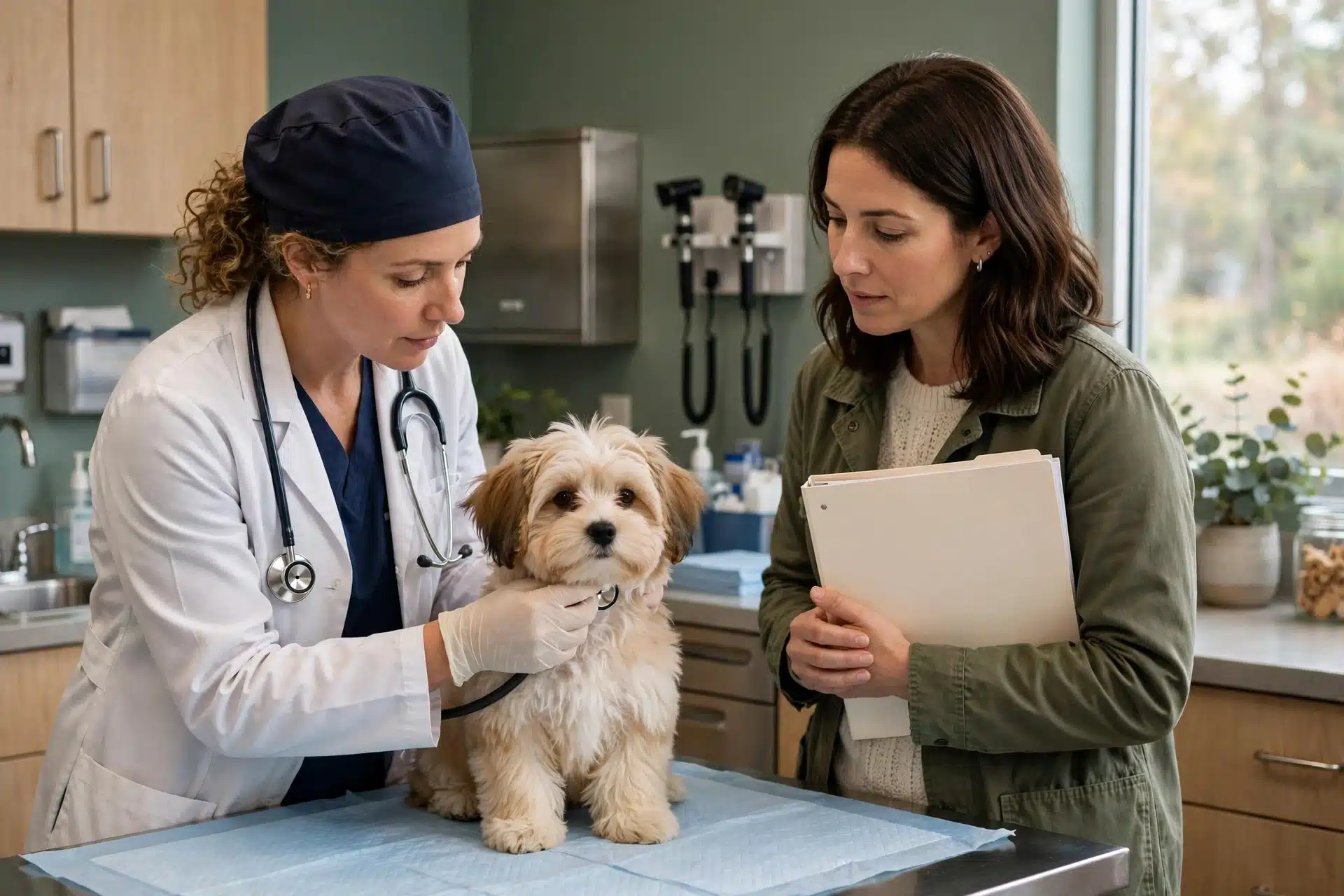
Book your puppy’s first vet appointment before pickup day. Most vets want to see a new puppy within 48 to 72 hours of arrival, even when the breeder has already started vaccines and deworming. That early exam sets a health baseline, confirms the records you received, and builds the relationship your puppy will rely on for life. If you’re adopting a Sage Puppies puppy, your welcome packet includes vaccine dates, deworming history, and parent health testing details, so bring it all with you.
What to Bring to the Appointment
Pack the night before so the morning stays calm. You’ll want:
- All health records from the breeder, including vaccine and deworming dates
- A fresh stool sample in a sealed bag, collected that same day if possible
- A photo of your puppy’s food label, plus notes on how much and how often you feed
- A written list of questions and anything you’ve noticed, like appetite or sleep changes
- A secure carrier or crate, treats, and a small blanket that smells like home
Small puppies should ride in a crate or carrier, not loose in the car. Keep them off the clinic floor and away from other animals until your vet confirms the vaccine plan.
Questions to Ask Your Kentucky Veterinarian
Write your questions down. The appointment moves fast, and a list keeps you from forgetting the important ones. Good ones to start with:
- Which vaccine boosters does my puppy need next, and when?
- What flea, tick, and heartworm prevention do you recommend for Kentucky?
- When is it safe to socialize my puppy around other dogs?
- What’s the right timing for spaying or neutering a small breed?
- What symptoms should send me straight to the clinic?
Ask about a puppy package too. Many clinics bundle the early visits into one price, which makes budgeting simpler.
Treat Health Information as a Plan, Not a Promise
A record tells you what happened. A plan tells you what comes next. Leave the first visit with three things written down: the vaccine schedule, the next appointment date, and any watch-fors specific to your puppy. Store everything in one folder, digital and paper, so nothing gets lost between visits.
Also Read: Kentucky Puppy Farms vs Regional Breeders: Which Has Better Health Records?
Step 5: Introduce Children, Visitors, and Resident Pets Slowly
A new puppy meets a lot of new faces in week one. Keep each meeting short, calm, and positive. The first three months are a puppy’s key social window, and good experiences now prevent fear later, according to AVSAB’s socialization position statement.
Make Children Part of the Calm Routine
Kids often love the puppy hardest, so set ground rules on day one.
- Sit on the floor and let the puppy come to the child.
- Use two fingers and a soft voice, no squeezing or chasing.
- Never wake a sleeping puppy to play.
- Always supervise an adult, even with gentle kids.
Let each child feed one meal or offer a treat. This builds a quiet bond fast. If the puppy backs away or tucks its tail, end the visit. It can try again tomorrow.
Introduce Resident Pets in Stages
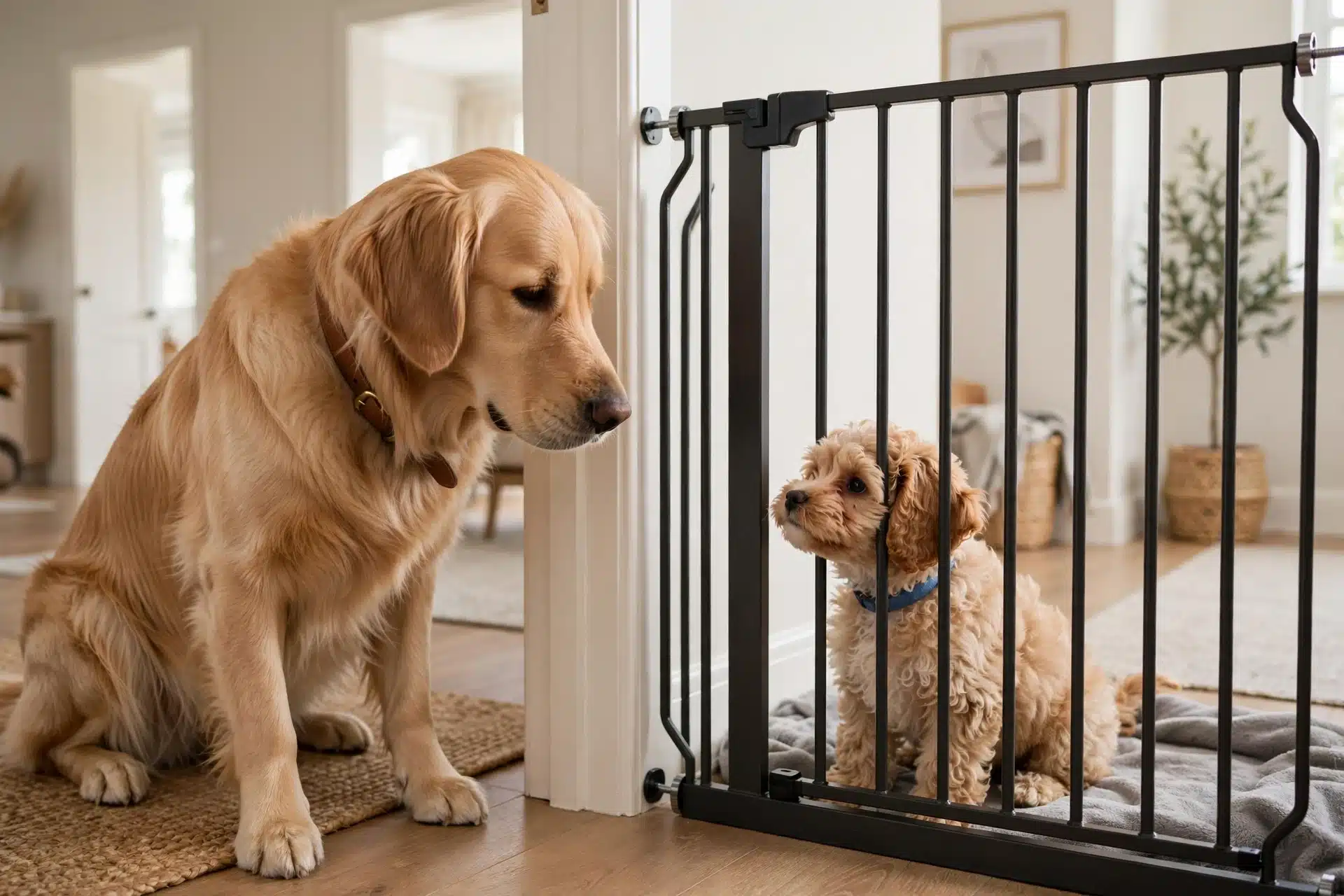
Greet your resident dog or cat first before the puppy comes inside. Then start with a baby gate or pen between them so they can see and sniff without contact. Keep first meetings a few minutes long and reward calm behavior with treats. Watch both animals for stiff posture, hard staring, or hiding. Supervision matters most when sizes differ, as the AKC advises for adult dogs and new puppies. Feed pets in separate rooms, and give your older pet plenty of breaks.
Choose Safe Socialization Before Full Public Outings
Your vet will tell you when your puppy is ready for public ground. Until then, carry your puppy on walks or use a stroller to watch the world safely. Let it see people, dogs, and traffic from a distance. Pair every new sight with a treat. Short, happy exposures now build a confident adult dog later.
Also Read: Guides – Sage Puppies
Step 6: Turn the First Week Into a Bonding and Training Foundation
Your puppy does not need a full training curriculum this week. She needs to learn one big thing: you are safe. Everything else builds on that.
Teach Trust Before Tricks
Behavior experts are clear on the order of operations. Trust comes first, commands come later. Once your puppy feels safe with you, teaching sit or come becomes easy, because she wants to stay close and listen.
So keep it simple this week:
- Reward eye contact and check-ins with a small treat.
- Ask for a sit before meals. That is enough formal training for now.
- Stay calm and upbeat. No yelling, no punishment for accidents.
The AKC’s puppy training timeline puts relationship building ahead of obedience for exactly this reason. A puppy who trusts you will learn faster for the rest of her life.
Make Handling and Grooming Ordinary
Havanese, Havapoos, and Cavapoos need regular grooming, so start now while she is tiny. Keep sessions short and pair each one with treats.
- Touch her paws, ears, and mouth for a few seconds each day.
- Run the brush over her coat, then stop before she gets bored.
- Lift her gently, the way a vet or groomer will.
Puppies handled gently and often during their first months grow into calmer adults. The AVMA’s research on puppy socialization shows early handling prevents fear responses later. Sage Puppies puppies arrive already used to gentle handling, so you are continuing a habit, not starting one.
Measure Progress at the End of the Week
By day seven, check in on the basics. Is she sleeping through most of the night? Eating well? Coming to you when called? Tolerating a brush without fussing? If most of those are yes, your foundation is set. If one is shaky, just give it another week. There is no rush.
Common Mistakes to Avoid During Your Puppy’s First Week
Most first-week trouble comes from a handful of easy-to-make errors. Watch for these:
- Skipping the vet visit. Book an exam within the first few days, even if your puppy seems healthy.
- Changing food right away. Keep the food your breeder used and transition slowly over a week or more to avoid stomach upset.
- Too much freedom too soon. Free run of the house leads to accidents and chewing. Start with one puppy-proofed room.
- Punishing accidents. It only teaches your puppy to hide. Clean up and move on.
- Isolating your puppy. Some families hold off on all new experiences until shots are finished. That’s a mistake. AVSAB notes that safe socialization should happen before full vaccination.
- Skipping naps. Puppies sleep up to 20 hours a day, and overtired puppies get nippy and cranky.
Small, calm steps win. Sage Puppies families get a written first-week plan with every puppy, so you never have to guess what comes next.
Also Read: Puppy Care Blog & Resources | Sage Puppies
Your Kentucky Puppy First-Week Checklist
Keep the first seven days calm and boring. That is the goal. Whether your Havanese or Cavapoo puppy arrives by Sage Puppies delivery or you meet us for pickup, this checklist covers the essentials. Experts at the AKC recommend a quiet, predictable first day with few visitors and plenty of rest.
Your week-one checklist:
- Puppy-proof one room before arrival day.
- Keep the same food the puppy has been eating.
- Take potty breaks after every meal, nap, and play session.
- Book a vet visit within the first week.
- Let the puppy explore at their own pace, no forcing.
Plan a low-key week. Veterinary guidance from AAHA stresses calm routines, minimal visitors, and a set sleep spot from night one.

Your puppy’s first week goes smoother when the start is calm and well-prepared. At Sage Puppies, our home-raised Havanese, Havapoo, and Cavapoo puppies arrive socialized, healthy, and ready to settle in. See our available puppies or start your application today – pickup in South Jordan or delivery to Kentucky and beyond.
Frequently Asked Questions
Q1: puppies for sale in Kentucky
Sage Puppies delivers nationwide, so Kentucky families can adopt a home-raised Havanese, Havapoo, or Cavapoo puppy with delivery or local pickup in South Jordan, Utah.
Q2: How should I puppy-proof my home?
Block cords, small objects, and stairs with a gate. Set up one quiet corner with a crate, water, and toys before your puppy arrives.
Q3: When should the first vet visit happen?
Within 2 to 3 days. Bring your puppy’s health records so your Kentucky vet can plan boosters and confirm the transition is going well.
Q4: Can I travel to pick up my puppy instead?
Yes. Many families fly or drive to Utah for pickup. Sage Puppies will help you plan the safest option for a small breed puppy.
Q5: How do I calm a crying puppy at night?
Use the crate, a warm blanket, and a ticking clock or heartbeat toy. Keep the room dark and avoid visits that reward whining.
Conclusion
Your puppy’s first week comes down to a few things done well: a puppy-proofed space ready before pickup or delivery, a vet visit scheduled early, gentle routines for sleep and potty breaks, and calm, positive introductions to new people and sounds. Early socialization matters more than most owners realize. The AVMA’s research on puppy socialization shows that positive exposure before twelve weeks helps prevent fear and behavior problems later. PetMD’s new puppy checklist echoes the same basics: supplies, a vet visit, and a steady routine. Go slow, keep things kind, and your Havanese, Havapoo, or Cavapoo from Sage Puppies will settle in as the confident companion you hoped for.