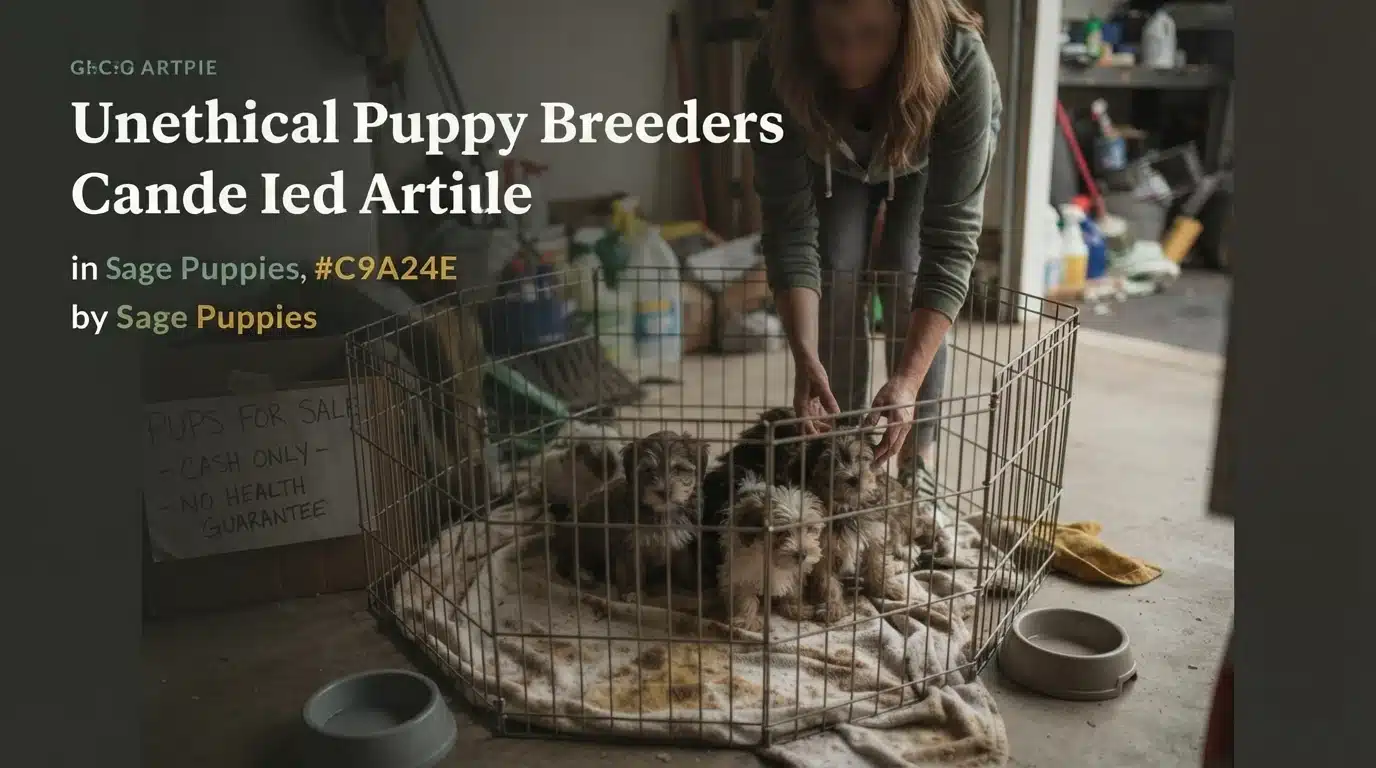
Quick Summary: Cute photos and fast replies don’t prove a Kentucky breeder is responsible. Verify health testing records for both parents, request a live video call, and read the full contract before sending any deposit. The article’s seven-step checklist also covers checking OFA public records, reviewing real customer feedback, and avoiding gift card or wire payments. Walk away if a breeder refuses parent names, rushes payment, or sends only cropped screenshots.
A Kentucky puppy listing can show bright eyes, a polished website, and a fast-moving reservation list. None of that proves the breeder health tests parent dogs or raises puppies for calm, family-ready temperaments.
The hard part is that weak sellers and responsible breeders can look alike online at first. Families searching for Havanese, Havapoo, or Cavapoo puppies need more than cute photos and quick replies. They need clear proof.
This guide gives you a practical puppy breeder checklist for screening Kentucky puppy breeders before you apply, send a deposit, or plan delivery. You will learn what to verify about parent health, home care, puppy social skills, reviews, payment requests, and pickup or transport plans.
Built around the questions careful families should ask, this framework helps you spot responsible breeders and avoid costly red flags.
Step 1: Confirm Who the Kentucky Breeder Really Is
Look for a real program, not a rotating puppy catalog
Start with the person behind the listing. Responsible breeders clearly name their program, location, breeds, and how puppies are raised.
Check that the same name, phone number, and photos appear across their website and social pages. Look for adult dogs, past litters, and family updates, not only polished puppy portraits.
| Green flag | Reason to care |
|---|---|
| Named breeder and clear location | You can research a real person and program |
| Parent dog details | It shows where the litter came from |
| Consistent photos over time | It is harder to fake an active home program |
| Clear contact information | You have a direct way to ask questions |
Search the breeder’s name with terms like reviews, complaint, and scam. Kentucky’s Attorney General has warned that puppy scammers may use fake ads and request payment through cash apps, so pause if the details do not line up. See the Kentucky consumer alert.
A breeder who will not identify the mother, their location, or who handles your questions is not ready for your reservation.
Ask for a live introduction before you reserve
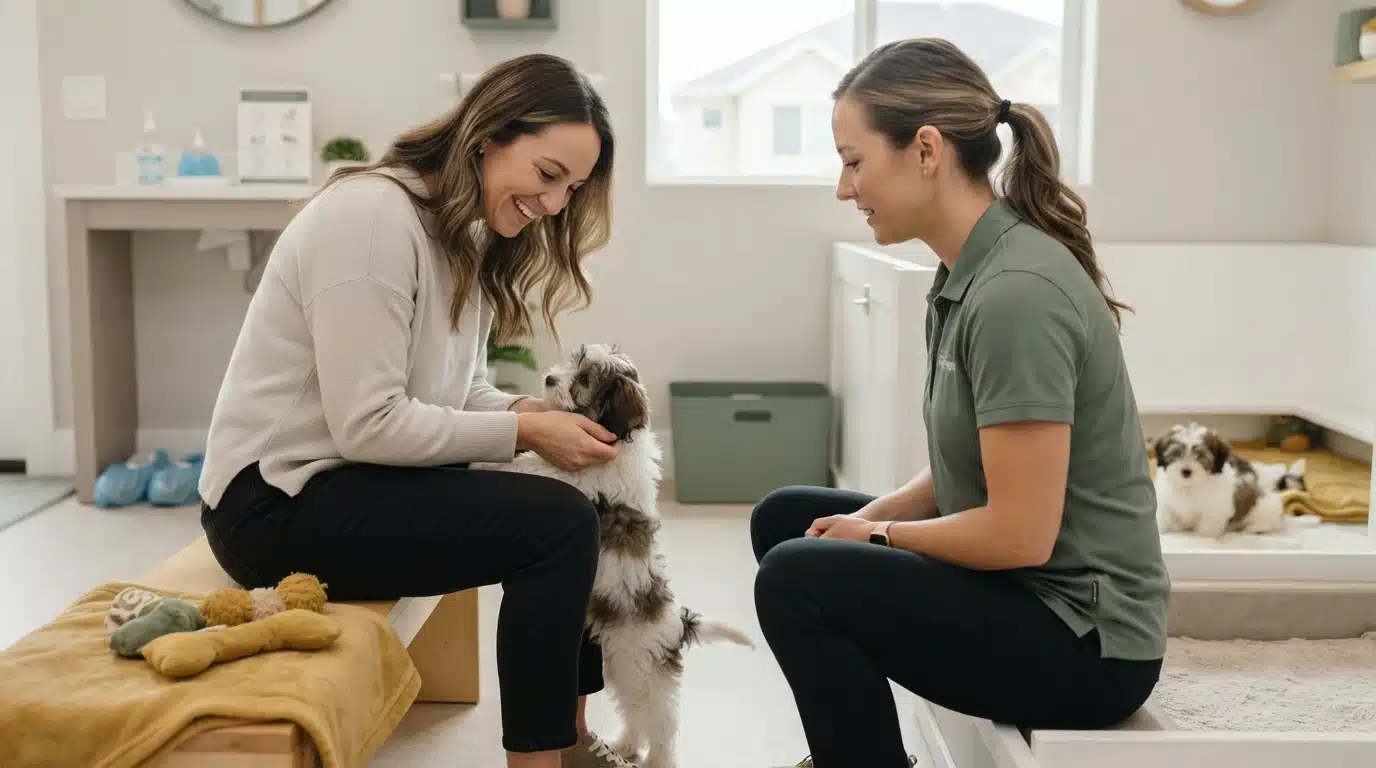
Request a short live video call. Ask to see the puppy, mother when appropriate, and the space where puppies spend their days.
Use this quick check:
- Ask the breeder to say the puppy’s name and show a simple action you request.
- Confirm the puppy’s age, available date, and price match the written listing.
- Ask who will handle pickup or delivery and when payment is due.
A real conversation will not replace health records, but it confirms there is a real person and puppy. Responsible breeders welcome thoughtful questions and do not rush you into an untraceable payment.
Also Read: How to Spot Puppy Scams When Searching Kansas Breeders
Step 2: Verify Health Testing on Both Puppy Parents
Health claims only matter when you can see what was tested and who was tested. Ask before you place a deposit, especially if you are choosing a Havanese, Havapoo, or Cavapoo from another state.
Request the names and results for each parent
Ask for the registered or full call names of both the sire and dam. Then request copies or direct links to each parent’s health results.
A clear breeder can show you:
- Parent names, breed, and date of birth
- The lab or registry that issued each result
- The test date and result
- Which parent belongs to the breeder and which may be an outside stud
- Any health history they are willing to discuss
Both parents matter. A breeder may not own the sire, but they should still have his records. The Orthopedic Foundation for Animals advises buyers to review health screens for both parents, not just accept a general claim of testing. OFA’s breeder interview guide makes this expectation clear.
A photo of a certificate is a starting point, not proof. Match the dog’s name and ID to the result.
Understand DNA tests versus physical screenings
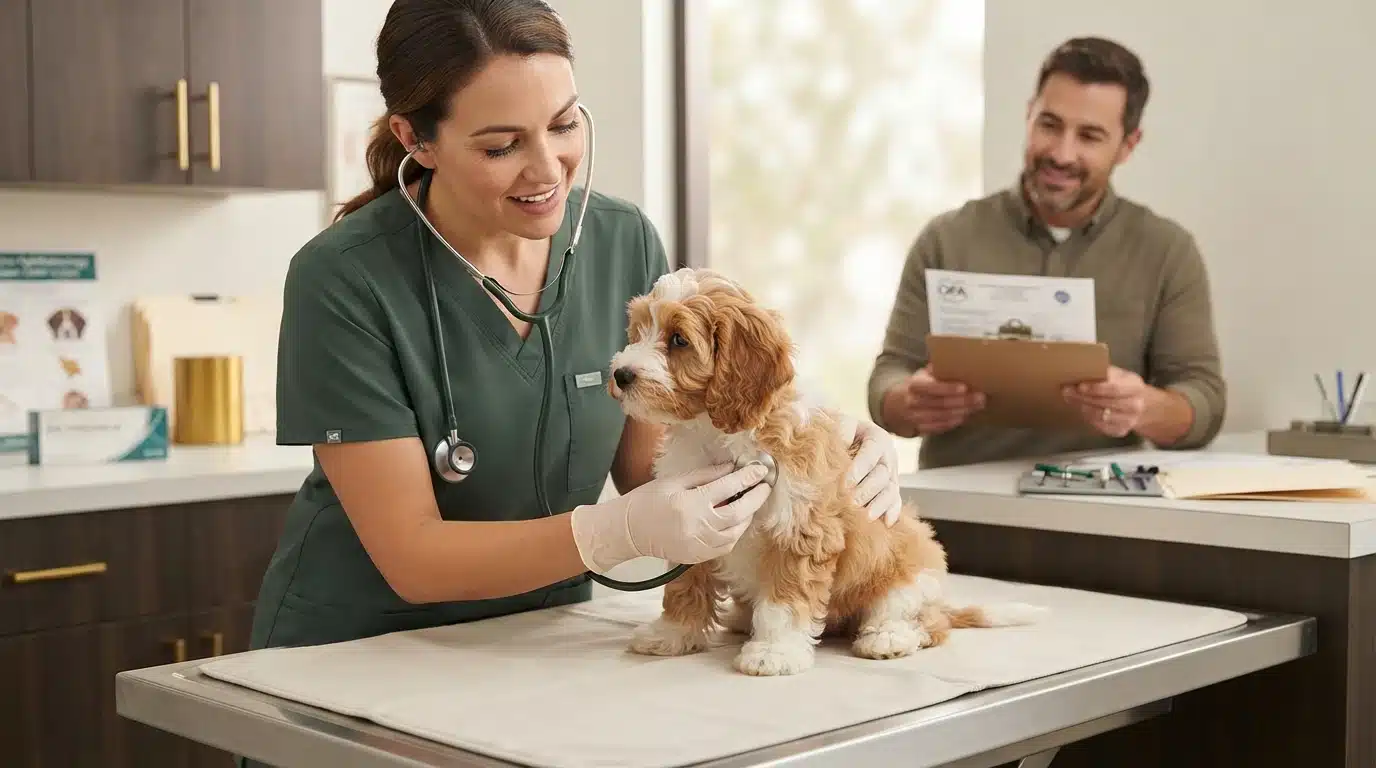
DNA tests check for specific inherited gene variants. They can show whether a dog is clear, a carrier, or affected for a listed condition. That is useful, but DNA panels do not replace exams of the dog’s body.
Physical screenings may include checks of:
- Kneecaps or patellas
- Eyes
- Heart
- Hips or elbows, where advised for the parent’s breed and size
For a mixed breed puppy, ask what was tested for each parent’s breed background. A Cavapoo pairing needs more than a vague “doodle panel.” The right plan considers the Cavalier King Charles Spaniel and Poodle lines.
| Test type | What it checks | What to ask for |
|---|---|---|
| DNA test | Known gene variants | Lab report and each parent’s status |
| Physical screening | Current structure or organ health | Exam or registry result with date |
| Pedigree review | Health patterns in close relatives | Names of parents and grandparents |

The OFA explains that its records can include DNA results plus hip, eye, heart, and patella screenings. Its overview of health tests is helpful when a report uses unfamiliar terms.
Verify public records instead of accepting a logo
A health-testing logo on a breeder’s site does not tell you which dogs passed which tests. Search the parent names in the OFA database, then compare the record to the certificate you received.
Check these details:
- The spelling of the dog’s name matches.
- The breed and sex match.
- The test type and date make sense.
- The result is public and easy to trace.
- The breeder answers calmly if a record is missing.
A CHIC number can show that a dog completed the breed club’s required screens and the results are public. It does not mean every result was normal, so read the report itself.
Walk away if a breeder refuses parent names, sends cropped screenshots, or says health records are private.
Also Read: 10 Red Flags to Avoid When Visiting a Local Puppy Breeder
Step 3: Evaluate How the Puppies Are Raised and Socialized
Ask what puppies experience each week
A good breeder can explain daily life in clear detail, not just say puppies are “well socialized.” Ask what changes as the litter grows.
- Are puppies gently handled by adults and children?
- Do they meet normal home sounds, grooming, crates, and car rides?
- How do they explore new surfaces, toys, and calm visitors?
- What happens if a puppy seems shy or overwhelmed?
Early, positive exposure matters. The AVMA socialization review notes that puppies benefit most from safe new experiences during their early weeks.

A breeder should describe real routines, including rest time. Constant stimulation is not quality socialization.
Check care records and the homecoming plan
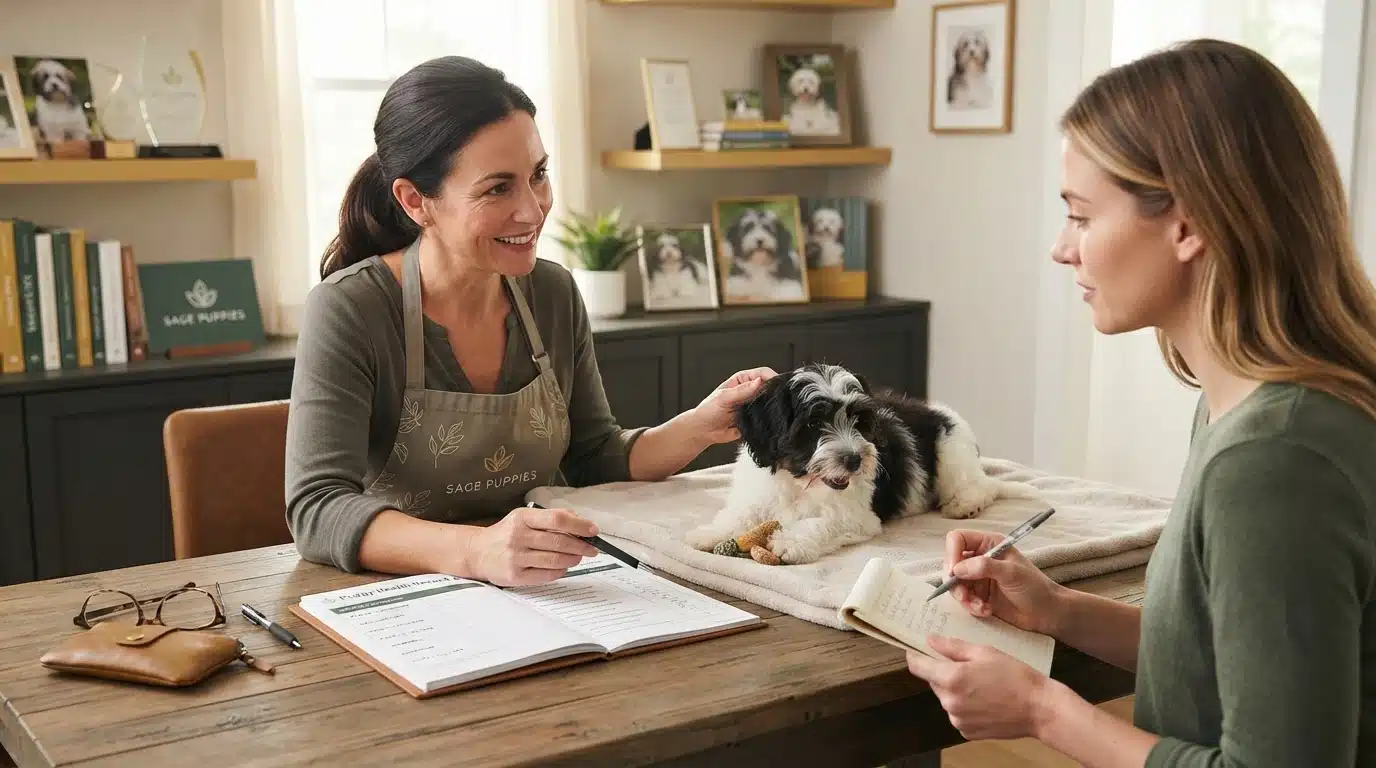
Ask to see age-appropriate care records and the plan for the handoff. Responsible breeders track more than cute milestones.
| Ask for | Why it matters |
|---|---|
| Vaccination and deworming record | Helps your vet continue care on schedule |
| Feeding routine | Avoids a sudden diet change |
| Crate and potty progress | Sets realistic first-week expectations |
| Homecoming guidance | Shows support after pickup or delivery |
The AVMA lists socialization, early training, clean housing, and client care instructions as sound breeding practices in its breeder guidance.
Watch the adults for temperament clues
Meet the mother when possible. A calm, friendly adult dog does not promise every puppy’s personality, but it offers useful context.
Ask how the breeder matches puppies to homes. For delivery, request a live video visit and clear travel details before reserving.
Also Read: 7 Puppy-Friendly States for Finding Responsible Breeders
Step 4: Interview the Breeder, and Notice Whether They Interview You
Ask questions that reveal the breeder’s priorities
A good call should feel like a real conversation, not a quick sale. Ask direct questions, then listen for clear, specific answers.
- Which health tests did each parent complete, and can I see the records?
- How are puppies raised and exposed to home life, grooming, people, and gentle play?
- How do you match a puppy’s temperament to a family?
- What support do you offer after pickup or delivery?
- If our circumstances change, what is your return policy?
Ask how they handle a shy puppy, a family with young children, or a buyer who lives out of state. Honest breeders explain both the joys and the work involved with Havanese, Havapoos, or Cavapoos. The AKC also advises buyers to ask about parent health testing, socialization, vaccine records, contracts, and ongoing contact. See its breeder question guide.

Watch for specifics. “They are all healthy” is not an answer. A responsible breeder can explain their care choices and provide proof.
Treat thoughtful screening as a positive sign
Expect questions about your household, work schedule, children, pets, training plan, and who will handle daily care. This is not a hassle. It shows the breeder wants a safe, lasting match.
The AKC notes that responsible breeders screen buyers to match each puppy with the right lifestyle.
Be honest, especially if this is your first puppy or you need delivery to Kentucky. A breeder who rushes you to pay a deposit but asks nothing about the future home is showing you their priority.
A careful breeder may say a certain puppy is not your best fit. That can be disappointing, but it is often a strong sign of care.
Also Read: 10 Adorable Havapoo Colors You Need to See (2026)
Step 5: Read the Contract, Health Policy, and Return Plan Before Paying
Review the agreement before sending a deposit
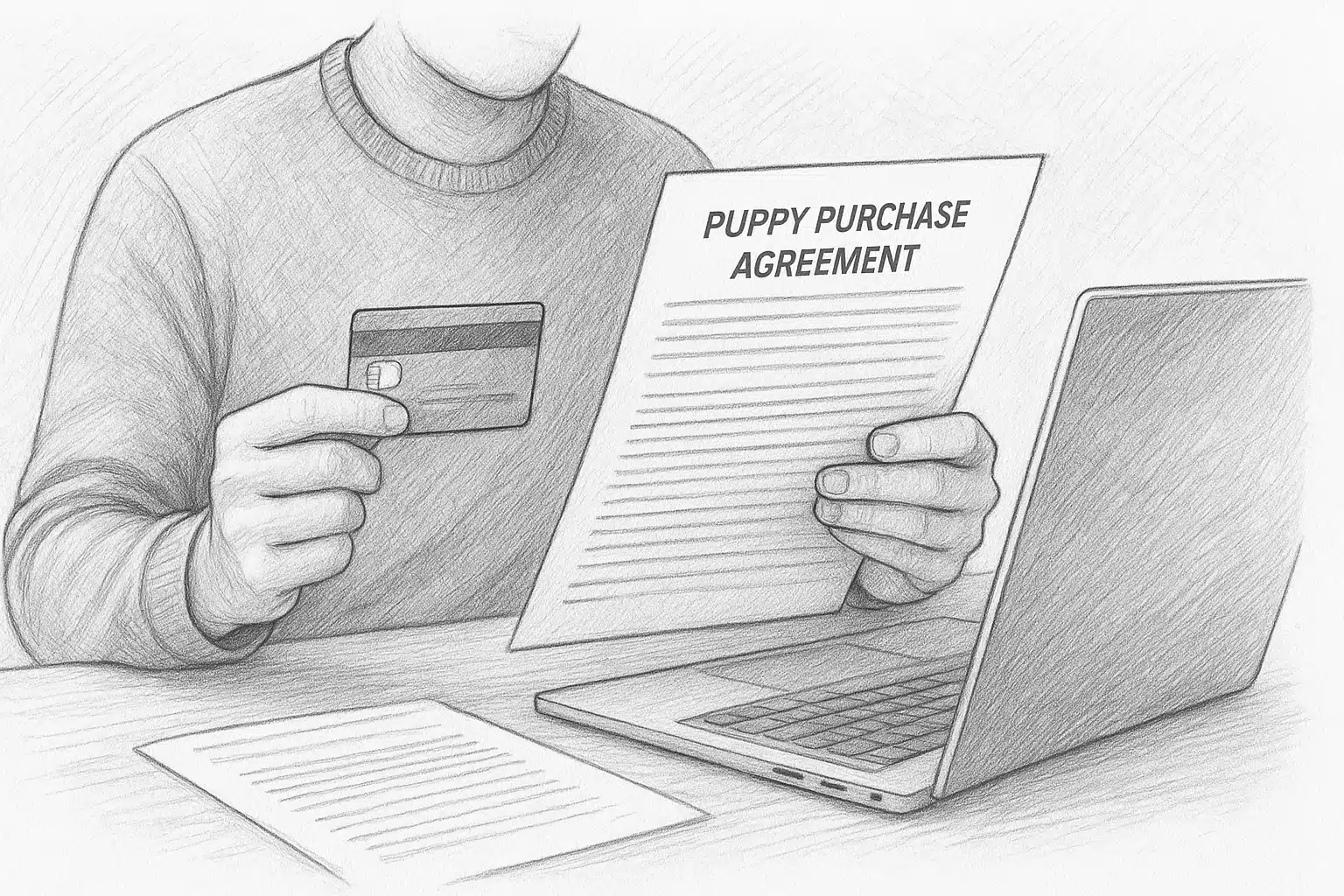
Ask for the full agreement before you send any money. A responsible breeder will not rush you through it or hide key terms in a message thread.
Check that it names the puppy, parents, price, deposit terms, pickup or delivery plan, and each party’s duties. It should also state what happens if the breeder cannot place the puppy or you must cancel.
| Check | What clear language looks like |
|---|---|
| Deposit | Amount, due date, and when it is refundable or transferable |
| Health policy | Covered conditions, time limits, vet exam rules, and remedy |
| Ownership | Registration, microchip details, and any pet-only terms |
| Delivery | Travel date, handoff point, costs, and delay plan |
The AKC recommends reviewing a contract before purchase, not as a last-minute surprise.
Warning: Do not pay a deposit until every promise made in texts or calls appears in writing.
Look for lifelong responsibility, not only a short warranty
A health promise matters, but it is not the whole test. Read what the breeder does if your family cannot keep the dog years from now.
Look for a return-to-breeder or first-contact clause. It should say the breeder will help reclaim or rehome the Havanese, Havapoo, or Cavapoo rather than let the dog be passed to strangers or a shelter.
A responsible contract also explains reasonable care you must provide. The AKC identifies a return-to-breeder clause as a key sign of accountability.
Confirm what comes home with the puppy
Before payment, request a written list of take-home items:
- Vaccination and deworming records
- Parent health records or links
- Feeding and care instructions
- Microchip and registration details, if offered
- Breeder contact information for follow-up
Also Read: How to Check Alabama Puppy Breeder Licensing and Facility Standards
Step 6: Verify Online Reputation and Protect the Transaction
Check whether reviews tell a consistent story
Look beyond the star rating. Read recent reviews on more than one site and watch for repeated details about communication, puppy health records, pickup, and follow-up support.
A few short reviews are not proof of a problem. But copied wording, sudden bursts of five-star posts, or complaints about surprise fees deserve a pause. Search the breeder’s name, phone number, and business name with terms like review, complaint, and scam. The FTC suggests this exact research step for pet listings.
| What you find | What it may mean |
|---|---|
| Specific, varied family stories | More credible feedback |
| Same wording across profiles | Possible fake reviews |
| Clear answers to hard reviews | A breeder who engages openly |
| Reports of lost deposits or added fees | Stop and investigate |
Trust patterns, not one glowing comment or one unhappy post.
Confirm the person behind the listing
Ask for the breeder’s full name, phone number, physical location, and a live call. A responsible breeder should comfortably discuss the puppy, parents, care routine, and how pickup or delivery works.
For a Kentucky search, confirm whether the puppy is actually in Kentucky or coming from another state. Ask for current, puppy-specific proof, not generic photos. A live call where the breeder can answer questions in real time helps confirm the listing is real.
- Reverse-search listing photos.
- Match the name, website, and payment recipient.
- Save messages, the agreement, and every receipt.
Use a payment process that matches the relationship
Read the reservation terms before paying. They should state the amount, what it covers, and when the balance is due. Keep every record.
Avoid gift cards, wire transfers, crypto, or pressure to pay fast. The FTC warns that these payment requests are common scam signs, while credit cards offer a way to dispute a charge if needed. Review the FTC’s pet scam guidance.
A real breeder welcomes careful questions. Pressure is never part of a sound puppy match.
Also Read: Puppy Care Blog & Resources | Sage Puppies
Step 7: Make a Clear Proceed, Pause, or Walk-Away Decision
Proceed when the evidence is specific and consistent
Proceed only when the breeder’s answers match the records, contract, and your own research. You should have clear parent health results, honest details about the puppy’s home life, and a plan for pickup or delivery.
Use this final check:
| Evidence | What “proceed” looks like |
|---|---|
| Parent health | Named tests and records for both parents |
| Puppy care | Clear socialization, vet, and feeding details |
| Communication | Direct answers without pressure |
| Contract | Terms you can read and understand |
| Payment | Traceable method and no rush to pay |
A good breeder also asks about your home and plans. The AKC notes that responsible breeders screen families, not just buyers’ wallets.
Save every message, record, and receipt before sending a reservation payment.
Pause or walk away when core evidence is missing
Pause if one item needs a simple follow-up. Walk away if missing proof becomes a pattern.
Red flags include:
- Health claims with no parent records
- Refusal to show the puppy’s mother or living space
- A contract sent only after payment
- Pressure to use cash, gift cards, or a rushed deposit
- Different names, prices, or stories across messages
Do not let a cute puppy or a short deadline override your checklist. Responsible breeders should answer questions and care where each puppy goes, according to AKC breeder guidance.
A reputable puppy source can handle reasonable questions. If the facts do not add up, protect your family and walk away.

Ready to move from screening breeders to meeting a well-raised puppy? Sage Puppies offers transparent, family-first Havanese, Havapoo, and Cavapoo adoptions, with health-tested parents, early socialization, and clear pickup or nationwide delivery details.
Frequently Asked Questions
Q1: What are the first signs of a responsible puppy breeder in Kentucky?
They share parent details, health records, home-raised care, and clear contact information. They welcome thoughtful questions, ask about your household, and never rush payment or promise a puppy without a good family match.
Q2: What health tests should a responsible breeder in Kentucky perform?
Ask for breed-relevant testing on both parents, such as eye, heart, patella, and genetic screening. Results should be easy to review and tied to the parents, not vague claims about “healthy lines.”
Q3: How can I verify a Kentucky puppy breeder’s reputation online?
Read reviews across several sources, look for dated family updates, and check how the breeder handles concerns. Search for consistent names, photos, and contact details. A real breeder leaves a clear, steady trail.
Q4: Should I pay a deposit before meeting the breeder?
Only after you understand the reservation terms, total price, and refund rules. Use a traceable payment method. Pressure to pay immediately, especially by wire or gift card, is a serious warning sign.
Q5: Can a responsible breeder deliver a puppy from another state?
Yes. Ask who handles transport, how the puppy travels, pickup timing, and what records come with them. Clear delivery plans matter as much as a safe local pickup.
Conclusion
A responsible Kentucky puppy breeder earns trust with proof, not polished posts. Verify each parent’s health testing, ask how puppies are raised and socialized, and look for clear answers about contracts, payments, pickup, or delivery.
Research reviews beyond the breeder’s own site. Watch for rushed deposits, vague parent details, stock photos, or pressure to decide fast.
A breeder should welcome careful questions because the right home matters as much as the sale.
For regulated breeders, USDA standards require a written veterinary care program and dog medical records available for inspection, as outlined in the APHIS veterinary care form. Patience now helps protect your family and your future Havanese, Havapoo, or Cavapoo.