
Quick Summary: Before visiting a California breeder, demand proof-not just photos or promises-like matching health records for both parents, a live video of the puppy’s home, and a contract with clear payment terms. The breeder should explain their breeding choices, show well-cared-for puppies and parents, and let you review all documents before paying, especially since California requires a health certificate for out-of-state puppies. If answers are vague, records are missing, or you feel pressured, walk away-no amount of cuteness justifies skipping these checks. Sage Puppies, for example, emphasizes transparent health testing and home-raised care as key verification steps.
Before you drive from San Diego, Sacramento, or Los Angeles to meet a puppy, know both parents’ names, where to check health results, who stands behind the sale, and how the breeder explains daily care.
The hard part is that polished photos and kind messages do not prove responsible breeding. Families need a clear way to separate solid records from vague promises.
This guide gives you a California-focused Havapoo breeder verification process. You will learn what to request before a visit, how to read health records, which legal papers matter, and what to watch for in person.
It also covers Cavapoo breeder requirements and common warning signs. These checks reflect the questions careful families should ask of any Havanese, Havapoo, or Cavapoo breeder. Strong Havapoo breeder verification protects your time, budget, and future puppy.
Step 1: Establish Who Is Selling the Puppy and Where It Was Raised
Request a Consistent Paper Trail Before You Travel
Ask one plain question first: Who bred this puppy, and where has it lived since birth? A seller should give the same answer by phone, text, video call, and contract.
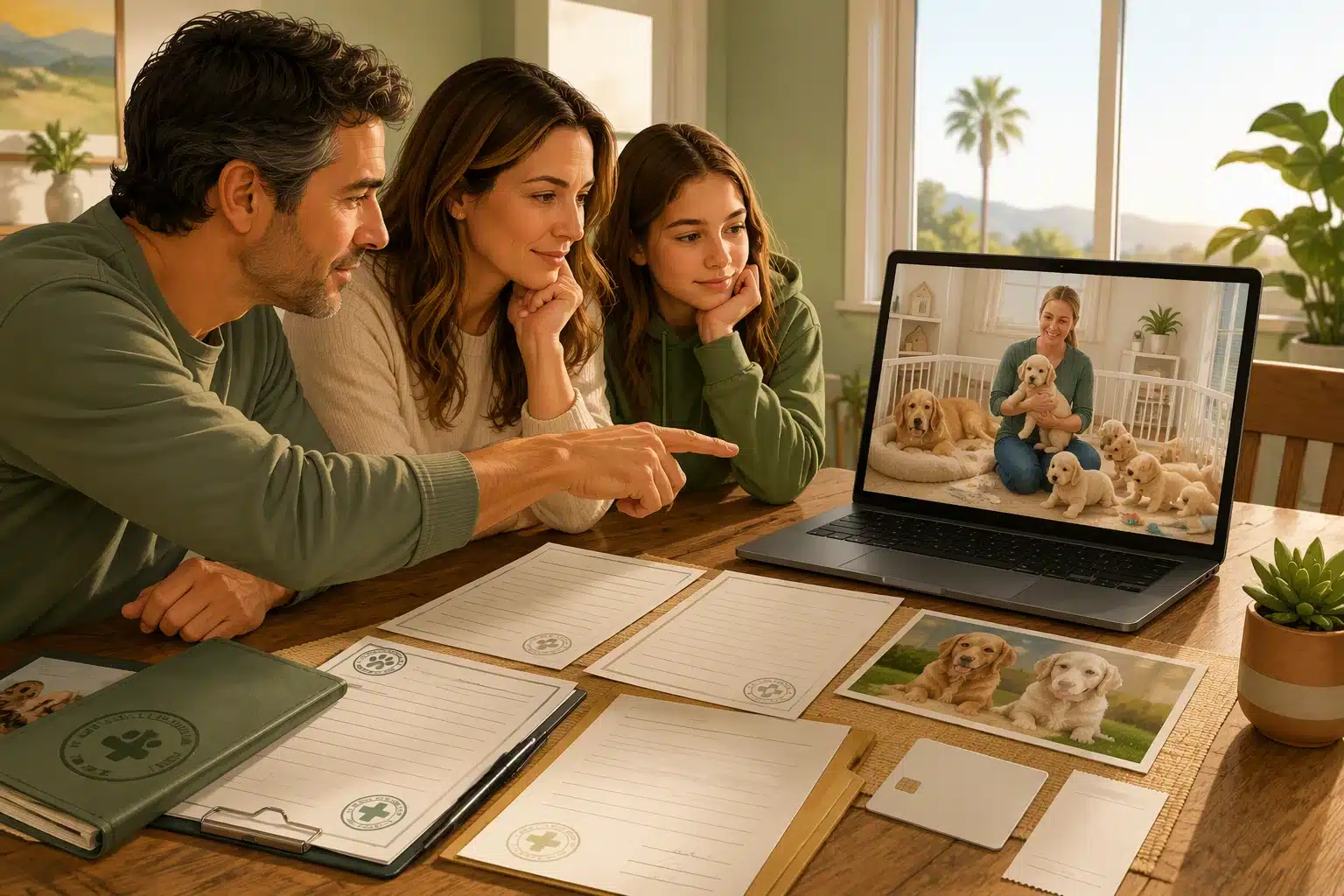
For solid Havapoo breeder verification, request these items before you book travel:
- The breeder’s full name, business name, and physical city
- The puppy’s birth date, litter details, and parents’ names
- A recent live video showing the puppy in its usual space
- Veterinary records that match the puppy’s name, date of birth, and seller
- A sample purchase contract and payment recipient name
| Check | Proceed | Stop and reassess |
|---|---|---|
| Seller identity | Matches records and payment details | Names or locations keep changing |
| Raising location | Clear home or facility shown live | Meeting only in a parking lot |
| Puppy history | Dates and parent details match | Vague answers or missing records |
A breeder may protect home privacy, but they should still clearly explain where puppies are raised and offer a safe way to verify it.
Clarify California Sale and Import Details
If a puppy is coming into California to change owners, ask who handles the health paperwork. California requires a health certificate, also called a Certificate of Veterinary Inspection, completed within 10 days of arrival for dogs entering the state for sale or transfer. Dogs over four months also need a signed, dated rabies certificate, according to California’s pet import guidance.
Ask the seller:
- Is this puppy already in California or traveling from another state?
- Who is listed as the shipper and new owner on the certificate?
- Will I receive copies before pickup or delivery?
For Havapoo breeder verification, the answer should line up with the contract, vet record, and travel plan. Do not accept a promise that paperwork will appear later.
Also Read: 10 Must-Ask Questions Before Buying a Puppy Locally
Step 2: Verify the Parents’ Health Testing, Not Just the Breeder’s Claims
Match Every Result to the Actual Parent
“Health tested” is a starting point, not proof. Ask for records for the specific dam and sire of your planned litter before you visit.
Compare each document with the breeder’s parent profile. Names, breed, sex, date of birth, microchip or registration number, and test date should line up. A clear report for a different dog does not protect your puppy.
- Request the parents’ full registered names and identifying numbers.
- Search each name in the OFA public records database.
- Match the result to the test type, date, and parent shown by the breeder.
- Ask for the original lab report when a result is not public.
OFA notes that normal results submitted to its database are public, while release of abnormal results may depend on owner consent. That makes direct records and calm follow-up questions especially useful.
Tip: A breeder should welcome this review. Save screenshots and reports in one folder before you place a reservation.
| Check | What should match | Why it matters |
|---|---|---|
| Parent identity | Name, sex, microchip or registration ID | Confirms the report belongs to that dog |
| Test result | Test name and clear result | Shows what was actually screened |
| Test date | Date fits the parent’s age | Helps spot old or incomplete records |
Apply the Right Standard to Havanese, Havapoo, and Cavapoo Parents
Health testing should fit the dog being bred. A Havapoo needs review of both Havanese and Poodle family risks. A Cavapoo needs the same care across Cavalier King Charles Spaniel and Poodle lines.
Use the parent breeds to guide your questions. Ask which tests cover hips, patellas, eyes, heart, and breed-relevant DNA risks. For Havanese, also ask about testing for neonatal cerebellar ataxia. OFA explains that affected puppies inherit two copies of the gene, so breeders must plan pairings with both parents’ DNA status in mind.
| Puppy type | Parent lines to review | Ask the breeder for |
|---|---|---|
| Havanese | Havanese | Joint, eye, hearing, and relevant DNA records |
| Havapoo | Havanese and Poodle | Records for both sides, not a generic panel |
| Cavapoo | Cavalier King Charles Spaniel and Poodle | Heart, eye, joint, and DNA records for both sides |
A CHIC number can help because it reflects completion of a breed-specific screening plan with public results. Still, review the underlying reports. A record is useful only if it belongs to the actual parents.
Use Missing or Limited Records as a Decision Point
No database result does not always mean a parent is unhealthy. Some tests use other labs, and records may be private. But vague answers are a reason to pause.
- Proceed when the breeder shares clear, parent-matched results.
- Pause when records are partial but the breeder explains what is missing.
- Walk away when names change, reports do not match, or you are told to “just trust us.”
A healthy-looking parent is not a health-testing record. Verify first, then decide whether a California visit is worth your time.
Also Read: Puppy Care Blog & Resources | Sage Puppies
Step 3: Ask Questions That Reveal Breeding Decisions and Family-Raised Care
Ask Why This Pairing and This Puppy Fit Your Family
Ask, “Why did you choose these two parents?” A careful breeder can explain the match in plain terms: temperament, size, coat, health records, and traits they hoped to support.
Then make it personal:
- Which puppy suits a home with children, a calm adult household, or first-time owners?
- What have you seen in this puppy’s confidence and energy so far?
- What parts of Havanese, Havapoo, or Cavapoo care may be hard for us?
A real answer includes strengths and limits. Responsible breeders should know the breed’s health risks and share how they addressed them through testing and selection, as AKC breeder guidance explains.
A breeder who promises a “perfect” puppy is selling certainty they cannot honestly provide.
Ask How the Puppies Are Raised and Prepared
Get specific. “Family-raised” should describe daily life, not just a photo backdrop.
Ask about:
- Daily handling by adults and children.
- Exposure to normal home sounds, grooming, crates, and car rides.
- Feeding routine, potty habits, and sleep setup.
- What records, supplies, and transition support go home with the puppy.
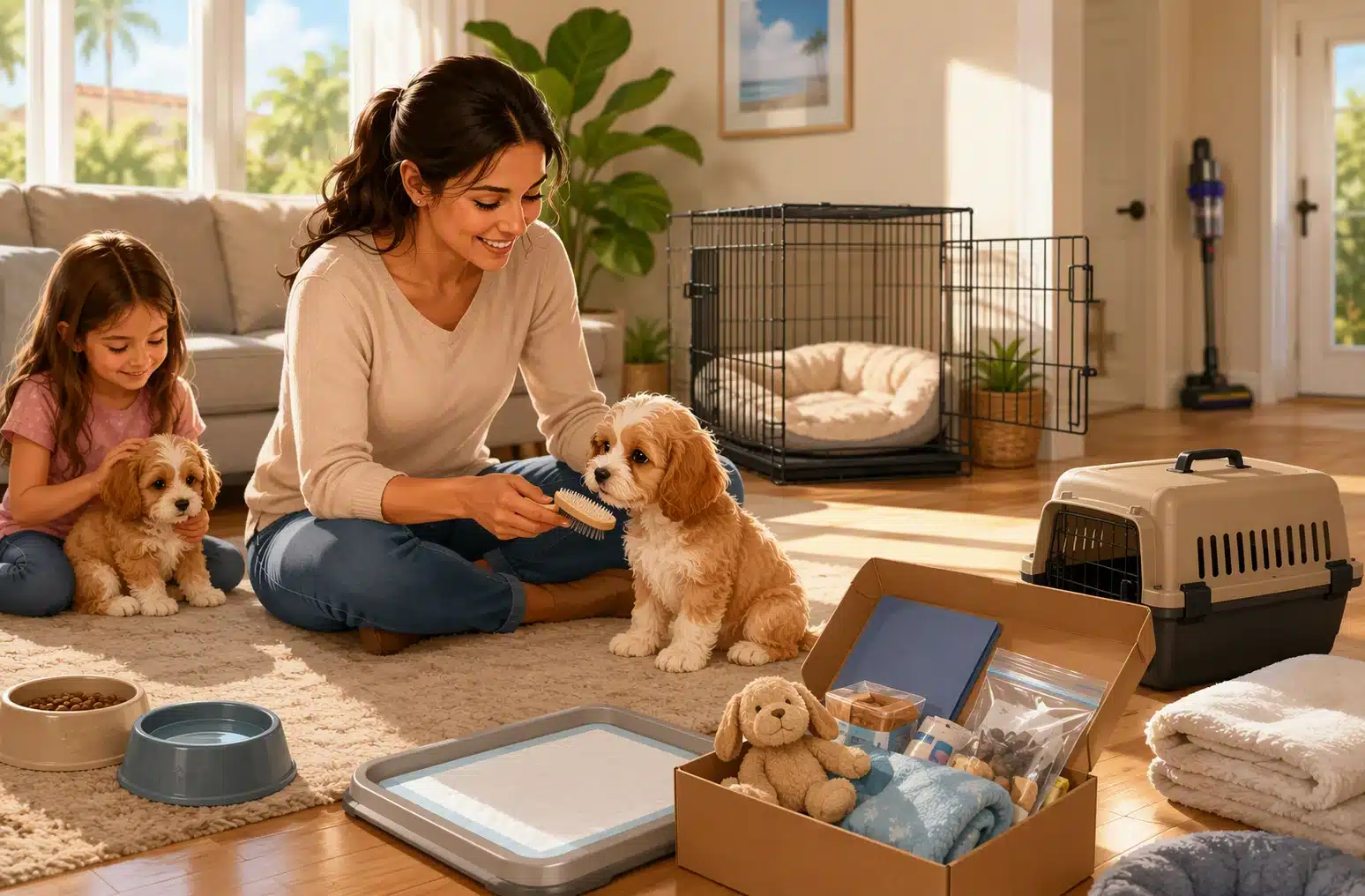
A thoughtful breeder can walk you through the routine without vague claims. Early, safe exposure to people, household life, and handling helps puppies adjust to new homes, according to AKC guidance on early socialization.
Notice Whether the Conversation Is Two-Way
The best breeders interview you, too. They ask about your work schedule, children, other pets, training plan, and who will handle grooming and care.
| What you hear | What it may show |
|---|---|
| “Tell me about your household and routine.” | They want a sound match. |
| “Any puppy can leave this week.” | Slow down and ask why. |
| “Here is what this puppy needs from you.” | Clear, practical placement care. |
At Sage Puppies, a good match matters more than a fast reservation. Welcome questions, but also expect honest ones in return.
Step 4: Use the Visit to Compare the Living Environment With the Story
Observe the Dogs Before You Handle a Puppy
Arrive with your eyes open. Watch the adult dogs and litter before anyone places a puppy in your arms.
Look for calm, curious behavior, clean coats, bright eyes, and normal movement. A shy puppy may simply need time, but repeated fear, coughing, runny noses, or dirty rear ends deserve clear answers.
- Are the parent dogs present and comfortable with the breeder?
- Do puppies have room to rest, play, and move away from noise?
- Does the breeder handle dogs gently and read their cues?
Ask children to wait for permission before touching. California public health guidance says tense posture, cowering, growling, and lip licking can signal that a dog needs space. Safe dog-interaction guidance from CDPH supports a calm, supervised first meeting.
Check the Environment for Consistency and Safety
A home-raised setting need not look perfect. It should look actively cared for.

Compare what you see with the breeder’s earlier claims about social time, routines, and care.
| What you see | What it should support |
|---|---|
| Clean bedding and fresh water | Regular daily care |
| Safe play area and varied surfaces | Early exposure and movement |
| Puppies near normal home sounds | Family-based social time |
| Records ready to review | Open, organized communication |
A little puppy mess is normal. Strong urine odor, crowded pens, stale water, or animals kept out of view are not small details.
Wash hands after the visit, especially before eating. Pets can carry germs even when they look healthy, according to the California Department of Public Health.
Do Not Let the Visit Override the Evidence
A charming puppy can make doubts feel smaller. Do not let one warm moment erase missing proof.
Use a simple decision check:
- Proceed if the visit matches records, parent information, and prior answers.
- Pause if details conflict or documents are delayed.
- Walk away if you feel rushed, blocked from key areas, or pressured to pay today.
Write notes in the car before emotion edits the facts. A responsible breeder welcomes thoughtful questions and gives you room to decide.
Also Read: Puppies for Sale in California: How to Vet Local Breeders
Step 5: Review the Contract, Puppy Records, and Pickup or Delivery Plan Before Paying
Read the Puppy-Specific Records
Ask for records tied to this puppy, not a generic folder for the litter. Names, dates, vaccine details, and the veterinarian’s contact information should match.
Review these before you send final payment:
- Date of birth, sex, color, and ID details
- Deworming and vaccine record
- Vet exam notes, if provided
- Parent health-test results and names
- Feeding routine and care instructions
For puppies entering California to change owners, the state says a health certificate is required and must be completed within 10 days of arrival. See California’s pet import guidance.
Stop if records are blurred, incomplete, use a different puppy’s details, or arrive only after payment.
Separate Registration From Health Evidence
Registration can show a puppy’s recorded lineage. It does not prove the parents passed health tests or that the puppy received proper veterinary care.
| Document | What it can show | What it cannot prove |
|---|---|---|
| Registration papers | Recorded breed and lineage | Health screening results |
| Vet record | Care given to this puppy | Parent genetic health |
| Parent test report | Specific health screening | The puppy’s current condition |

Ask the breeder to explain each result in plain language. A clear answer is a good sign. Evasion is not.
Confirm the Handoff Without Pressure
Get the handoff plan in writing. Confirm the date, place, balance due, and who handles the puppy from start to finish.
- For pickup, confirm the address, timing, and what goes home with your puppy.
- For delivery, ask who transports the puppy, how updates work, and what happens if travel changes.
- Read contract terms on deposits, health concerns, returns, and your duties after pickup.
- Pay only through a traceable method after the details match.
A careful breeder gives you time to read. Sage Puppies families can also review pickup or nationwide delivery details before making final plans.
Never let a claimed “next buyer” rush you past a contract question.
Also Read: 10 Signs a California Puppy Listing Is a Scam – Sage Puppies
Step 6: Make a Calm Proceed, Pause, or Walk-Away Decision
Proceed When the Evidence and Experience Align
Proceed when records match what you were told, the puppies appear clean and well cared for, and the breeder answers hard questions without pressure. Your contract, health information, parent testing, and pickup or delivery plan should all be clear.
For puppies entering California to change owners, the state requires a health certificate completed within 10 days of arrival, according to California public health guidance.
| Decision | What supports it |
|---|---|
| Proceed | Clear records, calm answers, healthy setting, written terms |
| Pause | One missing item or answer that needs proof |
| Walk away | Conflicts, pressure, poor care, or withheld records |
A good breeder welcomes a thoughtful pause. A rushed decision rarely serves the puppy or your family.
Pause or Walk Away When These Patterns Appear
Pause if the breeder needs time to send a record, corrects a simple mix-up, or offers a clear reason for a delayed document. Set a deadline and verify the answer yourself.
Walk away if you see a pattern of concern:
- Parent health testing is vague or cannot be checked.
- The puppy’s age, vaccine record, or parents keep changing.
- You cannot review the contract before paying.
- The breeder pushes same-day payment or blocks reasonable questions.
- The space or puppies appear dirty, fearful, sick, or overcrowded.
Do not let a cute puppy erase a concern that would matter next week.
Choose the Breeder Whose Process Matches Your Values
Choose the breeder whose care standards fit your home, budget, and timeline. The right match feels steady, not sales-driven.
Ask yourself:
- Do the documents support the promises?
- Did the breeder respect our questions?
- Can we follow the plan for pickup or delivery with confidence?
A transparent process, like the family-first approach at Sage Puppies in South Jordan, should make the next step feel informed and calm.

Choose a breeder who welcomes careful questions before you travel. Sage Puppies shares a clear, family-first process for Havanese, Havapoo, and Cavapoo puppies, with health-tested parents, home-raised care, local pickup, and nationwide delivery. Review available puppies, then take the next step when the fit feels right.
Frequently Asked Questions
Q1: What red flags should I watch for when visiting a California puppy breeder?
Watch for rushed visits, dirty housing, fearful puppies, missing records, or pressure to pay fast. A breeder should welcome questions and let you see where puppies live.
Q2: How do I verify a California breeder’s health testing for puppies?
Ask for parent test results, not verbal claims. Check that names, breeds, and dates match the parents. Ask what results mean for your puppy’s likely risks.
Q3: What questions should I ask a California breeder before meeting them?
Ask about parent health tests, puppy care, socialization, contracts, vaccine records, and pickup plans. Also ask what support they offer after your puppy goes home.
Q4: Should I meet the puppy’s parents?
Meet the mother whenever possible. If the sire lives elsewhere, ask for clear records, photos, and temperament details.
Q5: Can a reputable breeder offer delivery?
Yes. Ask who handles transport, travel timing, handoff details, and how the puppy stays safe and comfortable.
Conclusion
Verify the breeder before you fall in love with a puppy. Check parent health records, read every contract, ask direct questions, and watch how the dogs live and respond during a visit.
A clean website, sweet puppy photos, and reviews are not enough. Clear records, calm adult dogs, honest answers, and a written plan for pickup or delivery are stronger signs.
For puppies entering California to change owners, the state requires a health certificate completed within 10 days of arrival, along with rabies records for dogs over four months old, according to California public health guidance.
If a breeder avoids proof, rushes payment, or blocks reasonable questions, walk away.



