Quick Summary: In Illinois, puppy vaccination records should clearly show rabies vaccination details, including vet signature, microchip info, and dates matching the puppy’s age. Key points include verifying the rabies certificate for legal registration and ensuring vaccine series are complete and properly documented. Missing or inconsistent info should be clarified before bringing the puppy home to avoid registration or health issues later.
If you are checking paperwork for a Havanese, Havapoo, or Cavapoo pickup in Illinois, the line that matters most may not be the vaccine itself. It is often the rabies entry and whether the record is complete enough for county registration, your first vet visit, and clear proof of care later.
That is where many families get stuck. Puppy Vaccination Records can look simple, but key details are easy to miss. A date may be there, but not the product name. A vaccine may be listed, but not signed. Rabies paperwork may be separate from the rest of the Puppy Vaccination Records, which creates confusion fast.
This guide fixes that. You will learn how to read Puppy Vaccination Records, spot missing items, match the paperwork to a normal Puppy Vaccination Schedule, and understand the basic Vaccination Record Guidelines that matter in Illinois.
We work with careful puppy families who want to verify records before pickup, not after a problem shows up. That same standard shapes this guide. It is built to help you review Puppy Vaccination Records with confidence, ask better questions, and walk into your new puppy’s first appointment prepared.
What Illinois Requires on a Puppy Rabies Record
Illinois law is clear on the first checkpoint. A dog must be vaccinated against rabies once it is 4 months old or older, and that vaccine must be given by a licensed veterinarian. The law also says the dog needs a second rabies vaccination within one year of the first. After that, timing follows the vaccine’s licensed immunity period and the age at first shot, as outlined by the Illinois General Assembly rabies statute and the Illinois rabies vaccine immunity rule.
If your puppy is under 16 weeks at pickup, it may not have a rabies record yet. That can still be normal.
The rabies record itself should be easy to scan. At minimum, look for the puppy’s identifying details and the vaccine details that tie the shot to that dog. Illinois requires one animal per certificate, and the certificate should include key items such as:
- Dog identification – name, breed, sex, age, and often color
- Microchip number – if the puppy has one
- Vaccination date
- Vaccine product details – manufacturer, serial number, type, and amount given
- Recognized duration of immunity
- Veterinarian signature
- Owner information and county of residence
| Field on record | Why it matters | Red flag |
|---|---|---|
| Puppy identity | Matches the record to your dog | Generic wording like “puppy” only |
| Microchip number | Confirms the right dog if chipped | Chip listed wrong or missing when one exists |
| Vaccine date and product | Shows timing and traceability | No lot or serial details |
| Vet signature | Proves legal administration | Unsigned certificate |
The rabies tag and the certificate work together, not as substitutes. Illinois requires veterinarians who vaccinate dogs to issue a serially numbered rabies tag with the certificate. The certificate proves the medical event. The tag links that event to county animal control records and is honored across Illinois when ownership changes or the dog moves counties.
Ask for both before pickup if the puppy is already old enough for rabies vaccination. If one is missing, ask why.
Also Read: Questions to Ask About Health Records for Massachusetts Puppies
How to Read the Vaccine Dates Without Guessing
Match each shot date to the puppy’s age
Start with the puppy’s date of birth. Then count forward to each vaccine date on the record. This tells you whether the shot was given at a normal age or too early to trust.
A simple check works well:
- Write down the birth date.
- List each vaccine date in order.
- Add the puppy’s age in weeks beside each one.
- Flag anything that looks too early or oddly spaced.
For most puppy records, the early combo shots start around 6 to 8 weeks and repeat every 2 to 4 weeks until about 16 weeks or a little later, based on AAHA canine vaccine guidance. In Illinois, rabies is a separate legal issue. State law says dogs must be vaccinated for rabies at 4 months or more of age by a licensed veterinarian, with a second rabies vaccination within one year of the first, under Illinois rabies law.
If a record shows a rabies shot before 12 to 16 weeks, pause and ask the breeder or vet to explain it.
Separate core vaccines from non-core vaccines
Do not treat every line on the record the same. Some vaccines are expected for almost every puppy. Others depend on lifestyle, travel, boarding, or local risk.
Use this quick table:
| Vaccine type | Common examples on records | What it means |
|---|---|---|
| Core | DAPP, DA2PP, DHPP, rabies | Basic puppy protection most dogs need |
| Non-core | Bordetella, Lyme, canine influenza, some leptospirosis plans | Added based on exposure risk |
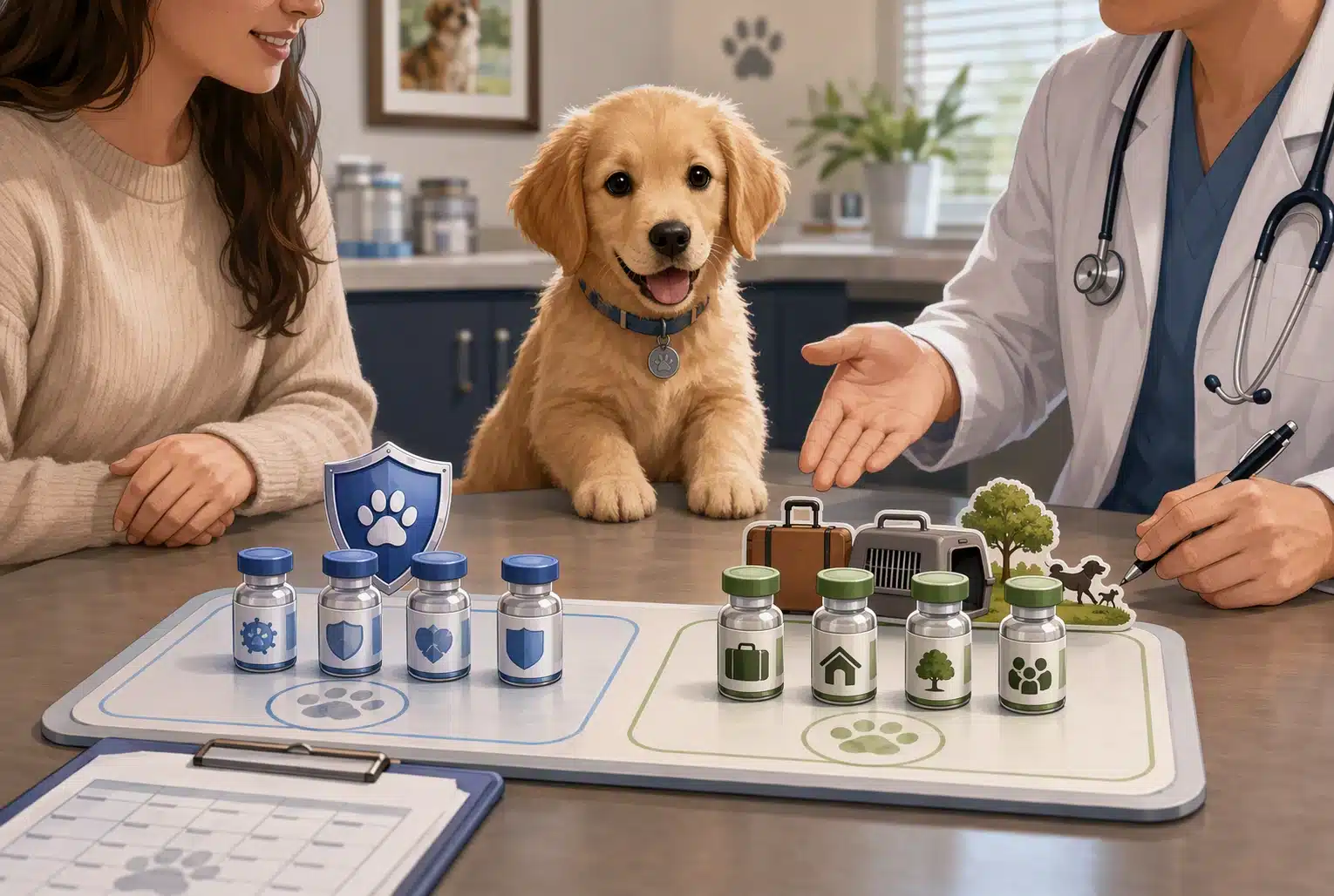
Name changes can confuse buyers. DAPP, DA2PP, and DHPP are all combo vaccines with similar core coverage. What matters is the disease group covered, not just the exact label.
- Core usually covers distemper, adenovirus, parvovirus, and often parainfluenza.
- Non-core may appear early if the puppy was exposed to daycare, transport, or kennel risk.
A longer record is not always a better record. It just may include more risk-based vaccines.
Look for the sequence, not just the names
One vaccine name by itself does not prove the puppy is fully protected. You need the series.
Look for:
- Dates that move forward in a steady pattern
- No missing middle booster
- Rabies listed separately from puppy combo shots
- Lot number, product name, and clinic or vet details when available
A record with one DAPP at 6 weeks and nothing after that is incomplete. A record with DAPP at 6, 9, and 12 weeks shows a clearer plan. That is the difference between a random note and a usable medical record.
Also Read: Puppy Care Blog & Resources | Sage Puppies
How to Verify the Veterinarian, Clinic, and Paperwork Details
Start with the name on the record. In Illinois, rabies vaccine must be given by a licensed veterinarian, and the certificate must be signed by that veterinarian under 510 ILCS 5/8. Match the vet’s full name, clinic name, phone number, and address across every page.
Use this quick check:
| Item to verify | What you want to see | Red flag |
|---|---|---|
| Veterinarian name | Full legal name | First name only or unreadable scribble |
| License status | Active Illinois license | No match in state lookup |
| Clinic details | Working phone, address, website or listing | Missing clinic identity |
| Signature | Vet signature on rabies certificate | Staff initials only |
You can confirm the vet through the Illinois license lookup at IDFPR Check License.
If the breeder says, “Our vet handles all that,” still verify it yourself. A real clinic will not be hard to identify.
A good form should be easy to read and tied to one specific puppy. Illinois law says a rabies certificate should include one animal per certificate, plus the microchip number if the pet has one.
Check for these basics:
- Puppy identity – color, sex, breed, date of birth, and microchip number if implanted
- Vaccine details – vaccine name, lot or serial number, and date given
- Due date – next vaccine date or stated duration
- Owner details – your name, breeder name, or transfer notes if pickup is pending
- Clinic details – date, signature, and contact info
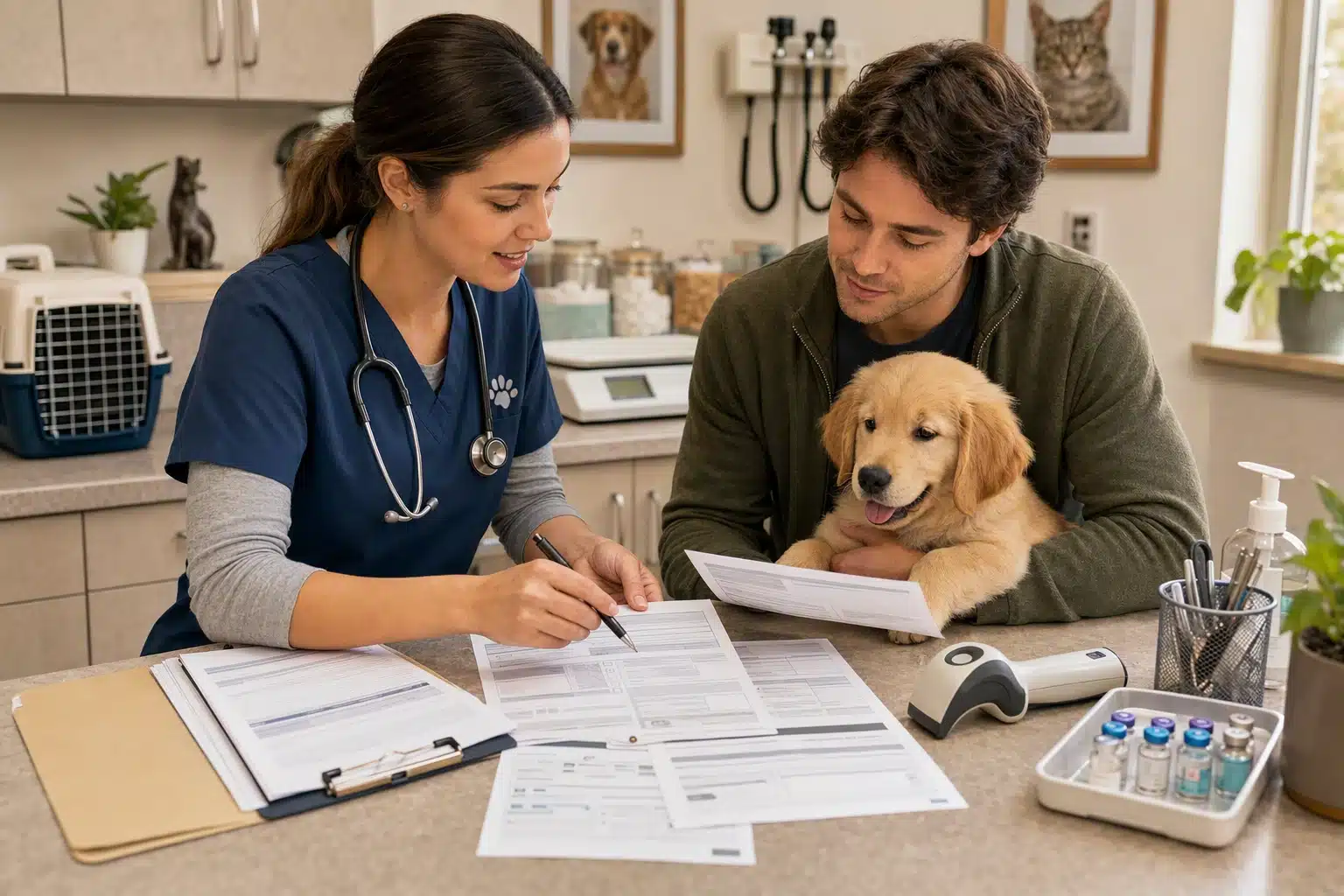
Blurry photos, crossed-out dates, and missing lot numbers do not always mean fraud. They do mean you should pause.
If anything looks thin, ask before pickup, not in the car ride home. Request a clearer scan, a photo of the full page, or written confirmation from the clinic. Keep your questions short:
- “Can you send a legible copy with the vet signature visible?”
- “Can you confirm this microchip number matches this puppy?”
- “Was this vaccine given at your clinic on this date?”
If the breeder is organized, they will answer cleanly. That kind of paper trail matters whether you buy in Illinois or work with a careful program like Sage Puppies and prepare for your first vet visit.
Also Read: How to Verify Puppy Health Records Before Buying in Texas
What Illinois County Registration Usually Needs From the Record
Why counties care about the rabies certificate
Illinois counties focus on the rabies certificate because it ties your dog to a legal vaccine record and tag. State law says dogs 4 months and older must be vaccinated by a licensed veterinarian, and the certificate must be signed and include the microchip number if the dog has one, according to the Illinois rabies inoculation statute. Illinois also honors a valid rabies tag and certificate across counties when ownership changes or a dog moves county to county under Illinois administrative rules.
Counties usually use the record to confirm:
- Owner name and address
- Dog identity – breed, age, sex, color, microchip if listed
- Rabies vaccine date and expiration
- Veterinarian signature
- Tag number, if issued
If your puppy is younger than 4 months, the county may not register a rabies tag yet. The first rabies visit often triggers the county paperwork.
What to keep with your home records
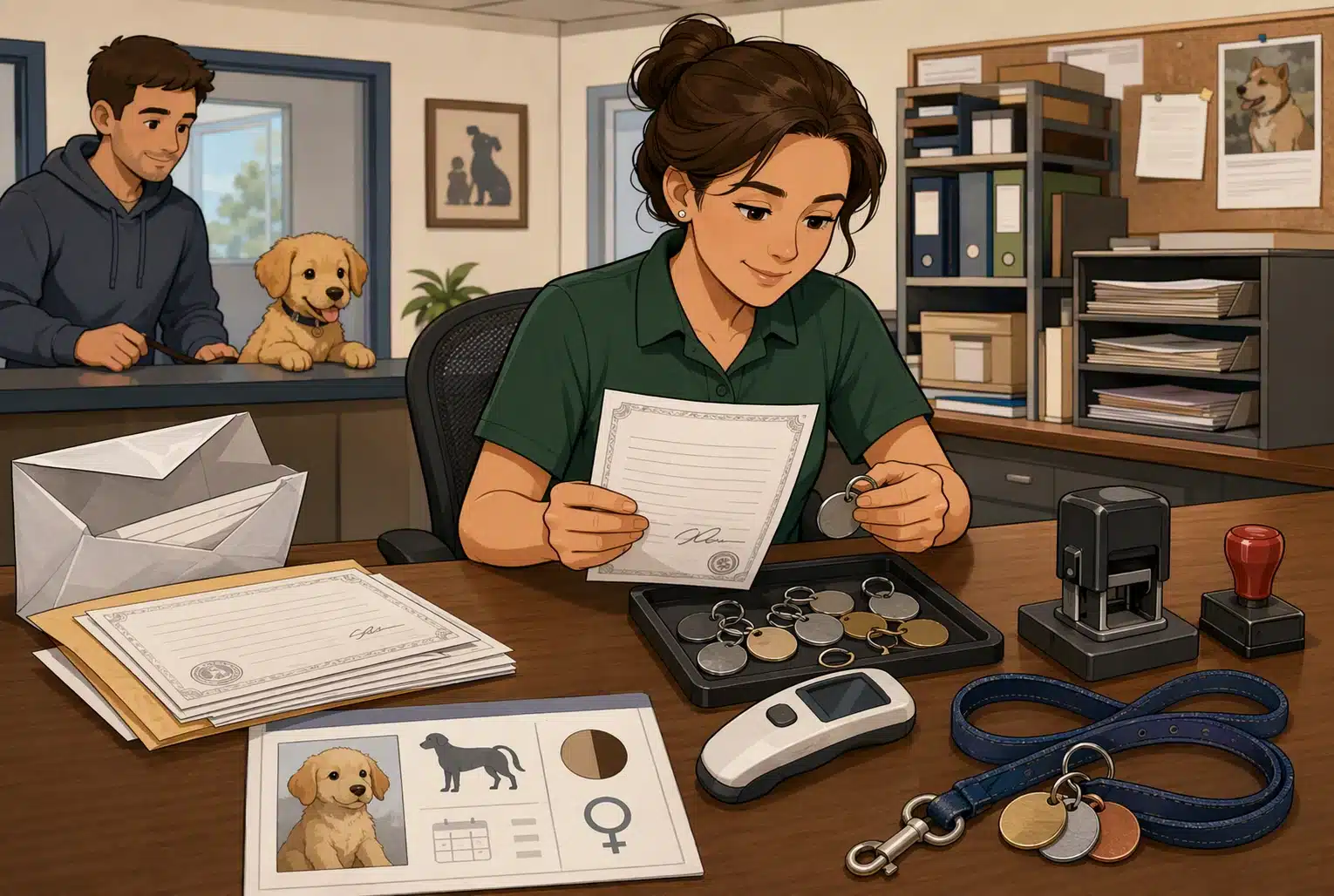
Keep more than the county tag receipt. You want a full paper trail in one folder.
Use this checklist:
- Rabies certificate
- County tag receipt or registration proof
- Puppy vaccine record from the breeder
- Microchip paperwork
- Bill of sale or adoption contract
- First vet exam notes
A simple home file helps when you:
- move to a new Illinois county
- replace a lost tag
- book boarding or grooming
- prove vaccine timing at your first local vet visit
| Record | Why it matters | Keep original or copy |
|---|---|---|
| Rabies certificate | Needed for county tag and legal proof | Original |
| County registration receipt | Shows tag was paid and issued | Copy and digital photo |
| Breeder vaccine record | Helps your vet avoid duplicate shots | Original |
Bring both the breeder record and rabies certificate to your first vet visit. They serve different jobs.
When to contact the county or veterinarian
Reach out right away if anything on the record does not match your puppy.
Call the veterinarian if:
- the vaccine date is missing
- the lot number or manufacturer is blank
- the puppy name or sex is wrong
- the certificate is unsigned
Call the county animal control office if:
- you moved into a new county
- no tag was issued with the rabies vaccine
- you lost the tag
- the county says it cannot read or accept the form
If you are buying from an Illinois breeder, ask for clear copies before pickup. That gives you time to fix errors before registration week.
Also Read: Havanese, Havapoo & Cavapoo Puppy Care Blog
Common Record Red Flags to Catch Before You Buy
Missing or inconsistent information
Bad paperwork usually looks sloppy before it looks fake. Check every line. Illinois law says a rabies certificate must be signed by the licensed veterinarian, list one animal only, and include the microchip number if the pet has one, according to the Illinois Animal Control Act.
Watch for:
- Misspelled owner or breeder names
- Dates that do not match the puppy’s age
- Vaccine stickers with no lot or serial detail
- Blank spaces where the vet signature should be
- One form listing multiple puppies
If a breeder says, “Our vet handles that later,” slow down. Good records should already make sense.
No clear connection between the record and the puppy
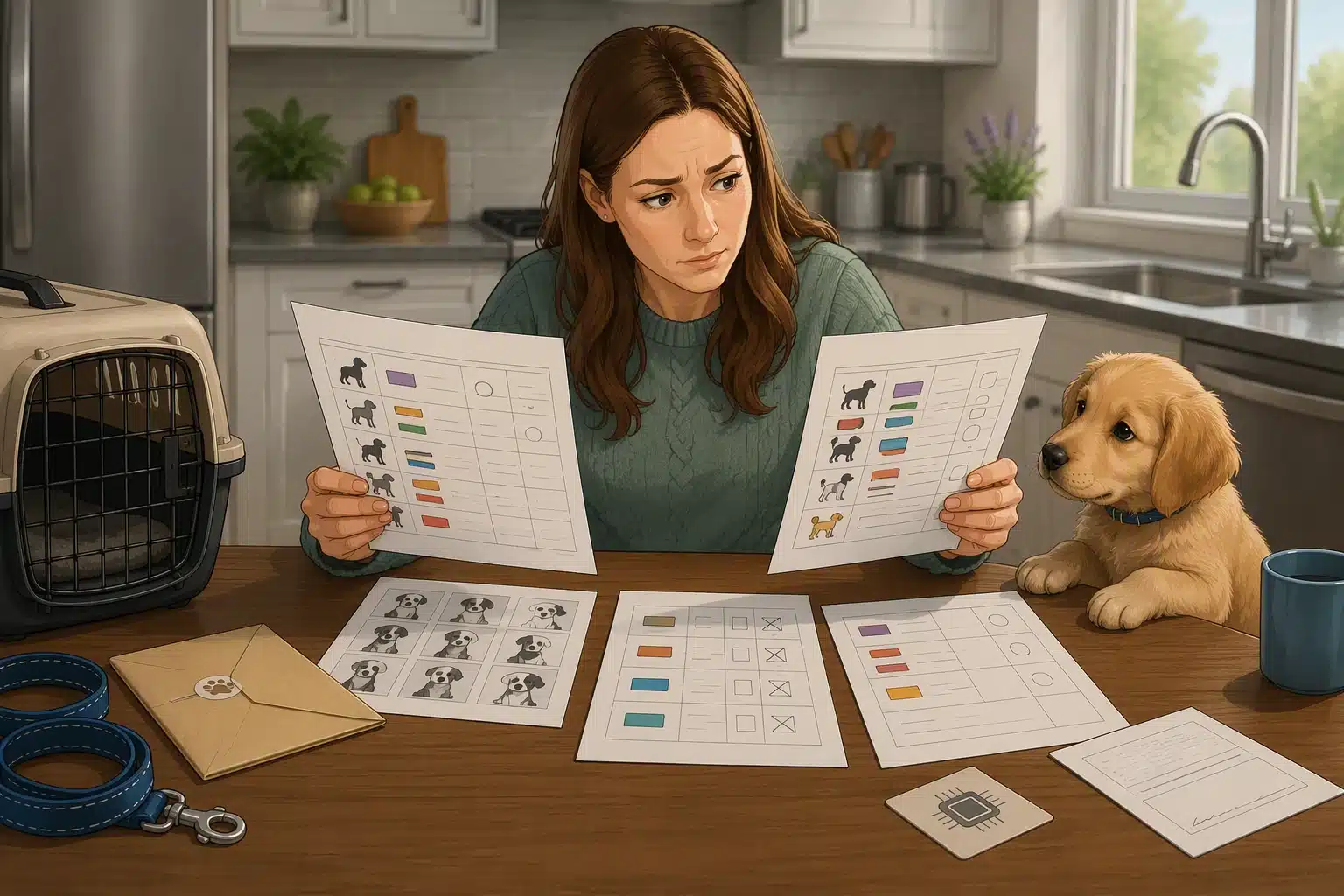
A clean form still fails if you cannot tie it to the puppy in front of you. The record should match the puppy’s breed, sex, color, age, and any microchip or tag details. If the puppy is chippped, ask the breeder to scan it in front of you.
Use this quick check:
| Record item | Must match the puppy | Red flag |
|---|---|---|
| Sex | Male or female | Different than paperwork |
| Breed | Listed breed mix | Vague or wrong breed |
| Color/markings | General appearance | Description fits another puppy |
A photo of the puppy beside the record is helpful, but it is not proof by itself.
Records that cannot support Illinois registration
For Illinois buyers, the problem is not just medical. It is legal and practical. Illinois recognizes out-of-state rabies proof only if the evidence shows the vaccination date, vaccine type, manufacturer, serial number, and dose, per Illinois administrative rules.
If those details are missing, county registration can get messy.
Common trouble spots:
- No rabies certificate from a licensed vet
- No vaccine product details
- No tag or certificate number
- Handwritten notes with no clinic identity
Buyers should ask for corrected records before pickup, not after.

Still unsure what an Illinois puppy record should look like before pickup? Sage Puppies makes the process clearer with a transparent, family-first approach, health-focused breeding, and clear next steps for pickup or delivery. If you want a well-started Havanese, Havapoo, or Cavapoo and paperwork you can review with confidence, explore Available Puppies, Pricing, and How It Works, then submit an application when you are ready.
Frequently Asked Questions
Q1: How can I interpret puppy vaccination records in Illinois for proper pet care?
Read the record line by line. Check the puppy’s name, birth date, vaccine name, date given, and next due date. Match each shot to your puppy’s age. If anything is missing, ask the breeder or vet for a clearer, signed copy.
Q2: What specific vaccination requirements are needed to register a puppy in Illinois?
For most young puppies, routine vaccines help with health records, but rabies matters most for licensing. Illinois generally requires rabies vaccination by the age set by law and a licensed veterinarian must give it. Local counties or cities may add license timing rules.
Q3: How do vaccination records impact puppy registration and licensing in Illinois?
Vaccination records prove your puppy received needed care and help your vet continue the schedule without repeats. For licensing, the rabies certificate usually carries the most weight. If dates, tag numbers, or clinic details do not match, registration or licensing can stall.
Q4: What should I do if the breeder record looks incomplete?
Ask for the original vet invoice, medical chart, or signed vaccine summary. Confirm whether a veterinarian or breeder gave each vaccine. If the form still feels vague, bring it to your first vet visit and have your vet rebuild a safe schedule.
Q5: Can I use a breeder shot record at my first vet visit?
Yes, and you should. Bring every page, including deworming notes and any product stickers. Your vet will decide which entries count, what needs repeating, and when the next vaccines are due. Clear paperwork saves time and helps avoid missed protection.
Conclusion
Reading a puppy vaccination record in Illinois gets easier once you know what to look for. Check the puppy’s name or ID, vaccine names, dates given, due dates, lot numbers, and the clinic or veterinarian signature. If anything is missing, ask before pickup.
The biggest point is rabies timing. In Illinois, dogs 4 months and older must be vaccinated against rabies by a licensed veterinarian, and the certificate should tie back to that official record under Illinois law. A first rabies shot given under 1 year of age still needs revaccination within 1 year, even if the product is labeled for 3 years, based on the Illinois administrative rule.
A clean record should make sense at a glance. Dates should line up, the puppy’s age should fit the schedule, and every vaccine entry should point to a real provider.
If the paperwork feels unclear, treat that as a sign to pause and verify.