
Quick Summary: Fake Indiana puppy ads often look real but use urgent language, stolen photos, and ask for risky payments like gift cards or wire transfers. Verify sellers through live video calls, check their location and health records, and avoid rushing or paying before seeing the puppy. Trusted breeders like Sage Puppies provide transparent, verified processes that help buyers avoid scams and find healthy puppies safely.
You spot a sweet Indiana puppy ad on Facebook or a classifieds site. Then the seller pushes for a deposit today and will only text. That is where many families walk straight into a Puppy Scam.
The hard part is that Fake Puppy Listings often look real at first. They use cute photos, low prices, and rushed messages to get money fast. A Puppy Scam can cost you cash, time, and a lot of stress.
This guide gives you a simple Puppy Ads Review process before you pay anything. You will learn what to check, what questions to ask, how to verify an Indiana seller, and which payment methods help protect you. You will also see the red flags that often point to a Puppy Scam.
We work from the breeder side of this process and know what a real, careful puppy placement looks like. If you want the safer path from the start, read our parent guide and compare that process with trusted options like Sage Puppies.
Step 1: Read the Listing for Pressure, Not Just Puppy Photos
Start with the words, not the face. Scam listings often push you to act before you think.
Check whether the wording feels copied, vague, or unusually urgent
Read the ad once for facts, then once for pressure. A solid puppy listing should tell you the breed, age, location, parents, health steps, and how pickup or delivery works. A weak one leans on emotion.
Watch for phrases like:
- “Last chance today”
- “Need deposit now”
- “Free puppy, just pay shipping”
- “Ready to go anywhere immediately”
The Indiana Board of Animal Health warns buyers to watch for odd phrasing or typos, stolen photos, and upfront payment demands in online puppy ads in its consumer advisory.
If the ad creates panic before it gives real details, treat that as a red flag.
Inspect the photos for reused or mismatched images
Cute photos can hide a fake listing. Look for signs the images were pulled from different places:
- different backgrounds in every shot
- different puppy ages in the same ad
- one polished studio photo mixed with blurry phone pictures
- cropped watermarks or odd edges
Run a reverse image search on at least one photo. If the same puppy shows up on unrelated sites, stop.
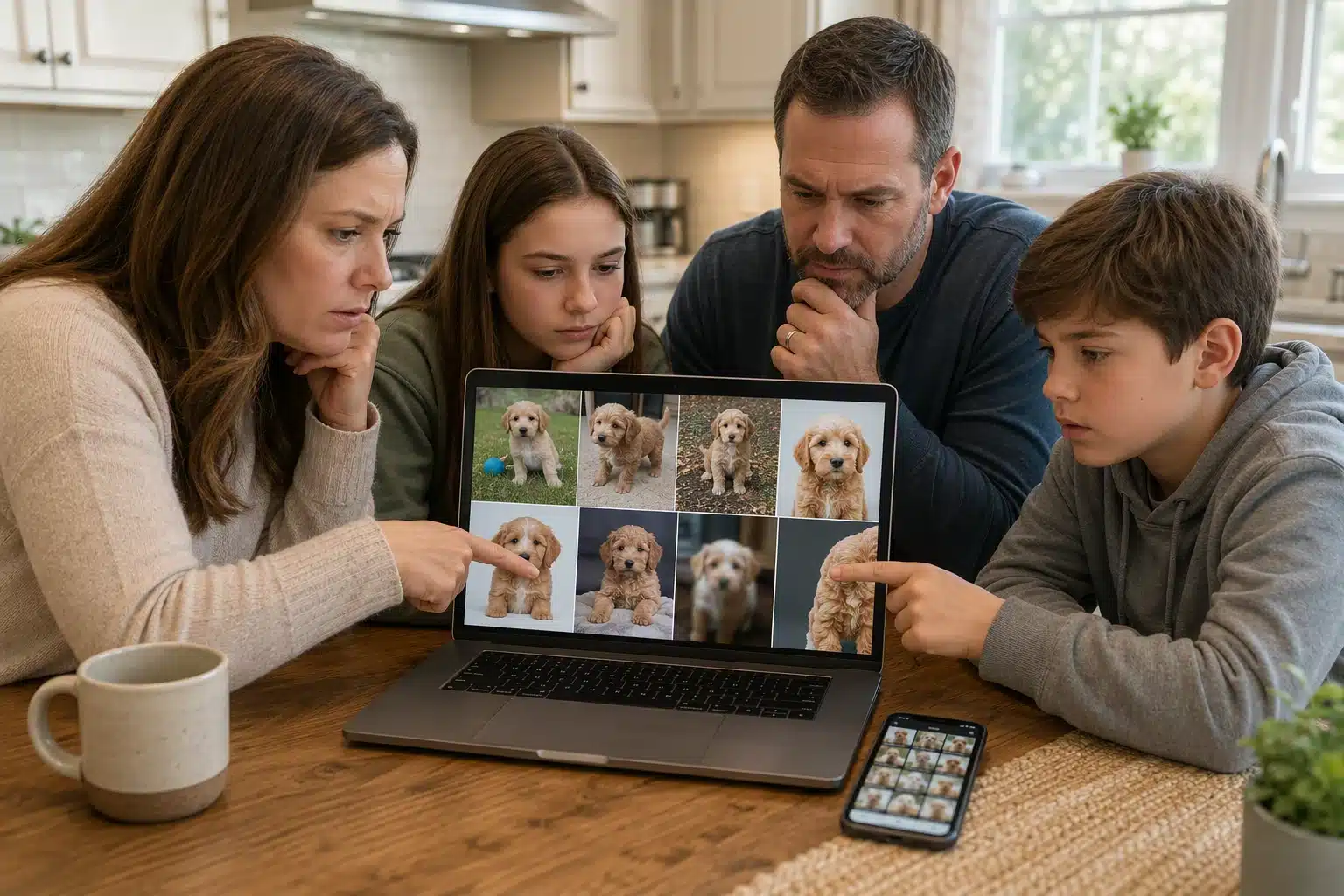
A 2026 news report citing BBB research says 80 percent of online pet ads may be fake and recommends reverse image search plus extra caution with urgent listings and emotional wording in this report.
| Photo clue | What it may mean | What to do |
|---|---|---|
| Same puppy on other sites | Stolen image | Walk away |
| Different ages in one ad | Mixed photo set | Ask for a live video call |
| No photo with breeder | Low transparency | Ask for current, dated photos |
Treat the price and payment setup as a signal
A low price can be bait. So can a fair price paired with strange payment rules.
Check the setup:
- Compare the price to similar Indiana listings.
- Ask what the fee includes.
- Refuse wire transfers, gift cards, or rushed app payments.
- Be careful with extra shipping, crate, permit, or insurance fees.
BOAH says wire transfers and gift cards are major scam signs. It also states that government agencies do not charge fees for pet movement within the U.S.
Also Read: Puppies for Sale in Indiana: A Buyer’s Local Checklist
Step 2: Verify the Seller Before You Trust the Conversation
A legit puppy seller will not hide behind text. The FTC says reputable breeders should welcome an in-person, phone, or video meeting, and refusing that is a major red flag in FTC consumer advice.
Require a real-time phone or video conversation
Ask for a live call before any deposit. Not later. Right away.
During the call, look for simple proof:
- The seller says their full name clearly
- They show the puppy live, not just photos
- They can pan to the room, crate, food, and littermates
- They answer basic questions without dodging
Use this quick check:
| What you ask | Good sign | Bad sign |
|---|---|---|
| Can we talk by phone today? | Gives a real number and calls | Stays in email or chat only |
| Can you video the puppy live? | Shows the puppy in real time | Sends old clips or excuses |
| Can I see the mom or setup? | Shows what is available honestly | Changes the subject |
If the voice, name, ad details, and puppy story do not match, stop.
Confirm the physical location and who actually owns the puppies
Get the full street address, not just “near Indianapolis” or “can deliver anywhere.” Then ask who owns the litter. Some scammers copy another breeder’s photos and act like they are the breeder.
Ask:
- Is this your home, kennel, or a broker’s location?
- Do you own the puppy right now?
- Who bred the litter?
- Can you show the puppy at that address live?
A trustworthy seller can explain the chain clearly. If they say the puppy is in Indiana but the phone number, payment name, and pickup story all point somewhere else, slow down.
A real breeder process should feel steady, clear, and easy to verify.
Cross-check the seller name, reviews, and history
Search the seller’s name, phone number, business name, and email with words like review, scam, and complaint. The FTC also tells buyers to research the seller this way, and the FBI reported about 2,600 puppy scam complaints and about $5.6 million in losses in the first nine months of 2024 in its holiday scam warning.
Check for:
- Reviews spread over time, not all posted in one week
- The same breeder name across website, social pages, and payment account
- Old posts, past litters, and normal buyer questions
- No sudden account creation or copied wording
If you are comparing breeders, look for a process with clear pickup or delivery details, health records, and real family communication, like you would expect from a transparent program such as Sage Puppies.
Also Read: Reputable Puppy Breeder Near Me: 7 Signs You Can Trust
Step 3: Confirm the Puppy Exists and the Story Matches the Paper Trail
This step cuts out a huge share of puppy ad scams. You need proof that the puppy is real, available now, and tied to records that make sense. If the seller avoids simple checks, walk away. For the full buyer path, go back to the parent guide, How to Spot Legit Indiana Puppy Ads Before You Pay.
Ask for live proof of the puppy and litter
Ask for a live video call, not just clips. During the call, have the seller:
- Show the puppy up close
- Pan to the mother and littermates
- Say today’s date and your name out loud
- Show the space where the puppies are raised
- Pick up the puppy and show its face, teeth, paws, and tail
Pre-recorded video is not enough. Scammers often recycle photos, reuse old footage, or claim the camera is broken. The BBB scam example shows how fast fake sellers push buyers to pay while giving shifting details and excuses about delivery and payment names in a reported puppy scam pattern.
If the seller says, “We do not do calls for biosecurity,” ask for a fresh one-take video made that day. No real seller should act offended by basic proof.

Compare age, breed, and availability claims carefully
Now match the ad to the story. Look for small gaps, because scams hide in small gaps.
Use this quick check:
| Claim in ad | What to verify | Red flag |
|---|---|---|
| Puppy age | Birth date matches records and ready date | “8 weeks” changes in messages |
| Breed mix | Photos, parent dogs, and paperwork align | Seller cannot show parents |
| Location | Indiana city matches pickup details | Different state suddenly appears |
| Availability | Puppy is still open and not “reserved twice” | Pressure to pay immediately |
Indiana also regulates commercial dog breeders and brokers, so a seller’s business story should match how they operate under Indiana’s dog breeder law. If they say they are small and home raised, but they list dozens of breeds and always have puppies ready, question it.
A real breeder’s details stay boring and consistent. Scammers keep revising the story.
Ask for records that should exist in a legitimate sale
Before you send money, ask for the records that should already exist:
- Vet record for the puppy
- Vaccination and deworming dates
- Date of birth
- Sale contract
- Parent information
- Pickup or delivery terms
- Microchip info, if already placed
Put the details side by side.
| Record | Should match | Why it matters |
|---|---|---|
| Vet sheet | Puppy description, age, sex | Confirms identity |
| Contract | Seller name, puppy name, price | Confirms who is selling |
| Health notes | Vaccine dates and timing | Flags fake timelines |
| Transport plan | Pickup or delivery story | Exposes bait-and-switch |
Federal rules require certain dealers to keep records that identify the dog’s breed, sex, age, markings, source, and disposition under 9 CFR 2.75 recordkeeping rules. If the paper trail is missing, messy, or full of edits, stop there.
Step 4: Use Indiana-Specific Checks Before You Send a Deposit
Start local. A scam ad can look polished, but Indiana gives you a few facts you can test before money leaves your account. If you missed the bigger screening process, go back to the parent guide on spotting legit Indiana puppy ads before you pay.
Look for registration and business details that can be verified
Ask the seller for their full legal name, business name, city, phone number, and where the puppy is being raised. Then check if those details stay the same across the ad, invoice, texts, and payment request.
Indiana also regulates some larger dog businesses. The 2024 code says a commercial dog breeder, broker, retail pet store, animal care facility, or animal rescue operation must be registered with the board in certain cases under Indiana Code Article 21.
Use this quick check:
| What to verify | Good sign | Red flag |
|---|---|---|
| Name and address | Same everywhere | Changes between messages |
| Indiana business details | Clear and checkable | Vague or hidden |
| Puppy age | Matches records | Seller dodges the question |
A strong seller should answer basic questions fast, without pressure.
If the seller will not share a real location or keeps moving the pickup point, pause the deal.
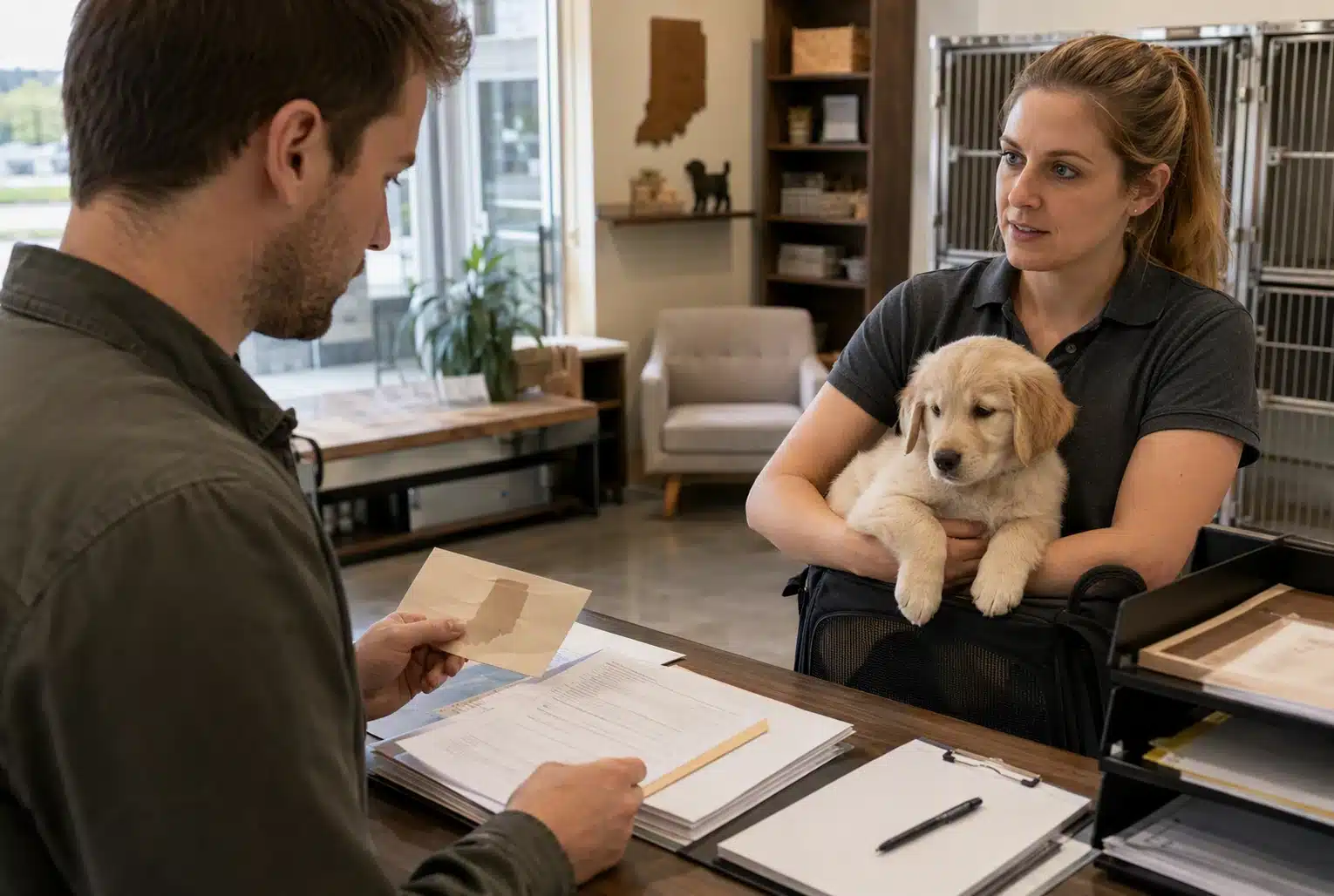
Treat shipping add-ons and transport delays as a major scam trigger
Indiana officials have warned buyers about this exact pattern. In a 2025 consumer advisory, the Indiana State Board of Animal Health said scammers often demand extra transport fees, claim the puppy is stuck in transit, or invent permit costs. The same advisory states that government agencies do not charge fees for pet movements within the United States according to BOAH’s puppy scam warning.
Watch for these triggers:
- A low deposit, then surprise crate or insurance fees
- A message saying the puppy is held at an airport
- A demand to pay fast by gift card, wire, or app
- A new “agent” contacting you after you already paid
One surprise shipping fee is bad. A chain of new fees almost always means stop.
Prefer sellers who invite pickup or a real visit
The safest Indiana ad usually leads to a real pickup plan. If the puppy is entering Indiana, state rules require a certificate of veterinary inspection issued within 30 days before movement into the state, as shown in Indiana entry requirements.
Ask for:
- Pickup address
- Date the puppy is ready
- Health record copy
- Video of the exact puppy that day
Sellers who welcome pickup, or at least a real visit, act more like responsible breeders and less like ad-only middlemen. That is also why many families prefer a transparent process from an established program like Sage Puppies, where pickup or clearly explained delivery is part of the process, not a last-minute surprise.
Also Read: 10 Adorable Havapoo Colors You Need to See (2026)
Common Mistakes to Avoid
Trusting urgency over verification
Scam ads try to rush you. They say three families are waiting, the puppy ships today, or the price ends in an hour. The FTC warns that scammers use pressure to push people into fast payment and bad choices in its pet scam alert.
- Slow the conversation down
- Ask for the breeder’s full name, address, and live proof
- Walk away if the tone turns pushy
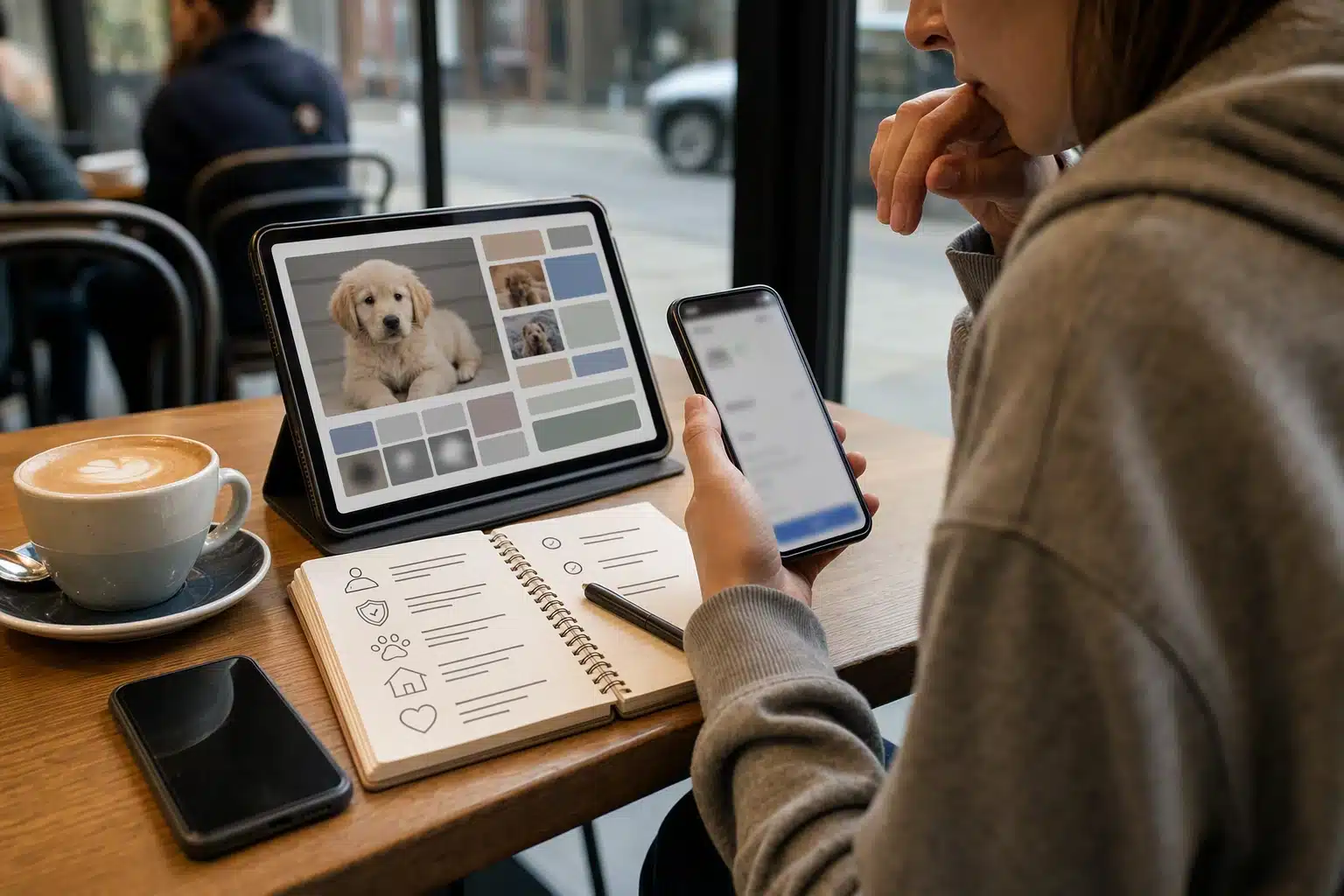
Paying before you have seen the puppy live
Do not send a deposit until you have seen the puppy in a live video call. You should also see the seller respond in real time, not with pre recorded clips. A real breeder can show the puppy moving, being handled, and reacting naturally.
- Ask to see the puppy live
- Ask to see the mother if possible
- Ask for today’s date spoken on camera
- Refuse gift cards, wires, crypto, or payment apps for rushed deposits
If the seller keeps adding shipping, crate, or insurance fees, stop.
Assuming a website or badge proves legitimacy
A polished site means very little. Scam sellers can copy logos, reviews, and fake trust badges in minutes. The FTC says fake webpages and stolen pet images are common in its 2026 warning.
| Looks legit | Still needs proof |
|---|---|
| Nice website | Live video call |
| Review badge | Verifiable address |
| Health claim | Real vet records |
Also Read: 10 Must-Ask Questions Before Buying a Puppy Locally
What to Do When a Puppy Ad Fails the Check
Stop paying and document everything
If a puppy ad feels wrong, stop all payment right away. Do not send a deposit, “refundable” shipping fee, or ID photo. Save the full ad, seller profile, texts, emails, payment requests, and any puppy photos.
Use this quick list:
- Take screenshots with dates visible
- Save the web address
- Write down names, phone numbers, and handles
- Keep receipts, transfer records, and voicemails
If the seller starts pushing you harder after questions, treat that as part of the warning.
Report the listing through the proper channels
Report the ad where you found it first, like Facebook, Craigslist, or the puppy site. Then file a fraud report with the FTC at ReportFraud.gov. The FTC says reports help law enforcement spot patterns and investigate scams.
Indiana shoppers can also file a complaint with the Indiana Attorney General consumer division, especially if money was requested through an online listing.
| Where to report | Best for | What to include |
|---|---|---|
| Listing platform | Getting the ad removed | Ad link, seller profile, screenshots |
| FTC | National scam tracking | Payment method, messages, timeline |
| Indiana Attorney General | State consumer complaint | Business details, loss amount, records |
Restart your search with a verified breeder process
Start over with a breeder who welcomes checks, not one who avoids them. Look for a clear process:
- Application before payment
- Real phone call or live video
- Health records and parent details
- Written pickup or delivery steps
- Transparent pricing and reservation terms
A breeder with a calm, open process is usually safer. That is the kind of path families should expect from trusted programs like Sage Puppies.

If you want a safer path than sorting through risky Indiana puppy ads, start with a breeder that shows you the process upfront. Sage Puppies gives families clear next steps, health-tested parents, home-raised puppies, and transparent pickup or delivery details, so you can move forward with confidence instead of guessing.
Frequently Asked Questions
Q1: What are the key red flags to identify fake Indiana puppy ads before making a payment?
Watch for prices far below normal, copied photos, vague locations, rushed sales, and sellers who refuse live video. A scammer often asks for deposits by Zelle, gift cards, or crypto and avoids clear answers about parents, health records, or pickup.
Q2: How can I verify if Indiana puppy breeders are legitimate and trusted?
Ask for a live video call with the puppy, review health paperwork, confirm the breeder’s full name and address, and check whether communication stays consistent. A real breeder welcomes questions, explains their process, and does not pressure you to send money fast.
Q3: What are the best practices to spot scams in online Indiana puppy ads?
Use reverse image search, compare ad details across sites, and ask for a same-day custom video with your name spoken aloud. Keep all messages in writing. If anything feels off, pause. Good breeders respect careful buyers and clear verification steps.
Q4: Is it safe to pay a deposit for a puppy I have not met yet?
It can be, but only after you verify the breeder, puppy, and terms in writing. Use a traceable payment method tied to a clear agreement. Never send a deposit just to “hold” a puppy when basic proof is still missing.
Q5: What should a trustworthy breeder explain before I commit?
You should get clear answers on parent health testing, puppy age, socialization, pickup or delivery, pricing, and what happens next. Breeders like Sage Puppies make the process easy to follow, not confusing, rushed, or hidden behind short text replies.
Conclusion
A legit Indiana puppy ad should hold up under slow, simple checks. Verify the seller’s real location, ask to see the puppy and parents, confirm health records, and match every detail across the ad, website, and direct messages. If the seller pushes wire transfers, gift cards, or surprise shipping fees, stop. The Indiana State Board of Animal Health warns that scammers often use stolen photos, ask for upfront payment, and invent transport charges, while government agencies do not charge fees for pet movement within the U.S. according to this Indiana BOAH consumer advisory. Careful buyers avoid pressure, keep records, and choose breeders with a clear, transparent process from first contact to pickup.



