Quick Summary: To verify a puppy’s health records in Texas, ask for the full packet including vaccination, deworming, vet exam, and microchip details before paying. Match these records to the puppy’s physical traits and ensure dates, signatures, and clinic info are consistent with Texas regulations. Incomplete or vague paperwork should raise red flags, and consulting your vet can help confirm accuracy before finalizing the purchase.
Before you send a deposit on a puppy in Texas, skip the cute photos for a minute. The fastest trust check is whether the breeder can show complete Puppy Health Records for that exact puppy, with dates, vet details, and ID numbers that match. That is where many buyers get stuck. Papers can look official but still miss key facts, belong to a different litter, or fail a basic Puppy Health Check.
This guide shows you how to Verify Puppy Health records step by step. You will learn what Puppy Health Records should include, how to match them to the puppy in front of you, and which gaps should make you pause.
We work from a buyer-first view shaped by real breeder paperwork, Texas rules, and the standards careful families expect. Good Puppy Health Records should make your choice clearer, not harder.
1. Start with the full document packet, not just a vaccination receipt
Ask for the full packet before you pay a deposit, not one photo of a shot record. In Texas, an official rabies certificate has required fields like the puppy’s identifying details, vaccine product, serial number, vaccination date, revaccination date, and the veterinarian’s signature and license number under Texas rabies rules.
What a legitimate packet should include
A real packet usually has more than one page. Ask for:
- Vaccination record
- Deworming record
- Vet exam or health check note
- Microchip details, if the puppy is chipped
- Sales contract
- Breed registration papers, if promised
- Parent health testing summary, if advertised
- Travel health certificate, if the puppy is being shipped or driven across state lines
If the puppy is entering Texas at 12 weeks or older, state guidance says it must come with a signed rabies vaccination certificate that meets Texas entry rules, according to Texas DSHS pet entry requirements.
How to check that the paperwork belongs to the puppy you are buying
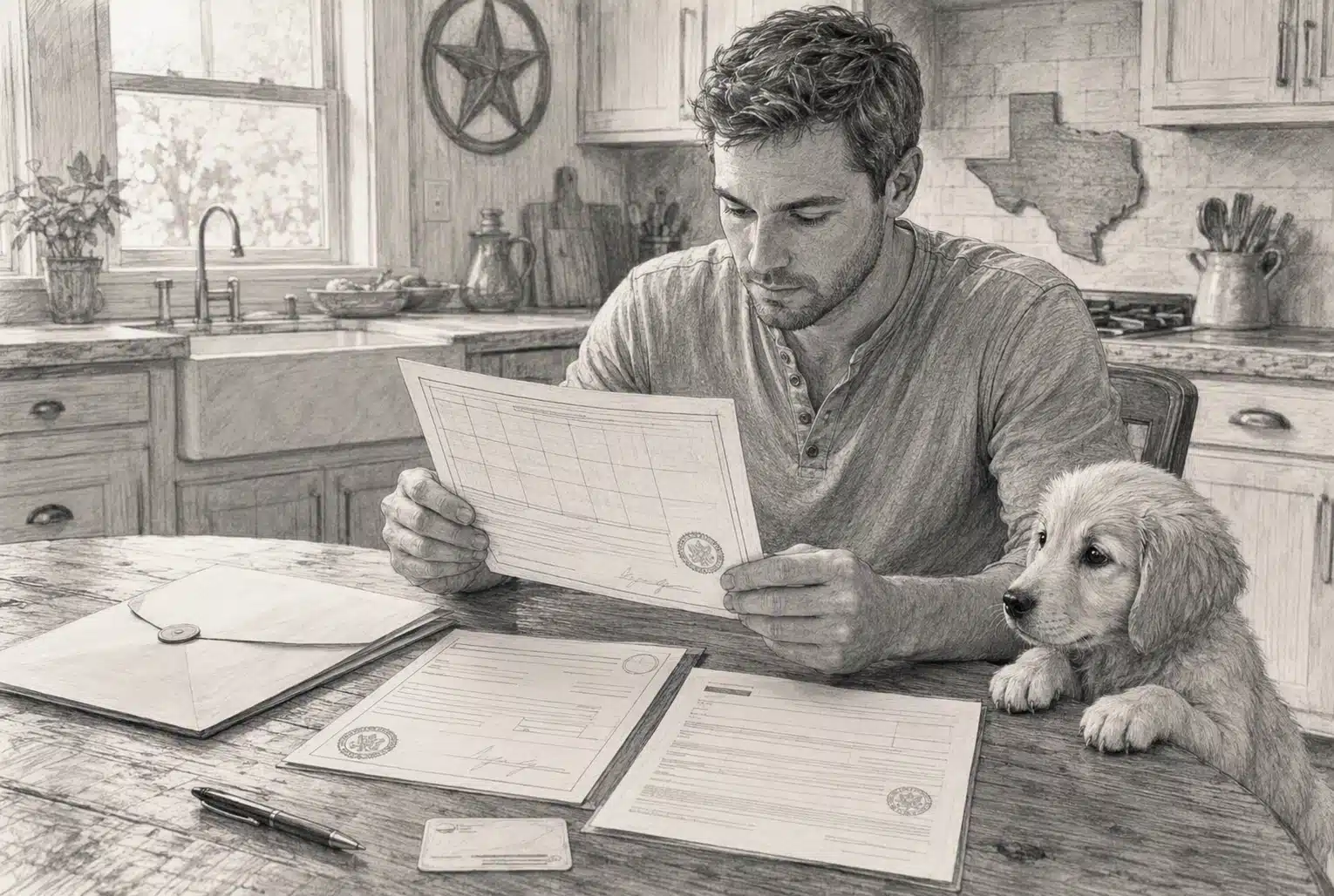
Match the packet to the puppy in front of you. Check these items side by side:
- Breed, sex, color, and age
- Microchip number
- Date of birth
- Litter details, if listed
- Vet clinic name and phone
- Breeder name matching the contract
Use this quick checklist:
| Record item | What should match | Why it matters |
|---|---|---|
| Color and markings | The puppy’s actual look | Helps catch swapped records |
| Sex and age | Listing and contract | Flags basic errors |
| Microchip number | Scan result or chip slip | Best proof of identity |
Why incomplete paperwork is a warning sign
Missing pages matter. So do vague answers.
A breeder who cannot produce clear records before pickup is asking you to trust claims you cannot verify.
Watch for red flags:
- One handwritten vaccine line with no clinic details
- No puppy ID on the record
- Dates that do not fit the puppy’s age
- A promise to “send the rest later”
Clean paperwork does not prove everything. Still, thin paperwork often points to thin care.
Also Read: Havanese, Havapoo & Cavapoo Puppy Care Blog
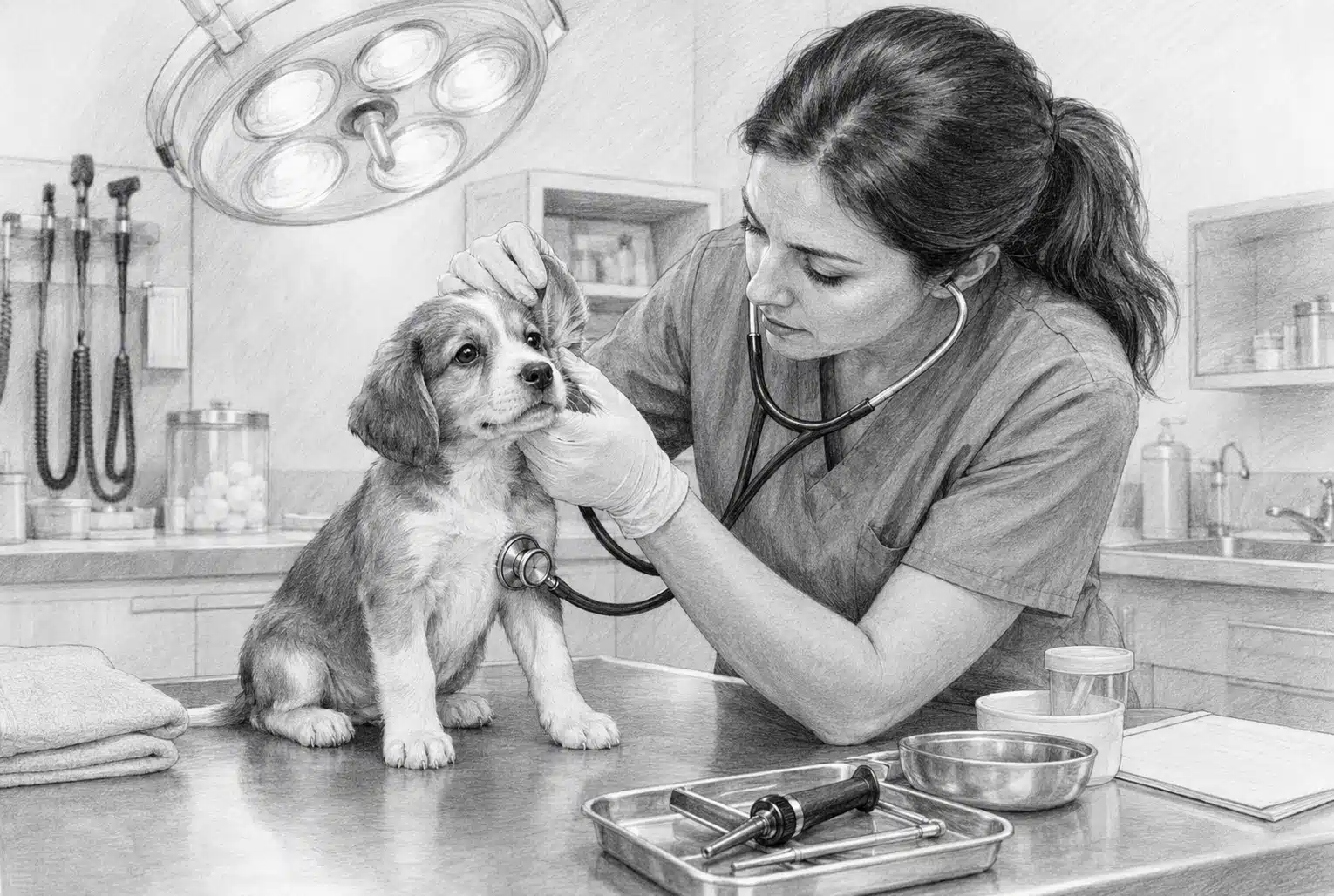
2. Verify the veterinary exam and puppy health check details
Ask for the actual vet exam record, not a line that says “puppy checked” or “healthy at pickup.” In Texas, vaccine paperwork must include details like the date given, vaccine used, revaccination due date, and the veterinarian’s signature or license information under Texas rabies vaccination rules. That gives you a useful standard for judging all health paperwork.
Use this quick check:
- Exam date
- Vet clinic name
- Veterinarian name
- Puppy ID matching color, sex, breed, and microchip if listed
- Notes, not just a stamped approval
If the breeder will not share a dated exam before payment, slow down.
Read the exam for scope, not just the final line. “Normal” means little if you cannot see what was reviewed. A solid puppy health check usually lists body systems or findings such as:
- Eyes and ears
- Heart and lungs
- Mouth and bite
- Skin and coat
- Abdomen
- Umbilical area
- Knees, hips, or gait
- Stool concerns or parasite signs
| What to look for | Good sign | Weak sign |
|---|---|---|
| Exam detail | Specific findings listed | “Checked and cleared” only |
| Puppy identity | Matches puppy exactly | Generic litter note |
| Timing | Recent, dated exam | No date or old date |
Ask one more question: What does this exam not cover? A routine wellness visit is not the same as a genetic test, orthopedic screening, or a promise against future illness. Texas also requires licensed breeders to keep veterinary care records and transfer key health care records with the animal under licensed breeder care rules.
Best practice: ask the breeder to mark which findings are current, which are pending, and which are outside a basic puppy exam.
Also Read: 10 Signs a California Puppy Listing Is a Scam – Sage Puppies
3. Confirm vaccination, deworming, and rabies paperwork line by line
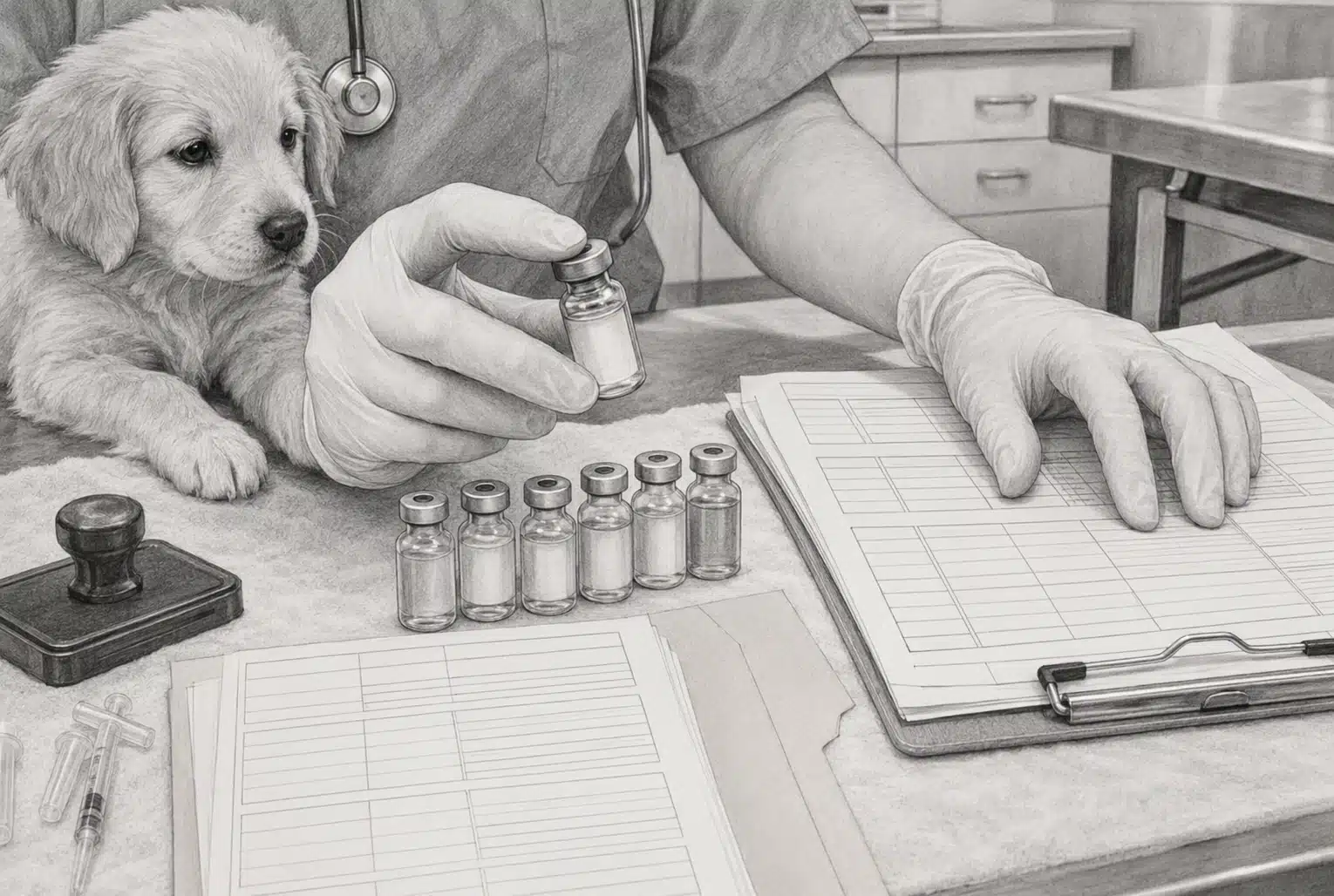
Do not stop at “shots given.” Match each entry to a real date, a real product, and a clear next step. That is how you tell organized care from filler paperwork.
Check vaccine dates, product names, and next-due dates
Puppies usually start vaccines at 6 to 8 weeks, then continue in a series until 16 weeks or older, according to the AVMA puppy vaccination guidance. On the record, check for:
- Date given
- Vaccine name or brand
- What it covered if listed
- Lot or serial number if the clinic included it
- Next due date
If the breeder says the puppy is “fully vaccinated” at 8 to 10 weeks, pause. That often means age-appropriate so far, not done for life.
A clean record shows timing that makes sense. Big gaps, crossed-out dates, or missing product names deserve follow-up.
| What to verify | What a good record shows | Red flag |
|---|---|---|
| Vaccine timing | Entries spaced by age | Random dates with no pattern |
| Product details | Brand or product listed | “Puppy shot” only |
| Next steps | Clear next due date | No follow-up noted |
Verify deworming history and treatment dates
Deworming records matter because intestinal parasites are common in young puppies. Ask for a line-by-line history, not a verbal summary. You want:
- Treatment date
- Drug name
- Dose or amount
- Reason, if a fecal test found something specific
A short checklist helps:
- Count how many deworming entries appear.
- Check whether dates match the puppy’s age.
- Ask if treatment was routine or based on symptoms or a fecal test.
- Confirm what follow-up your own vet should do after pickup.
If the paperwork only says “dewormed” once with no date or product, treat that as incomplete.
Review Texas rabies documentation when the puppy is old enough
In Texas, dogs must be vaccinated against rabies by 16 weeks of age, and the official certificate must include items such as the product name, manufacturer, serial number, vaccination date, revaccination due date, and veterinarian information under Texas rabies vaccination rules. For dogs entering Texas, those 12 weeks or older must also come with a rabies certificate under Texas DSHS import rules.
If your puppy is younger than the rabies age threshold, that is normal. You should still ask:
- Has the rabies appointment been scheduled?
- Who is responsible for it after pickup?
- Will local Texas rules in your city be stricter?
Also Read: 10 Must-Ask Questions Before Buying a Puppy Locally
4. Match the microchip, identity, and breeder record details
Paperwork should point to one puppy, not a general litter file. In Texas, licensed breeders must keep an individual record for each animal, including any microchip, tattoo, or other ID number, plus vet care and disposition details, according to TDLR breeder record rules.
Confirm the microchip number, if one has been implanted
Ask the breeder to show you the microchip number in three places:
- The vet record
- The breeder’s animal record
- The sale contract or take-home sheet
Then scan the puppy in person if possible. The number on the scanner should match every document exactly.
If the puppy is said to be chipped but the breeder cannot produce the exact number, treat that as a pause point, not a small clerical issue.
| Item to match | What should be identical |
|---|---|
| Microchip number | All digits on every record |
| Puppy description | Breed, sex, color, markings |
| Date of birth | Same across health file and contract |
Cross-check the breeder’s legal and facility information
Match the breeder’s name, address, and license details across ads, invoices, records, and the contract. Texas licensed breeders must include their license number in ads and contracts, and the contract must also include the TDLR notice, as shown in Texas breeder contract requirements.
Use this quick checklist:
- Legal name matches the contract
- Facility address matches where the puppy was kept
- License number appears where required
- Phone and email stay consistent
Make sure the sale contract does not contradict the health records
Read the contract line by line next to the health file.
Watch for conflicts like:
- Contract says no known illness, but records show recent treatment
- Vaccine dates differ
- Color, sex, or birth date do not match
- The contract names a different puppy
A clean breeder file feels boring. That is good. Clean records usually mean careful recordkeeping.
5. Use Texas rules to spot incomplete or questionable records
Know what Texas licensed breeders are expected to record
Texas gives buyers a useful baseline. For licensed breeders, records should do more than show one vaccine date. Texas rules say breeders must keep an animal record with key identity details, where the dog came from, microchip or tattoo info if used, disposition, and veterinary care. Those records must stay on file for two years, and licensed facilities must make them available to inspectors according to Texas recordkeeping rules.
- Ask whether the breeder is licensed in Texas
- Ask for the puppy’s individual record, not just a summary page
- Check whether dates, litter details, and ID numbers match across documents
If the breeder should be licensed but avoids that question, slow down.
| Good sign | Concern |
|---|---|
| Dates and ID details match | Missing intake, birth, or transfer details |
| Vet care appears tied to the puppy | Only generic notes with no clear match |
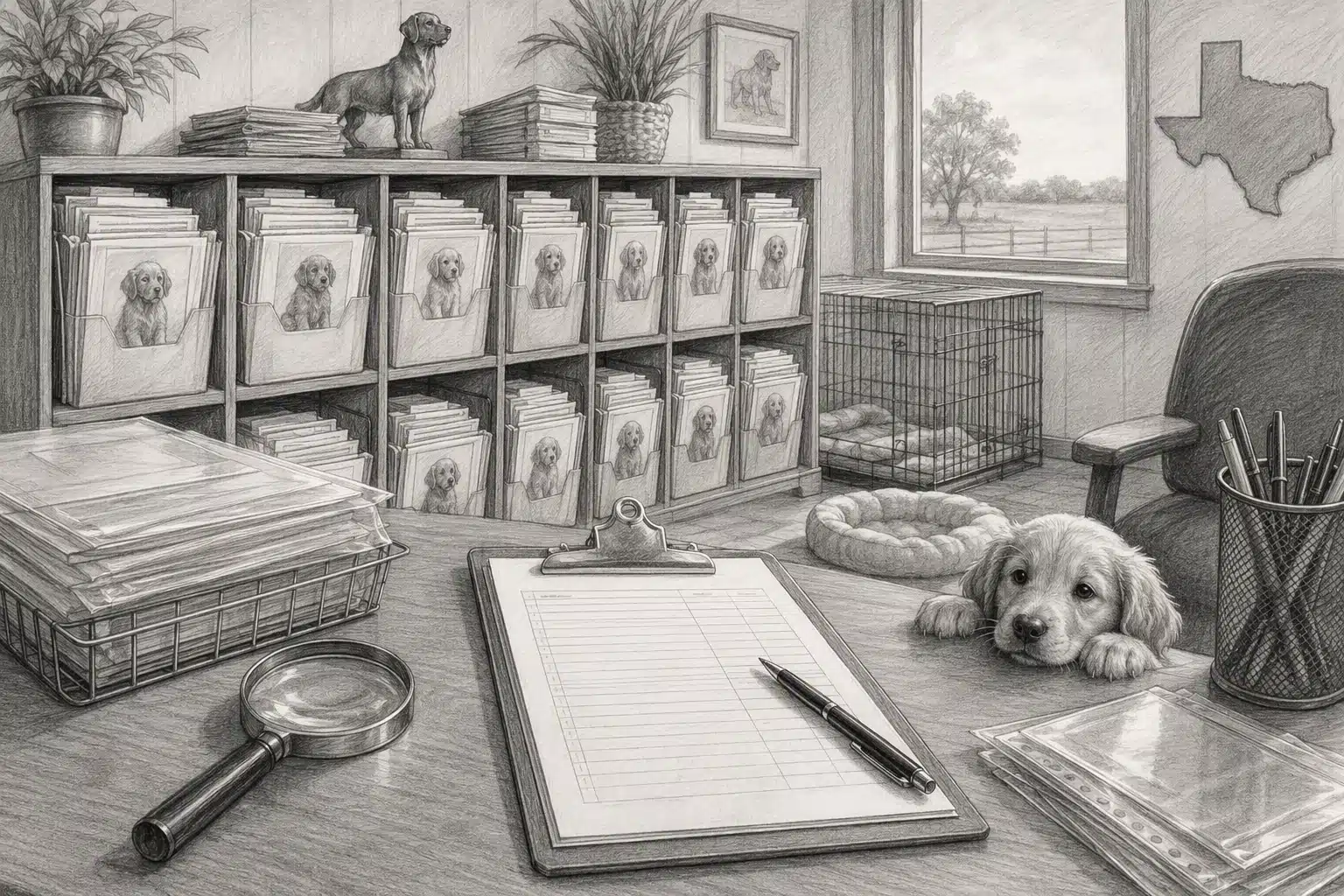
Recognize the difference between a document and a usable record
A paper is not the same as proof. A usable record lets you trace the puppy from birth to sale without gaps.
Look for:
- Names, dates, and vaccine entries that line up
- Veterinary details you can verify
- Puppy-specific identifiers like sex, color, litter, or microchip
A rabies certificate matters only if the puppy is old enough. Texas requires rabies vaccination by 16 weeks of age, and the certificate must include the vaccine used, date given, and revaccination due date under Texas rabies rules.
Use the breeder’s willingness to explain the records as part of verification
Good breeders do not act annoyed when you ask basic questions. They walk you through the file.
Use this quick check:
- Ask what each document is for
- Ask why any field is blank
- Ask who gave each vaccine or treatment
Evasive answers often tell you more than the paperwork.
A careful breeder, whether in Texas or shipping into Texas, should explain records in plain language. That kind of calm transparency is what thoughtful families should expect.
Also Read: Puppies for Sale in Texas: Spotting Trustworthy Listings
6. Common mistakes buyers make when reviewing puppy health records
Buyers often make the same three mistakes, and each one can hide a real problem.
-
Trusting a statement instead of the record itself
A seller may say the puppy is “fully checked” or “up to date.” That is not enough. Ask for the actual vaccine and vet records, not a summary in a text or ad. Texas licensed breeders must keep records of veterinary care for each animal, according to TDLR breeder responsibilities. -
Ignoring date and age mismatches
Check whether the dates fit the puppy’s age. A vaccine listed before the puppy was old enough deserves a closer look. In Texas, rabies timing has specific age rules, and entry records for dogs coming into Texas must also match vaccination timing and certificate details under Texas DSHS pet entry requirements.If the timeline feels off, pause the sale until the breeder or clinic clears it up.
-
Overlooking missing signatures, clinic names, or identification numbers
A record with no clinic name, no vet signature, or no puppy ID is weak proof. Match the paperwork to the puppy’s microchip, litter info, color, and sex. Missing details do not always mean fraud, but they do mean you need follow-up.
Also Read: Puppy Care Blog & Resources | Sage Puppies
7. What to do before you reserve the puppy
Ask for a written summary of anything still outstanding
Before you send a deposit, ask the seller to list every open item in writing. That includes vaccines not yet due, fecal results still pending, microchip registration not yet started, or a vet visit booked after your decision date. In Texas, dogs 12 weeks and older entering the state must have a rabies certificate, and the certificate must include specific details from the vaccinating vet, per Texas DSHS entry rules.
If the seller says, “we’ll send that later,” ask for the exact date and who will provide it.
| Outstanding item | What you should ask for | Green flag |
|---|---|---|
| Vaccine not done yet | Due date and planned clinic | Specific appointment date |
| Lab result pending | Test name and expected return date | Seller follows up without prompting |
| Missing record detail | Revised copy from vet | Corrected document quickly sent |
Have your veterinarian review the packet if needed
If anything feels off, send the whole packet to your own vet before reserving. A quick review can catch date gaps, odd vaccine timing, or records that do not match the puppy’s age. Texas rules also require official rabies certificates to include items like the vaccine product, serial number, revaccination date, and the veterinarian’s signature and license number under Texas rabies certificate standards.
Ask your vet to check:
- Age matches the vaccines shown.
- Names, colors, sex, and breed stay consistent.
- Dates make sense for travel or pickup.
- Any parasite or treatment note looks complete.
Move forward only when the records and the seller both feel consistent
Paperwork matters, but so does the person behind it. Reserve the puppy only when the records, timeline, and seller answers all line up.
Use this simple check:
- The seller answers clearly.
- The dates match the puppy’s age.
- Vet names and signatures are present where needed.
- No one pressures you to “book now” before records are settled.
A good breeder makes verification easy. If it feels confusing or rushed, pause.

If you want a puppy program that makes health paperwork easier to review, start with Sage Puppies. You can see available Havanese, Havapoo, and Cavapoo puppies, review next steps, and apply with confidence through a clear, family-first process built around transparency.
Frequently Asked Questions
Q1: How can I verify the health records of a puppy before buying in Texas?
Ask for the full record before you pay a deposit. Match the puppy’s age, vaccine dates, deworming dates, microchip number, and vet clinic details. Call the clinic yourself and confirm the visit happened.
Q2: What documents should a reputable Texas puppy breeder provide for health verification?
You should get a vaccine record, deworming history, exam notes, breeder contract, and any parent health testing that applies to the breed. Good breeders also explain what each paper means, not just hand over a stack.
Q3: How can I tell if a Texas puppy seller’s health records are legitimate?
Look for complete dates, lot numbers, clinic names, and a clear puppy ID. Watch for altered forms, missing signatures, or records that do not match the puppy’s age. If details feel vague, pause the deal.
Q4: Should I trust records from out-of-state breeders shipping into Texas?
Yes, but verify them the same way. Confirm the issuing vet, compare dates to Texas timing rules, and ask for a pre-travel exam if delivery is involved. Careful breeders, including Sage Puppies, welcome that check.
Q5: What is the biggest red flag in puppy health paperwork?
The biggest red flag is pressure to move fast while records stay incomplete. If a seller avoids your questions, refuses clinic contact, or sends blurry photos only, assume the paperwork may not hold up.
Conclusion
Buying a puppy in Texas gets safer when you treat health records as proof, not paper. The key checks are simple: match the puppy to the records, confirm vaccine dates and vet details, compare what you received against Texas rabies certificate rules in 25 Tex. Admin. Code § 169.29, and ask whether the breeder should hold a TDLR license. Texas also requires licensed breeders to keep animal-specific records, including vet care and disposition data, under TDLR breeder responsibilities. If anything feels incomplete, inconsistent, or rushed, pause the purchase.