Quick Summary: Plan puppy visits in stages: schedule ahead, meet the dam and litter, observe each puppy for 20 to 30 minutes, and match temperament to your household rather than choosing on appearance alone. Review health and vaccination records, parent testing, and the full purchase contract before signing, and confirm that “family-raised” means the puppies live inside the breeder’s home. If travel is impractical, request a live, unedited video walkthrough that shows the home, dam, puppies, and records, with Sage Puppies offering visits and video consultations from South Jordan, Utah.
Most families arrive at a breeder’s home with a shortlist of questions and leave with a photo on their phone, a signed contract and very little real evidence about the puppy they just chose. That happens because knowing how to meet puppies, what to watch and what to ask, rarely gets covered before visit day. Meeting puppies before adoption works far better with a plan. This guide walks you through a staged visit protocol: schedule the visit first, then observe the dam and litter, verify health records and vaccination details, and read the contract before you sign. You will also find wording for out-of-state travel plans and a video walkthrough option when an in-person puppy visit is not possible. The advice draws on documented experience from a small Utah breeding program that places Havanese, Havapoo and Cavapoo puppies with families across the country.
Step 1: Schedule the Visit and Confirm What You Can See
How do I schedule a visit to meet a litter of puppies?
You schedule a visit by contacting the breeder directly, agreeing on a date, and confirming exactly what you will see. Most breeders work like this:
- Submit an application or send an inquiry with your name, location, and the litter you want to meet.
- Wait for approval, then propose two or three dates.
- Confirm the time, address, and who is coming.
- Ask what the visit covers: dam, litter, records, and contract review.
A simple first message works well: “Hello, we’re a family hoping to meet your Cavapoo litter. Could we visit this month? What will the visit include?”
What to Confirm Before You Travel
Before you drive anywhere, ask these four questions:
- Age of the puppies and which ones are still available.
- Which parents you can meet, especially the dam.
- What records you can review, including health records and the vaccination schedule.
- Whether the contract can be discussed in person.
Get answers in writing. If a breeder will only show a video walkthrough of the puppies, treat it as acceptable, but ask why an in-person option is not available. Out-of-state families often ask breeders to hold the appointment until travel plans are locked in. Many small programs, including Sage Puppies in Utah, arrange visits after an approved application so the time actually fits the litter.
Preparing the Household and the Travel
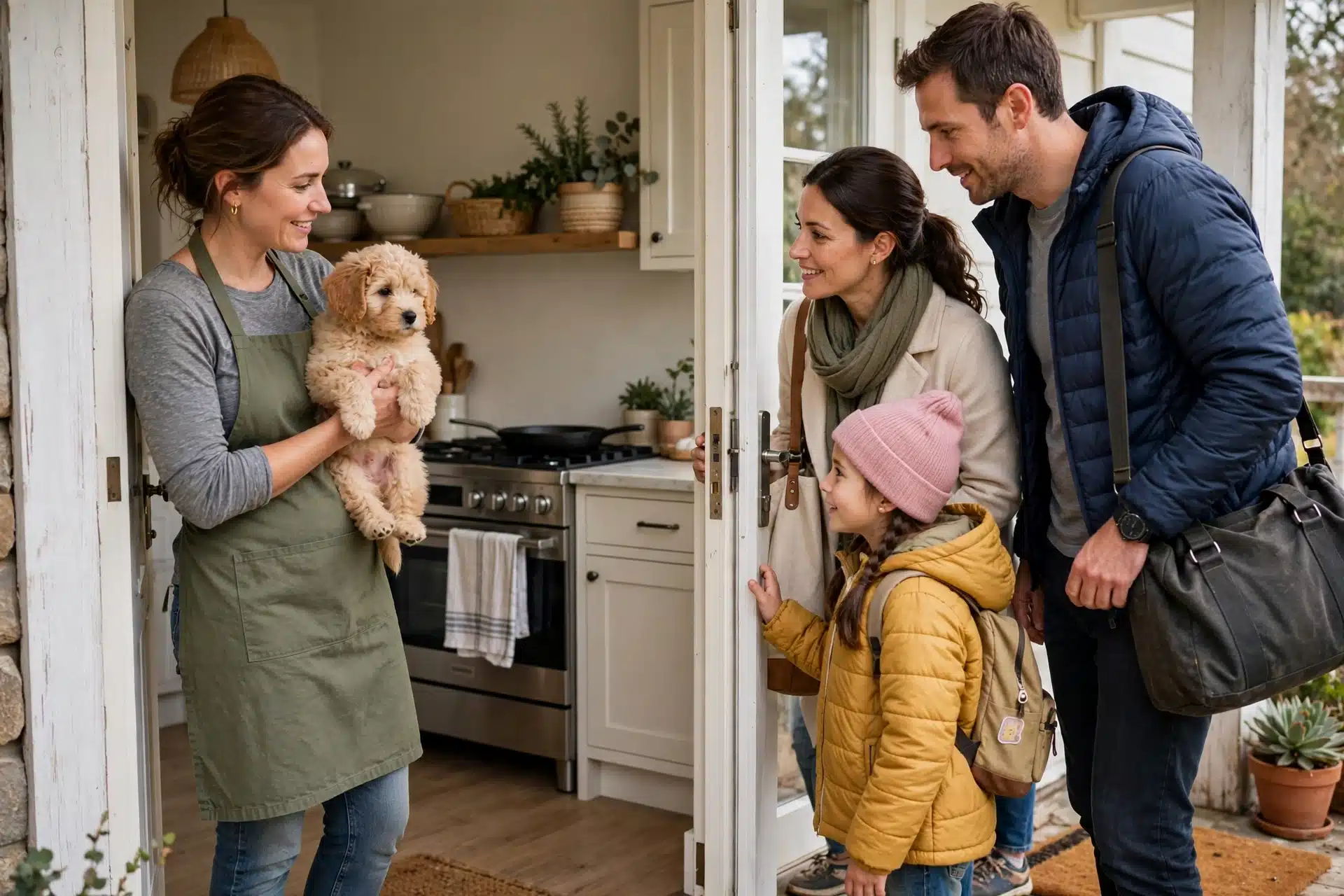
Plan the trip around the puppies, not the other way. Bring adults first; very young children tire quickly and overwhelm a litter. Ask whether other litters or visitors will be on site that day, because biosecurity rules at some programs limit foot traffic. Leave 60 to 90 minutes for the full visit so temperament assessment and paperwork are not rushed. For long drives, pack water, a towel, and a crate in case the visit turns into pickup day, which happens more often than families expect when the right puppy is waiting there.
Step 2: Meet the Dam and Sire and Read Their Temperament
The parents tell you more about your future puppy than any photo of the litter. Watch how they greet you, and ask to see the mother interact with her puppies before you fall in love with one.
What to Look for When Meeting a Puppy and Its Parents
When you meet puppies and their parents, watch for these signs:
- Curious, calm greetings from the dam, not hiding, lunging or constant barking
- Puppies that approach people willingly and recover quickly from startles
- Clean eyes, ears and coats, with no limping or labored breathing
- A dam that checks on her litter but relaxes when they nap
- A sire with a stable, friendly manner, whether he lives on site or you meet him by video
Take notes on what you see, because first impressions fade fast once excitement takes over.

Observing the Dam with Her Litter
Ask to spend a few minutes watching the mother with her puppies, without holding anyone. A well-bred dam will check in, lick and nudge her litter, and settle nearby. Growling, guarding food or refusing to enter the space can signal stress or poor socialization. Keep in mind that dams naturally slim down after weaning, so a lean mother is not automatically an unhealthy one.
Asking About Temperament Testing and Matching
A good breeder does more than observe; many run simple puppy temperament assessments around seven weeks, checking how each pup responds to handling, noise and new objects. Ask which tests were used, what each puppy scored and how those scores shape the puppy matching process. Breeders like Sage Puppies match based on your household, not on who pays first, so describe your kids, work schedule and activity level honestly. If the sire lives elsewhere, ask for a video walkthrough of him and his recent offspring. And ask how the dam behaves outside the whelping room, since temperament around strangers matters once the puppies come home.
Want to know why so many small-breed litters grow up confident? It often starts with the family-raised foundation these puppies get from day one.
Step 3: Observe the Puppies and Match One to Your Household
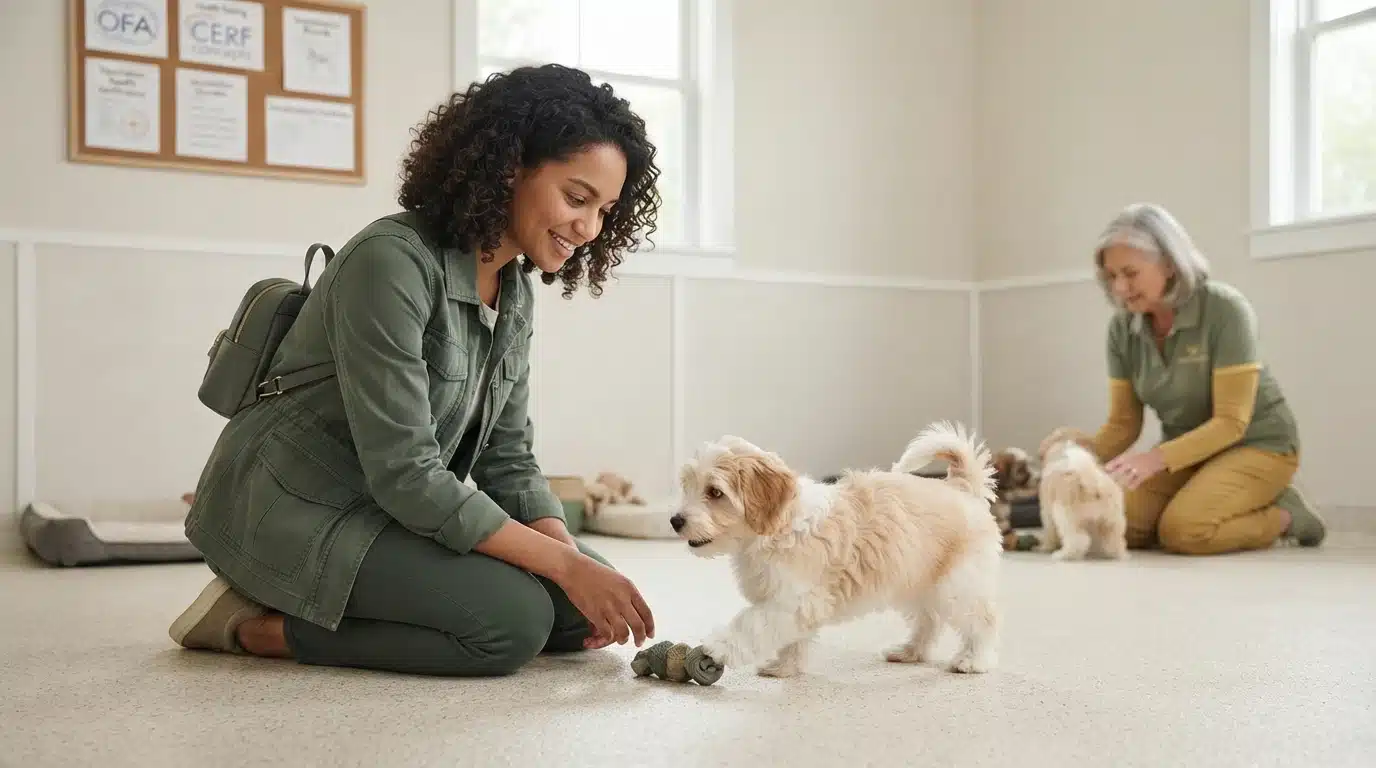
Watching a litter for 20 or 30 minutes tells you more than any photo or description. Puppies cycle through play, rest, and exploration, so you want to see each one in more than one mood before you decide.

How to Pick the Right Puppy for Your Household
The right puppy matches your home’s energy, your schedule, and the space you live in, not just the cutest face in the room. Use this quick map:
| Household | Look For |
|---|---|
| Busy family with kids | Confident pup that recovers fast after a startle |
| Quiet home or first-time owner | Calm pup that settles in your lap within a few minutes |
| Apartment or small yard | Middling energy, not the boldest escape artist |
| Active household | Playful pup that chases, tumbles, and re-engages |
Match energy first. Looks can change; temperament mostly stays.
A Repeatable Observation Routine for Each Puppy
Give every puppy the same short series of checks so comparisons stay fair:
- Watch first. Spend two minutes watching the pup play without calling to it. Note whether it explores, follows littermates, or hangs back.
- Crouch and call. Clap softly or kneel down. A healthy pup shows curiosity, even if it is cautious at first.
- Pick it up. Cradle the puppy belly-up for a few seconds. Squirming is normal; panic or going rigid is worth a closer look.
- Handle paws, ears, and mouth. Gentle fussing is fine. Sharp repeated snapping or freezing signals a pup that needs extra socialization work.
- Note recovery. After any startle, time how long the pup takes to return to play. Fast recovery predicts an easier adjustment to your home.
Jot one line per puppy. These notes become the backbone of your puppy temperament assessment when you compare the litter later, and they support the breeder’s own puppy matching process if you ask for help choosing.
How Children and Other Pets Change the Criteria
Kids and resident pets raise the bar on temperament. Ask to see each puppy around children if yours will live with them, and check whether the dam stays relaxed with your dog during the visit. Choose a pup that recovers quickly from noise and rough handling rather than one that retreats or snaps. Havanese, Havapoo, and Cavapoo litters tend to bounce back well, but each puppy is still an individual.
Step 4: Review Health, Ancestry and Contract Terms on Site
Paperwork tells you whether the cute puppy in front of you came from real planning. Set aside part of your visit to read documents calmly, and ask questions on the spot instead of after you get home.
Documents to Ask for and Read in Person
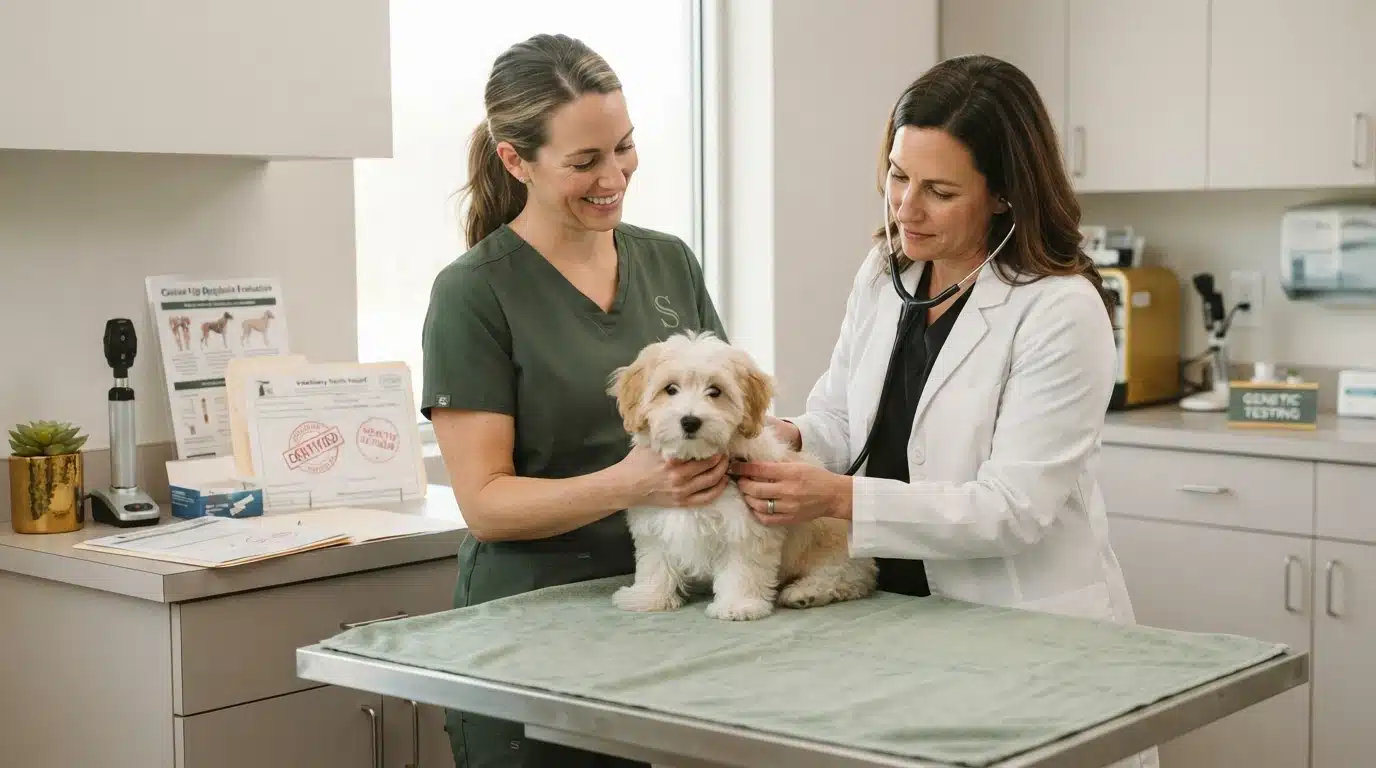
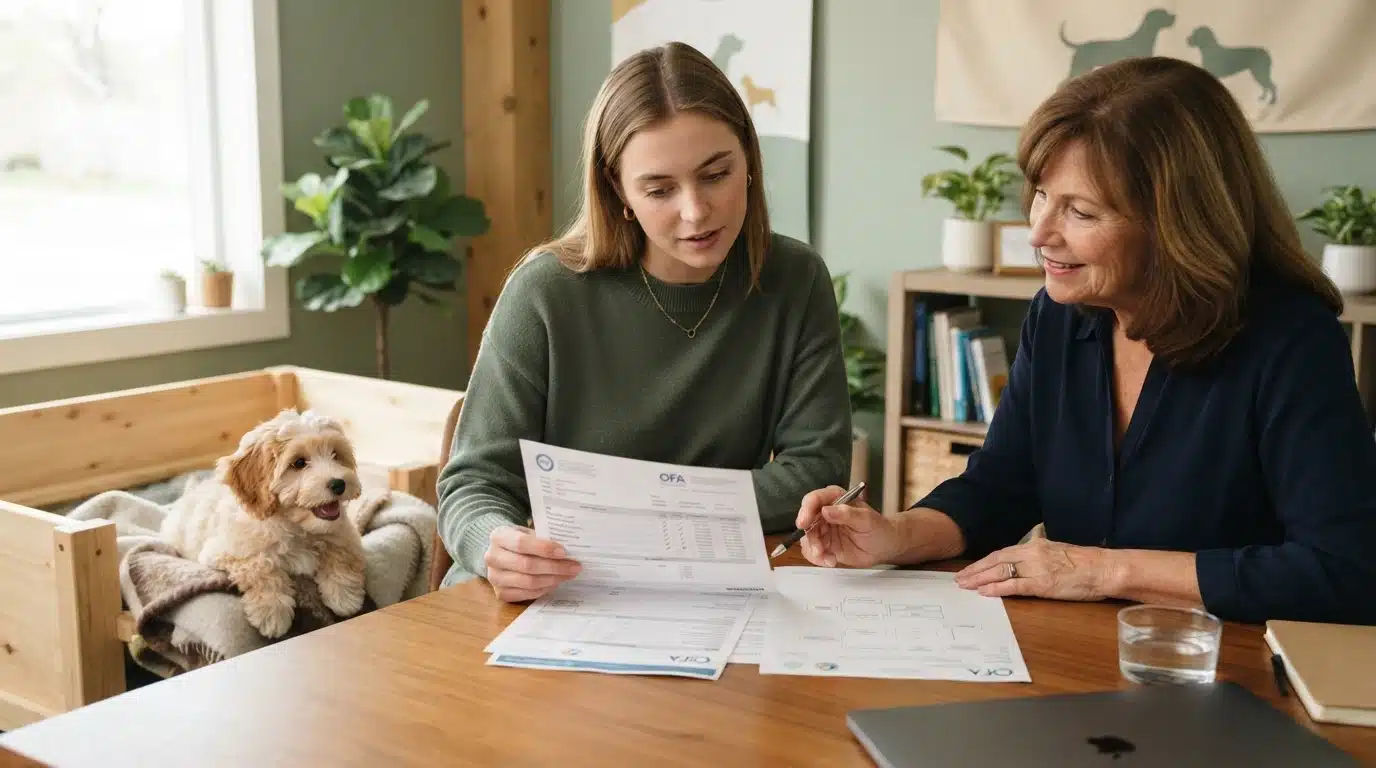
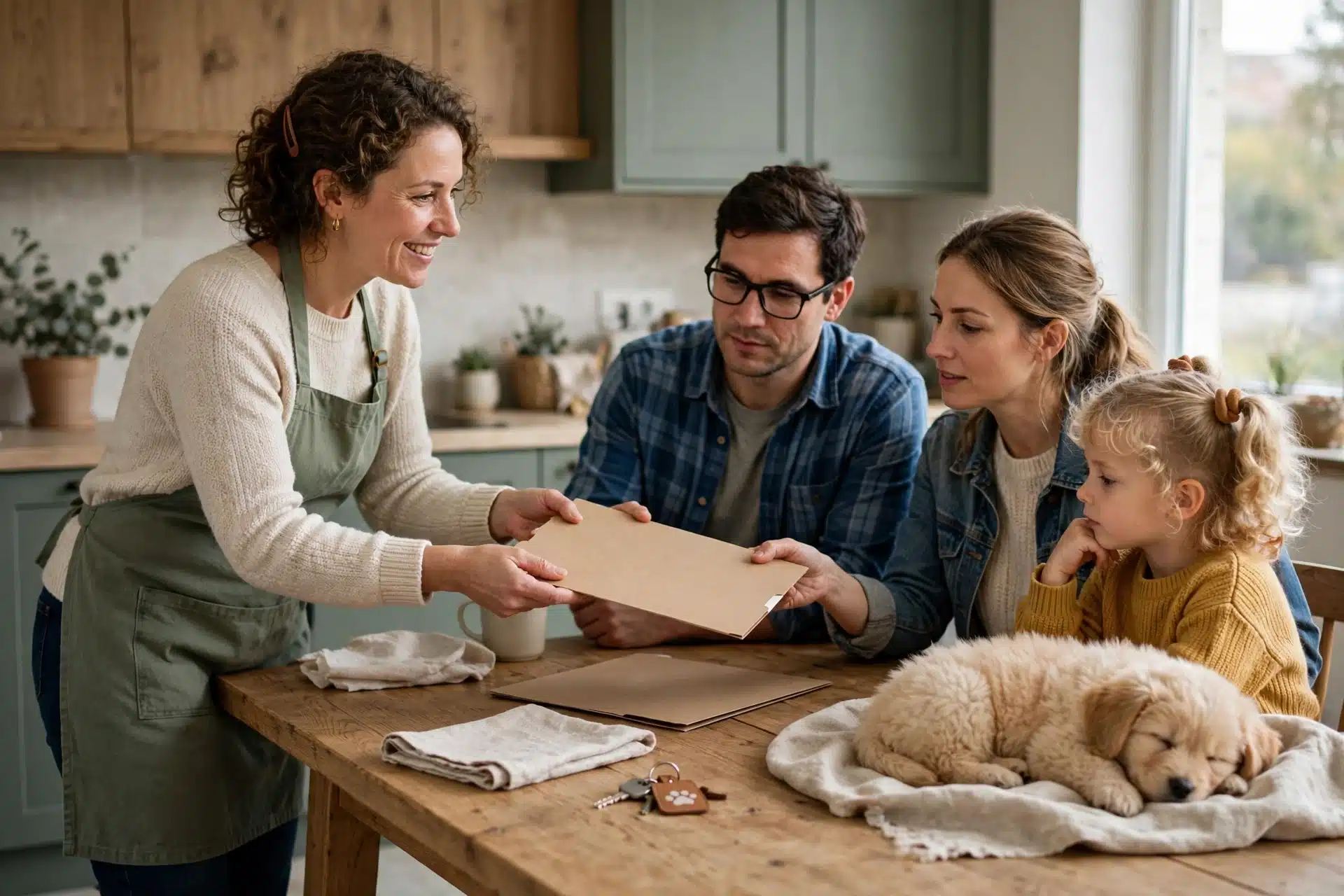
Request the puppy’s health records and vaccination schedule, a deworming log, the vet exam date, and the dam and sire’s health testing certificates. Match every record to the puppy’s microchip or ID, birth date and test date so nothing is borrowed from a different litter. The OFA advises owners to ask breeders for proof of screening before they commit, and originals beat screenshots. Ask what food the puppy eats and when the next vaccine is due.
Checking Ancestry and Health Testing
Look at the pedigree and confirm both parents’ testing matches what the breed expects. For Havanese, Havapoo and Cavapoo puppies, that usually means DNA panels plus heart, hip and eye screenings. You can search the OFA’s public records database for a parent’s registered name and see results for yourself. Ask why each parent was chosen for this pairing. A good breeder explains the match in plain terms.
Reading the Purchase Contract Before You Sign
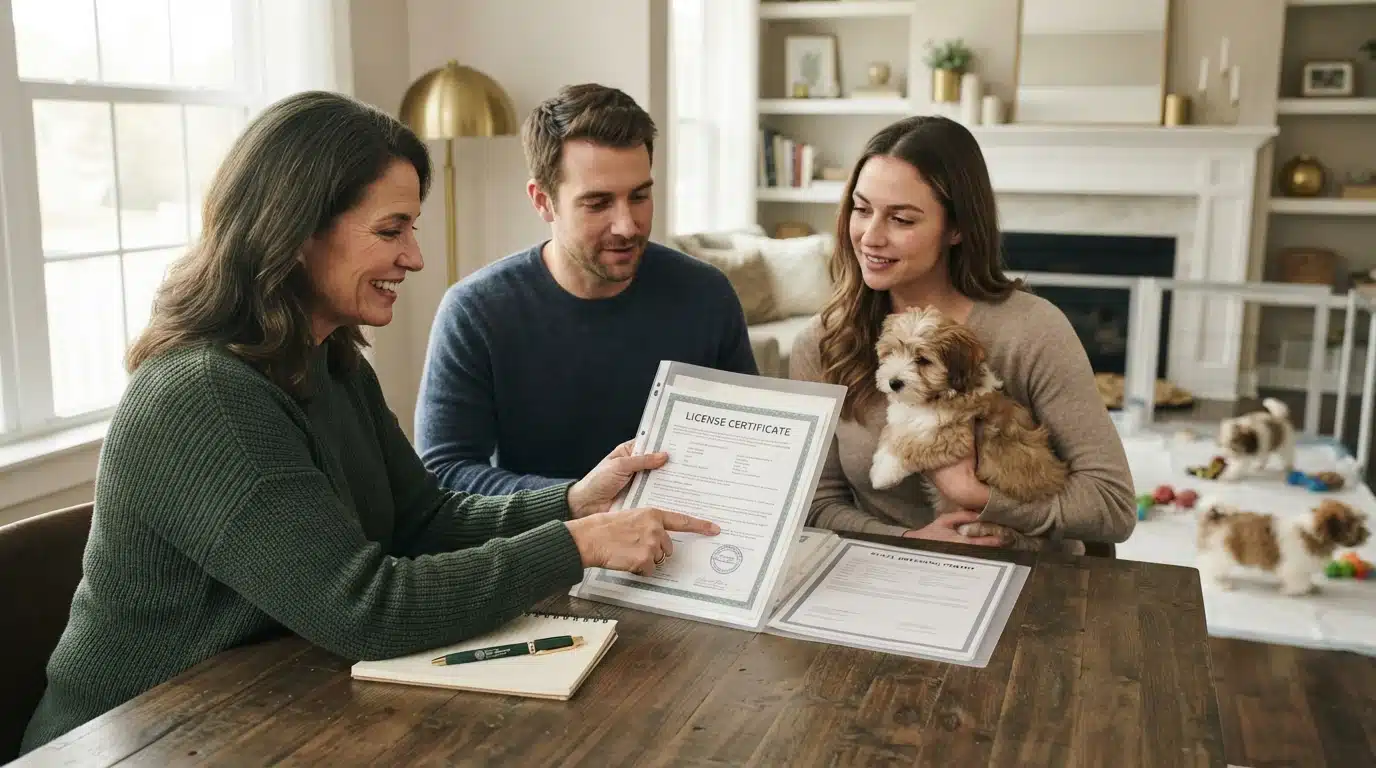
Read the whole contract while you sit there. Cover the price, deposit and refund terms, health guarantee window, return policy and any spay or neuter or guardian terms. Ask what happens if a health issue appears in the first weeks, and who pays for it. Some programs, including Sage Puppies’ deposit and reservation terms, put refund conditions in writing, so compare those clauses line by line. Take a photo of every signed page before you leave.
Step 5: Understand What Family-Raised Actually Means
A Working Definition of Family-Raised
“Family-raised” means the puppies grow up inside the breeder’s home, not in a separate kennel, barn, or outdoor run. The litter lives with everyday household life: doors closing, kids playing, vacuums running. Good breeders use the term for litters whelped and weaned in the home with daily human contact. When you learn how to meet puppies in person, ask exactly where the litter sleeps and eats. If the answer involves a building apart from the house, the label is marketing, not fact.
Five Signs of a Genuinely Home-Raised Litter
Watch for these details during the visit:
- Puppies approach people willingly. Home-raised litters are curious about new visitors, not cowering or frantic.
- The dam is present and relaxed. She lives in the home and greets guests without tension.
- Normal household sounds don’t startle them. A dropped pan draws a glance, then play resumes.
- The space is clean but lived-in. Real home-raising leaves evidence of daily life, not a sterile showroom.
- The breeder handles puppies constantly. Ask to see their routine for nail trims, grooming practice, and crate introduction.
For Havanese and Cavapoo puppies especially, this early social exposure shapes temperament more than any later training. A video walkthrough of puppies can show several of these signs before you travel.
Common Mistakes to Avoid During the Visit
Choosing Too Early and Skipping the Parents
When you meet puppies in person, resist picking a favorite in the first five minutes. Excitement makes any pup look like the right one. Watch the litter for 20 or 30 minutes instead, and always meet the mother. Her temperament and condition tell you more than any photo. Ask to see where the dam and puppies actually live. A breeder who keeps family raised puppies away from visitors deserves a careful second look.
Skipping Records and Biosecurity
Bring your puppy visit checklist so paperwork never gets forgotten. Ask for vet exam notes, deworming dates, and the vaccination schedule in writing. Skipping this step leaves you guessing later. Follow the breeder’s biosecurity rules too, such as removing shoes or skipping the visit if you saw other litters that day. These habits protect the puppies. Any program you trust, including boutique breeders like Sage Puppies, will happily hand over health records before you ask twice.
Remote Families: When an In-Person Visit Is Not Possible
Sometimes distance, work schedules or a new litter’s age make travel unrealistic, so a live video call replaces the visit. Ask the breeder to walk you through the whole home, not just one cute puppy. A good call mirrors an in-person visit closely enough to judge temperament and care.
What a Video Walkthrough Should Cover
Ask for a live, unedited tour. You want to see the puppies moving and playing together, the mother’s condition and behavior, the whelping and living area, and the food they use. Ask the breeder to handle each puppy on camera so you can watch how each one recovers from being held. Request the veterinary records by email: vaccination dates, deworming, and any parent health testing. A breeder who refuses a live call or sends only edited clips is a warning sign, because how to meet puppies you cannot touch depends entirely on what they choose to show you.
Arranging Travel When a Visit Is Worth It
If the litter matters enough, plan one trip instead of repeated short visits. Wait until puppies are at least six weeks old, then book a 60 to 90 minute window so you can watch the litter and review records without rushing. Flying families should ask whether the breeder can meet you at the airport or help with ground pickup in Utah, and confirm in writing what happens if you walk away after meeting the litter. A clear refund or deposit policy protects both sides before you spend on flights.

You now know how to spot a family-raised litter and what to ask before you commit. If a Havanese, Havapoo or Cavapoo is on your list, Sage Puppies makes meeting simple: apply, then visit our South Jordan, Utah home or schedule a video walkthrough from anywhere in the country.
Frequently Asked Questions
Q1: How do I schedule a visit to meet a litter of puppies?
Apply to the breeder first, then propose two or three dates once approved. Confirm the address, who is coming, and exactly what the visit covers: dam, litter, records, and contract review.
Q2: What should I look for when meeting a puppy and its parents?
Watch for a calm dam, puppies that approach willingly and recover fast from startles, plus clean eyes, ears and coats. Ask to see the mother with her litter before holding anyone.
Q3: How do I pick the right puppy for my household?
Match temperament to your home first. Busy families suit confident pups that recover quickly; quiet homes suit calm ones that settle in a lap. Observe each puppy in more than one mood.
Q4: What if I cannot visit in person?
Ask for a live, unedited video walkthrough covering the whole home, the dam, and each puppy being handled on camera. Request health records by email at the same time.
Q5: When should I bring my children to a visit?
Wait until the puppies are at least six weeks old, and consider bringing adults first. Young children tire fast and can overwhelm a litter, so confirm the breeder’s rules about kids on site.
Q6: What records should I verify before signing a contract?
Read the health records and vaccination schedule, deworming log, vet exam date, and both parents’ health testing certificates in person. Match each document to the puppy’s microchip and birth date before you sign.
Conclusion
Meeting puppies before adoption goes well when you follow one staged visit: schedule first, meet the dam and litter, read the health records and vaccination schedule, and review the purchase contract on site. Watch temperament over looks, keep a puppy visit checklist handy, and take at least 20 to 30 minutes with the litter. If travel is not realistic, a live video walkthrough of puppies covers the same ground from home. For families seeking family raised puppies for sale near me, a program like Sage Puppies in South Jordan, Utah places Havanese, Havapoo and Cavapoo puppies based on household fit, with pickup in Utah or delivery nationwide. Trust the breeder who welcomes every question, because a transparent home visit tells you more than any photo ever will.