Quick Summary: Treat breeder reviews as one signal, not proof: focus on dated, specific accounts from platforms the breeder cannot edit, then verify the claims against health and vaccination records, business registration, and a live video call. Call at least two references yourself with the same open-ended questions, and compare their answers with the written contract before paying any deposit. A lack of reviews is not automatically a warning, especially for a small program, but pressure to pay quickly, unverifiable records, or mismatches between promises and paperwork are reasons to walk away.
Most puppy reviews come from one buyer, about one puppy, written within a couple of weeks of pickup, often right after the breeder helped with a stressful handoff. That explains why a five-star page and a bare “no reviews found” page can describe two very different breeders. Checking puppy breeder reviews well matters more than reading a lot of them.
The real risk is that reviews tell you how one day went, not how a breeder tests parent dogs, raises litters or answers questions months later. So this guide walks you through six ordered steps: find where reviews actually live, read them for patterns, confirm them independently, run real reference calls, cross-check records and identity, and understand what reviews can never prove. We ground each step in guidance from the AKC, ASPCA, AVMA and BBB, applied to small companion breeds like Havanese, Havapoo and Cavapoo, so you can judge any reputable puppy breeder near you or nationwide before you pay a deposit.
Step 1: Look for reviews where the breeder cannot curate them
When you’re checking puppy breeder reviews, the first question is not “are they good?” It’s “who posted them, and could the breeder delete them?” A glowing review on the breeder’s own website proves nothing. Anyone can write those, and there’s no way for you to confirm a real buyer said it.
Reviews a breeder controls versus reviews they do not
A testimonial page, an Instagram comment wall, or screenshots pasted into a sales page are all curated: the breeder chooses what appears. Treat them as marketing, not evidence. The same is true of breeder-run Facebook groups, where critical posts often vanish.
Instead, look for platforms the breeder cannot edit. These include:
- Third-party review sites with neutral policies
- BBB complaint records and buyer alerts
- Court records and state complaint databases
- Local community groups the breeder doesn’t moderate
- Public discussions on breed-specific forums
One quick check before anything else: search the breeder’s exact name in quotes on the BBB’s Scam Tracker and general review sites. A program with no footprint anywhere outside its own pages deserves extra caution, because a real breeder with years of litters usually leaves a trail.
Search terms that surface real buyer experiences
Generic searches pull up breeder ads. Get specific. Try the kennel name plus “review,” “complaint,” or “deposit.” Then search the breed name with your city or region, such as “Havapoo puppies Utah reviews,” since buyers often describe experiences without naming the kennel. Breed club forums and Facebook groups for Havanese or Cavapoo owners are especially useful, because repeat breeders get known there by reputation.
[PASTED_YOUTUBE]
Phrase searches carefully so breeder names don’t get lost. Try “[Kennel Name] puppy review” or “[Kennel Name] + BBB” rather than scrolling endless puppy-selling sites. Ask in local Facebook groups, too: “Has anyone bought a puppy from [Kennel Name]?” Real buyer replies usually name the litter, the dam, or the pickup date. Scam alerts get shared fast, so search the name with “scam” or “ripoff” as well.
The goal here is not one perfect review. It’s a pattern you can verify independently, which is what the next steps cover. This same search-first approach works even before you contact the breeder, and it pairs well with the broader advice on how to check a puppy breeder’s credentials and reviews so nothing slips through.
Step 2: Read each review for patterns rather than averages
A four-star average hides more than it shows, because one glowing note can offset a family who never got their records. Read the actual reviews instead, and check for fake puppy reviews as you go. Look for five details worth trusting:
- Specific details: dates, puppy names, temperament notes, and real follow-up stories
- Timeline spread: reviews posted over months and years, not in one cluster
- Outcome statements: what happened after pickup, such as health checks and records arriving
- Balanced tone: small complaints handled well, not wall-to-wall praise
- Reviewer history: profiles with other reviews, not one-post accounts

The way a review is written also tells you how it was collected. Watch for these signs that a breeder wrote or gathered the reviews themselves:
- Near-identical phrasing across different names, or the same errors repeated
- Reviews posted the same week, often right after a litter announcement
- No mention of problems, paperwork, or the deposit process anywhere
- Reviewer accounts created the day they posted, with no other activity
- Comments the breeder answers with scripted, repeated wording
Genuine reviews read like people. They mention the drive home, the first vet visit, or a puppy who took a week to settle. When you can see those patterns across several families, you have something an average score cannot give you: evidence of how a breeder behaves before, during, and after the sale.
Step 3: Confirm the review independently of the review itself
Before you pay a deposit, ask the breeder for a short list of records, then check each one away from their website:
- Health testing reports for both parents, with lab confirmation you can verify
- Vaccination and deworming records for your puppy, dated and vet-stamped
- A written contract covering health terms, deposit and reservation terms
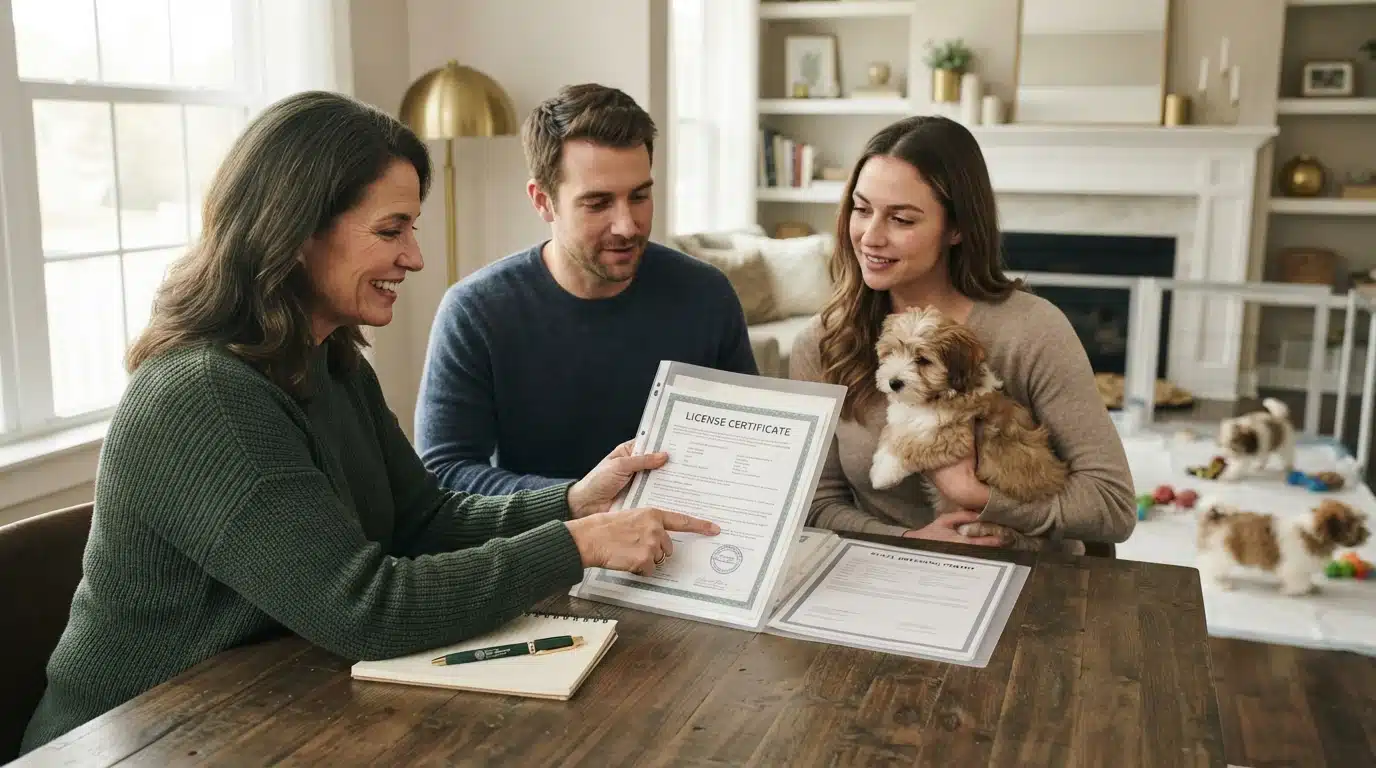
- Proof the business exists, such as a business registration or state agriculture department breeder license
- Veterinarian contact details you can call yourself
A glowing review means little if no record backs it. Good reviews describe outcomes, but documents prove the work behind them. Cross-checking both is how you verify breeder records instead of trusting a testimonial.
Matching reviews against health and identity records
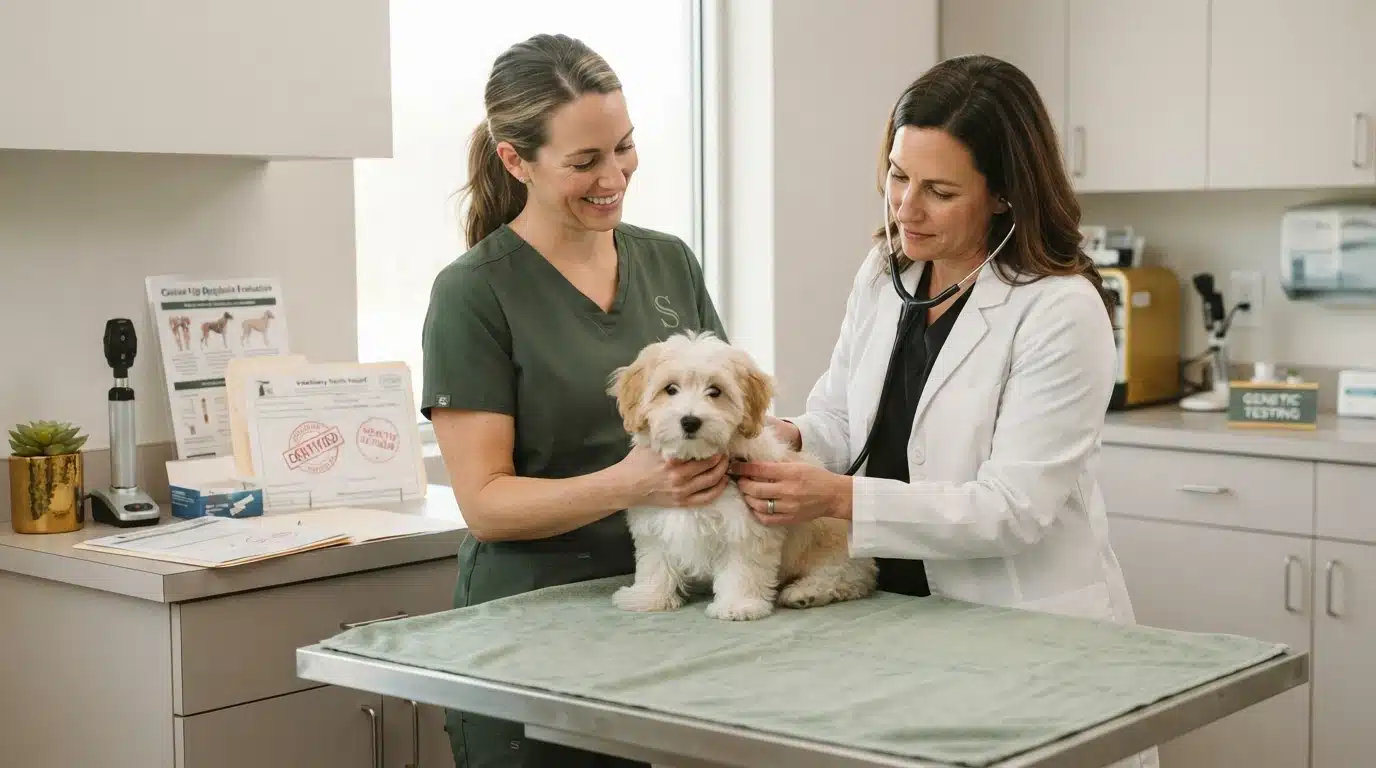
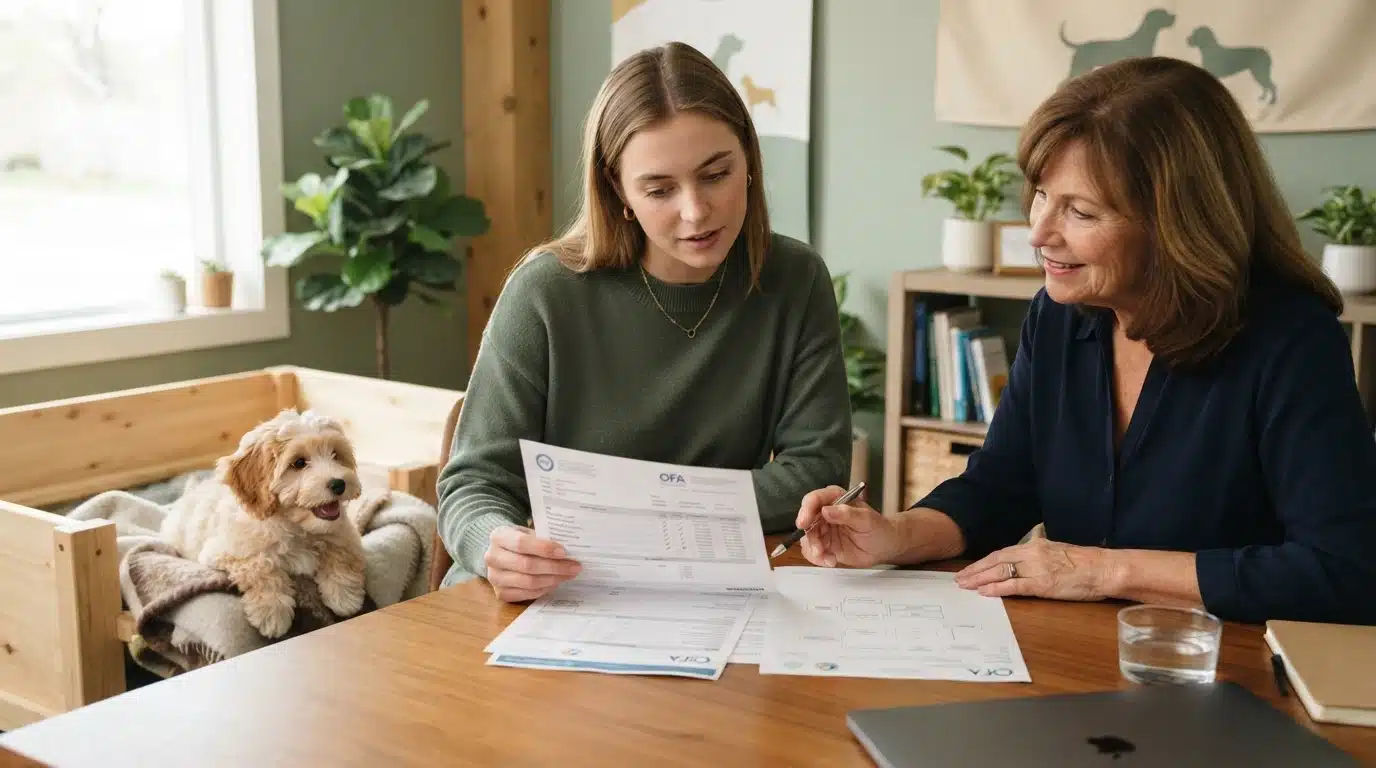
Start with the claims in reviews. If several buyers mention receiving health clearances, ask the breeder for the actual reports, including OFA or genetic panel results. Match names and dates. The dam listed on the report should match the mother named on your puppy’s paperwork.
Then ask which lab ran each test. A real breeder can name the lab and pull the report on request. For Havanese, Havapoo and Cavapoo litters, you can also learn which health tests to ask a Havanese breeder for before you commit. If the breeder hesitates, sends photos of documents instead of verifiable reports, or the details shift between emails, treat the reviews as unconfirmed.
Confirming the business is real before you deposit

Scammers borrow real breeders’ photos and reviews, so confirm the seller behind them. The AKC notes the BBB has logged nearly 10,000 puppy scam complaints in three years, and it recommends verifying the seller through a video call before any money changes hands. Ask for a live video tour of the puppy with the dam, not pre-recorded clips.
Also confirm the breeder business registration. Search the state’s business registry for the exact name, and ask for a state agriculture department breeder license where one is required. If the registry shows nothing and the seller pushes for a deposit through a payment app, walk away. As a rule, never buy sight unseen; a live video call, or a visit before your deposit, closes most scams before they start.
According to AKC’s puppy scam guidance, stolen photos and disappearing sellers are the two most common patterns, and both fall apart under independent checks.
Step 4: Run reference checks with a written script
Reviews tell you how a breeder looks in public. References tell you how the puppy did in someone’s home six months later. Before you call, ask the breeder for three types of contacts: owners of recent litters, owners of puppies from two or three years ago, and their veterinarian. Then ask each person the same questions in the same order. A written script keeps your comparison honest and stops you from drifting into small talk that confirms nothing.

The reference questions that produce real answers
Ask each reference these questions and write down the exact answers:
- Did your puppy match the health records you were given? This checks whether vaccination and deworming records reflect reality.
- What health problems showed up in the first year? Long-term owners remember what early buyers cannot know yet.
- How did the breeder respond when you had a question or a problem? Responsiveness after the sale matters more than charm before it.
- Would you buy from this breeder again, knowing what you know now? A pause here tells you as much as the words that follow.
- Was anything different from what the website or contract promised? This surfaces gaps between marketing and delivery.
Call at least two references yourself rather than accepting a group text or a shared testimonial. A short video call with a reference works too, especially for breeders outside your area.
How to read a reference’s answers without leading them
Never ask, “Was the breeder great?” That invites a yes. Ask open questions and stay quiet after each answer, because people fill silence with the honest part. Watch for specifics: dates, names, real events. Vague praise like “wonderful to work with” could come from anyone, including a friend or a relative. Ask how they know the breeder; a reference who has only met them online is worth much less. And treat one guarded answer as a signal, not a verdict, then weigh it against everything else you have verified. This same habit of asking direct questions early also helps when you request puppy breeder reference questions of your own, beyond the script above.
Step 5: Cross-check what you find against the written agreement
Reviews and reference calls tell you what people remember. The contract tells you what you are actually buying. Once you have gathered both, put them side by side and look for gaps.
Contract terms your review research should have prepared you for
A puppy contract is a binding document between buyer and breeder, so read it before you send any deposit. Key terms to review include the health guarantee and its deadlines, breeding restrictions and spay-neuter timing, deposit and reservation terms, and each buyer responsibility, as this overview of puppy contract terms explains. Your earlier research should have armed you with questions. If a reference praised “lifetime support,” check whether the contract spells out what that means. If reviews mention returns being easy, the contract should state the remedy and timeframe in writing.

When a reference and a contract tell different stories
Disagreements are where most problems hide. A reference might say the breeder replaced a sick puppy without argument, but the contract may allow only a refund up to a set date, or a veterinary-confirmed condition within 72 hours. Ask the breeder directly about the mismatch and get the answer in writing, by email or signed addendum. A strong breeder explains the difference calmly. Evasiveness, or a refusal to put terms on paper, is a signal to keep shopping. Trust what is signed, not what is said.
Mismatches between praise and paper are common enough that you should treat every verbal promise as a question, not a fact.
Step 6: Know the limits of reviews and what to do about them
What reviews and references cannot tell you
Is it bad if a breeder has no reviews? Not always. A new program, or one that places a few litters a year, can simply lack volume. What matters is whether you can verify everything else: health testing reports, vaccination and deworming records, and a live video call with the puppies. Reviews also go stale. A glowing testimonial from three years ago tells you nothing about current practices, and praise on a breeder’s own site is unverified. Even honest references speak only to their own puppy, not the litter you’re considering. So treat reviews as one signal, not proof. Search for a reputable puppy breeder near me only as a starting point, then confirm each claim independently before any deposit changes hands.
Escalating a concern without overstating it
If something feels off, start with the breeder in writing. Ask for the specific record or answer you’re missing, and give a clear deadline. A legitimate breeder responds with documentation; dodging or pressure is your answer. If concerns remain, report the issue to the Better Business Bureau and your state agriculture department if a license was claimed. The BBB logged nearly 10,000 puppy scam complaints in three years, and reports help other families searching the same breeder. Keep your claims factual: state what was promised, what was provided, and what dates are involved. Never accuse without evidence, and never post speculation. Facts protect you; guesswork exposes you to defamation risk.
Common Mistakes to Avoid
Rating the evidence instead of the reviewer
A five-star average tells you almost nothing on its own. Read what people actually describe, then weigh each review by how much that person could know. A buyer who took a puppy home last month can speak to communication and pickup day. A review that only praises cute photos proves less. Watch for fake puppy review patterns too: clusters of short, generic posts on the same week, reviewer names reused across breeders, and perfect scores with no detail. One detailed, dated account of a health issue beats a page of vague praise.
Keeping the search honest over time
Confirmation bias creeps in once you fall for a photo. Buyers start looking for reasons to say yes instead of reasons to wait. Counter it by writing down your concerns before each call, then checking whether the answers actually resolve them. Re-run the steps if anything changes, like a new deposit demand or a shifted pickup plan. Save your notes, even for breeders you drop. Six months later, the pattern across your calls is easier to see on paper than in memory, and a slow search finds a healthier puppy than a fast one.

You have the tools now: check reviews for patterns, call references, and confirm records before any deposit. If you want that process handled openly from the start, Sage Puppies shares health and development records for every Havanese, Havapoo and Cavapoo litter. Start with our application, ask anything, and see the answers before you commit.
Frequently Asked Questions
Q1: How can I safely check puppy breeder reviews and references?
Search the kennel name on sites the breeder cannot edit, read reviews for patterns instead of averages, call two references yourself with a written script, and match every claim against health testing and vaccination records before sending a deposit.
Q2: Should I trust reviews on a breeder’s own website?
No. Testimonials a breeder chooses to display are curated marketing. Treat them as a starting point, then confirm the same claims through third-party sites, BBB records, or buyer references you contact directly.
Q3: What if a breeder has no reviews at all?
Not necessarily a problem. Small programs may lack volume. Judge whether you can verify health testing reports, vaccination records, a written contract, and a live video call with the puppy and dam.
Q4: Can a breeder fake references?
Yes, so verify them. Ask how the reference knows the breeder, expect specific dates and puppy details, and prefer owners of older litters who can describe health after the first year.
Q5: When should I pay a deposit?
Only after records, contract terms, business registration, and a live video call or visit all check out. If a seller pushes app-based payment before any of that, walk away.
Q6: What do I do if something feels wrong?
Ask the breeder for the missing record in writing with a deadline. If concerns remain, report factual details to the BBB and your state agriculture department without speculation.
Conclusion
Checking puppy breeder reviews safely comes down to six habits: find reviews the breeder cannot curate, read them for patterns instead of averages, confirm claims against health testing and vaccination records, run reference calls with the same script, cross-check praise against the contract, and know what reviews can never prove. No single review settles anything, but a pattern of dated, specific, verifiable detail is hard to fake. For Havanese, Havapoo and Cavapoo litters, ask for parent health reports, a written contract, and a live video call before any deposit. Do that, and you can judge any breeder with confidence, even a small program with only a handful of reviews.