Quick Summary: Verify a puppy’s health testing with dated documents tied to each parent’s name and registration number, then check the results yourself in the OFA database. A CHIC number proves a dog completed required tests, not that every result was normal, so ask for individual scores, specialist records, DNA reports, and the puppy’s own veterinary history before paying a deposit. Sage Puppies supports this approach by sharing and verifying parent records before payment and excluding dogs that fail screening.
Ask a breeder whether the parents are health tested and you’ll often get a photograph of a lab report. The hard part is deciding whether that report belongs to the mother, the father, or an aunt from a litter two years ago. Most first-time buyers cannot tell the difference, and the paperwork can look convincing either way.
This guide walks you through the puppy testing questions worth asking before you put down a deposit, from genetic testing questions about carrier status to health test questions about hips, hearts, and eyes. Each question comes paired with the document that proves the answer, such as a CAER eye exam record or a CHIC certificate, and the public registry where you can verify it yourself. We’ll use the Havanese Club of America’s CHIC requirements as a worked example, so you can compare any breeder’s answers against a published standard rather than a sales pitch. Sage Puppies raises Havanese, Havapoo, and Cavapoo puppies in South Jordan, Utah, and built this guide around the same records we ask for in our own program.
What Health-Testing Language Actually Means
Breeders throw around terms like “health tested,” “vet checked,” and “DNA cleared.” They do not mean the same thing, and mixing them up is how buyers end up with a puppy whose parents were never really screened.
Screening Test Versus Vet Check Versus DNA Panel
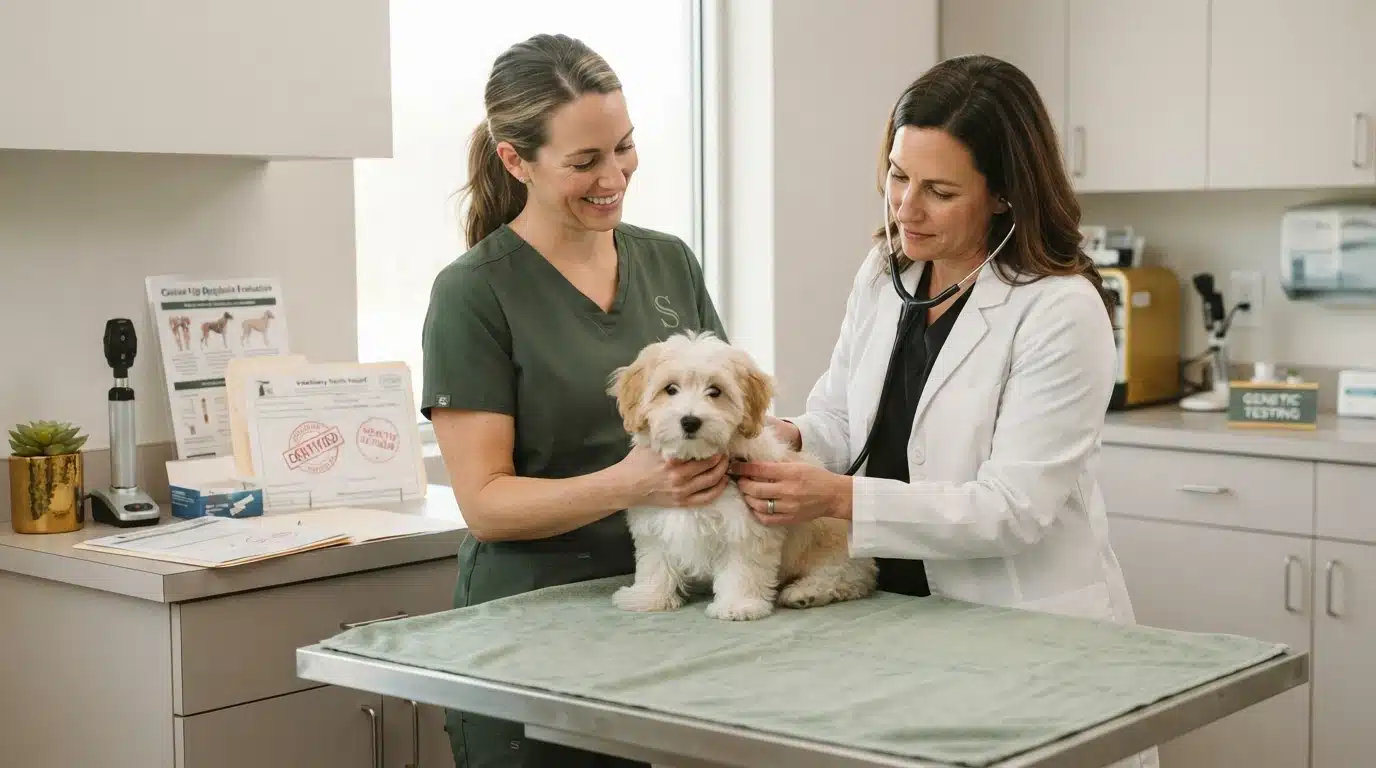
A screening test is a breed-specific exam done by a specialist, such as hip evaluation, patellar luxation screening, a CAER eye exam, or a BAER hearing test. Results are scored and posted publicly. A vet check is a wellness exam: the puppy looks healthy that day. It is not a test for inherited disease. A DNA panel checks gene variants, and “carrier” usually means the dog is healthy but could pass the variant on. A puppy health testing question worth asking is which of these three the breeder actually completed, and for which parent dogs. Each proves something different.
Why a CHIC Number Is Not a Clean Bill of Health
A CHIC number means a dog completed every test its parent club requires and the owner agreed to post the results publicly, whatever those results say. The OFA’s CHIC program issues the number when breed-specific results are entered into its database, even if some findings are abnormal. So a CHIC certificate answers “was this dog tested?” not “did it pass?” Ask for the individual scores behind it. Good breeders share them openly; that transparency is the standard we build into our own screening checklist for every litter.
The Core Questions That Confirm Genuine Testing
Ask these four puppy testing questions, and ask for proof of each answer:
- Which tests were done, on which dog, and on what date?
- What do the orthopedic records show?
- What do the eye, hearing, and cardiac records show?
- What does the puppy’s own vet record say?
A real breeder answers each one with a document, not a promise.
Which Tests Were Done, on Which Dog, and on What Date
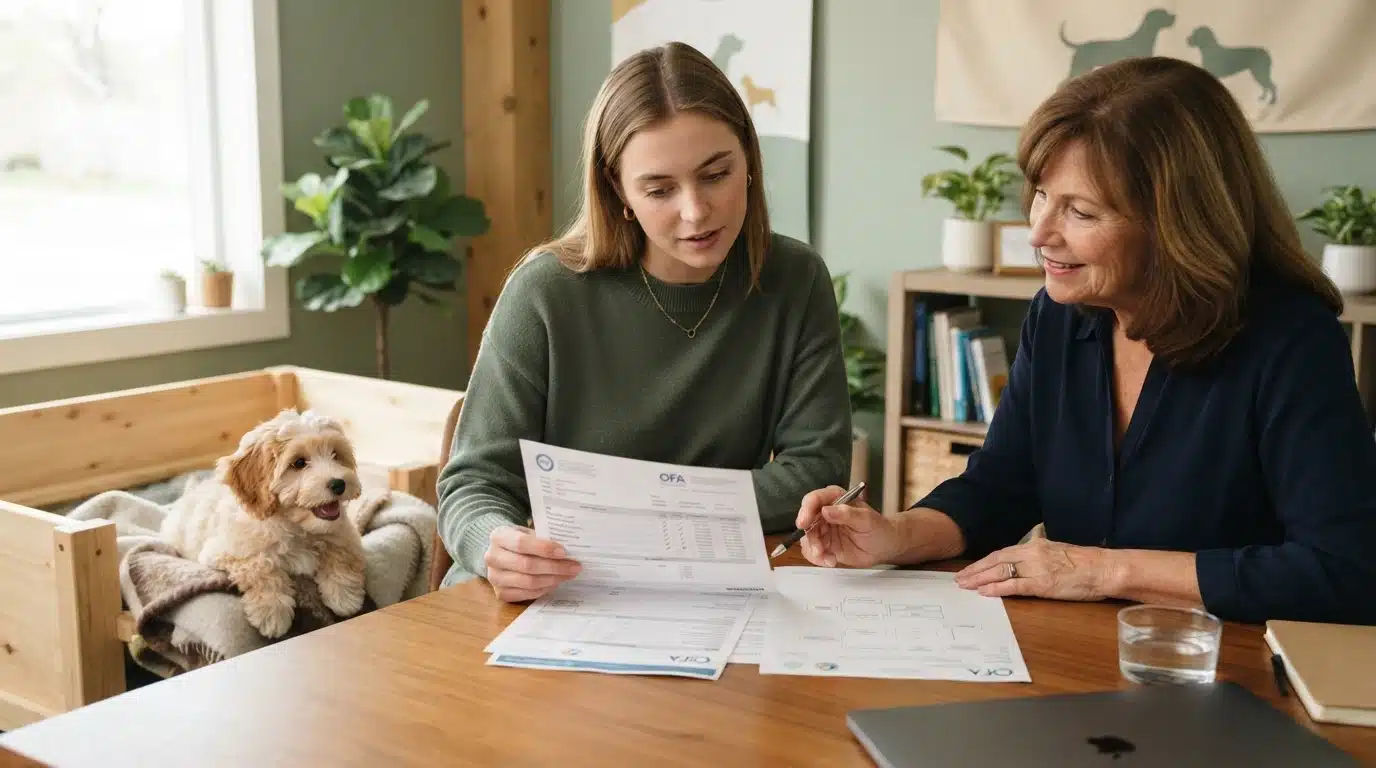
Get the parents’ registered names and numbers first. Then ask for each test result by name, tied to a specific dog and a date. Vague answers like “they’re all tested” mean nothing. A breeder who has done the work can send copies on the spot, and you can confirm the results yourself in the OFA’s public database.

Structural and Orthopedic Records
Small breeds need patellar luxation screening, because loose kneecaps are common in Havanese, Havapoos, and Cavapoos. Ask whether both parents have an OFA patella evaluation and what it found. Hip evaluations matter less in these breeds, but ask anyway so you can compare answers. Each result should show the dog’s name, registry number, and evaluation date.
Eye, Hearing, and Cardiac Records
Eyes should carry a CAER exam record from a board-certified ophthalmologist. Hearing results come from a BAER test, and the Havanese Club of America notes it is now a recommended test rather than a CHIC requirement for the breed. Cardiac exams should be performed and documented by a veterinarian, ideally a cardiologist.
The Puppy’s Own Veterinary Records
The parents’ testing protects future litters, but your puppy still needs its own exam record. Ask for the wellness visit date, vaccines given, deworming history, and any vet notes. Breeders who keep thorough records, like the process behind which puppy health records to ask a breeder for, make this easy. If records arrive slowly or arrive edited, walk away.
Questions About the Parents’ Health History
The parents’ records tell you more than any promise. Ask what illnesses either parent has had, what treatment they received, and how long relatives on both sides have lived. Then ask about the breeder’s own dogs, not just the sires and dams used for breeding.
Illnesses, Treatments, and Longevity in the Parents
Start simple: “Has either parent ever been sick, and what was done about it?” A cough that cleared up in a week matters less than recurring skin infections or early arthritis. Ask how old the parents are now, and how long their parents lived. Small breeds like the Havanese often reach their mid-teens, so a parent line that dies at eight deserves a clear answer. Good breeders keep this history on hand.

Prior Litters and Their Long-Term Outcomes
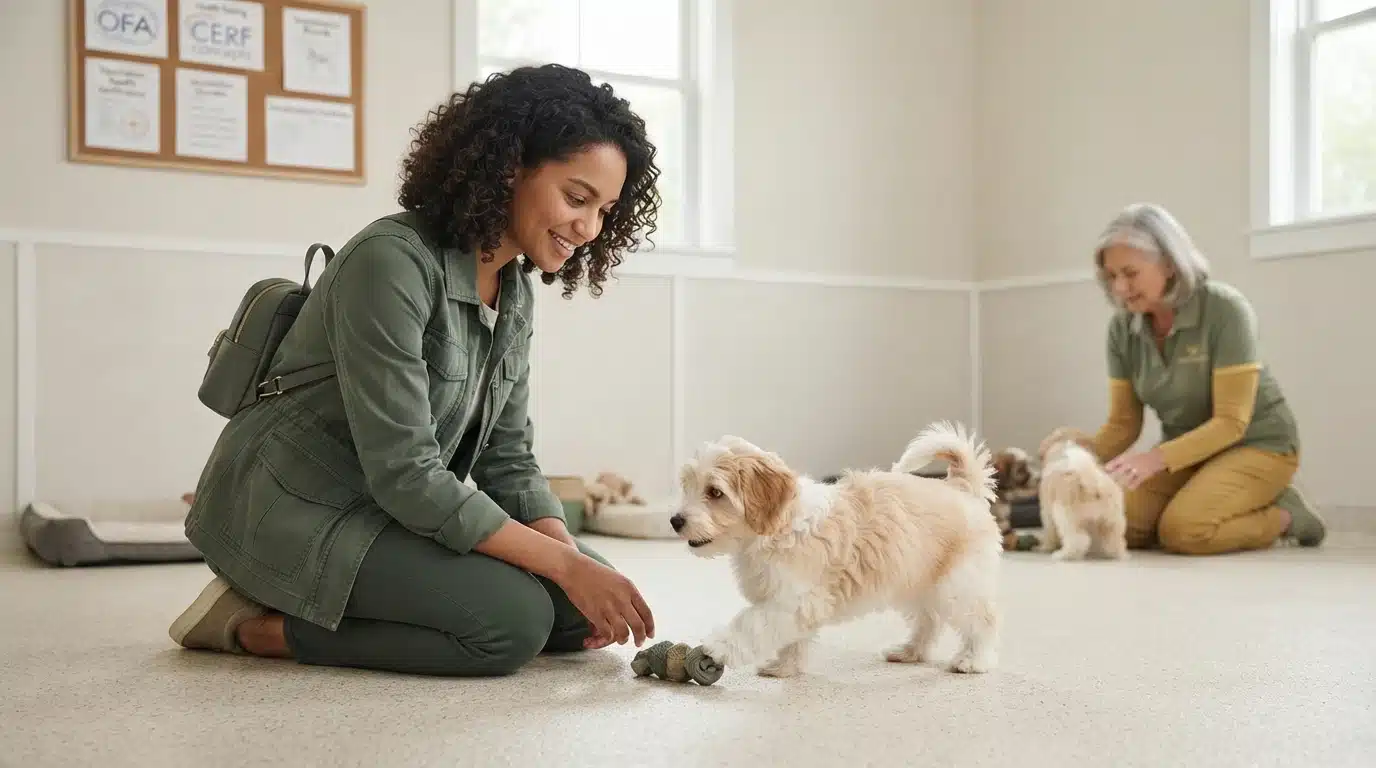
Next, ask about earlier litters. “How many litters has this mother had, and how are those puppies doing now?” A breeder who stays in touch with puppy families can tell you about surgeries, allergies, or temperament issues that appeared later. If the breeder says nobody has reported problems, ask whether they actually follow up or are just guessing. Breeder references, checked safely, can confirm what you hear firsthand.
How the Program Handles a Failed Test
Finally, ask what happens when a parent fails a screening. The answer you want is concrete: the dog leaves the breeding program, no matter how sweet or expensive. Some programs withdraw a parent after one failed CAER eye exam or a hip evaluation that comes back poor. Others keep breeding and simply swap sires. Ask for the program’s written policy, and compare it to the Havanese Club of America’s recommended testing set. Sage Puppies, for example, removes any dog that fails a screening before breeding continues. You can also see how a program presents its health screening checklist before you commit to an application.
How to Verify Health Testing Records Online Before You Pay
Ask one question before any deposit: can I see the paperwork, and can I confirm it myself? Follow these steps in order. Each takes minutes, and together they answer the tracked question directly.
- Get the parents’ registered names and registration numbers from the breeder.
- Look up each parent in the OFA database and read the results yourself.
- Review DNA reports and any specialist exam certificates.
- Match every record to the puppy you were actually offered.
Only then should money change hands.
Searching the OFA Database by Parent Name
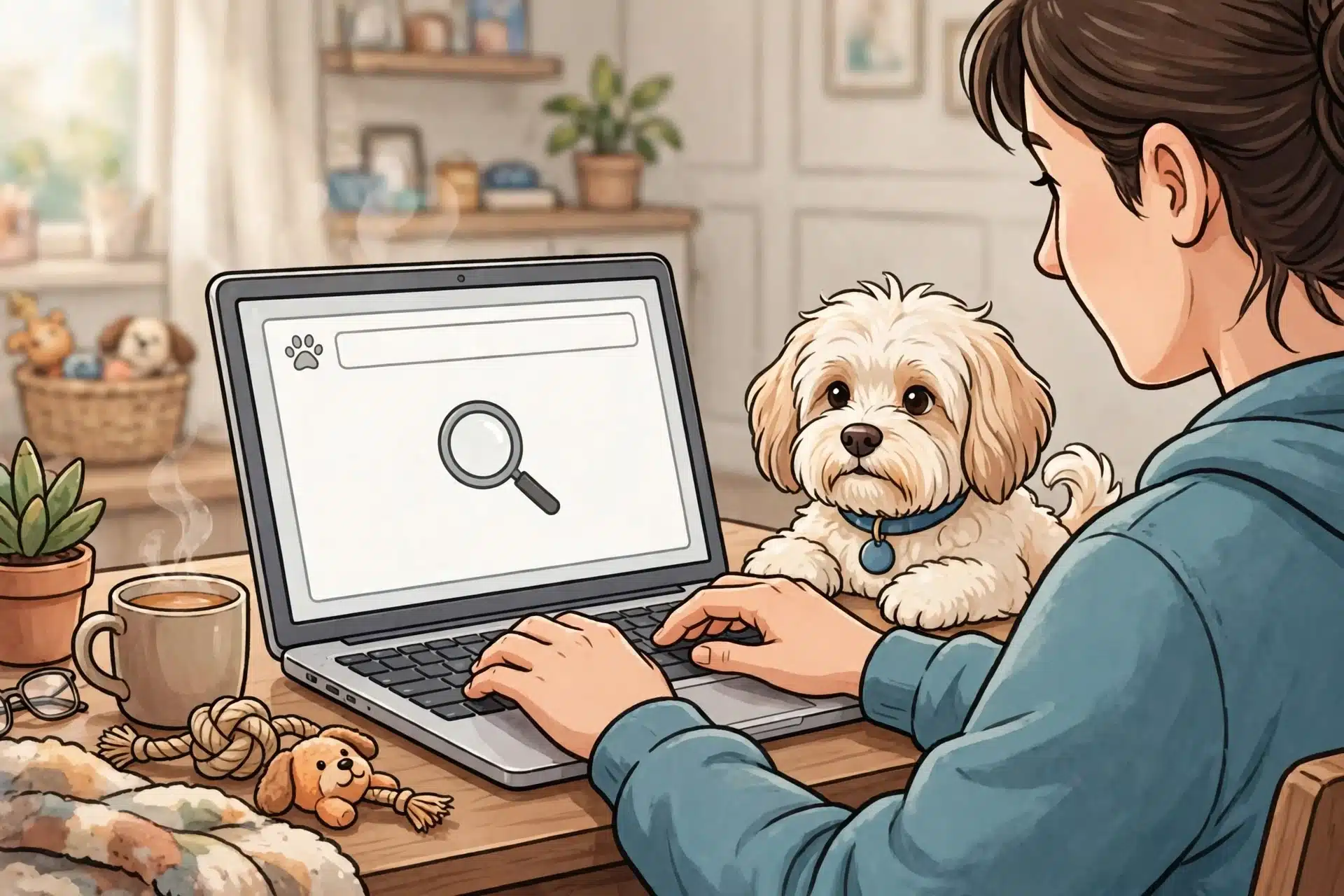
The Orthopedic Foundation for Animals keeps a free, public database. Go to ofa.org, choose the search option, and enter a parent’s registered name or registration number. You should see hip evaluation results, patellar luxation screening, and any eye or hearing entries. A Havanese parent with a CHIC number has met the breed club’s testing set. No results at all is an answer too.
Checking DNA Reports and Specialist Certificates
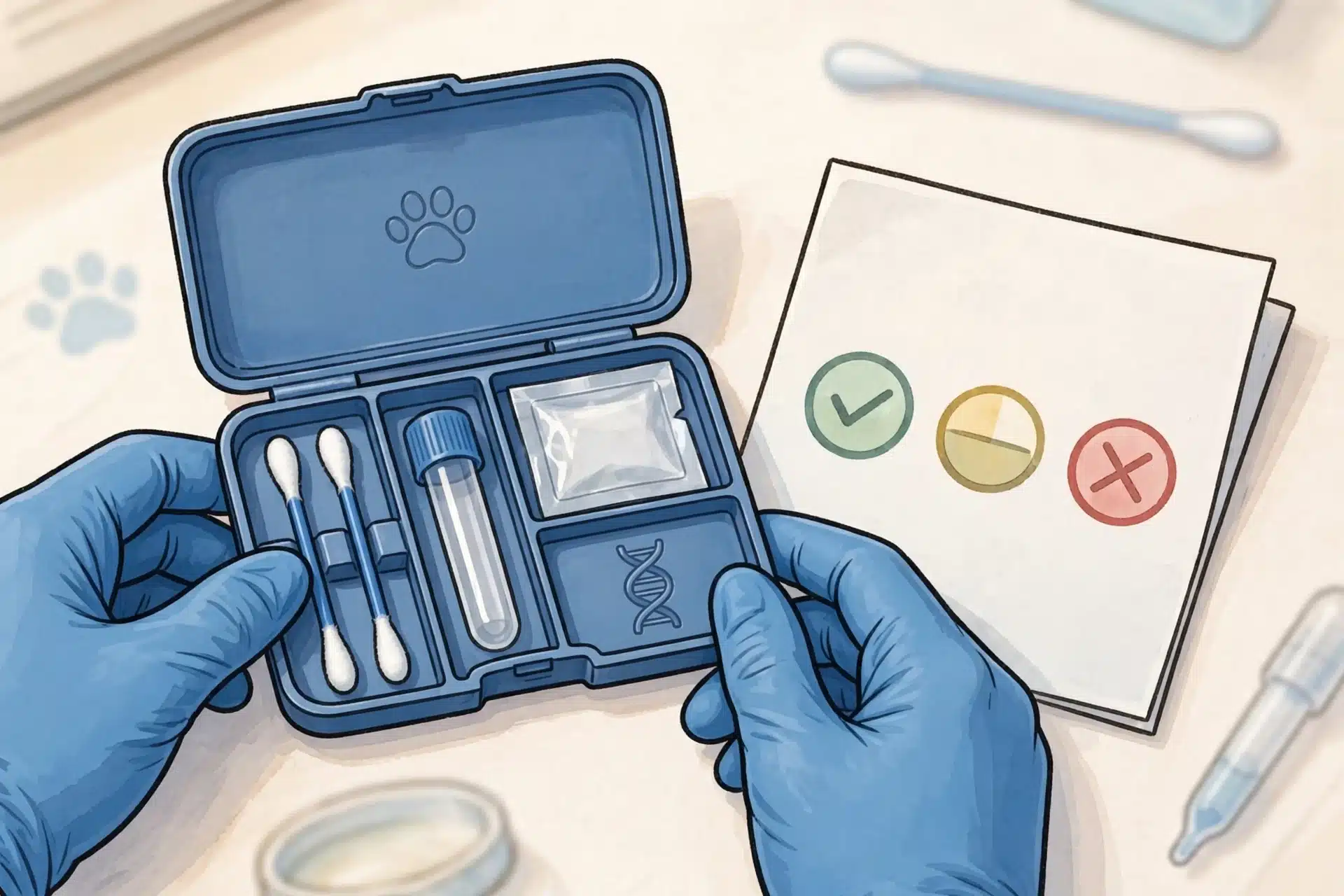
Ask for the actual DNA report, not a summary text. It should name the lab, list each disease tested, and state whether the dog is clear, a carrier, or affected. Eye exams come through CAER records and hearing tests through BAER, both filed with OFA when the owner submits them. If a breeder says “both parents are tested,” the documents should show those exact tests by name.
Matching Records to the Puppy You Were Offered
Check that the parents’ names on the paperwork match the parents described to you, and that the litter’s date fits the puppy’s age. A genuine breeder hands over this information freely. These are fair puppy testing questions, and hesitation is a warning sign.
The No-Deposit-Before-You-Verify Rule
Make verification a condition of paying. Responsible programs expect it; at Sage Puppies, for example, verification happens before any deposit is requested, and it should everywhere. If a seller pressures you to commit today, walk away. Real records survive a day of checking.
Genetic Testing Questions to Ask and Their Limits
Clear, Carrier, and Affected Explained
DNA panel results use three words. A clear dog carries no copies of a tested mutation. A carrier holds one copy and stays healthy, but can pass the gene on. An affected dog carries two copies and may develop the condition, though not always. What matters for your puppy is the pairing: clear parents cannot produce affected puppies, so ask how the sire and dam’s results combine, per breeding guidance on DNA results.
Questions That Test the Breeder’s Understanding
A good breeder answers plainly. Try these:
- Which conditions does the panel cover, and which are breed-relevant? Vague “full panel” talk is a flag.
- What are each parent’s exact results, and do any show carrier status?
- If a parent is a carrier, how was the pairing chosen? The right answer: bred only to a clear mate, so no puppy can be affected.
- Where can I verify these results myself?
The Riney Canine Health Center at Cornell notes that screening exists precisely so breeders avoid producing affected puppies. A breeder who explains pairings understands the tests.
What Genetics Cannot Tell You
A clear DNA panel is not a health promise. It cannot predict hip or kneecap problems, heart issues, or eye disease, which is why physical exams and screenings still matter. Genetics also misses conditions influenced by diet, weight, and environment. Treat results as one strong layer, not the whole picture.
Turning Answers Into Contract Terms
Good answers mean nothing if they stay verbal. A breeder who tested the parents should be willing to put the proof, and the promise behind it, in writing.
Where Health Testing Should Appear in the Contract
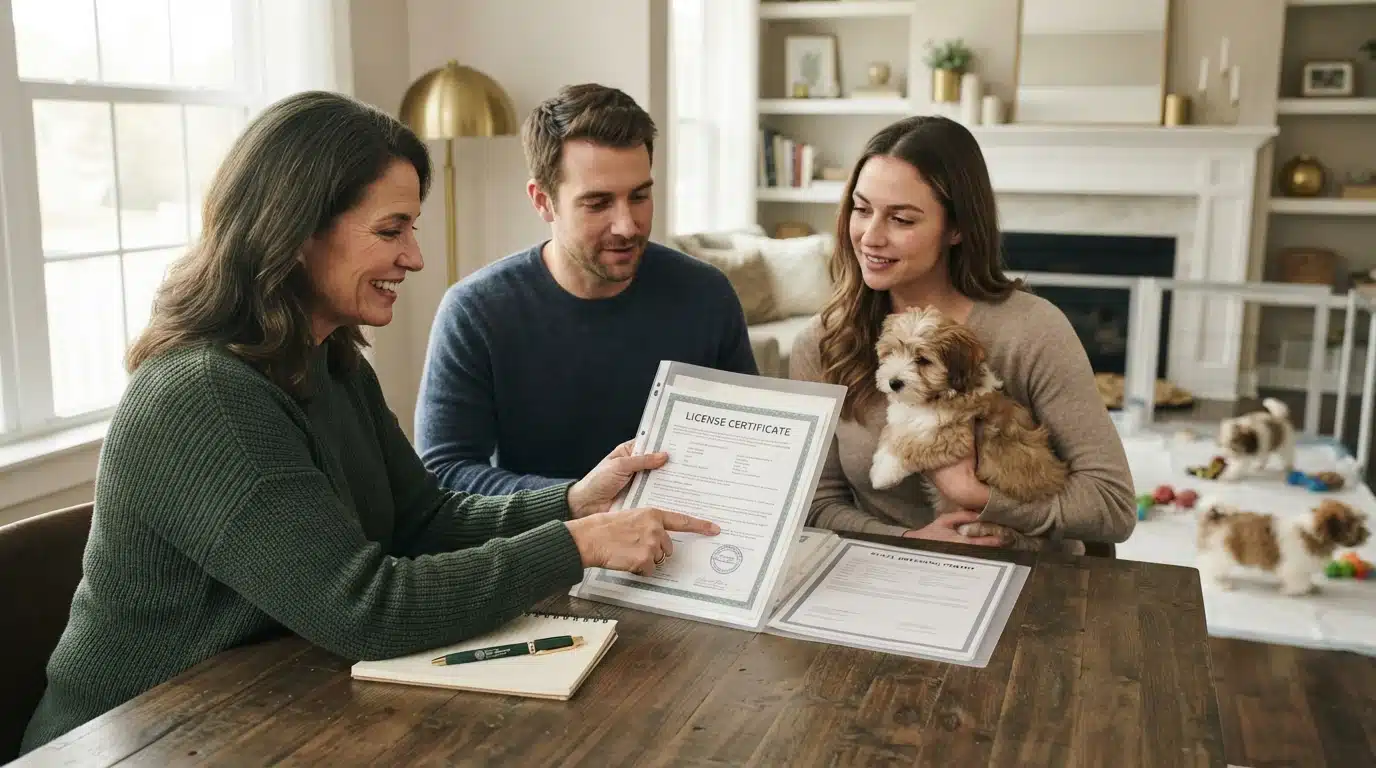
Ask for the contract to list each parent’s registration number and the tests performed, so you can match them against the OFA and CHIC records you already verified. Vague language like “parents are health tested” is not enough. If a breeder resists naming documents in writing, treat that as an answer in itself. Our own puppy health guarantee explained page shows how testing records and guarantee language connect.
Guarantee Scope, Time Limit, and Remedy
A solid puppy health guarantee covers three things clearly:
- Scope: which hereditary and congenital conditions qualify, ideally naming the ones testing was supposed to reduce
- Time limit: a defined window, commonly a short period for infectious illness and one to two years for serious genetic disease
- Remedy: exactly what happens if a claim qualifies, whether that’s a replacement, a refund, or help with treatment costs
Ask what voids the guarantee, too. Many contracts require a vet exam within a few days of pickup, so calendar that visit before you bring the puppy home.
Return Policy and After-Sale Support
Read the return clause before you need it. A fair policy states who pays transport, whether partial refunds apply, and how rehoming is handled if the match fails. Breeders who stay reachable after pickup, answering feeding and training questions, usually honor their paper promises better too.
Common Mistakes to Avoid
Treating Vague Reassurance as Evidence
“Both parents are healthy” is not a claim you can check. Ask instead for the parent’s registration number, then look up the hip evaluation, patellar luxation screening, CAER eye exam, or DNA panel result yourself. Words like “vet checked” describe one puppy visit, not tested parents. Real proof is a document with a date, a registry behind it, and results you can find on your own.
Paying Before Records Are Reviewed
Never leave a deposit before you have read the testing paperwork. Request copies of the parents’ health records early, and match each result against the public registry it names. If a breeder delays, makes excuses, or sends photos instead of documents, walk away. A responsible program welcomes verification; ours shares results before any money changes hands. Paying first removes your only leverage.

Ready to meet a puppy whose health testing you can check yourself? At Sage Puppies, Cassie shares each parent’s records and matches families through a clear, owner-run process. Review the available puppies, then submit your application to start the conversation.
Frequently Asked Questions
Q1: What questions should I ask a breeder to confirm a puppy is genuinely health tested?
Ask which tests were done, on which parent, and on what date, then request the documents: OFA hip and patellar luxation evaluations, a CAER eye exam, a BAER hearing test, and cardiac exam records. Each answer should come with a dated document you can verify.
Q2: What questions should I ask a puppy breeder about the parents’ health history?
Ask what illnesses either parent has had, how they were treated, how old the parents are now, and how long their relatives lived.
Q3: How can I verify a breeder’s health testing certificates online before paying a deposit?
Search the OFA database at ofa.org using each parent’s registered name or registration number, then compare results against the documents provided.
Q4: Which genetic testing questions should I ask a breeder?
Ask which conditions the panel covers, each parent’s exact results, and how carrier pairings were chosen. Remember DNA results cannot predict hip, heart, or eye disease, so physical screenings still matter.
Q5: What does a CHIC number actually prove?
It shows a dog completed its breed club’s required tests and results were posted publicly, whether or not findings were normal. Always ask for the individual scores behind it.
Conclusion
Genuine health testing is proven by documents, not reassurance. Ask which tests were done, on which parent, and when, then match each answer against the OFA database, the CHIC records, and the CAER, BAER, and DNA reports the breeder provides. A CHIC number shows a dog was tested, not that it passed, so read the individual scores yourself. Put the evidence into the contract, along with clear health guarantee terms, a time limit, and a remedy. Confirm the puppy’s own vet record before pickup. Breeders who welcome this process are usually the ones who did the work, and the ones worth trusting with your family’s next companion.