Quick Summary: Keeping puppies cool during Florida pickup travel hinges on pre-cooling the vehicle, using a secured carrier, and planning short, shaded stops while never leaving the puppy in a parked car. Watch for heat-stress signs like heavy panting or drooling, and if your AC fails or the route has long hot stretches, ask Sage Puppies about delivery instead. Early morning pickups with steady airflow, small water sips, and indoor breaks keep the first trip safe until you reach a cool, quiet arrival space.
A calm pickup can turn risky fast when sun hits a parked car or a rest-stop sidewalk. Young dogs lose heat control quickly, and Florida heat dogs face extra strain during a long drive.
These puppy travel tips help you keep puppies cool from the first handoff through each fuel stop. You will learn how to set up a safe carrier, manage car airflow, time breaks, pack the right supplies, and know when conditions call for a different travel plan.
Families picking up a Havanese, Havapoo, or Cavapoo need more than a cold water bottle. Smart puppy travel tips pair heat-safety basics with clear stop-by-stop choices. Use these puppy travel tips to protect a small puppy before the highway becomes the hottest part of the day.
Step 1: Decide Whether Florida Pickup Travel Is Safe for This Puppy
Check Heat, Humidity, and Travel Timing
Check the forecast for the pickup city, every planned stop, and your first overnight point. Look at the heat, humidity, storm risk, and parking exposure, not just the high temperature.
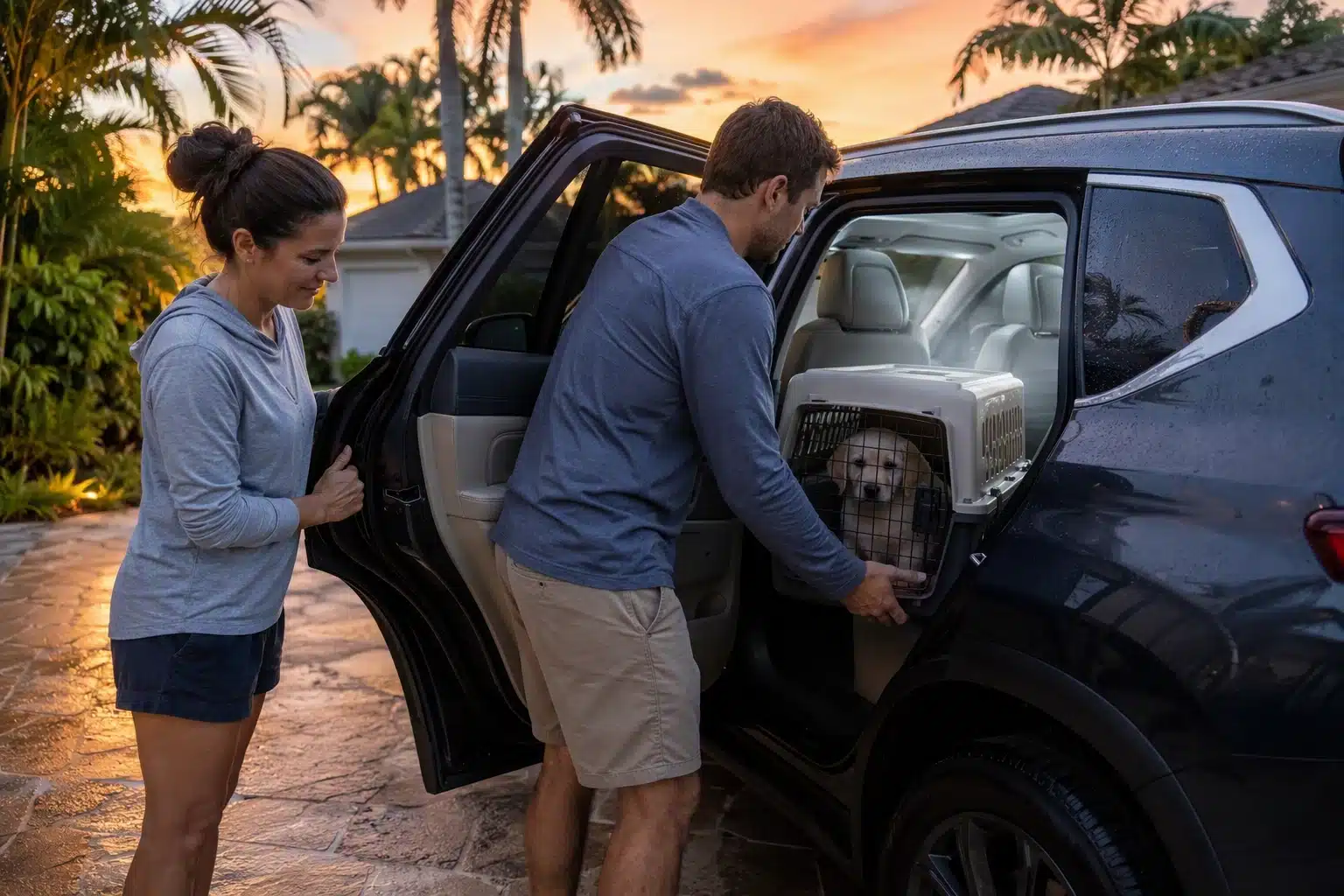
Plan pickup early, then load the puppy directly into a fully cooled vehicle. Keep stops short and indoors when possible. A puppy should never wait in a parked car. The American Veterinary Medical Association warns that a vehicle can heat up fast, even in shade.
| Travel factor | Safer choice | Riskier choice |
|---|---|---|
| Pickup time | Early morning | Midday heat |
| Stops | Indoor, quick, planned | Long outdoor breaks |
| Vehicle | Pre-cooled, steady AC | Parked or warm cabin |
High humidity makes panting less effective. Treat a muggy day with the same care as a very hot one.
Know When to Pause, Reschedule, or Ask About Delivery
Pause the plan if the puppy seems tired, unwell, or stressed before handoff. Ask Sage Puppies about delivery or a new pickup date if your route includes severe heat, storms, long stretches without indoor stops, or an unreliable vehicle.
Watch for heavy panting, drooling, weakness, wobbling, unusual gum color, or collapse. These are heat-stress warning signs that need urgent veterinary care.
Use this quick decision check:
- Confirm the puppy is fit and ready to travel.
- Confirm your AC works before pickup.
- Confirm an emergency vet is available along your route.
- Choose delivery if any answer feels uncertain.
A delayed pickup is far better than a preventable heat emergency.
Also Read: How to Keep Puppies Safe During Extreme Weather and Temperature Changes
Step 2: Prepare a Cool, Secure Vehicle Before Pickup
Set Up the Carrier for Airflow and Stability
Choose a hard-sided or sturdy travel carrier that lets your puppy stand, turn, and lie down. Line it with a thin, absorbent pad, plus one familiar-smelling item from the breeder if available. Avoid thick bedding that can trap heat or cover the puppy’s face.
Place the carrier on the back seat or flat cargo area, near the vehicle’s center. Thread a seat belt through the carrier’s approved strap points, or secure it so it cannot slide, tip, or fall during a stop.
The AVMA advises securing carriers and keeping them large enough for a pet to move comfortably.
- Keep carrier vents clear on all sides.
- Do not place it in direct sun.
- Never hold the puppy in a passenger’s lap.
- Keep the puppy inside the vehicle cab, never in a truck bed.
Tip: Put the carrier in the car the night before. Confirm doors latch, the seat belt holds, and cool air reaches the carrier.
Make Cooling Reliable Before the Puppy Enters the Car
Run the air conditioning for 10 to 15 minutes before pickup. Aim cool air near the carrier, not straight into it. Use a sunshade, cover hot leather seats with a light towel, and bring water in a spill-resistant bowl.
| Before you leave | What to check |
|---|---|
| Cabin temperature | It feels cool before the puppy enters |
| Airflow | Vents are open and not blocked by bags |
| Carrier surface | Pad is dry and not warm from sunlight |
| Backup plan | You know where to stop indoors if needed |
Never depend on cracked windows or shade. The AVMA warns that a parked car can overheat quickly.
Warning: If the AC fails, pull over at an air-conditioned indoor location. Do not continue driving with a panting, distressed puppy.
Also Read: Havanese, Havapoo & Cavapoo Puppy Care Blog
Step 3: Coordinate Pickup Timing, Records, and the First Hour
Confirm the Handoff Before Leaving Home
Set a morning pickup window with the breeder, then confirm it the day before. Ask where to park, who will meet you, and whether weather calls for a faster handoff.
Bring a folder or phone file for the puppy’s records. Keep it within reach, not buried in luggage.
| Bring or confirm | Why it matters |
|---|---|
| Vaccination and deworming record | Helps your home vet plan next care |
| Health certificate, if provided | May be needed for interstate travel |
| Microchip details | Lets you register your contact information |
| Feeding and routine notes | Keeps the first day familiar |
| Emergency contact | Gives you a fast point of contact |
For travel across state lines, check your destination rules early. The AVMA travel guide notes that requirements can vary by state.
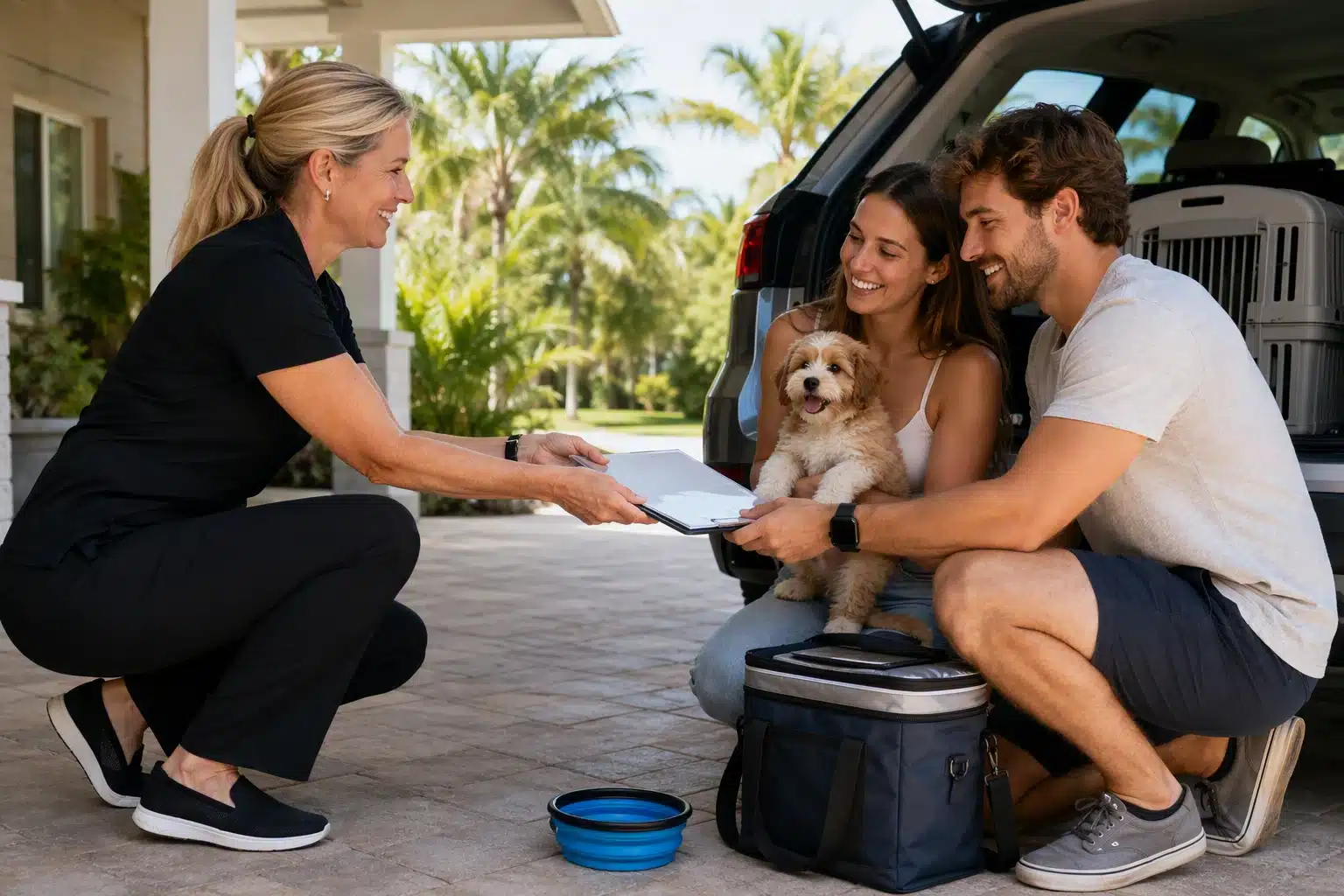
Tip: Ask Sage Puppies for the puppy’s last meal and potty time. That helps you plan the first stop without guessing.
Move From Handoff to Highway Without a Heat-Heavy Delay
Start the air conditioning before the puppy comes outside. Have the secured carrier ready in the back seat, with a light towel and no loose items.
- Place the puppy in the carrier right away.
- Secure the carrier so it cannot slide.
- Drive out before taking photos, shopping, or meeting friends.
- Stop only when the puppy needs a calm break.
Never leave a puppy in the parked vehicle. The AVMA warns that car temperatures can rise quickly, even in shade or with cracked windows.
Warning: Heavy panting, drooling, weakness, or pale or dark gums call for immediate cooling and emergency veterinary care.
Step 4: Manage Cooling, Water, and Breaks During the Drive
Monitor the Puppy While the Vehicle Is Moving
Keep the cabin cool before your puppy enters, then maintain steady air flow around the secured carrier. Do not aim a strong vent directly at their face.
Have one adult ride near the puppy when possible. Check calmly at each stop and listen for changes in breathing or distress.
- Offer a few small sips of water during planned breaks.
- Watch for heavy panting, drooling, weakness, wobbling, or unusual gum color.
- Keep the puppy secured in a carrier, not on a lap or loose in the car.
The AVMA advises urgent veterinary care for signs of heat stress, including unsteadiness or collapse.
Never leave your puppy in a parked car. Shade and cracked windows do not keep a vehicle safe.
Make Every Rest Stop Short, Shaded, and Controlled
Choose a quiet, shaded patch of grass away from traffic, other dogs, and hot pavement. Carry the puppy from the car to the potty spot on a secure harness and leash.
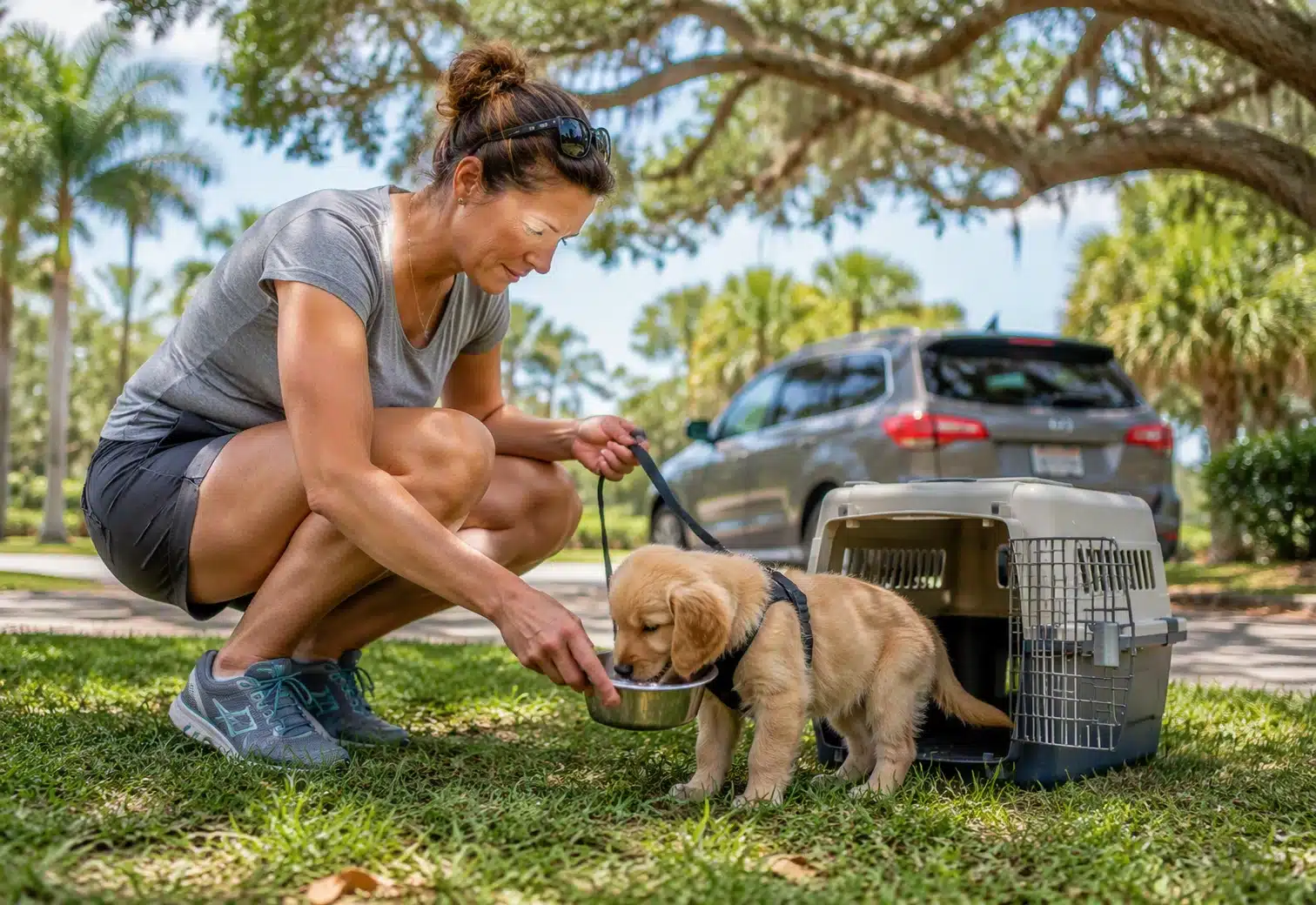
Keep each stop simple:
- Potty first.
- Offer water.
- Let the puppy sniff briefly.
- Return to the cooled vehicle.
Skip crowded dog areas and long walks. Young puppies can pick up germs before their vaccine series is complete. Hot asphalt can also burn small paws. The AVMA recommends grass over hot walking surfaces in extreme heat.
Keep Food and Cleanup Practical
Do not introduce new treats during travel. Pack the food your breeder sent and keep meals light if your puppy seems carsick or stressed.
Bring a small travel kit:
| Item | Why it helps |
|---|---|
| Bottled water and bowl | Gives clean, familiar hydration |
| Paper towels and wipes | Handles quick messes |
| Waste bags | Keeps stops clean |
| Spare towel and pad | Protects the carrier |
| Sealed food portion | Avoids diet changes |
Clean accidents at the next safe stop, then replace damp bedding. A dry, calm carrier helps your puppy settle.
Also Read: Puppies for Sale in Florida: How to Choose a Safe Breeder
Step 5: Recognize Overheating and Respond Without Delay
Stop Travel at the First Warning Signs
Do not wait for a puppy to “sleep it off.” Pull over in a safe, shaded spot or go straight into an air-conditioned building if you notice:
- Heavy or fast panting that does not settle
- Thick drool, restlessness, or anxious behavior
- Weakness, wobbling, or refusing water
- Gums or tongue that look very red, pale, blue, dry, or sticky
The American Veterinary Medical Association lists these as heat-stress warning signs. Move your puppy into cool air, offer small sips of water, and check that the carrier has steady airflow.
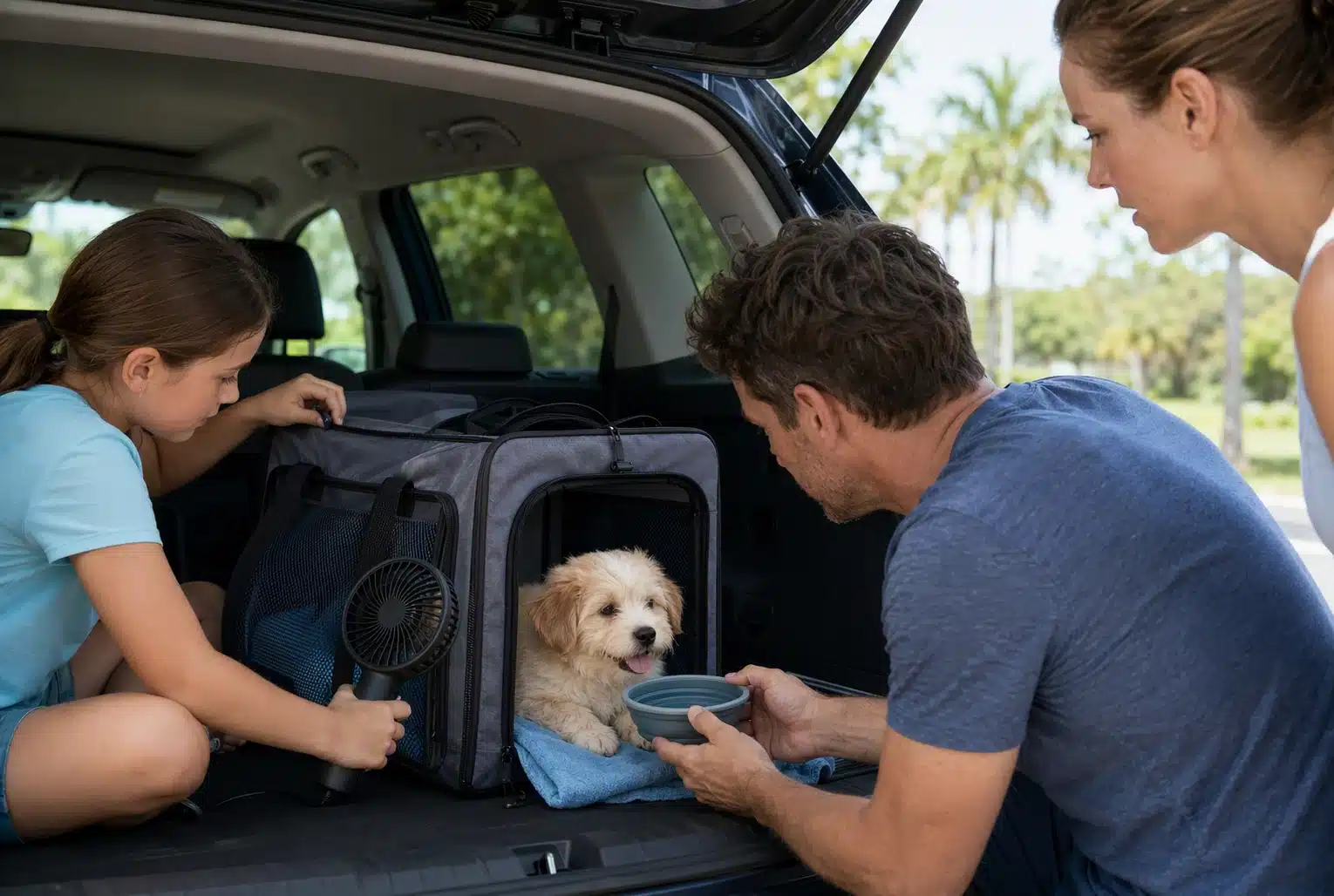
Do not resume the drive just because panting slows. Keep watching your puppy closely and call a veterinarian if you are unsure.
Treat Severe Signs as a Veterinary Emergency
Collapse, confusion, vomiting, diarrhea, or trouble standing means you need emergency veterinary help now. Call the nearest animal hospital while another adult drives there.
Start gentle cooling on the way:
- Run the vehicle air conditioning.
- Wet towels with room-temperature water.
- Place them around the neck, armpits, and groin.
- Use vehicle airflow or a fan, if available.
Avoid ice water, an ice bath, or forcing water into your puppy’s mouth. The AVMA advises prompt veterinary care and room-temperature cooling, noting that cold-water immersion can make the condition worse in some cases. Its pet first-aid guidance also recommends calling ahead so the hospital can prepare.
First aid supports the trip to the vet. It does not replace veterinary care.
Also Read: Florida Puppies: A Guide to Reviewing Breeder Guarantees
Step 6: Complete the Arrival Transition Safely
Move Directly Into a Cool, Quiet Space
Bring your puppy inside before unpacking bags or greeting everyone. Set up one calm, air-conditioned room with water, a familiar blanket, and a secure crate or pen.
Keep children, other pets, and visitors out for the first hour. Your puppy has handled heat, motion, and new sounds. Rest comes first.
Check for normal breathing, alertness, and steady movement. Heavy panting, drooling, weakness, unsteady steps, or unusual gum color can signal heat stress. The AVMA lists these as reasons to seek emergency veterinary care.
Never leave your puppy in the parked car while you carry items inside. The vehicle can heat up quickly, even in shade.
Record Questions and Follow Up
Write down anything you noticed during travel, including meals, water intake, potty breaks, vomiting, loose stool, or long panting spells. Small details help your veterinarian or Sage Puppies give clear guidance.
Use this quick arrival check:
| Check | What to note |
|---|---|
| Eating and drinking | What and when |
| Potty habits | Time, urine, and stool changes |
| Energy level | Calm, playful, weak, or restless |
| Heat concerns | Panting, drooling, or wobbliness |
Call an emergency veterinarian promptly if heat-stress signs continue or worsen. First aid supports your puppy, but it does not replace veterinary care.
Common Mistakes to Avoid
Relying on Shade, Cracked Windows, or a Quick Errand
Never leave your puppy in a parked car. Shade and cracked windows do not keep the cabin safe. The AVMA warns that vehicle temperatures can rise quickly, even on mild days. Bring the puppy inside with you or use curbside service.
Warning: A sleeping puppy can overheat before they show obvious distress.
Letting the Puppy Ride Loose or in the Truck Bed
A loose puppy can slip under pedals, fall, or become a projectile in a hard stop. Use a secured, well-ventilated carrier inside the air-conditioned cabin. Never place a puppy in a truck bed. The AVMA advises against loose travel, including open cargo areas.
Packing for Comfort but Not for Contingencies
A soft blanket is helpful, but it is not enough. Pack:
- Fresh water and a small bowl
- Paper towels and cleanup bags
- A spare towel and cooling plan
- Pickup records and an emergency vet contact
Also Read: 8 Seasonal Hazards Every New Puppy Owner Should Prepare For
Plan Your Florida Puppy Pickup With Confidence
Choose the Next Step That Fits Your Family
Choose pickup if you can keep the drive calm, air-conditioned, and flexible. Bring a secured carrier, water, towels, and a second adult if possible. Plan short, shaded stops and never leave your puppy in a parked car. The AVMA warns that vehicle temperatures can rise quickly, even in shade.
Use this quick check before you commit:
| Your situation | Best next step |
|---|---|
| You can travel early, keep the cabin cool, and stop as needed | Schedule Florida pickup |
| Your route includes long hot stretches or fixed deadlines | Ask about delivery options |
| You are flying or driving several days home | Confirm the travel plan before reserving |
Pause the trip if your puppy pants hard, drools heavily, seems weak, or becomes unsteady. These can be heat-stress signs that need urgent veterinary care, according to AVMA guidance.
Sage Puppies can help families weigh pickup against nationwide delivery, so the first trip home feels safe and manageable.

Plan a cooler, calmer trip before pickup day. Sage Puppies helps families choose between prepared travel pickup and nationwide delivery for a well-started Havanese, Havapoo, or Cavapoo puppy. View available puppies and begin your application today.
Frequently Asked Questions
Q1: travel
Plan the route around cooler hours, use a secured crate, and confirm each stop has shade. Keep water available, but offer small drinks often to limit car sickness.
Q2: How do you keep a puppy cool during a long car ride in Florida summer heat without air conditioning?
Do not make this trip in unsafe heat. Delay pickup, use climate-controlled transport, or arrange delivery. Cracked windows, fans, wet towels, and ice packs cannot safely replace air conditioning.
Q3: What temperature is too hot for a puppy in a car?
Treat a warm car as unsafe quickly. If the cabin feels hot to you, act at once. Puppies can overheat fast, especially during Florida humidity and direct sun.
Q4: Can I leave my puppy in the car during a rest stop?
No. Take the puppy with you or have one adult stay inside with climate control running. Never leave a young puppy alone in a parked vehicle.
Q5: What are early signs of heat stress?
Watch for heavy panting, drooling, weakness, bright-red gums, vomiting, or poor balance. Stop, cool the puppy gradually, and call a veterinarian if signs do not improve fast.
Conclusion
A Florida puppy pickup stays safer when you plan the whole route around cool air, short stops, water, and a secure carrier. Start early, cool the vehicle before loading, and never leave your puppy alone in a parked car. The AVMA warns that vehicle temperatures can rise fast, even on mild days.
Watch your puppy, not just the dashboard. Heavy panting, drooling, weakness, or strange gum color need urgent care. Keep the travel day calm, limit outdoor time, and choose delivery instead if heat, distance, or delays make a pickup unsafe.