Quick Summary: Regular brushing and combing are the key to preventing Havanese puppy mats, with daily care for long coats and professional grooming every 4 to 6 weeks. Comb before bathing, then dry and comb again while the coat is still damp, because water can tighten tangles into mats. For small tangles, use detangling spray, fingers, and a metal comb from the tips upward, but call a groomer for mats stuck close to the skin, especially if the puppy is sore or distressed.
The first sign of Havanese matting usually hides where you never brush on purpose: the crease where the ear flap meets the neck ruff, or a damp knot that forms hours after a bath because the coat dried without a comb. That soft, silky coat tangles fast, and small mats become tight mats within days.
This guide gives you a simple routine that keeps it under control. You will learn how often to brush and bathe, which brushes and combs actually work, and a hands-on method for unmatting a Havanese coat with a clear stop rule for when a mat needs a groomer instead.
These steps come from Sage Puppies, a small Havanese, Havapoo, and Cavapoo program in South Jordan, Utah, where every puppy goes home with coat-care coaching. Follow the routine and a tangle free Havanese coat stays realistic, even for a first-time owner.
Before You Start: Build a Kit That Handles a Silky Double Coat
Havanese grooming starts with four tools. Their soft double coat mats fast, so a slicker brush to detangle and a metal comb do most of the work:
- Slicker brush – lifts loose hair and works out small tangles
- Metal comb (medium and fine teeth) – finds mats the brush missed
- Pin brush – smooths the longer topcoat
- Detangling spray – adds slip so you pull less hair
Set Up the Surface and the Session
Groom on a non-slip mat or a towel-covered table, with treats within reach. Keep sessions short at first, five to ten minutes, so your puppy learns brushing is routine, not a wrestle. If you’re building a wider supply list for a new pup, this Havapoo puppy checklist covers the basics that overlap between breeds. Set the kit up once and every session after gets easier.
Step 1: Build a Brushing Routine That Stops Havanese Matting
How often should you brush a Havanese puppy? By coat length: daily for a long, full coat, three to four times a week for a medium or puppy cut, and once or twice a week for a short trimmed coat. A Havanese double coat sheds softly into itself instead of onto your floor, so loose hair tangles with healthy hair. Skip a few sessions and small knots turn into tight mats close to the skin.
The Daily Friction-Zone Check
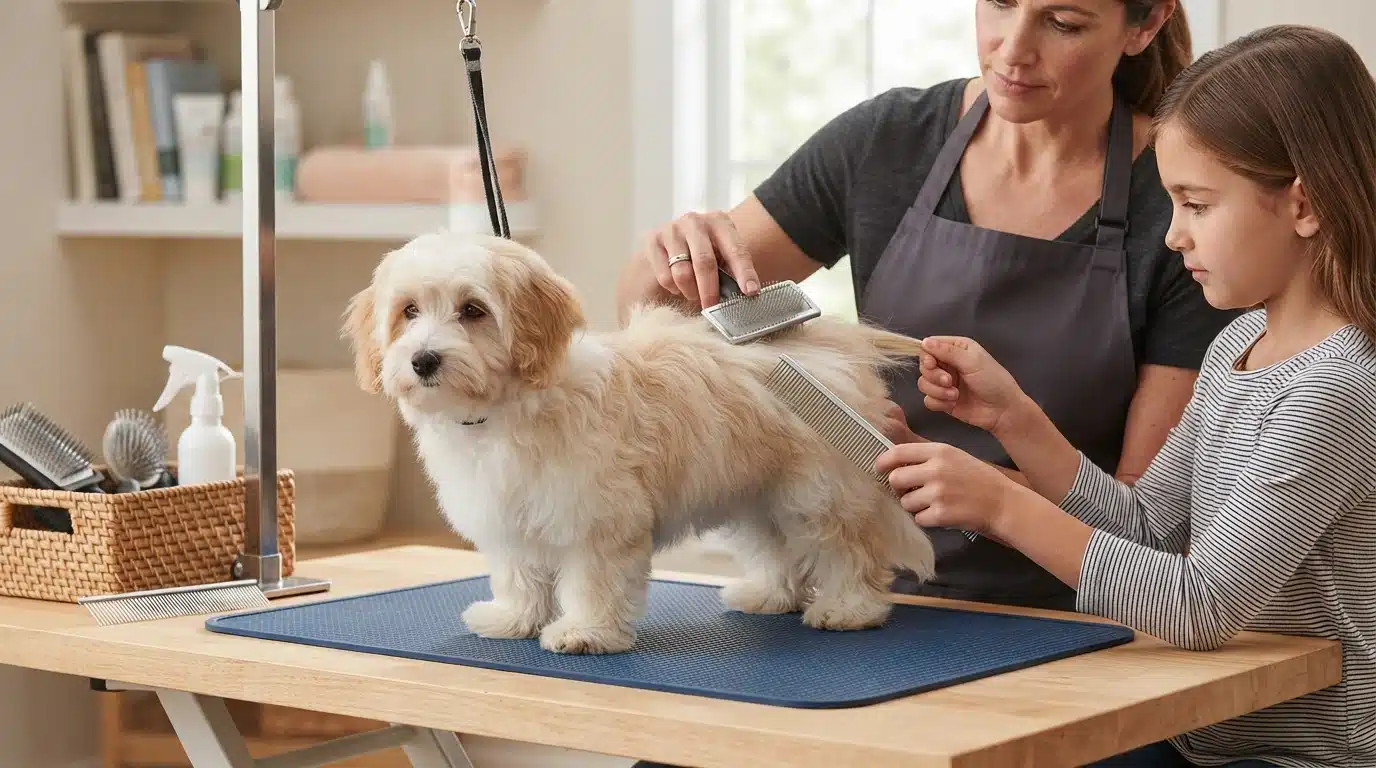
Run your fingers daily over the spots that rub together: behind the ears, the armpits, the belly, and the collar or harness line. These friction zones matte first because hair there gets compressed all day. A ten-second feel-through catches a knot while it is still soft. Two minutes with a slicker brush fixes it. A mat left for a week needs scissors or shaving, which is the outcome this whole routine exists to avoid. If brushing and combing will not separate it, use a small amount of dog detangling spray and work it loose by hand before it tightens further.
Line Brushing in Small Layers, Comb to the Skin
Brushing the top coat only hides problems, so use line brushing. Lift the hair with one hand, spray a light mist of detangling spray if the coat is dry, and brush a thin horizontal layer from the skin outward. Work one line at a time, starting at the legs and belly where tangles hide, then move up the body. When a section feels done, confirm it: a slicker brush finds knots, but a metal comb finds them all. Run the fine end of the comb down to the skin. If the comb glides through, move to the next layer. If it snags, go back with the brush before the coat dries into place. This is how you get a genuinely tangle free Havanese coat, not one that just looks smooth.
What Changes Between Five and Twelve Months
Somewhere around five to eight months, the fluffy puppy coat gives way to the adult coat. That transition is when matting risk jumps, because soft puppy hair mixes with coarser adult hair and knots form faster than you expect. Keep daily brushing going through this stretch, especially in friction zones. Our coat care between professional grooms guide walks through the same schedule we talk through with puppy families. Once the adult coat settles in, a steady routine with a slicker brush and metal comb keeps everything manageable.
Step 2: Unmat a Tangled Havanese Coat Without Hurting Your Puppy
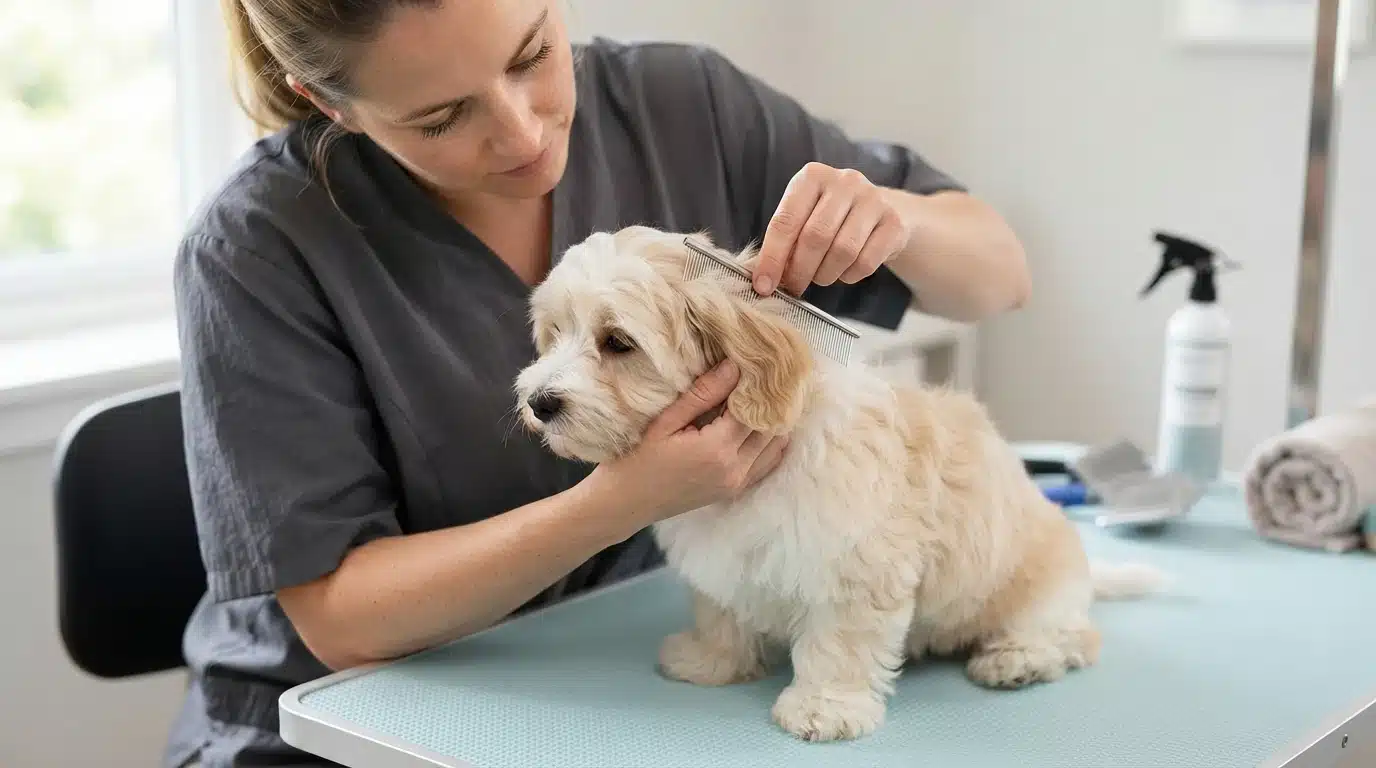
Work tangles out by hand before you reach for clippers or scissors. Most mats on a puppy come loose in a few minutes once you soften them, and the coat stays whole. A Havanese double coat grooming routine pays off here, because the undercoat is what knots first.
Tell a Tangle From a Mat
| Tangle | Mat |
|---|---|
| Loose fur twisted into a soft clump; it pulls apart when you separate the strands with your fingers | Fur packed so tightly the skin moves with it; fingers cannot pass through |
| Sounds and feels like static; the puppy stays relaxed | Feels like felt or carpet; often sits behind the ears, in the armpits or along the harness line |
| Fixes with a comb and a mist of dog detangling spray | Needs patient hand work, and sometimes help from a groomer |
If the clump loosens when you ease it apart, it is a tangle. If it stays rock hard against the skin, treat it as a mat.
The Hands-First Unmatting Sequence
Hold the mat at its base so the pull lands on the coat, not the skin. Then follow this order:
- Mist the mat with a dog detangling spray and wait a minute for it to soak in.
- Pull the clump apart with your fingertips into the smallest pieces it allows.
- Loosen each piece further with your fingers until you can slide a metal comb into the base.
- Comb from the ends upward, one small section at a time.
- Re-check with the comb against the skin before you move on.
Work in short sessions. A puppy’s patience runs out faster than a mat does, so five calm minutes beat one long struggle.
When to Stop and Call a Groomer
Stop if the skin reddens, your puppy yelps or squirms hard, or a mat sits too close to the skin to separate. Cutting near skin with scissors causes most grooming injuries, so leave tight mats to a professional. A groomer every 4 to 6 weeks keeps the coat manageable between your home sessions, and the calm habits you build through Havanese puppy training make those appointments easier for both of you.
Step 3: How Often Do Havanese Puppies Need Baths?
The Short Answer on Bath Frequency
Bathe a Havanese puppy about every two to four weeks. Most pups do well on this schedule:
- Every 2 to 3 weeks for active puppies who romp outside daily
- Every 3 to 4 weeks for mostly indoor puppies with clean coats
- Anytime a muddy romp, accident, or sour smell demands one
The silky coat holds dirt close to the skin, so waiting too long lets tangles set in. Consistency matters more than a perfect date. At Sage Puppies we send puppies home with the same routine they grew up on, so your first baths feel familiar to both of you.
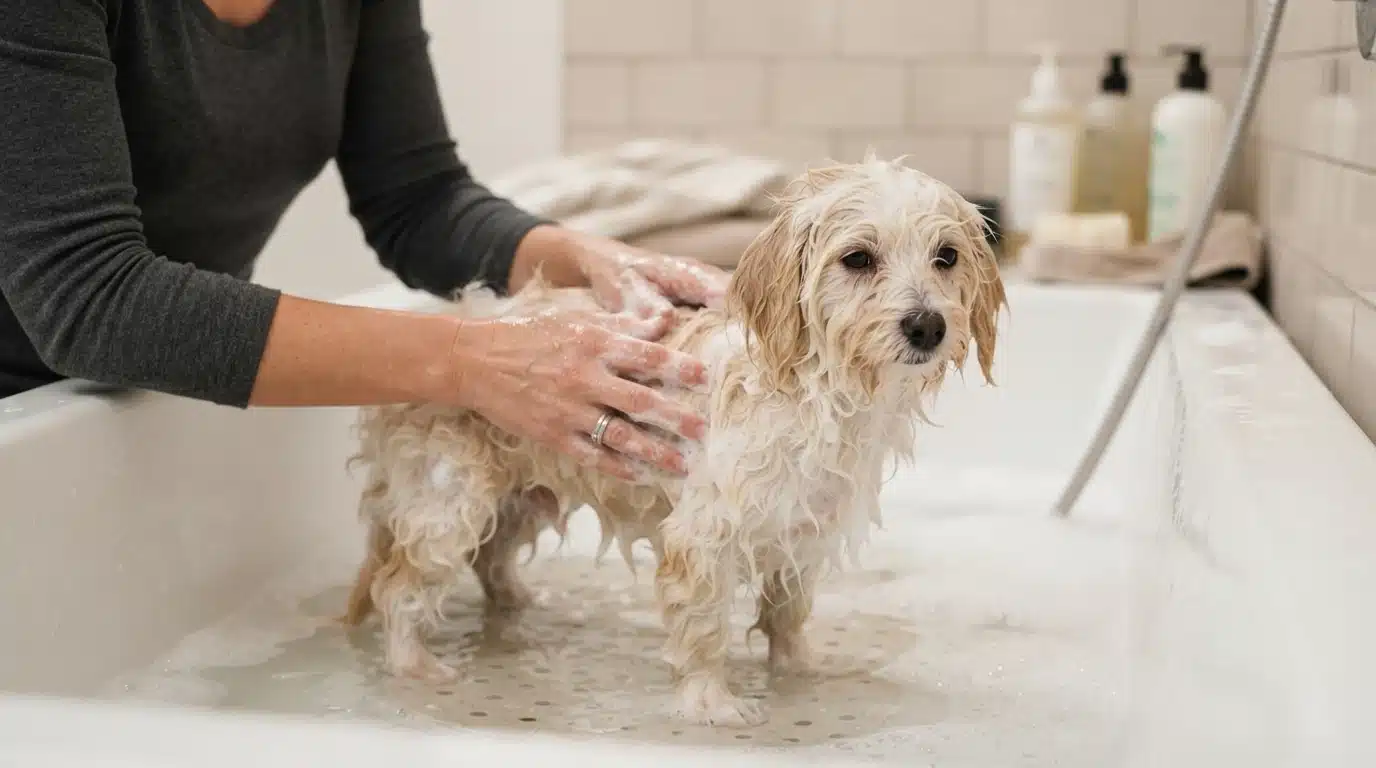
Full Bath or Spot Clean?
Not every mess needs a tub. A damp cloth clears a dirty chin or paws after a yard session. Cornstarch rubbed in and brushed out freshens the coat between baths. Save full baths for when the whole coat feels oily, smells, or has picked up dirt you cannot wipe away. Skipping needless baths protects the coat’s natural oils and keeps skin from drying out.
Why Baths Matter More Than You Think
A bath does more than clean. Warm water and conditioner soften loose hair and light tangles, so brushing afterward hurts less and works faster. It also resets the coat before a big groom and helps you feel every hidden mat behind the ears and in the armpits. Clean coats shed into the brush, not your sofa.
Step 4: Bathe and Dry Your Havanese Puppy Step by Step
The right order is comb first, wash second, dry and comb again in the same session. Water tightens any tangle you missed, so brushing after a bath turns small knots into mats. Work in this sequence and your puppy’s coat stays manageable from start to finish.
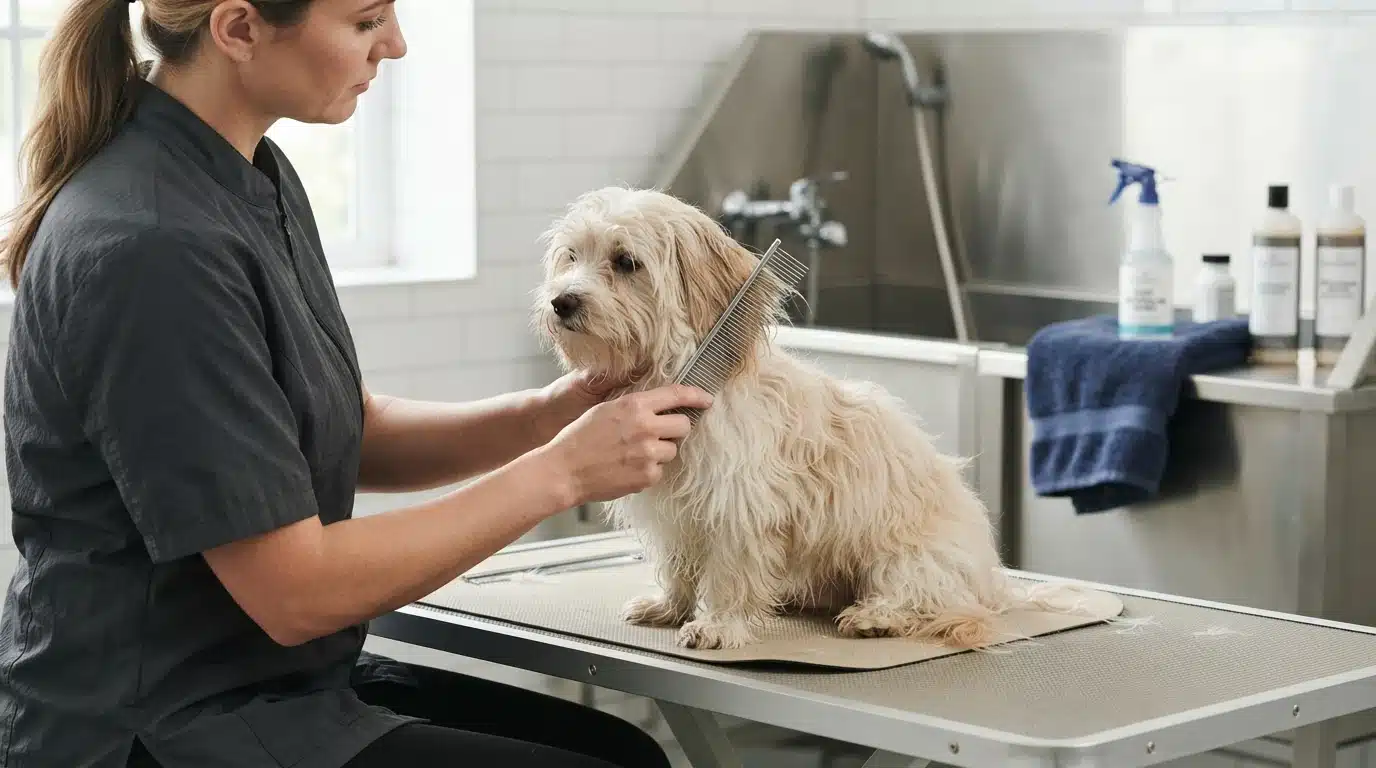
Comb Out Before Water
Run a slicker brush through the whole coat, then follow with a metal comb down to the skin. Pay extra attention behind the ears, in the armpits, and under the harness line, because those friction zones hide the tightest tangles. If the comb stops, spritz on a dog detangling spray and work the spot loose before the water comes anywhere near it.
The Wash
Use lukewarm water and a shampoo made for puppies or sensitive skin. Wet the coat down to the undercoat, lather twice if the coat is dirty, and rinse until the water runs completely clear. Leftover soap itches, so rinse longer than feels necessary. Keep suds away from the eyes, and wipe the face with a damp cloth instead to handle mild tear stains.
Dry and Comb in the Same Session
Towel blot first, then finish with a blow dryer on low heat, lifting the coat with your hand or a brush so air reaches the skin. A coat left to air dry curls and re-tangles. While the fur is barely damp, comb through it one last time. That final pass is what locks in a tangle free finish until your next bath, two to three weeks away for active puppies.
Step 5: The Small Tasks Between Full Groomings
Eyes, Muzzle and Tear Residue
Wipe around your puppy’s eyes daily with a damp, soft cloth. Havanese tear stains and face cleaning take two minutes, and daily wiping keeps residue from staining the hair under the eyes. Food often collects in the beard and muzzle folds after meals, so a quick swipe there prevents odor and crusting. If tearing looks heavy or the eyes stay red, call your vet instead of scrubbing harder.
Ears and Nails
Check the ears weekly for redness, wax buildup or odor. Havanese grow hair inside the ear canal, which traps moisture, so trim visible hair only and never push cotton swabs down the canal. Nails grow fast on small breeds. Small breed nail trimming every 2 to 3 weeks keeps you on the same rhythm as baths. Snip just the tip, avoid the pink quick, and reward calm behavior.
Teeth From the Start
Brush your puppy’s teeth 3 to 4 times a week with dog toothpaste and a finger brush. Start young so mouth handling feels normal, and finish each short session with praise. Pair these small habits with the professional grooming every 4 to 6 weeks, and your puppy stays clean, comfortable and easy to handle between full grooms.
Step 6: Match the Coat Length to Your Schedule
Puppy Cut, Teddy Bear Cut or Full Coat
A shorter haircut means less brushing, so a Havanese puppy cut and teddy bear trim cut home maintenance to a few minutes a day. The full show-style coat needs daily sessions and more attention to the friction zones behind ears and armpits. Pick the style you can actually keep up with; a tidy short trim beats a matted long coat every time.
Early Professional Groomer Visits
Book the first appointment around 14 to 16 weeks, once vaccines are current. Keep it short and positive, and ask for a simple trim rather than a full style. Plan on professional grooming every 4 to 6 weeks after that, and stay in the room or nearby the first time if your groomer allows it.
Seasonal and Local Conditions
Utah’s dry summers and snowy winters each affect the coat differently. Snowball tangles form on paws after romps, and dry air adds static and breakage, so a light dog detangling spray helps in both seasons. After outdoor play in winter, wipe paws before mats set in. Families nationwide receiving a puppy should adjust bath frequency to their own climate rather than copying a generic schedule.
Common Mistakes to Avoid
Skipping the Comb Check
Brushing alone can leave tangles hiding at the skin. After every session, run a metal comb through the coat, especially the friction zones behind the ears and in the armpits. If the comb glides through, the coat is truly tangle free. If it catches, work that spot before it tightens into a mat.
Bathing a Tangled Coat and Pulling Mats Out
Water tightens loose tangles into felted mats, so always brush and comb out the coat first. Never yank a mat with scissors or fingers. To unmat a Havanese coat, hold the mat at its base and work it apart with your fingers, loosening the hair near the skin so you pinch skin, not hair. Use a dog detangling spray and pick the mat apart with a comb, tip to root. If a mat sits tight against the skin or your puppy is sore, stop and let a groomer handle it.
Long Sessions and Forcing Cooperation
Keep early sessions short, about five to ten minutes, and end on an easy win. Fighting a wiggly puppy teaches him that grooming means struggle. A treat and calm praise after each step build a puppy who accepts handling for life.

Grooming a Havanese puppy gets easier every week you stick with the routine above. If you are still choosing your puppy, Sage Puppies matches families with well-bred Havanese, Havapoo and Cavapoo puppies and shares honest prep guidance. Visit Sage Puppies to start your application today.
Frequently Asked Questions
Q1: How often do Havanese puppies need baths?
Bathe a Havanese puppy every two to four weeks. Active pups who romp outside daily need baths every 2 to 3 weeks; mostly indoor pups can go 3 to 4 weeks. Always comb before water, since bathing a tangled coat tightens mats.
Q2: How do you get rid of tangles in a Havanese puppy’s coat?
Hold the tangle at its base, mist it with dog detangling spray, then pull it apart with your fingertips. Comb from the tips upward. If the mat stays hard against the skin or your puppy yelps, stop and call a groomer.
Q3: What brushes and combs do Havanese puppies need?
A slicker brush, a metal comb with medium and fine teeth, a pin brush for the topcoat, and a detangling spray. The comb matters most, because it finds mats the slicker brush misses.
Q4: When should a Havanese puppy see a groomer for the first time?
Book a short, simple trim around 14 to 16 weeks, once vaccines are current. Then plan on professional grooming every 4 to 6 weeks.
Q5: How often should I brush a Havanese puppy?
Daily for a full coat, three to four times weekly for a medium or puppy cut, and once or twice weekly for a short trim.
Conclusion
A tangle free Havanese coat comes down to three habits. Brush to a schedule that matches your puppy’s coat length, with daily passes through the friction zones behind the ears and armpits. Comb before every bath, because bathing a tangled coat turns loose knots into felted mats. And when you find a mat, work it apart with your fingers and a dog detangling spray before anything sharper touches the coat. Stop and call a groomer if a mat sits tight against the skin. Pair the routine with professional grooming every 4 to 6 weeks, and the coat stays manageable for years.