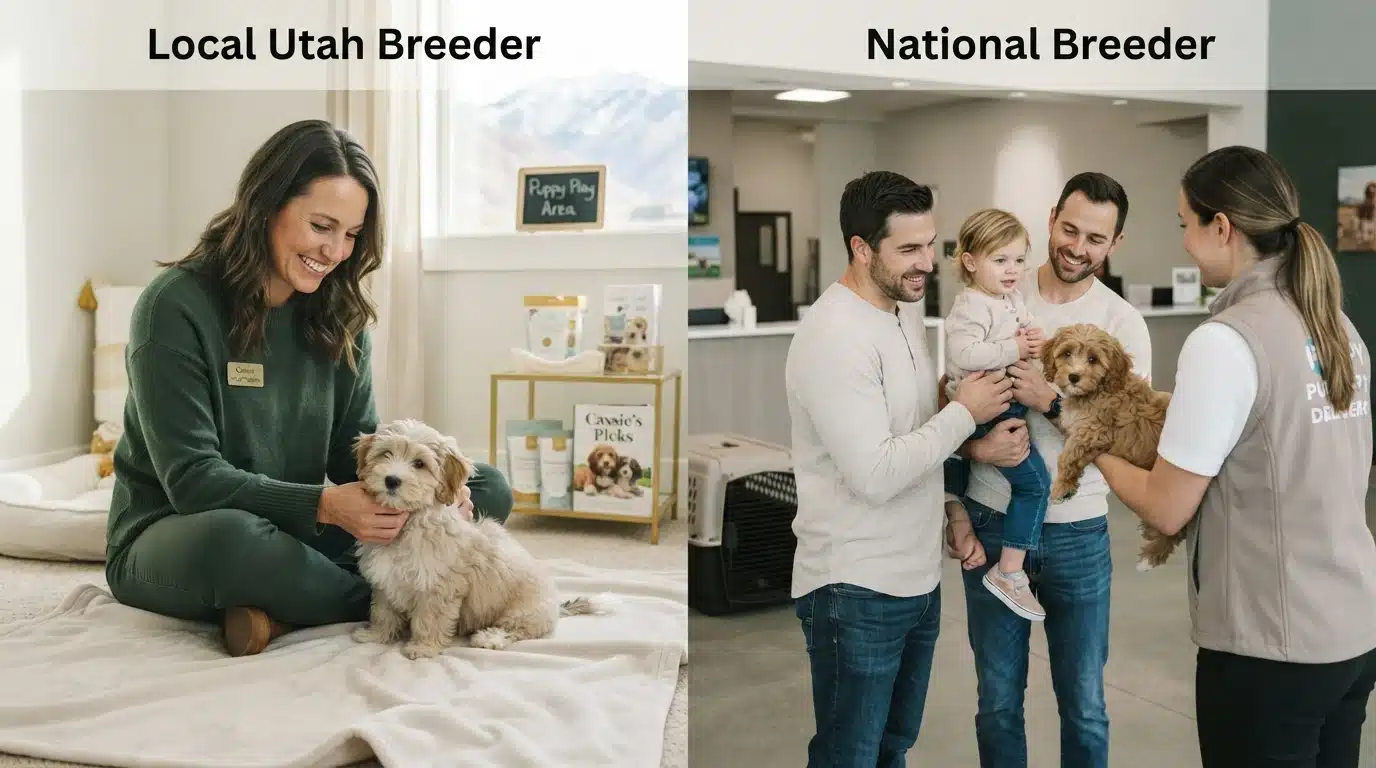
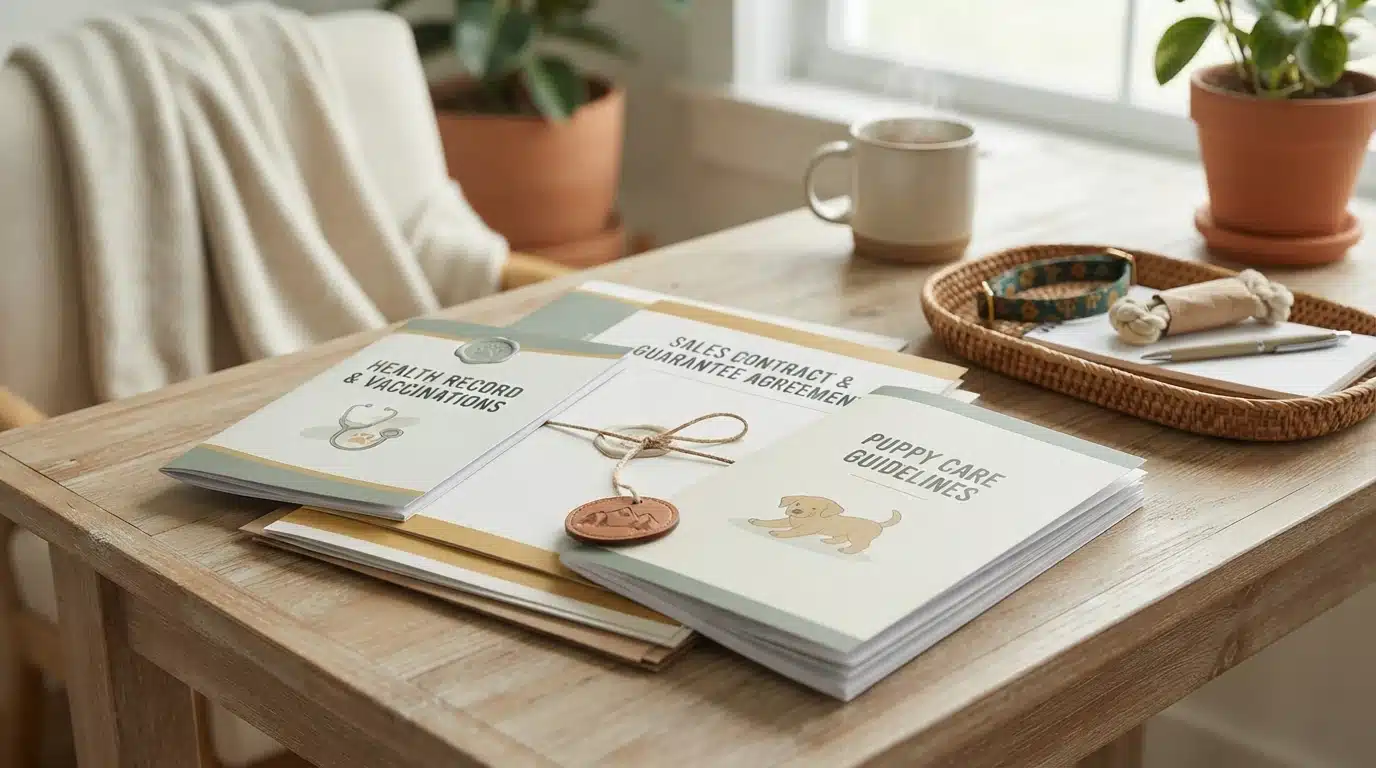
Quick Summary: A reputable small breed breeder should let you independently verify both parents’ OFA health results, see where and how puppies are raised, and review the contract, health guarantee, and licensing before you pay. For remote purchases, insist on live video, dated vet and microchip records, and a traceable payment method, because wire transfers, gift cards, and payment apps are common scam signals. Sage Puppies follows these practices for Havanese, Havapoo, and Cavapoo puppies in South Jordan, Utah, with records available for local pickup or nationwide delivery.
A breeder’s website can show you a spotless puppy photo gallery and still leave the most important question unanswered: which medical records exist, who made them, and can anyone confirm them independently? That gap is where most puppy buyers get hurt, whether they pay a scammer or bring home a dog from untested parents.
This guide shows you how to find a reputable small breed breeder using primary sources instead of pretty photos. You will learn to verify OFA health results yourself, read a breed club’s health requirements, check Utah breeder licensing, spot the payment patterns behind common scams, and ask contract questions that reveal how a breeder actually stands behind a litter.
Every step separates what a document proves from what it only suggests. That is the difference between hoping you found a good breeder and knowing it.
Step 1: Define Your Verification Standard Before You Search
Before you call a single breeder, decide what proof you will accept. A reputable small breed breeder produces records on request; a shaky one describes them. Set that line early and it becomes easy to spot. It also answers the question every buyer eventually asks: how do I find a reputable small breed puppy breeder instead of a good storyteller?
Start with three record categories:
| Category | What it is | What it proves |
|---|---|---|
| Health testing | OFA records for hips, patellas, eyes, and heart on both parents | The parents were screened and the results were filed publicly |
| Registration and pedigree | AKC papers or documented lineage for the dam and sire | Who the parents are, not that they passed any screening |
| Care records | Vaccination dates, deworming log, microchip number, vet exam notes | The puppy’s early care happened, and you can continue that timeline |
Breed specifics matter next. The Havanese Club of America lists the screenings its breeders owe each parent dog, including an eye exam by a board-certified ophthalmologist, patella evaluation, and a cardiac check. Havanese parents should meet those or explain why not. For Havapoo and Cavapoo crosses, ask for the Havanese or Cavalier side first, since the cross inherits both parents’ risks. Breeders working with these three breeds, Sage Puppies included, should walk you through each parent’s results without being asked twice.
Be clear about limits. Screening can prove a parent tested clear on the day of the exam. It cannot guarantee a puppy stays healthy for life, and it says nothing about temperament or early socialization. Ask how litters are raised and which red flags made you skeptical. Then weigh everything together.
Records are the price of entry, not the whole answer. A breeder who hands you documents but bristles at home-visit questions fails the standard too, which is why the next step covers how each breeder actually sources its litters.
Step 2: Build a Shortlist From Breed-Specific and Registry Sources
If you want a reputable small breed puppy breeder near you, work through these channels in order:
- Start with the parent breed club and registry listings.
- Ask your vet or groomer for breeder referrals.
- Drop any listing you cannot trace to a real, named program.
That order matters because the first two channels pre-screen for you. Classified ad sites do not.
Start with breed clubs and registries
Breed clubs are the best first stop for purebred Havanese. The HCA Breeder Directory lists breeders who are club members and agree to the club’s standards. For Cavapoos and Havapoos, which have no official registry club, look for established programs with verifiable parent dogs and a documented process. The AKC Marketplace also flags its Breeder of Merit participants, breeders who meet higher health and breeding standards. Add every promising name to a simple spreadsheet with location, litter dates, and health testing status.

Use veterinary and grooming referrals as a second channel
Vets and groomers see breeder puppies all year. They know which programs send in healthy, well-socialized litters and which ones return sick puppies. Ask your own clinic first. If you are new to the area, call two or three small animal practices and independent groomers and ask one question: which local breeders would you be comfortable buying from yourself? Two matching names beat any online ad.
Filter out listings that cannot be traced
Cut every listing that hides basics: no breeder name, no city, no parent photos, or an address that changes. A traced breeder has a real program you can verify. Our checklist of puppy breeder red flags covers what disqualifies a listing. Keep only three to five names, then verify each one with documents before you visit or place a deposit.
Step 3: Verify Health Screening Records Before You Visit
A breeder can say “health tested parents” in one sentence. Here is how to check that claim in under ten minutes, using records you can see yourself.
Run the OFA lookup yourself
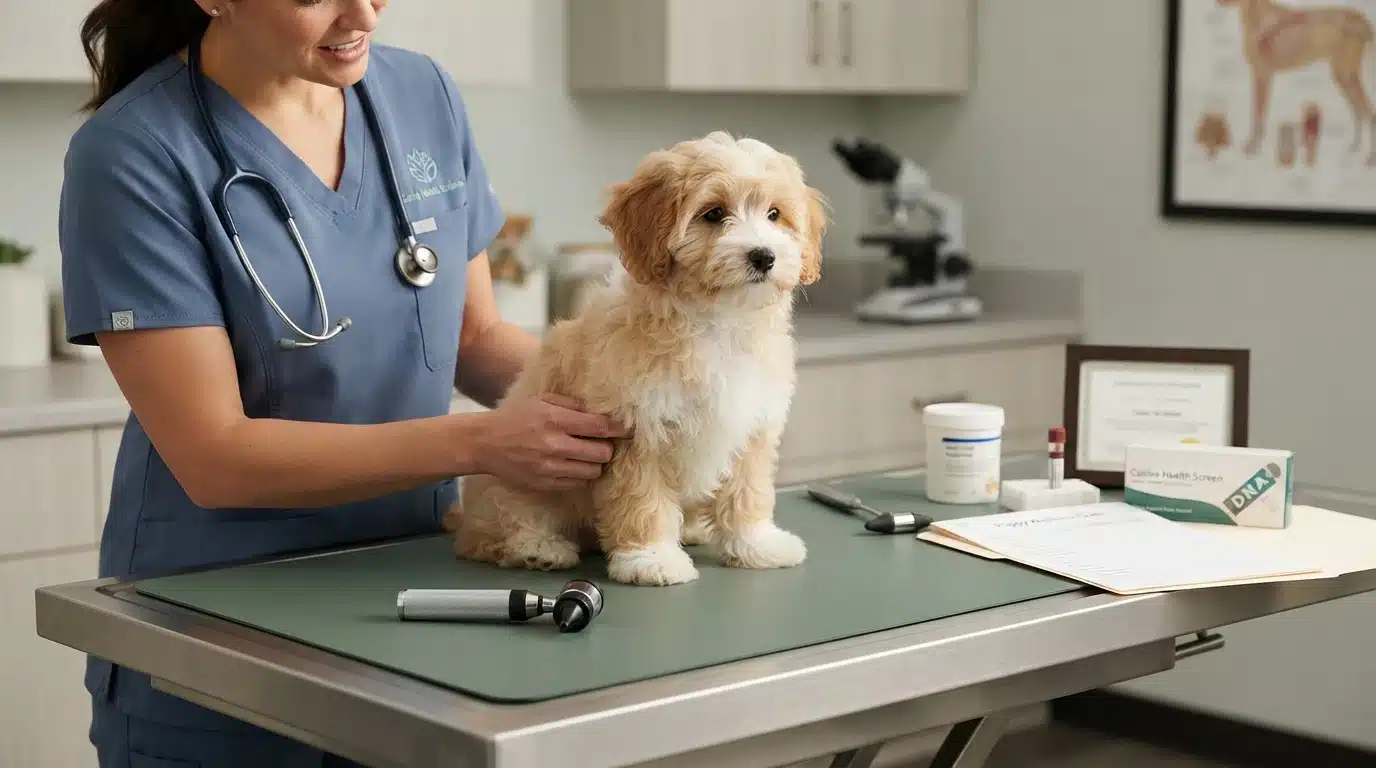
The Orthopedic Foundation for Animals keeps a public database of test results, and any breeder worth your deposit will give you each parent’s registered name. Go to OFA’s advanced search, enter that name, and the dog’s real results appear: hips, elbows, eyes, cardiac, and patellas for small breeds.
- Get both parents’ registered names, not nicknames.
- Search each one on the OFA database.
- Match the breed, birth year, and color to what the breeder described.
If nothing comes up, ask why. Normal results are published publicly, so a blank record usually means no tests were submitted.

Check dates, both parents, and the annual requirement
Some tests expire. Eye exams by a board-certified ophthalmologist are valid for about one year, so ask when each parent’s last exam was done. Patella evaluations should be current too, since small breeds are prone to luxating patellas. Verify results for the dam and the sire, not just the mother. A clean mother paired with an untested father still passes on whatever problems the father carries. This applies to mixed breeds as well; for a closer look, our guide to Havanese puppy health tests breaks down what each parent should have.
Ask for the individual reports, not a summary
A summary sheet or a photo of “clear” paperwork proves little. Request the actual OFA certificate numbers or CHIC listing for each dog, then confirm they match the database. Ask whether any results were abnormal and what the breeder did about it. Honest breeders explain their choices; evasive ones change the subject.
Step 4: Evaluate Where and How the Puppies Are Raised
Paperwork tells you about the parents. The home tells you about the puppy. A good breeder raises the litter in living space, not a kennel row, and can show you exactly how each week was spent.
What a well-run raising environment looks like
Ask to see where the puppies sleep, play and eat, in person or by live video. You want a clean indoor space with soft bedding, room to move, and daily contact with normal household noise: doors, vacuum, voices, kids. Pottying areas should be separate from sleeping areas. An ethical breeder welcomes the tour. A seller who steers you to a parking lot meet, or only offers staged photos, is hiding the conditions, and that alone is a reason to walk away.
Observe socialization without graded tests
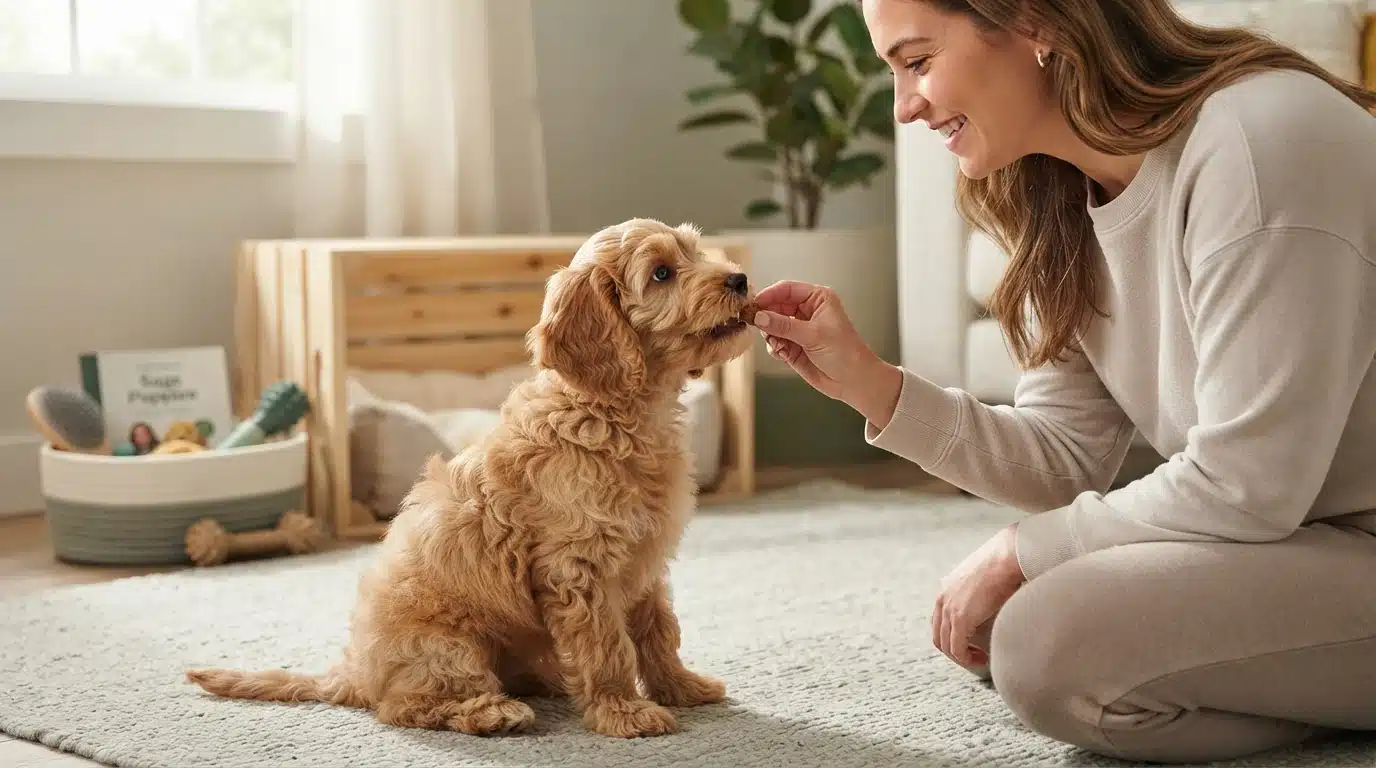
The first three months matter most for socialization, and the AVSAB position statement says it should start well before a puppy is fully vaccinated. So ask what the puppies have met: different ages of people, handling of paws and ears, car rides, new surfaces. Watch a video of the litter instead of demanding a formal test. A shy puppy that recovers in minutes is normal. A litter that panics at new hands signals too little handling. Family-raised litters usually show this naturally, which is a core part of how family-raised puppy socialization works in a good program.

Ask how the litter matches to your household
A strong breeder interviews you as much as you interview them. Expect questions about your schedule, kids, other pets, work hours and experience. Good matching means the breeder assigns puppies by observed temperament, not by who paid first. Ask how they decide which puppy goes home with which family, and what happens if a match clearly fails. At Sage Puppies, owner-managed matching follows the application. A breeder with no questions for you is a breeder selling inventory, not placing a companion.
Step 5: Review the Contract, Health Guarantee, and Paperwork
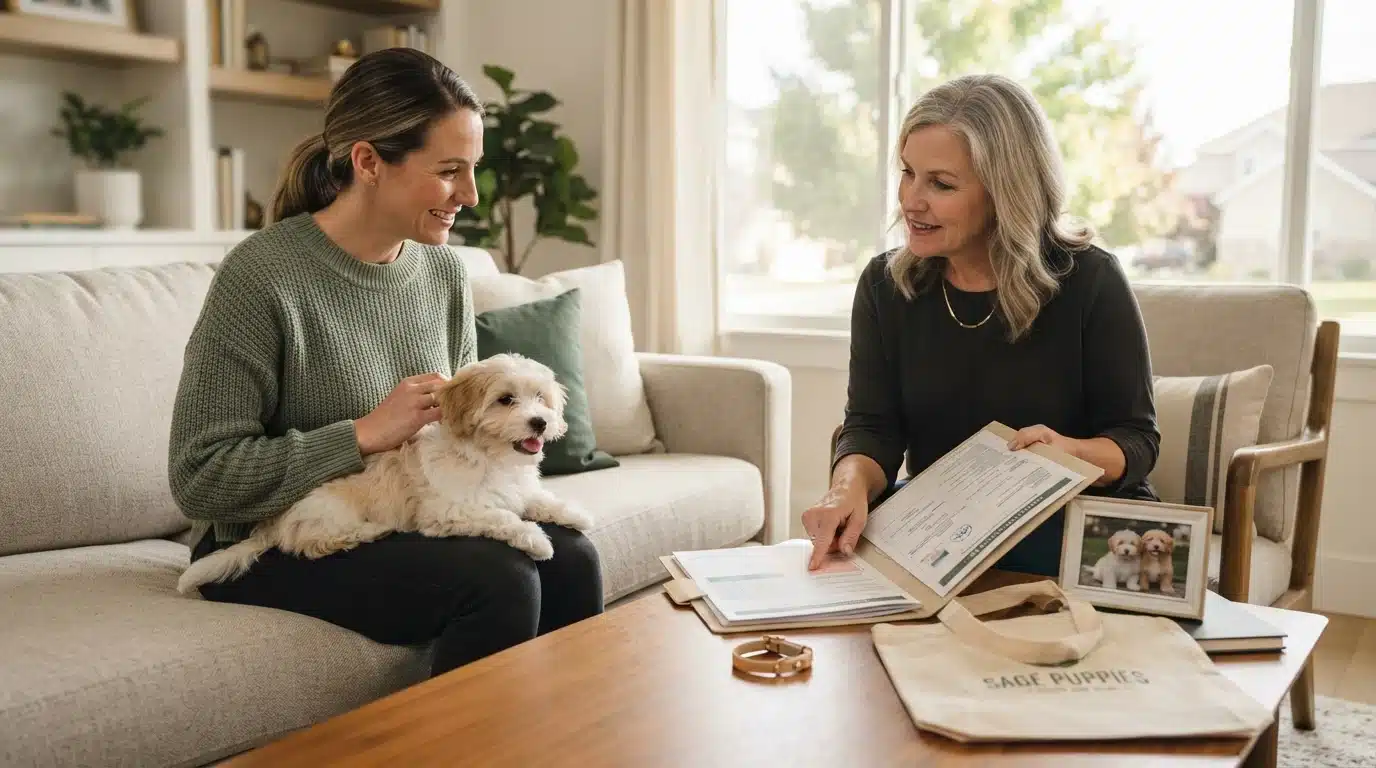
A good breeder hands you paperwork before you pay, not after. Ask for every document in writing, then read each one slowly. The AKC recommends covering registration, health screening, and return terms in a written breeder contract.
The document set to request before paying
Ask for all of these as drafts you can review at home:
- The written purchase contract
- The health guarantee, signed by the breeder
- The puppy’s vaccination and deworming record
- Microchip number and registration paperwork
- OFA results for both parent dogs
A breeder who refuses to share these before a deposit is telling you something. At our own program, the application comes first and paperwork follows, because a buyer should never commit blind.
How to read a health guarantee critically
What should a puppy health guarantee include? Look for:
- Coverage dates and what condition they cover, such as genetic heart or patella problems
- What proof the breeder needs, usually a vet exam in a set window
- The remedy: replacement, refund, or shared vet costs
- A return clause that lets you give the dog back at any age
Short, vague, or oral-only guarantees are red flags. So is a guarantee that only pays out if you return the puppy, since few families will.
Deposits, reservations, and spay or neuter terms
Deposits usually hold a pick in the litter order, and most are non-refundable. Confirm in writing what happens if no suitable puppy arrives, and how the balance is paid. Pet contracts often include a spay or neuter deadline with proof required. Get the date, the acceptable proof, and the consequences of missing it in the contract itself, not in a text message.
Step 6: Confirm Licensing, Visit or Verify a Remote Purchase, and Pay Safely
Scams share a pattern, and you can spot it fast. Watch for these warning signs:
- The breeder only accepts wire transfers, gift cards, or payment apps like Zelle or Cash App
- Photos look reused, and the “puppy” is always ready for immediate shipping
- The seller avoids visits, video calls, or licensing questions
- The price is far below the local norm, with pressure to pay a deposit today
Per the BBB’s puppy scam study, thieves rarely accept credit cards or personal checks, because those can be reversed.
Check the breeder’s local license and record
Ask which city or county licenses the breeding operation, then verify it. In Utah, that may mean a business license through Salt Lake City or Salt Lake County, so call the licensing office and confirm the name and address. Breeders who ship across state lines must hold a USDA license; you can ask for their certificate number and check the inspection record. If the answers are vague or defensive, walk away.
Verify the puppy exists when you cannot visit
Ask for a live video call at a set time, and have the breeder show today’s date and your name written on paper next to the litter. Request the dam’s and sire’s OFA numbers so you can match the parents yourself. Before pickup or delivery, insist on the puppy’s vet exam record, vaccination dates, and microchip number, all dated and in the breeder’s real name. Any refusal to do a live call is a hard stop. A careful remote process is normal; good breeders, including small Utah programs like Sage Puppies, expect it.
Pay in a way that can be traced
Pay by credit card whenever you can, because disputes can be reversed. Wire transfers, gift cards, and payment apps work like cash, which is exactly why scammers request them. Before you pay, confirm the total and the written deposit or reservation terms in the contract. Keep every receipt and message. A small deposit tied to clear paperwork is reasonable; a full payment sent by untraceable method to someone you have never seen live is not.
Common Mistakes to Avoid
Even careful buyers slip on a few predictable points. Watch for these:
- Trusting photos alone. Scammers reuse stolen puppy pictures. The BBB’s puppy scam study urges buyers to see an animal in person or use live video before paying.
- Paying with wire transfers, gift cards, or Zelle. These hard-to-track methods carry the highest risk. Use a credit card when you can.
- Taking a breeder’s word on health testing. Verify OFA results yourself; a claimed certificate is not a record.
- Skipping the contract read-through. Sign only after you understand health guarantee terms and return clauses.
- Confusing a cute website with a program. Ask which parent dogs they keep and where puppies are raised.
- Missing the socialization window. Puppies need early handling, not just health clearance.
Buyers who document each check rarely regret the pace.

If those checks feel like a lot, you don’t have to run them alone. Sage Puppies raises Havanese, Havapoo and Cavapoo puppies in South Jordan, Utah, with health records ready to share and honest guidance for local pickup or nationwide delivery. Start with the application and ask us anything on your checklist.
Frequently Asked Questions
Q1: How do I find a reputable small breed puppy breeder?
Start with breed club directories and registry listings, then verify OFA health results for both parents yourself. Demand a written contract, confirm any licensing, and pay only through traceable methods after a live visit or video call.
Q2: Can I trust a breeder who ships puppies nationwide?
Yes, if they pass the same checks: live video verification, OFA lookup, vet records, and a USDA license when crossing state lines.
Q3: What should a puppy health guarantee include?
Coverage dates, named conditions, required proof, the remedy offered, and a return clause at any age.
Q4: How do I check a breeder’s OFA health testing records?
Search each parent’s registered name in OFA’s public database and match breed, birth year, and results.
Q5: Are deposits refundable if no puppy fits my family?
Ask before paying; confirm the policy in writing, including balance timing and spay or neuter terms.
Conclusion
Finding a reputable small breed breeder comes down to one habit: verify documents yourself instead of trusting descriptions. Check both parents in the OFA public database, confirm current eye and patella dates, and read the contract and health guarantee before money moves. Watch how the litter is raised, and treat any request for wire transfers or gift cards as the scam signal it is.
Run the same checks whether you visit in person or buy remotely, and whether the program is across town or across the country. A reputable puppy breeder near me should welcome every one of these questions, so keep this list handy.