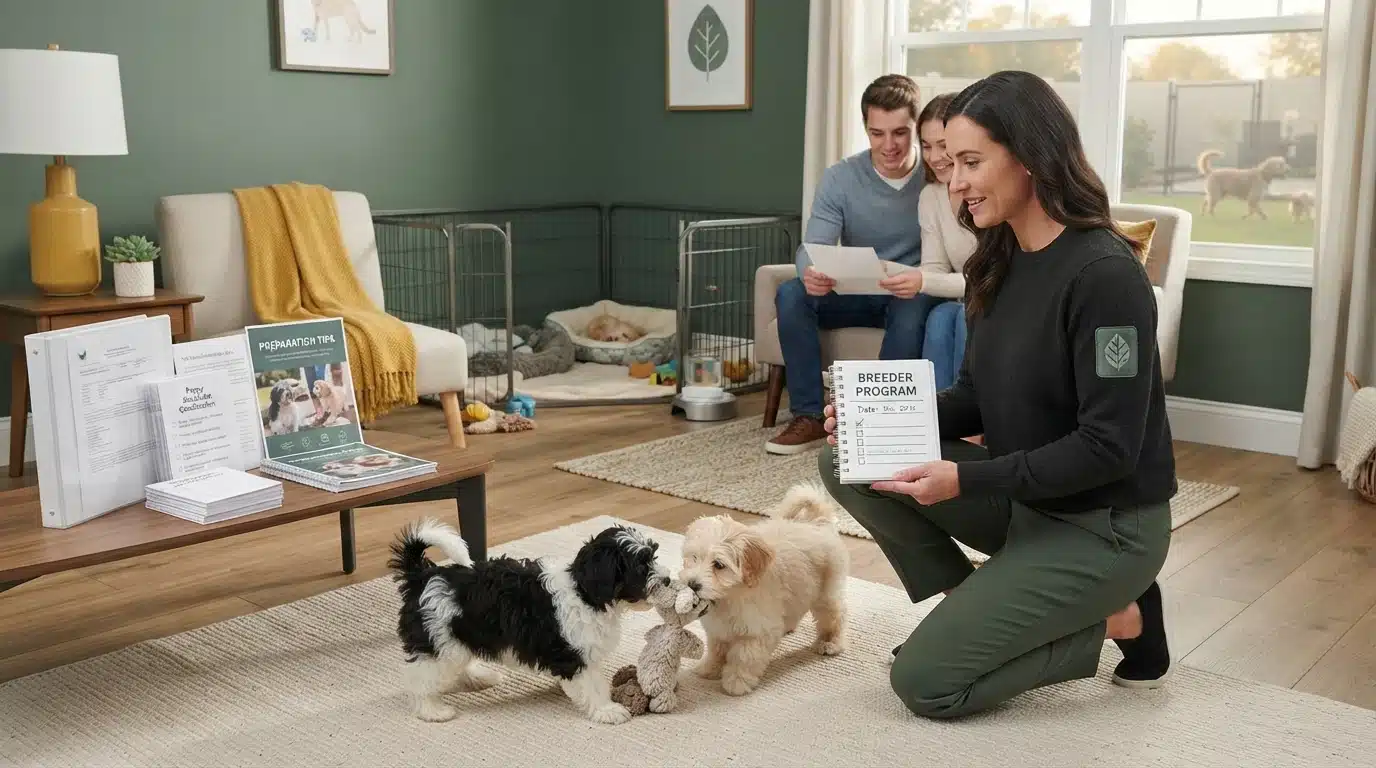
Quick Summary: California puppy buyers must scrutinize contracts before paying deposits or scheduling delivery-vague terms on refunds, health guarantees, or ownership transfer can trap you later. For example, the contract must clearly state when risk and ownership shift, especially if the puppy travels from another state, where California law requires a 10-day health certificate upon arrival. Sage Puppies highlights that reputable breeders provide written answers to all questions, including parent health testing details and exact return policies, before any money changes hands. Skip any deal where key terms are left unclear or pressured into signing.
A California family may reserve a Havanese, Havapoo, or Cavapoo from a phone screen while weighing a deposit, a health diagnosis, and delivery duties. That is not the time to skim a pet purchase agreement.
A careful puppy contract review helps you separate California legal rules from breeder promises. It also shows what happens if you cancel, your veterinarian finds a concern, or a puppy travels from another state.
This guide gives you a clear puppy contract review process before you pay, sign, or schedule delivery. You will know which clauses need plain answers, which records to request, and how to adopt puppy legally without guessing. A final puppy contract review can protect both your family and the puppy’s start at home.
Step 1: Confirm the Parties, Puppy, and Sale Details
Match the Seller and Buyer Names
Start with the basics. The contract should name the actual breeder or selling business, not only a website or social media handle. Confirm the full legal name, street address, phone number, and email match the person receiving your payment.
For California buyers, this matters even if the puppy travels from another state. California law requires breeder disclosures to include the breeder’s name and address when the law applies. See the state’s dog breeder disclosure rules.
Check these items before signing:
- Every adult buyer’s name is spelled correctly.
- The seller named in the contract matches the payment recipient.
- Delivery, pickup, and transfer dates are clear.
- The total price, reservation amount, and remaining balance add up.
A contract with vague parties makes follow-up much harder. Ask for a corrected copy before you send money.
Identify the Exact Puppy and Included Documents
The contract should identify your puppy, not just “a Cavapoo” or “a puppy from this litter.” Match the details to current photos, video, and your conversations.
| Contract detail | What to verify |
|---|---|
| Puppy identity | Breed, sex, color, date of birth, litter, and microchip number if assigned |
| Parent details | Sire and dam names, plus registry details if registration is promised |
| Health records | Vaccine, deworming, vet care, and any known condition |
| Handover items | Records, food, registration papers, and delivery documents |
California requires a separate written disclosure if a dog is represented as registered or registerable, and registration does not promise health or quality. Review the state’s registration disclosure carefully.
Also Read: Puppy Health Guarantees: What Good Breeders Include
Step 2: Trace Every Dollar and Test the Deposit Terms
Create a Complete Payment Schedule
List every cost before you reserve a puppy. Do not accept a single “total price” without details.
| Payment item | Question to ask | Written proof |
|---|---|---|
| Reservation fee | Is it applied to the purchase price? | Amount and due date |
| Puppy balance | When is it due? | Final price and payment method |
| Delivery or pickup | Is travel separate or included? | Route, carrier, and fee |
| Optional items | Can I decline them? | Itemized list |
Use a traceable payment method and keep every receipt. California’s Attorney General specifically advises puppy buyers to get a receipt with the seller’s name and address, rather than paying cash. Read the state consumer alert.

Read Refund, Cancellation, and Reservation Language Literally
A deposit is not automatically refundable because plans change. Read the exact words, including nonrefundable, transferable, credit, and at breeder discretion.
Ask these questions before payment:
- What happens if I cancel?
- What happens if the breeder cannot place this puppy with me?
- Can the fee move to a later litter, and for how long?
- Is delivery refunded if travel falls through?
- Which event triggers a full refund?
Warning: A friendly text promise is not enough. Ask for the refund rule in the signed contract or payment receipt.
California guidance says buyers should know the return policy before they purchase. The Attorney General’s refund guidance also explains that clearly disclosed limits can matter. Treat unclear terms as unfinished, not harmless.
Reject Lease-to-Own and Ownership-After-Payment Ambiguity
Your contract should plainly say you are buying the puppy, not leasing it or making open-ended payments for future ownership.
Look for terms that state:
- The full purchase price
- When ownership transfers
- Whether any finance charge applies
- Whether the breeder keeps rights after pickup
- What happens if a payment is late
Do not sign if “ownership” could mean something different from possession. If the clause is vague, request a rewrite or walk away. A sound breeder can explain each dollar and each ownership term without pressure.
Also Read: Puppy Care Blog & Resources | Sage Puppies
Step 3: Compare Health Guarantees With California Disclosures
Inventory the Health Records Provided at Transfer
Ask for the puppy’s records before you sign, then match them to the contract. For covered California breeder sales, the written disclosure should include the puppy’s birth date, breed, sex, vaccine and deworming history, veterinary treatment, and known health concerns. Both parties should sign it, and the breeder must also explain health information orally under California Health and Safety Code Section 122050.
Use this quick inventory:
- Vaccination and deworming dates
- Vet exam notes and medicines given
- Microchip details, if applicable
- Signed health disclosure
- Delivery health certificate for an out-of-state puppy
A health guarantee does not replace the puppy’s actual medical record.
Separate Parent Health Testing From the Puppy Guarantee
Parent testing and a puppy guarantee answer different questions. Parent results help you assess inherited-risk planning. The guarantee states what the breeder will do if a covered condition appears later.

| Contract item | What to confirm | Why it matters |
|---|---|---|
| Parent testing | Which parents, tests, and results | Supports informed breeding choices |
| Puppy guarantee | Covered conditions and time limits | Sets the remedy after purchase |
| Exclusions | Injury, parasites, buyer neglect, or late notice | Prevents surprises during a claim |
| Remedy | Refund, replacement, or vet-cost support | Shows your real options |
Ask whether the contract requires a specific test, specialist, or second opinion. Get any verbal promise in writing.
Check the Claim Procedure and Statutory Notice
Read the claim steps line by line. Note the deadline, required records, approved veterinarian rules, and whether you must notify the breeder before treatment.
For a puppy delivered into California from another state for resale or transfer, state law requires a veterinarian-issued health certificate dated no more than 10 days before entry, provided to both the buyer and the state. Review the California import health certificate requirements before delivery.
- Save the signed contract and disclosures.
- Book an independent vet visit promptly.
- Send concerns in writing with records attached.
- Do not surrender the puppy or approve major care without understanding the contract.
If a clause makes you waive all rights or gives only vague remedies, pause and ask for plain written clarification before reserving.
Step 4: Examine Return, Reclaim, and Lifetime Placement Clauses
Classify the Return Obligation
A strong contract separates a buyer promise from a breeder remedy. A lifetime return clause can protect the dog, but you need to know what it requires.
| Clause type | What to confirm |
|---|---|
| Required return | Whether you must contact the breeder before rehoming |
| Voluntary support | Whether the breeder can help place the dog |
| Refund term | Whether any refund, credit, or fee applies |
California contracts arranged for buyers in the state cannot require a nonrefundable deposit as of January 1, 2026, under Health and Safety Code section 122227.
Ask for clear wording on surrender, travel, vet care, and refunds. Do not assume a return means money back.
Test the Reclaim Clause for Specific Triggers and Process
A reclaim clause should name exact triggers, not vague terms like “unsuitable home” or “breach.” Check whether it applies to neglect, resale, failure to return the dog, or missed contact updates.

Ask these questions before signing:
- What event starts the reclaim process?
- Is written notice required first?
- How long do you have to respond or fix the issue?
- Who pays safe transport if the puppy was delivered from Utah?
- Does a dispute go to mediation, court, or another process?
A clause that lets someone reclaim your dog without notice, proof, or a stated process deserves legal review.
Confirm What Happens After a Return
Confirm who owns the dog after return, what records travel with them, and whether you receive any refund or credit. A responsible placement policy should put the dog’s safety first, not punish a family facing a real hardship.
Also Read: 10 Must-Ask Questions Before Buying a Puppy Locally
Step 5: Verify Pickup, Delivery, Risk, and Ownership Transfer
Define the Delivery or Pickup Plan
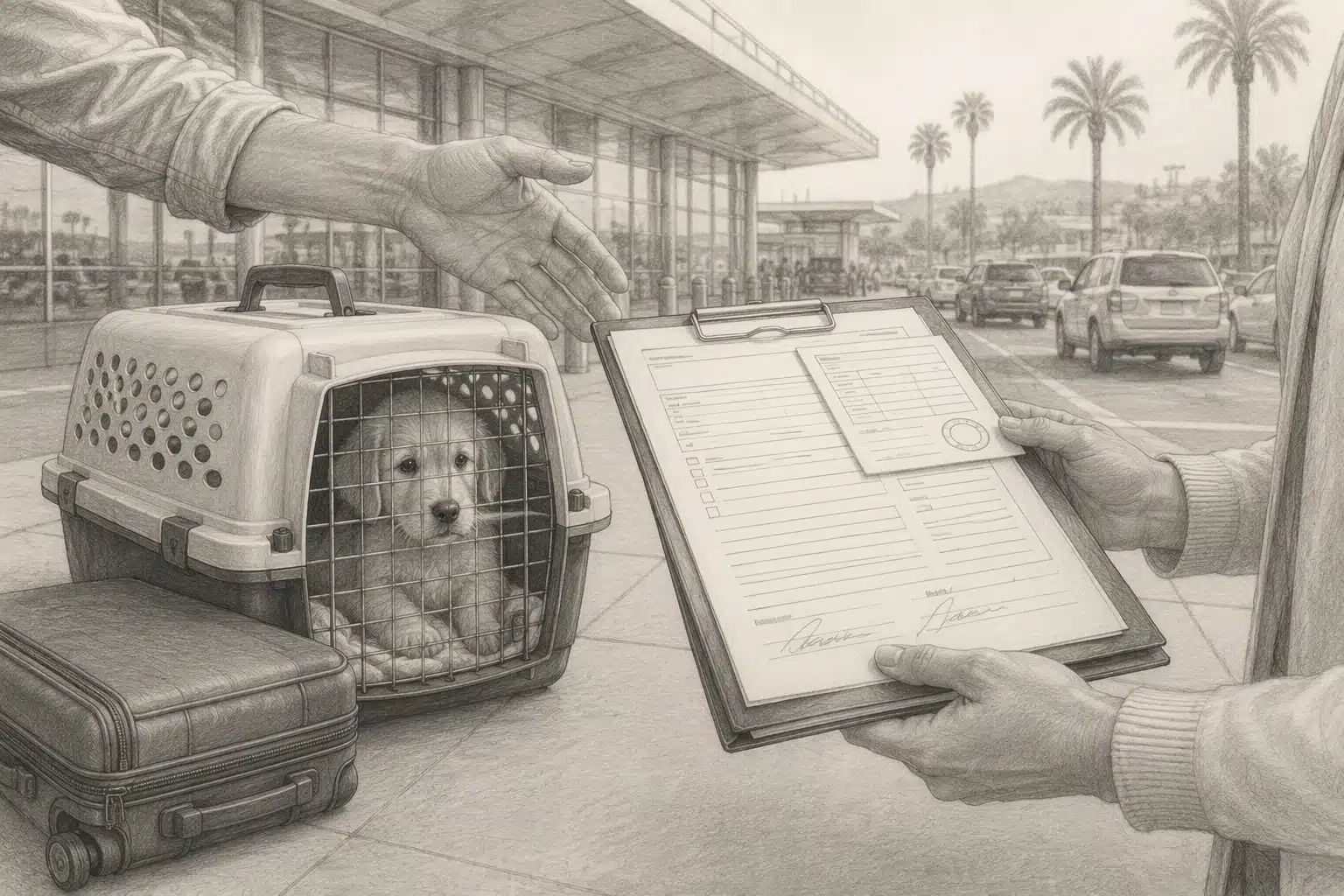
Put the handoff plan in writing before you pay the final balance. State the pickup address, date window, who may collect the puppy, and what happens if weather, flight delays, or family travel changes the plan.
For delivery into California, ask who handles the health paperwork. Dogs changing owners in California need a health certificate completed within 10 days of arrival, plus rabies records when the dog is over four months old, under California import guidance.
- Confirm the delivery method and carrier details.
- Ask whether pickup includes a live handoff and records.
- Set a backup contact and missed-appointment rule.
Do not accept a vague promise that delivery is “arranged.” The contract should name who does what.
State When Risk and Ownership Transfer
Risk means who bears loss or injury if something goes wrong. Ownership means when the puppy legally becomes yours. These dates may be the same, but the contract must say so.
| Contract point | Get a clear answer |
|---|---|
| Ownership transfer | At final payment, pickup, or delivery handoff |
| Risk transfer | Before transport, during transport, or at handoff |
| Delay or illness | Whether delivery moves, refunds, or another puppy is offered |
Ask for a signed receipt at handoff, the puppy’s records, and the exact condition-report process. If the language shifts all transport risk to you before you receive the puppy, pause and ask for a plain-English explanation.
Also Read: Havanese, Havapoo & Cavapoo Puppy Care Blog
Step 6: Review Care, Breeding, Registration, and Use Restrictions
Identify Care and Welfare Commitments
Read the care clause as a shared plan, not fine print. It should state your duties for food, safe housing, routine vet care, vaccines, training, and prompt treatment when your puppy is ill.
Ask what happens if your family can no longer keep the dog. A responsible return or rehoming clause should be clear and realistic.
| Contract item | Question to ask |
|---|---|
| Veterinary care | What routine and urgent care must I provide? |
| Rehoming | Must I contact the breeder before placing the dog elsewhere? |
| Neglect standard | What actions count as a breach of the agreement? |
Keep all health records, receipts, and messages. They can matter if you need to use a health or return clause later.
Read Breeding, Registration, and Transfer Restrictions
A pet-quality puppy contract may prohibit breeding, require spay or neuter, or limit transfers. Confirm the deadline, any health-based exception, who must approve it, and the stated result if you do not comply.
Registration is not a health promise. California requires a separate written disclosure when a breeder sells a dog as registered or registerable, and it explains that registration does not guarantee health, quality, or purebred status under California Health and Safety Code 122310.
Before signing, confirm:
- Whether papers are included, limited, or withheld.
- Whether you may transfer ownership.
- Whether any penalty is fair and clearly defined.
Ask for unclear terms in writing before you reserve or arrange delivery.
Also Read: How to Verify California Puppy Breeder Health Testing Before You Buy
Step 7: Resolve Disputes, Governing Law, and Unclear Language
Check the Dispute Procedure
Find the clause that says what happens if you and the breeder disagree. It should name the first step, such as direct contact or mediation, then state whether arbitration or court follows.
Check these points:
| Contract term | What to confirm |
|---|---|
| Governing law | Which state’s law applies |
| Venue | Where a claim must be filed or heard |
| Costs | Who may pay filing, travel, or legal fees |
| Deadline | How long you have to raise a concern |
A Utah breeder may use Utah law, even if delivery is to California. Ask before you reserve.
California law generally looks first to the written agreement and the parties’ intent. California Civil Code contract rules also say unresolved unclear language may be read against the party who created it.
Do not assume a dispute clause removes your right to ask questions. It tells you the process, not whether a concern is valid.
Send Questions Before You Sign
Put every concern in writing and save the reply with the contract. Ask:
- “Which state’s law and court location apply?”
- “Does this clause require arbitration?”
- “What happens if delivery is delayed or the puppy cannot travel?”
- “Can you define ‘reasonable,’ ‘timely,’ and ‘health issue’ in this clause?”
Request a revised clause or written addendum if the answer changes the deal. A verbal promise is hard to prove later.
Also Read: 10 Red Flags to Avoid When Visiting a Local Puppy Breeder
Step 8: Save a Final Contract Packet Before Paying or Taking Possession
Assemble the Signed Buyer File
Save one dated PDF folder before your final payment, pickup, or delivery. It should include the fully signed contract, payment receipt, health and vaccine records, parent test records promised in writing, microchip details, and any delivery agreement.
Add screenshots of approved changes. A text message is useful evidence, but it should not replace a revised, signed clause.
| File | Check before saving |
|---|---|
| Final contract | Names, puppy ID, price, dates, and signatures match |
| Payment record | Deposit, balance, tax, and payment method are clear |
| Health records | Dates, provider details, and promised care are included |
| Delivery papers | Carrier, handoff point, timing, and risk terms are stated |
For an out-of-state purchase brought into California, the buyer may generally owe use tax, according to California’s pet-purchase guidance.
Keep the original files in cloud storage and a printed copy with your puppy papers.
Use the Proceed, Clarify, or Pause Decision
Use a simple final test:
- Proceed if every promise matches the signed packet.
- Clarify if a term is vague, missing, or different from prior messages.
- Pause if anyone pressures you to pay before correcting a key term.
Ask for changes in writing, then save the revised version. Do not rely on “we will take care of it.” The final packet should show the complete deal before your puppy changes hands.

Before you reserve, ask clear questions about health records, delivery, returns, and every contract term. Sage Puppies offers a transparent, family-first process for Havanese, Havapoo, and Cavapoo families, with local pickup or nationwide delivery options.
Frequently Asked Questions
Q1: What are the must-have clauses in a California puppy contract?
Look for puppy details, price, payment timing, health records, return terms, breeder contact details, and any spay-neuter rule. The contract should state what each side must do.
Q2: Can a breeder legally reclaim my puppy in California if I violate the contract?
A breeder may try to enforce a clear contract term, but reclaiming a puppy is not automatic. Ask what triggers repossession, what notice you receive, and who decides a dispute.
Q3: How do I check if a California puppy breeder’s contract is fair before buying?
Read it before paying a deposit. Flag vague penalties, one-sided deadlines, and clauses that conflict with verbal promises. Ask for written answers to every unclear point.
Q4: Should delivery terms be in writing?
Yes. Confirm the cost, route, handoff point, travel risk, and who handles delays.
Q5: Can I ask for changes before signing?
Yes. A reputable breeder should discuss reasonable questions and confirm agreed changes in writing.
Conclusion
Read every term before you reserve a puppy. Confirm the total price, deposit rules, health records, parent testing, return terms, and who pays if a problem arises. Put each promise in writing.
For delivery into California, check that the contract names the transport plan and required records. California states that dogs changing owners from another state need a health certificate completed within 10 days of arrival, plus rabies records for dogs over four months old, under its pet import guidance.
A clear contract protects both your family and the puppy. Pause if a clause feels vague, rushed, or one-sided.