
Quick Summary: Before paying a deposit for a California puppy, check the contract for nonrefundable, health guarantee, and return terms, since new 2026 rules can void contracts with nonrefundable deposits. Verify the breeder’s identity, the puppy’s source, vaccination records, and known conditions, all required by California law. Trace every payment and cancellation scenario, and ensure the health guarantee covers both initial illness (15 days) and genetic conditions (up to a year). A vague contract is a red flag, so ask written questions and walk away if pressured.
Before you send a reservation payment for a Havanese, Havapoo, or Cavapoo puppy to a California address, open the contract and search for three words first: nonrefundable, health guarantee, and return. Those three terms tell you more about a breeder than any website photo. California puppy contracts carry real legal weight, and most buyers sign without a proper puppy contract review. This guide walks you through each part of a puppy purchase agreement, step by step, before any money changes hands. We raise Havanese, Havapoo, and Cavapoo puppies in our home program and put every term in writing, so we know which clauses protect families and which ones quietly favor the seller.
Before you sign or pay anything, make sure the paper in front of you names the right people and the right puppy. Many problems with California puppy contracts start here, not in the fine print later.
Match the Seller, Buyer, and Contact Information
Check the seller’s legal name and address first. California’s Polanco-Lockyer Pet Breeder Warranty Act requires breeders selling three or more litters a year to put their name, address, and any USDA license number in writing. If that block is blank, vague, or lists a name you’ve never spoken with, stop and ask.
Then check your own information. Your full legal name, address, phone, and email should appear exactly as they will on your records. If you’re arranging delivery from out of state, confirm the contract lists your shipping address as the buyer’s location. This matters because new 2026 rules apply when the purchaser is located in California, even if the breeder isn’t.
Finally, confirm who signs. The person signing should be the breeder or owner, not a third party you can’t identify.
Identify the Puppy and the Agreed Description
The contract should describe one specific puppy: breed, sex, color, markings, date of birth, and dam and sire if registration papers are promised. California law spells out exactly these disclosures, so a missing description is a real warning sign.
Match it against your application, photos, and any pickup or delivery date. At Sage Puppies, for example, families confirm the exact Havanese, Havapoo, or Cavapoo puppy by name before reserving. If wording differs from what you agreed, get it corrected before you sign.
Also Read: Guides – Sage Puppies
Step 2: Verify California Source, Medical, and Identification Disclosures
Before you pay a deposit, read the disclosure section line by line. California requires sellers to hand you specific facts in writing, and a missing line is a signal worth slowing down for.
Check the Puppy’s Original Source
Any seller shipping a dog to a California buyer must disclose the puppy’s original source: the breeder, the state of birth, and a USDA license number if one applies. If a seller doesn’t know these details, the law says they must say so in writing. This rule exists because California’s Attorney General has warned buyers that some sellers invent a “home-raised” story for puppies actually born in large commercial facilities. So ask directly: who bred this puppy, and where was it born? An ethical breeder answers instantly. Programs like Sage Puppies share the dam and sire’s names, health testing, and photos from birth, and the state where the puppy was whelped. Vague answers deserve follow-up questions.
Review Vaccination, Worming, Medication, and Veterinary Records
California law requires a written record of every vaccination and worming treatment, including dates and the exact product used. It also requires a record of any vet treatment or medication the puppy received. Confirm the contract includes:
- Vaccine dates and types (not just “up to date on shots”)
- Worming dates and products
- Any illness or medication given while with the breeder
- A signed statement on known disease, illness, or hereditary conditions
The Attorney General’s buyer checklist advises confirming records directly with the vet. Missing records are a red flag.
Read the Known-Condition Statement Carefully
The disclosure should state either that the puppy has no known disease, illness, or hereditary condition, or list known conditions with a vet’s written approval. Both signs must appear: the seller’s and yours. Read that condition list before signing, not after. Small items like a mild parasite are normal in puppies. What matters is that the breeder disclosed them openly.
Also Read: Puppy Care Blog & Resources | Sage Puppies
Step 3: Trace Every Payment, Deposit, and Cancellation Term
Money is where weak contracts hide their problems. Before you pay anything, map out every dollar: what you pay now, what you pay later, and what happens to each payment if plans change.
Label Each Amount and Its Purpose
Most puppy contracts involve more than one payment. Write down each one and what it covers:
- Deposit or reservation fee: holds your spot in a litter or on a waitlist
- Balance of purchase price: due at pickup or before delivery
- Delivery or transport fee: separate if the puppy ships or flies to you
- Optional extras: microchipping, training starter items, registration papers
Get each amount in writing with its due date. Ask one simple question: “Is this payment refundable, and under what conditions?” If the answer is vague, keep asking until it is not. Ethical breeders answer this easily. At Sage Puppies, for example, reservation terms are spelled out before you apply, not after you pay.

Test the Refund and Cancellation Language
Look for three scenarios and check that the contract addresses each one:
- You change your mind before the puppy is ready to go home
- The breeder cancels because the litter is smaller than expected or a health issue appears
- Timing slips, such as a flight delay or a delivery date that moves
In scenario one, a breeder keeping part of the deposit can be reasonable. In scenarios two and three, you should get your money back in full. If the contract is silent on any of these, ask for it in writing, even by email.
Apply the California Deposit Rule Without Overgeneralizing
California tightened its rules on January 1, 2026. Under Health and Safety Code Article 2.5, a contract arranged while the buyer is in California is void if it requires a nonrefundable deposit, and the seller must refund any money exchanged within 30 days of notice.
Caution: This rule covers dog, cat, and rabbit sales arranged by a person, pet dealer, or business while the purchaser is in California. It does not erase every payment obligation. Know which sales it applies to before you lean on it.
Also Read: 7 Puppy Breeder Red Flags First-Time Dog Owners Should Know
Step 4: Examine the Health Guarantee and Veterinary Process
A health guarantee is only as good as its deadlines. Most contracts are fair, but some quietly expire before you can act. Read this section with a calendar in hand.
Find the Examination Deadline and Notice Procedure
Almost every guarantee requires a vet exam within a set window, often 72 hours to 10 days. Miss it and the guarantee may be void. Circle the deadline before you sign, and plan the vet visit for the week your puppy arrives, whether you pick up in Utah or use delivery.
Then check the notice rules. California’s breeder warranty law requires you to notify the breeder within five days of learning about a problem, in writing, with your vet’s name and an itemized bill, per the state’s notice of rights. Ask: who do I email, and what proof of notice counts?
Separate Health Screening From a Lifetime Health Promise
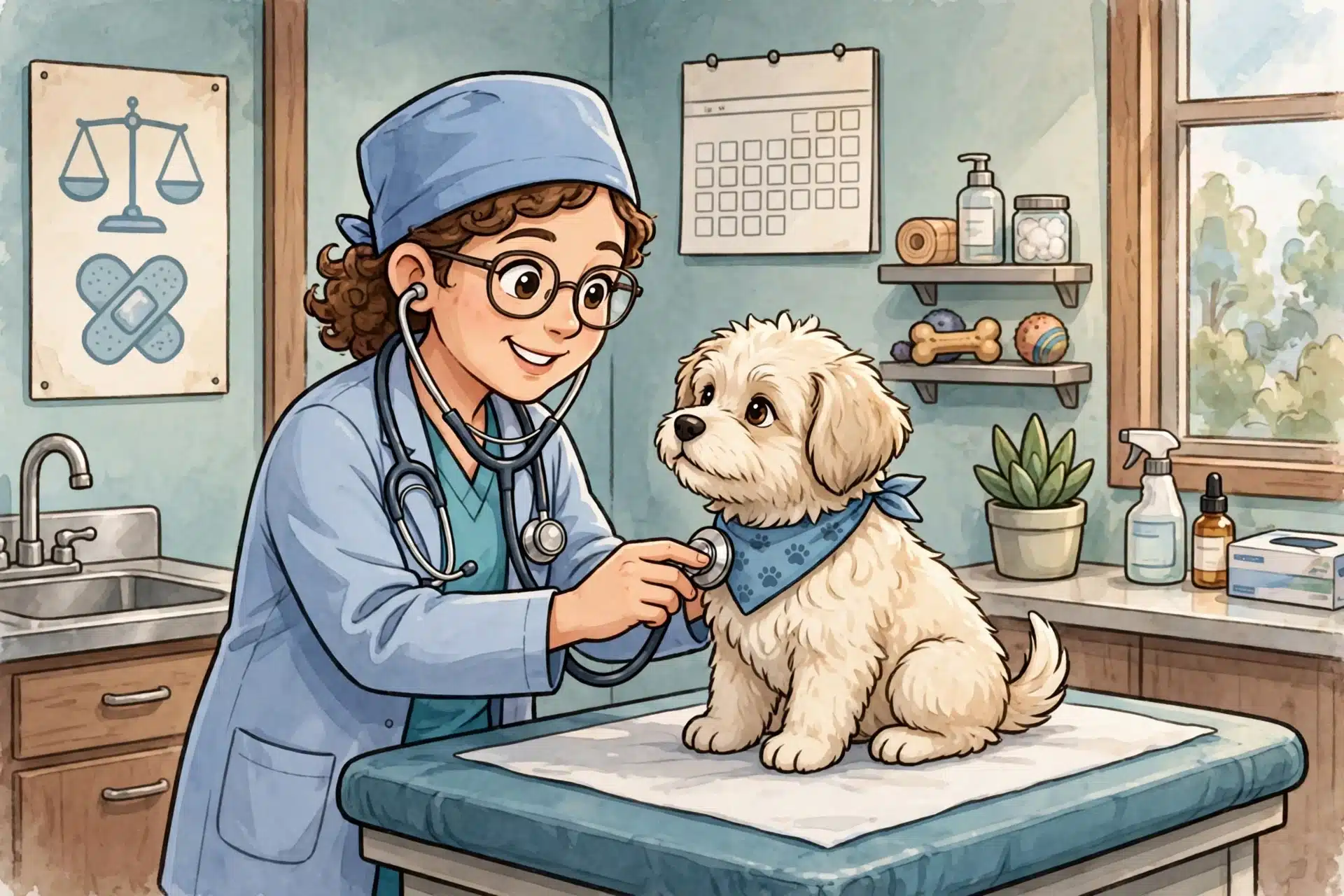
Good contracts cover two different things. The first is the initial screening: a statement that the puppy left healthy, with vaccines, deworming, and a recent vet check documented. The second is a longer promise about genetic conditions.
Don’t blur them. A 15-day illness window protects you against something the puppy carried home. A one- or two-year genetic term covers things like heart or joint defects. California law treats these differently too: illness claims run 15 days from possession, while hereditary conditions allow up to one year under the Polanco-Lockyer Pet Breeder Warranty Act. Ask which parent dogs were health tested, and for which conditions.
Understand the Available Remedies
When a claim qualifies, you should get to choose the outcome, not the breeder. Look for all three options:
- Return the puppy for a refund of the purchase price.
- Exchange for a puppy of equal value.
- Keep the puppy and get vet costs reimbursed, often up to 150% of the price.
Watch for contracts offering only replacement puppies, with no refund option. That’s a one-way door. At Sage Puppies, remedies are spelled out plainly so families never have to guess.
Step 5: Review Ownership, Care, Breeding, and Rehoming Clauses
This part of the contract covers how you live with the dog and what happens if things change. Read it closely. It stays binding long after you drive home.
Check Pet-Home and Breeding Restrictions
Most companion puppies are sold as pets, not breeding stock. Look for a clause limiting registration or banning breeding without written permission. The AKC’s breeder contract guide notes these terms are standard for pet homes. If you ever want breeding rights, agree on that before signing, not after. Ethical programs like Sage Puppies place Havanese, Havapoo, and Cavapoo puppies as companions and are upfront about it.
Understand Spay, Neuter, and Everyday Care Requirements
Check the deadline for sterilization. Some contracts say 12 months; others require waiting until 18 or 24 months for joint health. Note what proof the breeder wants, usually a vet invoice. Care clauses often cover indoor living, vet care, and grooming basics. Make sure they match your real plans. You can also ask why a breeder sets a certain timing – a confident breeder will explain.
Read the Return-to-Breeder Clause as a Lifetime Plan
Good contracts give the breeder first right of refusal if you can’t keep the dog. That sounds strict, but it protects the puppy from shelters. Ask what happens in year one versus year ten.
Also Read: 7 Documents a Reputable Puppy Breeder Should Provide
Step 6: Confirm Pickup, Delivery, and Responsibility at Handover
A contract can promise a healthy puppy and still cause problems if it says nothing about when and where you actually get the puppy. Lock down the handover terms before you pay the balance.
Define the Handover Date and Location
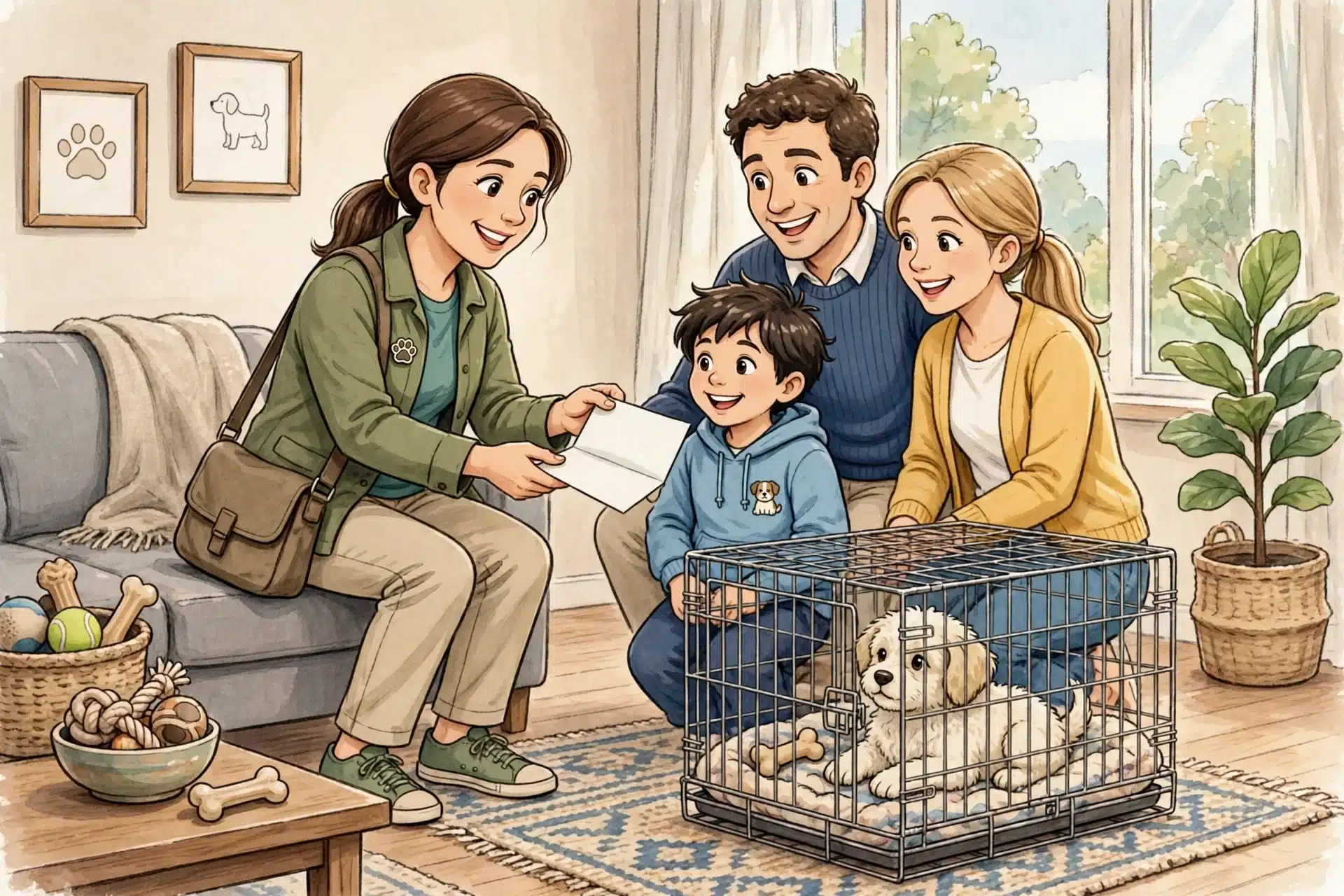
The contract should state a pickup date range tied to the puppy’s age. Most states let puppies travel across state lines only at 8 weeks or older, so a breeder who promises 6-week handovers is cutting corners. Ask whether you pick up in person or use delivery, and note who must be present to sign. Some contracts set a pickup deadline, after which the breeder may charge boarding fees or resell the puppy. Confirm what happens if you can’t make the agreed date.
List Delivery Costs, Delays, and Documentation
If the puppy ships, the contract should list every cost: transport fee, crate, and a Certificate of Veterinary Inspection. Many destination states require a health certificate for interstate travel, typically valid for about 10 days, so timing matters. See USDA’s state-to-state pet travel guidance.
Also confirm:
- What happens if weather or a carrier delays the trip
- Who covers extra boarding or re-booking fees
- When the transport company is allowed to seek emergency vet care
Under federal transport rules, carriers must have your contact details and care records before accepting a puppy (9 CFR § 3.14), so ask the breeder how they document this.
Also Read: How to Compare Havapoo Puppy Contracts Before You Commit
Step 7: Resolve Questions Before You Sign or Reserve
Use a Written Question List
Type out your questions before any call or visit. A good puppy brain forgets half of them under pressure. Cover the essentials:
- What does the health guarantee cover, and for how long?
- What happens to my deposit if no litter matches?
- Who pays for delivery, and what if travel is delayed?
- May I keep the puppy if the guarantee is triggered?
Send the list ahead if you like. Ethical breeders welcome written questions. OFA’s breeder interview guide puts it plainly: if a breeder dodges or hesitates too long, reconsider. Cornell’s veterinary team agrees that responsible breeders answer health-testing questions openly and offer lifelong support.
Know When to Pause
Watch how the breeder responds, not just what they say. Pause if you see:
- Pressure to pay the deposit today.
- Refusal to share the contract before payment.
- Vague or changing answers about guarantees or delivery.
The AKC notes the contract should be available before you decide to buy, never sprung on you at the end. Walking away costs you nothing. A rushed signature can cost you years.
Trust your gut. A good breeder wants you slow and certain, not fast and sorry.

A clear contract should make you feel confident, not confused. At Sage Puppies, we walk every family through our health guarantee, deposit terms, and pickup or delivery details before you commit. Browse our available Havanese, Havapoo, and Cavapoo puppies, then submit an application – questions welcome at every step.
Frequently Asked Questions
Q1: What should a California puppy contract include?
At minimum: breeder and buyer names, price, health guarantee terms, return policy, and any spay/neuter requirements.
Q2: Are puppy deposits refundable in California?
Not automatically. California doesn’t require refunds, so ask about the breeder’s written deposit policy before you pay anything.
Q3: How do I check a breeder’s contract before reserving a puppy?
Request a copy before sending money. Read the health guarantee, delivery terms, and refund clauses carefully. Ask questions early.
Q4: Can I get a contract reviewed before pickup or delivery?
Yes. Ethical breeders, including Sage Puppies, share full terms before you commit, whether you pick up or arrange delivery.
Q5: What health guarantees should I expect?
Look for coverage of serious genetic conditions for at least a year, plus a recent vet exam record.
Conclusion
Reading a California puppy contract before you pay comes down to a few habits: verify the breeder’s identity and disclosures, question any nonrefundable deposit (new rules effective January 1, 2026 can void such contracts), and get health guarantees and pickup or delivery terms in writing. California’s written disclosure law covers birth date, vaccination records, and known health conditions, so a vague contract is a warning sign, not a formality. The Attorney General’s guidance echoes this: reputable breeders share records openly and ask about your home. Slow down, compare terms, and trust the breeder who welcomes your questions. That breeder is the one worth reserving with.





