Quick Summary: Home-raised puppies usually make an easier transition to family life because daily household noise, handling, and varied surfaces during the 3-to-14-week socialization period build confidence, though a well-run kennel can offer the same benefits. Judge the breeder’s actual routines, verifiable health records, and contract terms rather than relying on labels, since prices overlap and kennels may keep clearer veterinary records. Sage Puppies follows a home-raised model in South Jordan, Utah, raising Havanese, Havapoo, and Cavapoo puppies with daily household exposure and per-puppy reservation terms.
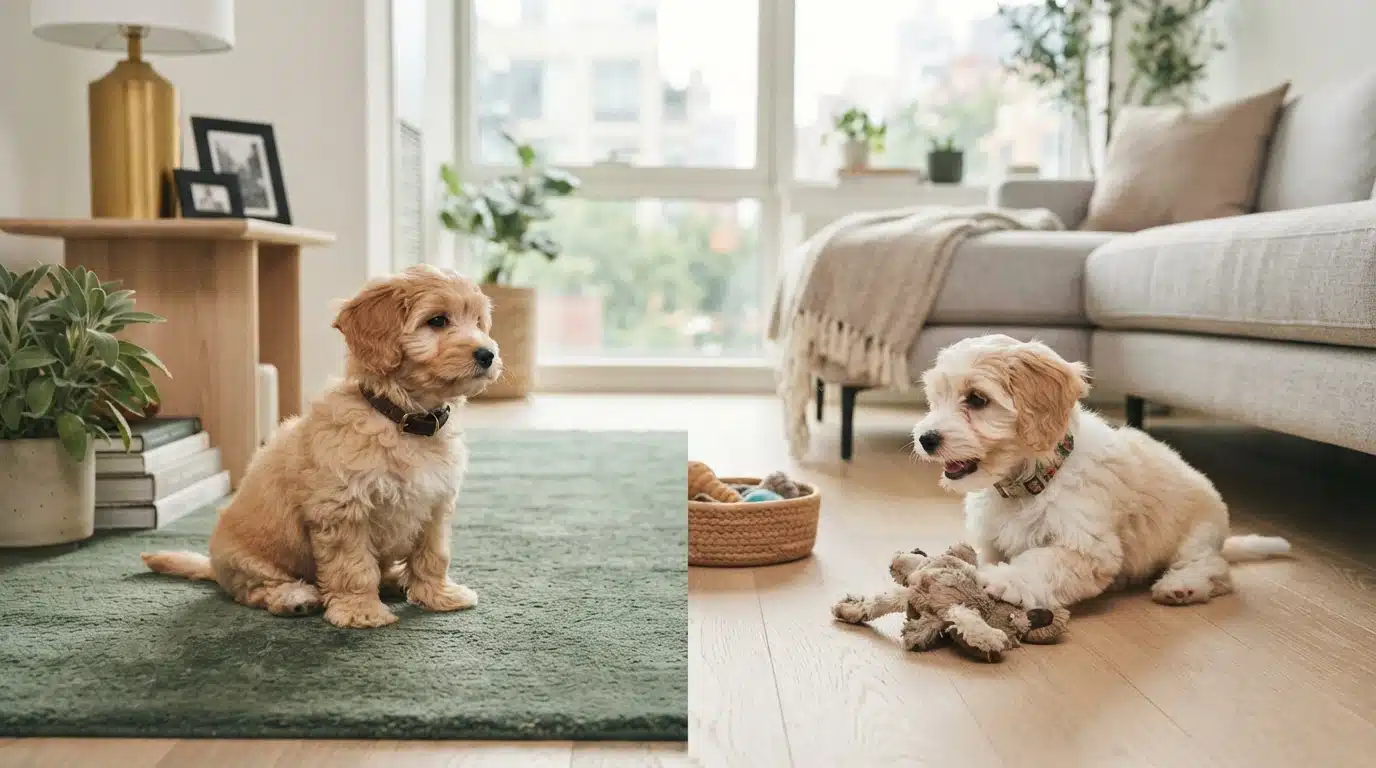
Two puppies can both be eight weeks old, have health-tested parents and cost the same, yet turn out completely different. One spent its mornings on a living room rug. The other spent them in a kennel run. That early setting matters. A home raised puppy usually starts out more at ease with household noise, handling and new people, and those home raised puppy benefits come from what it actually lived with during the sensitive socialization period. Puppies from kennel breeders can become wonderful dogs too, but they often need more settling-in work from you.
The problem is that every page you read pushes its own model, and the words are slippery. “Home-raised” gets used loosely, and “kennel” sounds worse than it always is. This comparison gives you a straight puppy breeder kennel vs home answer, explains what the research really shows, and ends with the questions to ask before you pay a deposit.
Home-Raised Puppies vs Kennel Breeders at a Glance
| Home-raised puppies | Kennel breeder puppies | Sage Puppies | |
|---|---|---|---|
| Where the puppy lives | Inside the breeder’s family home, in the flow of daily life | Dedicated kennel building, garage or outdoor runs, separate from the home | Home-raised program in South Jordan, Utah, Havanese, Havapoo and Cavapoo only |
| Socialization during the first weeks | Continuous exposure to household noise, visitors, handling and family routines | Planned sessions, group play and handler contact rather than continuous household exposure | Gradual, positive exposure that continues after the early developmental weeks |
| Typical price range | About $3,250 to $3,500 per puppy, with a $500 deposit | Varies widely by breed and breeder, often similar to home-raised pricing | $3,500 to $4,500, with each listing showing its confirmed price |
| Health testing and vet records | Embark DNA health panels on parents plus reproductive-veterinary care | Often centralized, so vet and vaccination records can be easy to review | Health-tested parents; guardian-home and delivery costs are separate |
| Best for | Families wanting an already-familiar puppy and local Utah pickup | Buyers prioritizing volume, professional staffing and easy record review | Utah families wanting local pickup and small-breed puppies |
How Home-Raised and Kennel-Raised Puppies Compare
Home-raised puppies
These puppies are born and raised inside a breeder’s family home, so everyday household activity becomes their first classroom. Programs like Home Raised Puppies in Eagle Mountain, Utah suit families wanting an already-familiar puppy and local pickup, with typical pricing around $3,250 to $3,500.
Key strengths
- Continuous household noise, visitor and handling exposure
- Embark DNA health panels on parent dogs
- Local Utah pickup for nearby families
Kennel breeder puppies
These puppies live in a dedicated kennel building, garage or outdoor run, with care from staff rather than family members. Socialization comes through planned sessions and group play instead of constant household life. This setup works well for buyers who value professional staffing and easy record review.
Sage Puppies
Sage Puppies is a boutique owner-managed program founded in 2025 in South Jordan, Utah, raising Havanese, Havapoo and Cavapoo puppies only. It blends a home-raised start with an application and waitlist process, which fits Utah families wanting local pickup of a small-breed puppy.

Key strengths
- Health-tested parents with confirmed per-listing pricing
- Gradual, positive socialization that continues past the early weeks
- Guardian-home and delivery options handled separately
What the Key Differences Between Home-Raised and Kennel-Raised Puppies Actually Are
Home-raised puppies grow up inside a breeder’s home, so they meet everyday sights, sounds and handling from birth. Kennel-raised puppies live in outdoor or separate housing, often with less human contact. That shapes four key differences:
- Early handling: home-raised pups get daily touch and household noise
- Socialization window: kennel pups may miss part of it
- Environment: carpets, vacuums and kids versus kennel runs
- Confidence: more varied experience usually means easier settling
What the 2019 puppy housing study found
A 2019 study compared litters kept indoors with litters kept in outdoor kennels. Indoor puppies scored better on tests of confidence and problem-solving, and outdoor-kept pups showed more signs of stress and slower recovery. The authors framed the indoor advantage as a treatment effect worth considering, not a guarantee for every puppy. Individual litters vary, and the study did not test home-raised litters directly.
Why the first weeks shape the rest of the dog’s life
Puppies have a sensitive socialization period that runs roughly from 3 to 14 weeks of age. During this stretch, the brain builds its picture of what is safe, so positive exposure to people, sounds and surfaces carries lasting weight. The AVSAB’s position statement urges breeders and owners to start socialization before a puppy finishes its vaccine series. Home-raised litters get a head start on household life, which matters for small companion breeds like a Havanese, Havapoo or Cavapoo raised around Utah families.
Where the evidence runs thinner
The research supports early handling and enrichment, but it does not prove home-raised puppies always turn out better. Kennel programs can still socialize well, and a careless home setting can undo the advantage. Buyers should visit, ask questions and weigh how to find the right reputable puppy breeder near you rather than trusting labels alone.
What a Puppy’s Day Actually Looks Like in Each Setting
Sound, surfaces and the sights a home puppy takes for granted
A home-raised puppy wakes up to doors closing, a dishwasher running, kids arguing over cartoons and the TV in the background. Tile, carpet, stairs and grass all show up in the first weeks. That daily noise matters because the sensitive socialization period runs from roughly 3 to 14 weeks of age, so a puppy hears these things while its brain is primed to accept them. A kennel puppy usually hears kennel sounds instead: fans, other dogs barking, feed buckets. Both are real environments, but only one matches the home you are bringing the puppy into.

Handling, grooming and early care routines
In a home setting, handling happens all day without anyone calling it training. Someone clips a bit of nail fur, wipes a paw, brushes a tangle or turns a puppy over to check its belly. By eight weeks, a Havanese or Havapoo raised this way often accepts grooming tools as normal rather than scary. Programs like Sage Puppies build this into daily life because small companion breeds need regular coat care. Kennel-raised puppies can get clean, careful care too, but it is usually scheduled and brief rather than woven into the day, so grooming may feel newer at first.
Routines like feeding times and what family-raised means shape how fast a puppy settles in.
Sleeping near people versus sleeping in a run
At night, the difference gets quiet and simple. A home puppy sleeps near people, hears breathing, and learns that alone-time comes in small, gentle doses. A kennel puppy sleeps in a run or pen, often with littermates, which has its own benefits. A review of kennelled dog welfare notes that kennel environments vary widely, so good care is possible in either place. Neither start is broken; they just build different first impressions.
How to Know if a Breeder’s Puppies Are Truly Home-Raised
Ask how you can tell home raised from kennel raised puppies with real proof, not labels. A genuine home-raised puppy is born and raised inside the breeder’s living space, with daily household noise, handling, and enrichment during the 3 to 14 week socialization window. Ask the questions below, listen for specifics, and trust what a breeder can show over what the website claims. If an answer stays vague twice, walk away.
- “Where exactly do the puppies sleep and play?” A good answer names rooms: kitchen, living room, not “our facility.”
- “What did this litter hear and experience this week?” Expect vacuums, kids, car rides, crate starts.
- “Who handles the puppies, and how often?” Daily handling by adults and children should come easily.
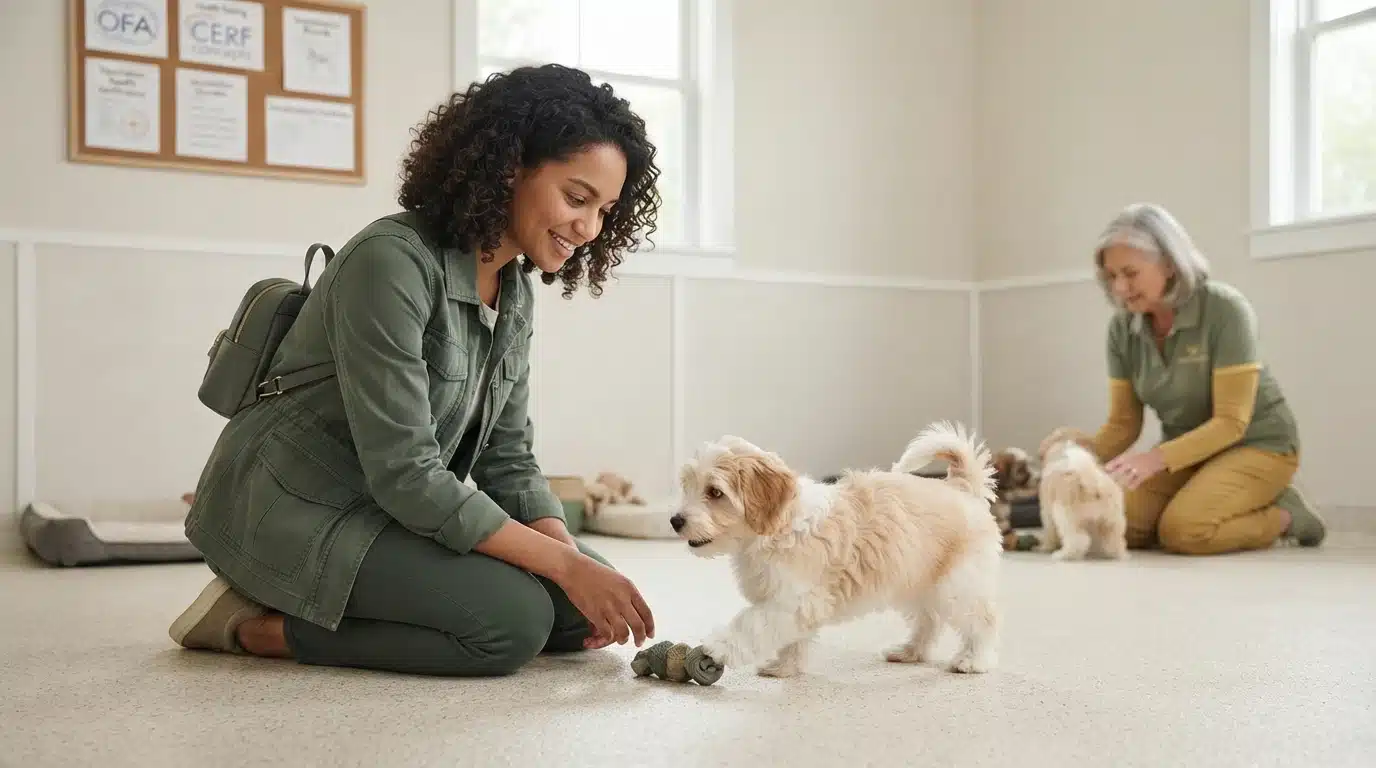
- “Can I visit or video call and see the home?” Yes, with short notice, is the honest answer.

Red flags that the home-raised label is mostly marketing
Some listings borrow the phrase without the lifestyle behind it. Watch for:
- No home access. “Visits happen at our kennel” or video calls refused flat out.
- Cookie-cutter answers. Every question gets the same rehearsed script about “family raised.”
- Brand-name pricing with no health testing shown. OFA or vet records should be shared, not promised.
- Pressure deposits. A same-day deadline before you have seen anything.
- Stock photos. Images that look like a facility, not a living room.
Reading a breeder’s website like a skeptic
Look for specifics a kennel cannot fake: photos of puppies near real furniture, named family members, and a written description of daily routines. Check whether health testing, deposit terms, and visit policy are spelled out. Utah families comparing a reputable puppy breeder near me can also plan an in-person visit and inspect puppies directly, which beats any website claim.
One useful benchmark: a transparent program like Sage Puppies publishes its application and matching process openly, so you know how a puppy is raised before you pay.
Health Testing, Vet Records and Where Kennel Operations Sometimes Have an Edge
What records you should be able to see before paying
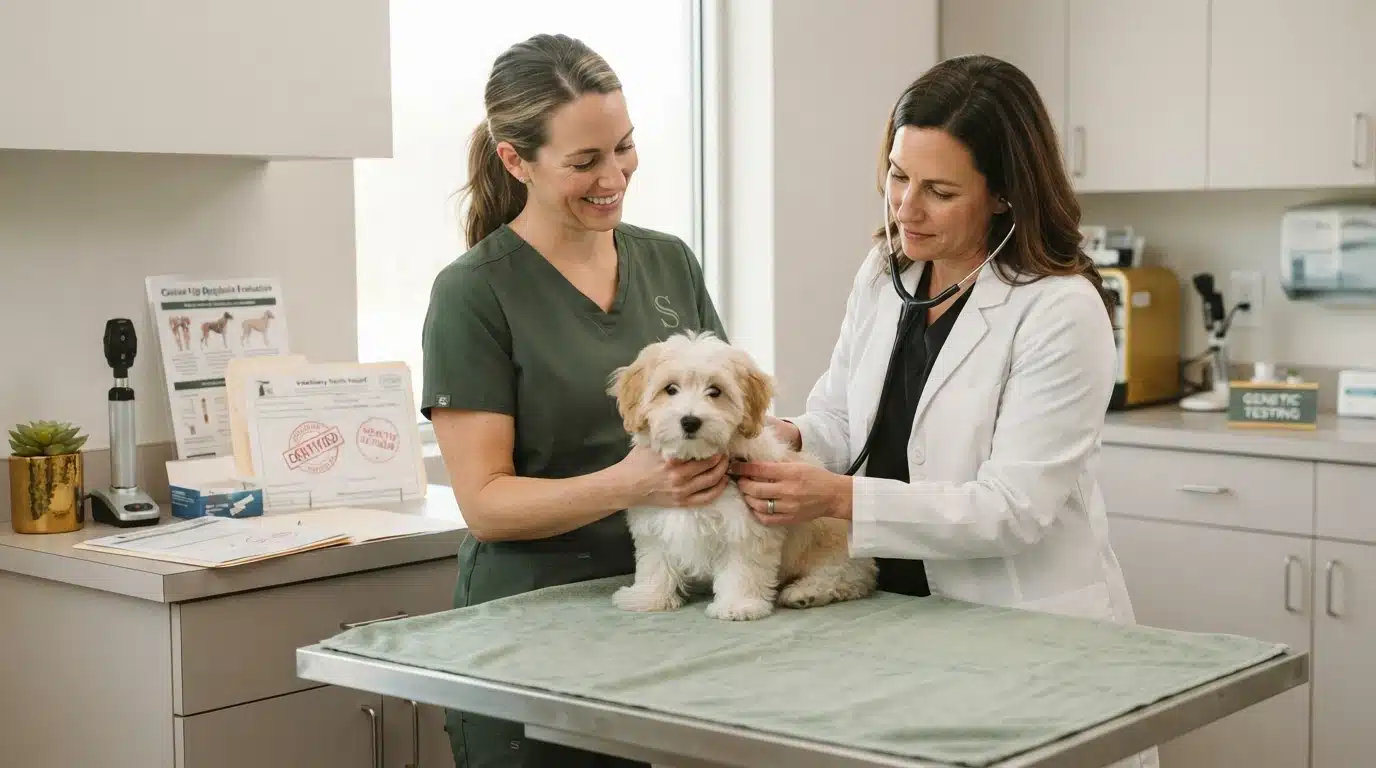
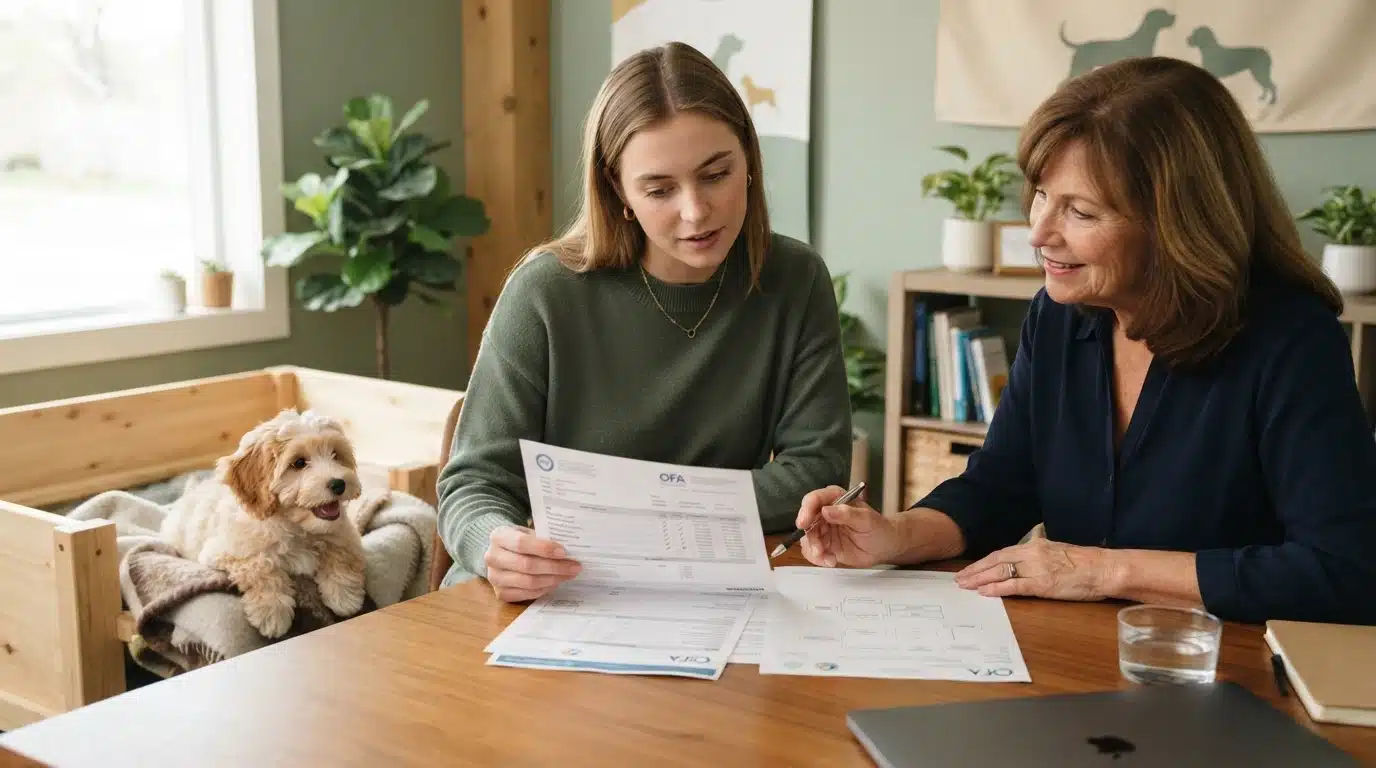
Ask for three things: the parents’ health test results, a recent vet exam record for the puppy, and a written health policy. Parent results should be public and searchable, not just a screenshot. The OFA database lets you look up a dog by registered name and see its actual test results. If a breeder cannot give you verifiable results, that is your answer.

Centralized kennels and easier record-keeping
Here is the honest edge some larger operations have. A kennel with set routines, staff, and software often keeps cleaner vet logs, vaccination dates, and deworming records than a busy household does. Paperwork is their system, so it tends to be consistent. That does not make their puppies better raised, but it does make verification simpler. Smaller home programs can match it with folders, shared documents, and a named vet who saw each puppy. Ask to see the actual records, whatever the setup. For a walkthrough of what each document proves, the team’s guide to how to check a puppy breeder’s health testing records covers the details step by step.
Why health testing informs decisions but promises nothing
Health testing lowers risk; it never removes it. A clear eye exam or cardiac check tells you what today shows, not what tomorrow brings. Even carefully tested parents can produce a puppy with a problem, because genetics carries chance. Read results as informed risk management, not a guarantee. Pair the tests with good daily care and a solid contract, then judge the whole picture.
Price, Deposits and What You Are Actually Buying
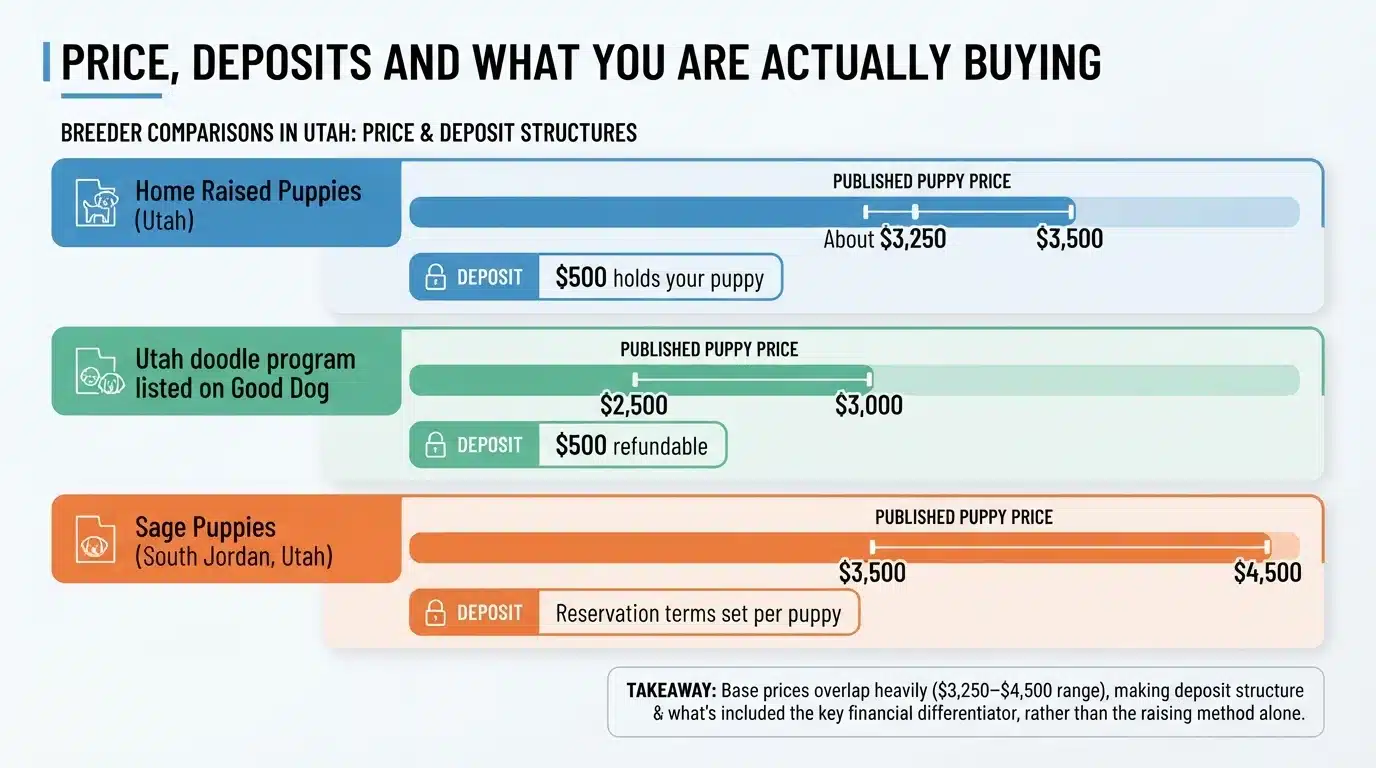
How much does a home-raised puppy cost compared with a kennel-raised one? In Utah, the sticker prices overlap heavily: published examples run from about $3,250 to $4,500, so the raising method matters less to the base price than the breed, size and program. What differs is the deposit structure and what the price includes.
| Breeder example | Published puppy price | Deposit |
|---|---|---|
| Home Raised Puppies (Utah) | About $3,250 to $3,500 | $500 holds your puppy |
| Utah doodle program listed on Good Dog | $2,500 to $3,000 balance | $500 refundable |
| Sage Puppies (South Jordan, Utah) | $3,500 to $4,500 | Reservation terms set per puppy |
The costs that sit outside the sticker price
Budget for items most pages skip. Utah pickup adds sales tax, and delivery options like an in-cabin flight nanny cost extra. Then come first-year basics: vet visits, vaccines, food, a crate, grooming for a Havanese coat, and training classes. Label your own budget example before you compare breeders, because two $3,500 puppies can carry very different totals.
Deposit and contract terms worth reading closely
Deposits range from refundable to non-refundable, so ask in writing which one you are paying. Read the health terms, the return policy and any spay or neuter requirement before you sign. One Utah farm lists a $300 non-refundable deposit plus 7.3% sales tax, which shows how terms vary. A clear written agreement matters more than the raising method itself.
Which Should You Choose: Home-Raised or Kennel-Raised Puppies?
Neither option wins on its own. The right choice depends on the breeder’s daily habits, not the label on the website.
Choose home-raised when
Pick a home-raised puppy if you want a dog that already lives with household noise: vacuums, doorbells, kids, and other pets. Puppies raised inside a home get constant handling during the 3 to 14 week socialization window, which research links to calmer, more confident adult dogs. This setup suits families with young children, first-time owners, and anyone buying a small companion breed like a Havanese, Havapoo, or Cavapoo. Just verify the claim by asking for photos or a video call inside the actual whelping space.
Choose kennel-raised when the breeder earns it
A kennel breeder can raise excellent puppies, but only with real effort. Look for daily human handling, indoor whelping areas, enrichment toys, and early exposure to sounds and surfaces. Ask how many litters the facility raises each year, and whether puppies meet visitors before they go home. Health testing of the parents matters here too. If a kennel program shows documented socialization work and clean, heated spaces, its puppies can settle into family life just as easily.
How Sage Puppies fits this comparison
Sage Puppies uses the home-raised model, with puppies born and raised inside a South Jordan, Utah home rather than a separate kennel building. Each puppy receives daily handling and household exposure during the socialization window. Prices run $3,500 to $4,500, and reservation terms are set per puppy, so ask for the written deposit and contract terms before you commit. Then compare those terms side by side with any other breeder you are considering, because wording varies more than price does.

If a puppy raised inside a real home sounds like the right fit, start with the questions in this checklist before you send a deposit. Sage Puppies raises Havanese, Havapoo and Cavapoo puppies in our South Jordan home, with application-first matching and written reservation terms. Visit Sage Puppies to see available puppies and ask us anything.
Frequently Asked Questions
Q1: What are the key differences between home-raised and kennel-raised puppies?
Home-raised puppies live with daily household noise and handling during the socialization window. Kennel puppies get scheduled care, so they often need more settling-in work from you.
Q2: How do I know if a breeder’s puppies are truly home-raised?
Ask where the puppies sleep, what they experienced this week, who handles them, and whether you can visit or video call. Vague answers twice mean walk away.
Q3: How does a puppy’s first 8 weeks of environment shape its temperament?
The sensitive period runs from 3 to 14 weeks, so early sights, sounds and handling build lasting confidence. A 2019 housing study found indoor puppies scored better.
Q4: Do home-raised puppies cost more than kennel puppies?
Usually no. Published Utah examples overlap, roughly $3,250 to $4,500, so breed and program matter more than the raising method.
Q5: What deposit and contract terms should I check?
Ask in writing whether the deposit is refundable, and read health terms, return policy and any spay or neuter requirement before signing anything.
Conclusion
The difference between home raised puppies and kennel breeders comes down to daily life, not labels. A home raised puppy grows up with household noise, handling and enrichment during the 3 to 14 week socialization window, and the 2019 puppy housing study supports that head start. Kennel programs can raise confident puppies too, but only with documented socialization work and verifiable health testing.
So judge the breeder, not the phrase on the website. Ask where the puppies sleep, request real records and read every deposit and contract term in writing. Verify claims with a visit or video call, and treat prices as one part of the whole picture. For families comparing a reputable puppy breeder near me, that checklist matters more than the raising method itself.