Quick Summary: When buying a small breed puppy, request and independently verify both parents’ OFA patella, cardiac, and CAER eye records, relevant DNA variant reports, and hip radiographs when age-qualified, plus the puppy’s own vet, vaccination, and deworming records. DNA tests do not replace hands-on exams, and a CHIC number only confirms required tests were completed, not that every result passed; OFA hips require age 24, while patella and cardiac certifications start at 12 months. Sage Puppies supports the same documented standard by encouraging buyers to check registry numbers, dates, specific test variants, and the full paperwork with their own veterinarian before paying a deposit.
Two breeders can hand you the same thickness of paperwork for a Havapoo litter, and only one of those packets actually shows the parents’ knees, hips, and eye records with dates, ages, and registry numbers attached. The other one is a stack of reassurances. That gap is the whole challenge with health tests for small breeds: the documents look alike, but they prove very different things.
This guide shows you which tests matter for Havanese, Havapoo, and Cavapoo puppies, which ones apply to parents rather than puppies, and how to verify each result yourself through registries like OFA and CHIC. It separates what a DNA report can prove from what it cannot. You will also see how a small program like Sage Puppies documents its litters, so you can hold any breeder, including us, to the same standard.
What Health Tests Do Small Breed Puppies Need?
The Short Answer for Small Breed Families
Health tests for small breeds come down to five core screenings on the parents, plus basic records on the puppy itself:
- Patella luxation exam, to check the kneecaps
- CAER eye exam by a board-certified ophthalmologist
- Cardiac evaluation, usually an OFA-certified heart check
- DNA variant tests for breed-specific genes
- Puppy records: vaccinations and deworming
The puppy itself needs a clean vet exam and those records. Everything else is about the parents, because the serious risks are inherited.
Why Small Breeds Share a Common Risk List
Tiny dogs carry a predictable set of problems. Loose kneecaps, inherited eye disease, and heart defects show up across Havanese, Cavalier lines, and their mixes. That is why breed clubs build their health requirements around the same trio: knees, eyes, heart. Age matters too. OFA certifies hips only at 24 months, but cardiac and patella results are valid from 12 months, per the OFA’s own rules.
How a Breed Mix Changes the Priority List
A purebred Havanese follows one parent club list. A Havapoo or Cavapoo follows two, because each parent breed contributes its own risks. A Cavapoo, for example, adds Cavalier heart concerns on one side and poodle eye and joint issues on the other. So ask for the Havanese tests, the poodle tests, and the Cavalier tests, matched to which parent is which. If a breeder’s answers get vague here, treat it as one of the red flags in puppy health testing worth walking away from.
What DNA Panels Add, and What They Cannot Show
DNA reports confirm whether a parent carries specific gene variants, like the ones behind Havanese eye and heart conditions. That part is precise. What a panel cannot do is clear a dog’s knees, eyes, or heart. Those need a hands-on vet exam. A glossy DNA report with no OFA results is half an answer, and CHIC listing only means required tests were done, not that they passed, per the OFA’s CHIC program page.
The Core Tests to Request for a Small Breed Litter
Five records cover the ground for small breeds like Havanese, Havapoos, and Cavapoos. Ask for each by name, and ask to see the paperwork rather than a breeder’s summary. The table below shows what to expect and the minimum age for final OFA health results.
| Test | Certifying Body | Final Age Threshold |
|---|---|---|
| Patella evaluation | OFA | 12 months |
| Hip radiographs | OFA or PennHIP | 24 months (OFA) |
| Eye exam | CAER (OFA) | Per exam date |
| Cardiac evaluation | OFA | 12 months |
| DNA panel | Lab report | Any age |
Patella Evaluation for Small Breeds
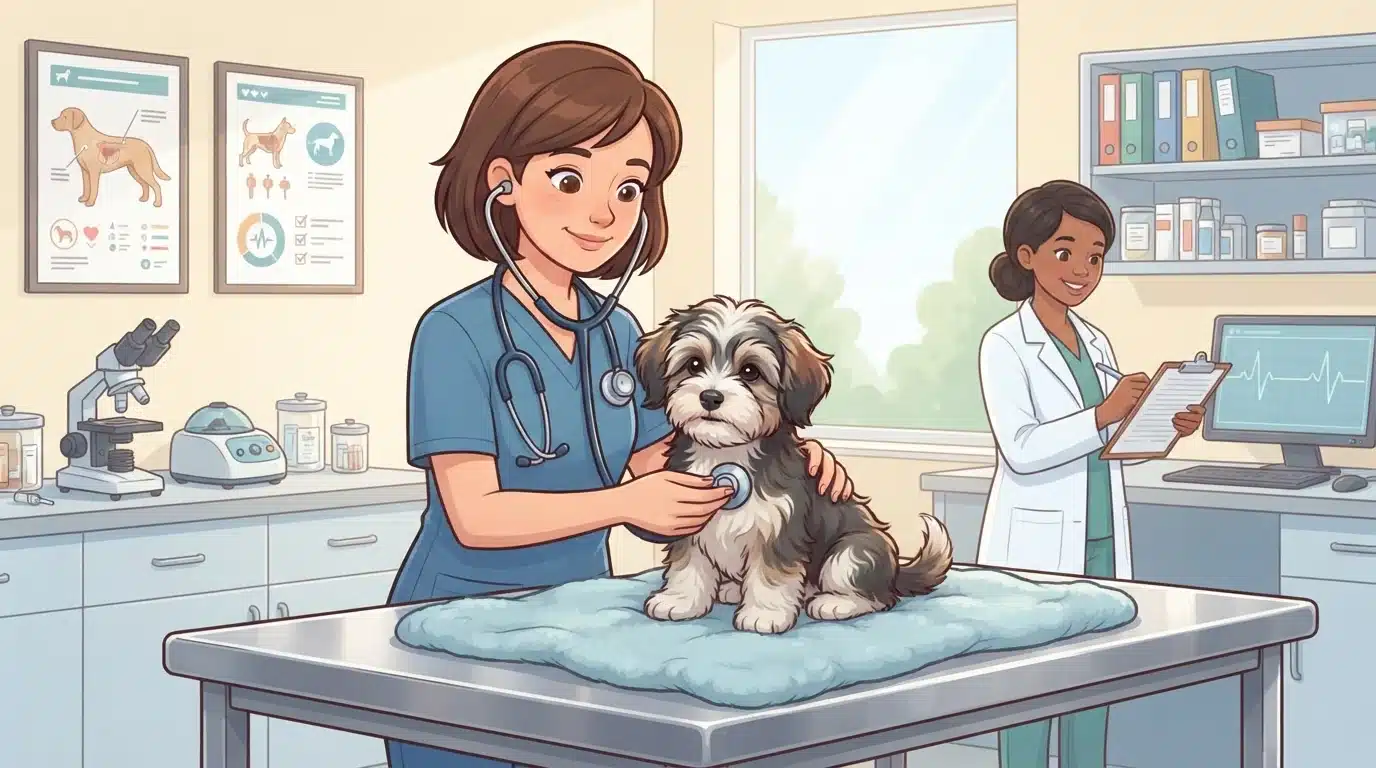
Patella luxation, a kneecap that slips out of place, is the most common joint problem in small breeds. The OFA certifies patella results from 12 months of age. Ask for the parent’s certificate number and look it up yourself on the OFA site.
Hip Radiographs and the PennHIP Distinction
The OFA certifies hips only at 24 months, so a young parent’s hips are usually still provisional. PennHIP evaluates hips earlier using a different method and gives a score, not a pass or fail. If a breeder reports PennHIP hips, that result does not transfer to OFA. Know which system the record belongs to before you compare dogs.
Eye Examinations Through CAER or OFA
Eye exams belong to a veterinary ophthalmologist, not a general vet. The exam is called CAER, short for Companion Animal Eye Registry, and results file through the OFA. Inherited eye disease shows up in Havanese lines, so both parents should have a current exam. Ask when the last exam was done.
Cardiac Evaluation and Auscultation
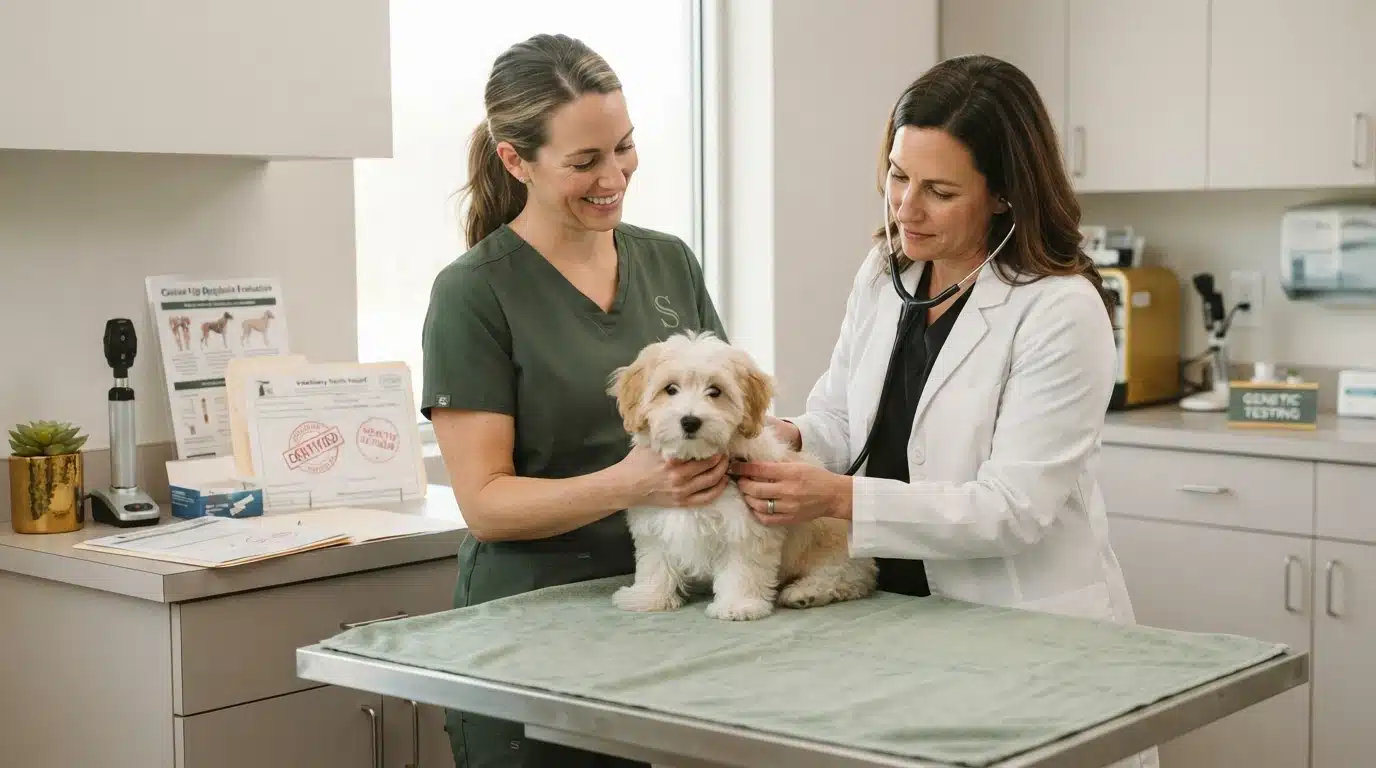
A cardiac evaluation starts with auscultation, which means a vet listens to the heart with a stethoscope. Small breeds carry some inherited heart risks, so this simple check matters. OFA accepts basic auscultation results from 12 months. Some breeders add an echocardiogram by a cardiologist, which is a step above the minimum and worth noting.
The Puppy’s Own Exam, Vaccination, and Deworming Record
Parent screening tells you about genetics, but the puppy needs its own record. Request a dated vet exam, a vaccination log with vaccine types and dates, and a deworming history with the product used. These papers show what actually happened, not what was promised.
Ask for copies, not photos of certificates. A real OFA number verifies on the OFA website in seconds.
Matching the Test List to Havanese, Havapoo, and Cavapoo Litters
The parent breed decides the test list. A Havanese parent needs the breed’s own CHIC set; a Havapoo or Cavapoo parent should cover the risks of both sides of the cross. Use the table below as your starting point, then verify each result in the OFA database rather than trusting a summary in an email.
| Breed pair | Priority parent screens |
|---|---|
| Havanese | OFA patellas, cardiac evaluation, BAER hearing, CAER eye exam |
| Havapoo (Havanese x Poodle) | Havanese CHIC set plus Poodle-relevant DNA variants and hips |
| Cavapoo (Cavalier x Poodle) | Cardiac evaluation, patellas, CAER eyes, Poodle DNA variants |
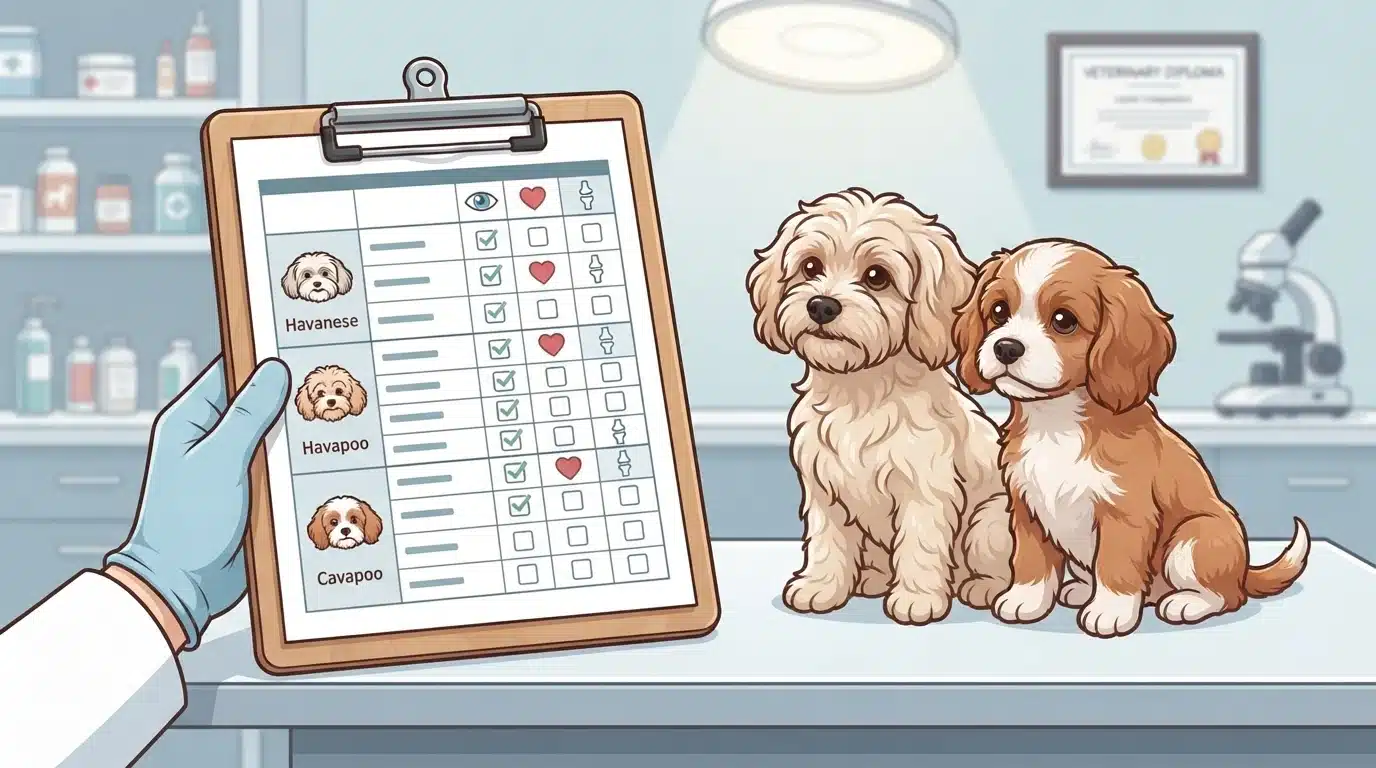
The Current CHIC Requirements
For Havanese, the Havanese Club of America’s testing guide lists patellas, hearing, eyes, and cardiac results as the core CHIC tests. Hips are optional at the breed-club level, so ask for them anyway. Remember the age rule: OFA certifies hips at 24 months, while patellas, cardiac, and thyroid results count from 12 months.
Havanese and Poodle on Both Sides
A Havapoo parent inherits screening duties from two clubs. The Havanese side calls for the health tests for small breeds covered above, including patella luxation and CAER eye exams. The Poodle side adds hip radiographs and DNA variants. Ask which parent carries which results, and check each one individually under OFA.
Cavalier and Poodle Ancestry
For a Cavapoo, the heart comes first. Cavalier ancestry raises the risk of mitral valve disease, so an adult cardiac evaluation by a cardiologist matters more than any single DNA line. Then confirm patellas, eyes, and Poodle DNA variants on the other parent. Breed-pair lists like these are what we document for every litter at Sage Puppies.
A Request List Template for Your Litter
Ask the breeder for four things in writing: each parent’s OFA or CHIC certificate numbers, the DNA variant report by name, a recent veterinary exam for both parents, and the puppy’s own vaccination and deworming records. If a number is missing, ask why before you pay a deposit; our parent health questions checklist covers the follow-up questions worth sending.
How to Verify Health Records Before You Pay a Deposit
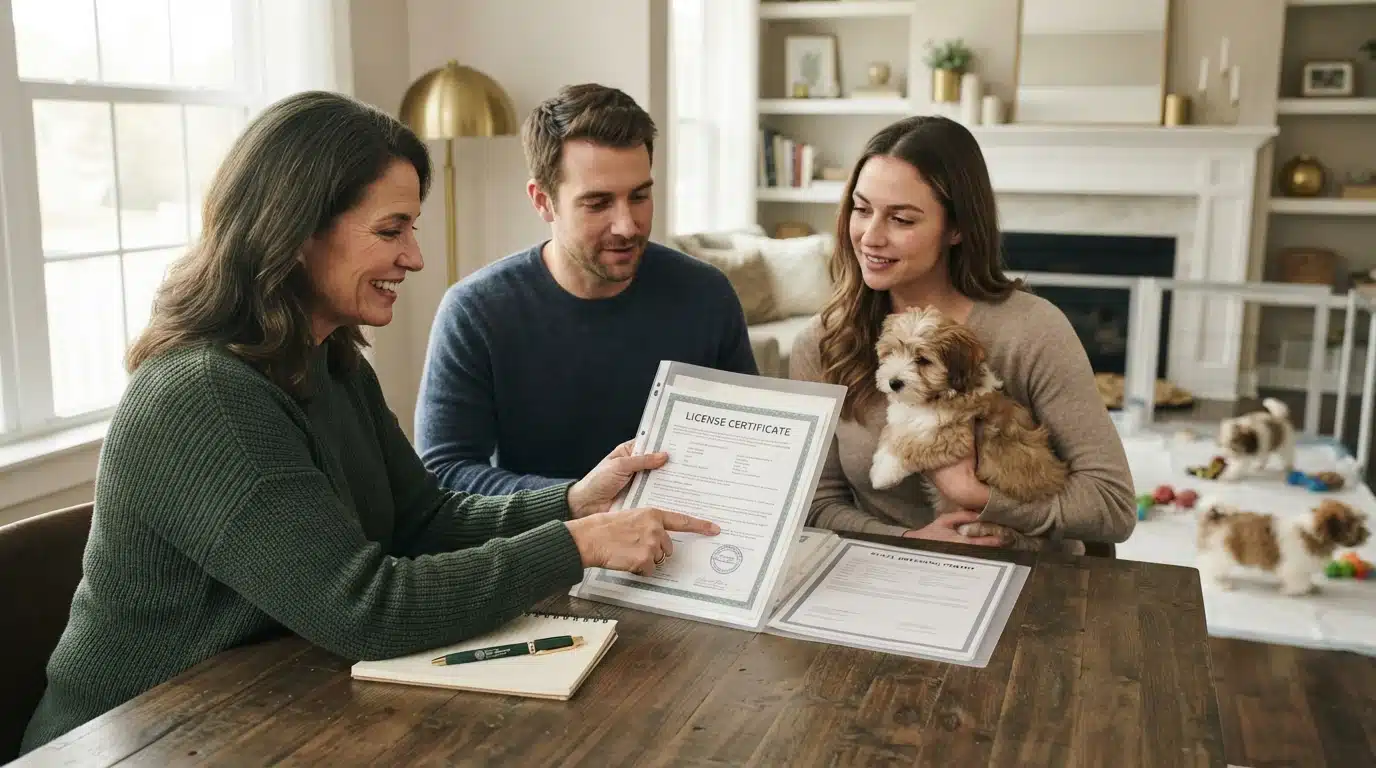
Verifying a breeder’s health test results takes four steps: search the OFA database by the parent’s registered name, read the certificate dates against the breed’s age rules, check any DNA report for the exact variant tested, and have your own vet review the full packet before money changes hands. Do all four. Each step catches something the others miss.

Searching the OFA Database by Registered Name
Ask the breeder for each parent’s registered name. Type it into the search bar at OFA’s public records. Legitimate results list the dog, its breed, and every completed test with dates. If a search returns nothing, ask why. Some breeders test through PennHIP instead, and those hip results live in a separate system, so hips-only data may not appear in the OFA record.
Reading the Certificate Correctly
A passing result only counts if the dog was old enough when tested. OFA certifies hips at 24 months, while patella, cardiac, and thyroid results count from 12 months. Check the exam date printed on each certificate, not just the verdict. A “pass” issued before the qualifying age means the dog has not actually been certified yet.
Validating DNA Reports and Their Limits
DNA reports should come from a named laboratory and list the specific variant tested, such as the genes behind patella luxation risk in Havanese lines. A panel covering 200 breeds proves little if it skipped the one mutation relevant to your puppy’s parent cross. Confirm the report shows the parent as clear, carrier, or affected for each relevant condition, and ask how the breeding pair’s results were matched.
Your Veterinarian Reviews the Packet
Before you pay a deposit, send the breeder’s full packet to your own veterinarian: parent test certificates, DNA reports, the puppy’s vaccination and deworming records, and any vet exam notes. Ask your vet to confirm the dates line up and the documents look consistent. This review catches mismatched names, missing pages, and gaps a buyer often misses. Any reputable program, including small Utah breeders like Sage Puppies, should welcome that outside review rather than resist it.
Questions to Ask a Breeder, and Signs to Walk Away From
The AKC’s breeder checklist covers the basics, but a small breed buyer needs to push harder on testing paperwork. Good breeders welcome the questions. Vague ones start defending themselves.

Twelve Questions Worth Asking in Order
- What health tests did both parents have, and for which conditions?
- Can you send the OFA, CAER, or lab results before I visit?
- How old is each parent, and are results final or pending?
- Do you register results publicly, or only claim them?
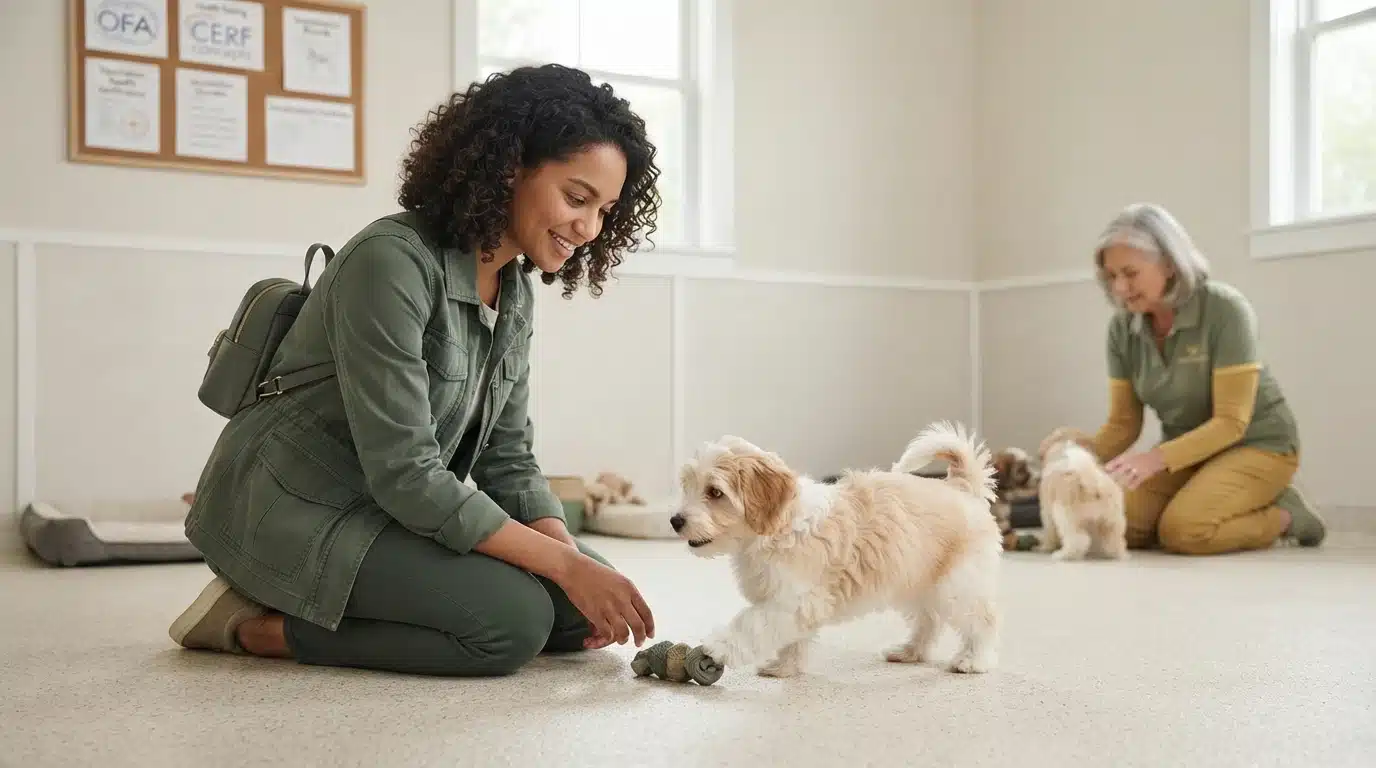
- Can I meet the mother, or see where puppies are raised?
- Which veterinarian examines the puppies, and when?
- What vaccines and deworming has this puppy had?
- What does your contract say about returns or health problems?
- How do you socialize the litter?
- Can I call your references?
- What feeding and house-training routines are the puppies on?
- What happens if my situation changes later?
Warning Signs in the Answers
Walk away when a breeder says “my vet says they’re healthy” instead of showing test results. Be wary of always-available litters with no waitlist, pressure to pay fast, or refusals to let you visit. Watch for parents under 24 months with claimed hip clearances, and DNA panels described only as “full breed panels” with no lab name.
When the Records Are Incomplete
Missing a test does not always mean dishonesty, sometimes a parent is simply younger than the certification age. Ask what is pending and get dates in writing. If records stay vague, choose a breeder who documents everything instead.
Take notes during every conversation. Breeders like Sage Puppies who encourage documentation make your comparison easy, and hesitation to put claims in writing tells you what you need to know.
Common Mistakes to Avoid When Reading Health Test Results
Treating CHIC as a Guarantee of Normal Results
A CHIC certificate only proves a breeder completed a required test list. The results can include fails, “fair” hips, or breeder-option scores. OFA issues the number even when some results are abnormal. Read the actual entries behind the CHIC number, not just its existence.
Using One Panel, One Test List, and Marketing Language for Every Cross
Each cross needs its own checks. Havanese parents should carry patella, cardiac, and CAER eye results; hip radiographs matter at 24 months. A Cavapoo pairing adds Cavalier requirements, so a Havanese-only list misses things. A DNA variant report also proves only what the lab actually tested: a panel covering 200 breeds proves little if it skipped the mutation relevant to your puppy’s parents. Ask for the lab name and the specific variants listed, then compare them to parent club recommendations for that exact mix. Words like “health-tested” or “full breed panel” carry no standard meaning. Breeders at programs like Sage Puppies who show you lab-linked results make this easy; treat any breeder who resists as a reason to keep looking.

Ready to put this checklist to work? Sage Puppies raises Havanese, Havapoo, and Cavapoo puppies with documented parent testing, and Cassie is happy to walk you through every record. Start the application and ask your questions. Wisely Bred. Beautifully Loved.
Frequently Asked Questions
Q1: What health tests should I ask about for small breed puppies?
Ask for patella luxation exams, CAER eye exams, cardiac evaluations, and DNA variant reports on both parents, plus the puppy’s vaccination and deworming records. Hips need OFA radiographs at 24 months or a PennHIP score.
Q2: Can a DNA panel replace vet exams?
No. A DNA report proves which variants were tested, not that knees, eyes, or heart are healthy. Those need hands-on exams.
Q3: Do CHIC numbers mean the parents passed?
No. CHIC only confirms required tests were done. Read the actual results behind the number.
Q4: Why must hips wait until 24 months?
OFA will not certify hips before then. Younger results are provisional, so treat claimed clearances skeptically.
Q5: How do I verify OFA results myself?
Search the parent’s registered name in OFA’s public database and check each certificate date against the age rules.
Conclusion
Health testing is about asking for the right papers, not more papers. Request parent patella exams, CAER eye exams, cardiac evaluations, and a named DNA variant report, plus your puppy’s vaccination and deworming records. Then verify each OFA number yourself and check certificate dates against the age rules: hips at 24 months, patellas and cardiac from 12 months. Remember what a CHIC certificate proves and what it does not. Breed-pair lists matter too, since a Cavapoo needs different screens than a purebred Havanese. Hold every breeder, including us at Sage Puppies, to this same documented standard before you pay a deposit.