Quick Summary: Before paying for a puppy, buyers should request and verify separate records for the puppy’s veterinary care, the parents’ clinical screening, and their DNA carrier status, then check OFA listings and confirm written contract and guarantee terms. Havanese parents need hip, patella, and yearly eye screening, while Havapoo and Cavapoo litters require testing on both sides, including breed-specific heart and eye or DNA tests where applicable. Sage Puppies is presented as a program that shares these records before payment, but buyers should still withhold deposits until all documents and payment protections check out.
Two listings can both carry a health-tested badge and mean entirely different things. One breeder can show you a puppy exam sheet, a parent’s OFA numbers, and a DNA panel on a single page. Another sends a stock photo of a certificate. Before any deposit leaves your account, you should be able to point to the exact document behind every claim.
That gap is the problem this checklist solves. This health tested puppy checklist separates the puppy’s own veterinary record from parent clinical screening and DNA carrier results, so you know which papers prove what. You will learn what to request, how to read it, and breed-specific items for Havanese, Havapoo, and Cavapoo litters. It draws on current primary sources and on the records a small Utah breeding program handles daily, from first vet visits through puppy pickup or delivery.
What Health-Testing Actually Covers, and What It Does Not
Health testing means three separate sets of paperwork. Know which one a breeder is showing you.
Three Layers of Records Buyers Should Keep Separate
First is the puppy’s own record: the pre-purchase veterinary exam, vaccination and deworming log, and microchip number. Second is parent screening, such as hip radiographs, patella results and ACVO eye exams. Third is DNA results showing which parent carries which variant. A healthy puppy record does not prove the parents were screened, so ask for each layer by name.
What Testing Can and Cannot Predict
Parent screening lowers the odds of inherited disease. It does not guarantee a puppy stays healthy for life, and no honest breeder claims otherwise. Clear patellas in a parent reduce, but never erase, the risk of a patellar luxation later. Treat test results as risk information, not a promise.
The Vocabulary You Will See on Records
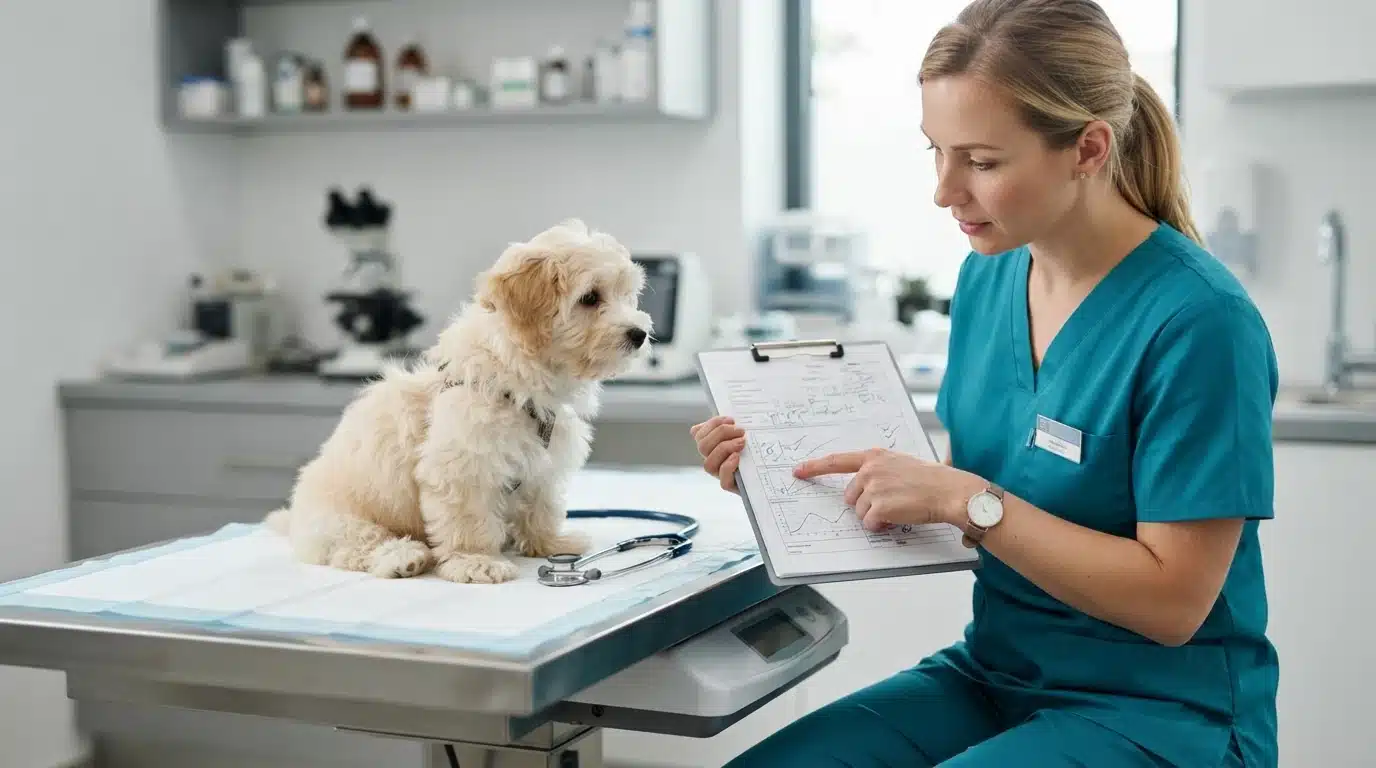
Records use short labels. Expect registered parent names, OFA numbers, CHIC listings, DNA variant results marked clear, carrier or affected, and dates for each exam. When a term is unclear, ask the breeder to explain it in plain words before you pay. Good breeders answer without hesitation.
Where Health Records Come From and How to Verify Them Yourself
The Public Record Trail
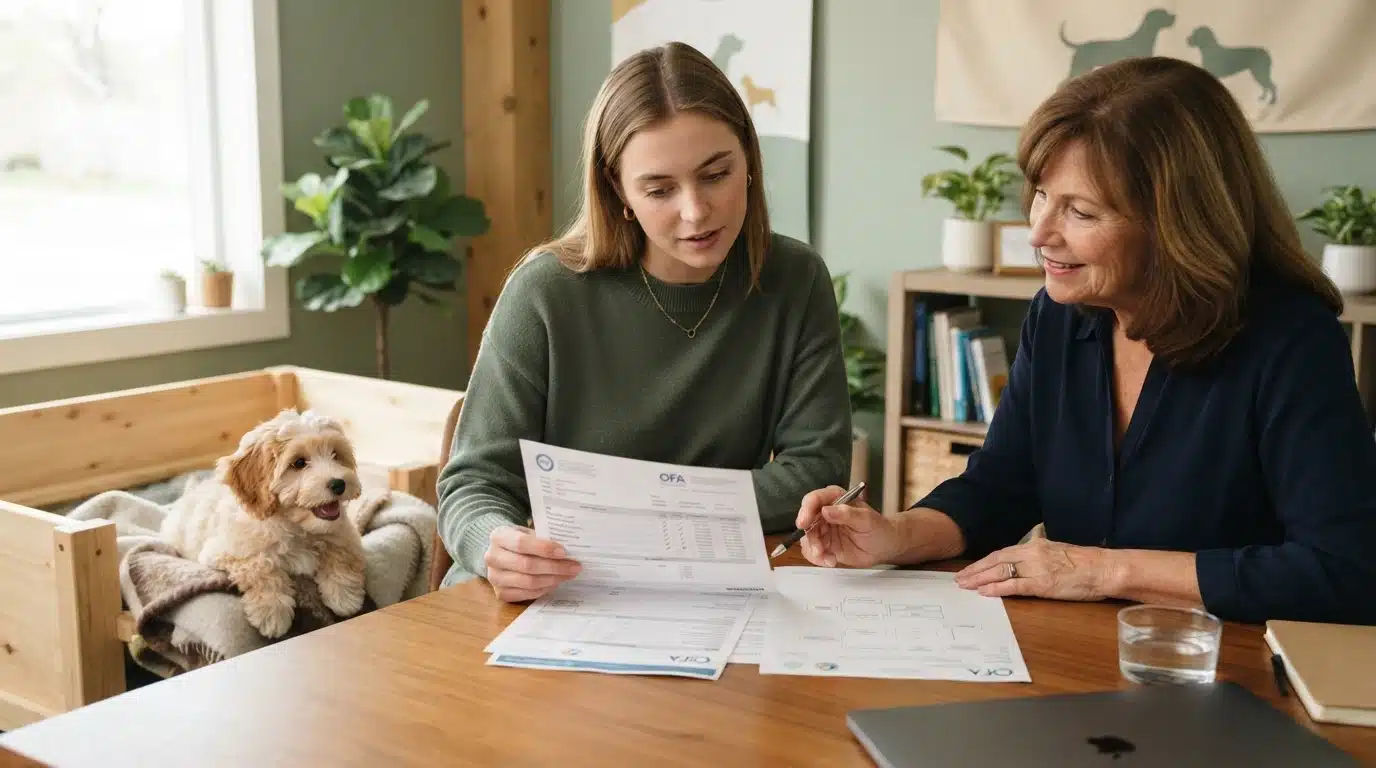
Verify a breeder’s health records in three steps. First, ask for the parents’ registered names and numbers. Next, enter those names on the OFA website and open each dog’s public page. Finally, confirm the results date, the test type, and that the dog matches the pedigree you were shown.
OFA also issues a CHIC number when a dog completes every test a breed requires. It means the dog was tested, not that every result passed, so open the individual listings and read each result yourself.
Matching the Parent to the Record
A record only matters if it belongs to the actual parents. Compare the registered name on each OFA listing with the names on your puppy’s paperwork, letter for letter. Check birth dates too. If a sire’s eye exam is listed under a similar name from a different kennel, ask the breeder to explain the difference in writing.
Sage Puppies shares each parent’s full testing history before a family reserves, so the match is easy to check.
Reading a Result, Not a Marketing Claim
Learn the difference between the three record types before you pay. The puppy’s own veterinary record covers exams, the vaccination and deworming log, and a pre-purchase veterinary exam. Parent screening covers hips, patellas, and ACVO eye results. DNA tests report variant carrier status, where a carrier can still be a healthy dog.
| Record Type | What It Shows | What It Does Not Show |
|---|---|---|
| Puppy vet record | Exam findings and shots given | Parent health history |
| Parent OFA results | Hip, patella, eye status | Puppy’s own future health |
| DNA panel | Carrier and affected status | Every possible condition |
Ask for copies of all three, not summaries. Real documents show clinic names, dates, and dog numbers you can spot-check. A claim written in a text message is not a record you can verify later, so get files before your deposit is due.
Breed-Specific Screening for Havanese, Havapoo and Cavapoo
The Current CHIC Requirements
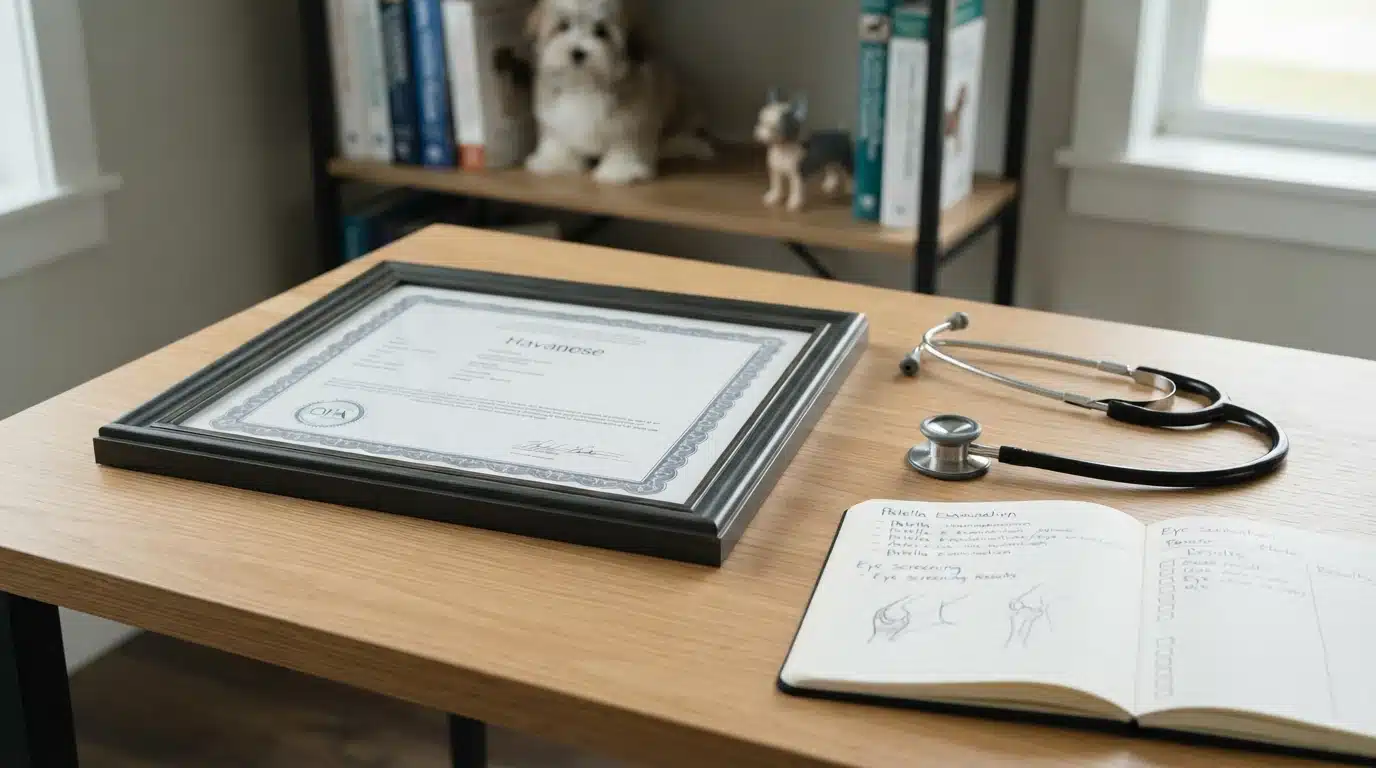
The Havanese Club of America sets three tests for a CHIC number:
- OFA hip radiograph, done at 24 months or older
- OFA patella exam, done after 12 months
- A CAER eye exam by a board-certified ophthalmologist, repeated yearly
A dog can earn a CHIC number without passing; results just must be public. Hearing tests are no longer required. Our guide to Havanese health tests walks through each result line by line.
Havapoo and Cavapoo: Crosses With No Single Panel
No CHIC program exists for Havapoos or Cavapoos, so ask for screening from both sides. A Havanese parent should meet the three tests above. A Poodle parent needs OFA hips, patellas and eye exams, plus DNA testing for progressive retinal atrophy variants. A Cavalier parent needs annual heart screening by a cardiologist and MRIs or DNA testing for syringomyelia. Never accept “the mix is healthier” as an answer.
Screening Questions That Work for All Three Breeds
Ask these before payment:
- What are each parent’s registered names, so I can look them up on OFA myself?
- Which DNA variants were tested, and what is each parent’s carrier status?
- Who performed the eye exam, and when was the last one?
- May I see the radiograph reports, not just a certificate?
What Is Not a Health Test
A puppy health certificate is a quick exam, usually for travel, done days before pickup. It confirms the puppy looked healthy that day. It says nothing about inherited disease in the parents, and no vaccination and deworming log replaces parent screening. Treat certificates as paperwork and parent test results as the real evidence.
The Puppy’s Own Veterinary Record Before You Pay
The puppy’s own record is the document you should review line by line before money changes hands. Ask for copies, not a summary. Here’s the checklist to work through at pickup or delivery:
- A vet exam record dated within the last few days, signed by a licensed veterinarian
- A vaccination and deworming log with dates, product names and the administering clinic
- A microchip number that matches the tag and the paperwork
- The puppy’s date of birth, either on the record or the registration papers
If a breeder hands over photos of records instead of originals or copies, ask why. Reputable programs expect the request.

The Pre-Purchase Examination
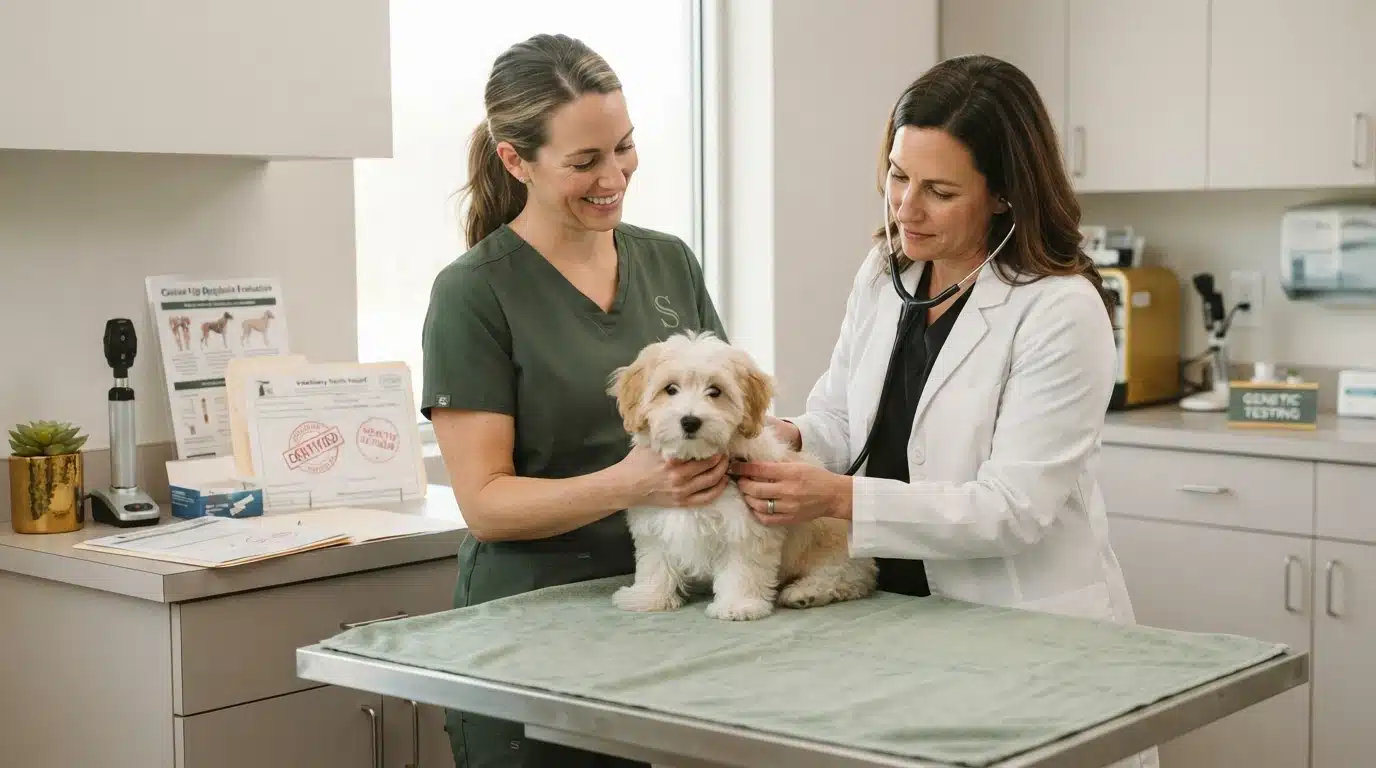
A pre-purchase exam is a head-to-tail check: heart, lungs, eyes, ears, teeth, skin, patellas and belly. Ask which clinic performed it and when. The record should name the vet, list findings and note anything watched rather than cleared. Most exam notes run one page. Read all of it.
Vaccinations, Deworming and Parasite Care
Puppies need several rounds of core vaccines, starting near six to eight weeks, plus routine deworming. The log should show each date, the vaccine name and who gave it. A fecal test result is a bonus. Gaps or handwriting that doesn’t match dates are worth a question.
Identity, Age and Registration
Match the microchip number on the vet record to the puppy in front of you. A vet can scan it in seconds. Check that the birth date on the registration papers matches the vaccine dates, since vaccine schedules depend on age. Registered parent names belong on the papers, not on a typed flyer.
What to Bring to Your Own Vet
Book a vet visit within the first few days home, even after a clean exam. Bring the breeder’s paperwork, including the vaccine and deworming log, so your vet can plan the next doses. If the puppy traveled, carry the health certificate too. Some states require specific paperwork for dogs moving across state lines, so check your destination’s requirements ahead of time. Your vet will recheck the basics and confirm the chip number on record.
The Health Tested Puppy Checklist You Can Use Before Payment
Here is the whole checklist in one place. Ask for items 1 to 10 as documents, items 11 to 17 as written terms, and items 18 to 24 as a conversation before any money moves.
Items 1 to 10: The Documents and Records
Ask the breeder to send copies of all ten before you pay a deposit:
- The puppy’s own veterinary exam record
- The vaccination and deworming log, with dates and products
- A fecal test result
- The microchip number
- Both parents’ registered names
- Parent hip results (radiograph at 24 months, or PennHIP)
- Parent patella results, done after 12 months
- Parent eye exam results, such as an ACVO eye examination
- Parent DNA variant results
- Registration papers or a pedigree
Items 11 to 17: Contract, Guarantee and Terms
Get these in writing, not on a phone call:
- The full purchase price and what it covers
- Deposit amount and refund rules
- Written health guarantee terms and duration
- What conditions the guarantee covers, and what voids it
- Return or rehome policy
- Spay or neuter requirements
- Pickup or delivery terms, with dates and who pays
Items 18 to 24: The Conversation and the Payment
- Ask who their veterinarian is, and call to confirm the exam if you want
- Ask how the puppy was socialized
- Ask about any known issues in the litter
- Verify any OFA CHIC listings directly on the OFA site
- Confirm exactly what your deposit holds
- Review the contract yourself before signing
- Pay only after every item above checks out
When a Missing Item Is Just a Missing Item
Not every gap means a bad breeder. A parent hip radiograph at 24 months may simply not be due yet, so ask why instead of walking away. A careful program like Sage Puppies explains what each record covers and what is still pending. The problem is evasion, not absence.
Contract, Health Guarantee and Pre-Payment Terms
How to Read a Health Guarantee Line by Line
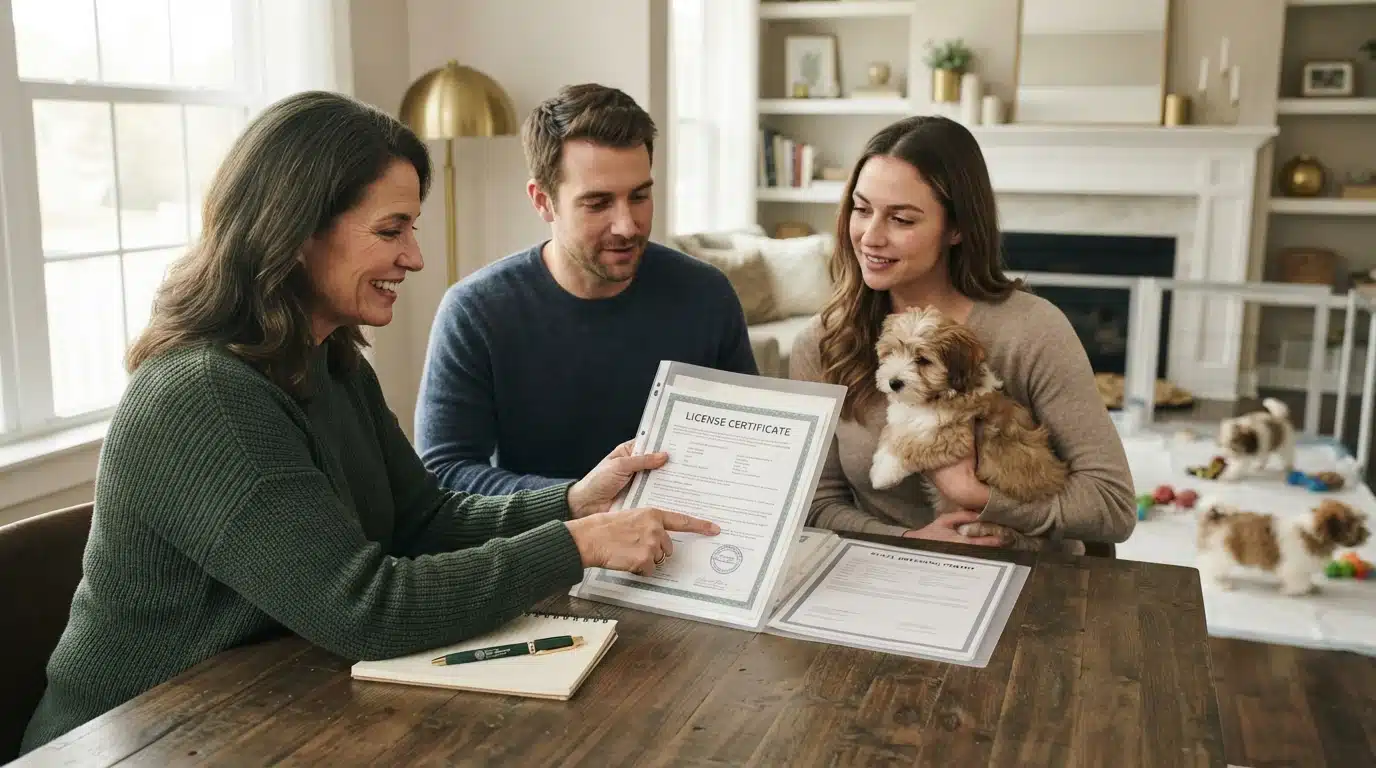
A written health guarantee should state what it covers, for how long, and what it requires of you. Read each line before you pay. Note the deadline for a pre-purchase veterinary exam, usually 48 to 72 hours, and what happens if the puppy fails it. Check whether the guarantee demands a specific food, supplement, or vet, since missing those conditions can void it.
Deposit and Refund Conditions
Ask two questions in writing. Is the puppy deposit refundable if your plans change, and is it transferable to a future litter if no puppy matches your home? Get the answers in the contract, not a text. A clear reservation terms page, like Sage Puppies’ pricing and reservation breakdown, shows what should be spelled out.
Costs to Keep as Separate Lines
| Item | Typical Range | Ask Before Paying |
|---|---|---|
| Puppy price | $3,500-$4,500 for a Sage Havanese, Havapoo, or Cavapoo | What it includes |
| Delivery or shipping | Varies by distance | Ground or air, who holds risk in transit |
| Sales tax | Utah rate for pickup | Added at pickup or included |
Keep every fee on its own line so the total is honest.
Red Flags, Seller Verification and Scam Awareness
Patterns That Deserve More Scrutiny
Be cautious when a seller pushes urgency, wants payment by gift card or wire, or refuses a video call where you see the puppy live. Other warning signs: no named veterinarian, parents you cannot see on paper, or answers that change between messages. A price far below typical rates for the breed usually signals a scam or a care shortcut, not a bargain.
Verifying the Seller and the Business
Check that the business has a real address, a working phone number, and reviews you can trace. A breeder who welcomes your questions and shares the puppy’s records without being asked is doing what a good program does anyway. Ask how a puppy deposit and reservation is handled before you send anything.
Protecting the Payment
Pay only with a method that offers recourse, such as a credit card. Avoid Zelle, wire transfers, crypto, and gift cards, since scams favored these methods in FTC fraud data. Never pay the full price before you have met the puppy or seen a live video, and get every promise in writing first.
Where to Find Health-Tested Puppies Near You and Nationwide
Advantages of Local Pickup in Utah
Local pickup lets you meet the breeder, see the mother, and review puppy health records in person before money moves. You can spot how the litter lives and ask questions face to face. Small programs in South Jordan and nearby towns often welcome a visit during the application process, so you leave with the vaccination and deworming log in hand.
Buying When You Are Not Local
Distance should not stop a careful purchase. Ask for scans or photos of parent hip radiograph and patella results, DNA variant carrier status, and registered parent names by email before you send a deposit. Most breeders offer puppy delivery or a flight nanny, and a scheduled video call lets you see the puppy move and eat before pickup versus delivery is decided.
Next Steps for Utah Buyers and Nationwide Families
Run the full checklist from earlier in this guide, request every document in writing, and compare answers across a few breeders. Some Utah programs, like Sage Puppies, handle pickup and nationwide delivery through the same application, so the verification steps stay identical either way. Then set your pre-purchase veterinary exam deadline in writing before you pay.

You came here to avoid paying blind. Print the checklist, request every record in writing, and hold your deposit until each item checks out. When a breeder’s paperwork makes that easy, you have found your match. Sage Puppies shares health records before any money moves, so start the conversation today.
Frequently Asked Questions
Q1: What should be on a health tested puppy buying checklist?
Request ten documents before payment: the puppy’s vet exam, a vaccination and deworming log, fecal results, the microchip number, both parents’ registered names, hip radiograph and patella results, an ACVO eye examination, DNA variant carrier status, and registration papers.
Q2: How do I verify a parent’s OFA results myself?
Enter the registered parent names on the OFA website and open each dog’s public page. Confirm the test type, result and date, then check for a CHIC number, which proves testing happened, not that every result passed.
Q3: What health tests do Havanese, Havapoo and Cavapoo parents need?
Havanese parents need hips, patellas and yearly eye exams for CHIC. For crosses, ask the Poodle side for hips, patellas, eyes and PRA DNA testing, and the Cavalier side for annual heart screening plus syringomyelia testing.
Q4: Is a puppy health certificate the same as health testing?
No. A certificate is a quick travel exam done days before pickup. It shows the puppy looked healthy that day and says nothing about inherited disease in the parents.
Q5: How should I pay for a puppy safely?
Use a credit card or another method with recourse. Avoid wire transfers, Zelle, gift cards and crypto, and never pay in full before seeing the puppy live.
Q6: What should a written health guarantee include?
Clear terms on coverage, duration, the pre-purchase exam deadline, what voids the guarantee, deposit refund rules, and return or rehome policy, all in the contract itself.
Conclusion
A health-tested puppy listing is only as good as the paperwork behind it. Keep the three record types separate: the puppy’s own veterinary record, parent clinical screening, and DNA variant results. Verify registered parent names on OFA yourself, read the vaccination and deworming log line by line, and get contract and guarantee terms in writing before any money moves. For Havanese, Havapoo and Cavapoo litters, expect breed-specific tests on both parent sides, not one generic panel. Missing records are not always a red flag, but evasion is. Whether you found health tested puppies for sale near me searches or a breeder across the country, the same checklist protects your deposit.