Quick Summary: A steady daily routine matters more than a perfect schedule: feed toy-breed puppies small, frequent meals, take potty breaks every one to two hours, provide plenty of crate naps, and build training into short daily sessions. Track monthly health checkpoints, including DHPP and rabies vaccines through 16 weeks, monthly parasite prevention, wellness checks, grooming, and early dental care, while keeping exercise short and protecting growing joints. Sage Puppies emphasizes that steady feeding, training, socialization, and vet care will help a Havanese, Havapoo, or Cavapoo thrive through its first year.
The first year of first year puppy care is built from small repetitions: the same wake-up, the same potty trip, the same five-minute training session, repeated until your Havanese, Havapoo or Cavapoo knows the pattern better than you do. The hard part is not the work. It is not knowing what should happen each month, so small things get missed. This guide lays out a month-by-month schedule covering feeding, vaccines, training and rest, plus a sample puppy daily routine first year families can actually keep. Your 12 month puppy care plan does not need to be perfect, just steady. At Sage Puppies in South Jordan, Utah, we raise Havanese, Havapoo and Cavapoo puppies and walk new families through this exact transition. Consider this the schedule we wish every puppy home had on the fridge.
Weeks 1 and 2: Setting the Baseline Routine
The first two weeks set the tone for your whole first year of puppy care. Keep everything calm, short and predictable so your puppy learns the new household routine before you add training goals.
The Decompression Rule for a Newly Delivered Puppy
New puppies need three quiet days to settle. Limit visitors, skip car trips and keep play sessions to a few minutes at a time. A Havanese or Cavapoo fresh from delivery has just left its litter and mother, so a calm space with a crate, water and a soft bed helps it feel safe. Short naps in the crate build the crate training habit early.
A Sample Day You Can Copy
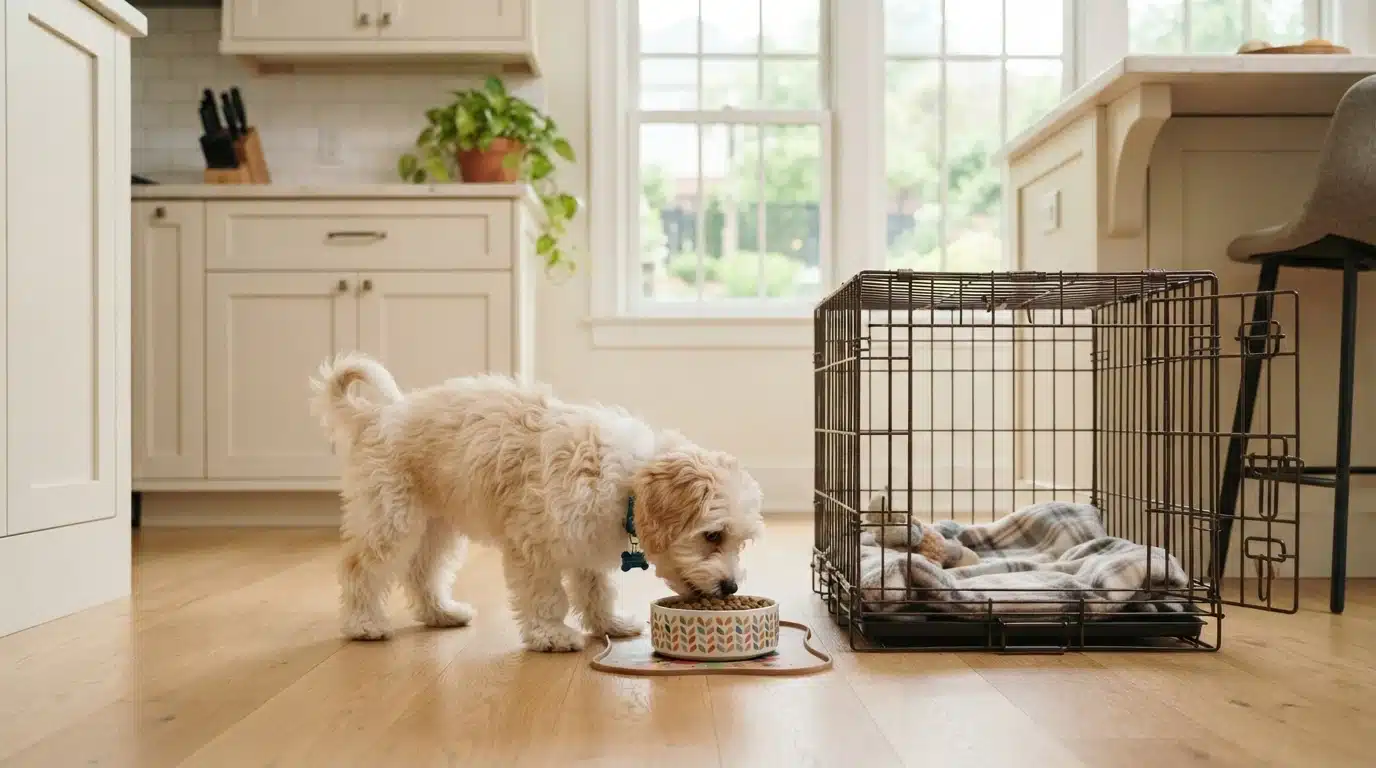
| Time | Activity |
|---|---|
| 7:00 am | Potty break, then breakfast |
| 7:30 am | Short play and training moment |
| 9:00 am | Nap in crate |
| 11:00 am | Potty, lunch, gentle play |
| 1:00 pm | Nap |
| 4:00 pm | Potty, play and socialization time |
| 6:00 pm | Dinner |
| 10:30 pm | Final potty break, then bedtime |
Paperwork to Have Open on Day One
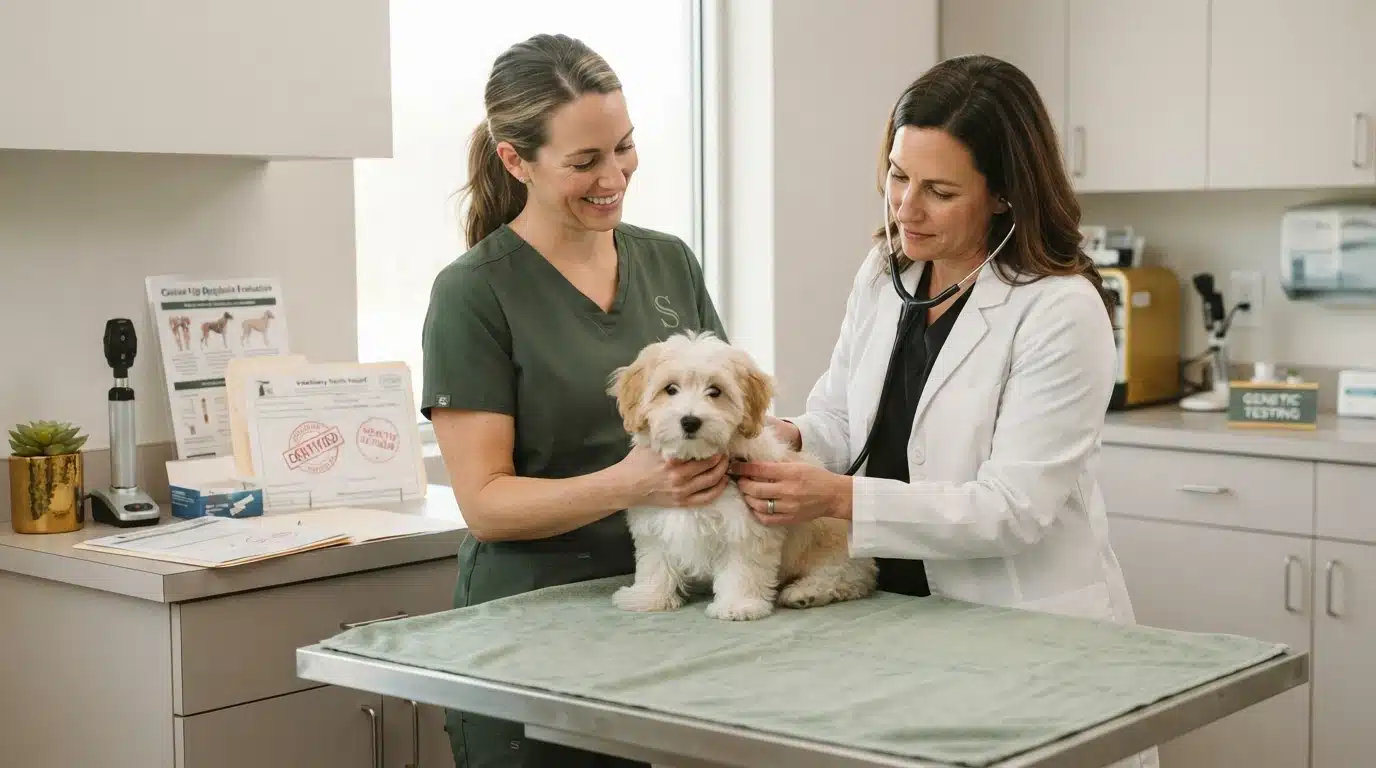
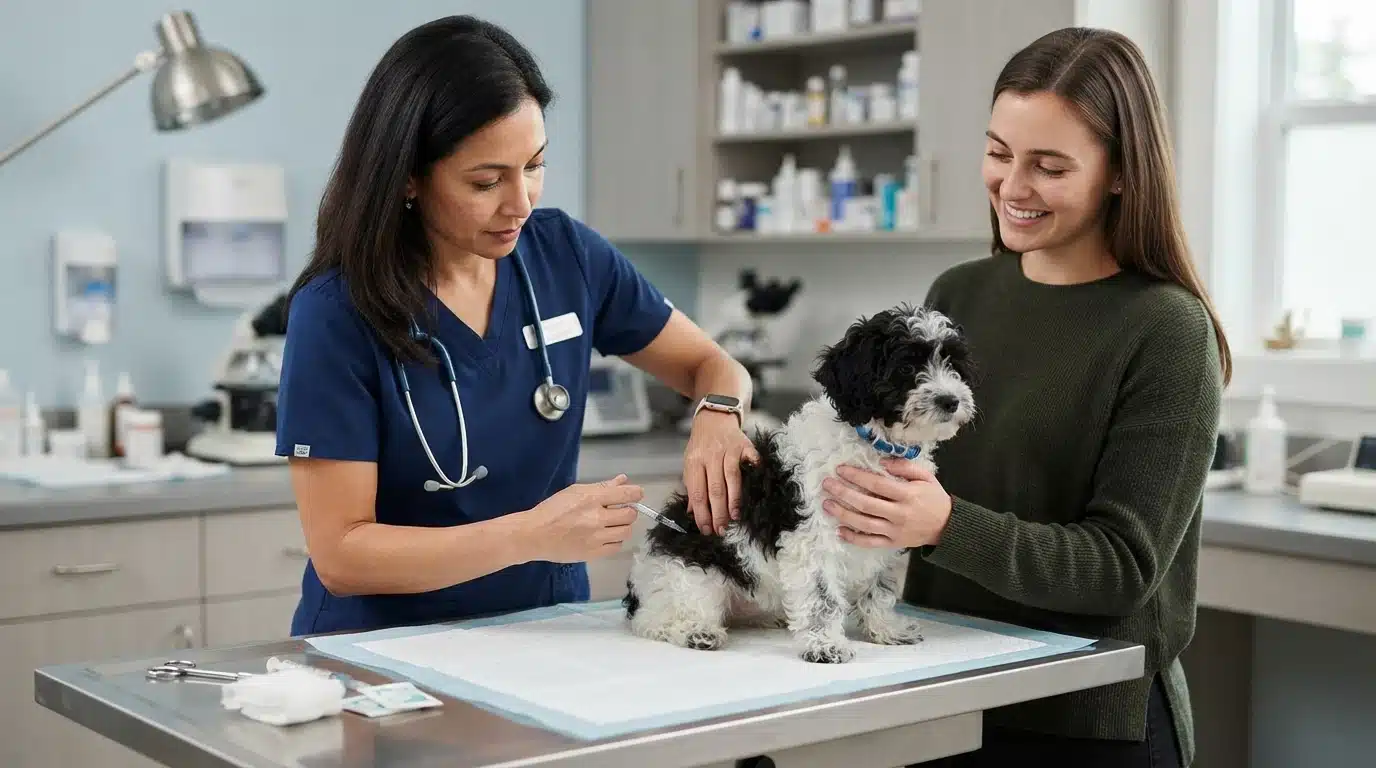
Keep the vaccine record, feeding notes and breeder paperwork in one folder or phone note. Your puppy’s first vet visit should happen within a few days of arrival, so bring those documents with you. Families working with Sage Puppies receive a health record with dates for deworming and first shots, which makes that first appointment easier. Also save your vet’s after-hours number before pickup day.
What a Small Breed Puppy’s First Year Care Schedule Looks Like
A small breed puppy care schedule for the first year has two layers: a daily skeleton you repeat, and monthly checkpoints that change as your puppy grows. The daily layer covers meals, potty, naps, play and training. The checkpoint layer covers vet visits, vaccines and the milestones that mark each stage of first year puppy care.
The Daily Skeleton: Six Anchors Every Day
Young puppies do best with six anchors at roughly the same times each day:
- Morning potty break, then breakfast
- A short play or training moment
- A nap in the crate
- Midday potty, lunch and gentle play
- An afternoon play and socialization window
- Dinner, then a final potty before bed
Between anchors, puppies sleep, and they should. Most 8-week-old pups need 18 to 20 hours of rest a day.
The Checkpoint Layer Across 12 Months
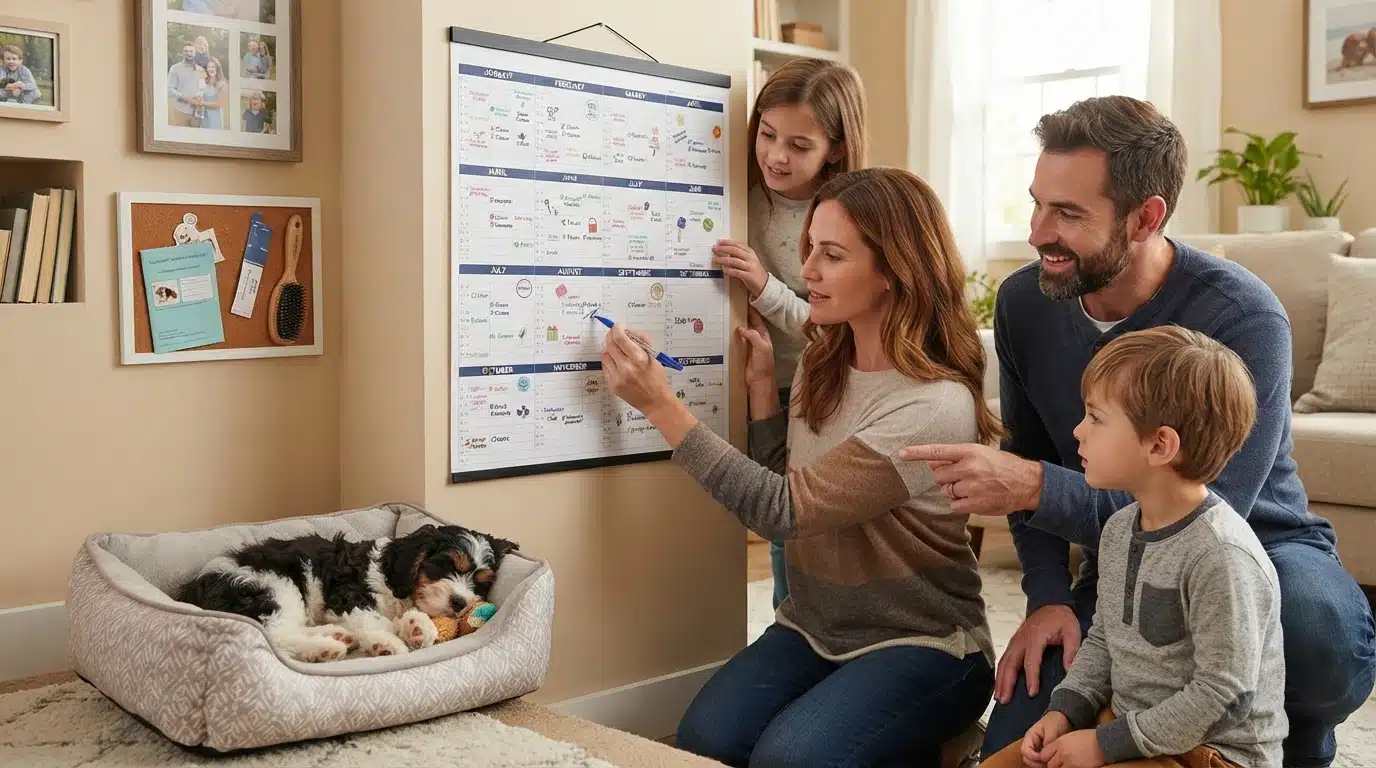
While the daily routine stays steady, the checkpoints shift month by month. Vet visits cluster early: a wellness exam soon after pickup, booster vaccines every 3 to 4 weeks until about 16 weeks, then deworming and parasite prevention on a monthly rhythm. The middle months add training classes, grooming introduction and spay or neuter timing talk. One year closes with an adult wellness exam and a switch to adult food. A printable monthly map helps here, and the breeders at Sage Puppies include a take-home health record so your vet can see exactly what has already been given.
Small Breed Adjustments to a Standard Schedule
Small breeds need tighter spacing than the generic advice you’ll read. Toy-size puppies burn energy fast and drop blood sugar easily, so free-skipping meals is risky; feed 3 to 4 small meals a day until about 6 months. Bladders are small too, so plan a potty break every 1 to 2 hours at first. Keep exercise short and low-impact, since growing joints in a Havapoo or Cavapoo handle stairs and long walks poorly. A quick new owner checklist covers what to have ready before day one.
Feeding, Meals and Nutrition Month by Month
Feed small breed puppies three to four times a day until about 6 months old, then drop to two meals a day from 6 to 12 months. Toy breeds like Havanese, Havapoo and Cavapoo pups burn energy fast and can’t skip meals safely.
| Age | Meals per Day | Notes |
|---|---|---|
| 8 weeks to 3 months | 4 | Small, evenly spaced meals |
| 4 to 6 months | 3 | Keep the same food brand |
| 6 to 12 months | 2 | Morning and evening |
Meal Frequency From 8 Weeks to 12 Months
Keep meal times steady so digestion and potty breaks stay predictable. A 7:00 am breakfast, midday lunch and 6:00 pm dinner worked into your daily routine helps house training too, since pups usually need a potty break soon after eating. Ask your vet before switching foods, and change brands slowly over a week.
Portion Control for Small Breeds
Small breeds need less food than you’d think, and extra weight strains tiny joints. Follow the feeding chart on your puppy food bag as a starting point, then adjust based on what your vet says at each visit. Treats count toward daily calories, so keep them under about 10 percent.
Signs to Watch in the First Year
Watch body condition over the scale number. You should feel ribs easily without pressing hard, and see a clear waist from above. Loose stool, skipped meals or a round belly after eating all deserve a call to your vet, since toy puppies can drop blood sugar quickly when they stop eating.
Vaccines, Vet Visits and Parasite Prevention
What Vaccines Does a Small Breed Puppy Need in the First Year?
A small breed puppy needs a core vaccine series of DHPP (distemper, hepatitis, parainfluenza and parvovirus) plus rabies in the first year:
- First DHPP dose at 6 to 8 weeks, often before your puppy comes home
- Boosters every 3 to 4 weeks until at least 16 weeks of age
- Rabies in one dose between 12 and 16 weeks
- Lifestyle vaccines, such as bordetella or leptospirosis, only if your vet recommends them for dog parks, grooming or boarding
Because maternal antibodies can block early doses, the final booster matters more than the first. The AAHA canine vaccination guidelines explain why that 16-week finish line exists.
Deworming and Parasite Prevention
Most puppies carry roundworms from their mother, so breeders and vets deworm starting around 2 weeks of age, then repeat at set intervals. Once your puppy is home, plan on a monthly preventive that covers heartworm, fleas and ticks year-round, even in winter. Heartworm testing usually happens around 6 to 12 months before switching to adult dosing. We start Sage Puppies puppies on a deworming schedule before they leave, and your vet will simply continue it.
The Rest of the Year: Well Visits and Spay or Neuter
After the puppy series ends near 16 weeks, the schedule slows down. Expect one wellness exam around 6 months to check growth, teeth and weight, then another at the one-year mark. Rabies boosters and annual exams continue into adulthood.
Spay or neuter timing varies by size. Small breeds often finish growing sooner than large ones, so many vets recommend around 6 to 12 months, but your vet should decide based on your puppy’s health, not a fixed deadline. If you want the full visit-by-visit breakdown, our guide to the small breed puppy care and vet visit schedule covers grooming timing too.
Training, Socialization and Good Manners
Building the Foundation in the First 8 Weeks
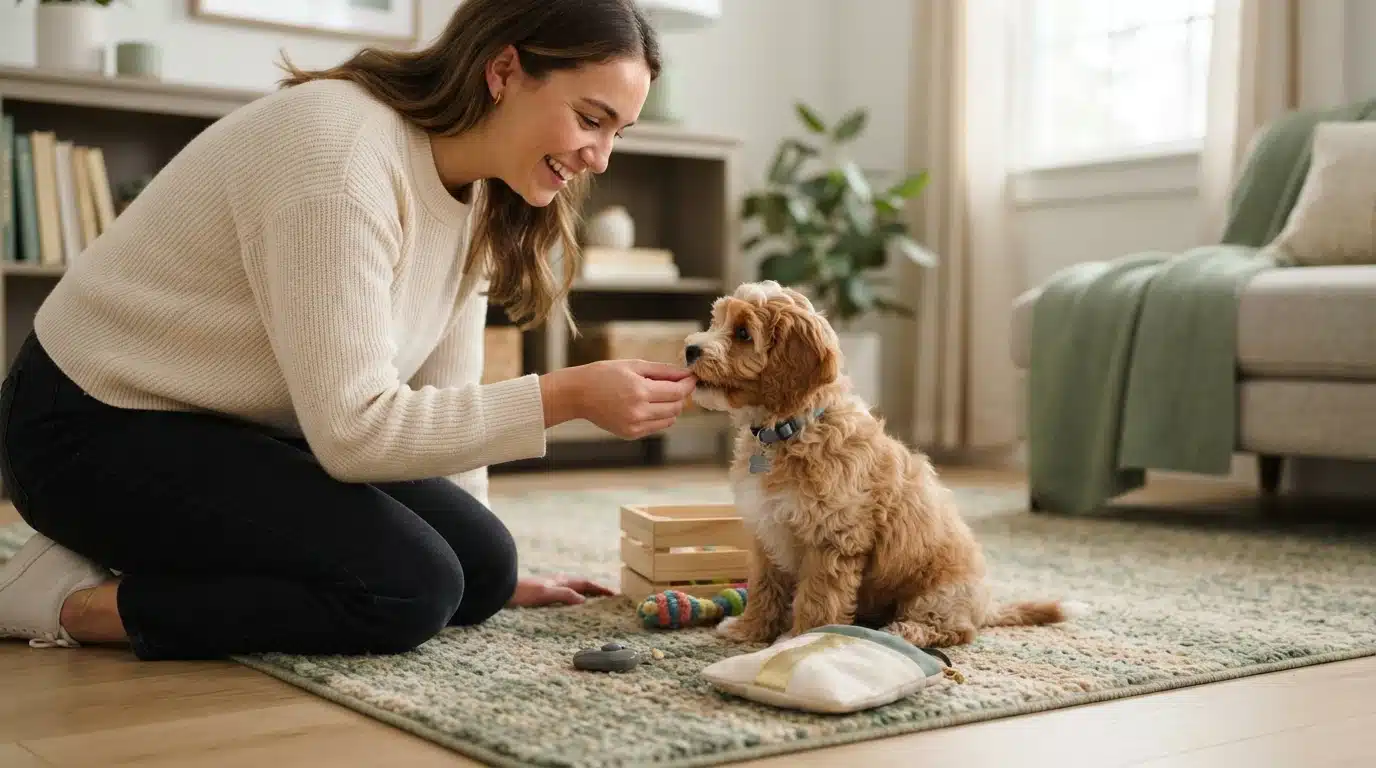
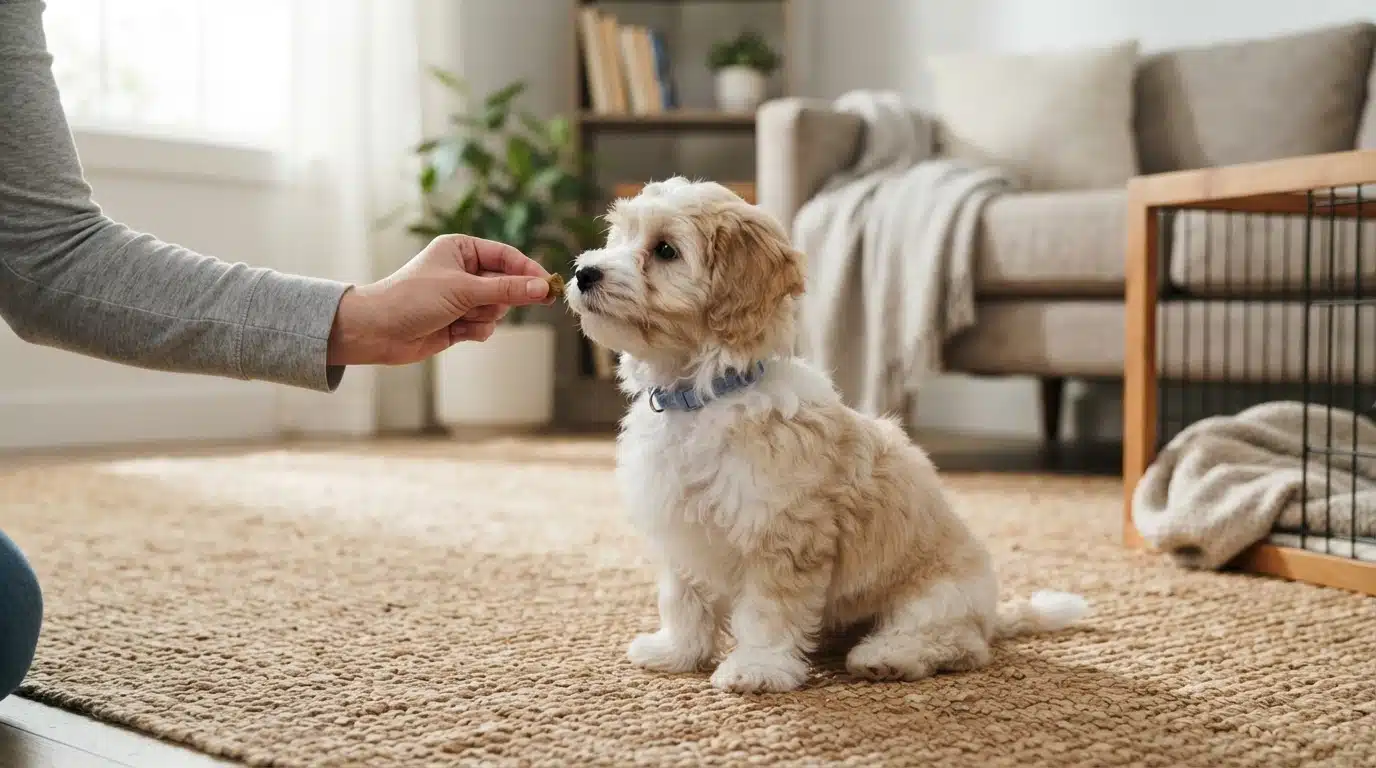
Start training the day your puppy comes home, not after a settling-in grace period. Good breeders begin the work early: Havanese, Havapoo and Cavapoo puppies raised in a home learn human touch, littermate play and household noise long before pickup. Your job at first is consistency. Use the same potty spot, the same cue words and the same crate routine every day, because small breeds learn patterns quickly.
A Gradual Socialization Plan
Socialization means safe, positive exposure before 16 weeks, the window when puppies form lasting impressions. Since full vaccination finishes around 16 weeks, carry your pup in your arms or a sling for outdoor outings rather than setting paws on unknown ground. Ask your vet what is safe locally. Aim for a few new sights, sounds and gentle people each week: car rides, different floor surfaces, kids at a distance, vacuum noise. Keep sessions short and end on success.
Months 6 Through 12: Manners and Impulse Control
Adolescence brings independence, so hold your routine steady. Practice sit, down, stay and a reliable come in short daily sessions, and reward calm behavior over pushy behavior. Around 6 months, most pups can handle longer walks and simple games like fetch. These puppy daily routine first year habits, repeated at the same times each day, turn scattered cues into dependable manners.
Exercise and Play for Small Breeds
How Much Exercise Does a Small Breed Puppy Need Each Day?
A common starting point is about five minutes of structured exercise per month of age, twice a day, so a three-month-old pup gets two short 15-minute sessions. That guideline is a rough frame, not a law; a common one, per Zoom Room’s guide. Match sessions to your puppy:
- 8 to 12 weeks: short sniffy walks and gentle play, ending before your pup tires
- 3 to 6 months: two 15 to 20 minute sessions plus free play
- 6 to 12 months: longer walks, fetch and easy training games
Havanese, Havapoos and Cavapoos are playful companion breeds, so mental work counts as exercise.
Indoor Exercise Ideas That Actually Work
Rain and Utah winters make indoor play worth planning. Hide treats for a nose game, roll a ball down a hallway, or run two-minute training sessions on sits and name recall. A food puzzle at mealtime tires a small brain fast. Rotate three toys so novelty stays fresh, and end each game while your puppy still wants more.
Small Breed Safety Notes
Those little legs and open growth plates need protection. Keep jumping off sofas and stairs to a minimum, avoid forced long walks, and skip busy dog parks until vaccines finish around 16 weeks. Watch for lagging or flopping, the clearest sign to stop.
Grooming, Teeth and Everyday Care Tasks
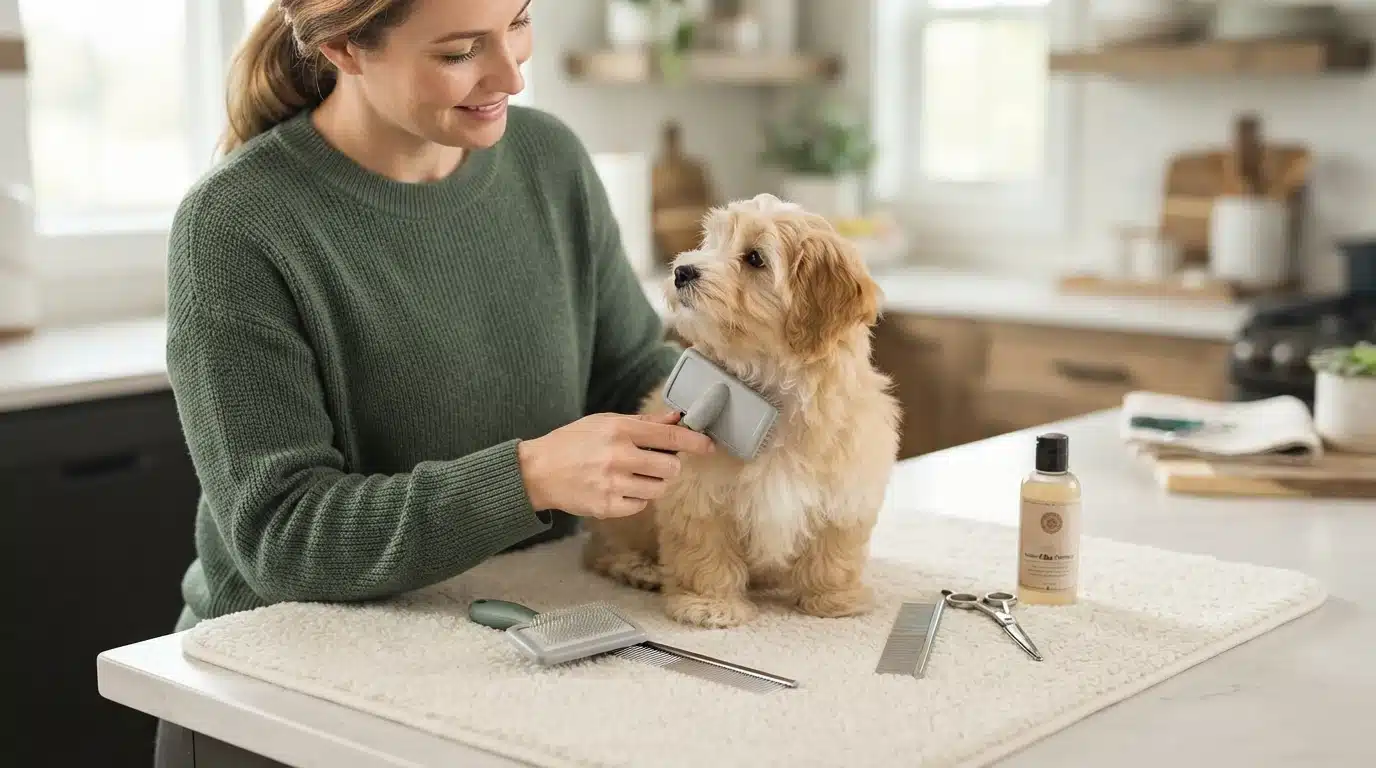
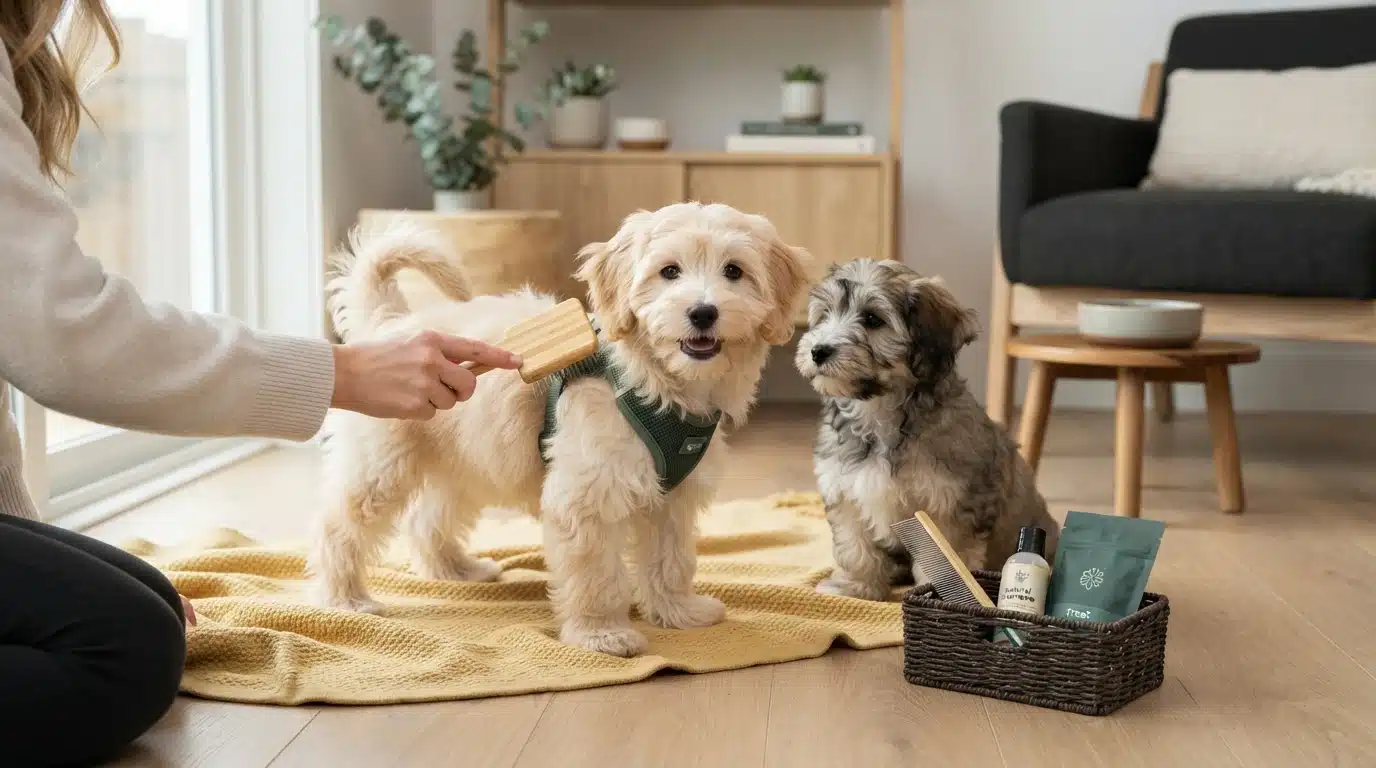
Havanese, Havapoo and Cavapoo coats need steady, light grooming rather than occasional heavy sessions. Aim for a quick brush three to four times a week and a full groom every 6 to 8 weeks:
- Curly coats (Havapoos, most Cavapoos): brush 3 to 4 times weekly to prevent mats, professional trim every 6 to 8 weeks
- Silky coats (Havanese): brush 2 to 3 times weekly, trim every 8 weeks
- All puppies: bath every 4 to 6 weeks, or sooner after a muddy adventure
A Weekly Grooming Rhythm
Tie grooming to something you already do. A short brush after the evening meal works well, since a tired puppy squirms less. Start sessions at two minutes and end on a treat, so brushing never feels like a wrestling match. Handling paws, ears and mouth now pays off at every future vet visit. For coat-specific timing, our guide to a Havanese grooming schedule by coat type breaks it down further.
Nails, Eyes and Ears
Trim nails every 2 to 3 weeks. If you hear clicking on hard floors, they are due. Small breeds often have shallow eyes, so wipe away tear staining daily with a damp cloth. Check ears weekly for redness or odor, and clean only with a vet-approved solution. Floppy ears trap moisture, so dry them after baths.
Teeth, and Why Year One Matters
Start tooth brushing the week your puppy comes home. Daily brushing is ideal, but brushing several times a week still works well, according to the AVMA. Year one is when the habit forms, and small breeds are prone to dental disease later, so those early sessions matter most.
Your 12 Month Milestone Map
A 12 month puppy care milestone map is a month-by-month reference that splits the first year into three phases: early survival, skill building, and steady growth. Each phase has its own priorities, so you always know what matters right now instead of worrying about everything at once.
Months 1 Through 3: Survival Mode
Keep the focus narrow: sleep, feeding, potty breaks and vaccines. Booster shots arrive every 3 to 4 weeks until about 16 weeks, so vet visits dominate the calendar. Crate naps, short play sessions and gentle handling build the routine everything else grows from.
Months 4 Through 6: Skills and Grooming
Now the foundation pays off. House training clicks, teething peaks, and meals drop from four a day to three. Start brushing and nail trims now so Havanese, Havapoo and Cavapoo grooming feels normal instead of scary.
Months 7 Through 12: Growing Together
Meals drop to two a day, and your puppy moves toward adult food. Talk with your vet about spay or neuter timing, since AAHA suggests neutering small breeds around six months and spaying females before the first heat. Keep training and socialization going through the adolescent months.

A steady routine beats a perfect one, so keep this schedule handy and adjust as your puppy grows. If you’re still choosing a companion, Sage Puppies matches families with well-bred Havanese, Havapoo and Cavapoo puppies, plus honest prep guidance for the first year. Browse available puppies or start the application today.
Frequently Asked Questions
Q1: What is a small breed puppy care schedule for the first year?
It’s a month-by-month plan pairing a steady daily routine (meals, potty, naps, short play) with checkpoints like vaccines, deworming, grooming and vet visits, adjusted for toy breeds’ small meals, tiny bladders and growing joints.
Q2: What vaccines does a small breed puppy need in the first year?
A DHPP series starting at 6 to 8 weeks with boosters every 3 to 4 weeks until at least 16 weeks, plus one rabies dose between 12 and 16 weeks. Bordetella or leptospirosis only if your vet recommends them.
Q3: How much exercise does a small breed puppy need each day?
A rough guide is five minutes of structured exercise per month of age, twice daily. So a three-month-old gets two 15-minute sessions, plus free play. Mental games count too.
Q4: When can my puppy walk outside before full vaccination?
Carry your pup on outings until the vaccine series finishes around 16 weeks. Short potty breaks in your own yard are usually fine; ask your vet about local risk.
Q5: When should I switch from four meals to two?
Feed four meals until 3 months, three until about 6 months, then two meals through the rest of the year. Small breeds shouldn’t skip meals early on.
Q6: When should I spay or neuter my small breed puppy?
Most vets suggest 6 to 12 months for small breeds, spaying females before the first heat. Your vet should decide based on your puppy’s health, not a fixed date.
Wrapping Up Your First Year
A first year puppy care schedule comes down to two layers: a daily routine you repeat and monthly checkpoints that change as your puppy grows. Feed small meals often, keep vaccine and deworming dates on the calendar, and protect those growing joints with short play sessions. Stay flexible where it matters, like spay or neuter timing and food transitions, and hold steady everywhere else. Your Havanese, Havapoo or Cavapoo will not remember a single missed training session, but it will thrive on the pattern you build. Steady beats perfect, every month of the year.