Quick Summary: The Havanese is usually the easier apartment dog because it needs about 30 minutes of daily activity, while a Havapoo typically wants 30 to 45 minutes plus more play and mental enrichment. Both need walks, indoor play, and puzzle or training sessions, and Havanese tend to bark more while under-exercised dogs of either breed become noisy. Choose a Havanese for a less predictable or lower-activity routine, and a Havapoo if you can commit to daily walks and training games, while remembering that individual litters vary.
No yard, a commute and a desk? The Havanese is usually the easier fit. The Havanese Club of America notes the breed stays content living indoors, while a Havapoo’s Poodle ancestry pushes its Havapoo energy level higher, calling for longer or split-up walks. The trouble is that breeder pages, breed clubs and veterinary sites publish wildly different exercise numbers, so first-time owners can’t tell which figures fit their building, schedule and household budget. This comparison explains what published guidance actually measures, lines the breeds up on exercise, indoor play, mental work and barking, and turns the evidence into a simple choice framework for Havapoo apartment dogs and Havanese energy requirements alike. It draws on documented experience raising both breeds.
Havapoo vs Havanese: Energy and Exercise Compared
| Havanese | Havapoo | |
|---|---|---|
| Published energy profile | Moderate; breed club states the breed can be very content living indoors | Energetic and active but moderate in daily exercise demand |
| Daily exercise needs | AKC cites moderate needs; PetMD suggests about 30 minutes of total daily activity | Roughly 30-45 minutes of walking or play, often split into two sessions |
| Indoor play tolerance | High; willing to play indoors and settle between outings | Good, but often seeks more active play and longer engagement |
| Mental stimulation needs | Steady; puzzle and trick work help manage a busy mind | Higher; Poodle ancestry adds problem-solving and puzzle interest |
| Apartment barking tendency | Notable vocal breed that can alert-bark in shared hallways | Can bark when left alone or under-stimulated in a small space |
| Best suited household | Apartments and low-to-moderate daily activity households | Active apartments, homes with yard access and owners who work from home |
How Havanese and Havapoo Compare
Havanese
The Havanese is a small companion breed from Cuba, and the Havanese Club of America describes it as comfortable living indoors. It suits apartments and households with low-to-moderate activity, since its Havanese energy requirements sit at a moderate level of about 30 minutes of daily activity.
Key strengths
- Content with indoor play and settling between outings
- Low-energy small breed companion potential for quieter homes
Havapoo
The Havapoo is a Havanese and Poodle cross, usually under 15 pounds, and it has not been recognised as its own breed. Its Havapoo energy level runs more active, with roughly 30-45 minutes of walking or play, so it fits busy apartments and work-from-home owners.
Key strengths
- Poodle mix energy brings trainability and puzzle interest
- Adaptable small breed dogs for apartments that stay active
Which Breed Needs Less Exercise in an Apartment?
The short answer for small floor plans
The Havanese needs slightly less exercise indoors, because its moderate Havanese energy requirements sit at about 30 minutes of daily activity. The Havapoo energy level runs a bit higher, closer to 30-45 minutes. In practice, both stay apartment-happy when they get:
- One or two short walks each day
- A few rounds of indoor fetch or tug
- Short training or puzzle sessions that tire the mind
Either breed can thrive in a condo if you meet those three needs consistently.
Why published figures look similar anyway
The numbers overlap because both dogs are small companion breeds with moderate demands. The AKC describes the Havanese as needing moderate exercise, and PetMD suggests about 30 minutes of daily activity, while Havapoo figures come from breeder and owner reports of the Havanese-Poodle mix. So the real difference shows up in bursts, not totals: a Havapoo may push for an extra game of chase, while a Havanese often settles faster after one good play session.
Where the Energy Comes From: Breed Heritage and Temperament
Are Havapoos more energetic than Havanese for small apartments? Usually yes, by a modest margin. A Havanese carries the calmer baseline, needing about 30 minutes of daily activity, while a Havapoo typically wants 30-45 minutes because its Poodle parent adds drive and working instinct. Both stay small and adaptable, so the difference is manageable rather than dramatic.
The Havanese baseline
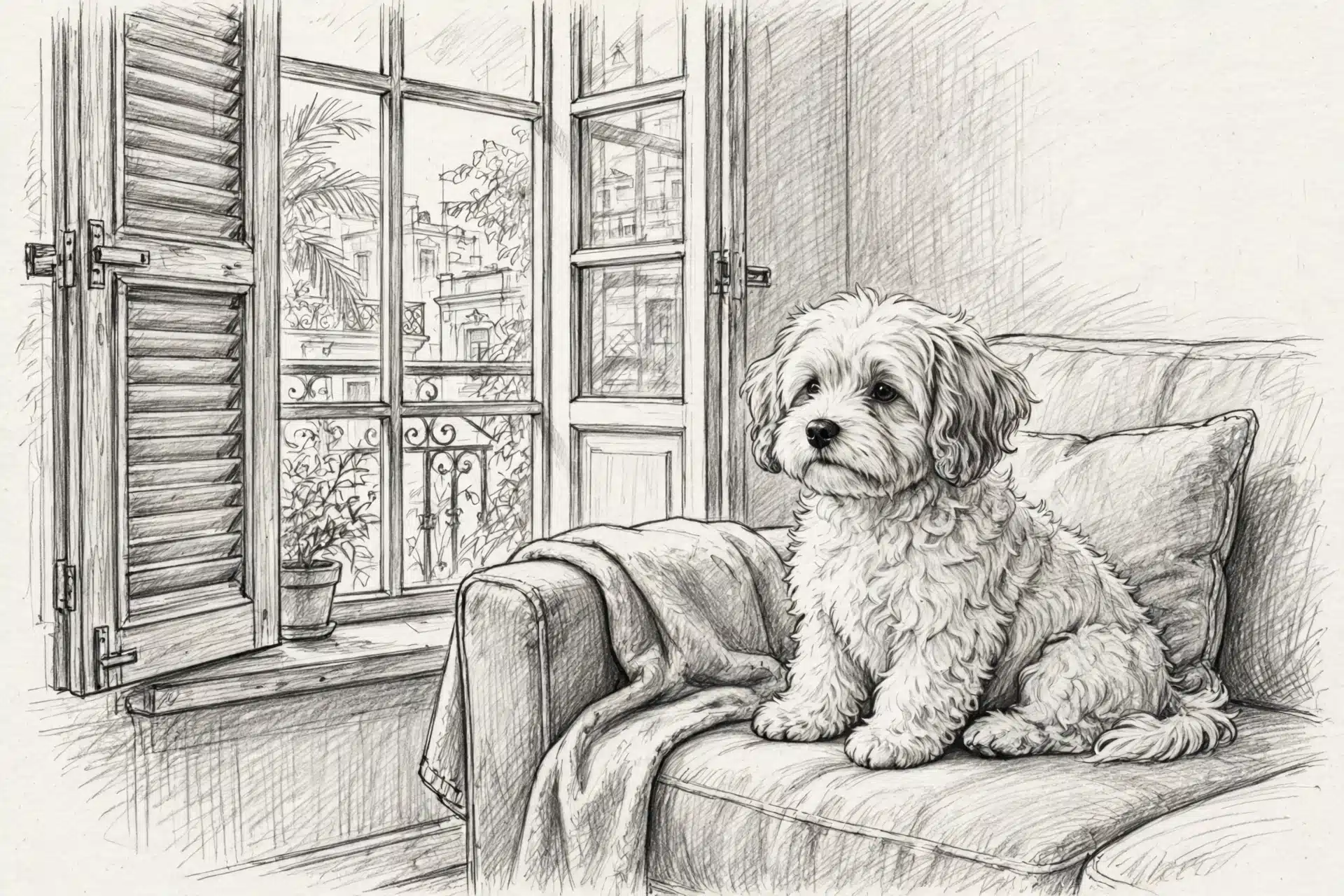
The Havanese is Cuba’s national dog and the only breed native to the island, descended from the old Bichon family of Mediterranean companion dogs. It was bred to sit in laps and charm its household, not to work. That history explains the moderate, people-focused energy you see today: playful bursts indoors, then a nap on the couch. According to AKC’s breed history, the breed is a natural companion, so its energy follows yours rather than demanding a job.
What Poodle Ancestry Adds to a Havapoo
The Havapoo inherits Havanese warmth, plus Poodle traits that raise the tempo. Poodles are sporting dogs with quick minds, so Poodle mix energy shows up as a sharper need for play, training and problem-solving, not long runs. Expect the same 30-45 minutes of walking or play mentioned earlier, ideally split into two sessions, plus mental enrichment like puzzle feeders or short trick sessions. A Havapoo with a bored brain invents its own games. Because both breeds stay people-centered, neither handles long solo days well. At Sage Puppies, Cassie matches each puppy’s individual temperament to the household, since energy varies litter by litter more than breed labels suggest.
Daily Exercise Minutes: A Side-by-Side Reading of the Sources
What the Major Breed Sources Actually Say
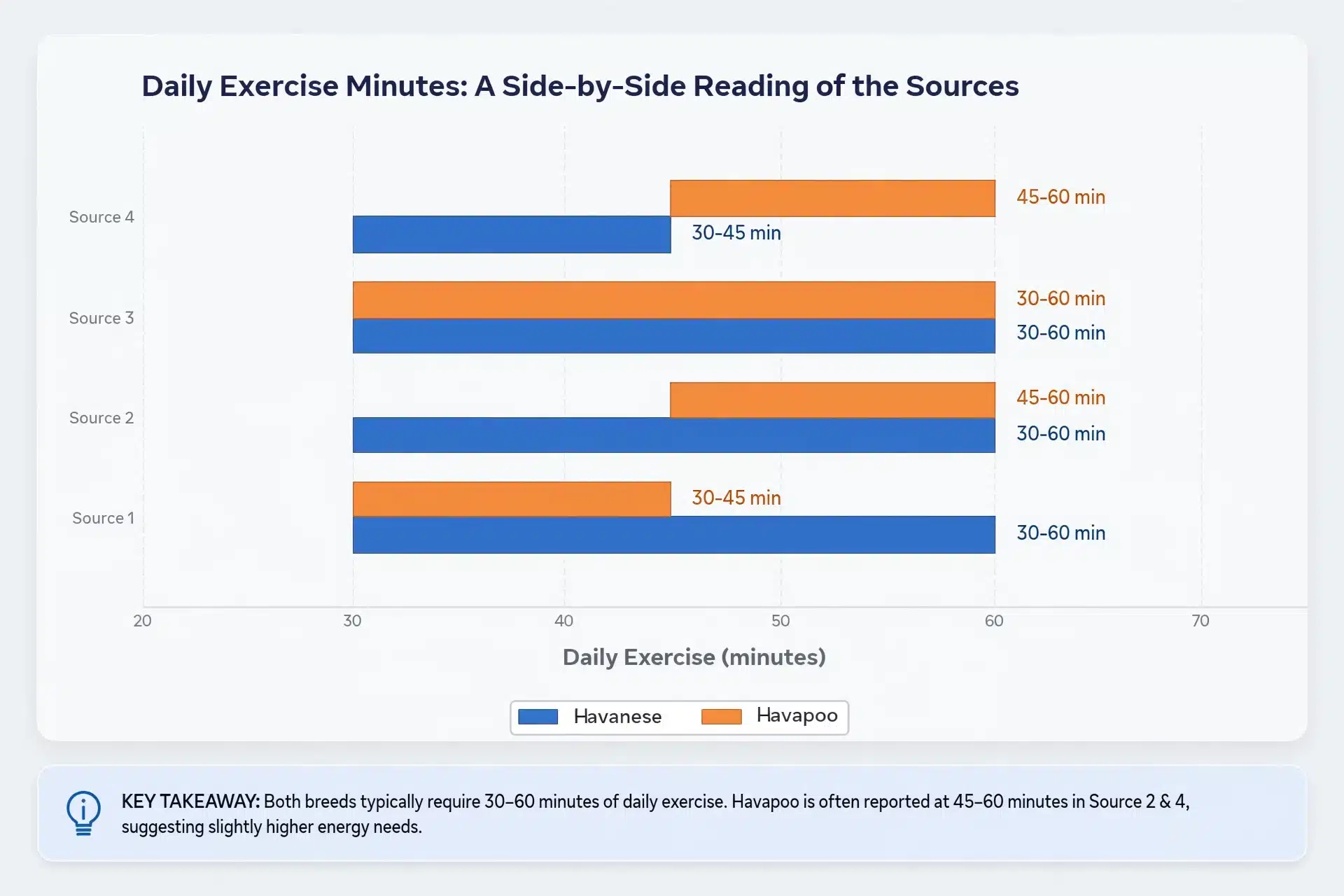
How many minutes a day do these dogs need? The answer depends on which source you check, so it helps to see them side by side:
- AKC: moderate exercise for the Havanese, no fixed minute count
- PetMD: about 30 minutes of daily activity
- Havanese Club of America: regular walks and play, with no strict daily total
- Breeder and owner reports for the Havapoo: roughly 30 to 45 minutes, often split into two sessions
None of these numbers is wrong. They measure different things. The 30-minute figure is a floor for the Havanese, while the Havapoo’s Poodle heritage pushes its realistic range toward the top of that same window.
Turning the Numbers Into an Apartment Routine
Treat the low end as the minimum and build up from there. Start with two short walks, morning and evening, then add ten minutes of fetch or tug indoors. A Havapoo that still seems restless after 45 minutes usually wants a puzzle feeder or a short trick session, not a longer walk. That mental enrichment matters as much as the minutes themselves.
Puppies need shorter, gentler sessions than the adult totals above. Match exercise to age, and keep feeding on a steady schedule so energy stays level throughout the day.
Mental Work May Matter More Than Minutes in a Small Space
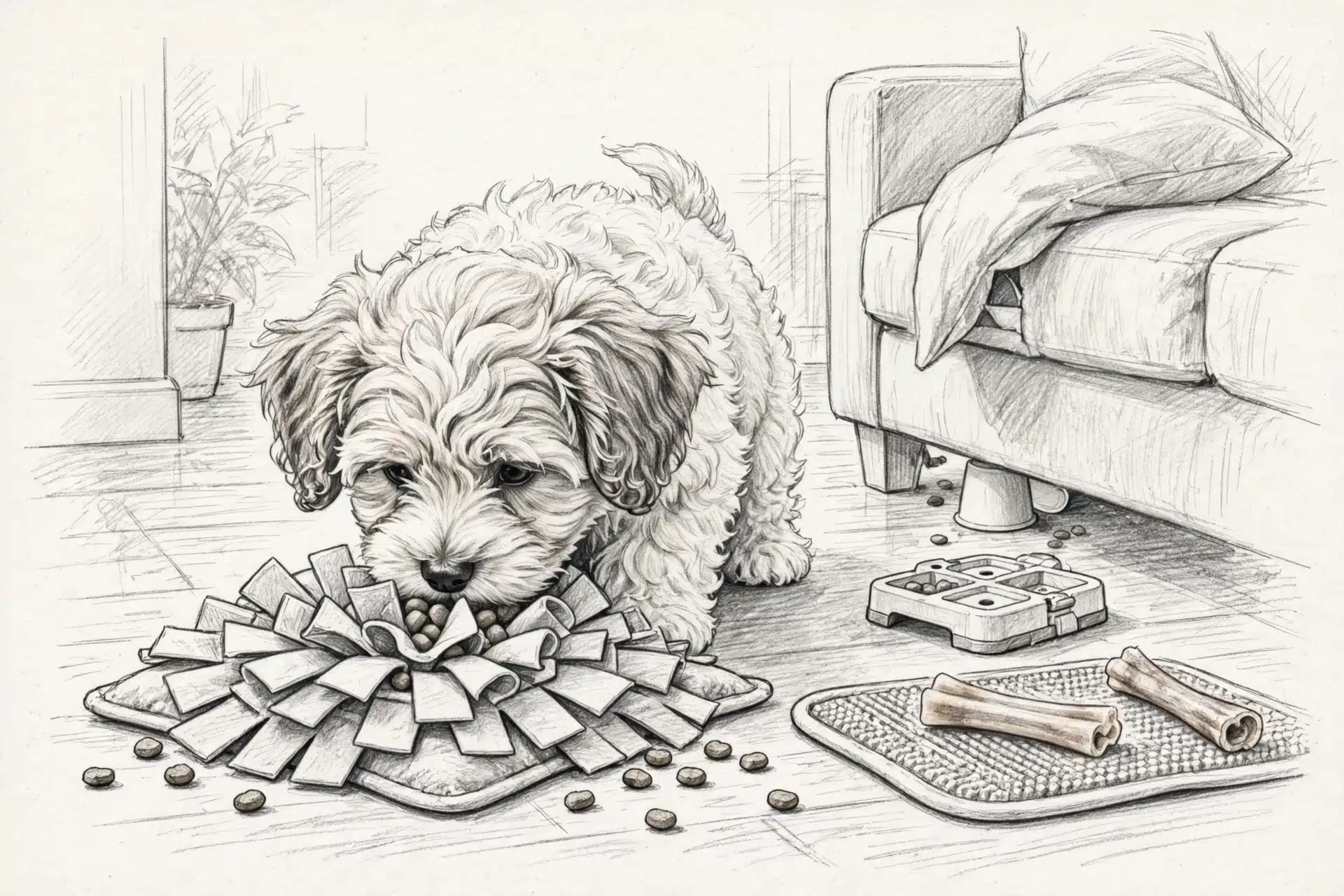
A settled apartment puppy is rarely the one with the longest walks. It is the one whose brain got used up. To keep a small breed puppy calm in a small space, pair short physical exercise with daily mental enrichment: a puzzle feeder at breakfast, a two-minute trick session, a sniff-focused walk, and a chew on a bed. Sniffing and problem-solving tire a puppy faster than distance covered.
Physical Versus Mental Exhaustion
Twenty minutes of walking burns muscle. Twenty minutes of sniffing and puzzle solving burns attention, and attention is what runs out first in a young dog. That is why a Havapoo can still pace after 45 minutes of play yet crash after ten minutes of hide-and-seek with a treat. The Poodle side adds thinking drive, so problem-solving counts double.
Enrichment That Works in a Small Apartment
- Snuffle mats or scattered kibble at one meal each day
- Puzzle feeders rotated so one stays new
- Trick sessions of two to three minutes, twice daily
- Treat hide-and-seek behind sofa cushions or under cups
- Chews and lick mats during your evening wind-down
A short feeding and nutrition basics guide can help you budget calories if treats start adding up. Spread enrichment across the day instead of stacking it at night. A puppy that solves, sniffs, and chews in small doses settles far faster than one waiting for a single long outing.
Barking, Noise and the Real Cost of Apartment Living
Energy and barking travel together. A bored dog with unused energy often fills the gap with noise, and both breeds are alert by nature, so they announce footsteps in the hall, elevators and delivery knocks. The Havanese was bred as a watchful companion, so barking is part of the package. A Havapoo may bark less, but restless energy still shows up as whining or pacing. Meeting those 30 to 45 minutes of daily activity is your quietest tool.
Why Energy and Barking Are Linked
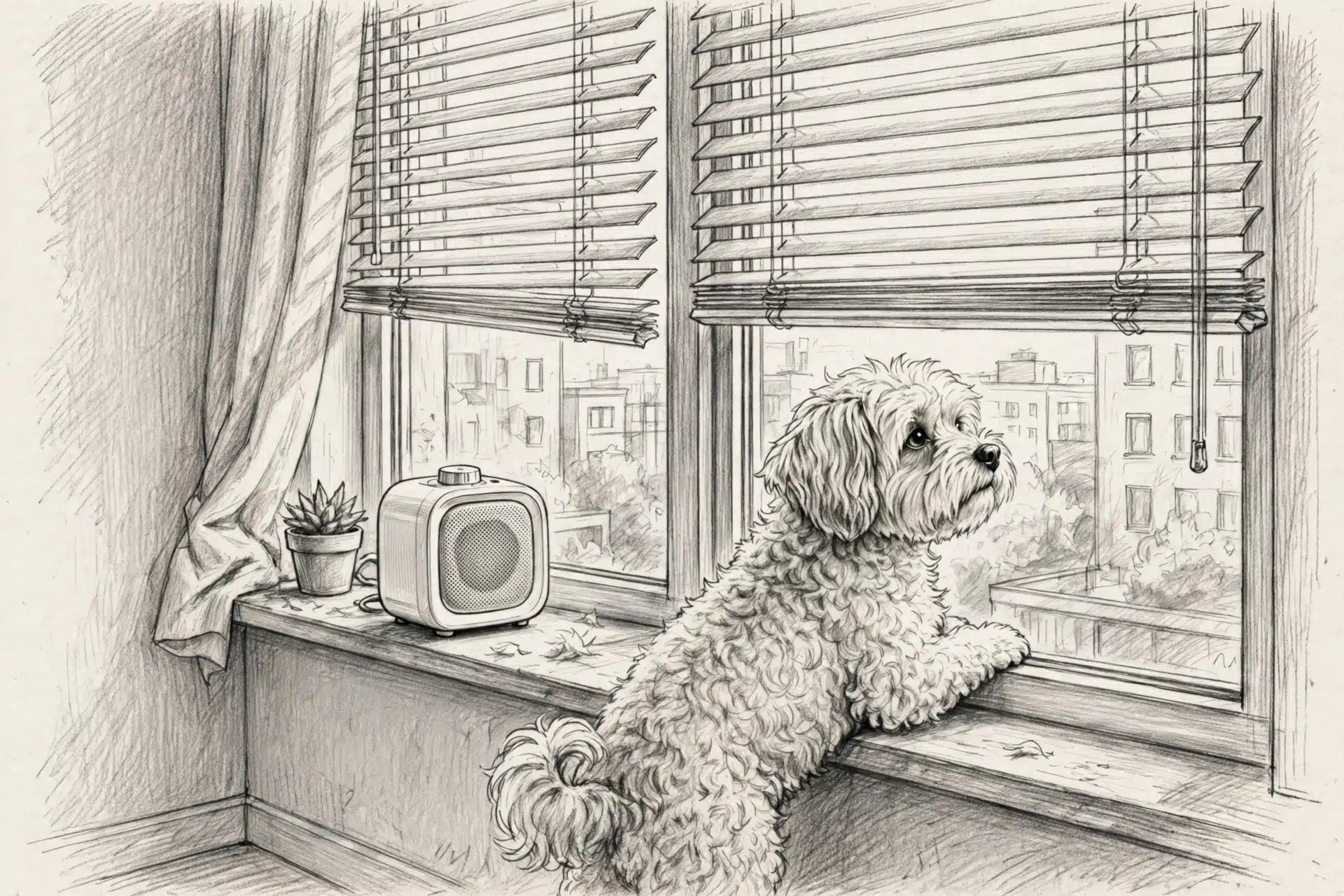
A tired dog settles. A dog that missed its walk treats every hallway sound as entertainment. Shelter and training guidance consistently links under-exercise with nuisance barking, so most noise complaints start with the exercise plan, not the dog’s personality. Puppies especially lack an off switch until you build one.
Managing Noise Without Punishment
Skip bark collars. They suppress the sound, not the cause. Instead, manage the view and the trigger: close blinds, add white noise, and reward quiet moments. Desensitizing your puppy to common building sounds works well, and early practice with basic puppy training skills like “settle” gives you a cue that beats yelling every time. These apartment barking management habits take weeks, not days, but they hold.
Puppy-Stage Energy: What Changes from Eight Weeks to One Year
A puppy does not run on the same energy schedule as an adult. Both breeds start small and easy to tire, then swing the other way during adolescence. Knowing the stages keeps you from overdoing walks or worrying when your pup suddenly seems wound up.
The First Months: Short and Frequent
At eight to twelve weeks, puppies play in bursts and crash hard. Free play beats structured walks. A common guideline from veterinary researchers is about five minutes of walking per month of age, once or twice a day, so a three-month-old gets roughly 15 minutes per outing. Let your puppy set the pace, and stop when it flops down or starts biting and zooming from overtiredness. Naps do more good than extra laps. The AKC covers puppy mental and physical exercise in detail if you want the full breakdown.
The Adolescent Stretch and Settling
Between four and ten months, energy peaks. A Havapoo especially lives up to its 30-45 minute adult range here, and both breeds get bolder, mouthier, and quicker to demand attention. Keep the total time steady but add brain work: short training reps, sniff walks, and food puzzles. Growth plates stay open until around a year, so avoid long forced runs and jumping stairs until then. Most Havanese settle noticeably after their first birthday; a Havapoo may take a few months longer.
Matching Breed to Floor Space, Schedule and Household Activity
A Four-Question Self-Assessment
Answer these honestly before choosing:
- How much floor space can you clear? Both breeds stay small, but a Havapoo uses its minutes with more intensity, so a hallway sprint loop helps.
- How steady is your schedule? If daily walks slip often, the Havanese’s forgiving 30-minute baseline is safer.
- How active is your household? Kids, runners, and work-from-home owners tend to suit a Havapoo; quieter homes lean Havanese.
- Can you handle a break from alone time? Neither breed enjoys long stretches solo, so plan for company or enrichment.
Where the Two Breeds Genuinely Diverge
On paper they look similar. In practice, the Havapoo’s Poodle heritage adds drive, so it wants the full 30-45 minutes and thrives on training games. The Havanese settles faster after its activity is met, which suits tighter condos and calmer routines. A first-time owner in a small apartment often does better with the Havanese, while a busier family that can commit to structured play gets a great match in a Havapoo apartment dog.
Which Should You Choose: Havapoo or Havanese?
The Conditional Verdict
Choose the Havanese if your schedule is unpredictable or your activity level is low. Its forgiving 30-minute baseline tolerates a skipped walk far better than the Havapoo does, and it suits owners who want a calmer small breed companion.
Choose the Havapoo if you already walk daily or work from home and enjoy training games. Its 30-45 minute range rewards structure, and its Poodle mix energy and trainability shine when you add puzzle feeders and short trick sessions. Both fit apartment life; the difference is how much structure you can honestly give.
Next Steps for a Serious Buyer
Start with an honest weekly calendar, not a wish list. If most days allow two walks plus playtime, a Havapoo fits. If not, pick the Havanese. Then review the available Havanese and Havapoo puppies and submit your application so matching starts early. Families in Utah can visit, and nationwide buyers get delivery, so location never decides the choice for you.

Still weighing the calm 30-minute Havanese against the busier 30-45 minute Havapoo? Sage Puppies matches each family with the right fit through an owner-managed application. Start yours at Sage Puppies today.
Frequently Asked Questions
Q1: Which dog needs less exercise in an apartment, a Havanese or Havapoo?
The Havanese. Its moderate needs settle at about 30 minutes daily, while a Havapoo’s Poodle mix energy pushes the range to 30-45 minutes.
Q2: How many minutes of daily exercise do Havanese and Havapoo puppies need?
Puppies need less. Use roughly five minutes of walking per month of age, once or twice daily, with free play and naps filling the rest.
Q3: Are Havapoos more energetic than Havanese for small apartments?
Usually, by a modest margin. The difference shows in play bursts and mental stimulation needs, not total minutes.
Q4: Do Havanese or Havapoos bark more in apartments?
Havanese tend to alert-bark more, but under-exercised dogs of either breed get noisier.
Q5: Can either breed stay home alone while I work?
Neither handles long solo days well. Plan midday breaks, puzzle feeders, or dog-walker visits.
Conclusion
Both breeds fit apartment life, but the Havanese needs less: about 30 minutes of daily activity against the Havapoo’s 30-45, thanks to its calmer, people-focused heritage. The Havapoo’s Poodle ancestry adds drive, trainability and a stronger pull on mental enrichment, which matters as much as walk minutes in a small space. Havanese alert-bark more; bored dogs of either breed get noisier. Choose the Havanese if your schedule slips often, and the Havapoo if you can commit to daily walks and puzzle games. Litters vary, so match the individual puppy, not just the breed label.