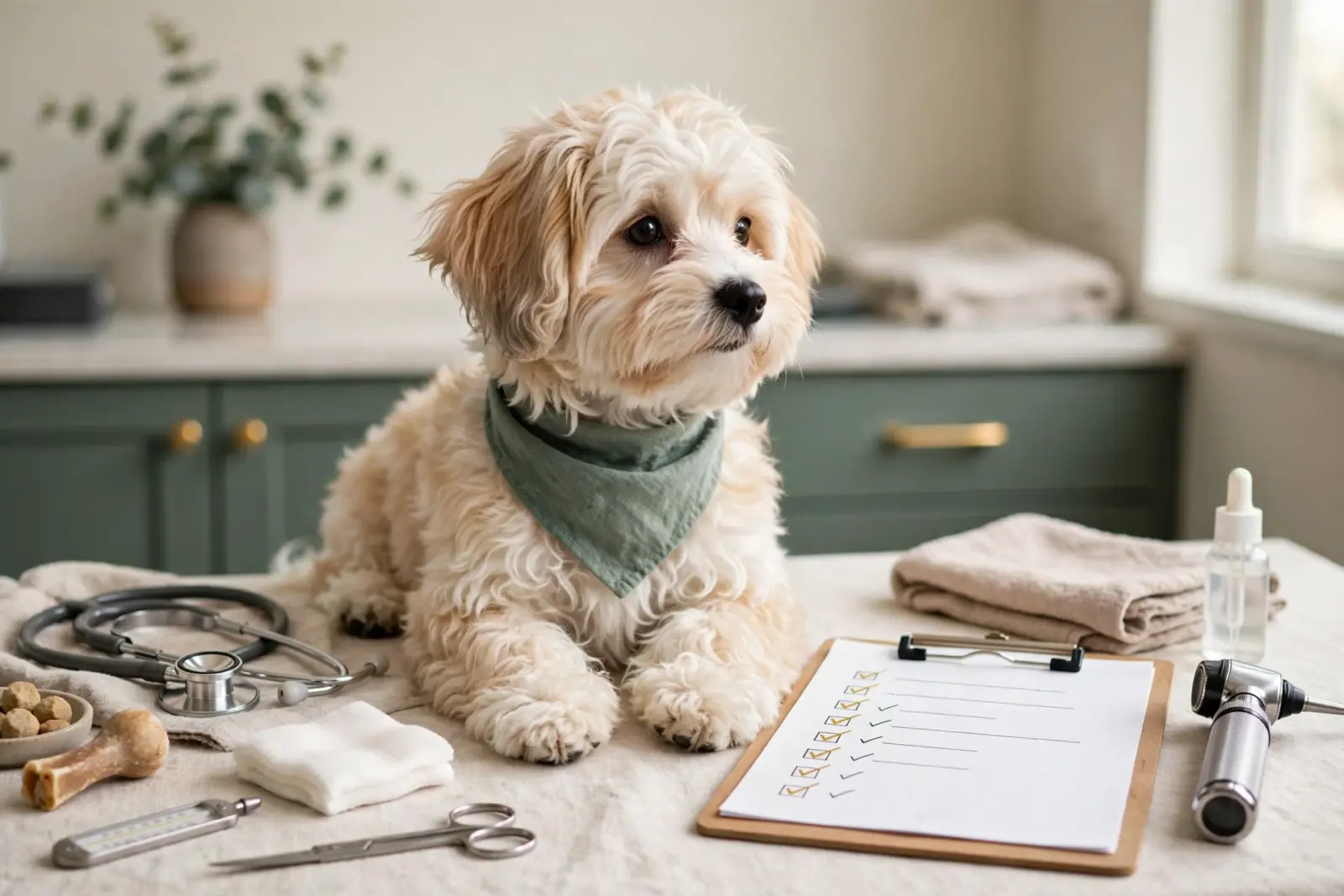
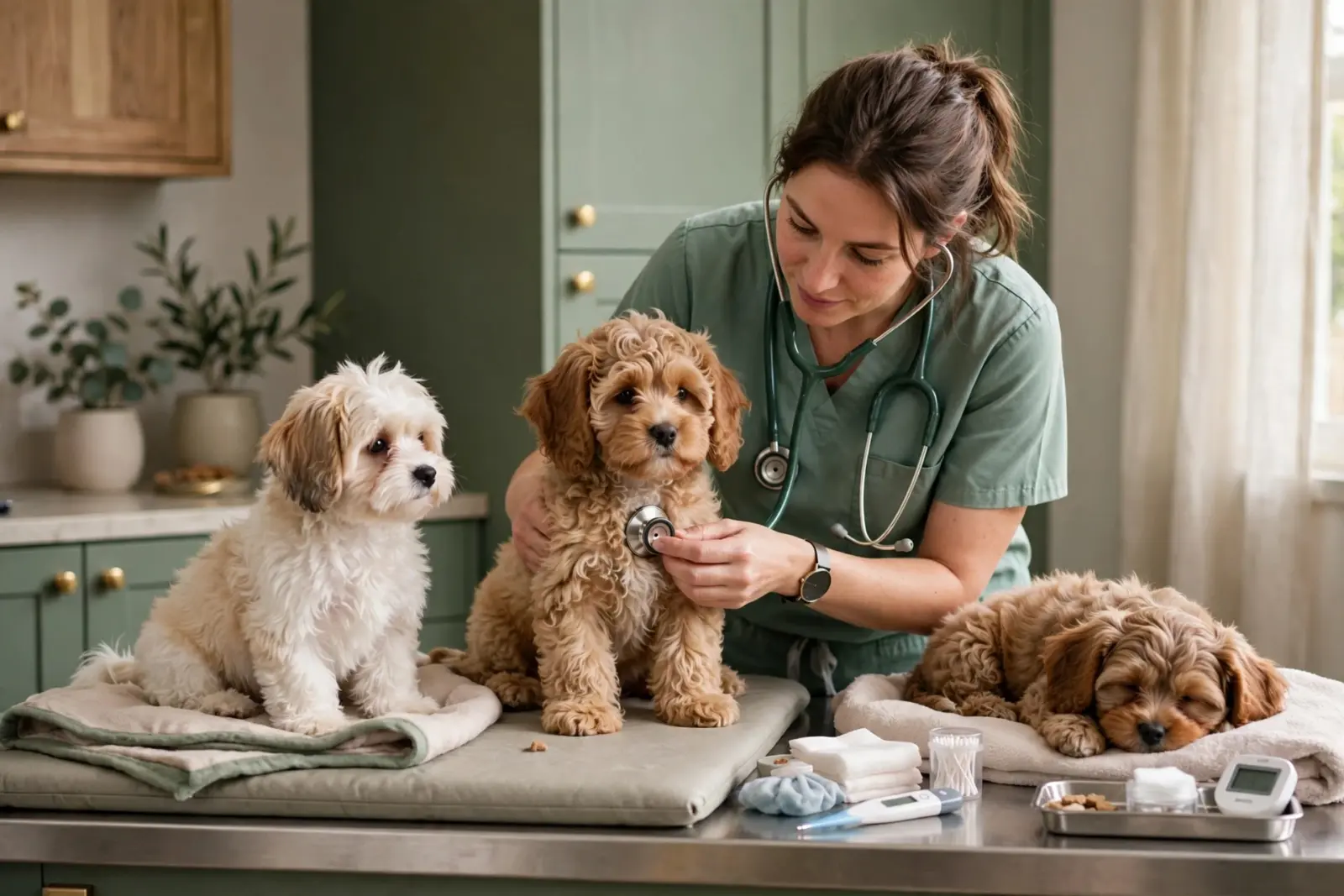
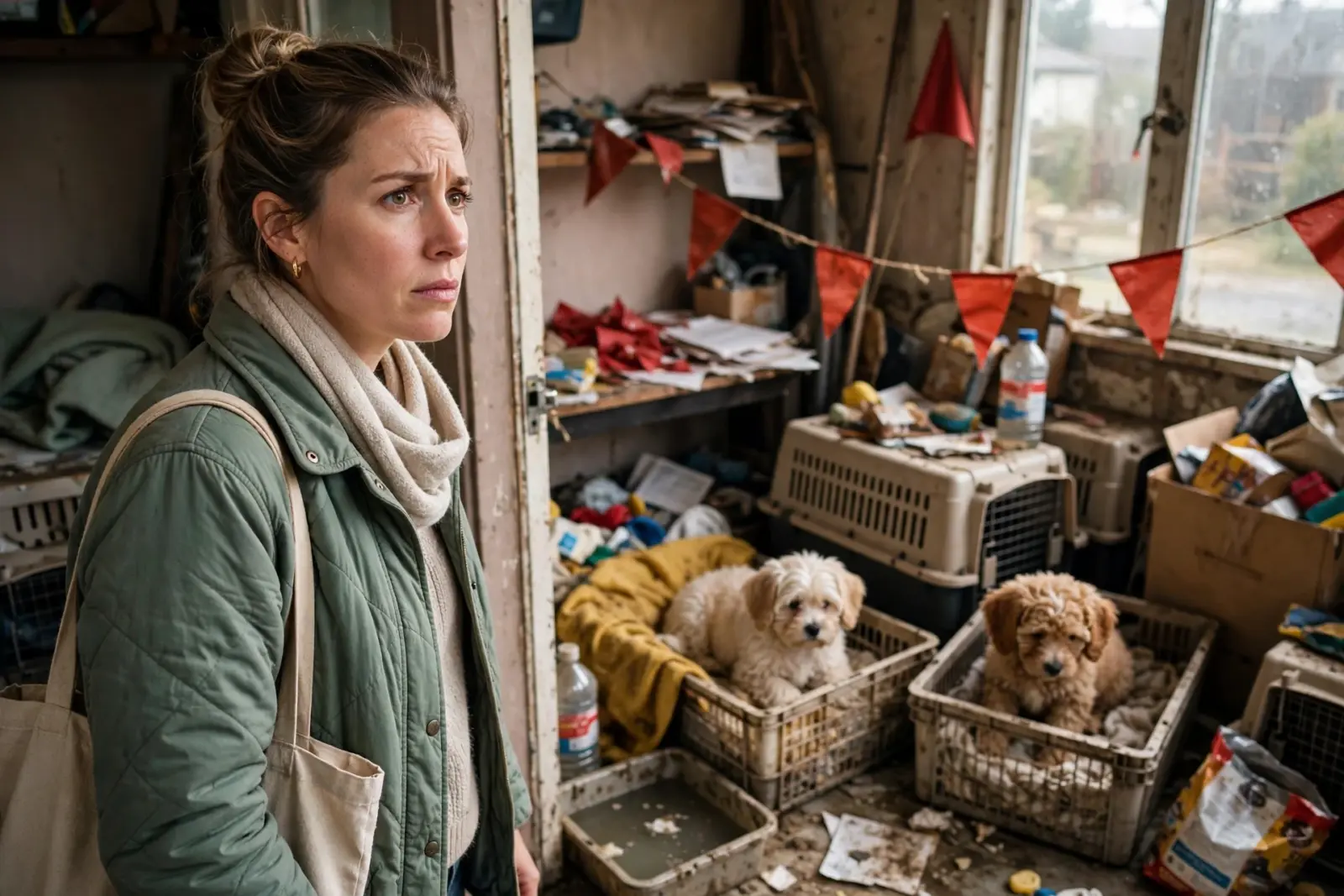
Quick Summary: The phrase “family-raised” means little unless you verify it through a live home tour, the puppies’ daily routine, their reactions to household noise, dated health and socialization records, a real pickup address, and a clear contract. Genuinely home-raised puppies should approach people, recover from everyday sounds, meet their mother, and live amid normal family activity. Sage Puppies highlights these checks while inviting buyers to verify the same evidence before paying any breeder.
A breeder can photograph a Havapoo litter on a living room floor, but the picture will not show you the dishwasher running, the grandkids stopping by, or the ten quiet hours those puppies spent in a back room. That gap between the photo and daily life is the real challenge when you want genuine home-raised puppies. Nearly every breeder uses the phrase “family-raised,” so the words alone prove nothing. What proves it is evidence: where the puppies sleep, what their day sounds like, how they react to a stranger, and which records and contract terms a breeder will show you. This guide gives you six ordered steps to verify the claim, from living-space checks to pickup day. As a Utah breeder of home-raised Havanese, Havapoo and Cavapoo litters, we raise our puppies in our own home and will show you exactly what genuine looks like, step by step, so you can apply the same standard to any breeder you consider.
Step 1: Confirm the Puppies Actually Live Inside the Home
“Genuine home-raised puppies” means the litter lives in the breeder’s kitchen, not a kennel building out back. So start with the space itself. A breeder who truly raises at home will show you the whelping area and play zone without hesitation. One that steers you to a lobby, garage, or parking lot is telling you something, and shelters warn that refusing to show where dogs live is a classic puppy mill sign.
Ask to See the Space Where Puppies Live, Not a Meeting Room
Ask directly: “Can I visit and see where the puppies sleep and play?” A home breeder says yes and sets a time. A seller who offers video calls only, third-party meetups, or a “sterile viewing room” is limiting what you can learn. If distance makes visiting hard, request a live video walkthrough of the whole area, not a recorded clip. Ask for the walk to start at the front door. Seeing the route through the real home tells you more than any polished tour, because it is hard to fake a live pan of a kitchen that puppies actually use every day.
Look for Lived-In Details a Staged Photo Cannot Fake
Photos can be shot in a borrowed room. Live video and visits show details that stay consistent: puppy-safe flooring, playpen panels, chew toys, food and water stations, and puppy puddle evidence. You should also hear normal household sounds, a doorbell, kids, a vacuum, because that noise is part of early socialization. Ask when the litter eats and naps, then request a call at that hour. Puppies mid-meal or tumbling in their pen confirm a real puppy daily routine; a spotless, silent set that looks identical at any hour does not.
Read the Dam’s Comfort Level
The mother dog is your best witness. Watch how she greets the breeder: relaxed tail, easy body, no hiding. A dam raised in the home treats the space as hers and settles near her puppies with people nearby. A dog that cowers, paces, or acts unfamiliar with the room may live elsewhere. The Humane Society’s fund notes that refusing to let you meet the mom is a red flag, but even a brief meeting shows plenty. Her ease around the person who raised her is hard to stage, and it tells you how her puppies were treated from day one.
When you compare Utah litters, these checks work best alongside the other questions worth asking about a family-raised puppy, such as health records and pickup terms.
Step 2: Ask How the Puppies Spend Their Day
A space can look clean in photos, but the daily routine tells you whether these are genuine home-raised puppies or litters kept in a back room. So ask the breeder to walk you through a normal day, from morning to bedtime. A real answer comes fast and includes specific details.
Request the Actual Daily Schedule
Ask what time the puppies wake up, when they eat, and how the day is structured. Honest breeders describe feeding times, potty breaks, naps in a whelping box, and play sessions in the kitchen or living area. Vague answers like “they’re just around” usually mean the puppies live apart from family life. A written or spoken schedule also shows whether the routine supports the socialization window between three and fourteen weeks, when puppies absorb the sights and sounds of a home.
Ask Who Handles the Puppies and How Often
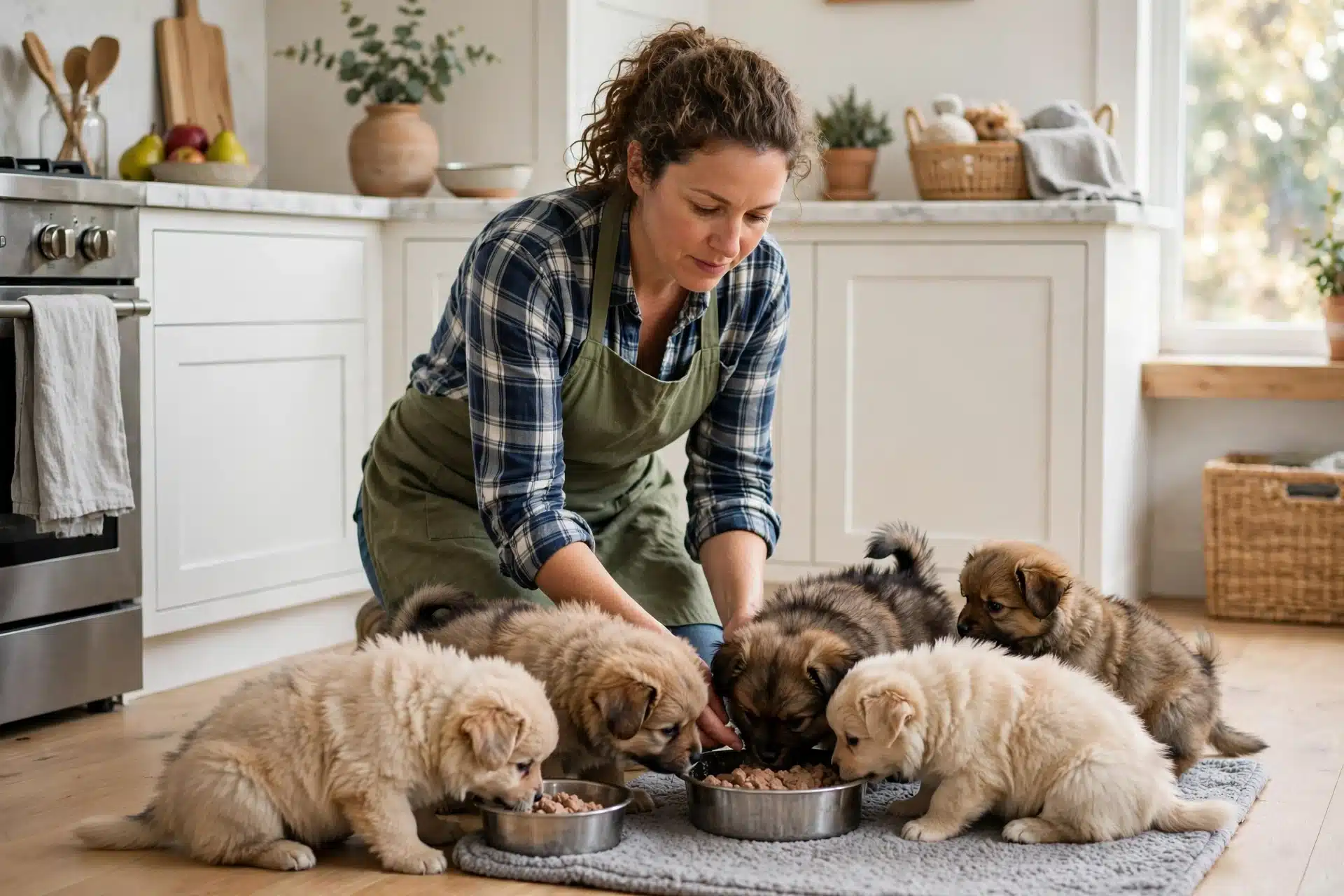
Next, find out who touches the puppies. Children, grandparents, neighbors, and visitors all matter, because varied handling builds confident adult dogs. Ask how many people interact with each puppy daily and whether the mother stays involved. One caretaker handling a litter twice a day is a red flag. A home-raised puppy has already met different ages, voices, and footsteps before it ever leaves.
Ask What Happens When the Household Is Busy
Finally, ask about noisy days: school mornings, deliveries, dinner guests. Puppies raised at home hear vacuums, doorbells, and dropped pans, and they learn to settle through it. If the breeder says puppies are moved somewhere quiet during busy hours, press gently. Routine noise early on prevents fearfulness later. This is one of the key questions before buying a family-raised puppy worth writing down and asking word for word.
Step 3: Test the Puppies’ Behavior in the Room
Paperwork can be faked. Puppy behavior usually cannot, because a dog raised around ordinary household life reacts to people and noise in ways a kennel-raised puppy does not. This is what most buyers are really looking for when they compare nearby family-raised litters, so treat the visit as a test with a method.
The Three-Minute Living-Room Test
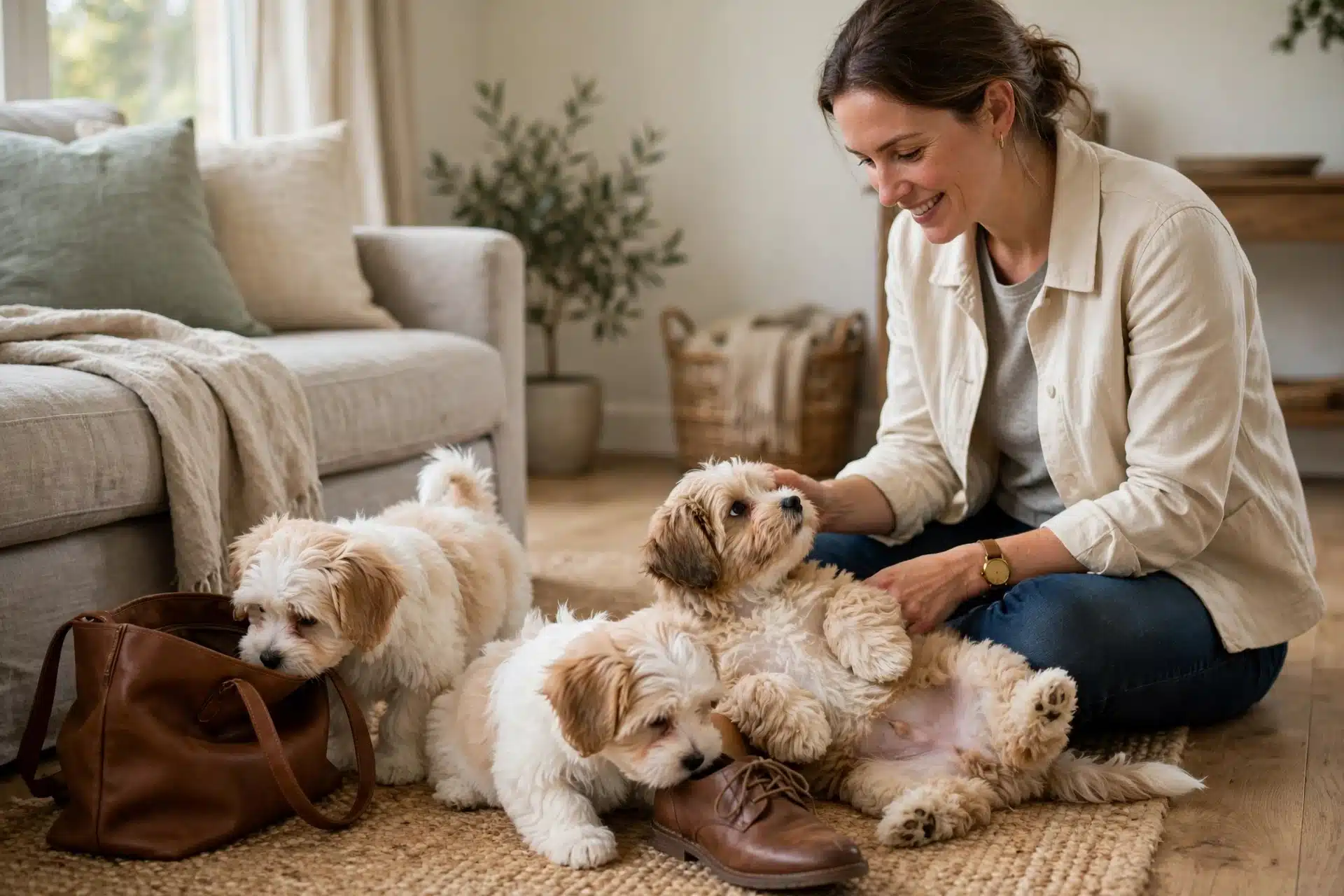
Sit on the floor and watch quietly for three minutes. Genuine home-raised puppies will usually:
- Approach you within the first minute, with curiosity instead of panic.
- Startle briefly at a dropped keys or a doorbell, then recover and return to play.
- Tolerate being touched on the paws, ears and belly without freezing.
- Follow you across the room or investigate your shoes and bag.
- Settle on their own after a short burst of play, a sign of routine napping.
A puppy that cowers, hides behind the sofa, or spins at the slightest noise has likely spent most of its life in a pen.
What Puppies With Little Household Exposure Often Show
Kennel-raised or barn-raised puppies tend to show the opposite pattern. Expect hesitant circling, holding urine longer than normal in one spot, no response to their name, flinching at a vacuum across the house, and loud distress when held. These signs point to missed socialization. The critical socialization window runs roughly from three to fourteen weeks of age, so limited early handling leaves a gap no later training fully erases.
Watch the Puppies During Normal Household Activity
Ask the breeder to keep the house running as usual while you visit. Vacuum if that’s on the schedule. Let kids wander through. A home-raised litter treats these moments as background noise. If the breeder insists on a silent, controlled meeting, ask why. Breeders who truly raise litters at home, the way we do with our Havanese, Havapoo and Cavapoo puppies in South Jordan, welcome ordinary chaos during a visit.
Step 4: Check the Records That Home-Raising Should Produce
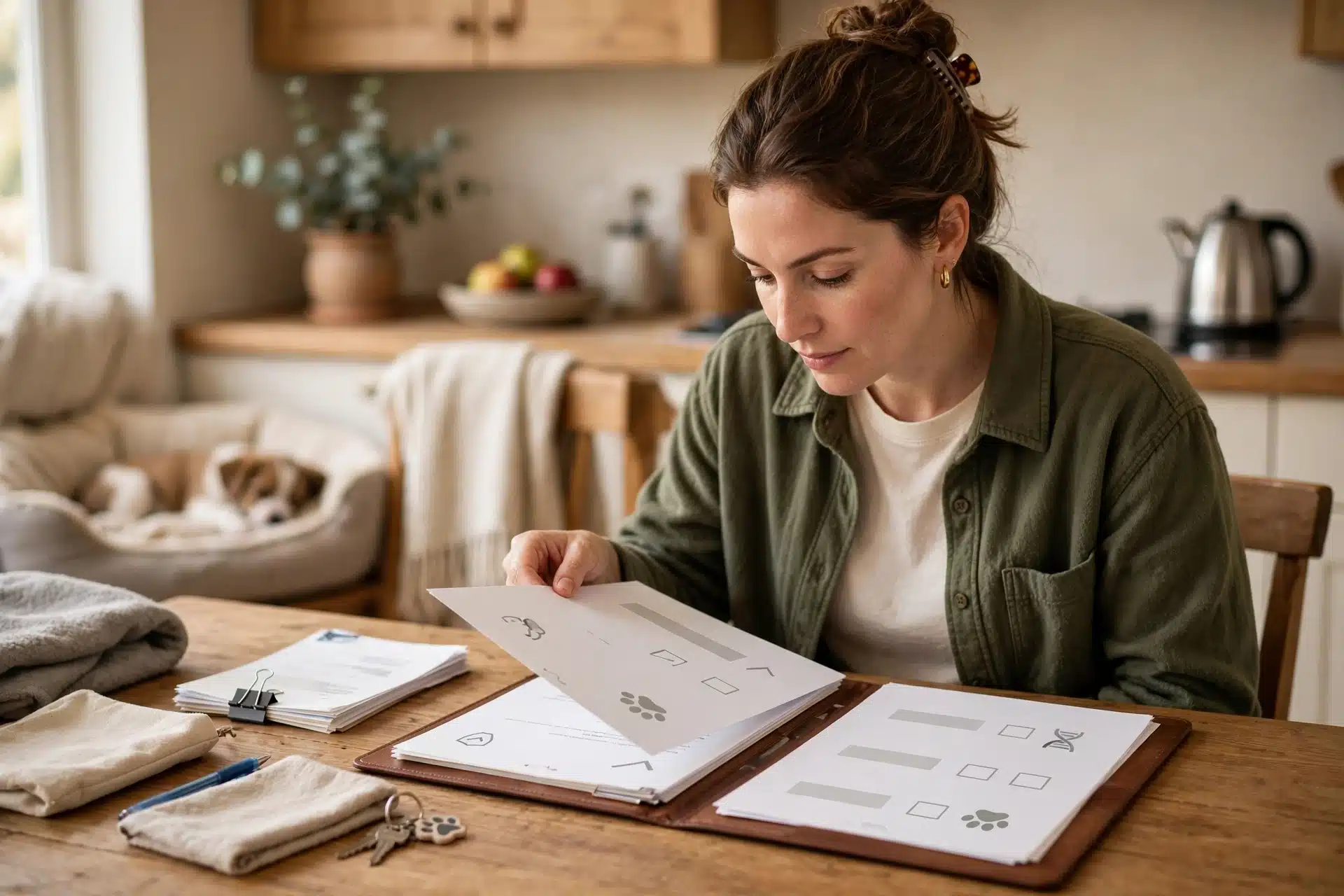
Home-raising shows up on paper too. A breeder who lives with her litters accumulates records as a side effect of daily care, so ask to see them before you send a deposit. A genuine home-raised puppy breeder should show you four things: vaccination and deworming records with dates, a veterinary exam note, a written socialization log, and health test results for both parents. Each document proves something different, so ask for them one at a time.
Vaccination and Veterinary Records
Real records carry dates, vaccine names and a clinic’s contact information. A home-raised puppy should have its first round of shots and deworming documented, usually starting around six weeks. Check that entries repeat on schedule rather than appearing all at once, and ask for the vet’s name so you can call the clinic. A breeder who “did the shots herself” without a vet visit is a warning sign. Keep your own copy of every puppy vaccination and deworming record for your first vet appointment.
Socialization and Handling Logs
Kennel-raised puppies have no daily routine to document, so this is where home-raising claims either hold up or fall apart. Ask what the litter experienced each week: car rides, different floor surfaces, children, baths, nail trims, new sounds. A good breeder can describe this from memory or show a simple written log. Vague answers like “they’re around people a lot” tell you less than a specific week-by-week list.
Health and Genetic Testing for the Parents
Parent records matter just as much as puppy records. Ask for health test results for both parents: a vet exam, genetic panel results and breed-relevant clearances such as OFA eye exams for Havanese. Legitimate results carry registry numbers you can verify yourself. A breeder who says “both parents are healthy” without paperwork is asking you to trust a claim, not evidence. Families comparing home-raised litters in Utah should expect these results before any deposit, and Cassie Milar of Sage Puppies shares her Havanese, Havapoo and Cavapoo parent testing openly for exactly this reason.
Step 5: Confirm That ‘Near Me’ Means a Real, Local Address
A real “near me” claim comes down to three checks: a street address you can find on a map, an open invitation to pick up your puppy where it was raised, and a breeder who never discourages the visit. Someone selling Havanese or Cavapoo puppies “near Salt Lake City,” for example, should give you a South Jordan street, not a shipping warehouse.
Verify the Physical Location
Ask for the exact address early, before you talk deposits. Then check it: a Google Street View search should show a real home in a residential area, matching what photos and video calls suggest. If the breeder only offers a county, a P.O. box, or a city “sort of near” the one you named, press for specifics. Breeders who actually raise puppies in their homes know their street by heart.
What Local Pickup Should Actually Look Like
A genuine pickup happens at the home where the puppy lived. You walk in, see the whelping area, meet the mother, and leave with your puppy plus its records. If a breeder suggests a parking lot, a gas station, or a third-party meeting spot, treat it as a red flag. Legitimate home breeders are proud of their space and expect you to want to see it.
Ask About National Delivery Without Buying on Distance Alone
If you live out of state, ask how delivery works and who holds the puppy in transit. But distance never replaces verification: a breeder five states away with full records beats a local one with none. Sage Puppies, for instance, serves families nationwide while still inviting local pickup at its South Jordan home. Choose evidence first, then logistics.
Step 6: Read the Contract and the Support That Follows
The contract is where a home-raising claim becomes binding. A responsible breeder will send it before you pay, not after. Read all of it.
Contract Terms That Show Accountability
A solid puppy purchase contract should include these elements: the legal seller’s name and Utah address, the exact puppy’s breed, sex, birth date and microchip, the total price and deposit rules, a written health guarantee with deadlines and remedies, spay or neuter terms, a return-to-breeder clause, and the governing state. The AKC’s breeder contract guide covers how these guarantees typically work.
Vague terms tell you as much as clear ones. If the seller is a first name with a cash app, or the health promise hides behind “call us if anything goes wrong,” step back.
The Return-to-Breeder Clause
This clause says the breeder must take the dog back if you ever cannot keep it. Ethical programs include it because they never want one of their puppies in a shelter. It signals accountability that lasts the dog’s whole life.
Read the remedy too, not just the coverage. Some contracts require you to surrender the puppy for any health claim, which is painful for a family that has bonded. Others offer a refund or vet cost reimbursement instead. The second protects you better. We write our remedies as refunds or reimbursement rather than forced returns, and any breeder you screen should explain theirs just as plainly.
Support After the Puppy Goes Home
Ask what happens after pickup day. Good breeders answer feeding and training questions for months, share the vaccination and deworming records before you ask, and stay reachable. Our Sage Puppies terms and Utah puppy contract terms are written out in advance, so nothing arrives as a surprise. A breeder who goes quiet after the payment clears told you something too.
Common Mistakes to Avoid When Vetting Home-Raised Puppies
Even careful buyers slip in predictable ways. Watch for these:
- Trusting photos instead of proof. Cute pictures of a “living room” litter tell you nothing. Ask for a live video tour, not stills.
- Skipping the mother. A breeder who won’t let you meet or see the mom on video is hiding something. Rescue groups flag this as a top warning sign of how to spot a puppy mill.
- Accepting a parking lot handoff. Meeting somewhere neutral means you never see where the puppy was raised, a red flag the Humane Society of the United States calls out directly.
- Paying before verifying records. Get vaccination and deworming dates and the vet’s name first.
- Ignoring the contract. No return-to-breeder clause? Walk away.
- Rushing the decision. Deposits pressure you. Slow down and compare answers across several breeders.

Ready to meet a puppy raised under one roof, with real records and honest terms? Sage Puppies raises Havanese, Havapoo and Cavapoo puppies in our South Jordan, Utah home, and you can visit or video chat before you commit. Start your application today.
Frequently Asked Questions
Q1: How can I identify puppies that were genuinely raised in a home?
Look for proof, not phrases. Visit or request a live video walkthrough, ask for the daily routine, watch how puppies react to noise, check dated records, and confirm a real home address for pickup. Genuine breeders welcome every one of these requests.
Q2: Should I visit a breeder’s home before buying a puppy?
Yes. Seeing where the litter sleeps and plays beats any photo. If distance prevents a trip, ask for a live video call that starts at the front door and moves through the real space.
Q3: Why is meeting the mother dog so important?
The dam is the hardest thing to fake. A home-raised mother relaxes around her breeder and settles near her puppies. Fear, hiding, or unfamiliarity with the room suggests she lives elsewhere.
Q4: What records should a home breeder provide before I pay?
Four things: dated vaccination and deworming records, a veterinary exam note, a written socialization log, and health test results for both parents with registry numbers you can verify.
Q5: What behavior shows a puppy was kennel-raised instead?
Expect cowering, spinning at small sounds, flinching at a distant vacuum, no response to their name, and distress when held. Puppies raised at home approach strangers, recover quickly, and settle after play.
Q6: Is a parking lot handoff ever acceptable?
No. Meet only at the home where the puppy lived, so you can see the whelping area and the mother. Neutral meetups hide the most important evidence.
Q7: What contract terms matter most?
Insist on the seller’s legal name and address, a health guarantee with deadlines, a return-to-breeder clause, and remedies written as refunds or reimbursement rather than forced surrender.
Conclusion: Trust the Evidence, Then Trust the Puppy
“Family-raised” is a phrase anyone can type. The six steps in this guide turn it into something you can check: see the real living space, hear the daily routine, watch how puppies behave around normal household noise, read dated records, confirm a home address and pickup, and read a contract with a return-to-breeder clause. A breeder who raises litters at home passes every step easily. One who hesitates, redirects, or goes quiet after payment is answering too. Whether you are comparing Havanese, Havapoo or Cavapoo litters in Utah or across the country, let evidence decide first. The puppy you bring home will carry those early weeks for life.