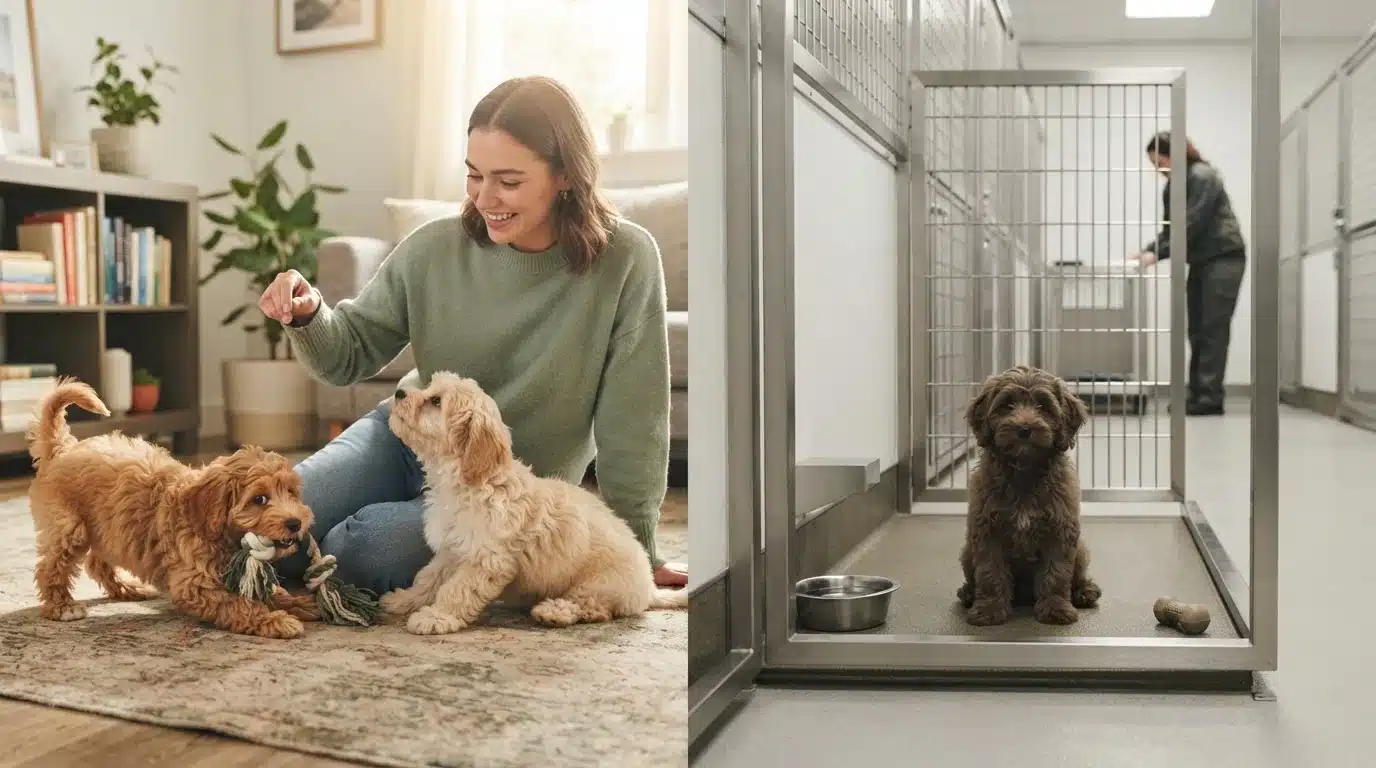
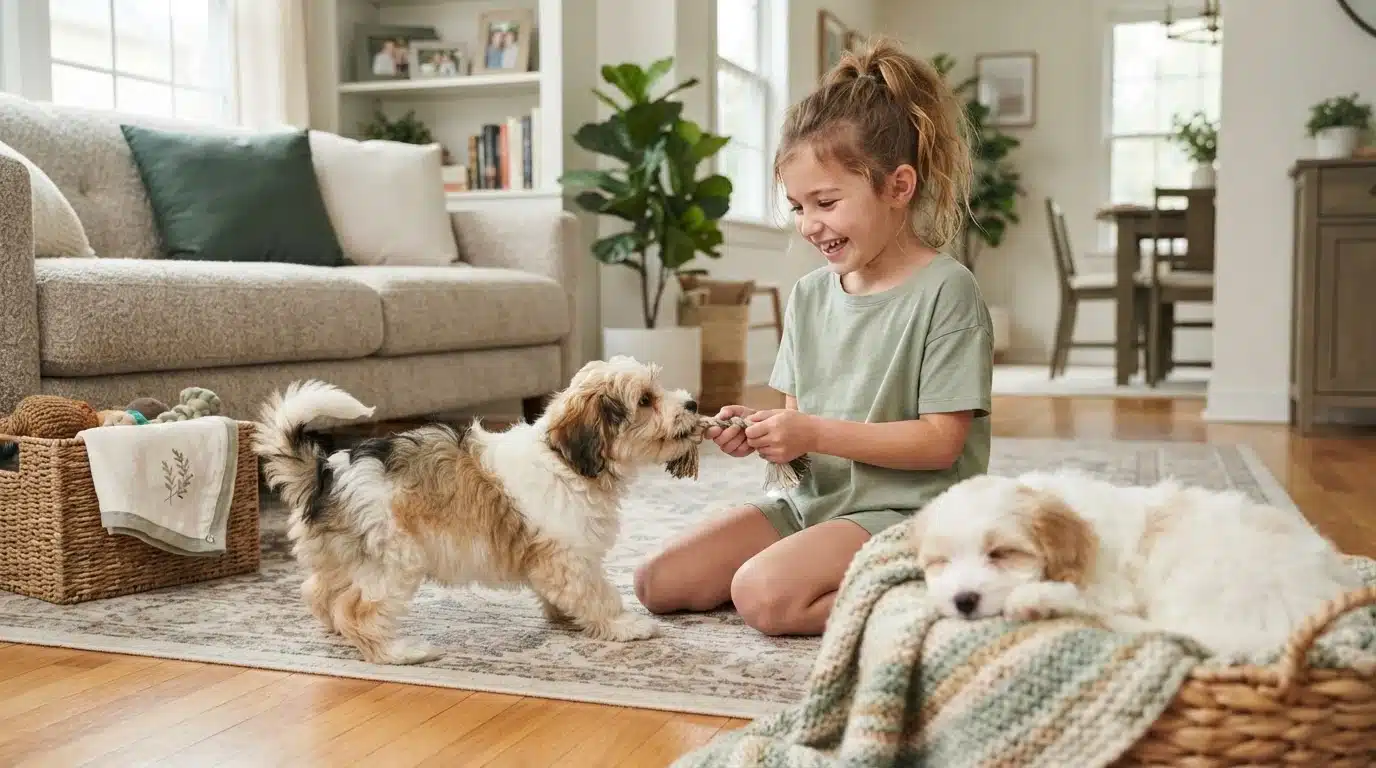
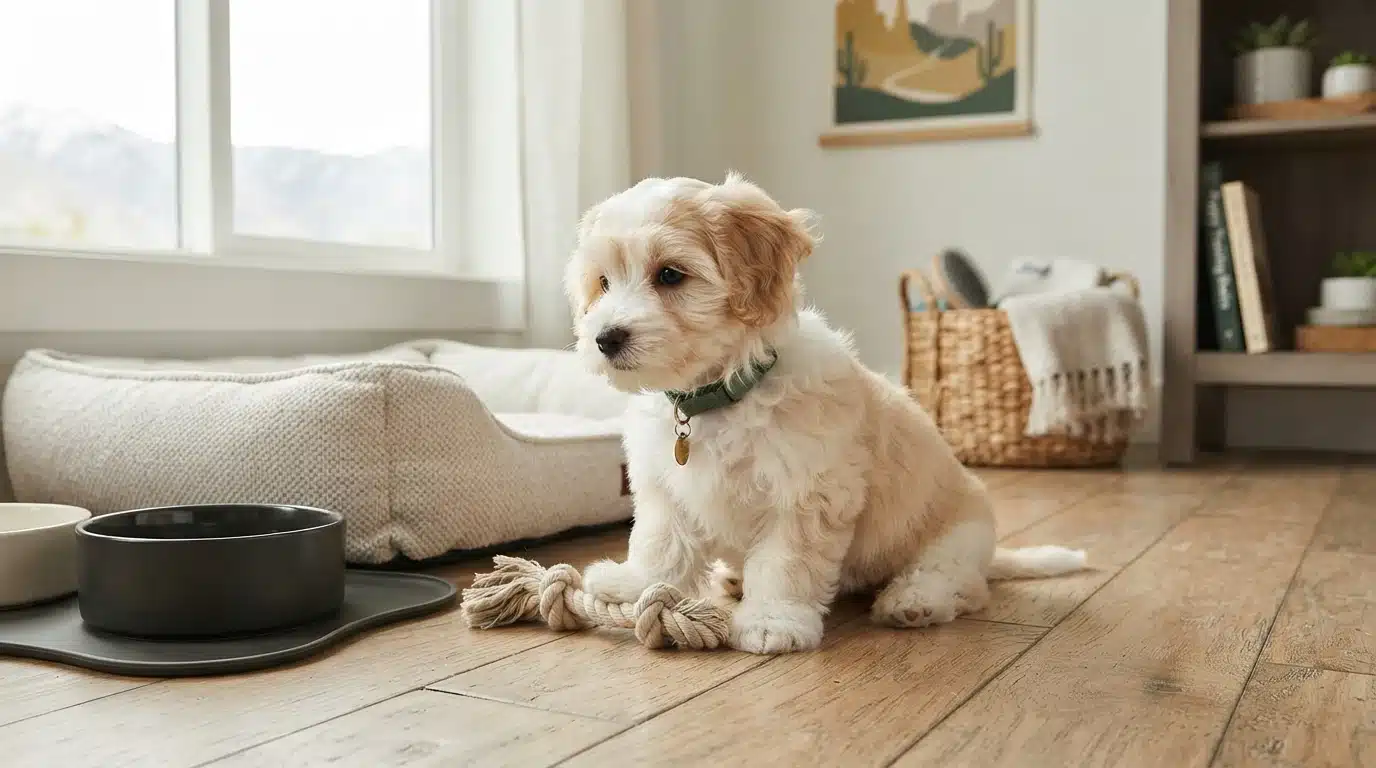
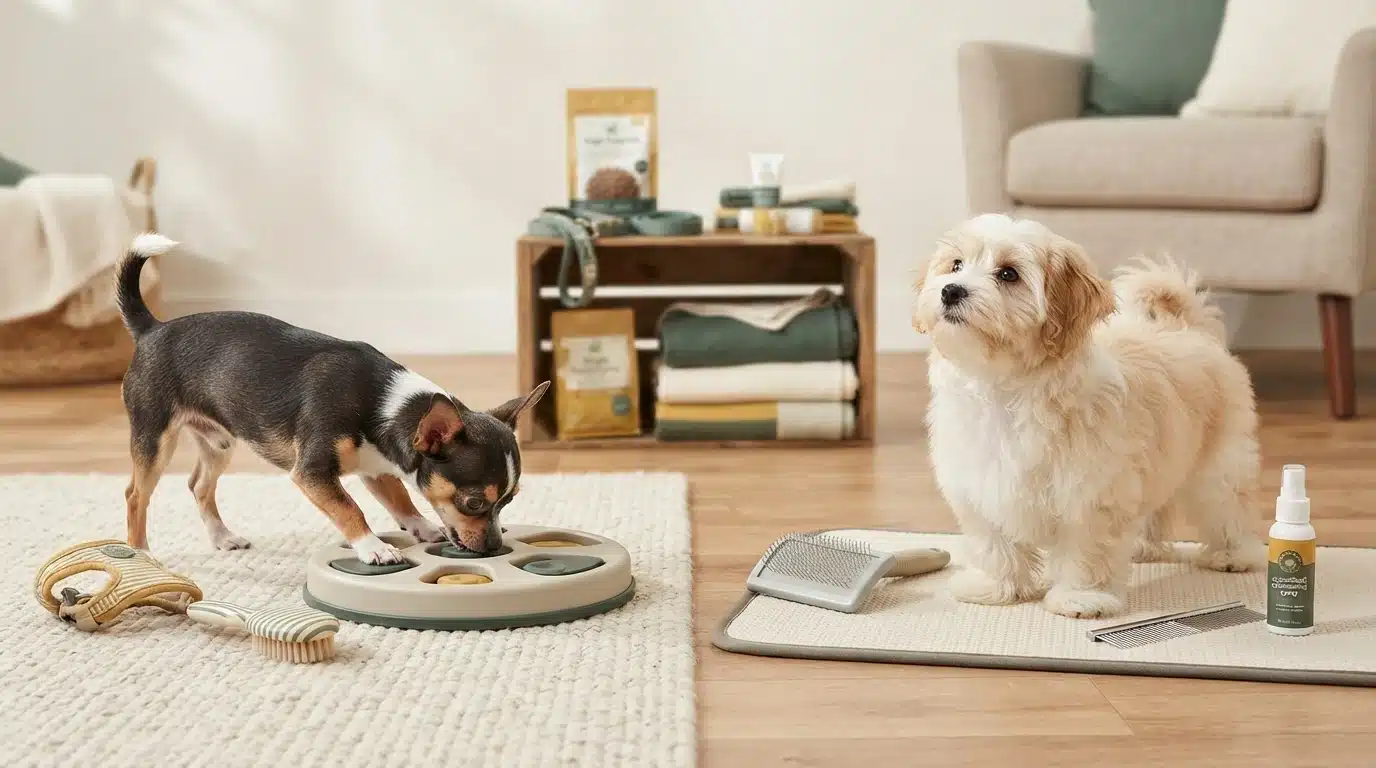
Quick Summary: Both breeds handle apartment life well, so the real deciding factor is your daily routine. A Havanese fits a calmer household with 30 to 45 minutes of daily activity, while a Havapoo (Havanese and Poodle mix) suits busier homes that can commit to 45 to 60 minutes of exercise plus mental games. Neither breed tolerates a full workday alone as a puppy, and both need several weekly brushings and grooming every six to eight weeks. Sage Puppies in South Junction, Utah matches each puppy to your home, schedule, and lifestyle rather than letting buyers pick by color alone.
Your apartment board approved a small dog, so which small dog? The Havanese and the Havapoo look close enough to confuse people, yet they differ in ways that matter when your hallway is six feet long and your neighbor naps at noon.
Havanese apartment living works well because the breed was made for close quarters. These dogs spent centuries as Cuban companions, and they ask for people time more than yard time. The Havapoo, a Havanese and Poodle mix, brings its own strengths. Many care about coat shedding and a slightly more athletic build, and Havapoo apartment living usually comes down to how much exercise and grooming you can commit to each week.
We raise both breeds at Sage Puppies in South Jordan, Utah, and we help families weigh this exact choice every week. In this guide, you will see how each breed handles noise, potty breaks without a yard, and time alone. We will compare the Havanese energy level against the Havapoo’s, cover grooming and health basics, and flag which puppy suits first-time owners. By the end, you will know which breed matches your floor plan, your schedule, and the way you actually live, not just the way a breed profile says you should.

So which dog actually fits your space? Havanese apartment living works beautifully if you want a calm, affectionate shadow, while a Havapoo adds a touch of poodle bounce for busier households. Both are small, people-first, and well suited to life without a yard, as long as you meet their social needs. The right match matters more than the breed label. At Sage Puppies, Cassie Milar matches each puppy to your home, schedule, and lifestyle through a simple, owner-managed process. Explore available Havanese and Havapoo puppies and start your application at Sage Puppies. Your next great neighbor is waiting.
Frequently Asked Questions
Q1: Are Havanese or Havapoo puppies better for apartment living?
Both breeds fit apartment life well, so the honest answer depends on your schedule more than your square footage. Havanese apartment living works especially well because the breed was shaped by centuries as a Cuban house companion. These dogs want your company more than your yard, and they stay content in a one-bedroom as long as someone is around most of the day.
A Havapoo suits an apartment too, often with a bit more bounce. The Poodle side adds energy and smarts, so this mix usually needs a slightly longer daily walk or a couple of short play sessions to settle. If your household is busy, active, or home on shifting schedules, a Havapoo may match better. If you want a calm, affectionate dog that asks mainly for closeness, lean Havanese.
Neither breed needs a yard. Both need daily human contact, a potty plan, and consistent routines. The better choice is the one whose energy and companionship needs line up with how your days actually run.
Q2: Which is quieter in an apartment, a Havanese or a Havapoo?
Neither breed is loud by nature, but neither is silent either. Havanese tend to bark to alert you: a knock at the door, a neighbor in the hall. The barking is usually short and stops once you acknowledge it. Havapoos inherit some watchfulness from the Havanese side and some Poodle alertness, so some individuals are chatty about every sound.
Individual temperament matters more than breed here. Ask your breeder which puppies in a litter lean quiet and which lean vocal. Early training helps in both cases. Teach a “quiet” cue, reward calm behavior after hallway noises, and avoid accidentally rewarding barking with attention. Puppies of either breed that get enough exercise and mental stimulation bark far less than bored ones.
Tip: If your building has thin walls, mention noise to your breeder during the matching process. A breeder who knows each puppy’s personality can steer you toward the calmest pup in the litter.
Q3: How much exercise do Havanese and Havapoo puppies need in a small space?
Plan on 30 to 45 minutes of activity a day for a Havanese, split into two or three short sessions. Puppies should not take long forced walks while their joints are growing, so keep sessions brief and let the puppy set the pace. Indoor games like hide-and-seek with a toy, short training reps, and a tug session count toward the total.
A Havapoo usually needs 45 to 60 minutes, and the Poodle side often craves a mental challenge as much as physical movement. Puzzle feeders, snuffle mats, and five-minute training sessions tire a Havapoo out in ways a hallway stroll cannot. A tired puppy settles quietly, which is exactly what your downstairs neighbor wants.
Small space living changes the format, not the amount. You can meet both breeds’ needs without a yard as long as you commit to daily walks, indoor play, and short training sessions. Skip the long runs and heavy jumping until your vet clears your puppy’s growth plates, usually around 12 months for these small breeds.
Q4: Can Havanese and Havapoos be left alone during a workday?
Short answer: not for a full eight hours as young puppies, and with difficulty as adults. Both breeds are companion dogs bred to be with people. A Havanese left alone day after day often develops separation distress, and a Havapoo is no more independent despite the Poodle mix.
The general guideline is one hour of alone time per month of age, up to about four hours for an adult, and far less for young puppies. If you work from an office full time, plan for a dog walker, a midday doggy daycare visit, or a neighbor who can pop in. Crate training done gently, plus leaving a long-lasting chew, helps both breeds handle short absences.
If nobody can visit midday, ask yourself honestly whether now is the right time for either breed. A lonely companion dog is a sad neighbor for everyone, and no breed label fixes that.
Q5: Which breed is easier to potty train in an apartment without a yard?
Both breeds can learn apartment potty routines, and the Havanese sometimes takes a little longer because small breeds in general have small bladders and less drive to hold it. A Havapoo often picks up the routine a bit faster thanks to Poodle cleverness, though every puppy is an individual.
The method matters more than the breed. Take your puppy out first thing in the morning, after meals, after naps, and after play. Pick one outdoor spot and go there every time, or use a patch of grass or a potty pad on a balcony as a backup. Praise immediately when your puppy goes in the right place. Never punish accidents, which just teaches a puppy to hide them.
Expect reliable house training somewhere between four and eight months. Elevator delays are real, so build in a little extra travel time and watch for sniffing and circling cues on the way to the door.
Q6: How much grooming do these breeds need in an apartment?
Both coats need steady work, and an apartment makes brushing non-negotiable because loose hair and mats show up fast in small spaces. A Havanese has a silky double coat that sheds very little but mats easily. Plan on brushing three to four times a week and a full groom every six to eight weeks. Many owners keep a shorter “puppy cut” to cut the workload.
A Havapoo’s coat depends on which parent it favors. Curly coats shed the least and mat the most, while wavy coats sit somewhere between. Either way, brush several times a week and schedule professional grooming every six to eight weeks. Budget for it: regular grooming runs roughly $60 to $100 per visit in most US cities, so add that to your monthly pet costs.
Warning: Skipping brushing for even a week can create mats close to the skin that a groomer must shave out. Short, frequent sessions beat one long weekend battle.
Q7: Are either of these breeds a good fit for a first-time dog owner?
Yes, and both are among the friendliest small breeds a beginner can choose. Havanese are forgiving, eager to please, and rarely stubborn in a way that derails a new owner. Havapoos are quick learners, which cuts both ways: they pick up good habits fast and bad ones just as fast, so consistency matters from day one.
A first-time owner in an apartment should focus on three things regardless of breed: a consistent potty routine, short daily training sessions, and early socialization with hallway sounds, elevators, and neighbors. Puppy classes help enormously and give your dog structured exercise in a small-footprint way.
If you want the lowest-maintenance temperament, choose the Havanese. If you enjoy training and want a slightly more athletic dog for hikes and games, choose the Havapoo. A breeder who matches puppies to homes, rather than letting you pick by color alone, can make this decision much easier.
Q8: What health issues should apartment owners watch for in these breeds?
Havanese are generally healthy, with lifespans often reaching 14 to 16 years. Known concerns include luxating patella, a kneecap that slips out of place, hip dysplasia, some heart conditions, and progressive eye issues. Havapoos share the patella and hip risks and may inherit Poodle-prone eye conditions. Reputable breeders test breeding dogs for these problems and share results openly.
Apartment living adds its own watch points. Hard floors are slippery, and repeated sliding strains growing joints, so add rugs along your puppy’s main runways. Avoid letting your puppy leap off the couch or bed repeatedly, and skip long stair sessions until growth plates close. Keep nails trimmed so your dog walks naturally instead of splaying its toes.
Ask any breeder you talk to for health test documentation on both parents. A breeder who raises Havanese and Havapoos should answer questions about patellas, eyes, and hearts without hesitation, and should stand behind their puppies with a written health policy.
Conclusion
Both breeds earn their spot in an apartment, so the choice comes down to your routine. A Havanese fits best when you want a calm, people-first companion who is content with 30 to 45 minutes of daily activity and plenty of company. A Havapoo adds Poodle energy and trainability, which suits busier homes that can commit to 45 to 60 minutes of exercise plus more mental games.
The practical checklist looks the same either way: a potty plan that accounts for elevator trips, brushing several times a week, grooming every six to eight weeks, and a midday visitor if you work away from home. Neither breed should spend a full workday alone as a puppy, so plan for that before you fall for a face.
Noise, exercise, and grooming all trace back to one thing: matching the puppy to your actual schedule, not the one you hope to have. That is why breeder matching matters more than the breed label. Our Havanese puppy buyer guide walks through what to prepare before pickup day.
Whichever puppy you choose, expect 14 or more years of a small dog who wants to be where you are. In a one-bedroom, that closeness is the whole point.