Quick Summary: A Havapoo is a Havanese-Poodle mix that usually weighs 7 to 20 pounds, but its temperament, coat, and adult size can vary widely, so buyers should verify parent weights, health tests, contracts, and vaccination records in writing. These people-focused puppies need regular exercise, daily companionship, gradual alone-time training, frequent brushing, and professional grooming every six to eight weeks. Sage Puppies prices Havapoos at $3,500 to $4,500, but the broader cost of ownership continues for 12 to 15 years.
Two Havapoo puppies from the same litter can look nearly identical at eight weeks, then grow into completely different dogs. One naps through the afternoon. The other needs puzzle feeders and midday company. That gap is the single most important thing to understand before you sign anything, because it decides whether a Havapoo puppy fits your home. The problem is that most Havapoo puppy info stops at “what is a Havapoo” and skips the buyer’s side of the deal. This guide goes further. You will find temperament and adult size expectations, health testing to demand from breeders, grooming you can actually keep up with, and honest costs, plus a checklist to verify records before your deposit leaves your account. It draws on documented experience from a South Jordan, Utah breeding program and primary health sources, so you can judge readiness with facts instead of cute photos.
What Should You Know About Havapoo Puppies Before You Buy?
A Havapoo puppy is a Havanese and Poodle mix: small, people-focused, and bred for companionship. Before you buy, know six things that separate a healthy, well-matched puppy from a gamble. Verify each one with the breeder, in writing.
The Six Questions That Decide Your Purchase
- Who are the parents? Ask to meet the mother and see health records for both sides.
- What health testing was done? Responsible breeders screen for patellar luxation, eye disease, and heart issues, and share results.
- How big will this puppy get? Adult size varies by parent, so ask for the parents’ weights.
- What does the contract cover? Read the health terms, deposit, and refund policy before you pay anything.
- How are puppies raised? Early handling and household exposure shape temperament more than any pedigree.
- What support comes after pickup? A good breeder answers questions for the life of the dog.
Any breeder who dodges these answers is telling you something.
What the Breed Label Cannot Promise
“Havapoo” describes parentage, not a guarantee. Coats range from wavy to curly, and shedding varies litter to litter. Temperament shifts too, since the Havanese side tends to be velcro-like while some puppies lean more independent. Because both parent breeds bond hard with their people, plan for alone time early to prevent separation stress.
No puppy is fully hypoallergenic, and no breeder can promise one. What a breeder can promise is testing, honest records, and support. The grooming commitment is real regardless of coat type; this is where comparing Havapoo and Cavapoo coat care helps you plan ahead.
What a Havapoo Puppy Is and How Big It Gets
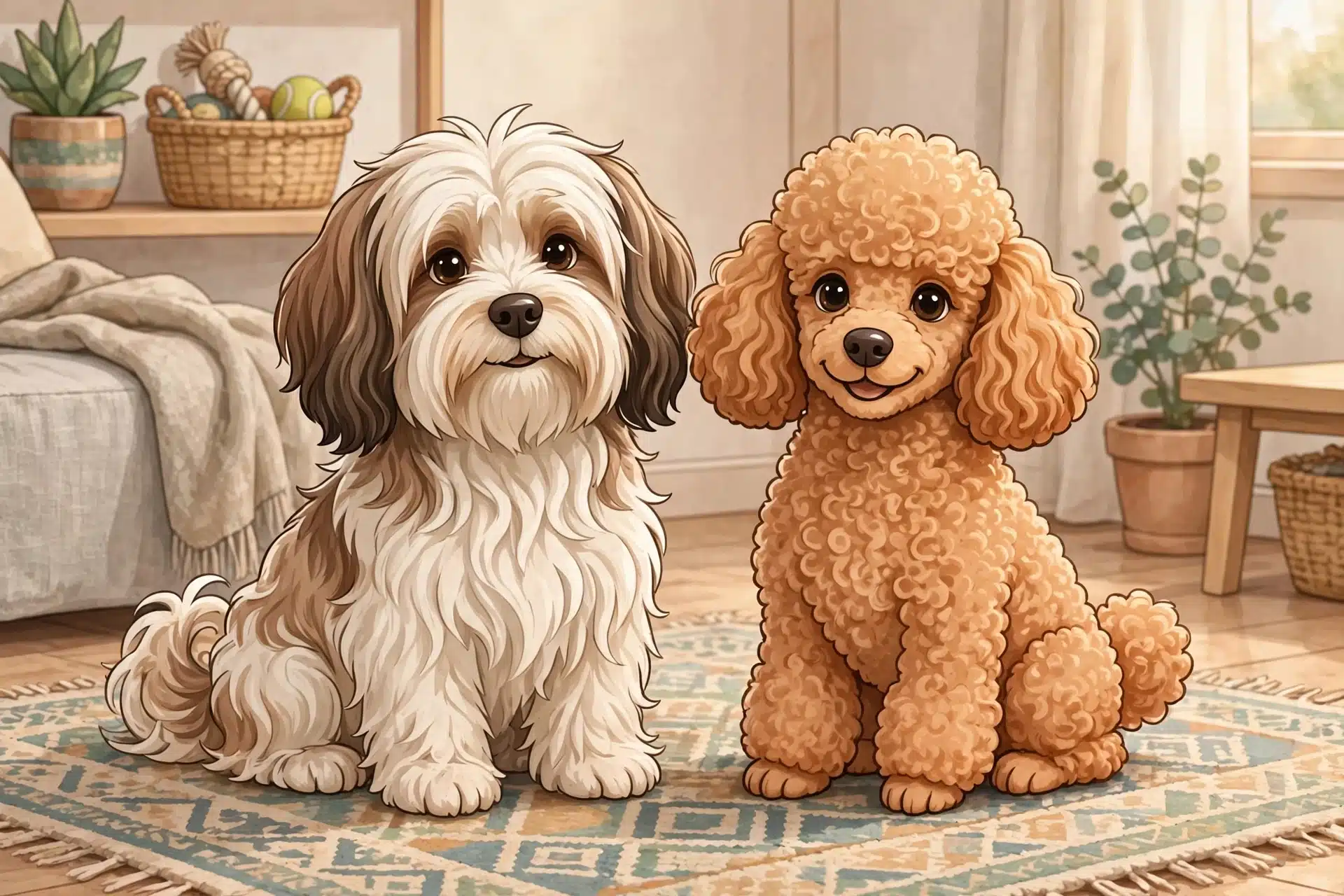
A Havapoo puppy is a first-generation cross between a Havanese and a Poodle, usually a Toy or Miniature Poodle. The mix exists for one main reason: the Havanese brings a soft, people-focused personality, and the Poodle adds a low-shedding coat many families want. It is a companion breed, not a working one, so expect a dog that wants to be near you most of the day.
The Two Parent Breeds
The Havanese is the national dog of Cuba, bred for centuries as a lap and companion dog. Adults weigh 7 to 13 pounds and stand about 8.5 to 11.5 inches tall, according to a Havanese growth chart from Pawlicy. The Poodle side matters more for size. Breeders pair Havapoos with either a Toy Poodle (4 to 6 pounds) or a Miniature Poodle (10 to 15 pounds), as PetMD’s breed profile explains. That choice shapes nearly everything about your puppy’s adult frame.
How Big Will Yours Actually Get?
Most full-grown Havapoos weigh 7 to 20 pounds and stand 8 to 15 inches at the shoulder. The range is wide because the Poodle parent’s size sets the ceiling. Ask the breeder the exact weight of both parents, and ask whether the Poodle was a Toy or a Miniature. A Toy Poodle cross usually lands under 12 pounds; a Miniature cross can reach 15 to 20. Puppy paws and body proportions give hints, but parent weights predict far better than any guess.
Small Dog, Real Consequences
Under 15 pounds sounds convenient, and it is, but it changes daily care. Small breeds burn energy fast and can drop into low blood sugar if meals stretch too far apart, so young puppies often need three or four feedings a day. Their joints and knees are also more fragile, so stairs and rough play with big dogs deserve caution. Size also shapes the choice between Havapoo and Cavapoo coat care, since a smaller frame means quicker brushing sessions but the same matting risk.
Temperament, Exercise, and Time Alone
The Temperament Range
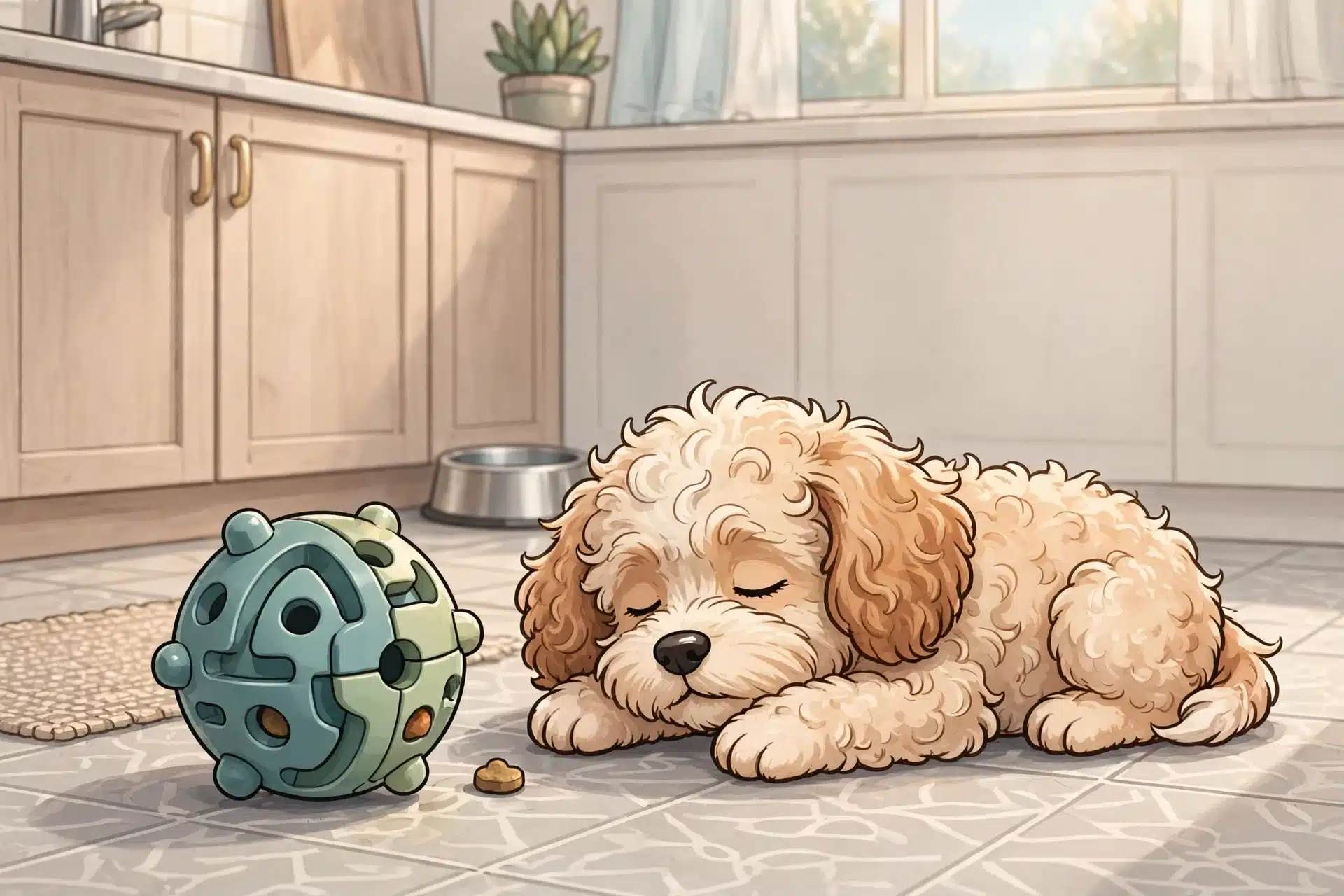
Most Havapoo puppies are cheerful, people-focused, and quick to learn, but the mix produces real variation. Some lean toward the Havanese side: soft, outgoing, and eager to follow you from room to room. Others show more Poodle: brighter, busier, and more independent. Within one litter, you can meet a bold puppy and a cautious one from the same parents. Ask the breeder which pups handled new sounds and strangers well during the socialization window, because that early pattern often predicts adult personality more than coat or size does. Fit matters more than fluff here.
Daily Exercise and Mental Work
A Havapoo needs less mileage than a sporting breed but more structure than most toy dogs. Plan on two or three short walks a day, plus a session of fetch or tug. Total active time of 30 to 45 minutes usually covers it. Mental work counts just as much. Puzzle feeders, short training reps, and sniffy walks tire a small dog faster than distance does, so rotate activities through the week. Skip strenuous jumping while the puppy’s joints are still developing; short, frequent outings beat one long haul for a 10-pound body.
Living With a Puppy That Hates Being Alone
Both parent lines were bred for companionship, so this breed tolerates solitude poorly. PetMD notes Havapoos don’t enjoy being alone for long and may bark excessively without enough attention, which is the early edge of separation anxiety. Build tolerance slowly: leave for a few minutes, return calmly, and extend the time over weeks rather than setting a fixed deadline. A midday visitor, a dog-walker, or a work-from-home schedule makes the biggest difference. If you want a head start, work through a socialization and training plan during the first month home.
What to Ask for and What to Watch For
A Havapoo inherits traits from both parents, so the health question is really two questions. Havanese lines and Poodle lines each carry their own risks, and a good breeder screens for both sides before breeding at all. Ask for proof, not promises.
Conditions Both Parent Breeds Can Pass On
The main shared concerns are eye disease, loose kneecaps, and heart problems. Havanese can carry inherited eye conditions such as cataracts and retinal changes, plus a small risk of liver shunts. Poodles add progressive retinal atrophy, a condition that causes gradual blindness, and both breeds can pass on patellar luxation, where the kneecap slips out of place. Small breeds also show higher rates of dental crowding, so start teeth care early. DNA panels let breeders spot carriers of retinal disease before a litter exists.
What Health Records to Ask For
A breeder should give you documents, not verbal assurances. Ask for:
- OFA patellar luxation results for both parents
- CAER eye exam certificates within the past year
- DNA panel results covering progressive retinal atrophy and other inherited eye disease
- Cardiac exam notes from a veterinarian
- Your puppy’s records: deworming dates, vaccination history, and a vet check note
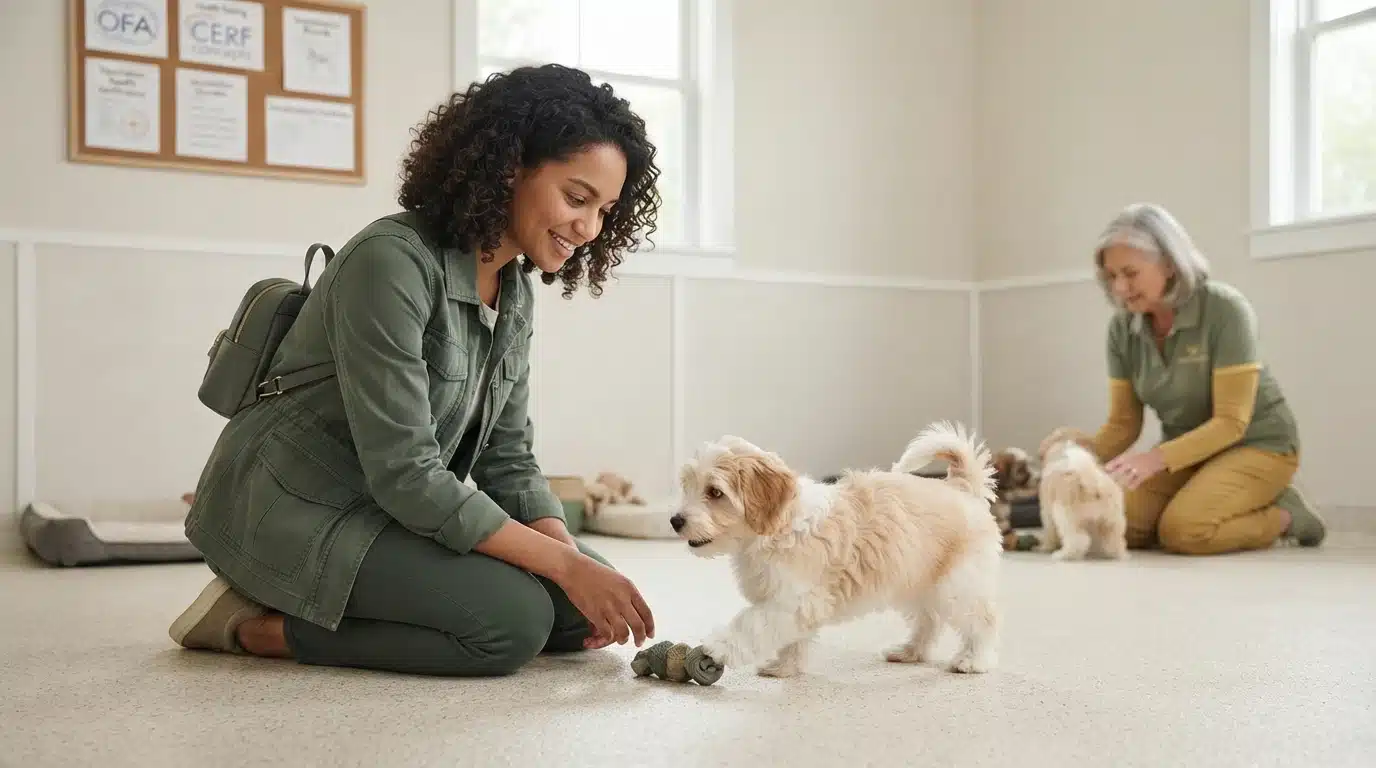
You can verify parent health results yourself in the OFA’s public databases, which is worth the ten minutes. Responsible programs like Sage Puppies walk buyers through these records during matching, so ask questions until the paperwork makes sense. For a deeper checklist, see the Havanese Club of America’s health and testing guide.

The First Year of Veterinary Care
Book a puppy exam within a few days of bringing your Havapoo home, even if the breeder’s vet already cleared the pup. Most litters finish core vaccines around 16 weeks, and your vet will set a rabies schedule for your state. Ask about parasite prevention, spay or neuter timing for small breeds, and weight checks at each visit. Small puppies burn energy fast, so also ask what low blood sugar looks like and when to feed more often. Keep every record in one folder; it helps at boarding, grooming, and future vet visits.
Watch for: a breeder who resists sharing parent test results or claims mixed breeds “don’t need” screening. Both parent breeds have documented hereditary risks, so testing matters more, not less. If answers get vague, walk away.
For a printable list of what to request, our guide to Havanese puppy health tests covers OFA hips, patellas, eyes, and DNA results in detail.
Coat, Grooming, and Everyday Care
Are Havapoos hypoallergenic? Not truly. No dog is allergy-free, and a Havapoo puppy is no exception. The breed sheds very little because both parent lines carry low-shedding coats, which means less dander spread around your home. Many mild allergy sufferers do fine with a Havapoo, but spend time with one before committing if allergies are a concern.
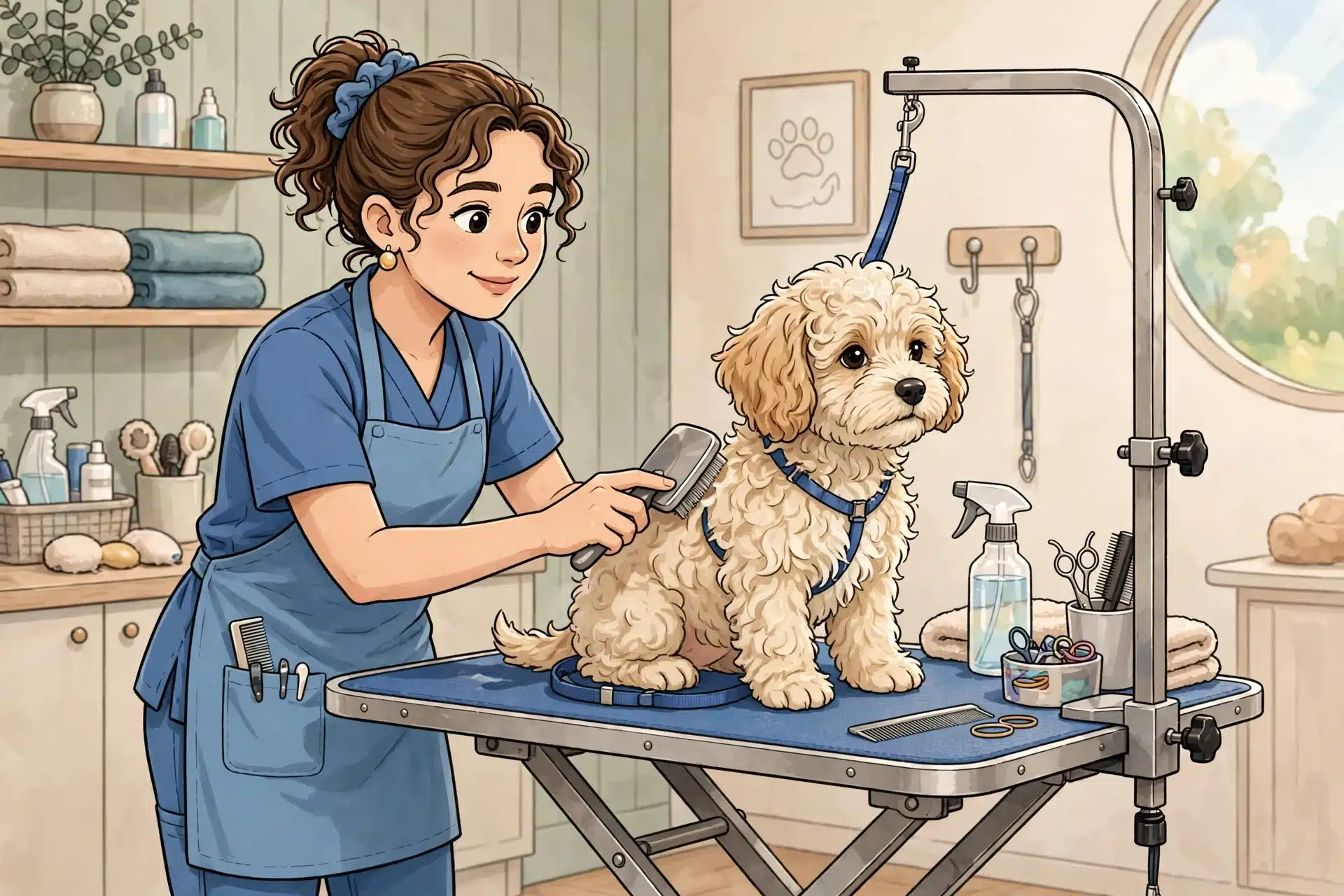
Why a Low-Shedding Coat Still Needs Daily Brushing
Low shedding sounds like low work. It is the opposite. Hair that does not fall out stays in the coat and tangles, so mats form fast behind the ears, under the collar, and in the armpits. Brush down to the skin three to four times a week at minimum, and daily during the coat change around 6 to 12 months. A slicker brush plus a metal comb catches tangles a brush alone misses.
Face, Eyes, and Ears
Tear staining shows up on lighter coats. Wipe under the eyes daily with a damp cloth and keep the face trimmed, since hair rubbing the eyes causes more tearing. Trapped moisture also drives ear problems. Havapoos can be prone to ear infections, according to PetMD’s breed health profile, so check ears weekly and clean after swimming or baths.
Bathing and Skin
Bathe every three to four weeks, or when the coat feels dirty. Use a gentle dog shampoo, rinse well, and dry the coat fully, because damp undercoat breeds skin trouble. Brush before the bath, not after, or you’ll set mats in place. Most pet families keep a short puppy cut, which trims brushing time dramatically. Rover’s haircut guide shows the common styles with photos.
What a Havapoo Puppy Costs and What Happens After You Buy
A Havapoo puppy from a small, health-tested program typically costs $3,500 to $4,500, and budget programs list closer to $750 to $1,200 for a vet-checked pup. The price gap usually reflects parent testing, raise-at-home care, and how much support the breeder offers after pickup, so ask what each price includes before comparing.
The Purchase Price and What It Covers
Most deposits sit between $300 and $500, applied to the total. A boutique price should cover parent genetic testing, the puppy’s first vet exam, age-appropriate vaccines and deworming, and the breeder’s time socializing the litter. Cheaper listings sometimes skip several of those steps, so ask for the health records in writing.
At Sage Puppies, published pricing falls in that $3,500 to $4,500 range, and the page explains what the program includes.
Ongoing Costs for the Dog’s Whole Life
The purchase is the smallest part of the bill. Food, grooming, and vet care add up for 12 to 15 years. These planning numbers are illustrative, not measured averages:
| Item | Illustrative Yearly Cost |
|---|---|
| Quality small-breed food | $300 to $500 |
| Routine vet care and vaccines | $300 to $600 |
| Professional grooming, every 6 to 8 weeks | $500 to $900 |
| Toys, treats, and replaceable gear | $100 to $250 |
First-year totals run higher once you add spay or neuter surgery, a crate, and puppy classes. A separate emergency fund matters too; an unexpected illness at an emergency clinic can cost several thousand dollars.
Contract, Registration, and Getting Your Puppy Home
Read the contract before you pay anything. Ask for these terms in writing:
- Deposit and refund conditions
- What happens if the puppy gets sick in the first days
- Return or rehome expectations
- Spay or neuter requirements, if any
Note that mixed breeds like the Havapoo cannot register with the AKC, so any “papers” would come from a mixed-breed registry instead.
Families near South Jordan, Utah can plan a pickup; buyers elsewhere should confirm exactly how delivery works, who travels with the puppy, and what it costs before sending a deposit.

If the checklist above matches how your family already lives, you’re ready for the fun part. Browse Sage Puppies’ available Havapoo puppies, review the pricing and reservation page, or start the application at Sage Puppies. Cassie matches each puppy to the right home, locally in Utah or with nationwide delivery.
Frequently Asked Questions
Q1: What should you know about Havapoo puppies before buying one?
Verify parent health testing, meet the mother, confirm adult size, read the contract, and plan for grooming and company. Good Havapoo puppy info comes from documents, not promises, so ask for records in writing.
Q2: Are Havapoos hypoallergenic?
No dog is truly allergy-free. Havapoos shed very little, which reduces dander, but spend time with one first if allergies matter.
Q3: How big does a Havapoo get?
Most reach 7 to 20 pounds and 8 to 15 inches. A Toy Poodle parent usually keeps the pup under 12 pounds; ask both parents’ weights.
Q4: How much alone time can a Havapoo handle?
Not much at first. Build tolerance in minutes over weeks, and plan a midday visit or work-from-home schedule.
Q5: How often do Havapoos need grooming?
Brush three to four times weekly, bathe every three to four weeks, and book professional trims every 6 to 8 weeks.
Q6: Can Havapoos be AKC registered?
No. Mixed breeds cannot register with the AKC, so treat any “papers” from a mixed-breed registry as a record, not proof of quality.
Conclusion
The right Havapoo puppy for your home comes down to paperwork and lifestyle, not looks. Verify parent health testing, ask for the mother, and confirm adult size by the parents’ weights. Read the contract before any deposit, and budget for grooming and vet care that outlasts the purchase price by years. Most importantly, be honest about alone time: a breed this people-focused struggles with long days empty. Good Havapoo puppy info lives in records you can check, from OFA results to vaccination dates. If those documents hold up and your household can give the daily company this mix needs, you’re ready, and the right puppy will be worth every question you asked.