Quick Summary: Havapoos and Maltipoos both shed very little once their adult coats settle, so coat texture matters more than breed name. A curly Maltipoo often traps loose hair best, while a silky Havapoo may leave more visible strands but is easier to brush. Choose based on the individual puppy, coat care time, and allergy needs, since neither breed is hypoallergenic.
Brush a Maltipoo and you might find a small pile of hair in the comb. Sweep under a Havapoo’s couch cushion and you might wonder where that fuzz came from. So which sheds less? On average, Havapoos shed more consistently little, while a curly-coated Maltipoo can shed less than an individual Havapoo. The paperwork matters less than the coat your puppy grows into.
That is why Maltipoo shedding and questions like “do Havapoos shed” need honest answers, not marketing. Both breeds get sold as low-shedding, and allergy-minded families deserve better than hype. This guide covers how each coat works, the puppy coat change, grooming effort and allergen reality, then finishes with a checklist for judging one puppy, not a breed label.
Havapoo vs Maltipoo Shedding: At a Glance
| Havapoo | Maltipoo | |
|---|---|---|
| Average shedding | Low to minimal for most individuals; some retain more of the Havanese double coat and shed more seasonally | Typically sheds very little; a soft, silky, Maltese-type coat can release more loose hair than a curly one |
| Coat texture and matting risk | Long silky or wavy coat; moderate matting risk, higher in the furnishings behind the ears and on the legs | Curly, wavy or fine silky coat; fine silky coats mat readily at the ears, armpits and behind the legs |
| Grooming routine | Regular brushing and combing plus scheduled professional grooming; coat length depends on the individual puppy | Frequent brushing or combing to prevent mats, with trims roughly every 6 to 8 weeks for most coats |
| Allergen and dander considerations | Produces the same dog allergens as any dog; low visible shedding does not mean lower medical risk | Poodle ancestry reduces loose hair but not dander, saliva or urine allergens; no dog is hypoallergenic |
| Best fit for the home | Households wanting a small companion with minimal loose hair and a willingness to maintain a longer coat | Households comfortable with frequent coat handling and wanting a compact, tidy-looking small dog |
How the Havapoo and Maltipoo Coats Differ
Havapoo
The Havapoo is a Havanese and Poodle cross, usually a small companion dog with a long, silky or soft wavy coat. Because both parent breeds are considered low shedders, most Havapoos shed very little, though some keep more of the Havanese double coat and drop extra hair seasonally. It suits households that want minimal loose hair and will keep up with brushing.
Key strengths
- Generally low shedding from two low-shedding parents
- Long, silky or wavy coat with a soft, pettable texture
Maltipoo
The Maltipoo pairs a Maltese with a Poodle, producing a curly, wavy or fine silky coat that most owners describe as low shedding, since the coat tends to trap loose hair. Fine silky coats can release more hair than curly ones and mat readily at the ears and armpits. This mix fits homes comfortable with frequent coat handling that want a compact, tidy small dog.
Key strengths
- Typically sheds very little
- Curly coats hold loose hair well and look neat between trims
Which Sheds Less: Havapoo or Maltipoo?
Both breeds shed very little, and there is no reliable difference between them. A Havapoo mixes the Havanese with a Poodle, so its coat is a single low-shedding layer. A Maltipoo mixes the Maltese with a Poodle and grows hair that sheds about the same minimal amount. Which one drops less visible hair on your couch comes down to the individual puppy, not the breed name. Three reasons explain why:
- Both parents pass on low-shedding coats. Havanese, Maltese, and Poodles all shed far less than double-coated breeds.
- Poodle genes tighten the coat. Curly hair traps loose strands instead of releasing them.
- Individual puppies vary. Coat type and texture depend on which parent’s genes show up.
The Short Answer for Families Shopping Now
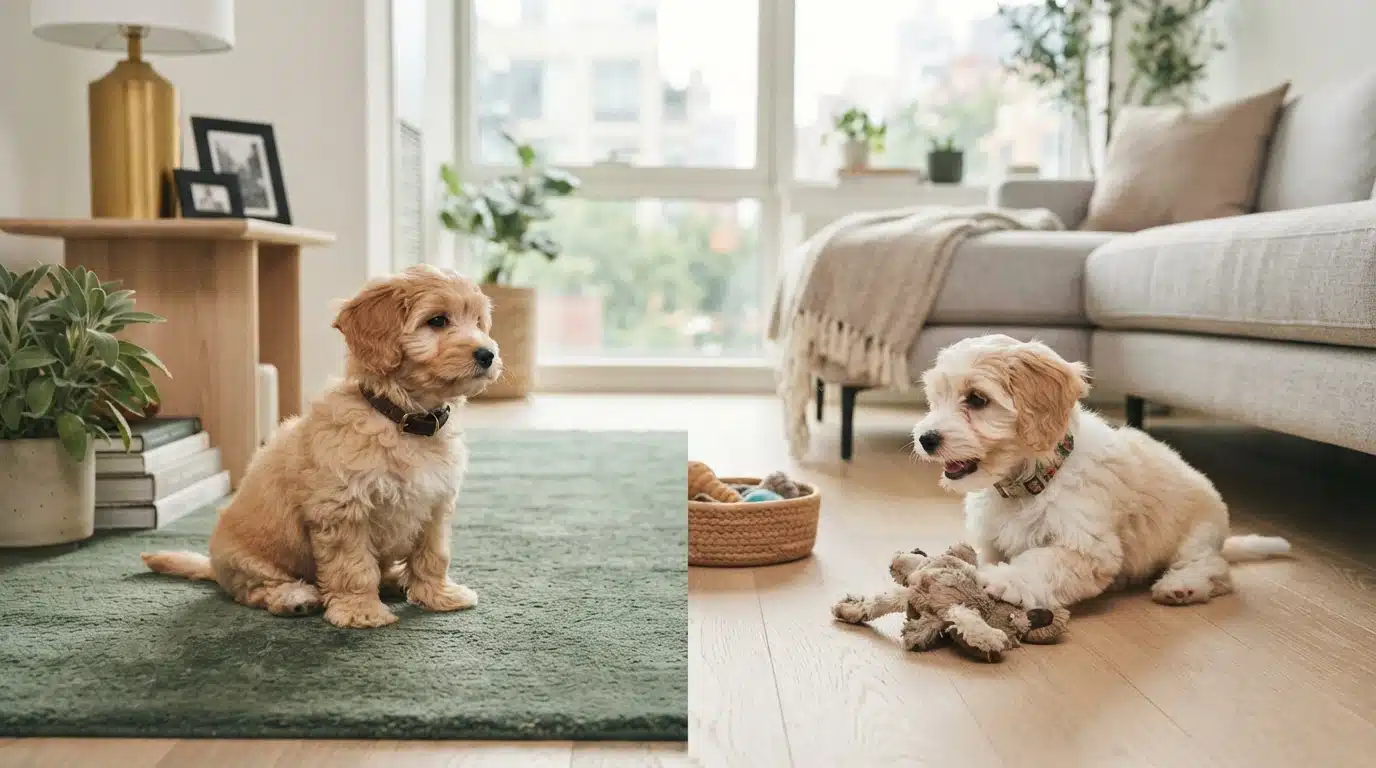
Shop for the puppy, not the label. Ask each breeder which parent contributed the coat, then meet the puppy in person if you can. A curly, dense, Poodle-like coat usually sheds the least visible hair but mats fastest. A silky, straighter coat sheds a bit more and shows loose strands on dark clothing. Neither breed is a bad choice for a shedding-sensitive home, so pick based on grooming time, temperament, and how the litter’s coats feel to your hand. Families comparing grooming routines can see how coat type changes the workload in our Havapoo vs Cavapoo grooming comparison.
Why Both Breeds Shed Less Than Most
Both mixes inherit the same advantage: a single hair coat instead of the double coat most dogs carry. Double-coated breeds push out dense undercoat each spring, which is when you see fur tumbleweeds. Havanese and Maltese grow one soft layer, and Poodles add a slow-growing, curly texture that holds loose hair in place until you brush it out. The trapped hair is a trade-off, not a free ride. It collects near the skin and forms mats fast, so weekly combing matters more for these mixes than for a shedding breed. That is also why shedding claims on breeder sites deserve a careful read; “hypoallergenic” is a marketing word, not a trait any breed actually has.
Coat Texture Decides More Than the Breed Name
Ask “which sheds less” and most answers stop at the breed name. That misses the point. Within both Havapoos and Maltipoos, the coat each puppy inherits varies a lot, and that variation matters more for shedding and grooming than the label on the paperwork.

Havanese Ancestry and the Double Coat Question
Havanese genetics give Havapoos their long, soft hair. Here is the twist many owners miss: despite the “hypoallergenic” reputation, the Havanese breed standard actually describes an abundant, silky double coat. Hairs shed, but slowly, so loose hair mostly stays trapped in the coat until you brush it out. A Havapoo puppy that leans toward the Havanese parent tends to have straighter, silkier hair that holds loose strands instead of dropping them on the couch. That is good for your floors and less good for mats, so brushing matters either way. If you want a deeper look at coat care across these mixes, the grooming needs of Havanese mixes are worth comparing side by side. The AKC’s Havanese breed profile covers the coat types and shedding expectations in detail.
Curly, Wavy and Silky Maltipoo Coats
Maltipoos show the same texture spread, just from the Poodle side. A tight curly coat behaves like a Poodle’s: loose hairs stay caught in the curls, so you see very little on your clothes. A silkier, straighter coat sheds slightly more visibly and needs the same matting prevention as a Havanese-type coat. Neither texture guarantees a specific adult look from a photo of the puppy, so ask breeders what the parents’ coats are like. The Havanese Club of America breed standard shows how much wording shapes expectations even within one breed.
The Puppy Coat Change Is When Shedding Gets Noticed
Both breeds start out with a soft puppy coat that looks almost shed-proof. Then the puppy coat blow out hits, usually between 4 and 6 months, and loose hair shows up on floors, clothes and car seats for a few weeks. This stage surprises many new owners, so it helps to know what is normal before you judge a breed’s adult shedding.
What a Loose Puppy Coat Means for Adult Shedding
A puppy coat is fine, fluffy and designed to be replaced. The AKC explains that puppies shed this coat between 4 and 6 months of age, though timing varies by breed and mix. That temporary hair loss says little about the adult coat underneath. Adult Havapoos and Maltipoos carry hair, not fur, so once the transition ends, most shed very little day to day. A Havapoo leans on the Havanese side, whose ancestors carry a soft double coat, so texture can run silky to wavy. A Maltipoo usually tips curlier, closer to the Poodle mix low shedding pattern. Judge shedding at 12 months, not at 5.
Keeping Hair in the Brush Instead of on Your Sofa
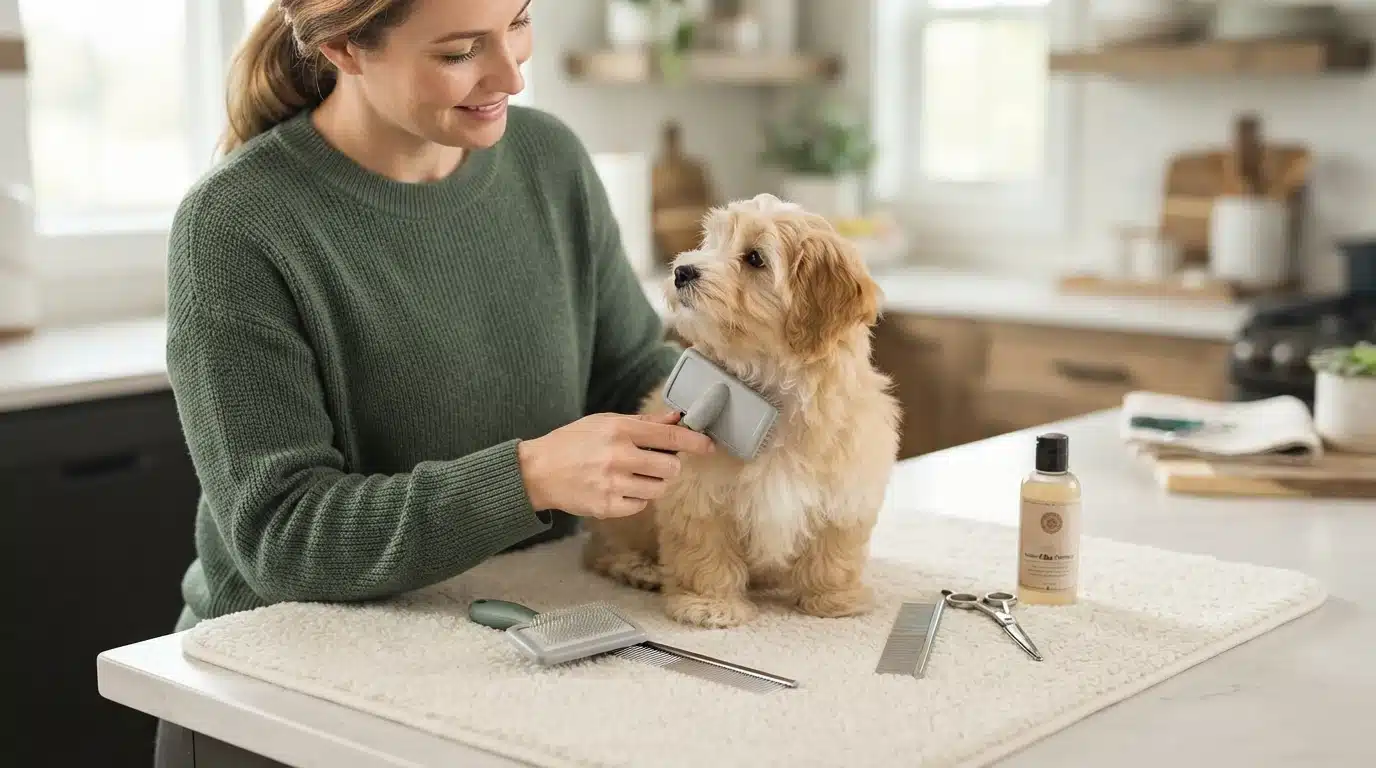
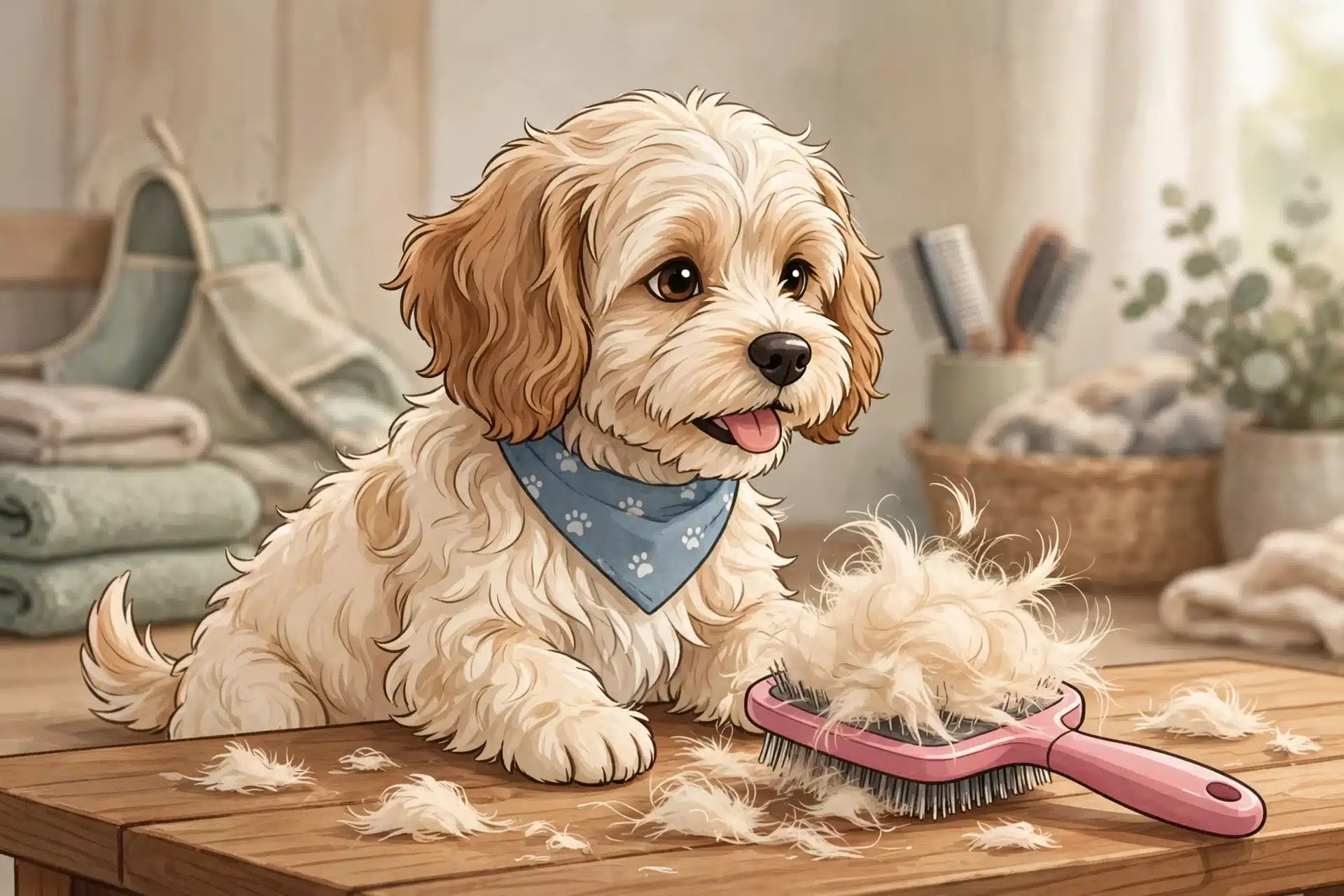
During the change, brushing two or three times a week catches the dead puppy hair before it lands around your home. A slicker brush plus a metal comb handles matting prevention in small breeds, since loose coat tangles fast against the incoming adult hair. After the transition, a short weekly session usually keeps both breeds tidy, though curlier coats need more frequent combing to stop mats at the collar and behind the ears. Our guide to Havanese coat care and shedding covers this routine in more depth for the silkier coat types.
Tip: If loose hair spikes suddenly outside the 4 to 8 month window, check with your vet. Patchy loss can signal skin issues, not a normal coat change.
Shedding and Allergies Are Two Different Questions
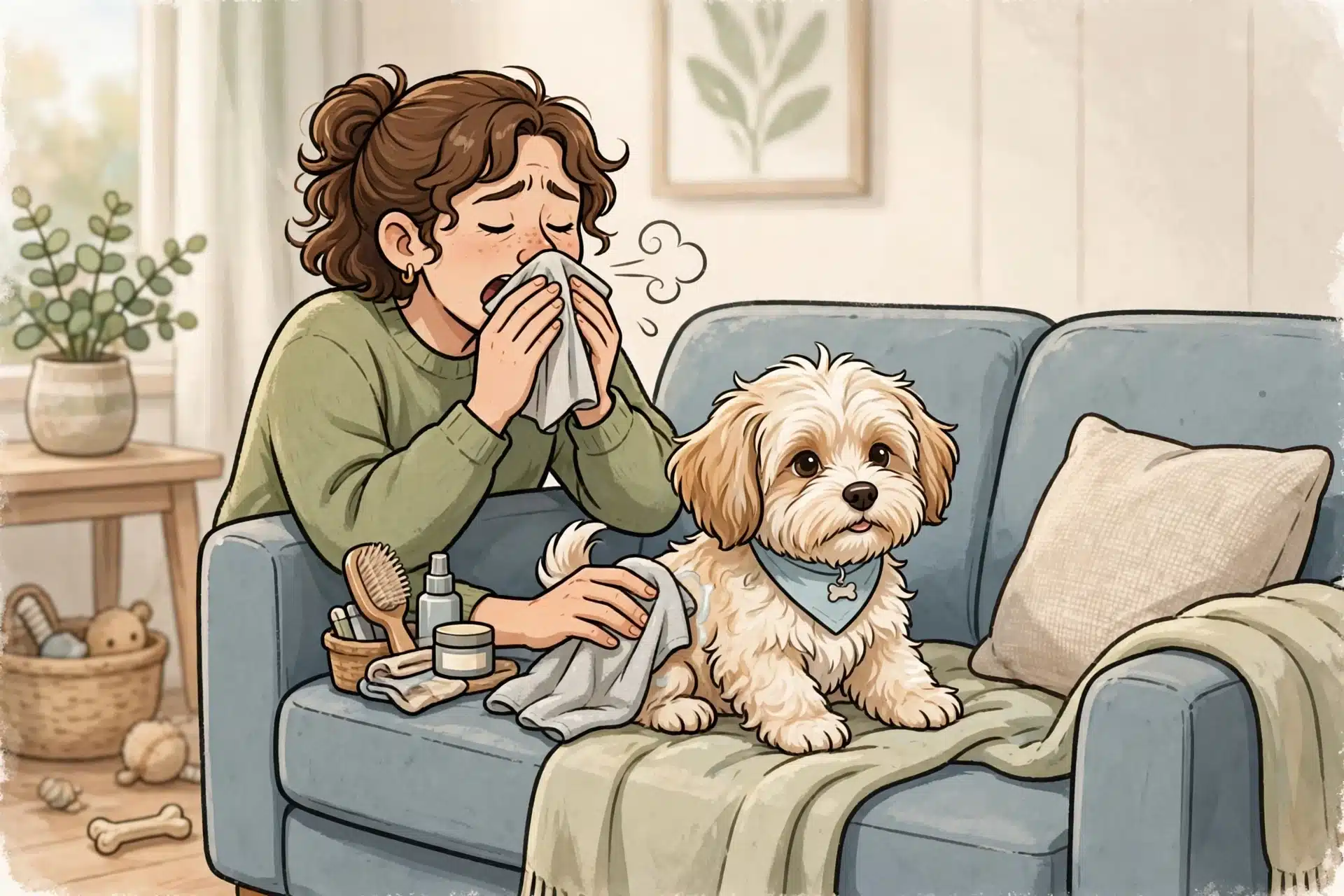
Shedding controls the hair you sweep up. Allergies come from a protein, not the hair itself. The main dog allergen, Can f 1, is made in the tongue and shows up in saliva, dander and hair, so every dog carries it. Research has even found higher Can f 1 levels in the coats of breeds labeled hypoallergenic than in other breeds, so less hair on the floor does not mean less allergen in the air.
What Low Shedding Actually Changes
A low-shedding coat holds loose hair on the dog instead of dropping it around your home. That means fewer tumbleweeds on the sofa and less fur on your clothes. What it does not change is the allergen itself. Because Can f 1 rides on dander and saliva, both a Havapoo and a Maltipoo can still trigger a reaction in a sensitive person, even at 12 months old with a settled adult coat. So ask the two questions separately: “How much hair will I clean up?” and “Will my allergies flare?” For shedding, a Maltipoo with a tight curly coat often sheds less visibly than a silky-coated puppy. For allergen exposure, the honest answer is that neither breed is allergy-free, and no ethical breeder should promise one. Grooming matters too, since mats trap dander and saliva against the skin, and coat care differs between mixes, as our Havapoo and Cavapoo grooming comparison shows.
Talking With a Clinician Before You Commit
If allergies are in the picture, spend time with the breed before you buy. Visit the puppy in person, hold it, let it lick your hands, and note how you feel over the next day or two. An allergist can run tests to confirm which proteins affect you, and the AAAAI notes that allergy severity varies a lot between individual dogs of the same breed. That hands-on hour tells you more than any coat chart.
Tip: Ask breeders whether you can meet an adult parent dog. Adult coats show the shedding and dander level your puppy is more likely to grow into.
Grooming Effort Is the Practical Cost of a Low-Shedding Coat
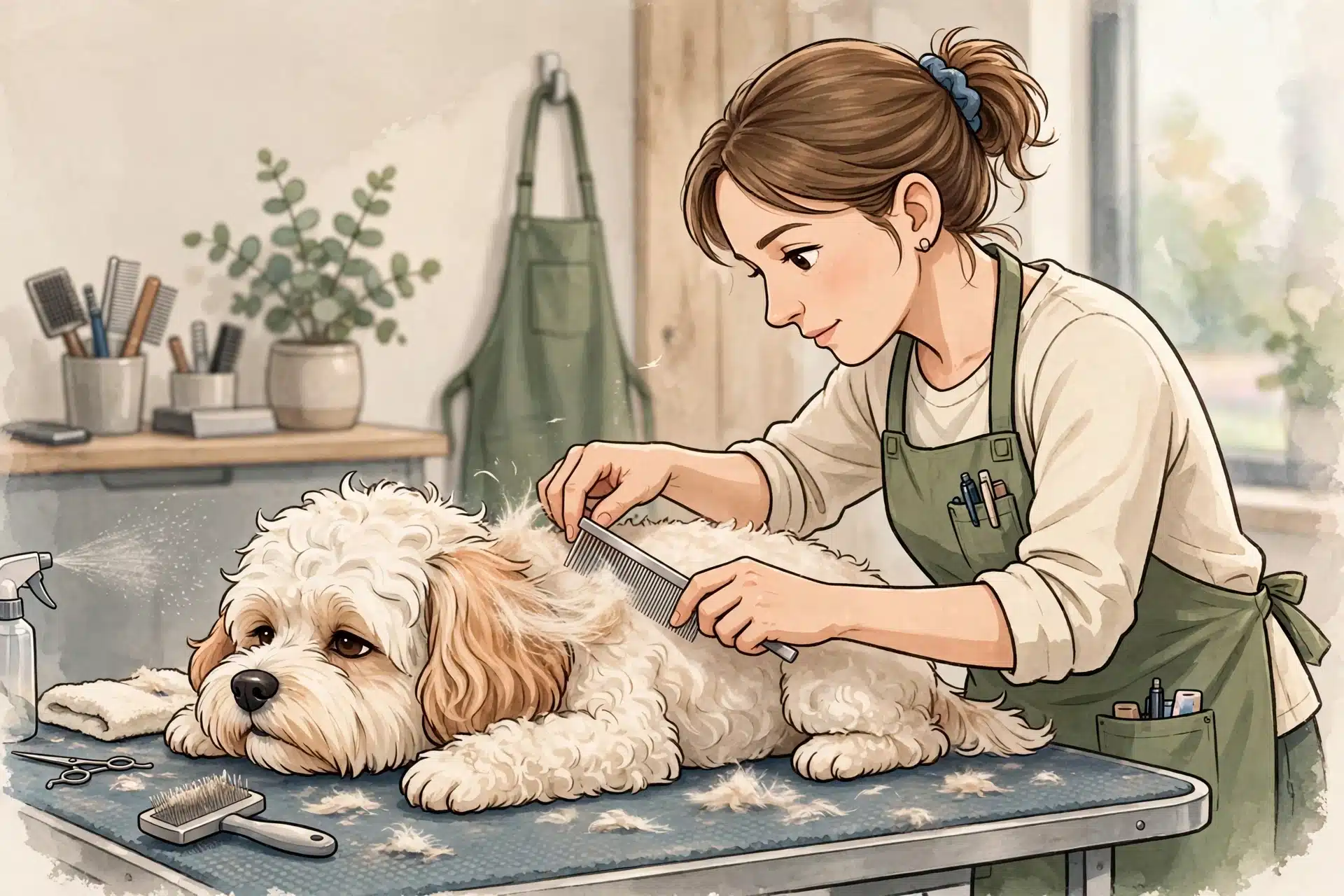
A coat that holds its hair holds everything else, too. Loose undercoat falls out on its own, but a Havanese-type or Poodle-type coat keeps dead hair trapped until a brush pulls it free. Skip that step for a week or two and trapped hair turns into mats, and mats turn into a shaved dog at the groomer. Low shedding really means high maintenance.
Time at Home Is the Real Deciding Factor
Neither breed wins here, because both demand the same core habit: a few minutes of brushing and combing most days, plus a professional trim every four to six weeks. The difference is texture. A Maltipoo with a tight, curly coat can knot quickly but often hides tangles deep in the curl. A Havapoo with a silkier coat shows tangles on the surface, so problems are easier to spot early. Puppies need short, calm sessions so brushing feels normal before the coat matures. If your schedule cannot fit daily coat care, be honest about it now, because a matted dog costs more in stress and grooming bills than the brushing ever will.
Matting Hot Spots to Check Weekly
Run your fingers through these spots every week, since they mat first and hide it longest:
- Behind the ears, where rubbing and moisture meet
- The armpits and chest, where the harness or legs create friction
- Around the collar, a classic hidden knot zone
- The base of the tail and groin, especially after potty breaks
- Between the paw pads, where debris packs in
Work through small tangles with your fingers and a metal comb before they tighten. Use a detangling spray on stubborn spots instead of ripping the comb through. If a mat sits close to the skin, leave it for the groomer; pulling at it can bruise the skin underneath.
For the full routine, brush types and a month-by-month plan, our guide to shedding and coat care for these breeds walks through the details.
Which Should You Choose: Havapoo or Maltipoo?
Both breeds shed very little once their adult coats settle, so your choice comes down to fit. Match temperament, grooming budget and coat texture to your home. Use this checklist before you commit to either puppy.
A Buyer Checklist for Coat and Shedding Expectations
- Ask the breeder which parent’s coat the puppy seems to favor.
- Meet the parents if you can, since adult coats predict adult coats.
- Plan to judge shedding at 12 months, not at 8 weeks.
- Confirm the grooming schedule and cost for a wavy or curly coat.
- Spend time with the puppy if allergies are a concern, because any dog can carry the Can f 1 allergen.
When a Havapoo Is the Better Fit
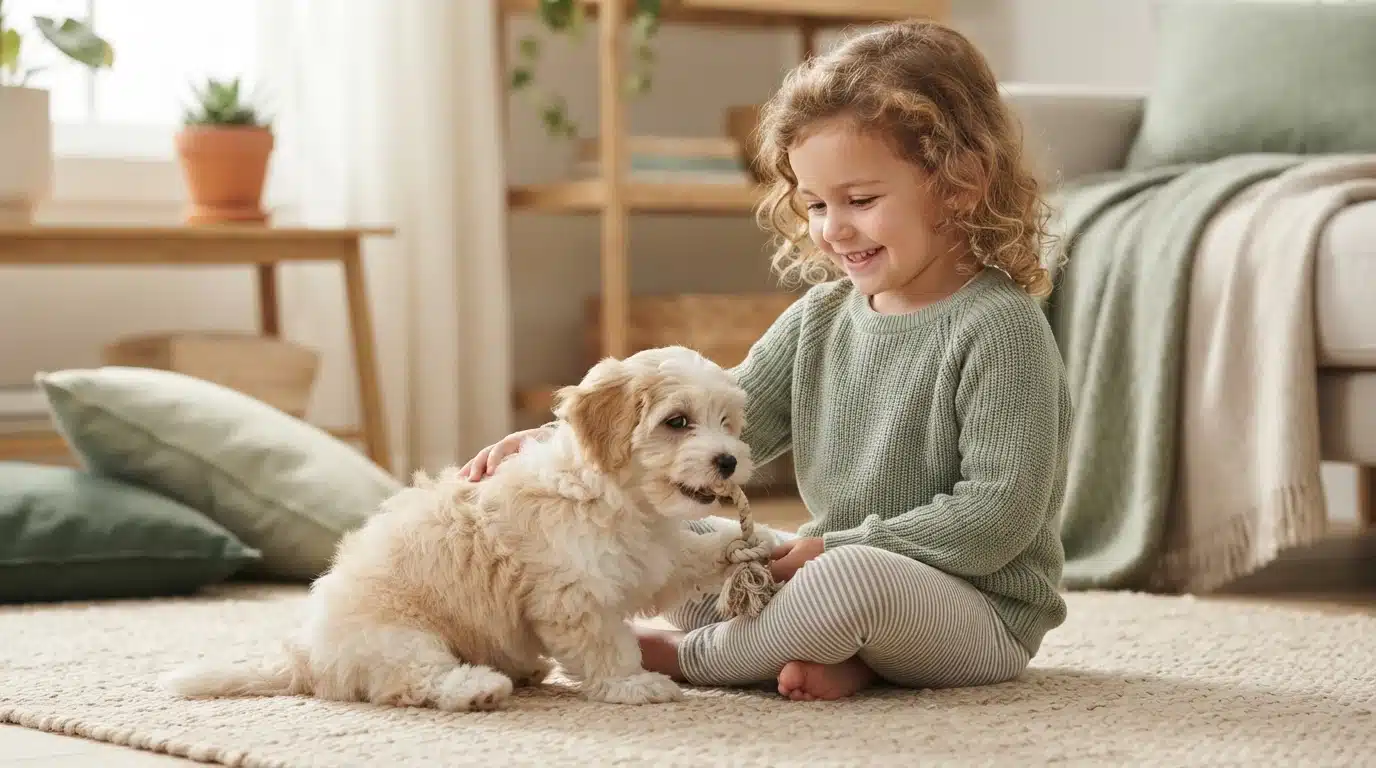
Pick a Havapoo if you want the Havanese side in the mix: a sturdy little companion with a silky, often wavy coat that stays manageable between trims. Havapoos tend to suit families who want a sociable dog that handles kids and apartment life well. Their coat usually sheds lightly, but the silky strands can mat near the collar and behind the ears, so brushing two or three times a week matters. If you are weighing local options, our guide to Havapoo puppies before you buy walks through the questions worth asking first.
When a Maltipoo Is the Better Fit
Pick a Maltipoo if you prefer a tighter, curlier coat that sheds even less visible hair. That curl trades easy for high maintenance: daily brushing and more frequent professional grooming to stop mats from forming close to the skin. Maltipoos often suit quieter homes, retirees and owners who enjoy a grooming routine. Sensitive allergy households sometimes lean curly, though no breeder can promise a reaction-free dog. Either way, the honest answer is simple: both are low-shedding, and the best choice is the one whose coat care you will actually keep up with.

Either breed can shed less hair once its adult coat settles at 12 months, so the better question is which puppy fits your home. The team at Sage Puppies matches families with Havanese, Havapoo and Cavapoo puppies through an honest, owner-run process. Start with the application and meet your match.
Frequently Asked Questions
Q1: Do Havapoos or Maltipoos shed less hair?
Both shed very little once adult coats settle. A tight, curly Maltipoo coat often sheds the least visible hair, while a silky Havapoo may show a few more loose strands. Judge the individual puppy’s coat texture, not the breed name, and recheck shedding at 12 months.
Q2: Are Havapoos low shedding compared to Maltipoos?
Yes, Havapoos are low shedding, but so are Maltipoos. The Havapoo’s Havanese ancestry can add a soft double coat, so some individuals drop more hair seasonally. A Maltipoo’s curls trap loose hair, though silky coats shed a bit more visibly.
Q3: Which is better for allergies, Havapoo or Maltipoo?
Neither. All allergies come from the Can f 1 protein in dander and saliva, not the hair itself, so both breeds can trigger reactions. Shedding and allergen exposure are separate questions: less loose hair does not mean less allergen. Spend time with the puppy and ask an allergist before you buy.
Q4: Do Havapoos shed at all?
Yes, a little. Most shed minimally day to day, but puppies go through a coat blow out between 4 and 6 months, and some Havapoos with more Havanese double coat shed extra seasonally.
Q5: How much grooming does a low-shedding coat need?
More than most owners expect. Brush most days, check matting hot spots weekly behind the ears and at the collar, and schedule professional trims every four to six weeks.
Q6: Can I tell a puppy’s adult coat at 8 weeks?
Not reliably. Puppy coats are soft and temporary, so meet the parents if possible and judge the adult coat closer to 12 months.
Conclusion
Neither breed wins the shedding contest outright. Both drop very little hair once adult coats settle, and coat texture matters more than the breed name. A curly Maltipoo often hides loose hair best, while a silky Havapoo shows a few more strands but is easier to brush. Allergies are a separate question: the Can f 1 protein rides on every dog, so spend time with the puppy before you commit. Judge shedding at 12 months, meet the parents if you can, and match the grooming routine to your real schedule. The right pick is the puppy whose coat care you will actually keep up with, not the one with the better label.