Quick Summary: Most Havapoos reach an adult weight of 7 to 15 pounds and a shoulder height of 8.5 to 11.5 inches, with height settling by 6 to 8 months and weight by 9 to 12 months. Their parents’ sizes, especially the Havanese and Toy Poodle, set the likely range, so ask the breeder for both adults’ weights and track your puppy weekly through 6 months, then monthly. Steady gains and healthy body condition matter more than hitting an exact number, and Sage Puppies provides each puppy’s current weight to help families plan for their adult size.
There is a moment in every Havapoo litter when the numbers start telling the truth. A ten-week-old pup that weighed 2.4 pounds on Monday might tip 3.1 pounds by Friday. A breeder who weighs every pup the same way, in the same bowl, on the same scale, sees growth curves before anyone else notices a thing. If you are trying to predict havapoo size by age at home, you can build the same picture.
The problem is that mixed breeds give no fixed answer. A Havapoo inherits size from both the Havanese and the Toy Poodle, so pups in one litter can land several pounds apart at maturity. This guide walks through a month-by-month chart, explains how big does a havapoo get in real weight and height ranges, and shows when a full grown havapoo stops growing. At Sage Puppies in South Jordan, Utah, weighing each pup on a set schedule is part of how we match families with the right fit.
How Much Should a Havapoo Weigh at Each Month?
Havapoo Size by Age at a Glance
Most Havapoos fall between 7 and 15 pounds as adults, so monthly weights stay small. Use this table as a ballpark, not a promise, because the Poodle parent’s size shifts the whole curve.
| Age | Toy Havapoo | Mini Havapoo |
|---|---|---|
| 8 weeks | 2-3 pounds | 3-5 pounds |
| 4 months | 4-6 pounds | 6-9 pounds |
| 6 months | 5-8 pounds | 8-12 pounds |
| 12 months | 8-14 pounds | 12-20 pounds |
So a four-month-old pup sitting near 5 pounds is right on track. Sage Puppies’ Havapoo size guide breaks down the Toy and Mini adult ranges in detail.
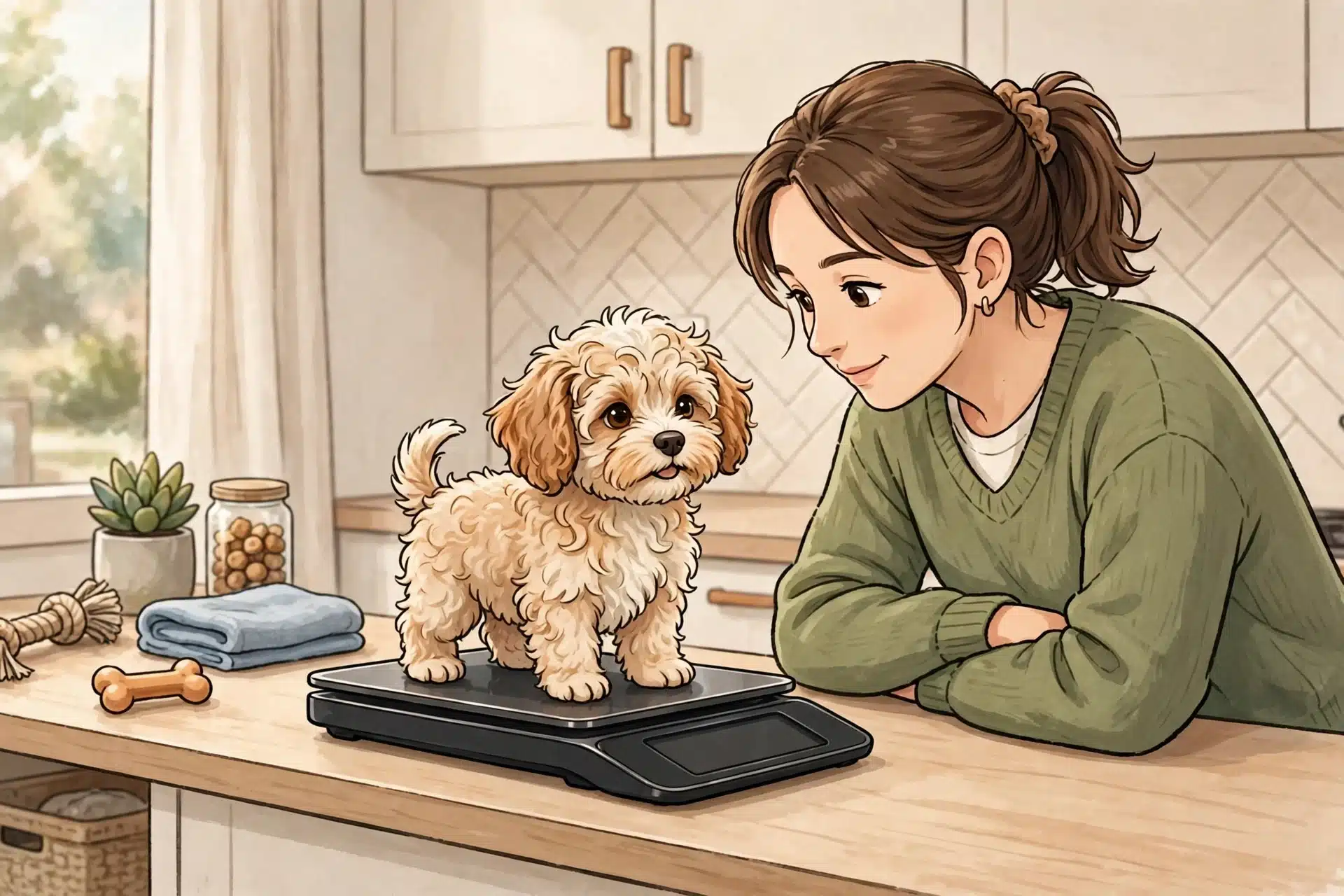
Reading the Numbers Without Worrying
Small breeds gain fast early, then slow down, which is normal. Vets commonly use a puppy growth chart by age to compare against breed-size averages. What matters most is steady gain and good body condition, not hitting one exact number.
The First Three Months, Week by Week
Puppies usually double their birth weight in the first week or two, then gain a few ounces daily. By 8 weeks, a Havapoo often weighs 2 to 6 pounds. From there, weigh weekly and log the numbers, since a missed drop in appetite or weight shows up small.
Six Months and Beyond: Where the Curve Flattens
Small breeds typically reach adult weight between 8 and 12 months. Height arrives first, then muscle and chest fill out through the final months, so expect slower gains rather than a hard stop.
The Havapoo Growth Timeline From 8 Weeks to 12 Months
When do Havapoo puppies stop growing? Most finish height between 6 and 8 months, then add a little weight until 9 to 12 months. The curve looks like this: fast doubling in the first two months, steady gains through the middle, and a slow settle near the end.
The Rapid Season: 8 to 16 Weeks
This is the steepest stretch of Havapoo size by age. Pups often double their weight between 8 weeks and 4 months, moving from roughly 2 to 6 pounds into the 4 to 9 pound range. Expect visible change week to week, then weigh weekly so the numbers stay useful.
The Steady Middle: 4 to 8 Months
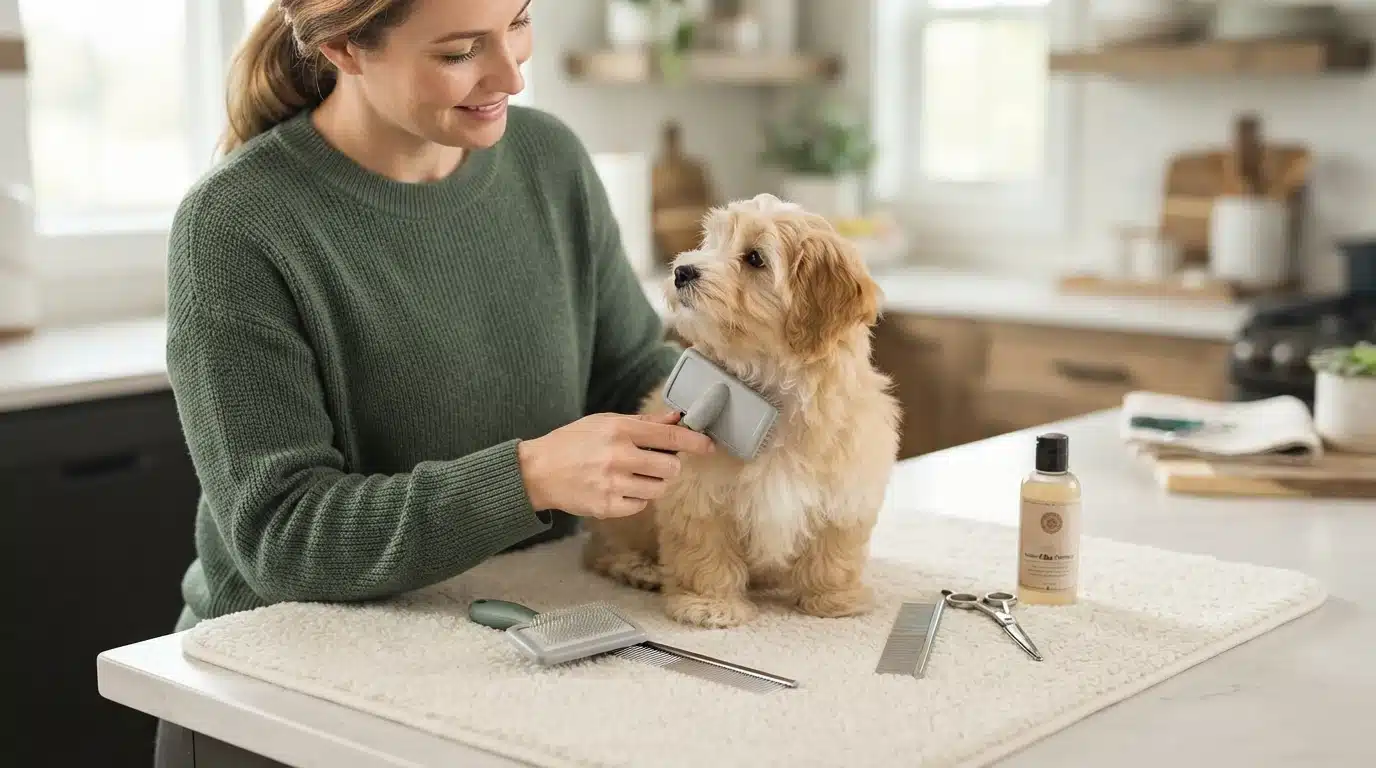
Growth slows but does not stop. Legs lengthen, chests fill out, and weight climbs toward the 5 to 12 pound band, depending on whether your pup leans Havanese or Toy Poodle. Monthly weighing works fine here. Coat changes may make your pup look bigger than the scale says, so trust the numbers over the mirror. For coat-specific care as the adult coat comes in, see the grooming comparison of Havapoo vs Cavapoo needs.
The Final Stretch: 8 to 12 Months
By this stage, most Havapoos stand at full height. Weight creeps up a pound or two as muscle settles in, landing most pups between 8 and 15 pounds by their first birthday. Larger Toy Poodle-leaning pups can keep filling out toward 12 months or slightly past.
Beyond One Year: Late Fill-In
Some Havapoos add a modest amount of density after a year, mostly chest and muscle rather than height. If your adult dog keeps gaining after that, compare body condition with your vet instead of assuming it is still growth.
What Actually Decides a Havapoo’s Adult Size
A Havapoo gets half its genes from each parent, so the parents’ sizes set the range. Nothing about the mix itself guarantees a number. Three things do most of the deciding.
The Havanese Anchor
The Havanese is the sturdier half. The AKC breed standard lists Havanese at 8.5 to 11.5 inches tall and 7 to 13 pounds. A Havapoo with a larger Havanese parent tends to drift toward the upper end of that band. Coat and bone structure often come from this side too, which is why grooming needs matter as much as weight for some families. If you want to see how the two parent lines shape day-to-day care, our Havapoo vs Cavapoo grooming comparison covers the coat side in detail.

The Poodle Side of the Equation
Havapoos are almost always bred with Toy Poodles rather than Miniatures. A Toy Poodle stands under 10 inches and usually weighs 4 to 6 pounds, so this parent pulls the average down. When a breeder uses a small Toy Poodle with a petite Havanese, pups often finish closer to 7 or 8 pounds. A larger pairing can reach 15 pounds or a bit more.
Why Two Littermates Can Land Far Apart
Genetics shuffle. One pup inherits more of the Poodle’s small frame, while its sibling takes after a heavier Havanese grandparent. Growth also depends on sex, nutrition, and plain luck, so littermates from the same parents can differ by several pounds as adults.
Because of this spread, any single estimate is a range, not a promise. Ask to see both parents, since that is the best clue you will get before your own puppy’s growth chart starts filling in.
What a Full Grown Havapoo Actually Looks and Weighs
Most Havapoos finish between 7 and 15 pounds and stand roughly 8.5 to 11.5 inches tall at the shoulder. That spread comes straight from the parents. A Havanese weighs 7 to 13 pounds and a Toy Poodle 4 to 6 pounds, so your pup can land anywhere in between depending on which parent it favors.
The Adult Weight Range, and Why Sources Differ
How big does a Havapoo get? Anywhere from about 7 pounds for a petite pairing to 15 or slightly more when both parents run large. Sites disagree because there is no single crossbreed standard. Breeders use different parent sizes, so each litter has its own likely range. Ask your breeder what the parents weigh for the best estimate.
Height at the Shoulder
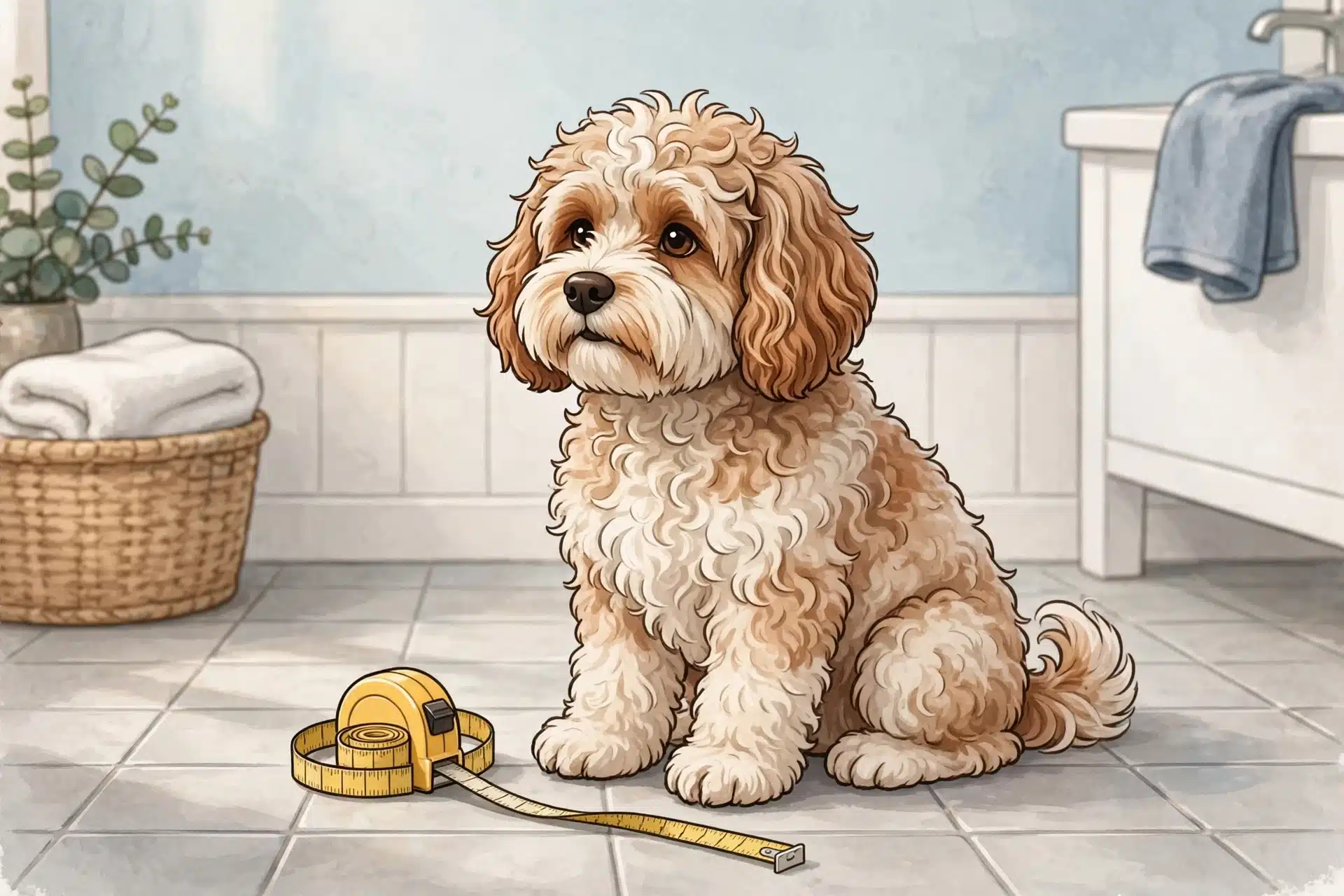
Measure from the ground to the top of the shoulders while your dog stands square, front legs straight under its body. A tape measure laid flat works fine. Most adults measure near the Havanese standard of 8.5 to 11.5 inches, since the Toy Poodle parent stays under 10 inches anyway. Legs finish by 6 to 8 months.
Puppy Appearance Versus Adult Appearance
Puppies look round and fluffy, all coat and little legs. Adults keep that soft, teddy-bear coat but carry it over a leaner frame. The muzzle lengthens slightly, the chest fills in, and the ears set lower. Many owners are surprised how much of the “extra weight” was simply fur.
Measuring and Tracking Your Own Puppy’s Growth
Charts give you the average. Your puppy gives you the real numbers, and those come from a kitchen scale and a notebook. Ten minutes a week tells you more than any published curve, because you see your own dog’s pace instead of a breed-wide estimate.
Setting Up a Simple Weigh-In Routine
Here is how to weigh a puppy at home without a vet visit:
- Weigh yourself on a bathroom scale and note the number.
- Pick up your puppy and step on again.
- Subtract the first number from the second. That difference is your pup’s weight.
- Do this at the same time of day, before breakfast, so food and water don’t skew the result.
For pups under about 20 pounds, a digital kitchen scale is even more accurate. Set the puppy in a basket or on a towel, tare the scale to zero, and read the display. A Havapoo’s monthly gain is often under two pounds, so precision matters.
Weekly Records vs Monthly Check-Ins
From 8 weeks to about 6 months, weigh weekly. Small breeds grow fast early, and a weekly number catches a stall or a jump while you can still act on it. After 6 months, once a month is enough, because gain slows as your pup nears its adult frame. Keep records in your phone or a simple spreadsheet with the date, the weight, and any note worth remembering, like a food change. Bring the log to wellness visits so your vet sees the trend, not one snapshot.
Body Condition Scoring Alongside the Scale
Pounds only tell half the story. Two pups can weigh the same and look different, so run your hands over the ribs and check for a visible waist. Vets use a body condition score from 1 to 9, where ribs you can feel but not see sit near the healthy middle. If ribs are hard to find under fat, or sharply visible, adjust food amounts with your vet rather than guessing. Track shape along with weight and you will catch problems earlier than the scale alone.
Sizing Your Home and Gear Around the Adult Dog
Most Havapoos finish between 7 and 15 pounds and stand about 8.5 to 11.5 inches tall, so plan your gear for that adult body, not the tiny 8-week-old ball you bring home. Buy once, size once.
Crates, Playpens and Gates
Pick a crate sized for the grown dog. For a 7 to 15 pound adult, a 22 to 24 inch crate usually fits well, letting your dog stand, turn around and stretch out. Go bigger only if your pup leans toward the large end of the pairing. A taller playpen matters more than a wider one: these dogs jump early and well. Set gates at least 30 inches high, and check them before your pup proves the point.
Travel Carriers, Harnesses and Everyday Gear
A soft-sided carrier rated for 15 to 20 pounds covers almost every adult Havapoo, with airline rules as the deciding factor for flights. Skip tiny-puppy harnesses at 12 weeks; buy an adjustable one that fits a 12 to 20 inch chest girth and grow with it. Collars, beds and car seats should all be sized for the adult weight too, so measure your dog’s back length before ordering a bed.
When the Adult Size Surprises You
Some pups land outside the family estimate. If your Havapoo finishes heavier than 15 pounds, nothing is wrong, but recheck crate fit and harness comfort, and ask your vet to confirm a healthy body condition. Gear sized for a smaller dog simply gets swapped.
Choosing a Havapoo Puppy When Size Is Part of Your Decision
What to Ask About Parentage and Growth
Size starts with the parents, so ask the breeder for both adults’ weights and heights. A small Toy Poodle paired with a petite Havanese tends to produce pups closer to 7 or 8 pounds, while a larger pairing can reach 15 pounds or a bit more. Ask whether the parents are purebred and health tested, since ancestry shapes adult size as much as diet or luck.
Meeting Puppies and Using the Scale
If you can visit, weigh each puppy on the breeder’s scale and compare it to the growth chart by age. An eight-week-old pup usually lands between 2 and 6 pounds, and the litter’s smallest pup rarely stays smallest. Bring a kitchen scale home and keep weighing weekly, because steady gains matter more than one snapshot.
Next Steps at Sage Puppies
Sage Puppies in South Jordan, Utah raises Havanese, Havapoo, and Cavapoo puppies and shares each pup’s current weight with its family, so you can match your pick to your space and plans. Before you commit, review the available puppies and see which litter fits the size range you want.

Still weighing each week and wondering where your Havapoo will land? Most finish between 7 and 15 pounds, and a simple tracking habit keeps you ahead of gear and food changes. If you want a well-bred Havapoo from the start, visit Sage Puppies to start an application.
Frequently Asked Questions
Q1: How much should a Havapoo weigh at each age?
Expect 2 to 6 pounds at 8 weeks, 4 to 9 pounds at 4 months, and 8 to 15 pounds by 12 months. Treat these as ranges, since parent size shifts every curve.
Q2: What size should my Havapoo be at each month of growth?
Growth runs fast until 4 months, slows through 8 months, then settles. Weigh weekly until 6 months, then monthly, and compare against the chart.
Q3: How large will my Havapoo get as an adult dog?
Most finish between 7 and 15 pounds and 8.5 to 11.5 inches tall. Parent weights give the best clue.
Q4: When do Havapoos stop growing?
Height finishes between 6 and 8 months; weight fills out until 9 to 12 months, sometimes slightly later.
Q5: How can I weigh my puppy at home?
Weigh yourself, then hold your puppy and subtract. A digital kitchen scale works even better for small pups.
Conclusion
A Havapoo’s adult size follows a predictable shape even when the exact number varies. Most pups finish between 7 and 15 pounds and 8.5 to 11.5 inches tall, with height done by 6 to 8 months and weight settling by 12. Parent sizes set the range, so asking for both adults’ weights gives the best estimate. A weekly weigh-in from 8 weeks to 6 months, then monthly checks, tells you more than any chart. Pair the scale with body condition scoring, and size your crate, harness, and carrier for the grown dog once, not the puppy twice. Steady gains and a healthy waistline matter more than hitting one exact number, because every Havapoo grows on its own curve.