Quick Summary: Havapoos are usually easier to own because they often house train faster, shed less, tolerate alone time slightly better, and need professional grooming every 6 to 8 weeks instead of every 4 to 6 weeks. Havanese offer more predictability through a documented AKC standard, but their long double coat requires 10 to 15 minutes of daily brushing, and both breeds struggle with long periods alone. Purchase prices are similar, so the best choice depends on your grooming time, schedule, and preference for breed predictability over a mix’s variability, while written parent health-test results remain essential.
If your real question is which puppy is easier to own, here is the short answer. The Havapoo is usually lighter on coat care and often easier to house train. The Havanese is simpler on grooming if you keep the coat trimmed and stay disciplined about brushing. This Havanese puppy comparison breaks the decision into four measurable parts: coat care, training, health surveillance and cost. Both breeds are affectionate small dogs with real daily work, and the deciding factor is how much handling time you can honestly commit. Sellers call both low-shedding and gentle, so we separate documented traits from owner-reported patterns before giving you a clear pick.
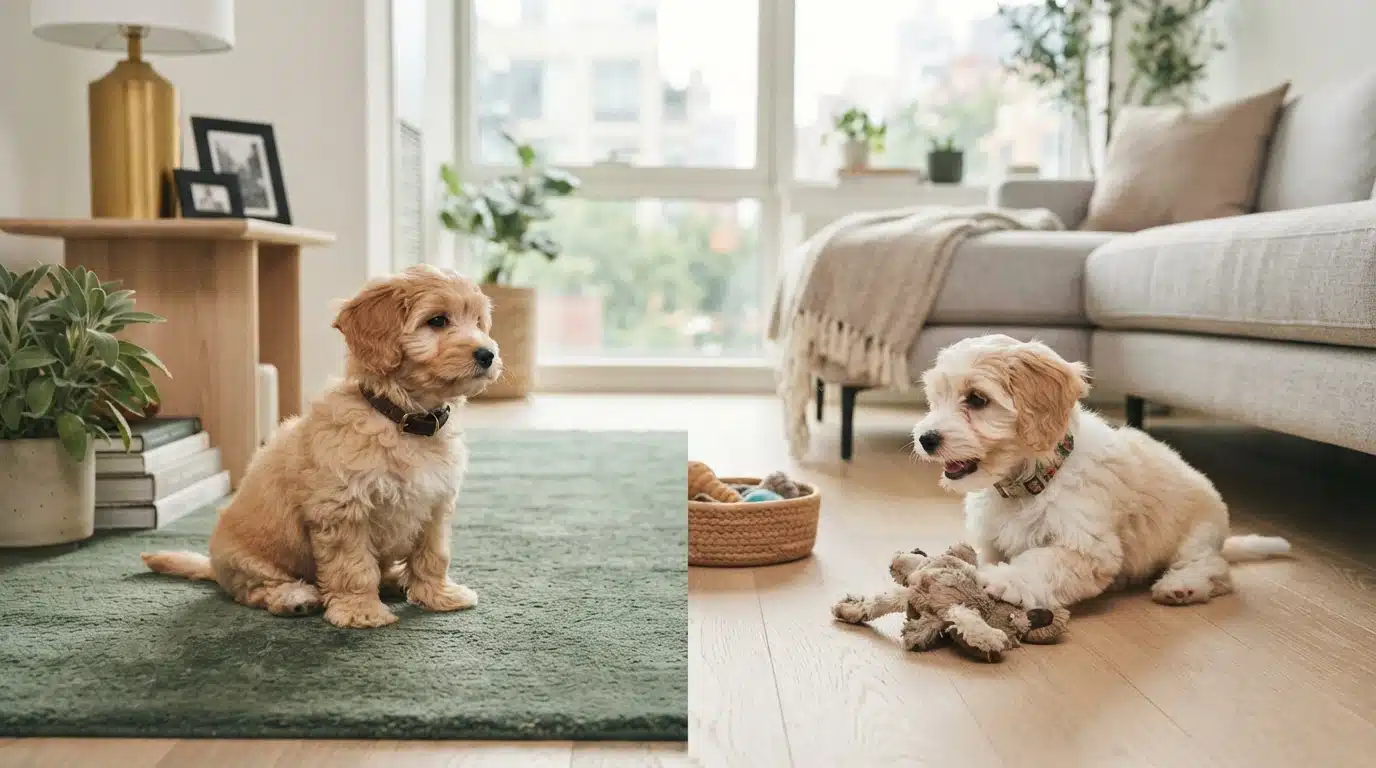
Havanese vs Havapoo Puppies: Side-by-Side Comparison
| Havanese | Havapoo | |
|---|---|---|
| Coat Care and Shedding | Long, abundant wavy double coat per the AKC standard; daily combing expected, professional grooming every 4-6 weeks | Variable coat, often curlier and denser, still requires daily brushing and regular professional grooming |
| Training and House Training | Smart but sensitive; rewards-based work needs a gentle hand and consistency | Poodle influence often means faster learning and quicker house training than many Havanese |
| Energy and Exercise Needs | Moderate daily exercise with a pronounced need for companionship; dislikes long alone time | Moderate exercise but higher mental stimulation demand and a low tolerance for being alone |
| Health Risk Profile | Documented breed concerns include portosystemic shunt, patellar luxation, eye and dental conditions | Inherits risks from both lines, including eye disease, patellar luxation, periodontal disease and Legg-Calve-Perthes |
| Size and Home Fit | Ideal height 9-10.5 inches per the AKC standard; typically 7-13 pounds | Full-grown Havapoos typically weigh under 15 pounds; size depends on the Poodle parent used |
| Best For | Owners who want a documented, predictable breed standard and enjoy coat handling | First-time owners seeking trainability and a coat that can be kept shorter |
How the Havanese and Havapoo Compare
Havanese
Cuba’s native companion breed, the Havanese is an AKC-recognized small dog with a long, silky double coat and a people-first temperament. It suits owners who want a documented, predictable breed standard and who enjoy regular coat handling. In any Havanese puppy comparison, this documented standard is the breed’s main edge.
Key strengths
- Predictable size and traits under the AKC standard
- Smart, sensitive and eager to please with gentle, rewards-based training
- Moderate exercise needs
Havapoo
The Havapoo is a cross between the Havanese and a Toy or Miniature Poodle, widely bred in the United States but not AKC-recognized as a breed. Poodle influence often brings faster learning and easier house training, plus a coat you can keep shorter. First-time owners often find that mix appealing.
Key strengths
- Often quicker house training than many Havanese
- Coats that can be trimmed short for easier upkeep
- Typically under 15 pounds as an adult
What ‘Easier to Own’ Actually Means
“Easier” here is not a feeling. It means fewer daily demands, faster training, lower health risk and smaller lifetime cost. That is how this Havanese puppy comparison scores both breeds, so you can match the work to your real life instead of trusting a cute photo.

The Four Components Used in This Comparison
Each breed gets rated on four measurable areas:
| Component | What It Measures |
|---|---|
| Daily care | Grooming time, coat brushing frequency, exercise needs |
| Training | House training ease, barking control, adaptability |
| Health | Documented risks, recommended health testing, screening availability |
| Cost | Purchase price, grooming bills, routine vet care over life |
Daily care and cost dominate the first year, so weigh them most heavily.
What Breed Standards Can and Cannot Tell You
The AKC Havanese standard describes coat, size and temperament in detail, which makes purebred traits fairly predictable. That is a real advantage: you know what you are getting at eight weeks.
A Havapoo works differently. As a Poodle mix versus a purebred, its coat, size and drive can follow either parent, so the standard tells you the Havanese side only. Those gaps show up most in grooming and shedding.
Owner reports fill in the rest, and they are labeled as such throughout. For a preview of the biggest daily commitment, Havanese coat brushing is covered in detail on our grooming guide.
Coat Care: Where the Two Breeds Diverge Most
Do Havanese or Havapoo puppies need daily brushing? Havanese usually do, because their long, abundant wavy double coat mats fast. Havapoos often get by with brushing every other day, since tighter curls trap fewer tangles. The shorter the coat you keep, the more slack you get either way.
| Breed | Brushing Frequency | Matting Risk | Professional Grooming |
|---|---|---|---|
| Havanese | Daily combing and brushing | High without daily care | Every 4-6 weeks |
| Havapoo | Daily to every other day | Moderate to high | Every 6-8 weeks |
Brushing Time and Matting Risk
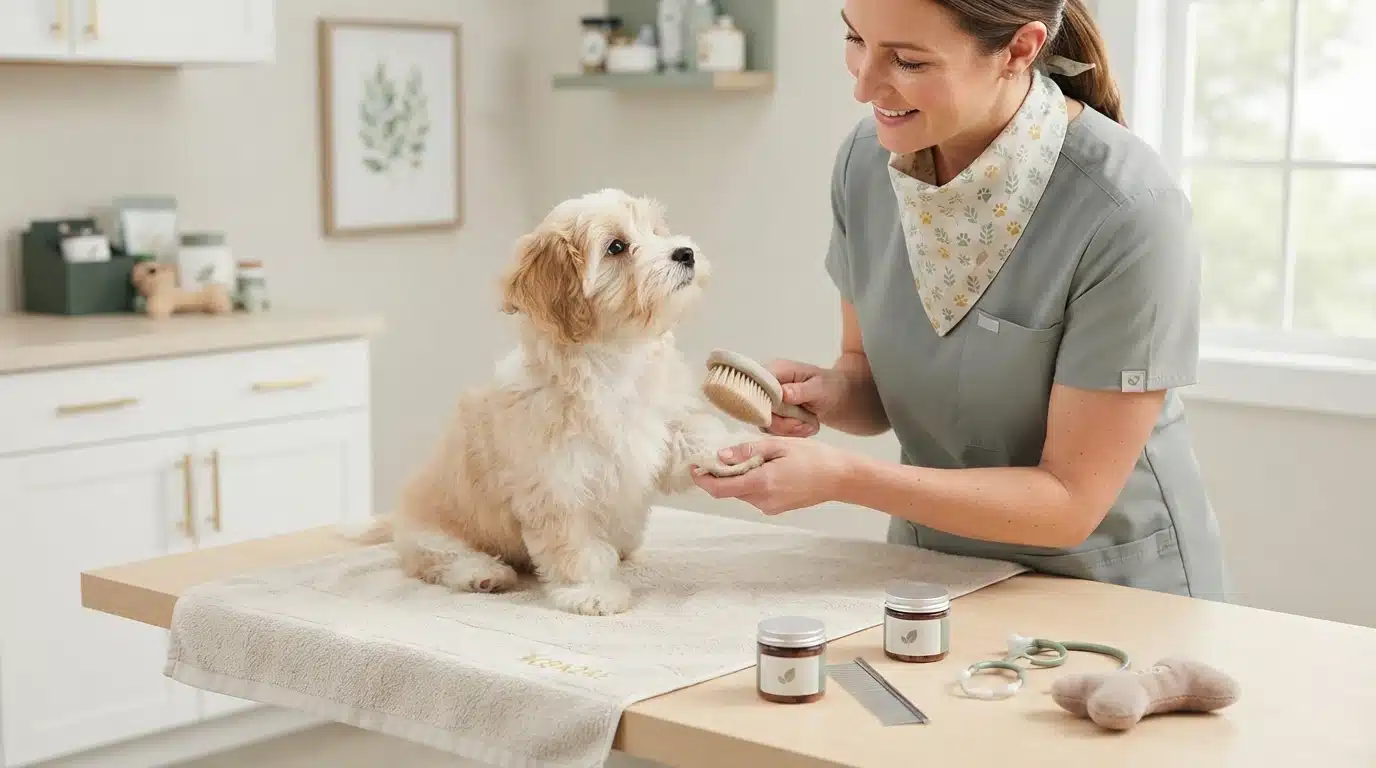
The Havanese coat follows the AKC breed standard: long, abundant and wavy, with a soft undercoat that tangles close to the skin. Skip two days of combing and mats start forming behind the ears, in the armpits and under the harness. Budget 10-15 minutes a day, plus a weekly line-brushing session where you part the coat and work in rows.
Havapoo coats vary with the Poodle parent. Curly, Poodle-like coats mat most at the collar and tail base. Wavier coats shed tangles more easily. Either way, run a steel comb down to the skin so you find mats early, not after they tighten.
Professional Grooming and Coat-Length Decisions
Both breeds need a professional groomer. Most Havanese owners book appointments every 4-6 weeks, while many Havapoo owners stretch to 6-8 weeks between cuts. The bigger decision is length. A short “puppy cut” on either breed cuts brushing time in half and keeps mats rare.
Havanese in full show coat need the most work. If you love the flowing look, commit to daily care. If you want easy, keep both breeds clipped short and brush at home between visits. Learn a simple at-home routine early, like the one in a Havanese puppy grooming schedule, and grooming stays manageable.
Shedding and Allergy Considerations
Havanese shed very little, and Havapoos often shed even less when they inherit the Poodle’s curly coat. Neither breed is truly hypoallergenic, so spend time with adult dogs before you decide if allergies run in your family.
Training, House Training and Learning Speed
Sensitivity Versus Boldness
Which breed is easier to house train? Many owners report that Havapoos pick up potty routines a bit faster, because Poodle genes add problem-solving drive. Havanese are bright too, but they are a companion breed first, so they often train best through soft, positive methods. Rough corrections can shut a sensitive Havanese down. Havapoos tend to bounce back bolder from mistakes. Match the method to the puppy in front of you.
House Training and Puppy Manners
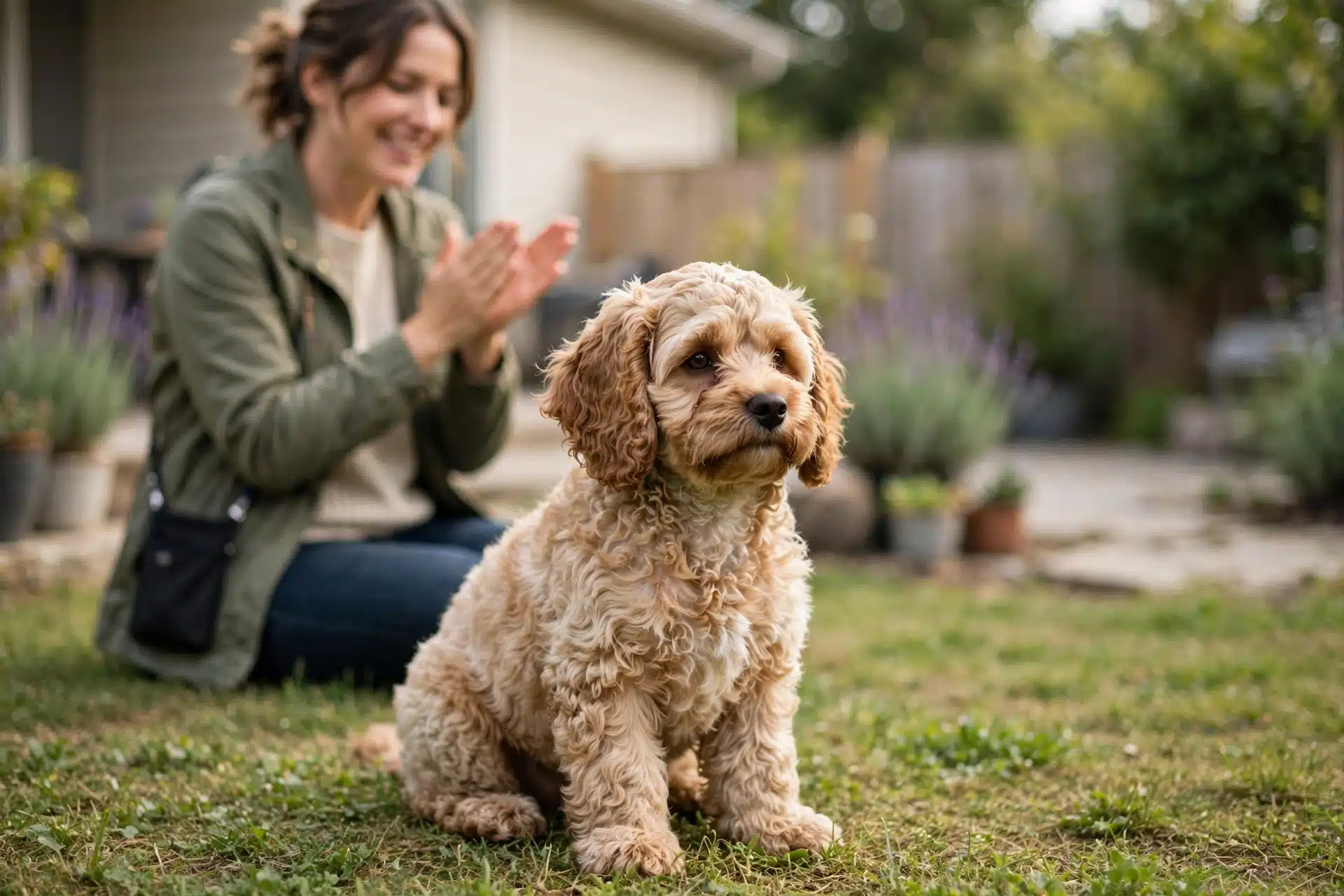
Both breeds are small, and small bladders mean frequent potty breaks. Expect a consistent schedule, a set pad or yard spot, and praise the moment your puppy finishes outside. Crate time helps because most puppies avoid soiling where they sleep. With steady timing, many owners see reliable habits within a few months, though small breeds in general take longer than large ones. For step-by-step help, these beginner training tips for small breed puppies cover the first commands.
Living With Other Dogs and Visitors
Havanese usually welcome guests and get along with other dogs, a trait bred into the companion line. Havapoos are friendly too, but early socialization matters more because Poodle mixes can lean watchful. Both need calm introductions rather than forced greetings.
Both breeds respond to short, upbeat sessions. Five minutes twice a day beats one long drill, and patience matters more than breed choice.
Energy, Exercise and How Much Time You Spend Alone
Daily Exercise and Mental Work
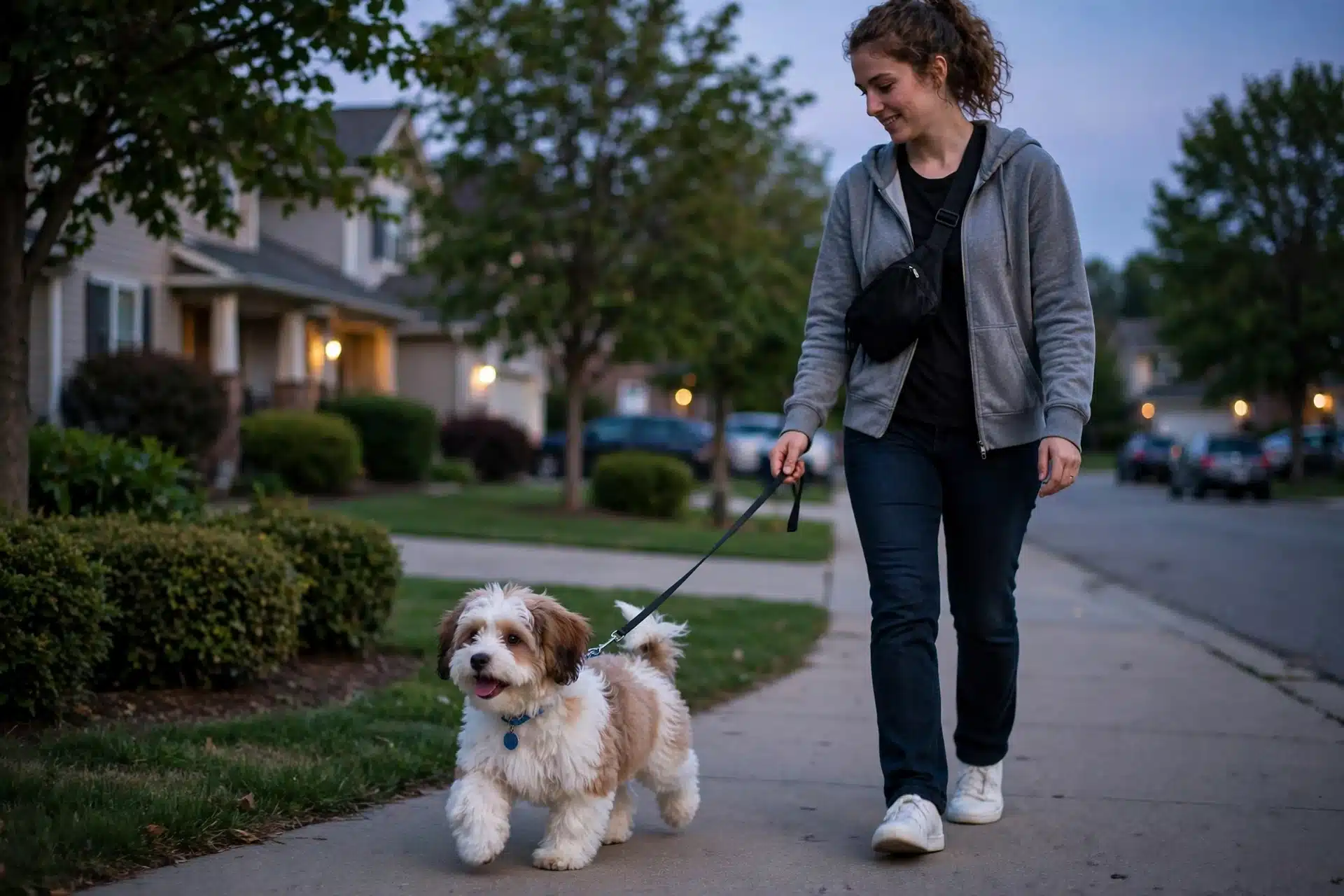
Both breeds are moderate-energy small dogs, not couch potatoes or marathon partners. A Havanese usually does well with 30 minutes to an hour of daily activity, split between short walks and indoor play. A Havapoo often wants a bit more, since many Poodle mixes inherit a stronger work drive. Short training games, sniff walks and puzzle feeders tire either dog more than a long stroll. If your household can offer two or three short sessions a day, both breeds fit easily.
Time Alone and Separation Behavior
This is where the real difference shows up. Havanese were bred to be companions, so many struggle when left alone, and owners on the r/Havanese forum describe puppies that panic within minutes. Trainers recommend practicing brief separations from day one, before anxiety takes hold. Havapoos love people too, but owner reports suggest they often tolerate alone time a little better. No breed handles a full workday alone, so plan for midday breaks or doggy daycare. Building a calm routine matters more than breed choice, and the first weeks home set the tone for both.
Verdict: Havapoo, slightly, on alone time. Exercise needs are nearly identical.
Health Surveillance and Veterinary Load
Both breeds need routine puppy visits, but their documented risks differ. Havanese carry a known list: patellar luxation, where the kneecap slips from its groove, plus heritable eye disease, cardiac issues, and portosystemic shunt, a liver blood-flow defect. Havapoo risks combine those Havanese concerns with Poodle-side conditions, so screening questions matter for both.
Havanese-Specific Screening Concerns
Because the breed is purebred and well studied, its risks are documented. The Havanese Club of America’s health statement lists OFA eye exams (CAER), cardiac testing, and orthopedic checks as standard breeder tests. That gives you a clear checklist: ask for proof of patellar luxation, CAER eye, and cardiac screening on both parents. A purebred pedigree means test results map directly to your puppy.

Havapoo Risks and the Uncertainty of Crossbred Predictability
A Havapoo inherits genes from both parents, and breeders cannot guarantee which ones pass on. The cross may benefit from hybrid vigor, but it is not a health promise. A Havapoo can still develop patellar luxation, eye disease, or Addison’s disease from the Poodle side. Responsible breeders screen the Havanese parent against the breed list and the Poodle parent against Poodle tests. Crossbred predictability depends entirely on that parent testing, so treat any breeder who skips it as a warning sign.
What to Ask Before You Reserve
Ask which health tests each parent has, request OFA or CAER results in writing, and confirm the health guarantee terms. Our screening checklist for health-tested puppies walks through every question to bring with you.
First Purchase Versus Ongoing Care
One-Time Purchase Price Is Set by the Breeder, Not the Breed
The puppy price rarely tells you which breed is easier to own. Havanese and Havapoo puppies cost about the same because both prices reflect the breeder’s program, health testing and support, not the breed itself. Boutique programs such as Sage Puppies price Havanese and Havapoo puppies the same at $3,500 to $4,500, so neither breed wins on purchase price. Beyond the puppy, one-time costs like a crate, spay or neuter surgery and starter gear averaged $2,100 in the AKC’s cost survey.
Recurring Cost Categories to Plan For
Recurring costs are where the breeds start to differ, mostly through grooming frequency. Here is an illustrative first-year budget, not a market average:
| Category | One-Time or Recurring | Example Amount |
|---|---|---|
| Puppy purchase | One-time | $3,500-$4,500 |
| Crate, gear, spay/neuter | One-time | Up to $2,100 |
| Food, toys, routine vet care | Recurring | About $2,500 per year |
| Professional grooming | Recurring every 4-8 weeks | More for Havanese |
The AKC pegs average annual costs at roughly $2,500, and both breeds land near that baseline. Havanese appointments every 4-6 weeks cost slightly more than Havapoo cuts stretched to 6-8 weeks.
Health Testing and Records as Part of Purchase Value
Ask both breeders for patellar luxation, PRA and, for Havapoos, portosystemic shunt screening on the parents. Documented testing and health records cost the breeder money, so they belong in any fair price comparison. A well-documented puppy is usually the cheaper one over ten years.
Which Is Easier to Own: Havanese or Havapoo?
For most first-time owners, the Havapoo is slightly easier to own because its Poodle mix often sheds less and learns house training fast. Pick the Havanese instead if you want a predictable, AKC-standard companion breed with a documented temperament and you can commit to daily coat care. Ease depends on your grooming time, work schedule and appetite for a known breed profile versus hybrid flexibility.
Choose the Havapoo If
You want a coat that often sheds less and may need trimming every 6-8 weeks instead of every 4-6. You are home often enough for a social puppy but flexible on grooming routines. You like the idea of a slightly sturdier dog, usually under 15 pounds, whose size shifts with the Poodle parent. You accept some unpredictability in coat and adult temperament, because a first-generation mix can lean either way.
Choose the Havanese If
You value predictability. The AKC breed profile describes a funny, intelligent, outgoing companion with a defined size and coat, so you know roughly what you are getting. You can give 10-15 minutes of daily brushing plus regular professional grooming. You work from home or have company during the day, because this people-focused breed can struggle when left alone for long stretches.
Before You Decide, Ask for Records in Writing
Whichever breed you choose, ease of ownership starts with health. Request written proof that both parents passed eye exams, patella and cardiac checks, and genetic tests for conditions like portosystemic shunt markers and progressive retinal atrophy. Reputable small-breed programs, including Sage Puppies, share these results before you reserve. Dogs with tested, healthy parents mean fewer vet surprises and an easier first year.

Whichever breed fits your routine better, the next step is choosing a well-bred puppy. Sage Puppies matches Utah families and nationwide buyers with Havanese and Havapoo puppies through a clear application and owner-managed process. Start yours today.
Frequently Asked Questions
Q1: Which is easier to own, Havanese or Havapoo puppies?
The Havapoo is usually easier for first-time owners. It often sheds less, house trains faster, and its coat can be kept short.
Q2: Do both breeds really need daily brushing?
Havanese usually do, since their long double coat mats fast. Havapoos often manage with brushing every other day.
Q3: Which breed handles being alone better?
Havapoos often tolerate alone time slightly better, but neither handles a full workday. Plan midday breaks either way.
Q4: How much do Havanese and Havapoo puppies cost?
Both cost about the same, typically $3,500 to $4,500 at boutique programs, since price reflects breeding, not breed.
Q5: Which health tests should I ask breeders for?
Request written patellar luxation, CAER eye, cardiac, and genetic screening results for both parents before reserving.
Conclusion
The verdict favors the Havapoo slightly, mostly for easier house training and lower grooming frequency. The Havanese wins on predictability, with a documented AKC standard that tells you the size, coat and temperament before you reserve. Cost is a near tie, so neither breed beats the other on price. What actually decides ease of ownership is your daily reality: 10-15 minutes of brushing, regular professional grooming, and whether someone is home through the day. Match those demands honestly, then ask every breeder for written health test results on both parents. The well-documented puppy is the easier one to own.