Quick Summary: Teach a Havanese puppy a soft mouth from the first weeks home using calm, reward-based training, because habits often form before four months. Hand-feed for gentle mouths, redirect nipping to toys, use a consistent release cue during tug, and make every household member follow the same four-line plan instead of scolding or punishing. Match the response to whether biting comes from play, handling, teething, or separation distress, and consult a veterinarian or certified trainer if it starts suddenly or comes with signs of pain or fear.
Your Havanese puppy latches onto your thumb with needle teeth, and in that split second you decide whether to yelp, freeze, or pull away. That choice shapes how softly your adult dog mouths at two years old. Bite inhibition means a puppy learns to control its jaw pressure, and good habits form fast, mostly before four months.
Many families punish nipping, but scolding often makes mouthing worse and can damage trust. This guide takes a different path. We walk you through six puppy bite inhibition techniques built on rewards, including how to teach puppy bite inhibition for play nipping, handling fussiness, and nipping tied to being left alone. You get an ordered plan, clear progress markers, and tips for keeping every household member consistent. It reflects the humane, structured start we give every Sage Puppies puppy in South Jordan, Utah, before the first night home.
Technique 1: Answer the Question of Why Your Havanese Puppy Bites So Hard
Your Havanese puppy bites hard because she has not yet learned how sensitive human skin is. Puppy mouthing is normal, not aggression: puppies explore with their mouths, and they learn bite inhibition, meaning mouth control, mainly through feedback from their littermates and from you. Needle teeth make every lesson feel dramatic, but the behavior usually fades as adult teeth arrive.
What Puppy Mouthing Is Actually For
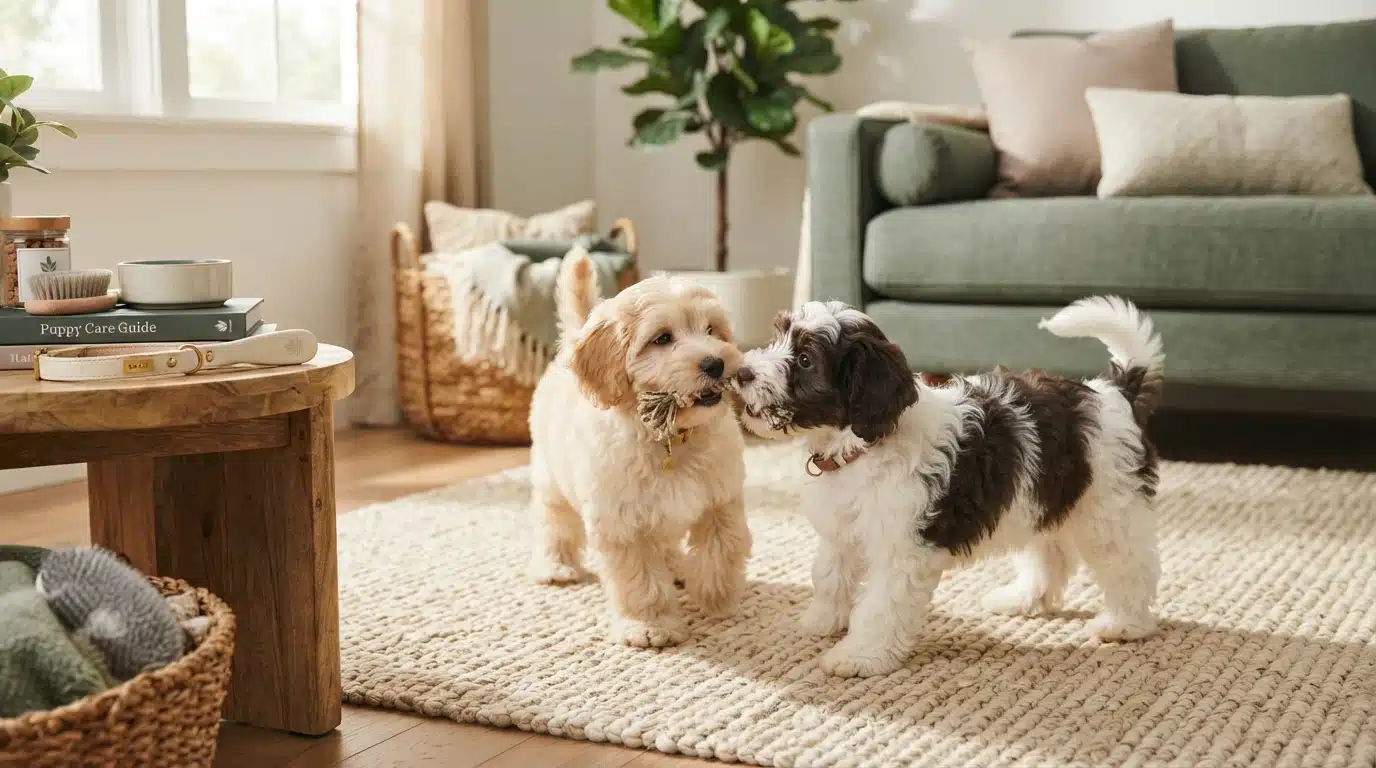
Mouthing is how a puppy plays, explores, and soothes sore gums during teething. When puppies wrestle with each other, a too-hard bite makes the playmate yelp and quit, so the biter learns to soften. That same lesson is what you are now teaching at home. Per Pima County’s animal care guidance, mouthing hands during play or petting is expected puppy behavior, and it responds to teaching rather than punishment.
Four Different Biting Motives and How to Tell Them Apart
- Play nipping: loose body, wiggly tail, bites during games. Interruptible and excited.
- Teething chewing: gnaws furniture or hands slowly, especially around 12 to 16 weeks.
- Handling nipping: bites when picked up, brushed, or touched on the paws, then stops once released.
- Separation-related nipping: bites or chews on you at the door, whining, when you leave or are about to.
Read the body first. Loose means play; stiff, frozen, or guarded behavior calls for a certified trainer or behavior consultant.
The Part Most Owners Miss
The motive changes the fix. A play nip needs a toy redirect; a handling nip needs slow handling work; a departure nip needs confidence building. Treating all biting as one problem is why so many plans stall. Watch when it happens for three days, then match the response. This is where havanese puppy bite inhibition training really begins, and our step-by-step training plan builds that foundation in order.
Technique 2: Hand-Feed to Build a Soft Mouth
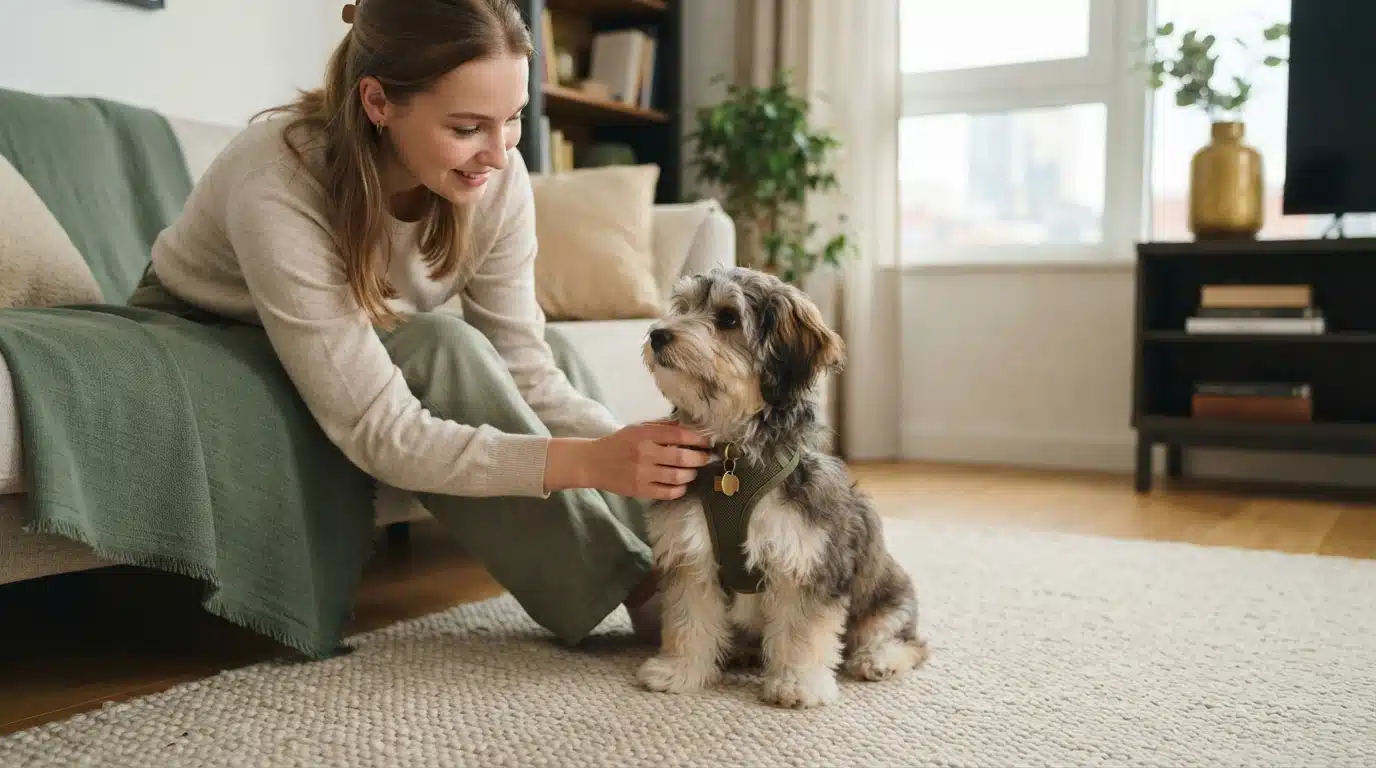
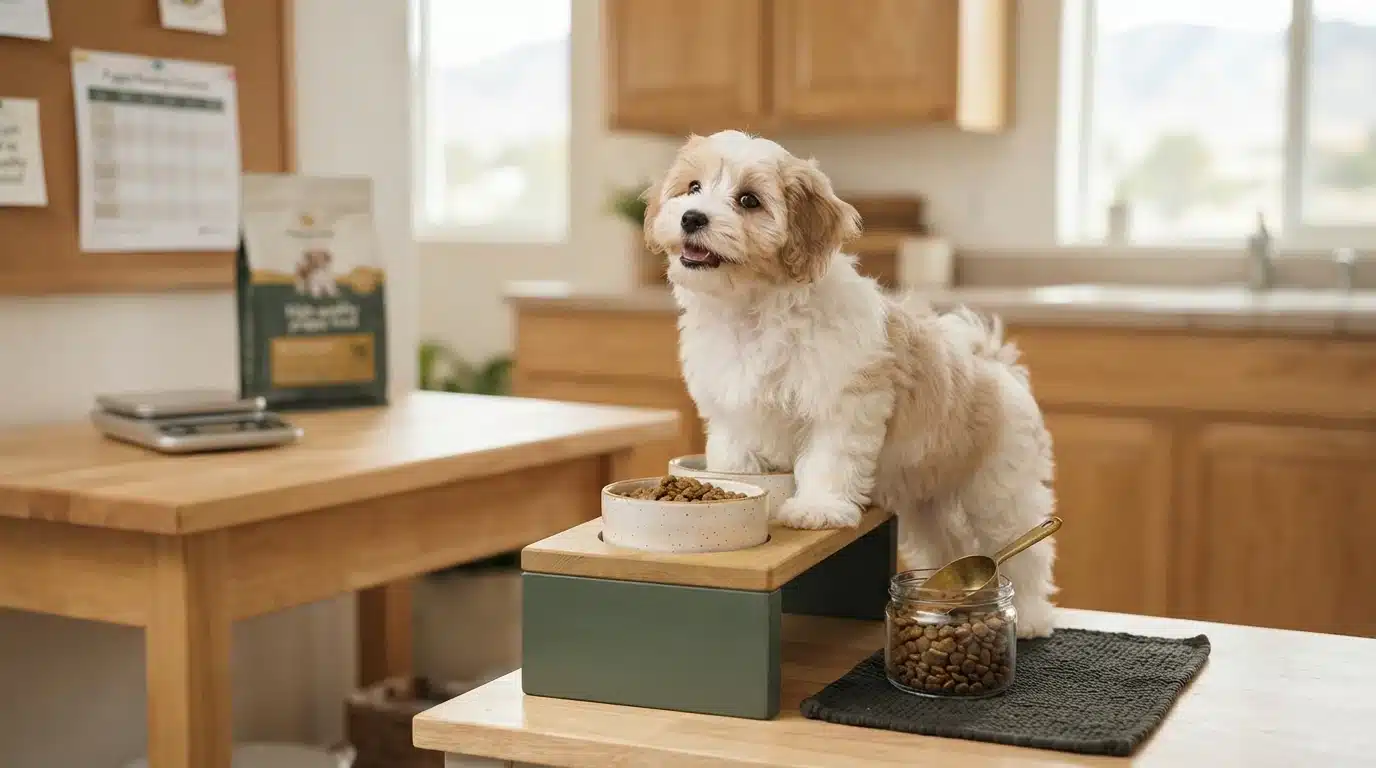
Hand feeding a puppy is the fastest way to teach Havanese puppy bite inhibition around your hands. Your puppy learns that teeth touching skin make food disappear, while a soft, gentle mouth keeps meals coming. Since Havanese puppies have tiny jaws and sharp needle teeth, the lesson lands quickly when every piece of kibble becomes a mini training rep.
The Daily Hand-Feeding Routine
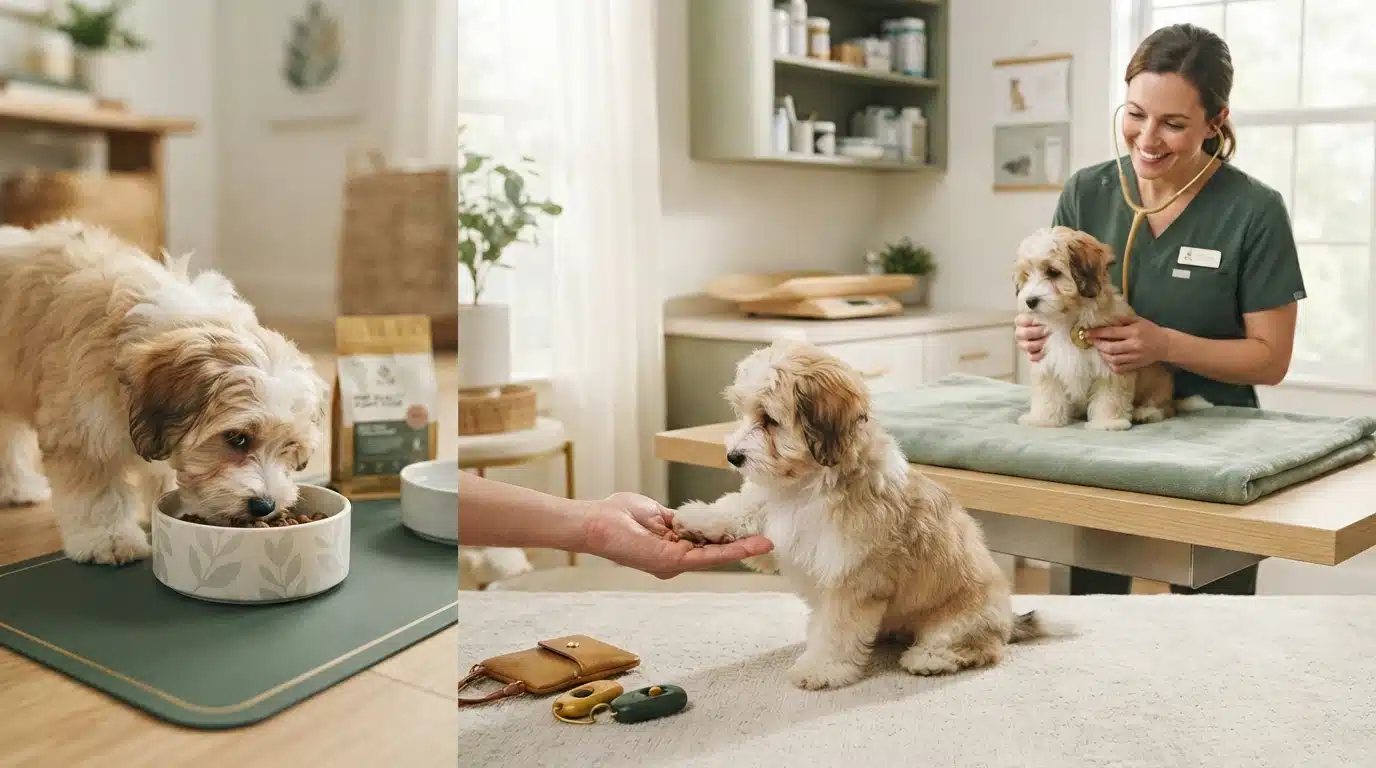
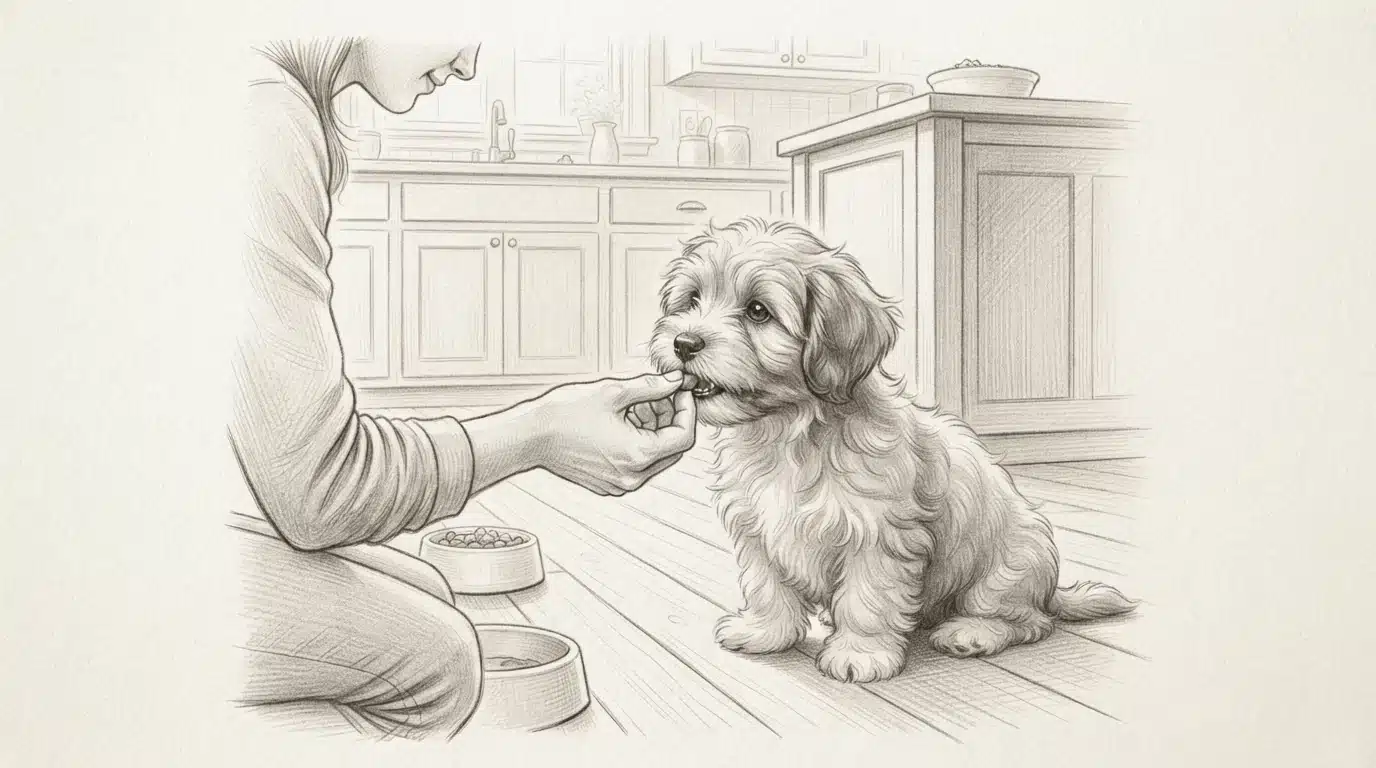
Skip the bowl for one meal a day. Sit on the floor and feed each piece of kibble by hand, one at a time. Before each piece, pause and wait for your puppy to sit or look at you calmly. If teeth touch your skin during the reach, pull the food back for three to five seconds, then try again. Most puppies figure out the pattern within a few sessions. Keep sessions short, about five minutes, so your Havanese stays interested rather than frustrated. Rotate the routine between family members so the soft-mouth rule applies to every hand in the house.
Adding a Hand Target
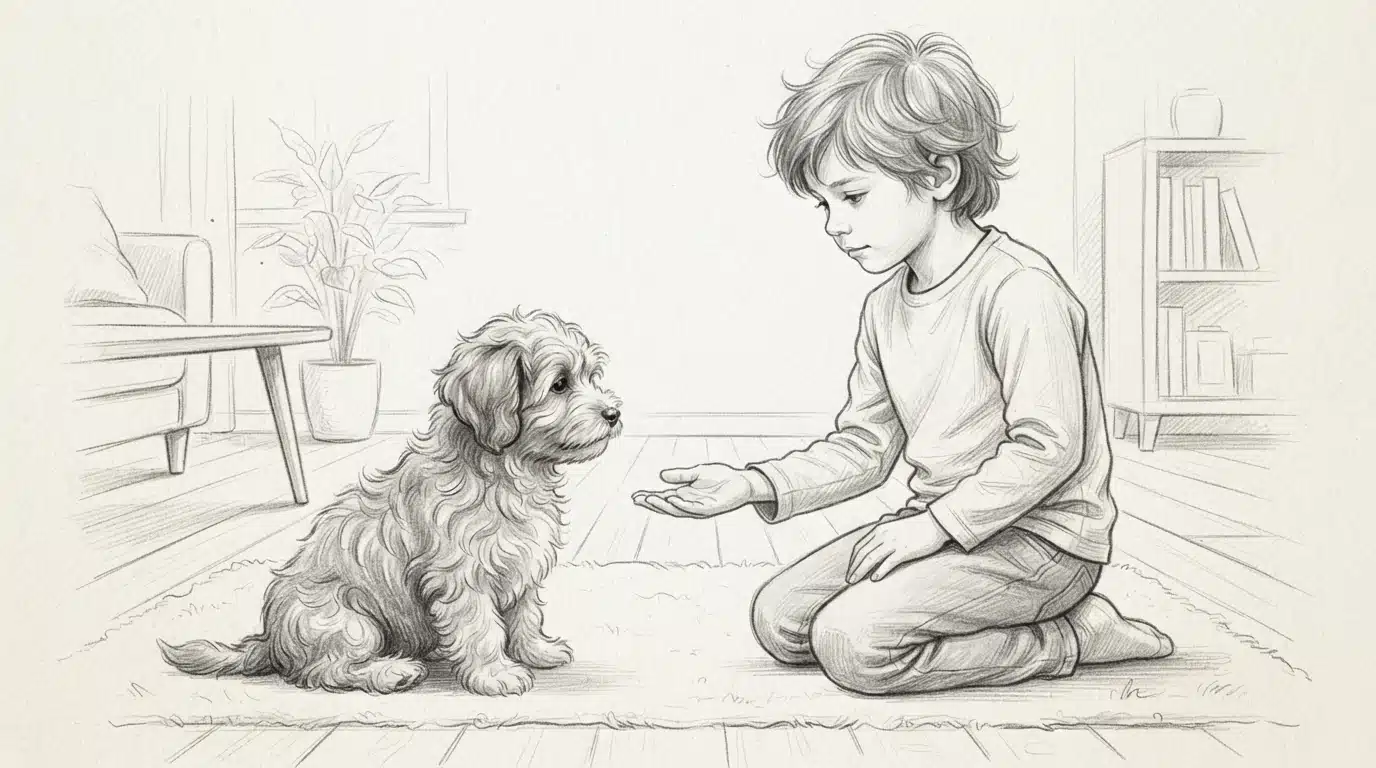
Once meals feel calm, layer in a release cue. Present your flat palm and say “gentle” or “soft.” Feed only when your puppy’s nose touches your palm without teeth. This becomes a hand target you can reuse later for recalls, vet visits and grooming, which matters for a breed that needs regular coat care. The target also gives your puppy a clear job to do instead of mouthing your sleeves.
When the Puppy Nips Your Fingers Hard
If a grab breaks skin or draws a yelp, end the session for ten to fifteen seconds. Stand up, fold your arms and look away, then resume. That brief pause teaches that rough mouths stop the fun. Save the deeper fix for repeated hard nipping around handling, covered in Technique 3, and keep the food game positive so your puppy stays eager to try again.
Technique 3: Redirect to a Toy Instead of Punishing the Bite
The Redirect That Actually Replaces the Bite
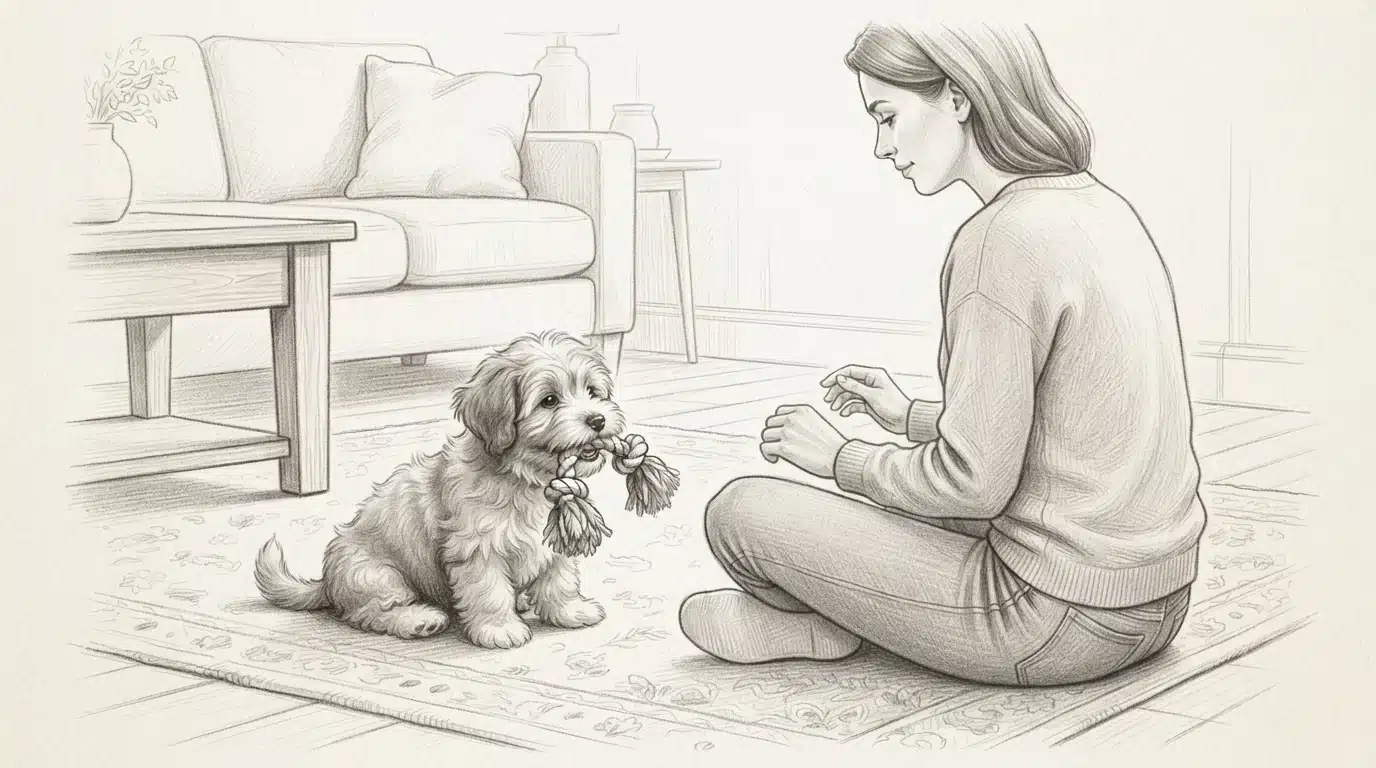
Stop the game the instant teeth touch skin. Say “ouch” in a flat voice, stand up, and turn away for five to ten seconds. Then offer a toy and restart play. Follow these steps every time:
- Freeze the moment teeth land on your hand.
- Let your hand go limp, then remove it slowly.
- Hand your puppy an appropriate chew toy instead.
- Praise calm chewing and resume the game.
Why Reward-Based Methods Are the Standard
Should you punish your Havanese puppy for biting? No. Yelling, scruffing, or tapping the nose can scare a puppy and often makes nipping worse, because fear raises arousal. Groups like the American Veterinary Society of Animal Behavior recommend reward-based training and warn against punishment. With a soft-tempered breed like the Havanese, gentle consistency works faster and protects your bond.
Replacing Your Hands as the Play Toy
Always keep a toy within reach before play starts. If hands are the only moving thing your puppy gets to chase, hands stay the favorite target. Wiggle a tug toy or toss a ball so the fun lives in objects, not your sleeves. That simple swap teaches your puppy what “toy” means during play, and the same habit supports the broader work in raising a healthy, well-started puppy.
Technique 4: Teach a Calm Mouth Off Cue
Choosing and Delivering the Cue
Pick one short word, such as “off” or “gentle,” and let every family member use it the same way. Say it once, in a calm, low voice, the moment teeth touch skin. Repeating “off, off, off” turns it into background noise, so a single word works better. If your puppy already knows a release word from other games, reuse it here so the meaning stays clear.
The Pause-Then-Return Pattern
When nipping starts, say your cue, then stop all play and go still for a few seconds. Turn slightly away or step back. Puppies learn fast that fun ends the instant teeth touch a hand. Once your puppy pauses, count a beat, then resume play with a toy instead of your fingers. This pause-then-return loop teaches the rule without scaring or scolding, and it rewards the calm mouth you want.
Fading the Cue as Pressure Drops
Over a week or two, your puppy will soften its mouth first and bite less often. Start delaying the cue and wait for the softer mouth on its own, then mark it with praise and keep the game going. Gradually use the word only for real slips. Soon the calm mouth becomes the habit, and the cue becomes a rare backup rather than a constant reminder.
Technique 5: Practice Controlled Tug to Teach Pressure Control
Tug gets a bad name, but played with rules it teaches your puppy to soften its grip on cue. That skill transfers straight to bite inhibition with hands and sleeves.
Setting Up a Safe Tug Session
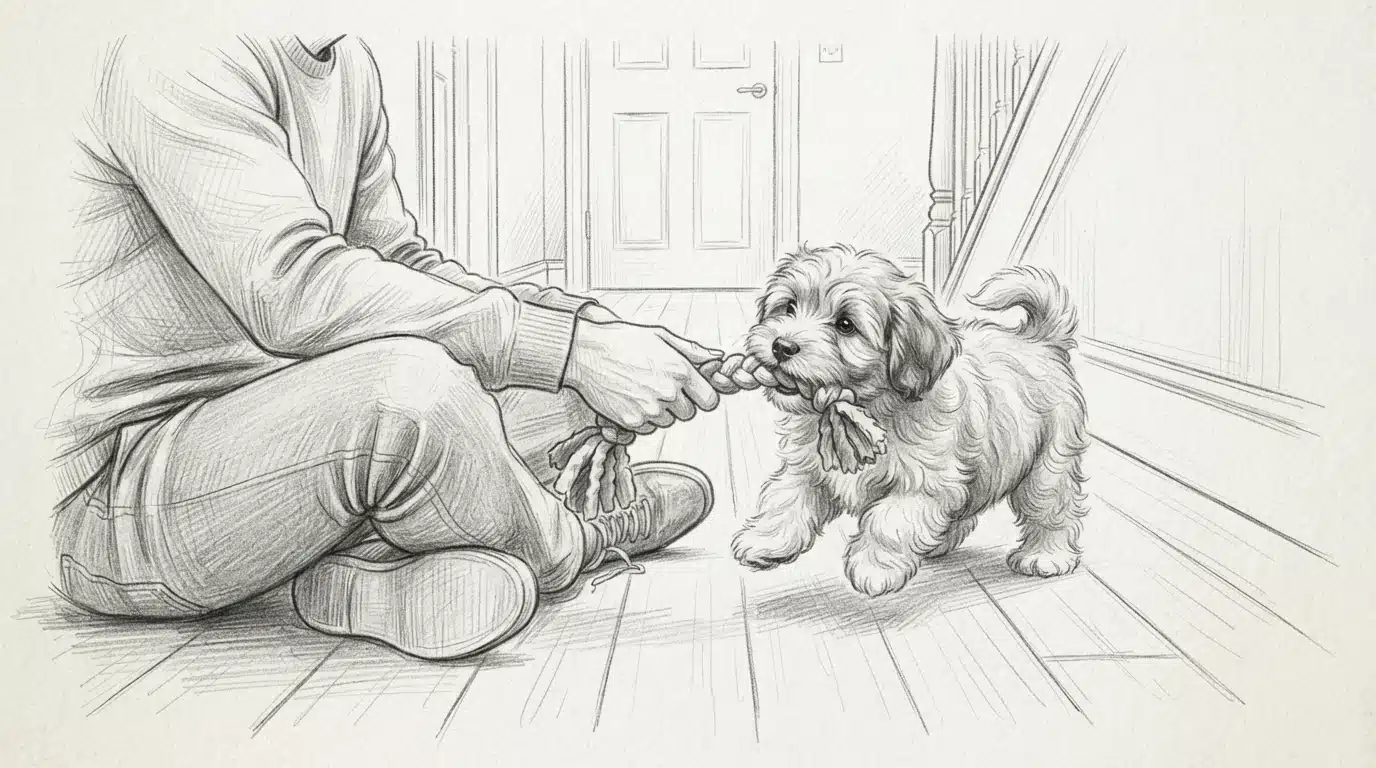
Pick a long, soft rope or fleece toy so teeth land on fabric, never skin. Keep the toy low and let your puppy win often, which keeps the game rewarding. Stop the moment teeth touch your hand or clothing, and end every session while your puppy still wants more. Short, upbeat games work better than long wrestling matches.
Building the Release Cue
The release is the whole lesson. Mid-game, go still, offer a treat at your puppy’s nose, and say “drop” as it lets go. Mark the moment, hand over the treat, then restart the tug. Within a week or two, most puppies drop on the word alone, so reward with a fresh game instead of food. If your puppy guards the toy or freezes, end the session calmly and ask a certified trainer before pushing further. Punishing a growl here teaches hiding, not giving things up.
Using Tug to Check Pressure
Once the release is solid, use tug as a pressure test. Pull gently and watch: soft mouth, relaxed body, quick drop on cue, all good signs. Hard clamping or shaking means your puppy needs more practice on the earlier techniques first. End each round on a successful release, and your puppy learns that gentle jaws keep the game alive.
Technique 6: Keep the Whole Household on the Same Plan
A puppy learns fastest when every person responds to nipping the same way. If one family member stays calm and stops play while another yelps or pushes the puppy away, your Havanese gets mixed signals and the nipping drags on. Agree on the plan first, then apply it every single time. The American Veterinary Society of Animal Behavior notes that training works best when it teaches a dog what to do rather than punishing what not to do, which is the spirit behind their humane training position.
The Four-Line Household Rule Card
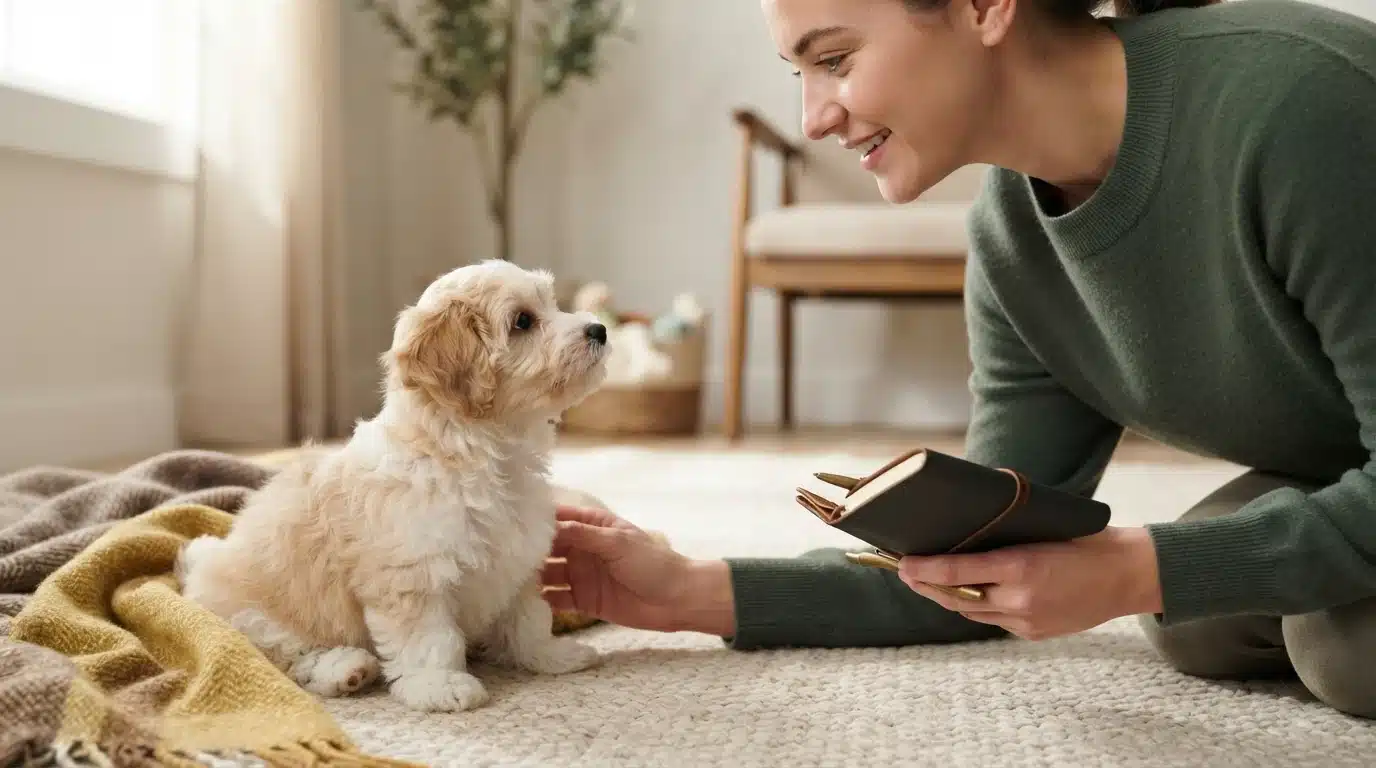
Write the plan down so nobody has to guess. Put it where the puppy plays most, like the fridge or a kitchen cabinet. Keep it to four lines:
- Freeze: when teeth touch skin, hands go still.
- End the game for a short pause after a hard nip.
- Redirect to a toy every time.
- Praise a soft mouth immediately.
If you are still planning your first weeks home, our guide to the first weeks with a small breed puppy covers how to set routines everyone can follow.
Coaching Children Safely
Children need coaching, not just rules. Have an adult supervise every puppy-and-child play session, especially during the teething weeks. Teach kids to go still and quiet when teeth touch skin, because a squealing, waving child looks like a littermate asking for more play. Show them how to offer a toy with a flat hand and to praise gently when the puppy takes it. Keep sessions short, and end on a calm success. If a child feels nervous around the sharp teeth, let them watch and hand out treats instead of handling the puppy directly.
Managing Visitors and Guests
Guests undo good work without meaning to. A new arrival who greets a jumping, mouthing puppy with excited baby talk teaches the puppy that strangers spark wild play. Ask visitors to ignore the puppy until all four paws are on the floor, then greet calmly. Keep a toy basket near the door so guests can redirect nipping to a chew instead of their sleeves. Brief sitters and relatives on the rule card before they arrive, and hold the same line at the door that you hold on the couch.
When Biting Is Not a Training Problem
Most Havanese nipping fades with consistent practice. Some biting, though, points to pain, fear, or distress that no technique can fix. Learn to tell the difference before you push harder on training.
Signs That Call for a Veterinary Visit
Sudden snapping, growling when touched, or biting that appears alongside limping, appetite loss, or hiding can signal pain rather than poor manners. Ears, teeth, hips, and bellies are common trouble spots in small breeds. If nipping starts abruptly or gets worse instead of better, book an exam first, and bring your questions. Our Havanese puppy health checklist and year-one vet schedule lists what to watch and when to call.
Nipping Around Departures and Confinement
Biting that flares only when you leave, or when your puppy is crated, usually reflects separation stress or barrier frustration, not a discipline gap. Watch for pacing, whining, drooling, or house soiling during short absences. If those show up, shorten departures, make the crate a pleasant place, and address the anxiety itself before working on mouthiness.
Working With a Trainer or Behavior Professional
Choose a certified professional who uses reward-based methods and never recommends yelling, pinning, or alpha rolls. Fear-based tools often make nipping worse. A good trainer will first rule out pain, then build a plan around the specific trigger.
Common Mistakes to Avoid
Correcting the Behavior Instead of the Puppy
Yelling, tapping the nose, or holding the muzzle shut teaches a puppy that hands bring scary consequences. That can make nipping worse or create fear around touch. Reward-based training works better.
Skipping the Household Conversation
If one person allows tug games with hands while another says “no,” your puppy gets mixed signals. Agree on the same rules, the same toy redirects, and the same “mouth off” cue before day one.
Waiting for a Calendar Milestone
Bite inhibition is not something a puppy outgrows on schedule. Start teaching soft mouths in the first weeks home, while needle teeth make every lesson clear.

Nipping feels endless at 12 to 16 weeks, but gentle, consistent practice turns those sharp little teeth into a soft mouth. If you want a puppy raised with this kind care from day one, explore Sage Puppies and start with our application at Sage Puppies.
Frequently Asked Questions
Q1: How do I teach my Havanese puppy bite inhibition?
Hand-feed one meal a day, pausing when teeth touch skin so food returns only for a soft mouth. Add toy redirects, a calm mouth off cue, and tug with a release, keeping every household member on the same plan.
Q2: How do I stop my Havanese puppy from biting my hands during play?
Freeze the moment teeth land, let your hand go limp, and say “ouch” once in a flat voice. Pause play for five to ten seconds, then redirect to a toy and resume with praise.
Q3: Why does my Havanese puppy bite so hard?
She hasn’t learned how sensitive human skin is. Puppies explore and play with their mouths, and needle teeth make lessons feel intense. Feedback from littermates and your consistent responses teaches jaw control.
Q4: When should I start bite inhibition training?
Right away. Habits form fastest before four months, so begin hand feeding and redirects during your puppy’s first weeks home rather than waiting for adult teeth.
Q5: What should I do if nipping gets worse instead of better?
Rule out pain with a vet exam first, especially if biting starts suddenly or pairs with limping or hiding. Then consult a certified trainer who uses reward-based methods.
Conclusion
Teaching Havanese puppy bite inhibition comes down to three habits. Hand-feed one meal so a soft mouth earns food. Redirect nipping to a toy instead of punishing it, following reward-based training rather than scolding that can make things worse. And keep every person in the house on the same four-line plan, so your puppy hears one clear message.
Match the response to the motive too: play nipping, handling fussiness, and separation-related nipping each need a different fix. Most mouthing fades before adult teeth arrive, so start in the first weeks home and praise every gentle mouth.