Quick Summary: Apartment barking is a diagnosis problem, not a volume problem: film a normal departure to tell separation distress (fast, escalating, with pacing or howling) from boredom (later, scattered bursts), frustration, or territorial hallway noise, since each needs a different fix. Then block visual triggers at windows and doors, mask hallway and elevator sound while training, make departures boring by desensitizing keys and coats, and build alone time from five seconds upward using the AKC’s one-hour-per-month-of-age as a ceiling, not a goal. A crate and settle mat support the plan but do not stop barking on their own, and punishment, startle tools, or bark collars often make it worse. If panic signs like drooling, pacing, or house soiling continue after four to six weeks of reward-based work, ask your vet for a veterinary behaviorist referral.
The hallway door has barely closed before a high, frantic bark starts. It bounces off the corridor walls and reaches your neighbor’s unit before you reach the stairwell. In an apartment, that first bark is rarely a training problem. It is a building problem, and the line between a puppy who needs more practice and a puppy in distress is usually invisible from the hallway.
Puppy barking control in small breeds is less about how to stop barking and more about diagnosing why it starts. Separation distress, boredom, and territorial alerts all sound the same through a wall, but they need different fixes. This guide shows you how to tell them apart, then layer in apartment-friendly environment changes, counter-conditioned departures, and a step-by-step alone-time ladder. We raise Havanese, Havapoo, and Cavapoo puppies at Sage Puppies in South Jordan, Utah, so the advice here reflects what small companion breeds actually do in close quarters.
Step 1: Diagnose the Barking Before You Change Anything
Why Does My Puppy Bark When Left Alone in an Apartment?
Puppies bark when left alone for four main reasons: separation distress, frustration, boredom, or territorial noise from hallway sounds. Each cause needs a different fix, so the first job of puppy barking control is figuring out which one you are hearing. Guessing wastes weeks and can make things worse.
- Separation distress – panic that starts within minutes of you leaving
- Frustration – barking at a gate, crate door, or blocked window
- Boredom – random bursts when energy has nowhere to go
- Territorial barking – responses to footsteps, elevators, or neighbors’ dogs
Using Home Video as a Diagnostic Tool
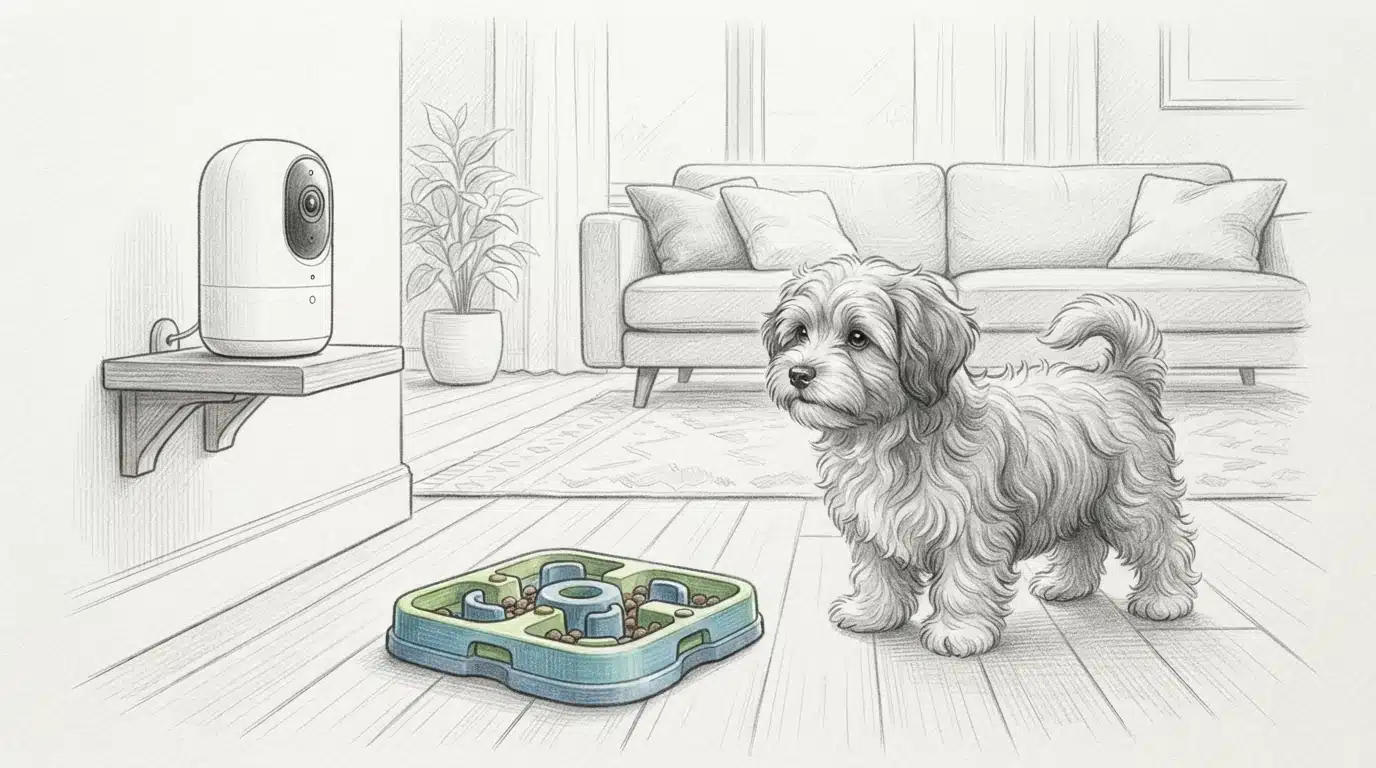
A cheap camera tells you what your neighbors already know. Film a normal departure and watch two things: when the barking starts, and what it sounds like. Distress kicks in fast and escalates, often with pacing, scratching, or howling. Boredom shows up later, in scattered bursts. Frustration sounds rhythmic and points at one spot, like a crate door. The AKC lists boredom, restlessness, fear, and separation anxiety as the common drivers of barking when home alone, and the timing pattern on video usually points to one of them.
Matching the Cause to the Right Response
Once the video shows a pattern, match it to a response. Distress calls for gradual alone-time work, not more exercise. Boredom needs a food puzzle and a settle routine before you leave. Frustration means changing the setup, like a room instead of a gate. Real separation-related behavior in puppies can escalate, and researchers note it often needs structured treatment. Diagnose first, then train, and you will build early independence skills that fit a month-by-month training timeline.
Step 2: Reduce the Apartment Triggers That Start the Barking
Most apartment barking starts with a trigger your puppy can see or hear. Fix the setup first, then train.
Cutting Off Visual Triggers at Windows and Doors
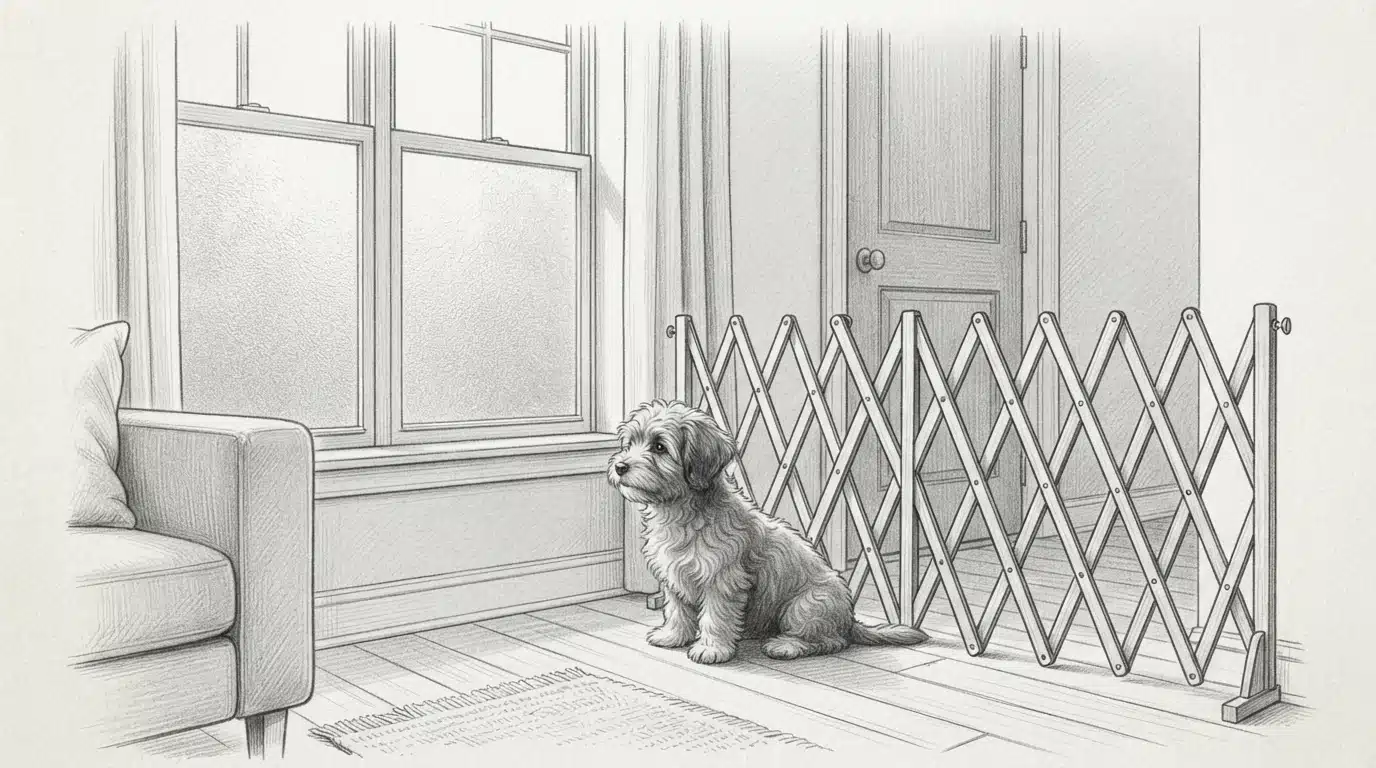
Every passerby, dog, and delivery truck at the window is a rehearsal. Move a couch or pet pen so your puppy cannot perch at the glass, or apply a frosted film to the lower panes. Keep curtains half closed during busy morning and evening hours. If the front door sets your Havanese off, block the sightline with a freestanding gate a few feet back.
Managing Hallway, Elevator, and Neighbor Noise
Hallway footsteps and elevator dings teach your puppy that every sound means someone is coming. Time potty breaks and walks to miss the morning rush, and feed or play quietly when the building is busiest. Add a rug near the entry door to soften foot traffic noise inside your own unit. A knock should never mean a party; stay calm and ask your puppy to settle on a mat instead.
What Sound Management Can and Cannot Do
A radio, fan, or white noise machine masks hallway sounds, so your puppy has less to react to. It does not soundproof the wall, and it will not silence barking on its own. Use masking while you train, not instead of it. White noise at a moderate level works well; avoid cranking volume high enough to stress sensitive ears. Pair the sound with your counter-conditioned departure cues so the noise itself starts to mean calm time.
Step 3: Make Departures Boring and Uncouple Departure Cues
Puppies read your exit ritual like a script. Grab keys, put on shoes, jingle the leash, and a sensitive Havanese already predicts hours alone, so the barking starts before you touch the door. Step 3 breaks that script: you separate the signals from the scary part and make leaving feel uneventful.
Building a Low-Stakes Departure Routine
Keep the actual exit calm and short. Feed a stuffed chew toy a few minutes before you go, skip long goodbye speeches, and walk out without a word. For a Havapoo or Cavapoo in an apartment, the goal is a neutral hand-off: puppy settles with the chew, you slip out, you return within a couple of minutes. Repeated low-key exits teach your puppy that departures predict nothing worth worrying about.
Desensitizing Keys, Coats, and the Door Handle
Counter-conditioning departure cues means doing the trigger without the trigger’s meaning. Pick up your keys, then sit back down. Put on your coat and watch TV. Touch the door handle and stay inside. Mix these in short sets several times a day until each one stops predicting leaving. When the cues go quiet, add brief absences – step to the hallway, come back – and build slowly. Some Sage families start these drills in week one of their puppy’s first month.
Rewarding Quiet at the Door
Silence earns payment, not fuss. Return home only during a calm moment when you can, then greet your puppy softly at floor level instead of matching his excitement. If he barks as you arrive, wait for a beat of quiet before the door opens. You are teaching one clear rule: calm opens doors, noise keeps them closed. Track which quiet moments you rewarded so the pattern becomes obvious to your puppy too.
Step 4: Build Alone Time Gradually at a Pace Your Puppy Can Handle
How Long Can You Leave a Puppy Alone?
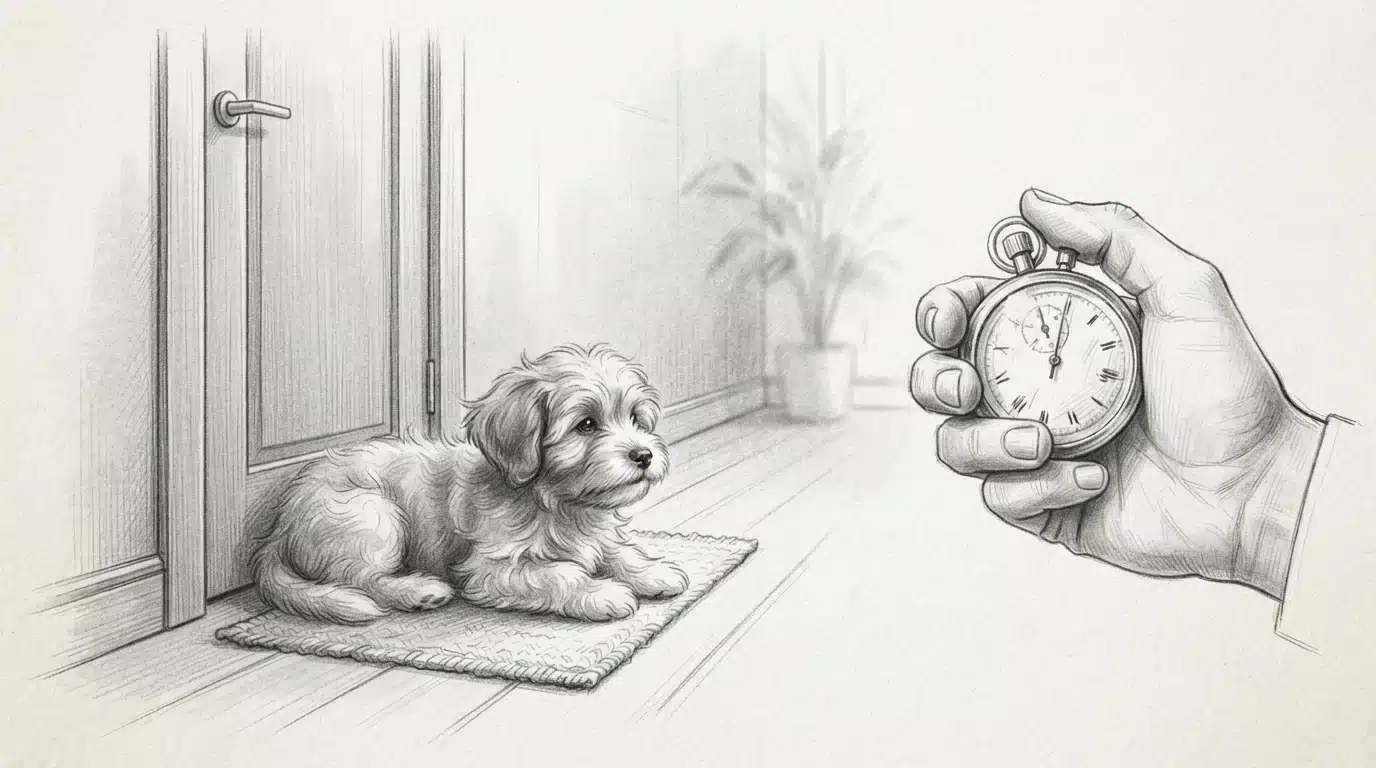
Age sets the ceiling. The AKC suggests roughly one hour per month of age, so a 10-week-old handles about two hours and a 4-month-old about four. Bladder control drives much of this, not just emotion. Treat these as maximums, not goals, and stop well short of them while your puppy is still learning that being alone is safe. AKC’s guide is a good reference point for each age band.
A Progression Framework for Micro-Absences
Start absurdly small so your puppy never practices panicking. A simple ladder:
- Seconds first. Step behind a closed door for 5 to 10 seconds, then return calmly.
- Build to minutes. Add 30 to 60 seconds per session if your puppy stays relaxed.
- Vary the exits. Touch your keys, grab your bag, then leave without them sometimes.
- Stay under threshold. If barking starts, the last step was too big. Drop back one level.
- Pair with naps. A tired puppy settles faster than a wired one.
How Long Should You Let a Puppy Bark When Alone?
Short alert barking that fades within a couple of minutes is normal protest. Wait it out quietly, then reward silence. Panic barking is different: high-pitched, nonstop, with scratching or drooling. Interrupt it sooner. Returning mid-panic can teach your puppy that screaming brings you back, so use a neutral sound cue instead and reward the pause. If panic repeats across several sessions, shorten your absences and ask your vet about a behavior referral. crate-settling practice pairs well here too, and guides like our stress-free crate training for Havanese puppies walk through the first steps.
Step 5: Crate Training and Independent Settling as Support, Not as a Cure
Should You Crate Train a Puppy to Stop Barking?
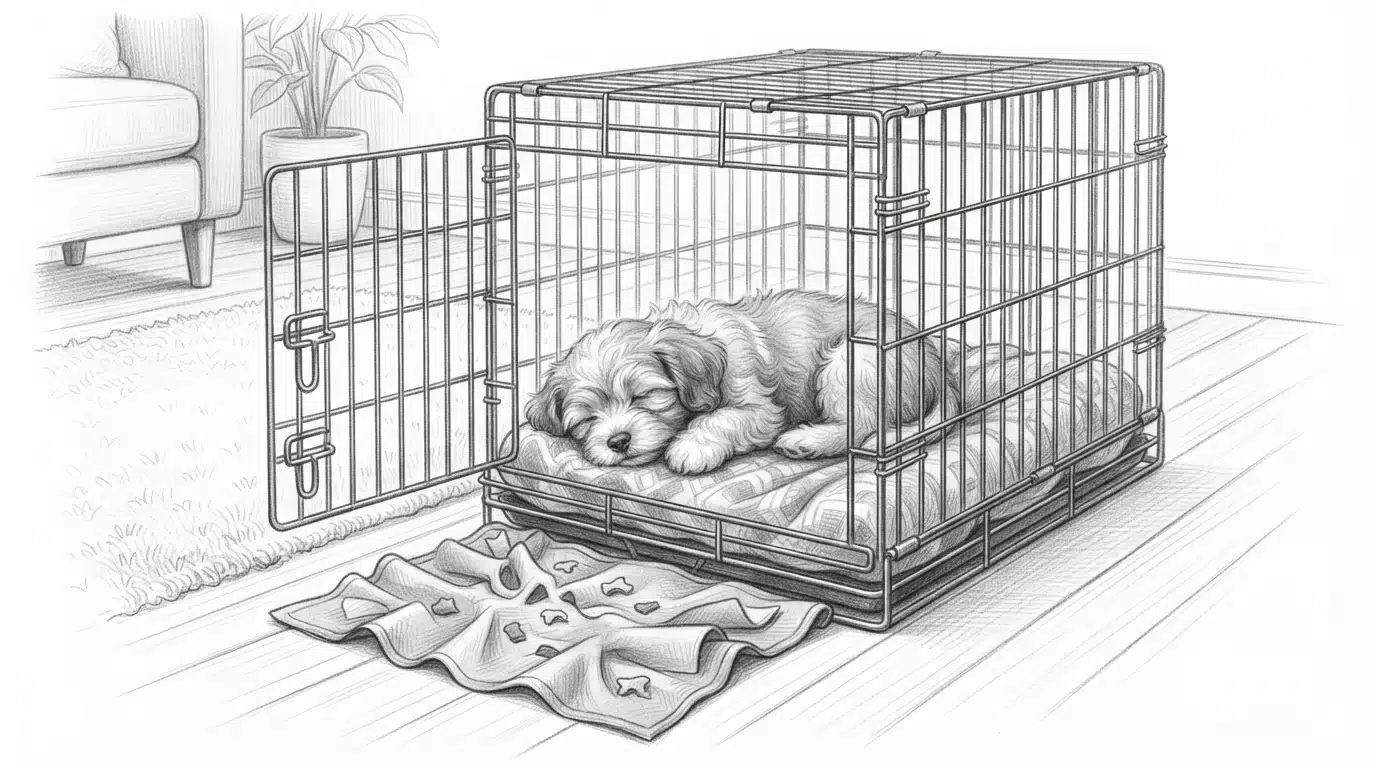
Yes and no. A crate does not stop barking. It gives your puppy a safe, quiet space and helps you manage the environment while you work on the real cause. Many dogs bark more in a crate at first, so the crate alone is not a cure. Pair it with reward-based training, and let it support the plan rather than replace it.
Positive Crate Acclimation, Step by Step
Build good feelings before you ever close the door:
- Feed meals inside the open crate.
- Toss treats in and let your puppy exit freely.
- Sit beside the crate while your puppy naps there.
- Close the door for a few seconds, then open it.
- Slowly stretch the closed-door time as your puppy stays calm.
Keep the crate near you at first, never as a punishment spot.
Teaching an Independent Settle Without a Crate
Mat training builds the same skill anywhere. Place a mat, lure your puppy onto it, then pay calm lying-down moments with a treat. Gradually add time and distance. This teaches your puppy to relax on cue in a crate, on a mat, or beside your desk, which matters most in a small apartment.
Step 6: Apartment Barking Rules, Neighbor Relations, and When to Get Help
How Apartment Barking Rules Usually Work
Most leases handle barking through a nuisance clause or designated quiet hours, often 10 p.m. to 7 a.m., rather than a ban on dogs themselves. Noise complaints usually start with a written notice from the landlord or HOA. Repeated complaints can lead to fines or lease violations, so read your pet clause before your puppy arrives and know what your building counts as excessive.
Responding to a Complaint or a Worried Neighbor
Act fast and stay friendly. Thank the neighbor, explain that you’re training a new puppy, and give a realistic timeline. Then share your plan briefly: sound masking, an alone-time ladder, and departure training. A neighbor who sees you working on the problem is far more patient than one who only hears the noise. Never argue about how long the barking really lasted; it doesn’t change the outcome.
When a Behaviorist or Trainer Should Get Involved
Escalate to a professional when barking continues despite four to six weeks of consistent reward-based training, or when your puppy panics: drooling, pacing, house soiling, or self-injury near doors. Look for a certified trainer using positive methods, and ask your vet for a veterinary behaviorist referral if distress looks severe. Early help matters, because separation-related behavior in puppies tends to deepen without treatment.
Common Mistakes That Make Apartment Barking Worse
Punishment, Startle Techniques, and Bark Collars
Yelling at a barking puppy often backfires. From your puppy’s view, you are joining in, so the noise gets rewarded. Startle tools like thrown cans or spray bottles can silence one bark, but they add fear and can break your puppy’s trust in you. Bark collars carry the same risk: the shock or spray may pair with whatever scared your puppy in the first place. Reward-based training is the accepted standard, so replace punishment with teaching a calm behavior your puppy can earn a treat for instead.
Skipping the Diagnosis and Guessing at Fixes
Treating barking before you know the cause wastes weeks. Boredom barking needs more play and puzzle feeders, while separation-related behavior needs slow departure practice, and the two fixes look nothing alike. If you guess wrong, your puppy keeps practicing the noise and may get worse. Watch when the barking starts, what stops it, and how your puppy acts when you leave. Write it down for a week. A clear pattern points to the right fix, whether that means enrichment, counter-conditioning, or a veterinary behaviorist.

A quieter apartment starts with the right puppy and a calm plan. At Sage Puppies, Cassie matches Havanese, Havapoo, and Cavapoo puppies to your home through a clear application and honest guidance. Ready for a well-bred companion who learns quickly? Browse available puppies or start your application today.
Frequently Asked Questions
Q1: Why does my puppy bark when left alone in an apartment?
Usually one of four reasons: separation distress, frustration, boredom, or territorial noise from hallway sounds. Film a departure to see when barking starts and what it sounds like, since each cause needs a different fix.
Q2: How long should I leave my puppy alone before it stops barking?
There is no fixed target. The AKC suggests roughly one hour per month of age as a maximum, not a goal. Build from seconds upward, and stop growing the absences if barking starts.
Q3: Should I crate train my puppy to stop barking in an apartment?
A crate will not stop barking on its own, and many dogs bark more at first. Use it as a safe space that supports reward-based training, never as a punishment spot.
Q4: How do I know if it’s separation distress or boredom barking?
Distress starts within minutes and escalates, often with pacing, scratching, or howling. Boredom shows later in scattered bursts and fades once energy has an outlet like a food puzzle.
Q5: Do white noise machines really help with apartment barking?
They mask hallway footsteps and elevator noise, which lowers triggers while you train. They do not soundproof, and they will not silence barking alone.
Q6: When should I call a professional about puppy barking?
After four to six weeks of consistent reward-based training with no progress, or anytime panic appears: drooling, pacing, house soiling, or self-injury. Ask your vet for a veterinary behaviorist referral.
Conclusion
Puppy barking control in apartments works when you treat it as a diagnosis, not a battle. Film a departure to tell distress from boredom or frustration, cut the window and hallway triggers, then make leaving feel boring. Build alone time from seconds upward, use the crate and a settle mat as support, and reward quiet rather than punishing noise. Skip bark collars and startle tricks; they trade one problem for a bigger one. If panic signs continue after four to six weeks of consistent reward-based training, ask your vet for a behavior referral. With patience, most small breeds learn that calm, not barking, gets them what they want.