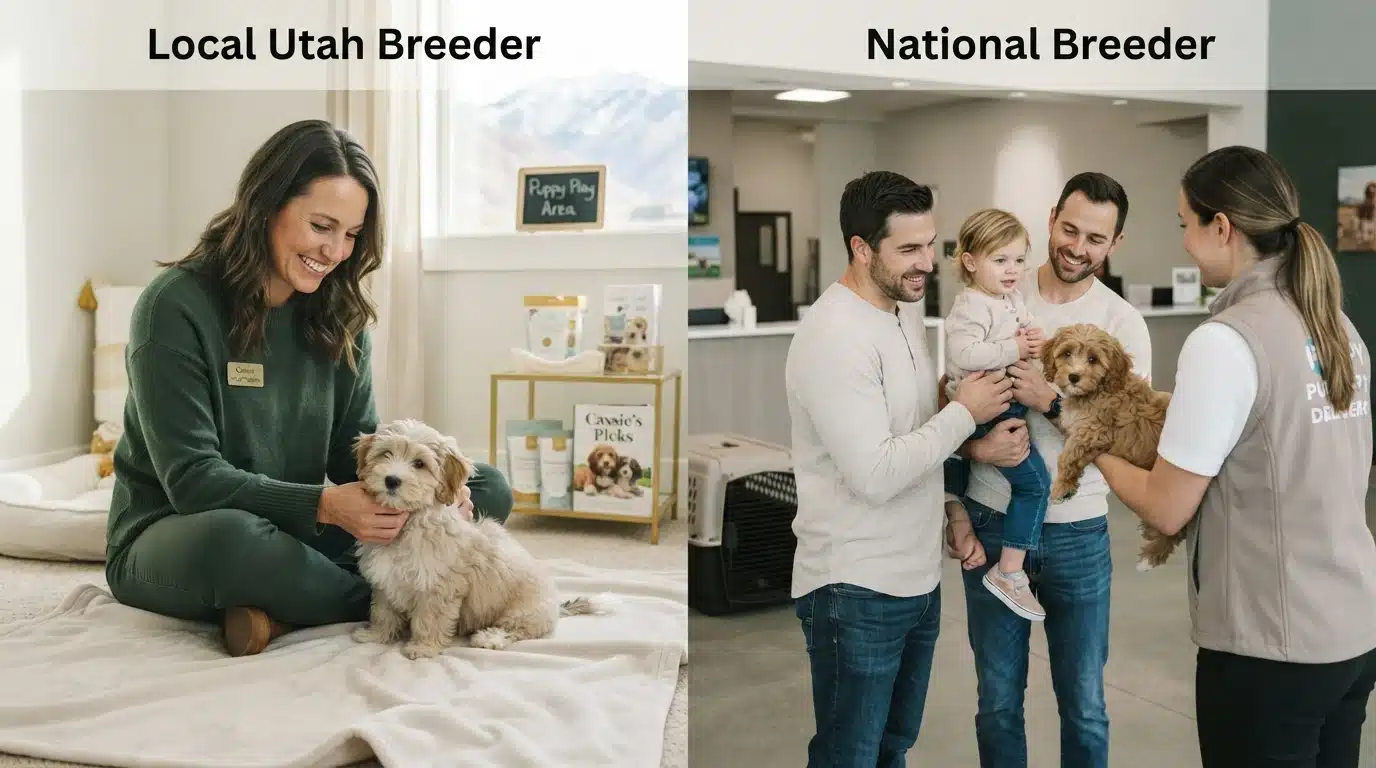
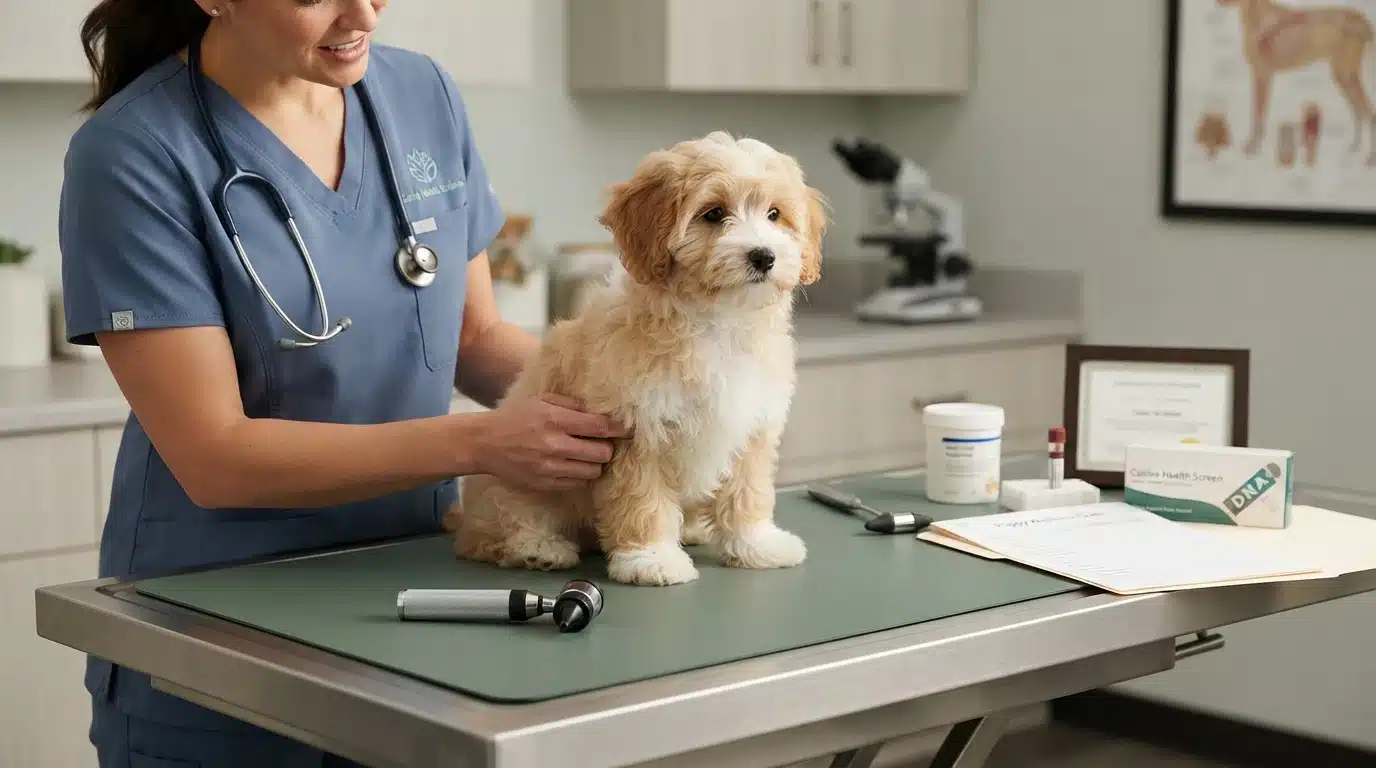
Quick Summary: A safe puppy purchase depends on a complete written agreement covering identity, price, deposit refunds, the 48-to-72-hour vet exam window, health guarantee exclusions, return terms, and spay or neuter requirements. Sage Puppies publishes its pricing, deposit, and reservation policies before buyers pay, while Home Raised Puppies provides a contract checklist but shares full terms on request. Read every clause and keep vet records before paying a deposit.
Two family-raised Havapoo programs can both sell you a healthy, well-socialized puppy, and the difference between a smooth purchase and an expensive dispute usually lives in one document: the written puppy agreement. Sage Puppies in South Jordan and Home Raised Puppies in Eagle Mountain both describe family-raised puppies near you, but their breeder contract terms, and how each explains them, are not the same. Most buyers know they should read the contract, yet few know which clauses to check, which questions expose a thin guarantee, or how to spot a documented written puppy agreement before a deposit goes out. This comparison walks through standard clauses, compares each seller’s published approach, and ends with a puppy contract template checklist, so you can request anything not yet in writing before you sign.
Sage Puppies vs Home Raised Puppies: Contract and Guarantee Terms at a Glance
| Sage Puppies | Home Raised Puppies | |
|---|---|---|
| Written contract approach | Owner-managed written purchase agreement with published health guarantee and deposit and refund policy pages; exact terms shared in writing before payment | Publishes a detailed puppy contract guide listing standard AKC-recommended clauses and buyer red flags; full contract terms shared on request |
| Health guarantee scope | Health guarantee published as a standing policy tied to health-tested parents and puppy health records | Health guarantee described with vaccine records, vet check, and go-home packet; specific covered conditions and duration are set out in the written agreement |
| Deposit and refund terms | Published deposit and refund policy, plus separate guardian arrangements; puppy purchases generally $3,500 to $4,500 | A $500 deposit holds a puppy for pickup; Havapoo pricing published around $3,250 to $3,500 |
| Health records access | Families receive vaccination and puppy health records for their puppy; parent health testing explained | Embark DNA tested parents and a documented vet check are part of the go-home packet |
| Pickup or delivery | South Jordan, Utah pickup or nationwide delivery options | Pickup in Utah by appointment, or an in-cabin flight nanny to your city |
| Best for | Buyers who want a small-breed-only program, an application-based process, and contract terms provided in writing | Buyers who want a published contract checklist to work from and options for flight nanny delivery |
How Sage Puppies and Home Raised Puppies Approach Contracts
Sage Puppies
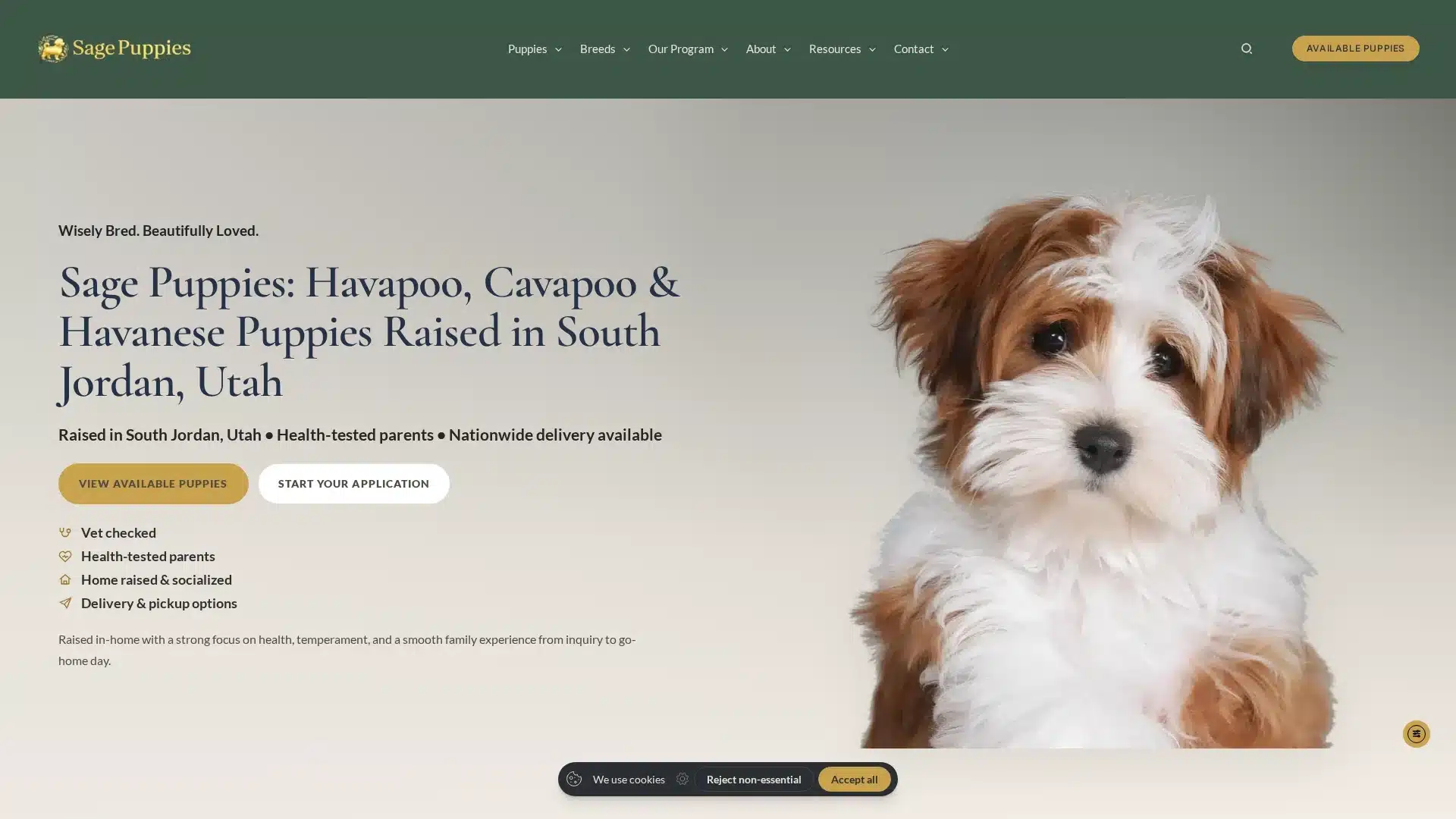
Sage Puppies is a boutique, owner-managed program in South Jordan, Utah that raises Havanese, Havapoo, and Cavapoo puppies only. It suits buyers who want an application-based process and written contract terms before any payment. Its health guarantee, deposit, and refund policy pages are published as standing policy.
Key strengths
- Health guarantee and deposit and refund policy published openly
- Exact written terms shared before payment
- Utah pickup or nationwide delivery
Home Raised Puppies
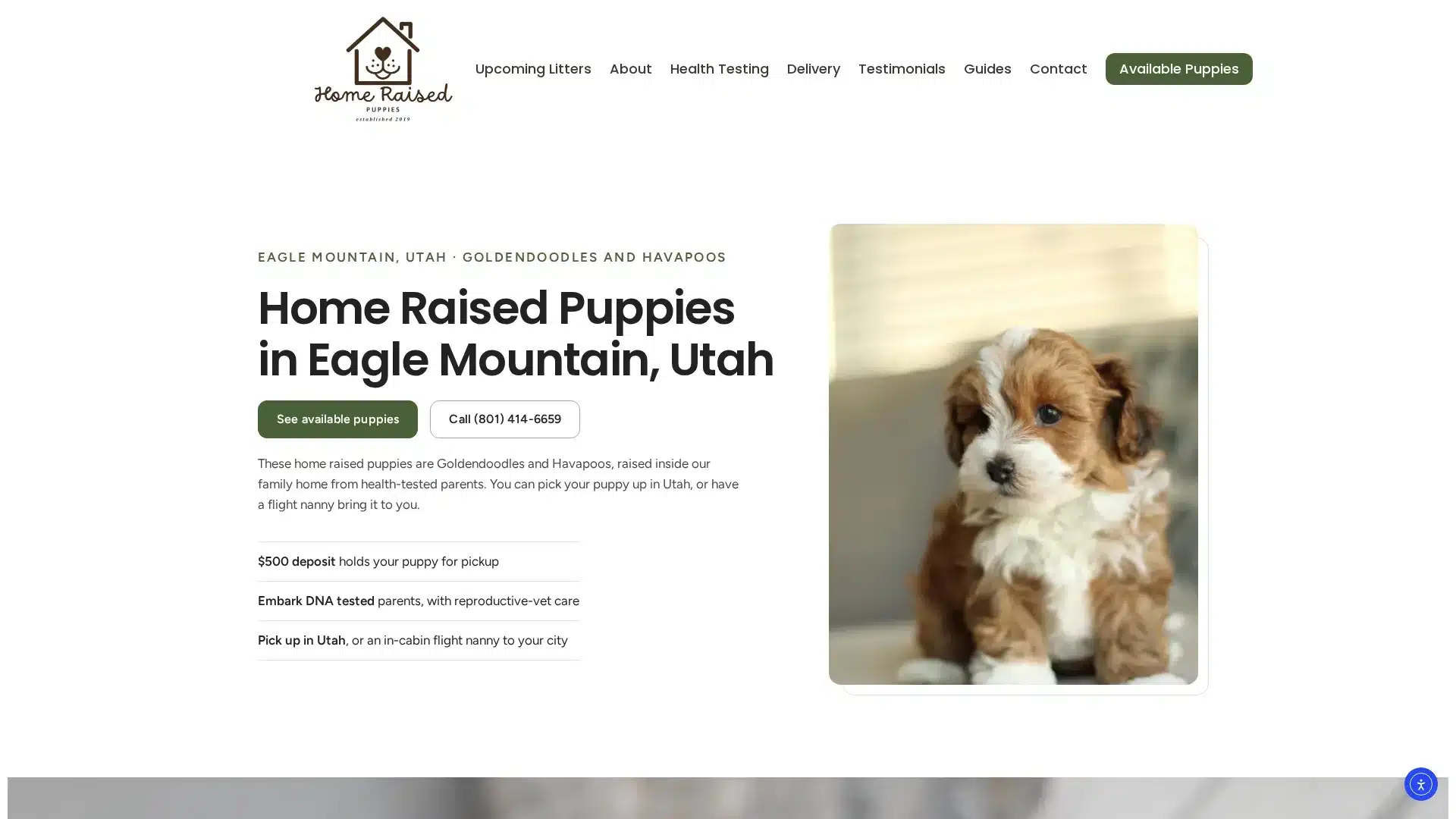
Home Raised Puppies is a Utah family breeder in Eagle Mountain raising Goldendoodle and Havapoo puppies with Embark DNA tested parents. It works well for buyers who want a detailed puppy contract template guide to check against. Full contract terms are shared on request rather than published.
Key strengths
- Published contract checklist with buyer red flags
- Vet check and vaccine records in a go-home packet
- Flight nanny delivery to your city
What a Family-Raised Puppy Contract Should Include Before You Sign
A solid puppy contract should include a written identity section, total price with deposit terms, a vet check window, a health guarantee with named conditions and exclusions, and a return or take-back clause. Use this checklist as your puppy contract template and ask any breeder to fill in each part before you pay.
- Full identity of seller and puppy: legal names, address, breed, birth date, microchip or litter ID.
- Price and deposit terms: total cost, what the deposit covers, refund rules.
- Vet check window: how many days you have for an exam.
- Health guarantee: covered conditions, exclusions, and what triggers a remedy.
- Return clause: what happens if you cannot keep the dog.
- Spay and breeding terms: timing, waivers, penalties.
Missing clauses are not just sloppy paperwork. They are one of the warning signs of an unreputable seller, so treat a refusal to put terms in writing as a reason to walk.

Identity, Price, and Deposit Clauses That Anchor the Agreement
Start with the parties and the puppy. The contract should name the breeder’s legal name and address, plus the puppy’s breed, sex, birth date, and microchip number. Then check the money section. The total price, deposit amount, and refund policy belong in writing, with dates for balance payment and pickup. A program like Sage Puppies publishes its deposit terms and a set price range up front, which is the standard you should expect from anyone. If those details live only in texts, ask for the contract version.
The Vet Check Window and How It Affects Your Leverage
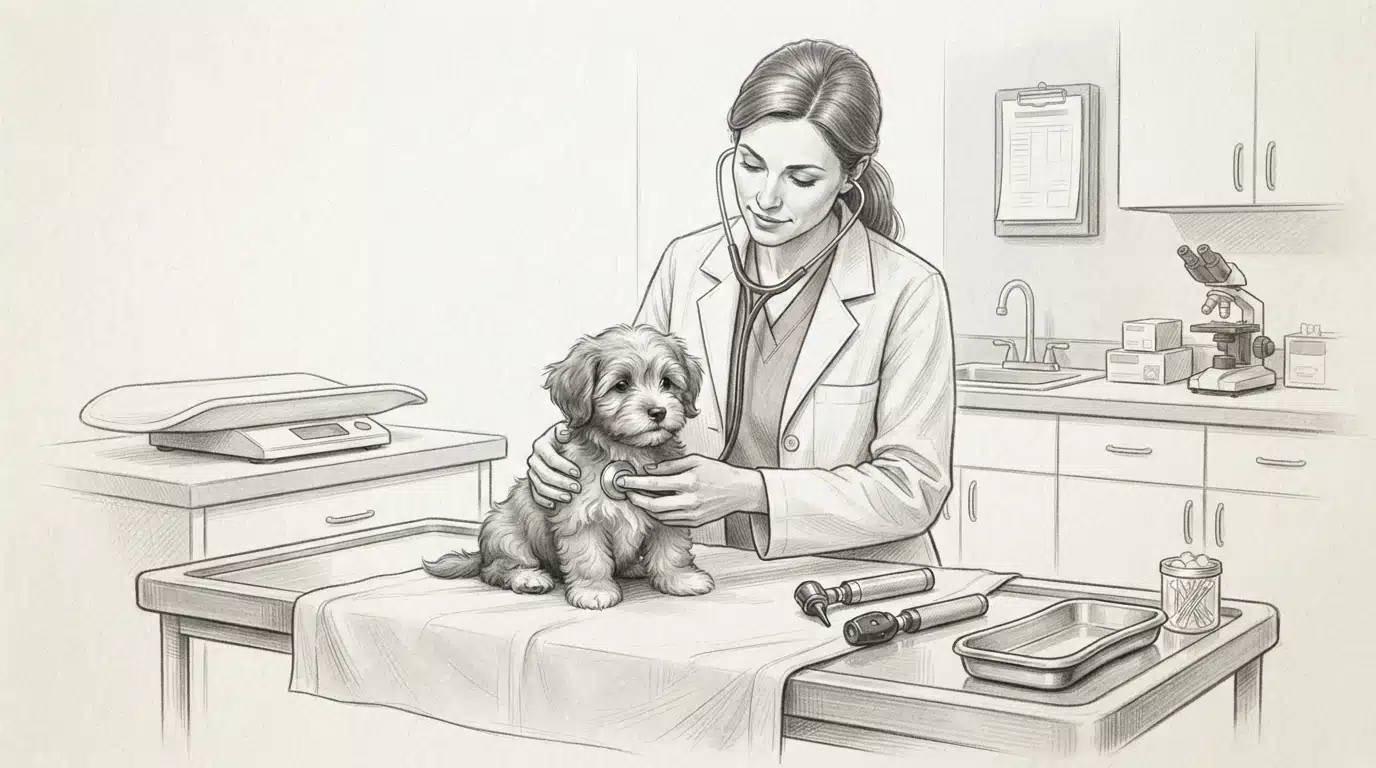
Most written puppy agreements give you 48 to 72 hours to have your own veterinarian examine the puppy, a range common in sample contracts such as the Texas LGD association’s model. Book the appointment before pickup day. If the vet finds a problem, your leverage comes from reporting it inside the window, in writing, with records. Miss the deadline and most guarantees void, no matter how serious the issue.
Return, Spay, and Breeding Clauses to Read Twice
A take-back clause should promise the breeder rehomes the dog rather than forcing you to surrender it elsewhere. Spay and neuter terms need dates or ages, plus a process for extending them with your vet’s input. Breeding restrictions should state penalties clearly. Read any clause that requires you to return the puppy for a refund without naming a deadline, because vague wording there costs buyers the most.
How the Two Programs Describe Their Health Guarantee
A puppy health guarantee should last long enough to catch genetic problems, which usually means one to two years for congenital and hereditary conditions. Some programs also pair it with a short vet check window, often 48 to 72 hours, so you can have your own veterinarian examine the puppy right away. The written length matters less than what the guarantee actually covers, what it excludes, and whether both programs put those terms in writing.
What Each Seller Puts in Public Writing
Sage Puppies publishes its pricing and reservation terms openly, and buyers can review the details on the puppy pricing and reservation page before they apply. Home Raised Puppies, another Utah program, describes its promise on its Good Dog listing: puppies go home with a health guarantee, vaccine records, and a puppy packet, with a $700 non-refundable deposit. That tells you a guarantee exists, but not the covered conditions, exclusions, or refund steps. Ask each seller for the full written agreement before you send money.
Why Guarantee Length Matters More Than the Headline Number
A “two-year guarantee” sounds strong, but the fine print decides its value. Check whether it covers only life-threatening genetic defects, requires a specific vet exam to keep it valid, or refunds instead of replacing the puppy. Some Utah programs advertise a two-year warranty for serious genetic conditions, which is a fair benchmark. Compare the clause text, not the number on the sales page.
Covered Conditions, Exclusions, and What Voids a Claim
What does a puppy health guarantee typically cover?
Most guarantees cover these conditions:
- Life-threatening congenital defects, such as severe heart or kidney problems present at birth
- Serious hereditary diseases common to the breed, often listed by name in the breeder contract terms
- Sometimes a short infectious-illness window, like parvo or distemper, if the puppy was exposed before pickup
They usually exclude these:
- Fleas, worms, kennel cough, or coccidia, which are treatable and common in young puppies
- Injuries, poor weight, or illness that develops after pickup due to environment or care
- Stress-related upsets, since shipping or a new home can cause loose stools that resolve on their own
Hereditary conditions run in the breed and appear on the breeder’s written list. Environmental and contagious problems come from the world the puppy lives in after pickup, so most programs place those on the buyer. Read which conditions carry a deadline, too. Some hereditary claims must be filed before the puppy turns one, and any congenital claim almost always must happen within days of pickup, not weeks. When a program such as Sage Puppies publishes which problems it covers and which it does not, you can compare that list with your own vet’s exam notes.
Buyer Obligations That Keep the Guarantee Valid
Guarantees are conditional. Break one clause and even a strong claim can fail, so treat the obligations like a checklist. These duties appear in nearly every written puppy agreement.
- Take the puppy to your vet within the stated vet check window, often 48 to 72 hours, and keep the invoice
- Keep up with the puppy vaccination and health records already given to you, and follow the schedule the breeder or your vet set
- Feed the food the program recommends for at least the first few weeks, since sudden diet changes cause stomach problems
- Keep the puppy away from dog parks and unknown dogs until the vaccine series is done
- Meet spay and neuter contract timing if the puppy was sold as a pet, usually between 8 and 14 months
- Ask questions in writing, including what to do if something looks wrong
Keep copies of every record. A claim usually rests on the paperwork you hold, not on memory, so a folder with dates and vet notes protects both sides.
Deposits, Refunds, and Payment Terms Inside the Agreement
What Deposit Terms Should Say in Writing
Deposit language should answer four questions before you send money. How much you pay, what the deposit holds, when it is refundable, and whether it transfers to a future litter. Ask for these answers in the written agreement, not in a text message. A clear puppy deposit terms and refund policy protects both sides if timing changes, a litter arrives smaller than expected, or you need to postpone. Get the payment schedule in writing too, including the balance due date and accepted payment methods. If a program will not put deposit terms on paper, treat that as a reason to keep looking.
Two Published Pricing Models Side by Side
Published numbers make this easy to compare, so check each program’s own pages before you apply.
| Program | Deposit | Purchase Price | Where It Is Stated |
|---|---|---|---|
| Sage Puppies | Deposit terms published alongside pricing | Generally $3,500 to $4,500 | Public pricing and reservation page |
| Home Raised Puppies | $500 deposit holds a puppy | Stated per puppy on listings | Good Dog listing and site |
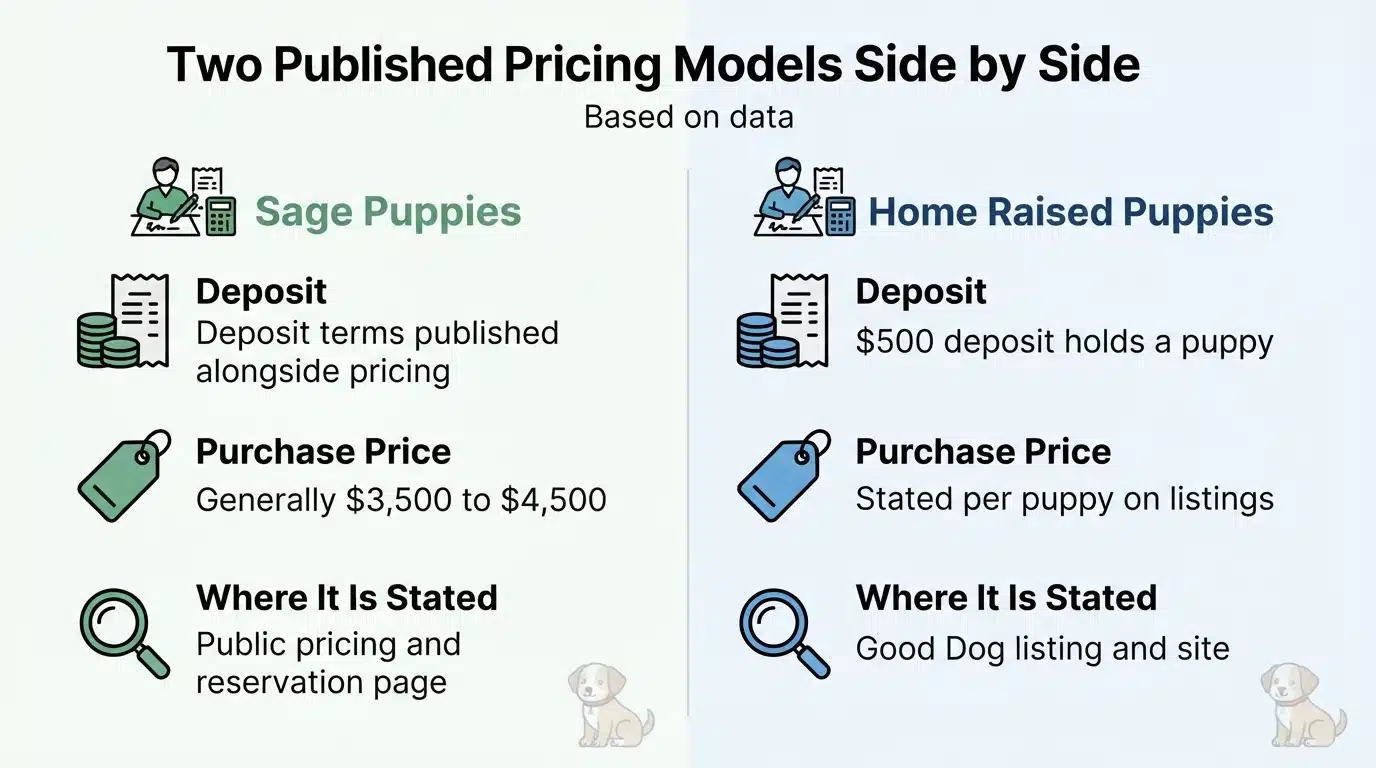
Both models can work. What matters is that the amount, refund conditions, and balance deadline match what the contract says.
Records, Vet Checks, and Pickup or Delivery Arrangements
A written contract is only as good as the paperwork and handoff behind it. The checklist below covers what should change hands on puppy day, and the delivery clause that protects you if the puppy travels instead.
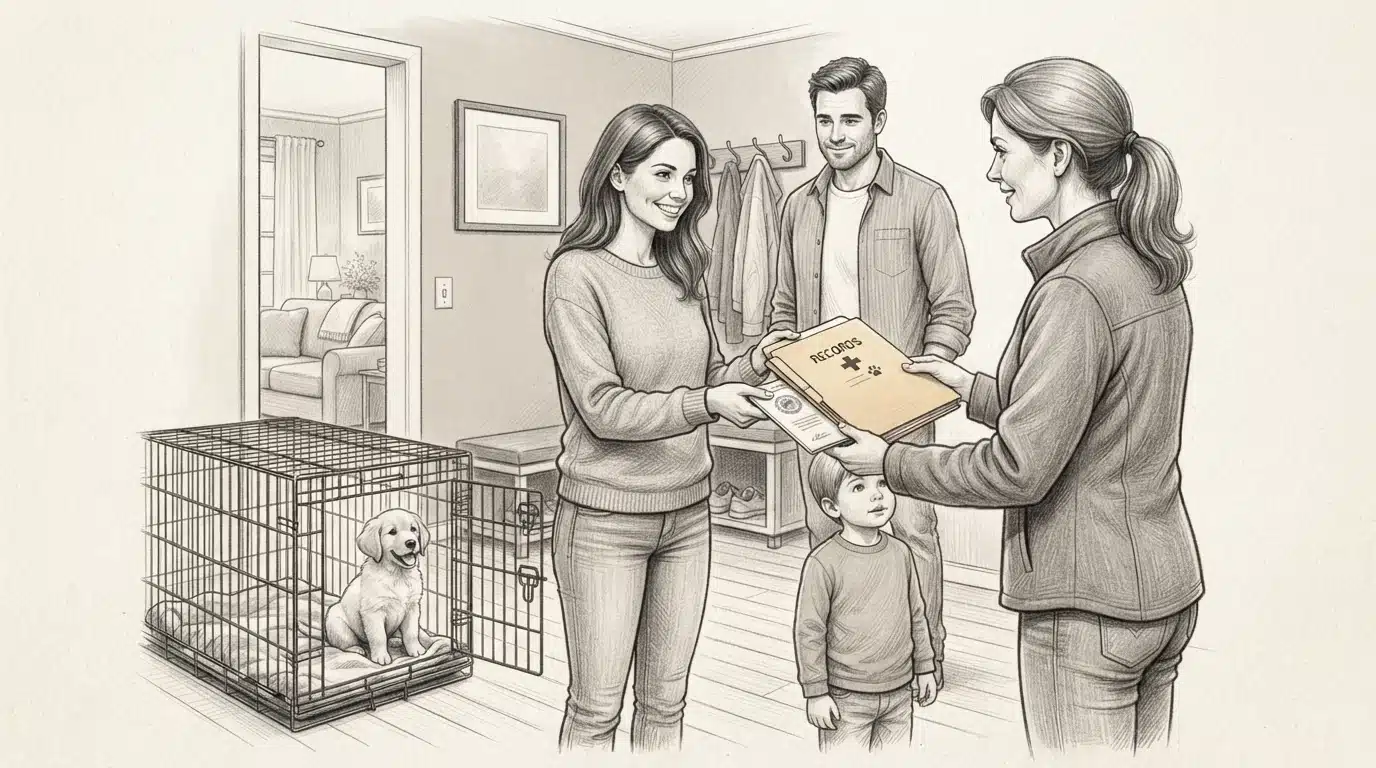
Records You Should Receive in Writing
Ask for dated vaccination records, deworming dates, the microchip number, and a signed vet exam note. These belong in your puppy contract template checklist as named items, not vague promises. Written puppy vaccination and health records let your own veterinarian continue care without guessing. If a breeder hands you a verbal summary, request the paper copy before you pay the balance. Our own health testing records guide shows what to verify. Good programs provide all of it on handoff day.
Pickup, Nanny Delivery, and Contract Language
If you travel for pickup, the contract should state the go-home date, who pays remaining balance, and what happens if you’re delayed. For flight nanny or ground transport, ask who holds risk while the puppy travels. Put it in writing: carrier, route, fees, and a contact number. Compare options in our pickup and delivery overview. A clear clause keeps a stressful day from becoming a dispute.
Questions to Ask a Breeder Before You Sign a Puppy Contract
Before you sign, ask a breeder these questions:
- What exactly does the health guarantee cover, and what does it exclude?
- How long does the guarantee last, and does it cover genetic conditions?
- What is the vet check window, and what happens if my vet finds a problem?
- What are the puppy deposit terms and refund policy?
- What written puppy agreement clauses apply to spay or neuter timing?
- Which records and paperwork come home with the puppy?
Good breeders answer these plainly. Vague or evasive replies are a reason to walk away, so ask early, before you pay anything.
Coverage and Duration Questions
Start with the guarantee itself. Ask which conditions are covered, which are excluded, and whether genetic problems found later are included. Many breeders list covered genetic conditions and replace or refund in specific cases, so get the exact wording.
Then ask how long the coverage lasts. Terms often run one to three years, but programs differ, and the start date matters too. Ask whether the clock starts at pickup or at birth.
Ask for a sample contract before you commit. Reading it a week early beats finding a surprise clause at pickup.
Paperwork, Payment, and Handoff Questions
Next, cover the practical terms. Ask what the deposit covers, whether it applies to the final price, and when it is refundable. Ask for the total cost in writing, including any delivery fee.
Also ask what paperwork comes home: vaccination and health records, a dated receipt, and a signed copy of the contract. Confirm the vet check window and who pays for the exam. If your puppy is arriving by ground delivery or flight nanny, ask who arranges it and what it costs.
Which Written Terms Should You Choose: Sage Puppies or Home Raised Puppies?
The right agreement depends on how much you want spelled out in writing before you send a deposit. Both programs work for family-raised puppies, but they document the deal differently.
When Sage Puppies Fits Your Situation
Choose Sage Puppies if you want the core commercial terms published up front. Pricing generally runs $3,500 to $4,500, and deposit and refund terms sit on a public page instead of arriving mid-conversation. That matters if you compare programs on paper before you call anyone. You still get a written agreement, but the key numbers are already decided, so the contract confirms rather than introduces them. This setup fits first-time owners who want fewer surprises, and buyers in Utah or elsewhere who want to apply, reserve, and plan delivery with the same figures in hand.
When Home Raised Puppies Fits Your Situation
Home Raised Puppies may suit you if you prefer terms stated per listing. A $500 deposit holds a puppy, and the Good Dog listing describes a health guarantee, vaccine records, and a puppy packet going home with each litter. Ask for the deposit refund policy, the vet check window, and any spay or neuter timing in writing before you pay. Whichever program you pick, the same rule applies: get every promise on paper, keep your copy, and read it fully before you sign.

If you want every contract term in writing before you commit, Sage Puppies publishes its pricing, deposit, and reservation terms upfront, so nothing arrives as a surprise. Browse the available Havanese, Havapoo, and Cavapoo puppies, then start an application and ask any question on your list.
Frequently Asked Questions
Q1: What should a puppy contract include when buying a family-raised puppy?
Identity details for seller and puppy, total price with deposit terms, a vet check window, health guarantee covered conditions and exclusions, and a return or take-back clause.
Q2: What does a puppy health guarantee typically cover?
Congenital defects and named hereditary conditions, usually for one to two years. Treatable issues like worms or kennel cough are typically excluded.
Q3: What questions should I ask a breeder before signing a puppy contract?
Ask what the guarantee covers and excludes, how long it lasts, the vet check window, deposit refund rules, spay or neuter timing, and which records come home.
Q4: When does a health guarantee start counting?
Ask the breeder directly. Some agreements start the clock at pickup, others at birth, and the difference can shorten your claim window.
Q5: Are deposits refundable if the litter changes?
Refundable deposit terms vary by program, so get the policy in writing before you pay.
Conclusion
A strong purchase comes down to three things: a written puppy agreement with every clause filled in, a health guarantee whose covered conditions and exclusions you have read in full, and deposit terms stated before you pay. The puppy contract template checklist in this guide covers identity, price, vet check window, return clause, and spay or neuter timing, so use it with any breeder. Sage Puppies publishes its pricing and deposit terms up front, while Home Raised Puppies shares full terms on request; either way, ask for the paper copy, keep your records, and read everything before you sign.