Quick Summary: Cavapoos are generally gentle, affectionate, people-focused, and quick to learn, but each puppy differs in confidence, energy, and sociability. Success depends on matching the individual puppy to your household, then using gentle socialization from 3 to 14 weeks, consistent training, gradual alone time, and clear routines for nipping, chewing, and potty training. Expect a temporary adolescent wobble around 8 to 10 months, and note that Sage Puppies matches puppies to families through its application process.
The first week with a Cavapoo puppy turns temperament from a breed description into behavior you can actually watch. One puppy startles at the vacuum. Another settles only when someone sits nearby. A littermate mouths your fingers at eight weeks. Same lineage, very different puppies to raise.
That gap is the challenge this Cavapoo temperament guide addresses. Breed pages list stereotypes, but they rarely explain how Cavapoo behavior traits show up in a real home or what you can do about them.
This guide walks through puppy-stage development, life with children, socialization steps, time alone, and everyday Cavapoo behavior. You will learn which traits are bred in, which are shaped by you, and where honest limits sit.
It draws on the documented experience behind Sage Puppies, a small Utah program breeding only Havanese, Havapoo, and Cavapoo lines. No guarantees, just practical guidance.
What Cavapoo Temperament Actually Means
A Cavapoo’s temperament is the mix of traits it inherits from two parent breeds, shaped further by genetics, early socialization, and training. This Cavapoo temperament guide separates what the breed average predicts from what each individual puppy actually shows.
How the Cavalier and Poodle Heritage Shape Temperament
The Cavalier side contributes the sociable core. Cavaliers are described by the AKC as affectionate, gentle family dogs that bond closely with their people. The Poodle side adds intelligence and a desire to work with you, which is why Cavapoos usually learn routines quickly. Together, they tend to produce people-focused, quick-thinking companions rather than aloof watchdogs.
Where Individual Puppies Differ From the Breed Average
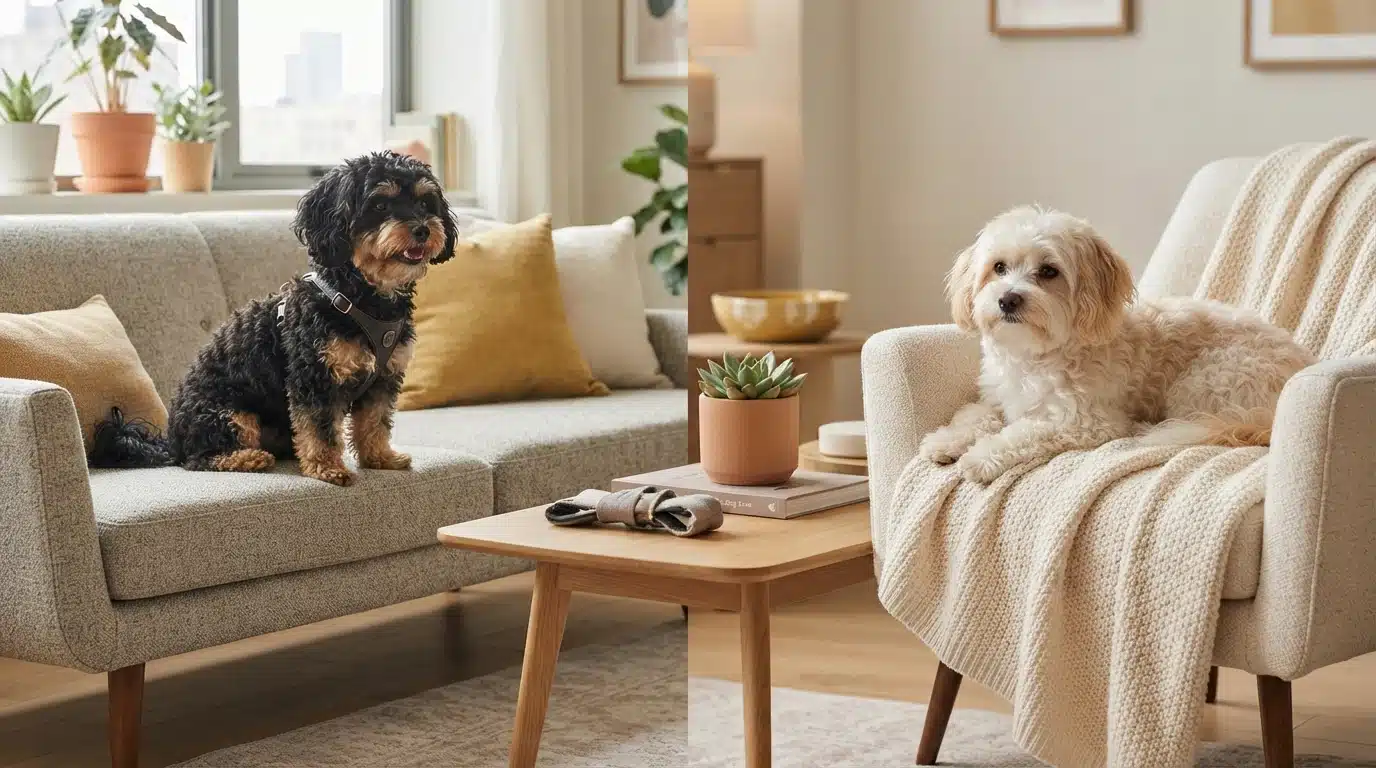
Breed averages describe the middle, not every puppy. Within one Cavapoo litter, you can find a bold puppy that charges into new rooms and a cautious sibling that watches first. Energy level, confidence, and how much each pup wants to sit on a lap all vary. Parent temperament matters, but so does the puppy’s own wiring. A breeder who watches the litter for weeks can tell you which pup fits your household, which is how matching works at Sage Puppies.
Temperament Versus Training: What You Can and Cannot Change
Training shapes behavior, not core personality. You can teach a Cavapoo to settle calmly, greet politely, and handle being alone for short stretches. You cannot train away a naturally soft or high-energy nature, and no puppy is guaranteed to fit a checklist. The AKC notes Cavaliers are smart and train easily, which helps, but realistic owners accept the puppy they have. Match the individual first, then guide it.
The Temperament of a Cavapoo Puppy, Stage by Stage
A Cavapoo’s temperament unfolds in stages, and each stage asks something different of you. This Cavapoo temperament guide walks through the three phases most families notice: the tender early weeks, the socialization window, and the adolescent stretch that surprises so many owners.
What Temperament Looks Like at 8 to 12 Weeks
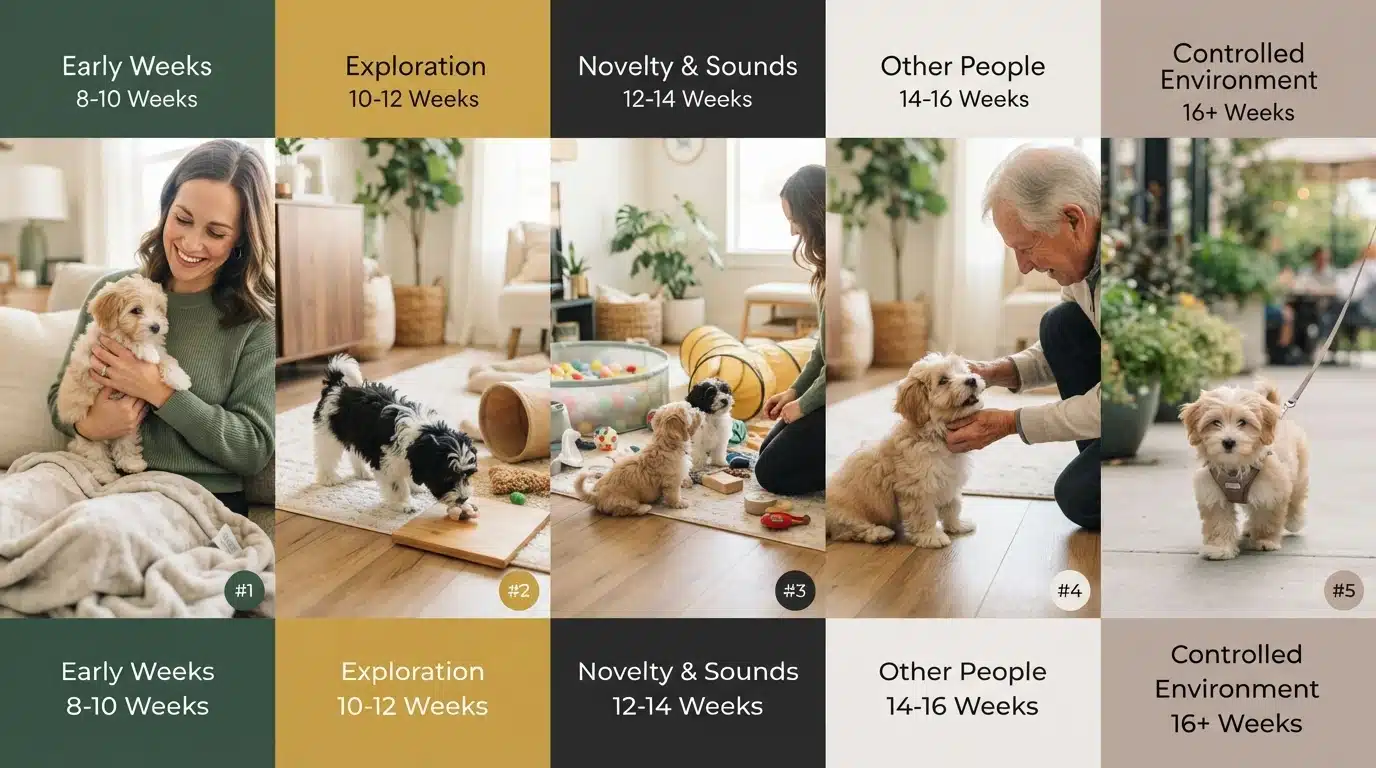
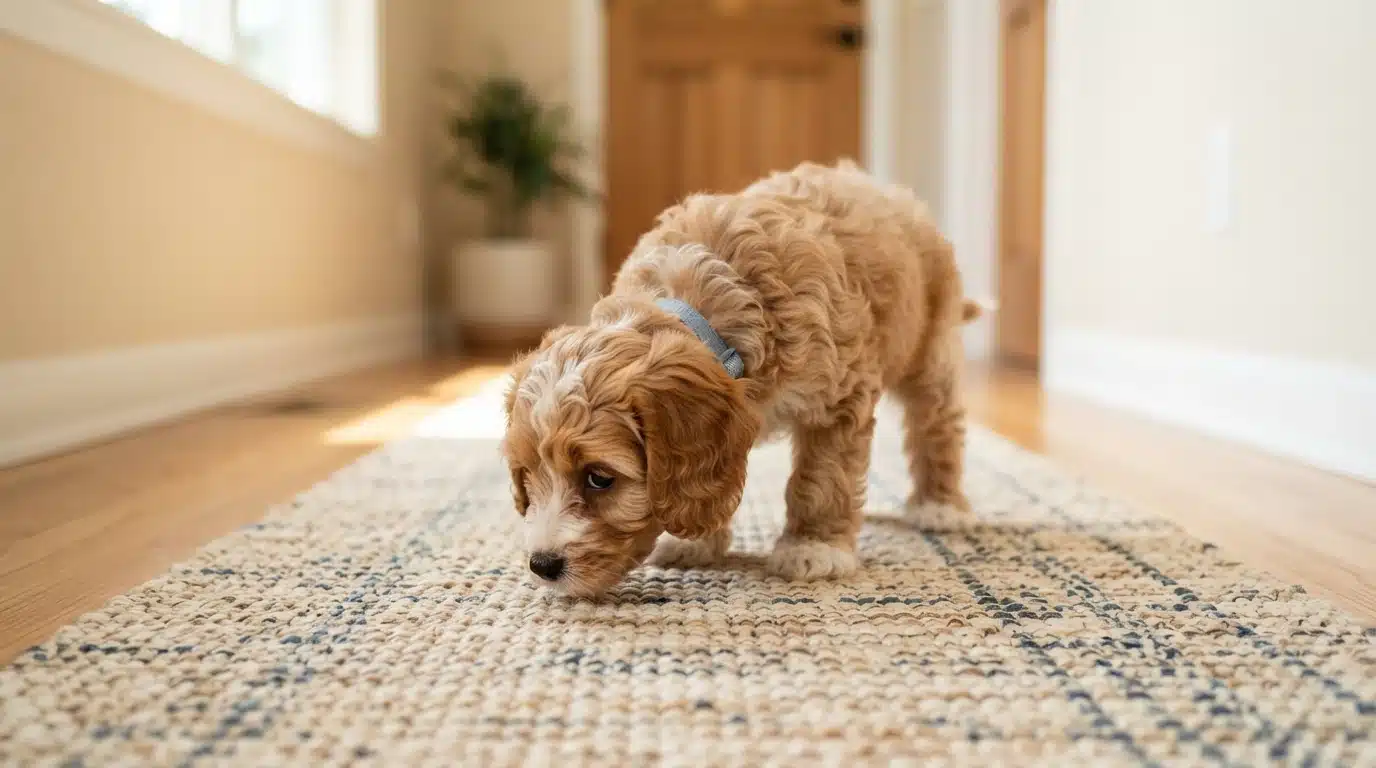
At 8 to 12 weeks, a Cavapoo puppy is soft, curious, and easily startled. Most will follow you from room to room, nap hard after short bursts of play, and mouth everything they can reach. This is also the first fear period, a stretch when sudden noises or new surfaces can leave a lasting impression. According to the AKC’s overview of puppy fear periods, most dogs hit one around 8 to 11 weeks. Keep new experiences gentle and positive during this stage.
Early Socialization Months: Building Confidence
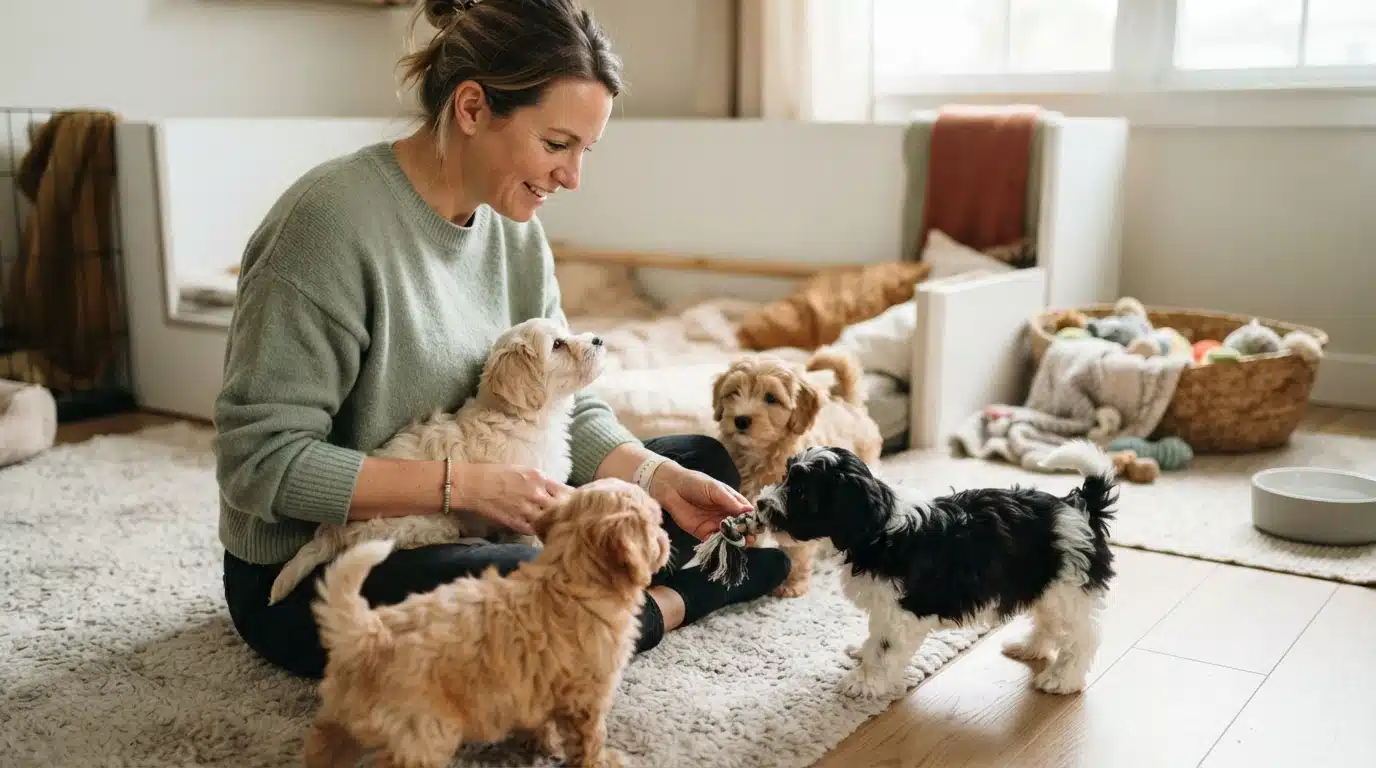
Between roughly 3 and 14 weeks, puppies are primed to learn what counts as normal. Research shows the socialization period strongly shapes later behavior, so calm exposure matters more than volume. Introduce your Cavapoo to different people, handling, sounds, and surfaces at a pace she can handle. Short, happy outings beat long, overwhelming ones. Breeders who raise puppies in a home setting start this work early, which is one reason your first days together often go more smoothly than new owners expect.
Why Behavior Seems to Change at 8 to 10 Months
Around 8 to 10 months, many Cavapoos act less biddable. Adolescence brings hormones, independence, and a second fear period that can run into the teen months. A dog who recalled perfectly at 6 months may suddenly hesitate. Stay consistent with training, keep sessions short, and treat setbacks as normal development rather than a personality change.
Are Cavapoo Puppies Good With Children?
The Honest Answer About Child Compatibility
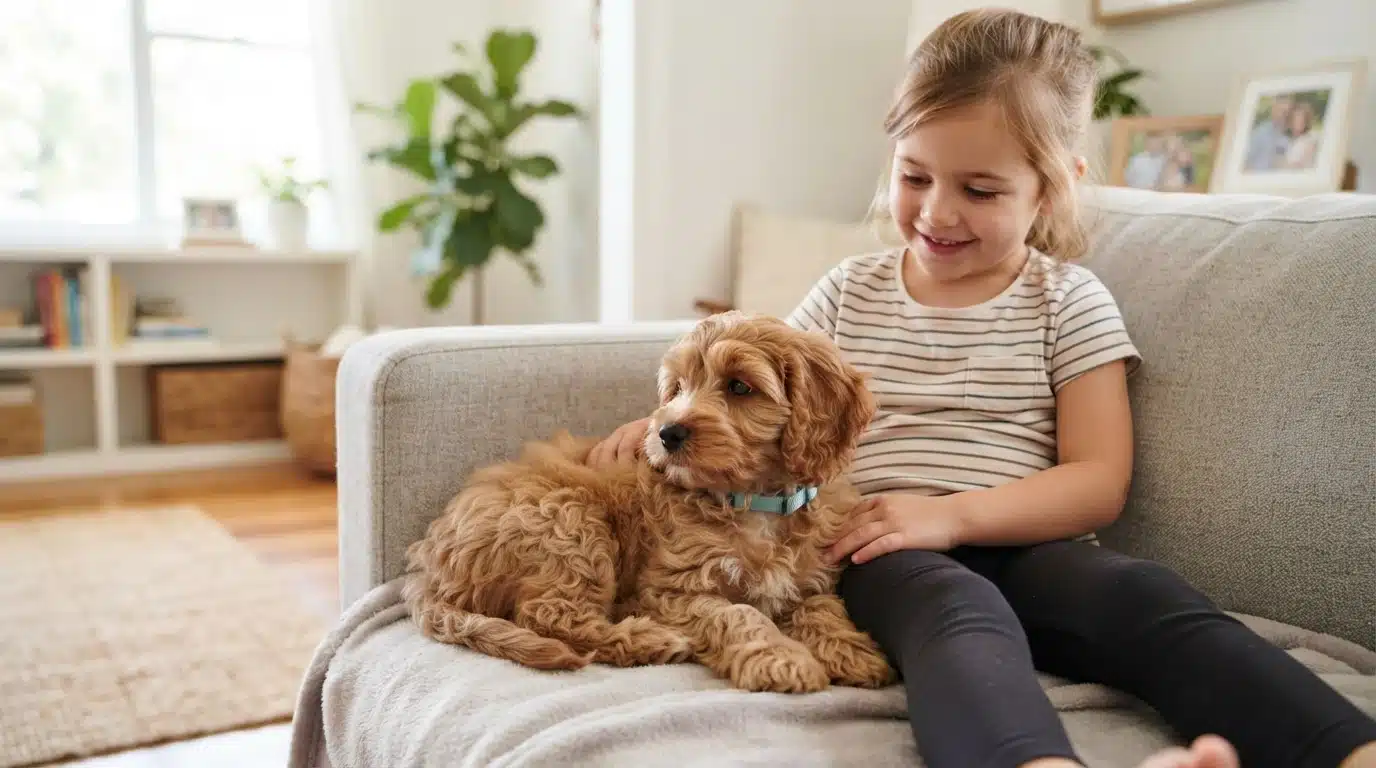
Usually yes, with one condition: the children, not just the puppy, need good dog manners. Cavapoos tend to be gentle, affectionate, and people-focused, and PetMD notes they generally do well with children who know how to play gently. But any puppy under 12 weeks is small and breakable, and rough handling can teach fear or nipping. Temperament gives you a head start, not a guarantee. The real outcome depends on supervision, structure, and how consistently your household handles the puppy.
How Old Your Children Should Be, and How to Handle Introductions
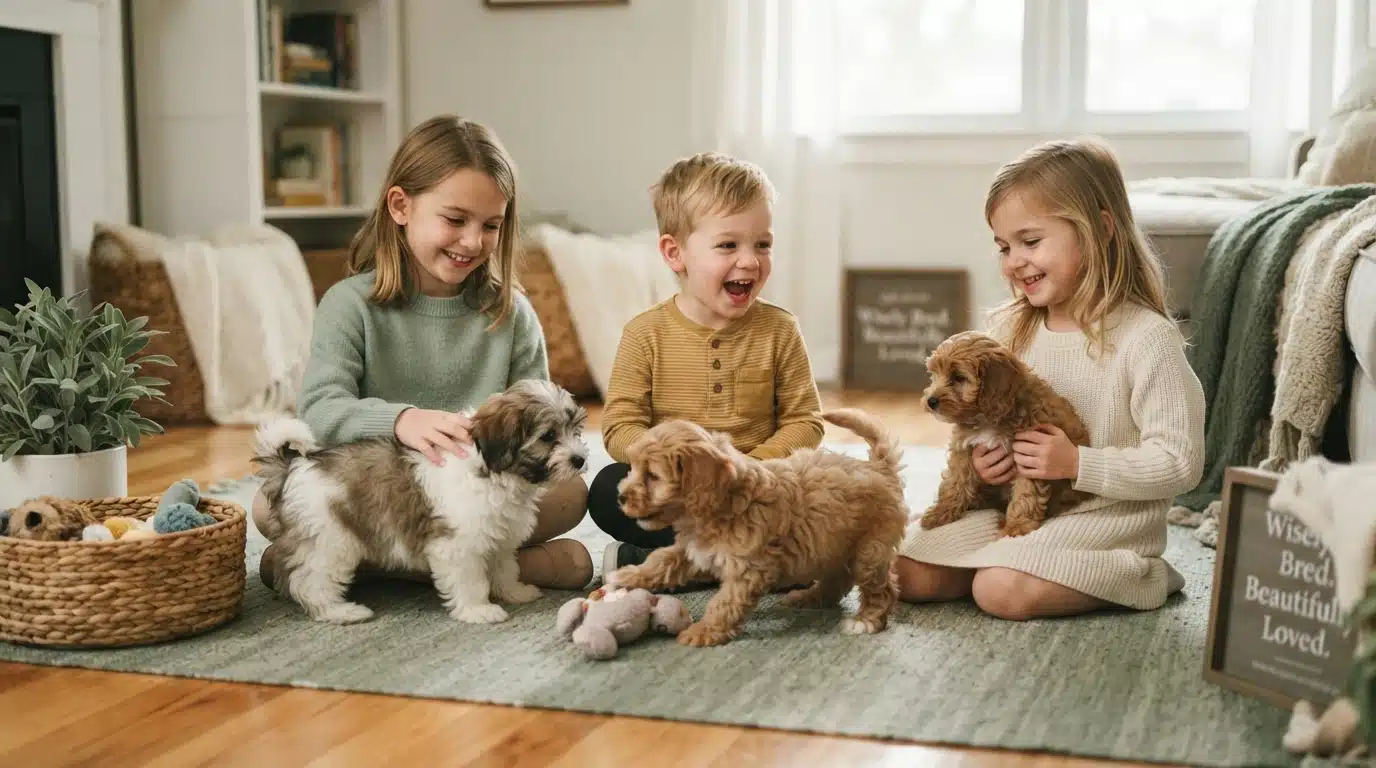
There is no fixed age rule, but school-age children usually manage best because they can follow directions like “let sleeping dogs lie.” Toddlers and puppies can work, though only with an adult within arm’s reach at all times. Teach your kids a few basics before the puppy arrives: pet with a flat hand, never grab, and let the puppy walk away. For the first introduction, keep it calm and short. One child, one seated adult, and let the puppy approach on its own terms rather than being passed around the room.
Meeting a Resident Dog Before You Bring the Puppy Home
If you already own a dog, arrange a neutral-ground meeting before homecoming day. Pick a fenced yard or quiet park, keep both dogs leashed loosely, and watch for loose, wiggly body language rather than stiff stares. A successful first meeting lowers the odds of territorial friction later, and it tells you whether your resident dog actually enjoys puppies. Puppy socialization between the two breeds’ temperaments matters too; see how family-raised socialization shapes a puppy’s confidence before new people and pets arrive.
Socialization With Strangers, Visitors, and Other Dogs
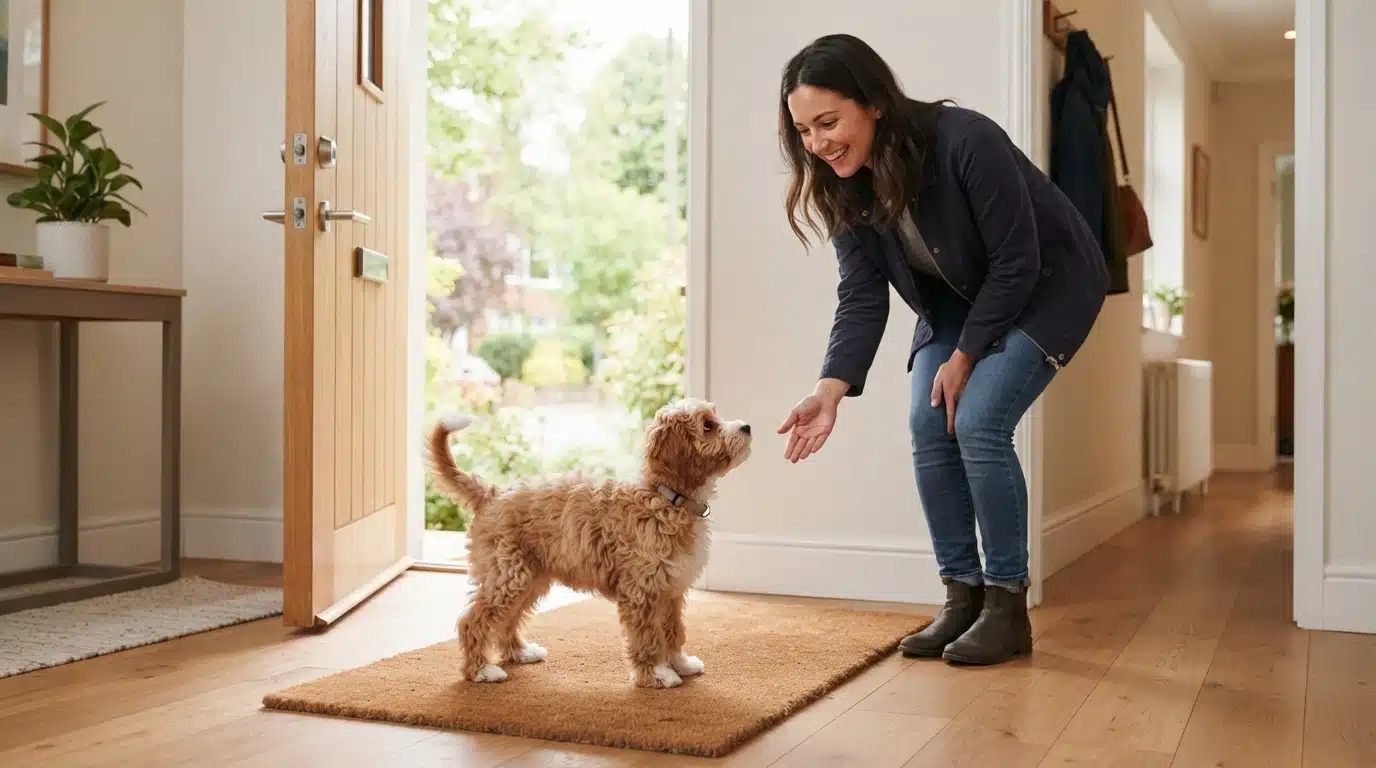
Cavapoos tend to greet strangers warmly, but each puppy has its own blend of friendly and watchful. Some bark once at a knock, then wiggle with joy once the door opens. That alert-first pattern is normal for a companion breed with a watchdog streak. Read your puppy’s signals instead of labeling the behavior good or bad. A single bark followed by relaxed body language is alertness. Growling, backing away, or refusing treats means the visitor arrived too fast, and the moment needs a slower setup.
Friendly, Alert, or Both: Reading the Watchdog Instinct
The watchdog instinct in a Cavapoo usually looks like notice-then-warm-up. Your puppy hears a sound, checks it, and decides whether you seem worried. If you greet guests calmly, most Cavapoos follow your lead within a minute. Problems start when owners either punish the alert bark or reward nonstop barking with attention. The middle path works better: acknowledge the knock, thank the puppy quietly, then ask for a sit at the door. That habit turns guarding noise into a short, manageable signal.
Building a Puppy That Handles Visitors Calmly
Visitors become easy when practice happens in small doses before real guests arrive. Have one calm adult enter, ignore the puppy for a few minutes, then offer a treat once all four paws are on the floor. Ask friends to avoid hovering or grabbing at your puppy’s face. Between about 3 and 14 weeks, puppies decide what counts as normal, so varied, gentle visitor exposure during that window pays off for years. A family-raised puppy often arrives with a head start on household sounds.
Dog-to-Dog Manners as a Puppy Grows
Dog-to-dog manners depend far more on practice than on breed labels. Match your puppy with calm, vaccinated adult dogs who correct gently rather than roughly. Keep early play sessions short, around ten minutes, because overtired puppies turn into nippers. Watch for healthy turns: both dogs take breaks, roles swap, and neither pins the other constantly. Skip dog parks until your puppy’s manners are solid, since one bad encounter with a rude dog can undo weeks of progress.
Tip: Let visitors know your rules before they walk in. Consistent handling from every guest teaches faster than any single training session.
Time Alone and Separation Anxiety in Cavapoo Puppies
Why a People-Oriented Puppy Struggles With Isolation
Cavapoos were bred for companionship, so being alone runs against their nature. Both parent breeds bond tightly with people, and a puppy who has just left her littermates may feel that loss hard. Left alone too long, too soon, she can learn that your departure means panic. That is why separation-related problems need steady, structured prevention, not just patience.
Building Alone Time Gradually Rather Than by Deadline
Start small. Step out of the room for a minute, come back calmly, and repeat. Slowly stretch the gaps: a few minutes, then twenty, then a short errand. The RSPCA recommends introducing being alone gradually from the day your puppy comes home, because early practice lowers the risk of problems later.
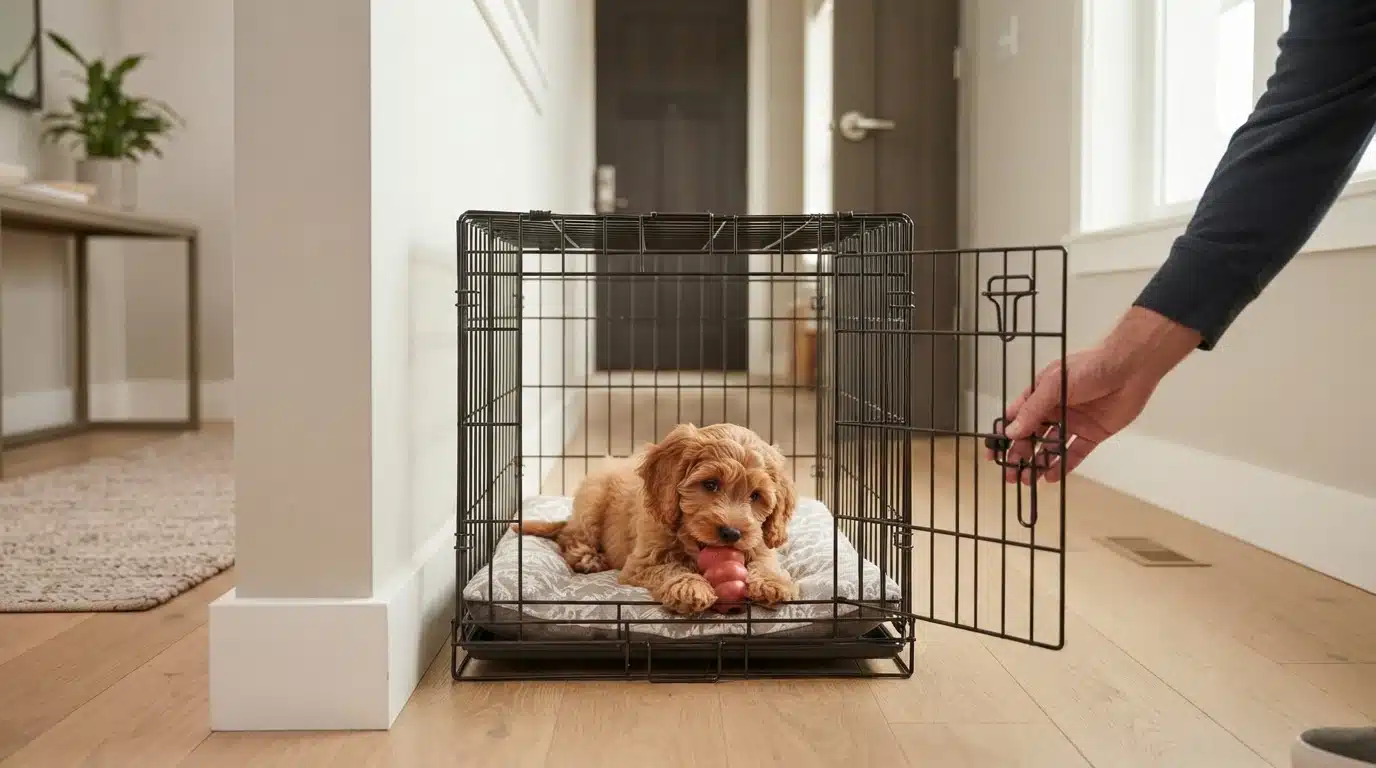
Keep arrivals and departures boring. A predictable routine, a safe spot, and a food-stuffed chew toy all help. There is no fixed age when a puppy “should” handle a full workday; progress depends on the individual dog. If an absence has to happen, keep it short and arrange a neighbor, friend, or sitter for the middle stretch.
Warning Signs and When to Call a Vet or Trainer
Some whining at first is normal. Watch for the heavier signals: destroyed door frames, soiling despite housetraining, drooling, nonstop howling, or escape attempts that risk injury. These suggest real separation distress, not simple boredom. If the signs persist after a few weeks of short-session practice, or your puppy hurts herself, contact your vet or a certified trainer. The VCA’s overview of separation anxiety in dogs outlines what professional treatment typically involves, and behavior worsens faster the longer it goes unaddressed.
Everyday Behavior Traits: Nipping, Barking, Chewing, and Potty Training
Mouthing and Nipping, and Teaching Bite Inhibition
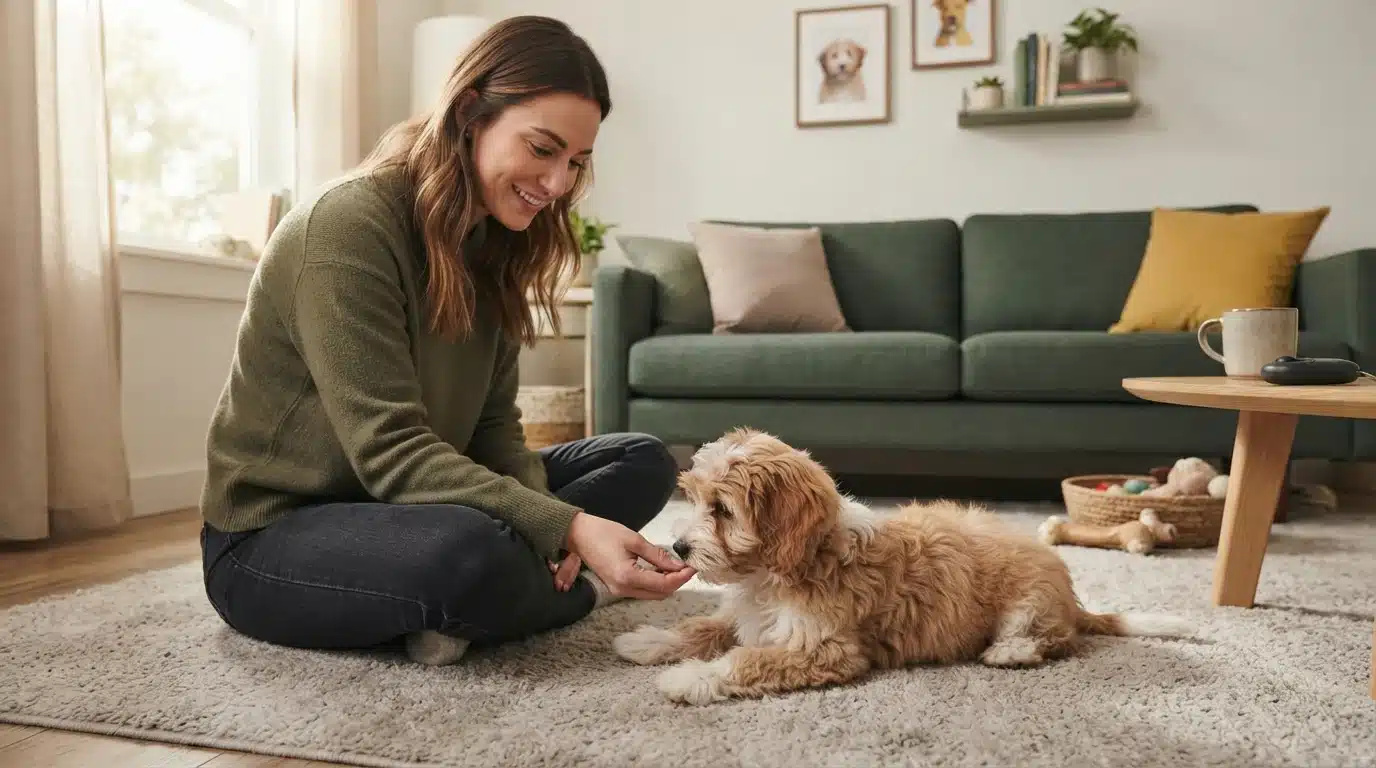
Cavapoo puppies mouth hands, sleeves and ankles because that is how puppies explore. The habit fades faster when you teach bite inhibition. If teeth touch skin, yelp quietly and stop play for a few seconds. Praise calm licks instead. Offer a chew toy whenever hands get exciting, so your puppy learns what is fair game. Never scruff or shout, since rough corrections often make nipping worse.
Distinguishing Play, Alert, and Distress
Cavapoos are social and fairly vocal, so reading the reason behind a bark matters more than silencing it. Play barks come in bursts, with a bouncy posture and loose tail. Alert barking is a few sharp notes at a noise or a stranger at the door, and it usually stops once you acknowledge it. Distress sounds different: whining, pacing, or a high, steady cry. Answer distress quickly, because punishing it teaches a puppy to hide worry rather than lose it.
Chewing and the Strong Jaws of a Poodle Cross
Chewing peaks during teething, roughly 3 to 6 months, and Cavapoos are persistent about it. Their poodle ancestry brings a busy, clever mouth that will find chair legs, shoelaces and remote controls. Prevention beats correction. Rotate two or three sturdy chew toys, swap items before boredom sets in, and keep floors picked up. Use a taste deterrent on fixed objects your puppy keeps returning to, and redirect to the toy every single time.
Potty Training and the Reliability of the Routine
Cavapoos are eager to please, so potty training usually goes well when the routine is boringly consistent. Take your puppy out after every meal, nap and play session, plus first thing in the morning and last thing at night. Feed on a fixed schedule. Praise outdoors, stay neutral about accidents, and clean messes with an enzymatic cleaner so scent does not call your puppy back. Most Cavapoos become dependable within a few months of steady practice.
Training, Exercise, and Matching a Cavapoo to Your Lifestyle
Daily Exercise and Mental Work
Adult Cavapoos usually need 45 to 60 minutes of activity a day, split across walks, play, and short training games, according to BorrowMyDoggy’s breed guide. Puppies need far less; keep sessions short and let naps happen. Mental work matters as much as walking, because a bored Cavapoo invents games with your shoes. Puzzle feeders, sniff walks, and two-minute training reps tire a small dog out fast.
A Realistic Training Path for First-Time Owners
Cavapoos are biddable and food-motivated, which makes them forgiving of beginner mistakes. Start with name response, crate comfort, house training, and gentle handling, using rewards your puppy actually wants. Plan for the adolescent dip around 8 to 10 months, when recall and focus may wobble. Keep sessions short, stay consistent, and expect the skills to return. If mild anxiety shows up, PetMD notes that crate training and steady exercise often help.
Whether a Cavapoo Fits Your Home, Schedule, and Budget
A Cavapoo suits apartments, houses, and most family setups, as long as someone is home most of the day. They dislike being left alone for long stretches, so plan pet-sitters or doggy daycare if you work full-time away. Budget beyond the purchase price: food, grooming every few weeks, vet care, and training classes. Match the puppy to your real routine, not your ideal one.

Now that you know what a Cavapoo’s temperament really asks of you, meet the puppy raised to match it. Sage Puppies matches each Cavapoo with the right family through a simple application, with local pickup in Utah or delivery nationwide. Start yours today.
Frequently Asked Questions
Q1: What is the temperament of a Cavapoo puppy like?
Cavapoos are people-focused, gentle, and quick to learn routines, thanks to the sociable Cavalier and clever Poodle heritage. Expect a lap-loving companion that follows you around, though energy and confidence vary from puppy to puppy within the same litter.
Q2: Are Cavapoo puppies good with children?
Usually yes, with supervision. Cavapoos tend to be affectionate and patient, but puppies under 12 weeks are small and easily hurt. School-age kids manage best, and adults should stay within reach whenever toddlers and puppies share the floor.
Q3: Can Cavapoo puppies be left alone for long periods?
Not for long stretches. Cavapoos were bred for companionship, so build alone time gradually from day one: one minute, then twenty, then a short errand. Arrange a sitter or daycare if you work full-time away from home.
Q4: Do Cavapoos shed or trigger allergies?
Most Cavapoos are low-shedding, but no dog is truly hypoallergenic, and coat types vary within a litter. Spend time with the puppy before committing if allergies matter in your home.
Q5: How much exercise does a Cavapoo need?
Adults typically need 45 to 60 minutes daily, split between walks, play, and short training games. Puppies need far less; keep sessions brief and protect nap time.
Q6: How long does potty training take?
Most Cavapoos become dependable within a few months of a consistent routine: outside after every meal, nap, and play session, with calm cleanup of accidents using an enzymatic cleaner.
Q7: When do Cavapoo puppies calm down?
Expect a wobbly adolescent phase around 8 to 10 months, then steadier behavior as your dog matures past a year. Consistent short training sessions help skills return quickly.
Conclusion
A Cavapoo’s temperament gives you a gentle, people-focused start, but the puppy you raise decides the rest. Breed averages describe the middle; each individual pup varies in confidence, energy, and how quickly she settles.
The habits that matter most are simple: gentle socialization between 3 and 14 weeks, short training sessions, gradual alone time, and consistent routines for nipping, chewing, and potty training. Expect an adolescent wobble around 8 to 10 months, and treat it as development, not a personality change.
Match the puppy to your real schedule and household, and accept honest limits rather than guarantees. When temperament and daily habits line up, most Cavapoos grow into calm, affectionate companions that fit family life beautifully.