Quick Summary: Picking up a puppy from an out-of-state breeder goes smoothly when you confirm health records, travel plans, and handoff details in writing before you drive. Connecticut requires a USDA-accredited health certificate issued within 30 days for imported dogs, and puppies must be at least 8 weeks old. Pack a secure crate, plan calm stops every 2-3 hours, and review vaccination and microchip records at the handoff. Keep the first 24 hours quiet, schedule a vet visit within a week, and avoid overstimulating the puppy.
You typed “puppies Connecticut near me” into a search bar, scrolled for hours, and still didn’t find the right Havanese, Havapoo, or Cavapoo. It happens often. The healthiest, best-matched puppy for your family may live with a breeder out of state, and that’s when pickup day matters most.
Here’s the good news: pickup is simple when you confirm health records, travel plans, and handoff details ahead of time. This guide walks you through exactly what to expect, step by step. You’ll learn what paperwork to collect, how to prepare your car and home, and which Connecticut rules to know before you drive.
We raise Havanese, Havapoo, and Cavapoo puppies in a home setting, so we know pickup day from the breeder’s side. Use this guide whether you’re searching “puppies Connecticut near me” one more time or planning a longer drive to meet your new puppy.
Step 1: Confirm the Pickup Plan Before You Travel
Before you book a flight or load the car, lock down every detail of the handoff. A short phone call a few days ahead saves you from a 2,000-mile trip gone sideways. This matters even more if you’ve been searching “puppies Connecticut near me” and found the right match with an out-of-state breeder like us in South Jordan, Utah.
Confirm the Puppy and Reservation Details
Get everything in writing, then read it twice. Your confirmation should spell out:
- The exact puppy – breed, sex, color, and date of birth
- Your name as it appears on the reservation, plus contact numbers
- The final price, what’s already paid, and what’s due at pickup
- The pickup location and who will meet you
Connecticut families should also know the state takes paperwork seriously. Any dog imported into Connecticut must arrive with a health certificate issued by a USDA-accredited veterinarian within 30 days of the trip, and puppies sold in the state must be at least 8 weeks old, per Connecticut General Statutes § 22-354. Ask your breeder for the health certificate, vaccination record, and health guarantee before travel day.
Tip: If a breeder can’t confirm which puppy is yours in writing, walk away. Ethical breeders keep records and share them willingly.
Set a Realistic Arrival Window
Agree on a time window, not a vague “sometime Saturday.” Flights get delayed, and puppies don’t wait well. Confirm:
- The exact date and a 2-3 hour arrival window
- A backup contact and phone number for the person handling the handoff
- What happens if your flight is late or canceled
If you’re flying, book an arrival at least 2 hours before the handoff. If a same-day backup plan isn’t possible, ask about overnight boarding with the breeder. A breeder used to nationwide families – like ours – will have handled delayed flights before and can adjust. One more check before you leave: verify the address in your own maps app and screenshot the confirmation. Cell service can drop right when you need it most.
Also Read: 10 Adorable Havapoo Colors You Need to See (2026)
Step 2: Prepare Your Family, Vehicle, and Home for the Trip
Pickup day goes smoothly when the boring stuff is done the night before. Puppies pick up on stress, so a packed car and a calm plan matter more than you’d think. Families driving from Connecticut to meet a Utah-based program like Sage Puppies, or meeting a transport leg, should treat this like any long trip with a baby on board.
Pack for a Secure, Low-Stress Ride
The safest setup is a small travel crate or carrier, secured so it can’t slide. Cornell’s veterinary school warns that loose pets distract drivers and face real injury risk in sudden stops, and recommends a crash-tested crate or harness as the first choice.
Your packing list:
- Crate or carrier with a soft pad and a breeder-scented blanket
- Harness and leash for potty stops (never let the puppy roam at rest areas)
- Paper towels, enzyme spray, and plastic bags for accidents
- Water and a small bowl, plus the food the breeder sends home
- Health records and paperwork in a folder you can reach
Plan a stop every two to three hours. When you stop, leash the puppy before any door opens, and let it settle in the grass away from busy dog areas. Skip feeding a big meal right before driving; motion sickness hits puppies hard, so AVMA guidance suggests limiting food in the hours before travel. Ask your breeder when the puppy last ate.
Plan the Route and First Night
Map the drive with buffer time built in. A ten-hour drive is really a twelve-hour day with puppy stops. If you can’t finish in one stretch, book a pet-friendly hotel in advance and confirm their pet policy when you call.
Before you leave, puppy-proof one room at home. Block stairs, tuck cords, and set up a crate in the room where your family spends time. Keep the first night quiet: potty break, small meal, then rest near you. The puppy may cry. That’s normal, and it passes faster in a calm house.
Also Read: Sage Puppies vs Happytail Puppies: Which Connecticut Guarantee Is Better?
Step 3: Review the Puppy and Documents at the Handoff
Handoff day moves fast. Between the puppy wiggling and the goodbyes, it’s easy to grab the carrier and drive off. Slow down for twenty minutes instead. This is the moment to verify health records, confirm paperwork, and complete the transfer the right way.
Ask for the Health and Identification Records
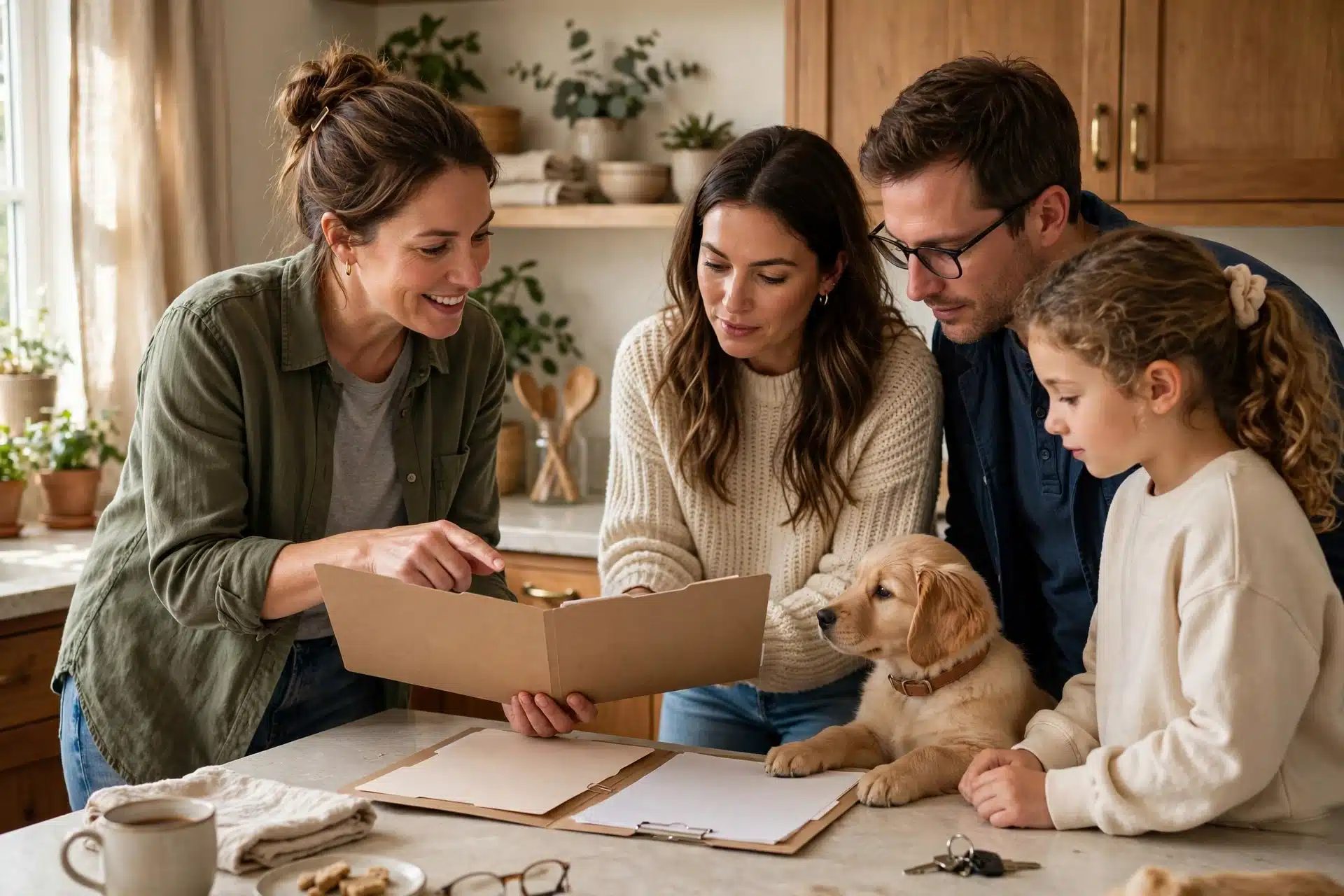
A good breeder hands you a folder without being asked. Before you leave, make sure you have:
- Veterinary exam record – the puppy’s checkup date and findings.
- Vaccination history – which shots were given and when the next ones are due.
- Deworming schedule – dates and products used.
- Microchip number – with registration instructions, if chipped.
- Feeding and care notes – what food the puppy eats now, so you can transition slowly.
Ask questions while you’re there. Is the puppy eating well? Any loose stools or naps longer than usual? An ethical breeder answers these plainly. At Sage Puppies, families get a full written health summary and a walkthrough of the puppy’s routine before they drive away.
Understand Connecticut Entry Requirements
If you’re driving your puppy into Connecticut from another state, the state has rules. Under Connecticut General Statutes § 22-354, imported dogs must be accompanied by a health certificate issued within 30 days by a USDA-accredited veterinarian. The Connecticut Department of Agriculture also notes that dogs over three months old staying more than 30 days need a current rabies vaccination certificate.
Ask your breeder to time the vet exam so the certificate is valid on your travel date. Confirm who mails or files the required copies.
Complete the Transfer Before You Leave
Sign the sales contract and ownership paperwork at the handoff, not after. Photograph every document with your phone as a backup. Save the breeder’s contact info for follow-up questions, then buckle your puppy in for the ride home.
Also Read: Puppy Care Blog & Resources | Sage Puppies
Step 4: Evaluate the Handoff Through Questions, Not Pressure
Pickup day moves fast. A fluffy puppy is in the room, and suddenly nobody wants to slow things down with questions. Slow down anyway. Good breeders expect questions, and the AKC recommends having a list ready before you ever arrive.
Ask About Temperament and Daily Routines
Bring a short list and ask it out loud:
- Which puppy in the litter is the boldest? Which is the watcher?
- How has this puppy handled new sounds, visitors, and handling so far?
- What food is the puppy eating, and how often do you feed?
- What does a normal day look like at your house right now?
These answers help you predict the first two weeks at home. A puppy raised around normal household noise adjusts faster than one raised in quiet isolation. The OFA advises choosing breeders who raise puppies in the home, not tucked away from daily life.

Review Parent Health Testing and Ongoing Support
Ask to see the parents’ health test results and the puppy’s vet records. Responsible breeders share them easily. Then cover support:
- Who do you call if a question comes up at 10 p.m. on day three?
- What food, blanket, and scent items go home with the puppy?
- When is the next vaccine due?
Breeders like Sage Puppies keep this simple: health-tested parents, records in hand, and an open line after pickup day.
Notice Whether the Process Feels Clear and Respectful
Pay attention to how the breeder answers, not just what they say. Clear pricing, patient answers, and questions asked back to you are all good signs. Rushing, dodging, or “take it or leave it” talk is not. You are building a relationship that should last well past this day.
Step 5: Travel Home Safely After Pickup
The ride home is your puppy’s first road trip. Keep it calm, contained, and quiet, and you set the tone for every ride that follows.
Settle the Puppy Before Pulling Away
Skip the food before the drive. An empty stomach lowers the chance of nausea, and many puppies drool or vomit on early car rides. Offer water instead.
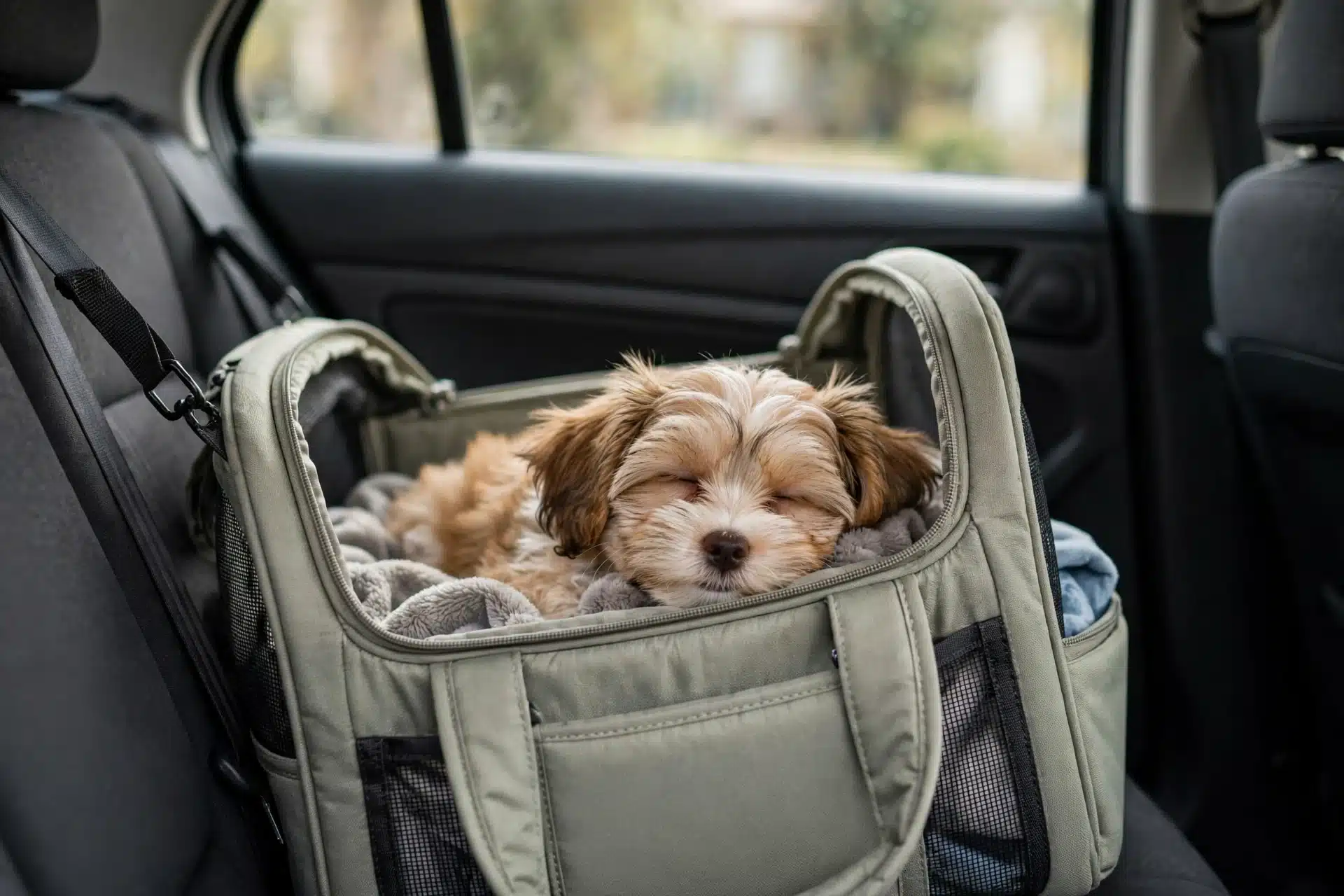
Secure your puppy in the back seat, either in a crate or carrier, or on a second adult’s lap wrapped in a familiar blanket. Cornell’s canine health center warns against letting any dog roam loose in a vehicle, since a sudden stop can cause serious injury.
Have your puppy potty before you start the car. Then speak softly, play no loud music, and drive gently.
Use Calm, Clean Breaks
For drives over two hours, plan a stop or two. A young puppy can usually hold its bladder about one hour per month of age, plus one.
At each stop:
- Clip the leash on before opening any door.
- Pick a quiet grassy patch, away from busy dog areas where unvaccinated pups face risk.
- Offer a little water, then head back.
Keep a bag ready with paper towels, wipes, and a spare towel. Accidents happen, and cleanup is easy when you’re prepared.
Know When to Seek Help
If your puppy vomits repeatedly, seems limp or lethargic, or stops responding to you, call the breeder or your vet right away. AVMA guidance also reminds owners to never leave a puppy alone in a parked car, even briefly. Trust your gut. When something looks wrong, it usually is.
Also Read: How to Join a Connecticut Puppy Waiting List With Confidence
Step 6: Complete the First 24 Hours at Home
Keep the Arrival Quiet and Predictable
Resist the urge to invite the neighbors over. Your puppy just left everything familiar, so the first day should feel calm and small. Show them one potty spot, one water bowl, and one cozy resting area. Let them explore one room instead of the whole house. Keep kids seated and gentle, and skip the dog park entirely. Quiet time now builds the confidence that makes everything else easier later.
Schedule the Connecticut Veterinary Visit
Book your puppy’s first vet appointment within a week of bringing them home. Veterinarians recommend an early exam to set a health baseline and keep the vaccine series on track, since most puppies need shots every few weeks until about 16 weeks old (PetMD).
Before you go:
- Bring the health records Sage Puppies sends home with you, including vaccine and deworming dates.
- Collect a fresh stool sample that morning.
- Write down the food you’re currently feeding so your vet can plan a safe transition.
If your puppy arrives by delivery, schedule the visit right after you confirm the arrival date so you get a spot within that first-week window.
Tip: Ask your vet when it’s safe to visit public places. Until the vaccine series is done, carry your puppy in unfamiliar spots instead of walking them.
Start the Home Routine Gradually
Pick a feeding schedule and stick to it. Take potty breaks after every meal, nap, and play session. Introduce one new room or sound per day. Short, calm exposure beats big adventures right now.
Also Read: Guides – Sage Puppies
Common Mistakes to Avoid During Connecticut Puppy Pickup
Pickup day goes smoothly when you know what not to do. Here are the four mistakes we see most often.
Leaving Without Matching Records
Before you drive away, check the paperwork against the puppy. Match the microchip number, date of birth, and vaccine dates to what’s on the health certificate. Once you’re home, fixing a mismatch means phone calls and delays. Five minutes at pickup prevents all of it.
Treating a Pickup as an Unplanned Visit
Families sometimes show up without a plan and stay for hours. The puppy then faces a long car ride already tired and stressed. Set a pickup time, keep the visit focused, and bring a crate, water, and a towel. A calm handoff beats a chaotic one every time.
Overstimulating the Puppy Immediately
Kids and relatives will want to hold the new puppy. Let them, briefly. Then give the puppy a quiet space to decompress. Too much noise, handling, and excitement in the first hours can lead to an upset stomach and a rough first night.
Assuming State Rules and Breeder Policies Are the Same
Connecticut law sets minimums, like the ban on selling puppies under eight weeks and health certificate rules for imported dogs under state statute 22-354. But breeders add their own policies on deposits, returns, and spay or neuter timing. Read both, and never assume one covers the other.

Ready to welcome a well-started Havanese, Havapoo, or Cavapoo? Sage Puppies makes pickup or nationwide delivery simple and stress-free. See our available puppies, review our pricing and how it works, then submit your application today.
Frequently Asked Questions
Q1: puppies for sale in Connecticut
Most Connecticut families meet out-of-state breeders at pickup or through delivery. Sage Puppies offers local Utah pickup and nationwide delivery for Havanese, Havapoo, and Cavapoo puppies.
Q2: What should I bring on pickup day?
Bring a leash, water, a small towel, printed paperwork, and a safe travel crate or car harness for the drive home.
Q3: Can my puppy travel to Connecticut instead?
Yes. Many breeders offer flight nanny or ground delivery. Sage Puppies ships nationwide with clear pickup and delivery instructions.
Q4: How old should my puppy be at pickup?
Eight weeks is the standard minimum. Responsible breeders keep puppies longer when needed for health or development.
Q5: What health records should I receive?
Expect vaccination dates, deworming records, a vet exam summary, and a written health agreement before you leave.
Conclusion
Pickup day goes well when you plan it in three parts: paperwork, travel, and the first night home. Confirm Connecticut’s entry rules early, since most states require a health certificate signed by an accredited veterinarian before a puppy crosses state lines, per the AVMA’s travel guidance. Verify the handoff details in writing, pack a secure carrier, and keep the ride home calm. An ethical breeder makes each step clear and answers questions without pressure. Do that, and your Havanese, Havapoo, or Cavapoo arrives settled, healthy, and ready to become part of the family.