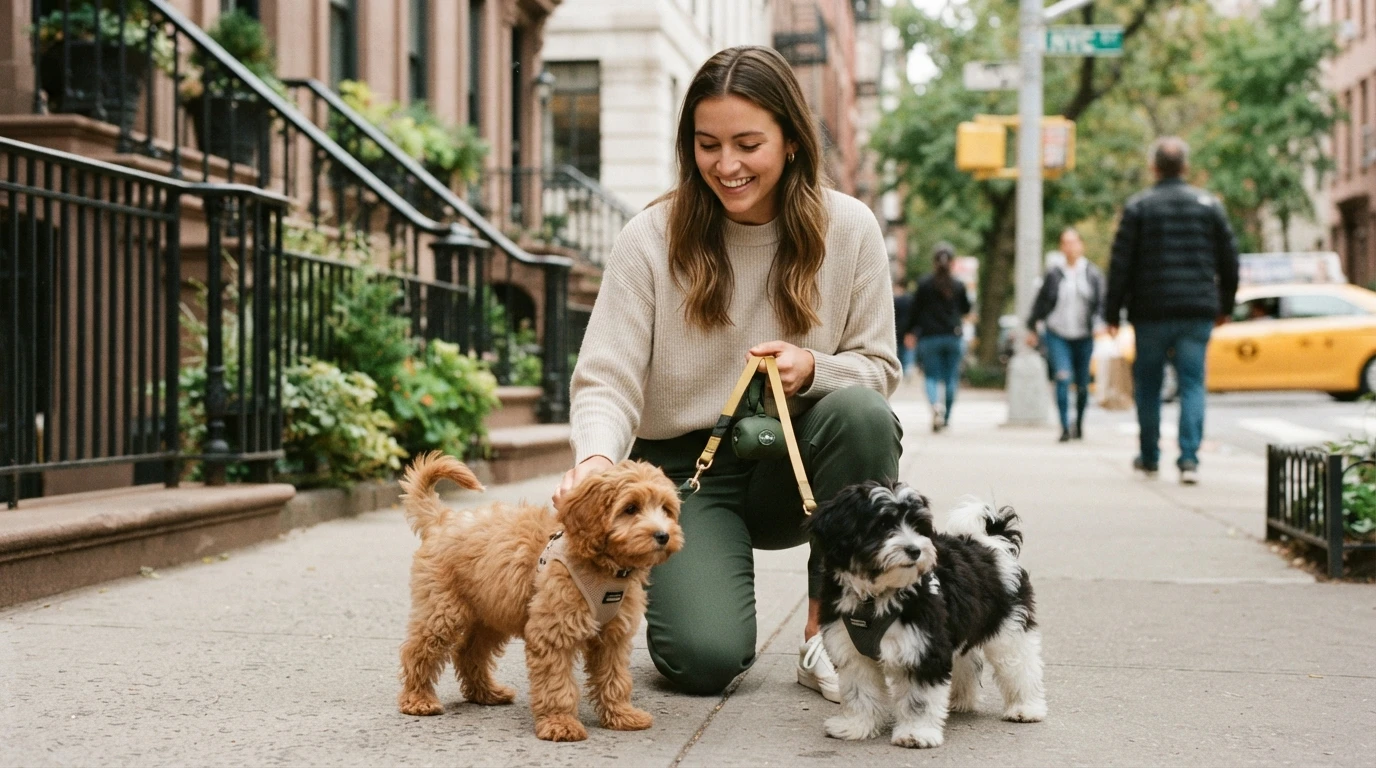
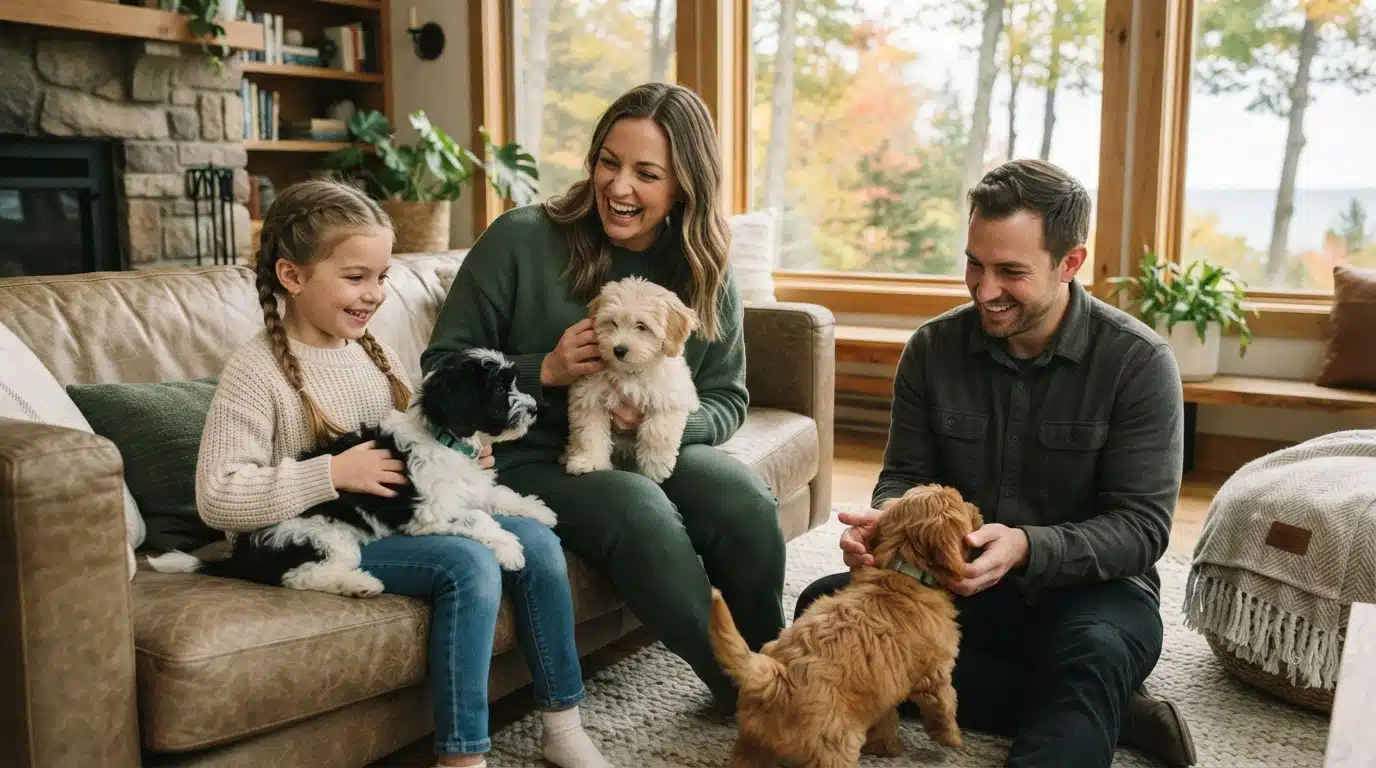
Quick Summary: Puppy space needs depend on layout and routine, not raw square footage, so plan for the adult dog’s size and a few defined zones rather than a magic number. Colorado’s legal minimums, like 2 square feet for a small puppy, are cruelty-prevention floors, not comfortable living targets. A 700-square-foot condo works fine for Havanese, Havapoo, or Cavapoo puppies if you set up a crate, playpen, and potty area, while even a big house fails if cluttered or confusing. Measure usable floor space, gate stairs, and test your routine before pickup; daily walks matter more than square footage, especially for small breeds.
A 700-square-foot Denver condo can be a perfectly comfortable first home for a Havanese, Havapoo, or Cavapoo puppy. Clear paths to walk, one quiet rest corner, and a steady potty routine matter more than raw square footage. Meanwhile, a big house can still feel cramped if every usable area is blocked, loud, or overwhelming. That’s the gap this guide closes: puppy space needs are about layout and routine, not a magic number. Puppy living space breaks down into rest zones, play zones, and potty access, and small dog space works differently than most families assume. We’ll walk through each size, room by room, with Colorado-specific tips drawn from years of home-raising these breeds.
Start With the Puppy’s Expected Adult Size, Not Today’s Footprint
The biggest mistake families make with puppy space needs is planning around the eight-week-old fluffball in front of them. That puppy will triple in size within months. Plan for the dog, not the puppy.
Why Current Puppy Size Can Mislead You
A Havanese puppy weighs just a few pounds at eight weeks, yet lands around 7 to 13 pounds as an adult. Small breeds grow fast, so the tiny puppy stage is gone by the time you’ve settled in. Paw size, leg length, and “the runt theory” are all weak predictors. Breed standards and parent weights tell you far more than the puppy’s current build, and veterinary growth research shows size class, not current weight, drives how a puppy fills out.
Size Is Only One Part of the Decision
Adult weight sets the frame, but puppy space needs also depend on energy and temperament. A calm 12-pound companion may need less room than a restless 8-pound one. Havanese, Havapoo, and Cavapoo puppies are small, people-focused dogs that adapt well to apartments and condos. What matters most is a safe indoor potty spot, a quiet sleep area, and daily play. Match the layout to the adult dog’s needs, and the space question usually answers itself.
Also Read: 10 Adorable Havapoo Colors You Need to See (2026)
Use Colorado’s Minimums as a Safety Floor, Not a Home-Space Goal
Colorado actually has one of the clearest rulebooks in the country. The PACFA enclosure rules set minimum space for any licensed facility in the state.
Colorado’s Puppy Enclosure Categories
PACFA splits puppies into four weight classes, and the numbers are smaller than most families expect:
| Puppy Size | Weight | Under 16 Weeks | 16-22 Weeks |
|---|---|---|---|
| X-Small | 0-4 lbs | 1.25 sq ft | 1.875 sq ft |
| Small | 4-10 lbs | 2 sq ft | 3 sq ft |
| Medium | 10-20 lbs | 2.5 sq ft | 3.75 sq ft |
| Large | 20-30 lbs | 5 sq ft | 7.5 sq ft |
A 10-pound Havanese puppy legally needs just 2 square feet at a licensed kennel. The rules also cap crate time at 14 hours per day.
Why Facility Minimums Are Not the Same as Comfortable Living Space
These numbers exist to prevent cruelty in shelters and kennels, not to guide your living room. A puppy surviving in 2 square feet is not a puppy thriving in your home.
Think of the legal minimum as a floor, never a target. Your Havanese or Cavapoo needs room to play, potty, train, and rest away from chaos – plus daily exercise and your attention. At Sage Puppies, we raise puppies in our home, so they arrive used to family life, not kennel life.
Also Read: 8 South Carolina Puppies Suited to Apartment Living
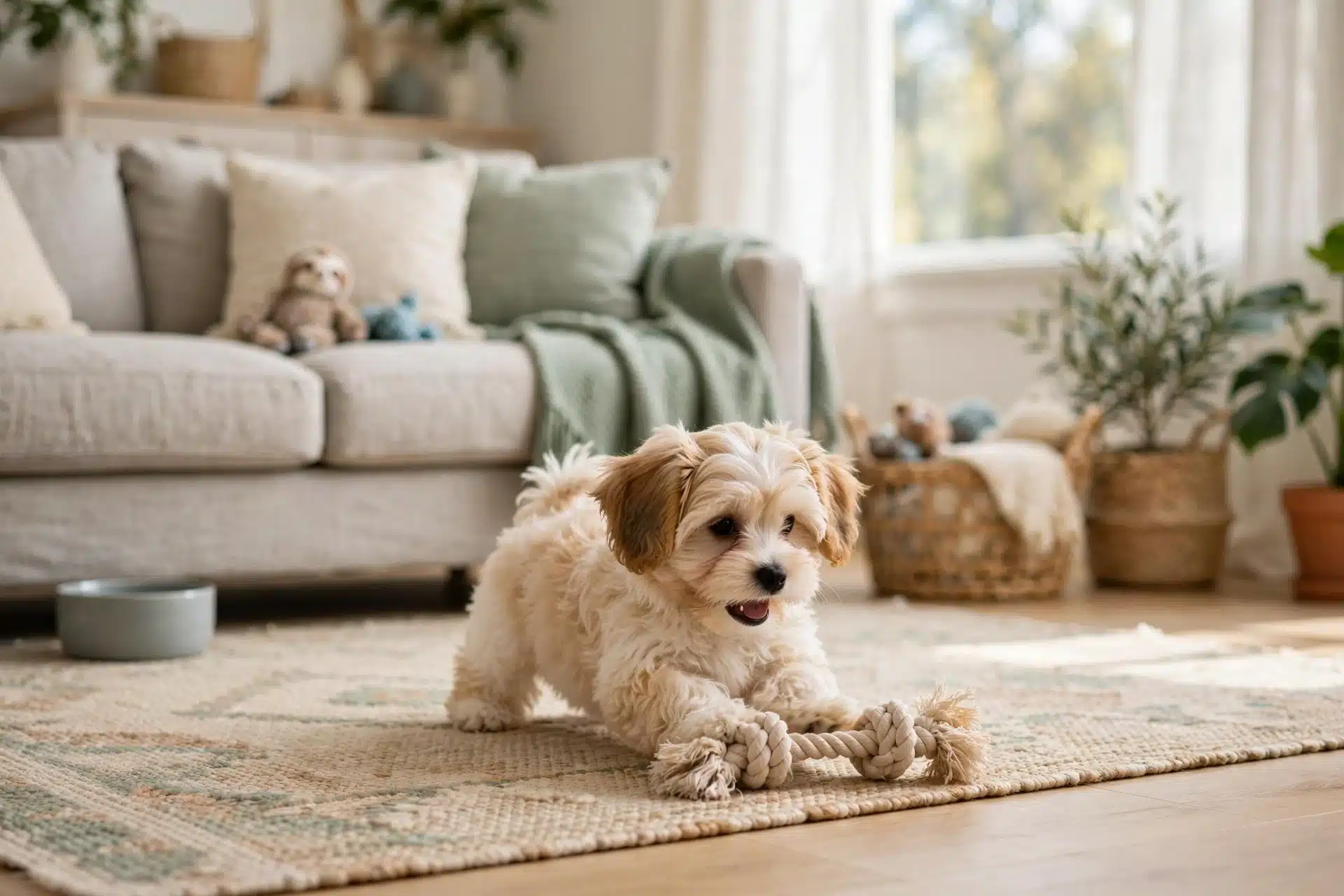
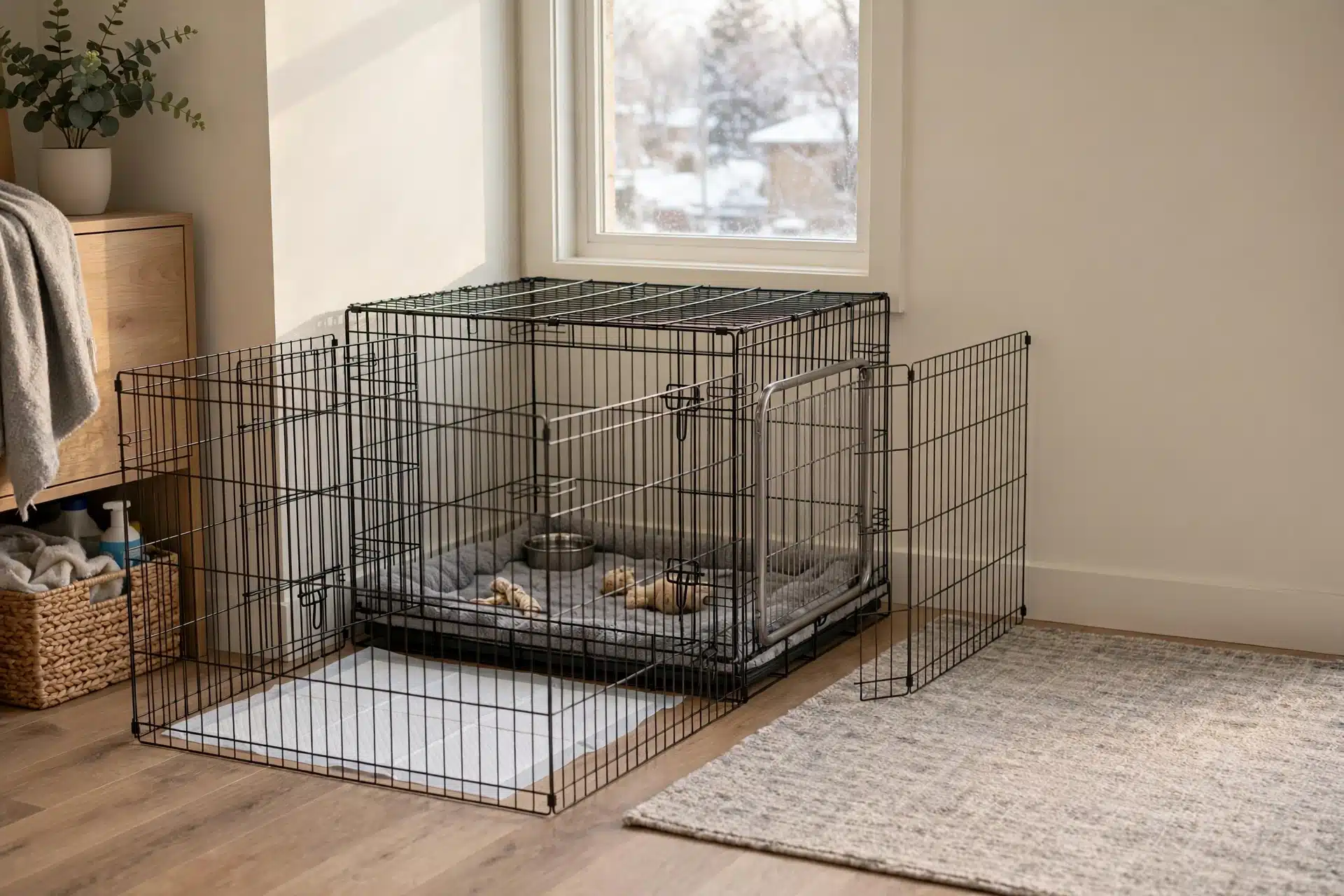
A small puppy like a Havanese or Cavapoo does not need a big house. It needs a well-planned corner of one. The right setup fits in a few square feet: a crate sized for adult size with a divider panel, a playpen beside it, a non-slip potty spot, and room to stretch out with you. What matters most is layout, not square footage.
A Practical Small-Puppy Setup
Start with the crate. According to AKC crate guidance, a puppy needs just enough room to stand, turn around, and lie down. Too much space can slow potty training, so an adjustable divider solves the growth problem in one purchase.
Then build the daily rhythm around it:
- Pick one calm corner away from doorways and vents.
- Add a playpen or baby gate to limit roaming when you cannot supervise.
- Keep the potty area close, especially in winter.
- Reserve a rug or hallway for short indoor play bursts.
Apartment and Condo Factors in Colorado
Colorado apartments and condos work well for small breeds, and the AKC lists many small companion dogs among its top apartment breeds. Your real constraints are potty access and noise. Look for quick outdoor access, or a balcony backup plan for icy mornings. Check HOA or lease pet rules before reserving a puppy, and plan two or three short walks a day instead of one long one.
Many of our Sage Puppies families live in apartments and condos, and well-started small breeds settle into these routines quickly.
How Much Space Does a Medium-Sized Puppy Need?
A medium puppy, expected to land between 25 and 50 pounds as an adult, needs more room than a toy breed. Federal standards give a useful starting point: a USDA guide calculates minimum floor space as the dog’s body length plus six inches, squared. A 24-inch dog needs about 6.25 square feet just to stand, turn, and lie down.
Plan for More Movement and a Larger Adult Body
The legal minimum is a floor, not a goal. A USDA factsheet notes that more space improves welfare, and singly housed dogs need roughly double their floor space for exercise.
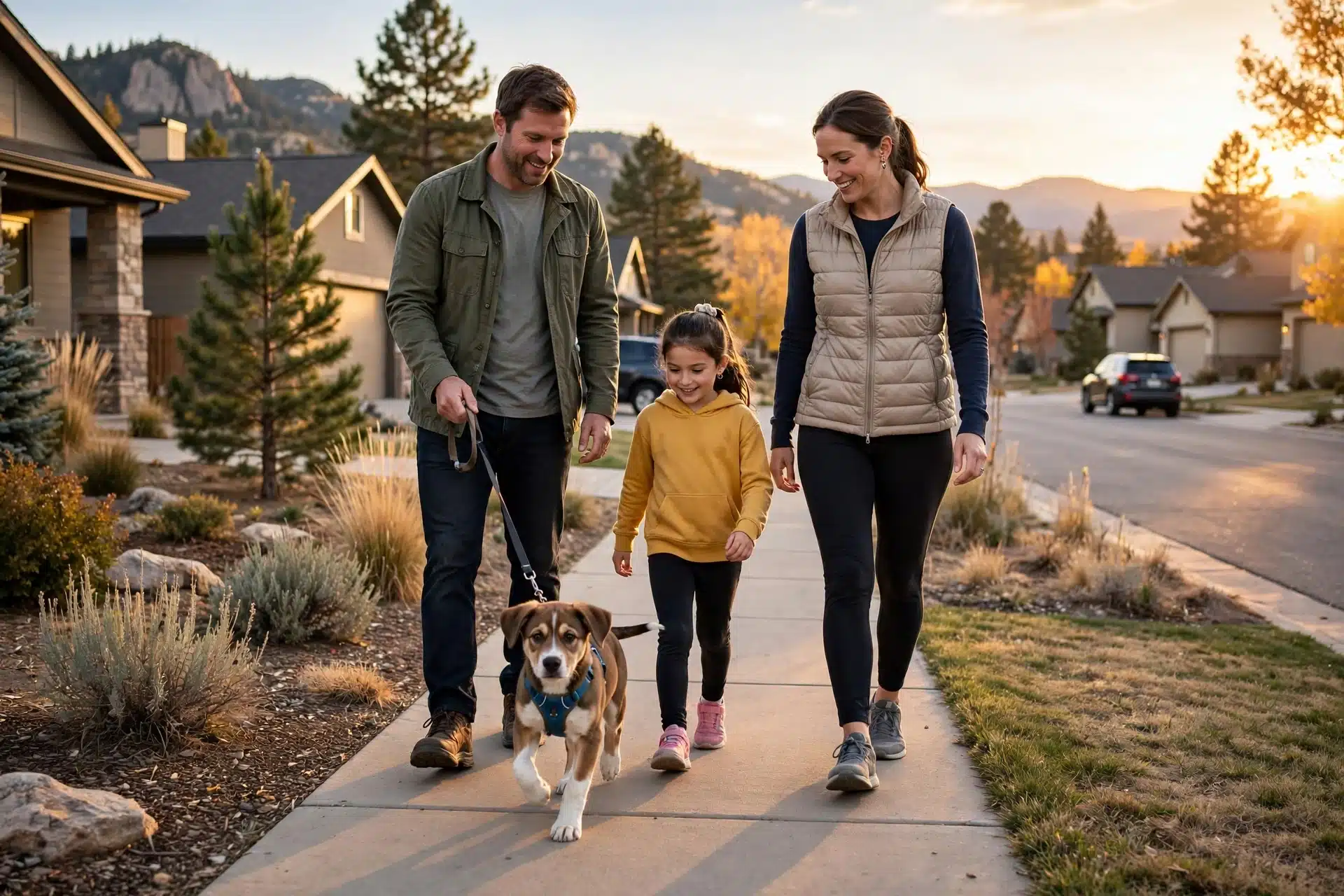
Medium puppies also move more. The AKC recommends about five minutes of structured walking per month of age, plus safe free running. If your home is small, plan on two daily outdoor sessions to make up the difference.
Use the Home’s Layout to Create More Usable Space
Layout matters as much as square footage. To stretch your space:
- Clear a straight path from the puppy’s bed to the door and water bowl.
- Place the crate in a quiet corner away from foot traffic.
- Use a playpen to block off one open room instead of giving the whole house.
- Add rugs on hard floors for traction during growth-plate months.
Also Read: How to Plan a Long-Distance Puppy Pickup From Colorado
What Is the Minimum Space Requirement for a Large Puppy?
Here’s the honest answer: there is no single magic number. Large breeds usually hit an adult weight between 45 and 90 pounds, so “large puppy” covers everything from a Lab to a German Shepherd. What matters is daily outlet, not square footage alone.
Read the Large-Puppy Category Correctly
- Adult weight, not puppy size. A roly 10-week-old pup can triple in size by one year. Plan for the adult body, not the fluff ball on your floor today.
- Growth takes longer. Large-breed growth plates can stay open until 16 to 18 months, versus 6 to 9 months for toy dogs, per AKC’s large-breed care guide.
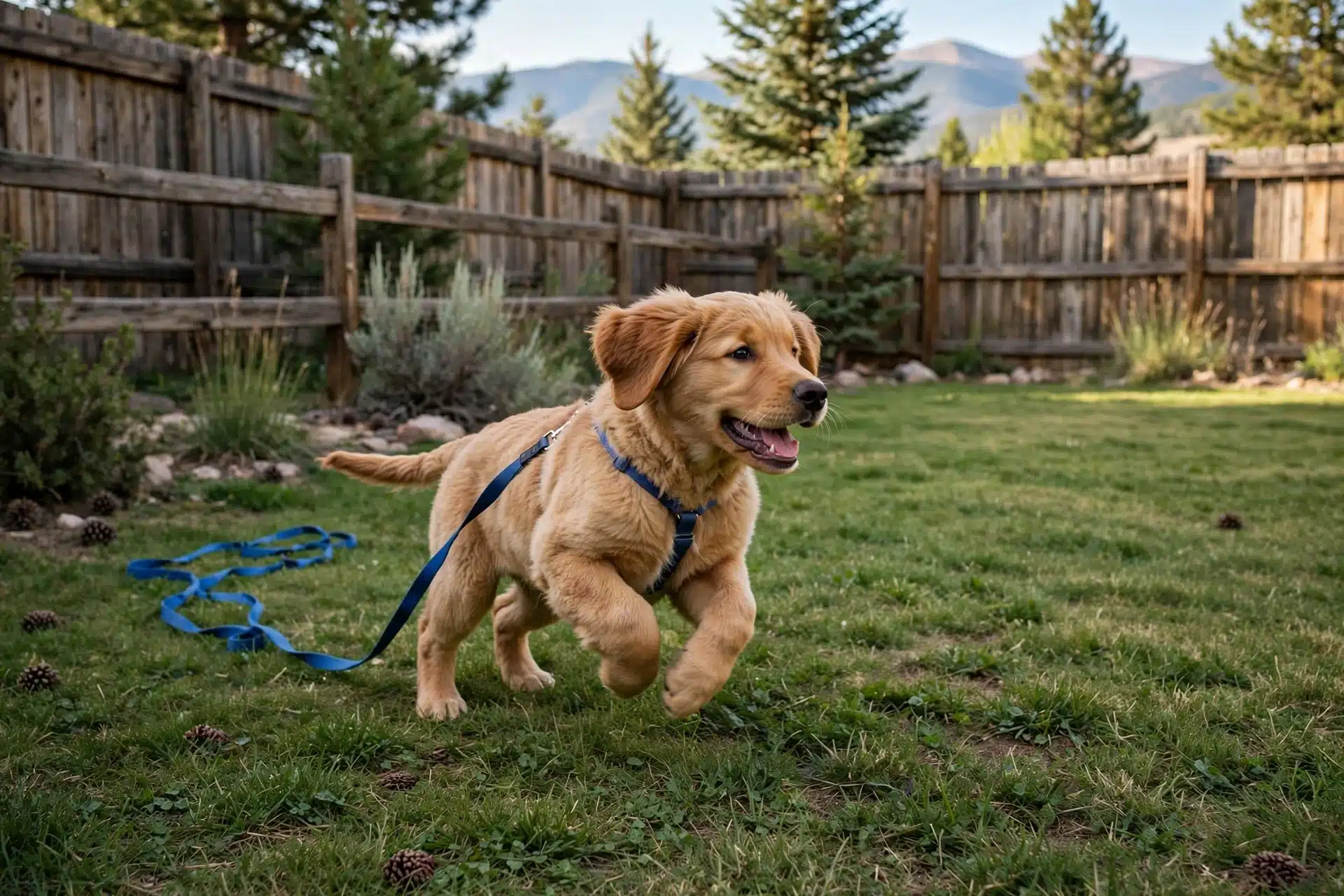
- Space means play space. Vets recommend self-regulated free play on soft ground rather than forced runs. A fenced yard or a 15-foot long line works well, according to AKC puppy exercise guidance.
When a Home May Be Too Restrictive
A home can be the wrong fit even if it’s legally allowed:
- No yard and no daily plan for outdoor play or potty trips.
- Stairs are the only exercise route, which stresses developing joints.
- No room for a properly sized crate plus a separate potty area.
- Your schedule allows fewer than two or three short play sessions a day.
If those boxes stay unchecked, a smaller breed may suit your layout better. Sage Puppies focuses on Havanese, Havapoo, and Cavapoo puppies precisely because their space needs fit apartments and smaller Colorado homes comfortably.
Also Read: 10 Red Flags to Avoid When Visiting a Local Puppy Breeder
Build a Puppy Living Space That Supports Rest, Training, and Family Life
A puppy zone works best when it mirrors your whole home in miniature. You need four zones: a bed, open floor, a food station, and a potty spot. Experienced breeders divide puppy pens into sleep, play, eat, and eliminate areas, and those same zones carry over cleanly into a kitchen corner or hallway pen at home.
Separate Sleeping, Moving, Eating, and Potty Areas
Keep each zone distinct so habits form fast. The crate holds bedding and nothing else. The play area gets traction and safe toys. The food bowl lives on easy-to-clean flooring. The potty area sits as far from the sleep zone as your layout allows, because puppies instinctively avoid soiling where they rest.
Layout tips that pay off:
- Put the potty spot on the far side of the pen and the play spot nearest the entrance.
- Take your puppy out the same door to the same grass every time.
- Clean the potty area several times daily so the rest of the zone stays appealing.
Expand Access as the Puppy Earns More Freedom
Start small, then widen the world one room at a time. House freedom comes after a few accident-free weeks, not days. If a mistake happens, shrink the zone for a few days and rebuild. Progress should feel earned and calm.
Watch for these readiness signs:
- Consistent potty trips to the right spot for at least two weeks.
- Calm settling in the crate without whining.
- Chewing only on puppy toys, not baseboards.
Each new room gets a short, supervised first visit. Praise quiet behavior and carry your puppy out to potty when the session ends. Slow expansion builds a dog who understands your whole home, not just one corner of it.
Also Read: Havanese, Havapoo & Cavapoo Puppy Care Blog
Measure Your Colorado Home Before You Reserve a Puppy
Floor plans lie. Photos lie harder. Before you reserve, walk your actual rooms with a tape measure and a puppy’s-eye view, then decide which space your Havanese, Havapoo, or Cavapoo will really live in.
The Functional-Space Audit
Square footage is the wrong number. What matters is usable space. Check:
- Open floor area – the floor a puppy can actually run on after the couch, coffee table, and playpen take their share.
- Potty access – how far from the crate to the door? In January, that walk matters more than the kitchen.
- Stair count – stairs are a falling hazard for small puppies, so plan to gate them (PetMD).
- One safe zone – a gated room or playpen where the puppy can decompress away from kids and other pets (VCA Hospitals).
A 900-square-foot condo with one open living area beats a split-level where every potty trip crosses two staircases.
Test the First Six Months, Not Just the First Week
Puppy week is all hands on deck. Month four, life is back to normal – and that’s when layouts fail. Live one weekend in “puppy mode”: block one room as the puppy zone, gate the stairs, and note every friction point. Where will the crate go? Which door handles icy shut in a storm? Answering those now makes pickup day calm, whether you’re collecting your puppy locally or planning delivery to Colorado.
Also Read: Guides – Sage Puppies
Common Mistakes to Avoid When Planning Puppy Space
Mistakes That Make a Home Feel Smaller Than It Is
A big square-footage number can hide a cramped setup. Watch for these:
- Cluttered floors. Piles of shoes and cords eat walkable space. The AKC’s puppy-proofing checklist recommends removing cords and small hazards first.
- One giant open room. Puppies do better with a defined safe zone, not the whole house at once.
- Too much gear. A crate, playpen, and gates in one corner can swallow a small apartment.
Mistakes That Confuse Space With Exercise
Indoor square footage is not a substitute for a walk. Small breeds like a Havapoo or Cavapoo stay happy in a condo, but they still need daily activity and play. Owners who rely on space alone often see chewing and restlessness, which the AKC links to boredom, not a small home. Plan for a routine of walks and short play sessions, then let the floor plan handle the rest.

Ready to match a puppy to your space? Our small, family-raised Havanese, Havapoo, and Cavapoo puppies fit beautifully in Colorado apartments and homes alike. Browse Sage Puppies to see available litters, then start your application for pickup in South Jordan or nationwide delivery.
Frequently Asked Questions
Q1: How much space does a small puppy need?
A small breed like a Havanese or Cavapoo needs one puppy-proofed room, not a big yard. A crate, a play corner, and short potty trips to a balcony or hallway cover early weeks.
Q2: How much space does a medium-sized puppy need?
Plan for access to two or three rooms plus a safe outdoor potty spot. A fenced yard helps, but daily walks matter more than square footage.
Q3: What is the minimum space requirement for a large puppy?
There’s no legal square-foot minimum, but large breeds need room to stretch, run, and a sturdy crate sized for their adult weight. A townhome works with committed daily exercise.
Q4: Can a puppy live happily in a Colorado apartment?
Yes. Small companion breeds adapt well to condos and apartments when you add daily walks, potty routines, and mental play.
Q5: How much space does a crate need?
Choose a crate big enough for your puppy to stand, turn, and lie down. Place it in a quiet corner of a room your family uses daily.
Q6: Do I need a fenced yard before getting a puppy?
No. Leash walks and scheduled potty trips work fine, especially for small breeds like the Havanese and Havapoo puppies raised at Sage Puppies.
Conclusion
Space is really two questions in one. Legal minimums and crate sizing cover the rules; daily routines cover real life. Havanese, Havapoos, and Cavapoos all fit apartments, condos, and suburban homes because their exercise needs are modest and their temperament centers on people, not territory. What matters most is your layout, not a magic square-foot number. Measure your actual rooms, plan zones for sleep, play, and potty breaks, and match the breed’s adult size to your family’s pace. Even a 900-square-foot home works well when the fit is right, as we explain in our guide to small breeds for small homes.