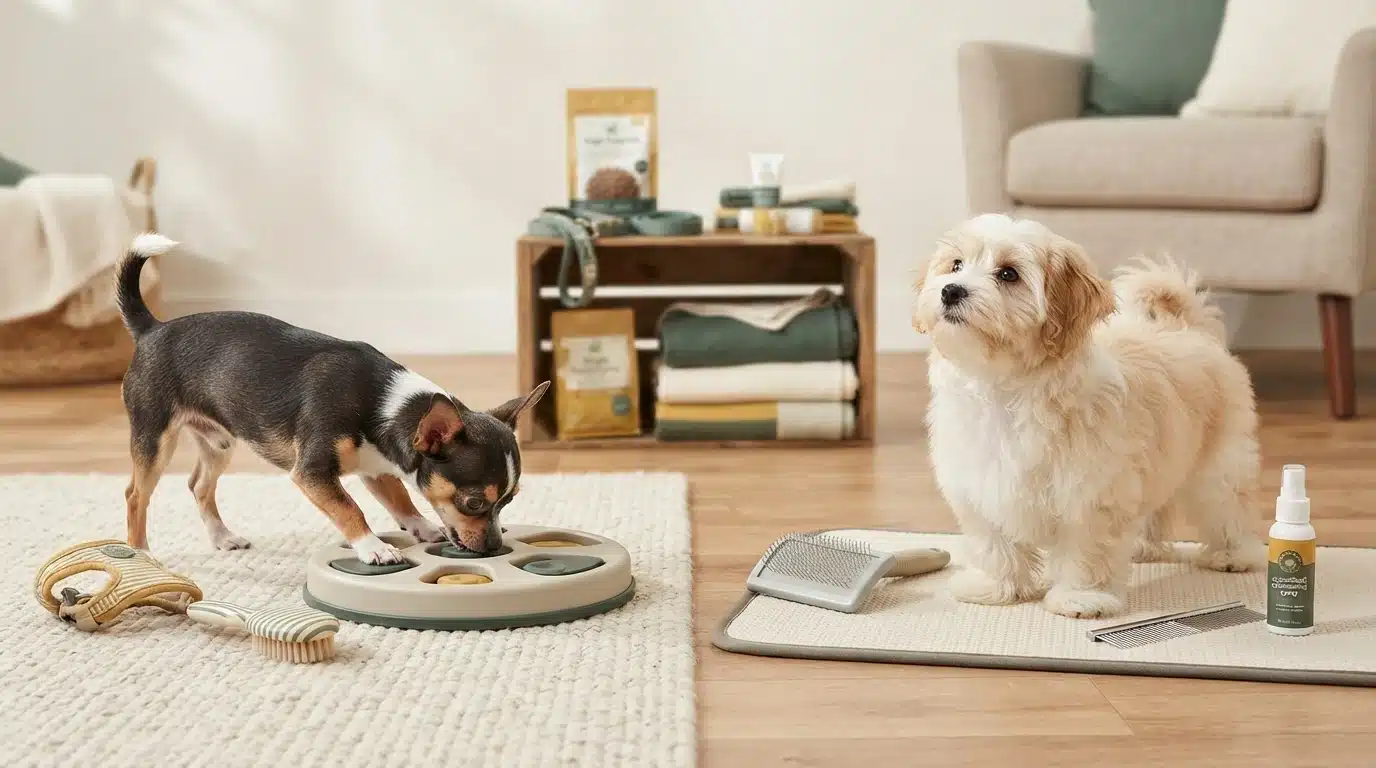
Quick Summary: Choose a Havanese for predictable sizing: adults weigh 7 to 13 pounds under the AKC standard. Choose a Cavapoo for a wider 8-to-25-pound range, depending mainly on the Poodle parent. Both need brushing several times weekly and professional trims every four to six weeks, but Havanese coats demand more steady combing, especially during the 8-to-18-month coat change.
Here is the short version of cavapoo vs havanese. A Havanese puppy comes with a documented adult size: the AKC breed standard puts the breed at 7 to 13 pounds, so you can plan furniture, car seats and lifting around a real number. A Cavapoo’s adult weight stays genuinely uncertain because it depends on which Poodle variety the parent is. For coat work, expect the Havanese to need more frequent, more careful brushing, while the Cavapoo’s texture keeps changing as the puppy grows, so your grooming plan has to change with it.
Most comparisons stop at “low shedding” and “family friendly.” Those words will not help you carry a dog up the stairs or block out Saturday brushing time. This cavapoo vs havanese guide instead covers adult size range, coat type, grooming cadence, matting hotspots, puppy-to-adult coat change and cost of care, drawing on the published breed standards and grooming references behind each breed. It ends with a pick based on your household, not popularity.
Cavapoo vs Havanese: Size and Grooming At a Glance
| Cavapoo (Cavalier King Charles Spaniel and Poodle cross) | Havanese | |
|---|---|---|
| Typical adult weight | Roughly 8 to 25 pounds depending on Poodle parent, per PetMD | 7 to 13 pounds, with ideal height 9 to 10.5 inches per the AKC standard |
| How predictable adult size is | Low to moderate; varies with the Poodle parent rather than a breed standard | High; the AKC standard sets a defined range for the breed |
| Coat type and texture | Wavy to curly, Poodle-influenced, still setting in during the first year | Long, silky, untrimmed double coat that sheds very little |
| Shedding and matting | Sheds some; matting depends on how curly the coat becomes | Low shedding, but the double coat mats if it is not combed out consistently |
| Grooming routine at home | Regular brushing several times a week, more often as the adult coat develops | Frequent, patient combing; a coat this length needs regular hands-on care |
| Best for | Households that want a small companion and can accommodate coat change as the puppy grows | Owners who want a documented small size and are prepared for consistent long-coat care |
How Cavapoo (Cavalier King Charles Spaniel and Poodle cross) and Havanese Compare
Cavapoo (Cavalier King Charles Spaniel and Poodle cross)
The Cavapoo crosses a Cavalier King Charles Spaniel with a Poodle, and that Poodle parent shapes both size and coat. Adults typically land between 8 and 25 pounds, per PetMD, because the outcome depends on which Poodle variety was used. Choose this cross if you want a small companion and can wait out a coat that keeps changing through the first year.
Key strengths
- Poodle-influenced, wavy to curly coat that sheds some but rarely heavily
- Low to moderate size predictability, driven by the Poodle parent rather than a fixed standard
- Regular brushing several times a week, increasing as the adult coat comes in
Havanese
The Havanese is a purebred Toy Group dog with a published AKC standard, so its adult range is documented rather than estimated: 7 to 13 pounds. That predictability suits owners who want to plan furniture, lifting and car space around a known size. The trade-off is a long, silky double coat that needs frequent, patient combing to stay mat-free.

Key strengths
- High size predictability, set by the AKC breed standard at 7 to 13 pounds
- Low-shedding coat
- Best for owners committed to consistent long-coat care
How Big Does Each Puppy End Up?
Why One Range Is Documented and the Other Is an Estimate
The Havanese comes with a printed number. The AKC breed standard fixes the breed at 7 to 13 pounds, so an adult Havanese’s size is documented before you ever meet the litter.
The Cavapoo is different because it is a crossbreed, not a purebred with a published standard. Its adult weight depends on which Poodle variety sits behind the cross, so honest breeders and size guides describe a range instead of a set point. PetMD puts most Cavapoos between 8 and 25 pounds, and a Cavapoo size breakdown shows why: a Toy Poodle parent can produce a 7 to 13 pound adult, while a Miniature Poodle parent often lands 13 to 20 pounds or more. Generation matters too, which is why an F1b Cavapoo explanation helps you read a breeder’s litter description.
What Size Means for a Small Dog Household
Numbers only matter when you translate them into daily life. A 10-pound Havanese and a 20-pound Cavapoo are both small dogs, but they carry differently. The lighter dog is easier to lift onto a couch or into a car seat, while the sturdier one handles rough play from kids with less worry.
Ask practical questions before you choose. Can every family member safely carry the dog? Will it sleep on furniture or in its own bed? Does your car setup fit a dog that might double in weight from pickup day? Breeders who know both breeds, like Sage Puppies, usually ask these questions during matching because the honest answer shapes which puppy fits your home. Measure your carrier, your stairs and your lap before you decide.
Coat Type, Texture and How It Changes as They Grow
What a Double Coat Actually Means for Handling
The Havanese carries a true double coat: a soft undercoat under a longer outer coat. The AKC standard actually faults a single, flat coat, so this structure is part of the breed, not a fluke. For you, it means volume and shedding that stays in the coat until you brush it out. Skip a few sessions and the loose undercoat tangles into mats close to the skin, where clippers are the only fix.
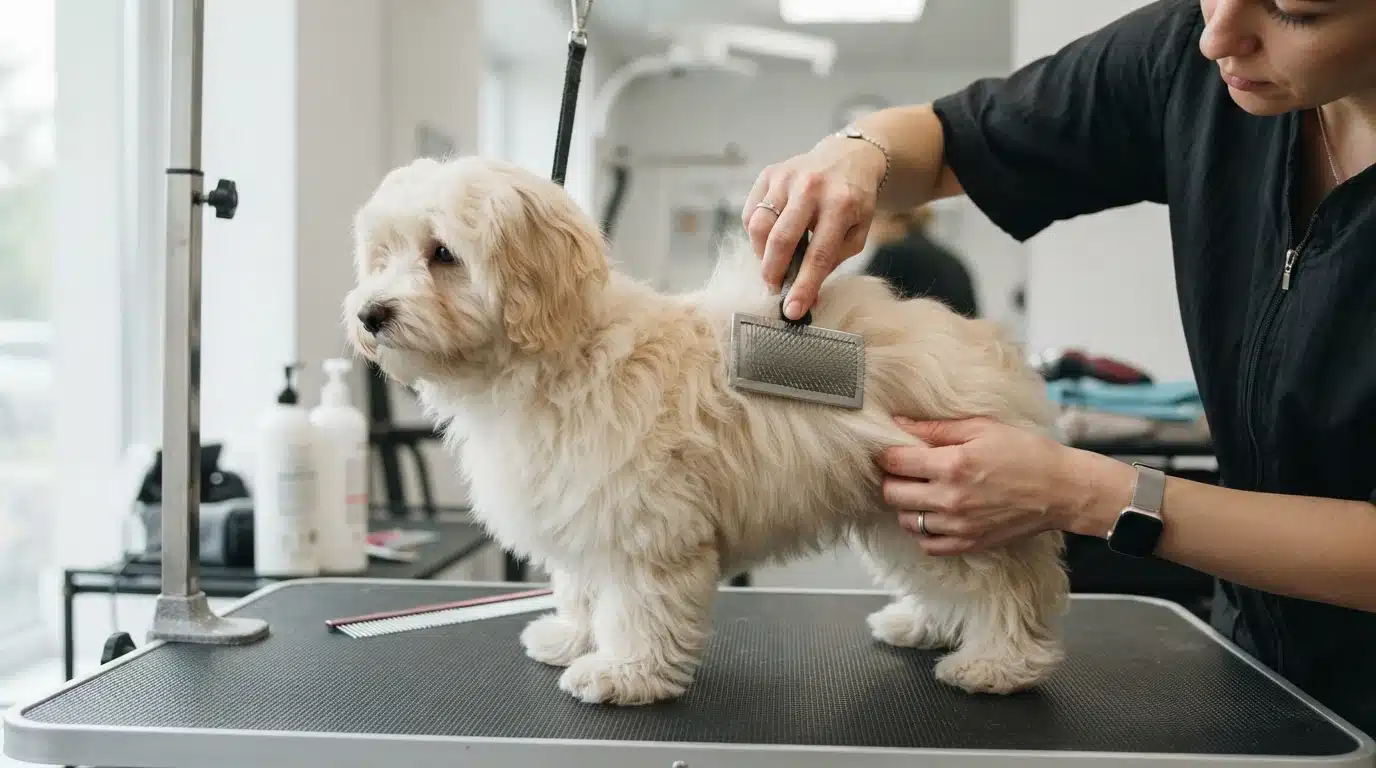
Cavapoos usually take after the Poodle side with a denser, wavy or curly coat that holds onto debris and mats in its own way. Curly coats also trap loose hair instead of dropping it, which is why Cavapoo coats and allergy questions come up so often together. Either way, plan on brushing several times a week and a professional trim every six to eight weeks.
Why a Puppy Coat Is Not a Predictor
Both breeds change coats as they mature, so the fluffy puppy in front of you is a poor preview of the adult dog. Havanese pups go through a coat change that can start between about 8 and 18 months and last several months, a window breeders warn is prime matting season because soft puppy hair sheds into incoming adult hair. Adults often shift color too, so a dark puppy can lighten noticeably by its first birthday.
Cavapoo coats are even less predictable because the Poodle genes can push the adult texture wavier, curlier, or straighter than it looked at eight weeks. Judge a breeder on the parents’ coats, not the litter’s fluff.
Grooming Routine: What Each Coat Asks of You Week to Week
The Havanese coat asks for steady, predictable brushing. The Cavapoo coat asks for a guessing game first, because you do not know until adulthood whether your puppy leans silky, curly or wavy. That difference shapes your weekly schedule more than anything else.
Tools Each Coat Actually Needs
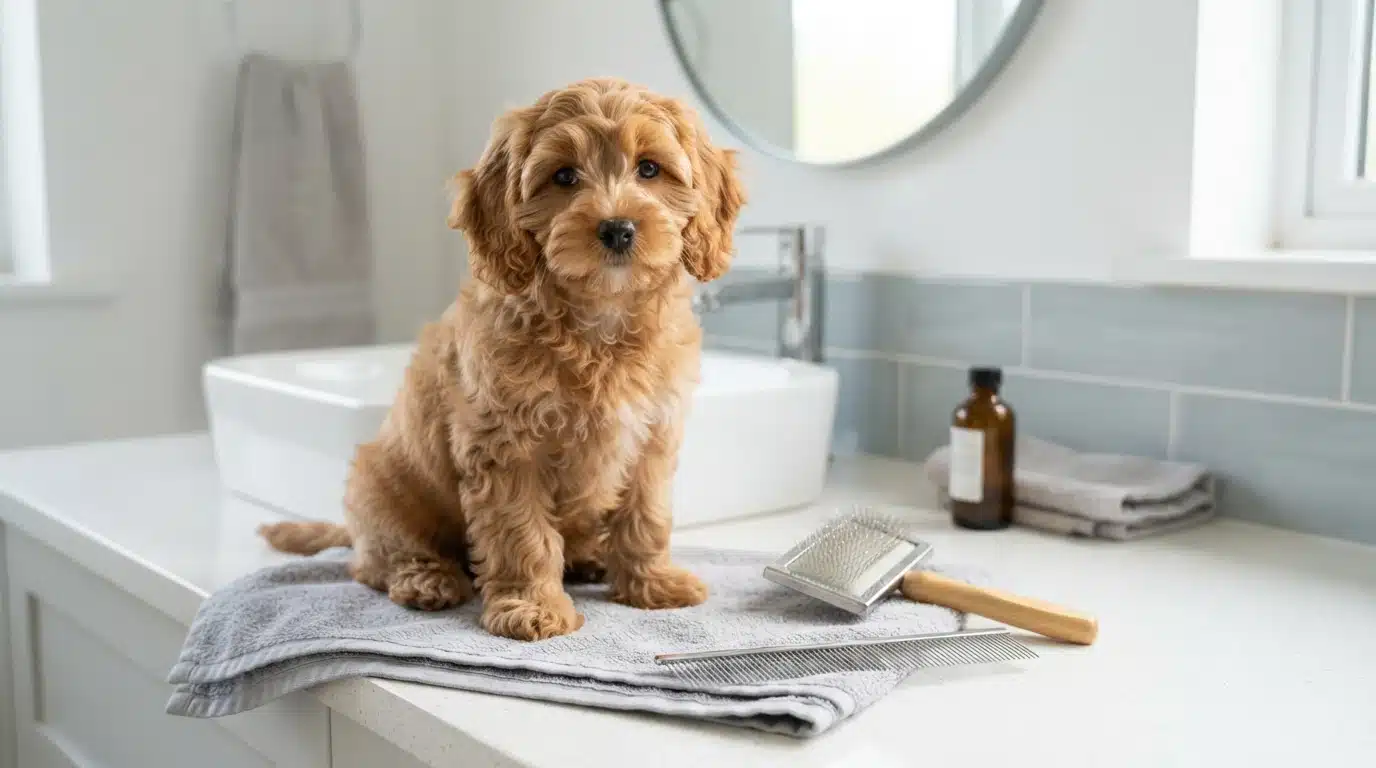
Both breeds need the same core kit: a slicker brush, a metal greyhound comb, detangling spray and blunt-nosed scissors. The comb matters most. It is the only tool that finds mats hiding at the skin line, where a slicker glides right over them.
A Havanese in full coat should be brushed two to three times a week, according to the Havanese Club of America, and many owners go daily. Keep the coat parted in sections and brush down to the skin, not just the surface hair. Curly or dense Cavapoo coats need the same line-brushing discipline, often more of it. Wavy coats are more forgiving. Most owners of both breeds book a professional trim every four to six weeks.
Never bathe a matted dog. Water tightens mats, so brush fully before every bath.
For a week-by-week example laid out by coat type, our Havanese grooming schedule breaks it down by stage.
Matching the Routine to Your Schedule
Ask yourself two questions before choosing. First, how many minutes a day can you honestly give? Fifteen focused minutes three or four times a week keeps either coat mat-free. Five rushed minutes does not.
Second, will you keep the coat long or cut it short? A puppy cut on either breed cuts brushing time nearly in half. Long coats are beautiful but unforgiving, and one skipped week can end at the groomer’s shave-down table. If your weeks swing between busy and calm, a shorter trim is the safer bet.
Shedding, Matting and Allergy Questions
What Shedding Means for Your Floor and Clothes
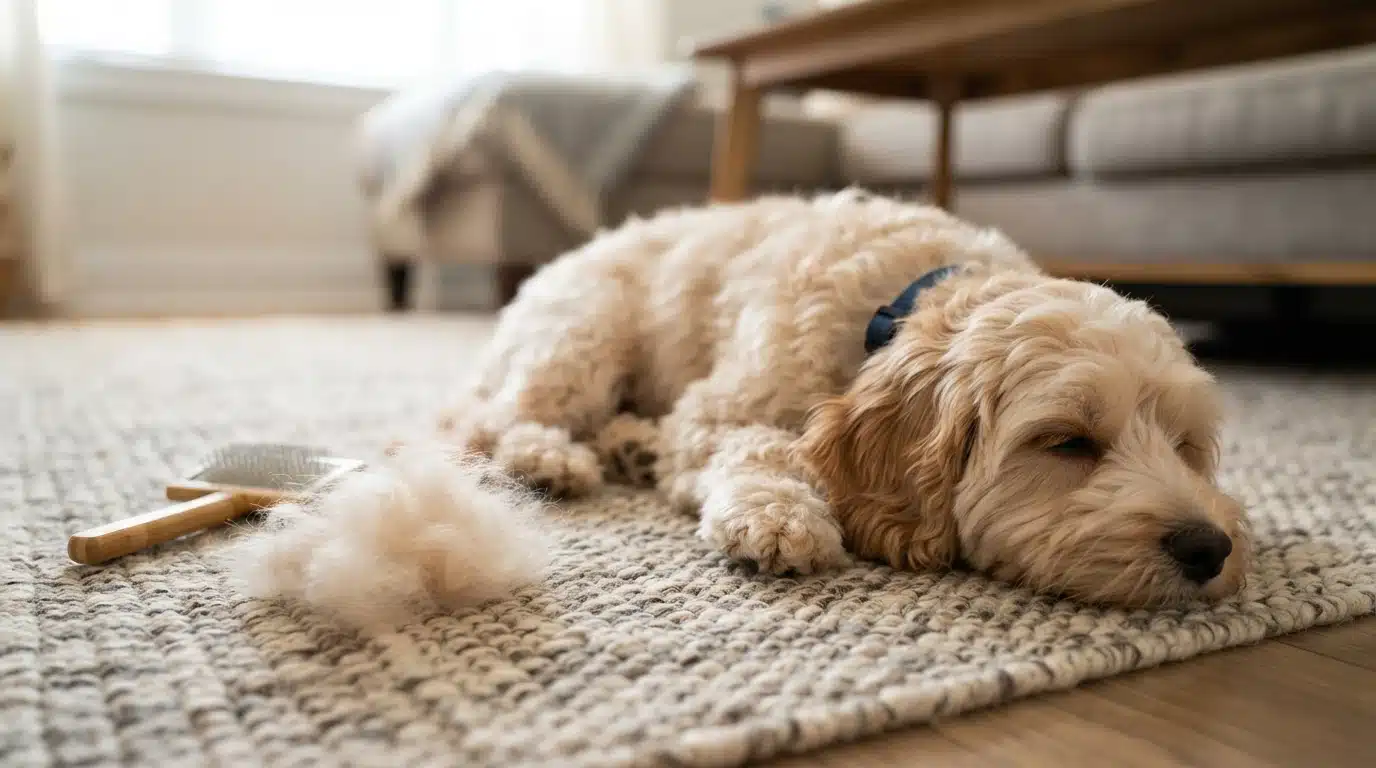
Neither breed fills your lint tray like a shedding double-coated dog, but the details differ. The Havanese has a long, silky coat that rarely sheds, so loose hair mostly stays in the coat instead of landing on your sofa. That sounds ideal until you realize where the hair goes: it stays trapped and turns into tangles if you skip brushing. A Cavapoo’s coat depends on inheritance. Some pups take after the Poodle parent with a low-shedding, curly coat, while others carry more Cavalier texture and drop a little hair, especially during seasonal change.
Both breeds are better than most for hair on your black pants, but neither breed is a zero-maintenance floor situation.
On allergies, be careful with the word hypoallergenic. No dog is truly allergen-free, because reactions come from dander and saliva, not just fur. Spend time with the parents before you commit if allergies run in your family.
Matting Spots That Need Attention Early
Mats start where friction lives: behind the ears, under the collar, in the armpits, and along the harness line. The area between the paw pads and around the eyes mats fastest on both breeds. Check these spots twice a week with your fingers, not just your eyes. You will feel clumps before you see them.
The Havanese puppy coat change, which can begin between 8 and 18 months, is the highest-risk window, so daily brushing pays off there. A Cavapoo’s curls tighten as the adult coat comes in, and tight curls hide mats until they sit against the skin.
What Size and Grooming Mean for Your Specific Household
A 7-to-13-pound Havanese and an 8-to-25-pound Cavapoo both fit on a lap, but they ask slightly different things from a home. Here is how the difference plays out for two common situations.
For First-Time Small Breed Owners
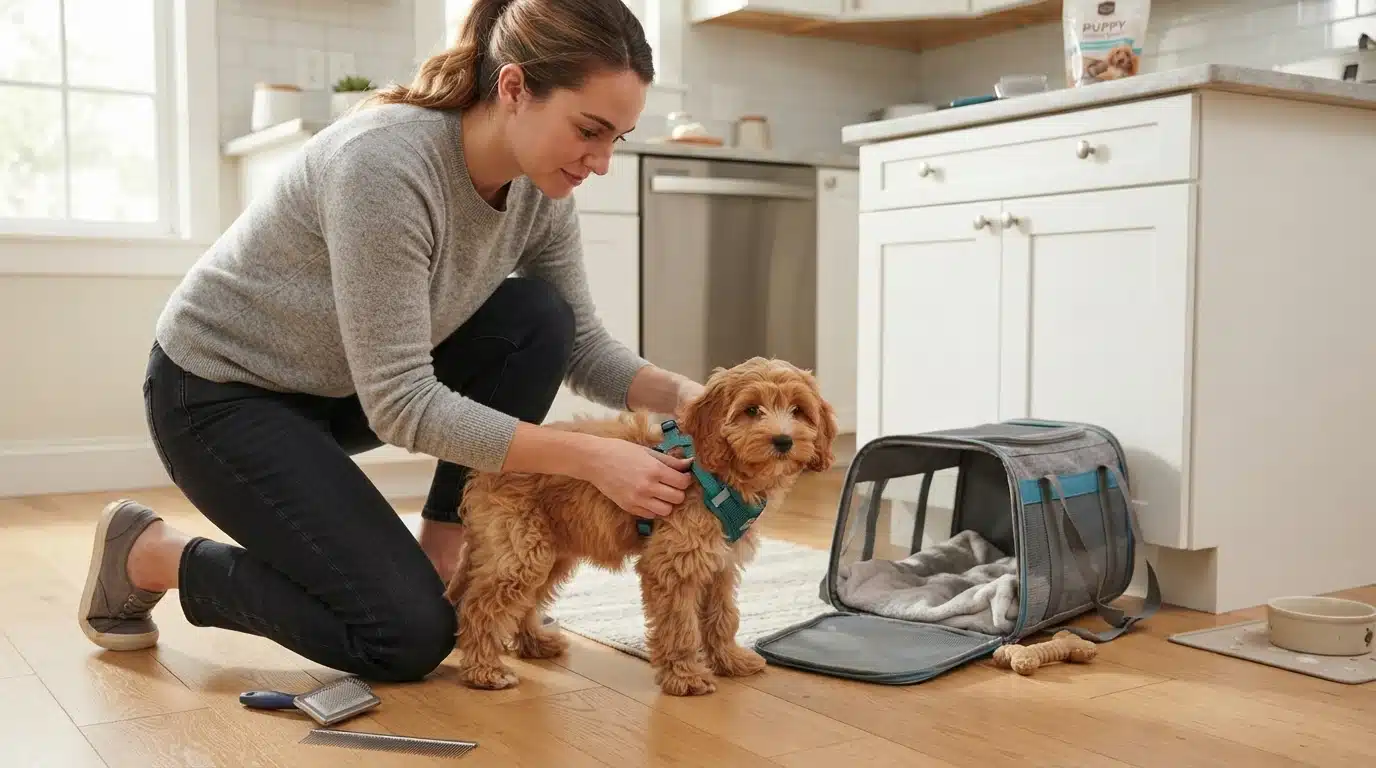
Plan around the smaller number, not the average. A Cavapoo bred from a Miniature Poodle parent can reach 20 pounds, so buy a harness and carrier that fit the puppy now but adjust upward as it grows. A Havanese’s documented 7 to 13 pound range lets you pick gear once.
Grooming is where first-timers get surprised. Both breeds need brushing several times a week, and Havanese go through a coat change between 8 and 18 months when mats form fast. Start a short brushing routine early and it becomes normal for both of you.
For Utah Families and Those Picking Up Locally
Local pickup keeps the first day simple. A puppy under 10 pounds rides in a small carrier on your lap area, while a sturdier 15-pound Cavapoo pup may already need a roomier crate for the drive home. Neither setup is complicated, but knowing your breed’s likely adult weight helps you buy the right car gear once.
Utah winters add a grooming twist. Snow, road salt and dry air tangle feathered coats, so paw checks after walks matter for both breeds. Families who receive puppies through delivery rather than pickup should ask their breeder what the trip plan includes so the first hours at home stay calm.
Both dogs suit apartment and house living alike. The real choice is your time budget for brushing.
Which Should You Choose: Cavapoo or Havanese?
Both breeds fit a lap and a family. The right pick comes down to two questions: how much do you need to plan ahead, and how much grooming time can you honestly commit to?
Choose a Havanese if predictability matters to you. The AKC standard fixes adults at 7 to 13 pounds, so you can buy a carrier, harness, and crate once and know they will still fit in a year. That documented range also helps if you or a family member has a weight limit for lifting, or if you want a dog that stays firmly in toy-dog territory. The trade-off is a coat change between 8 and 18 months, when daily brushing matters most.
Choose a Cavapoo if you want a bit more dog and you are comfortable with range. Most adults land between 8 and 25 pounds depending on whether the Poodle parent was a Toy or a Miniature. Ask the breeder which variety was used and what the parents weigh, then buy adjustable gear. Coats vary too: some Cavapoos take after the low-shedding Poodle side, others the Cavalier.
| Factor | Havanese | Cavapoo |
|---|---|---|
| Adult size | 7 to 13 pounds, set by breed standard | 8 to 25 pounds, depends on Poodle parent |
| Size planning | Buy gear once | Buy adjustable, size up |
| Grooming | Heavy during coat change, then routine | Varies by coat type |
| Best fit | Households that want a fixed plan | Households flexible on size |
At Sage Puppies, both breeds are raised under the same health-tested program, so the choice is truly about your household, not quality.

Still weighing a predictable 7 to 13 pound Havanese against a wider Cavapoo range? Tell Sage Puppies how your home, schedule, and grooming time look, and Cassie will help match you with the puppy that fits. Start your application at Sage Puppies and meet the litter with confidence.
Frequently Asked Questions
Q1: How do Cavapoo and Havanese puppies differ in size and grooming?
A Havanese adult weighs a documented 7 to 13 pounds under the AKC standard, while a Cavapoo can land anywhere from 8 to 25 pounds depending on the Poodle parent. Grooming is similar: both need brushing several times a week, though Havanese mats spike during the 8-to-18-month coat change.
Q2: Which breed is easier for a first-time owner to groom?
A Cavapoo with a wavy coat is more forgiving, but either breed stays manageable with fifteen minutes of brushing three or four times a week and a short puppy cut.
Q3: How often do these breeds need professional grooming?
Book a trim every four to six weeks for both, or every six to eight weeks for a Cavapoo kept longer.
Q4: Will a Cavapoo puppy’s coat stay the same?
No. Poodle genes can push the adult coat curlier, wavier, or straighter, so judge the parents’ coats instead of the puppy’s fluff.
Q5: Are either of these breeds hypoallergenic?
No dog is truly allergen-free, since reactions come from dander and saliva. Spend time with the parents first if allergies are a concern.
Q6: What gear should I buy before pickup?
A small carrier, adjustable harness, and crate sized to the breed’s likely adult weight.
Conclusion
Size and grooming decide this matchup. A Havanese adult weighs a documented 7 to 13 pounds under the AKC standard, so you can buy a carrier and harness once and trust they will fit. A Cavapoo ranges from 8 to 25 pounds depending on the Poodle parent, so flexible gear and honest breeder questions matter more.
Grooming asks for steady work from both. Brush several times a week, book trims every four to six weeks, and watch friction spots like the ears and armpits. The Havanese coat change between 8 and 18 months is the riskiest stretch; a Cavapoo’s adult texture may not settle until later.
Choose the Havanese for a fixed plan, the Cavapoo for a wider range you can live with. Match the puppy to your schedule, and either coat stays manageable.